
Quick Take
- Landing a striped bass is easy enough, but knowing the surprisingly narrow legal size window that determines what you can actually keep is another story entirely. Check size regulations →
- White perch thrive in freshwater, but the biggest fish turn up somewhere most anglers overlook. Find the best hotspots →
- Atlantic salmon are on Connecticut's best-catch list, but fishing for them in the wrong spot is actually illegal, and the approved waters may surprise you. See approved waters →
- Brown trout aren't native to North America, yet they dominate Connecticut's top freshwater rivers. Most anglers, however, overlook the importance of spring timing. Learn spring timing →
Connecticut offers great fishing opportunities in both fresh and saltwater, with over 3,000 lakes, ponds, and reservoirs across the state, as well as 5,828 miles of rivers and streams, and over 618 miles of tidal shoreline. If you’re planning a fishing trip in Connecticut, take a look at our list of the best fish to catch in the state, as well as where to find them.
Striped Bass
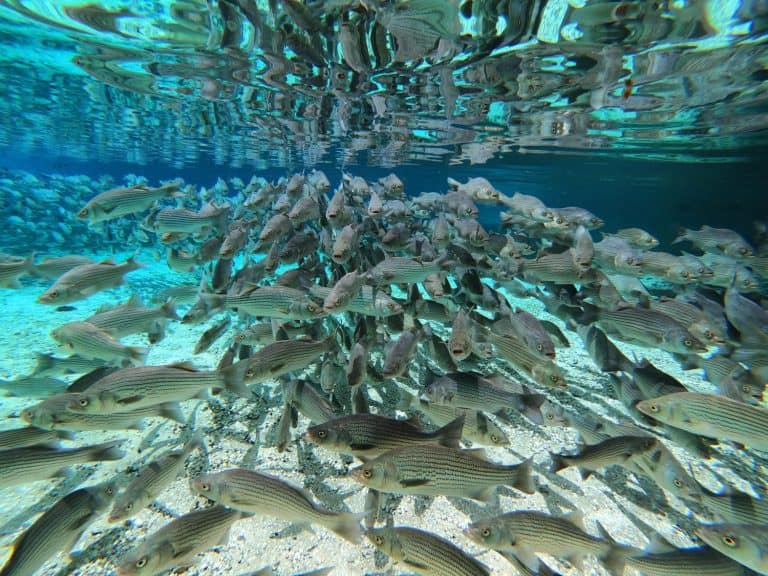
Some of the common names for the striped bass include rockfish and striper. These fish are prized because they regularly reach 20 to 40 pounds or more, and they are hard fighters. Striped bass are silvery-colored fish with olive-green or dark blue backs, pale bellies, and seven or eight horizontal stripes on their sides. Caught bass are regularly 16 to 36 inches long, but the state rule is that only fish over 28 inches and less than 31 inches may be kept.
Since these are schooling fish, it’s easy to find many of them at once. Bass schools will feed at the surface, making it easy for anglers to catch as many fish as they want. The best times to fish for striped bass in Connecticut are late spring from mid-May through June and fall in September and October. Stripers actively feed along the coast and in and around tidal rivers during these months. Top locations to fish for striped bass include the Connecticut River, the Housatonic River, Bluff Point State Park, and the Niantic and Long Island Sound Structure.
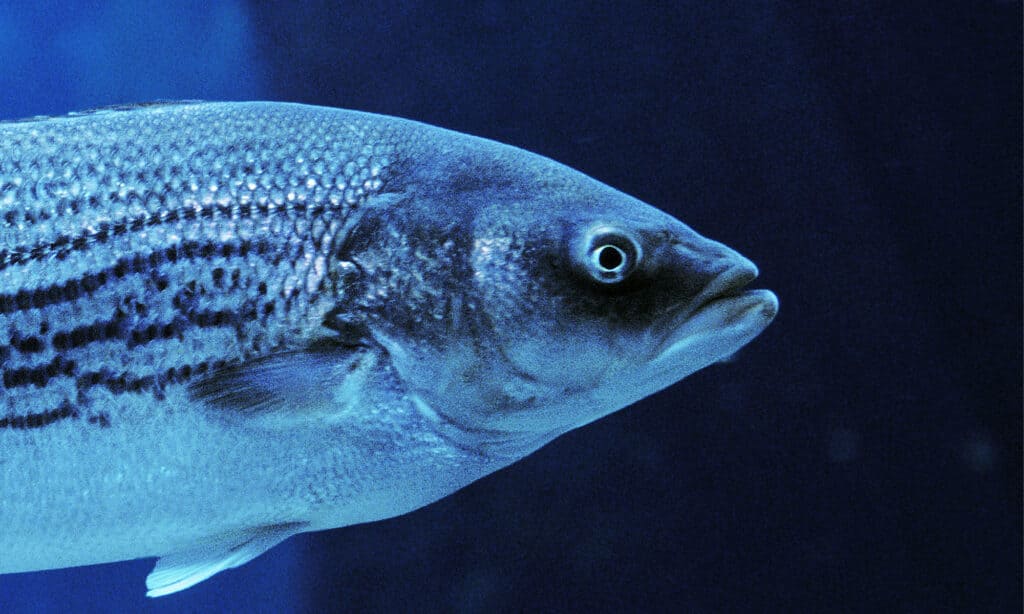
In Connecticut, open season for striped bass is year-round.
©iStock.com/slowmotiongli
White Perch
The white perch is a relative of striped bass, both belonging to the temperate bass family Moronidae. A few common names for white perch include little white bass, narrow-mouthed bass, and silver perch. Compared to yellow perch, you’ll find these fish to have a chunky body shape. Their coloration can vary from silvery-green to olive. White perch usually have a white belly, no bands, and two connected dorsal fins. On average, white perch in Connecticut weigh between 1 and 2 pounds. They’re usually 8 to 10 inches long, and their size depends on their environment. Even though they thrive in freshwater, bigger fish are often caught in brackish waters.
The best time to fish for white perch in Connecticut is during the spring in April and May when the fish migrate up tidal rivers to spawn in large schools. Late summer into early fall from July through October is also a good time to fish in deeper reservoirs and estuaries. Top spots include the Connecticut River, Quinnipiac River, Housatonic River, and Beseck Lake. Connecticut regulations state that there is a 7-inch minimum size on white perch.
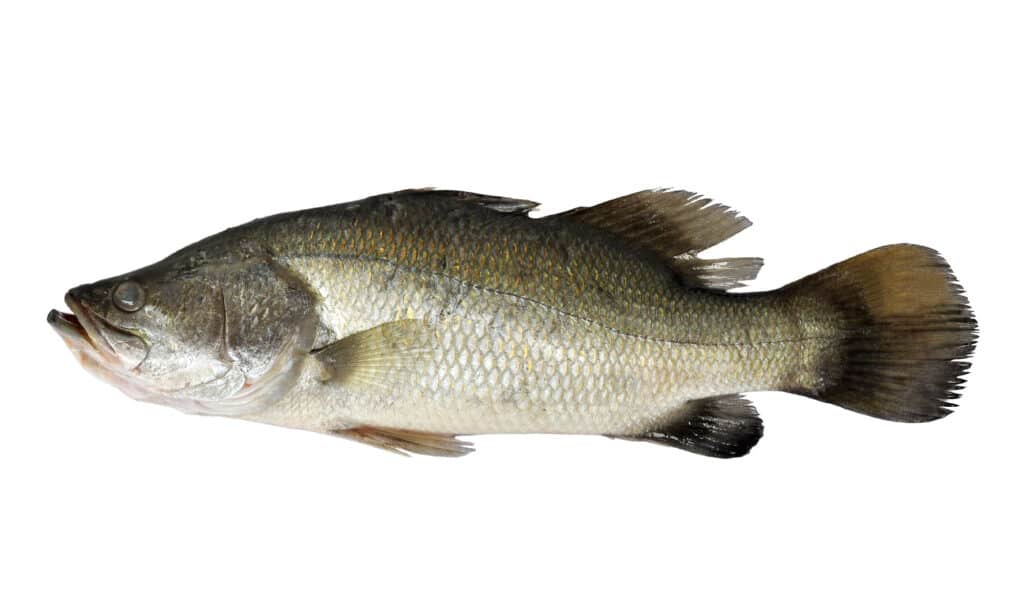
White perch are usually 8 to 10 inches long, but bigger fish are often caught in brackish water.
©daagron/Shutterstock.com
Brown Trout
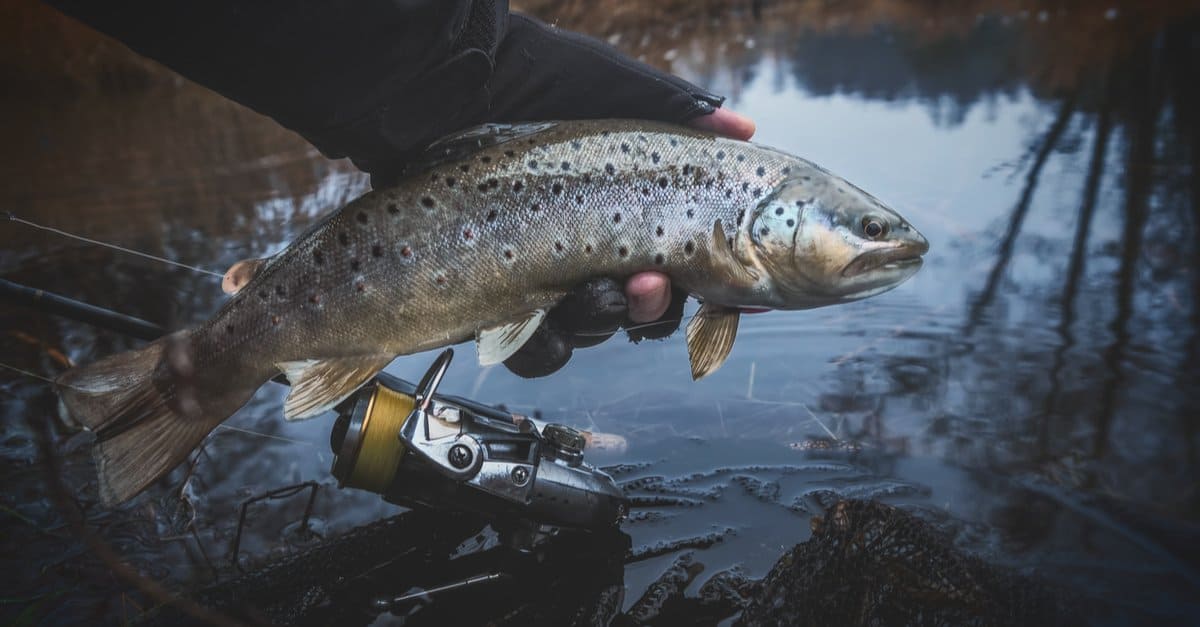
Some of the common names for brown trout include German trout, English brown trout, and European brown trout. Native to Europe and Asia, brown trout thrive in the waters of Connecticut. They are stout fish with olive-brown backs, yellowish-brown sides, pale bellies, reddish-brown spots, and non-forked tails. They have large mouths, with males having the largest. On average, they measure 8 to 20 inches long and can weigh between 1 and 2 pounds, but trophy sizes can easily reach over 20 pounds.
Spawning happens in late autumn and early winter. That means you’ll have the best luck catching these fish during spring and early summer in April through June after the catch-and-release-only season ends. Insect hatches on rivers like the Housatonic and Farmington Rivers attract actively feeding brown trout, which are famous for their carnivorous habits. Keep in mind there is a statewide 9-inch minimum length limit and a daily creel limit of five fish for all brook, brown, rainbow, and tiger trout. However, check the specific regulations for the waters in which you plan to fish.
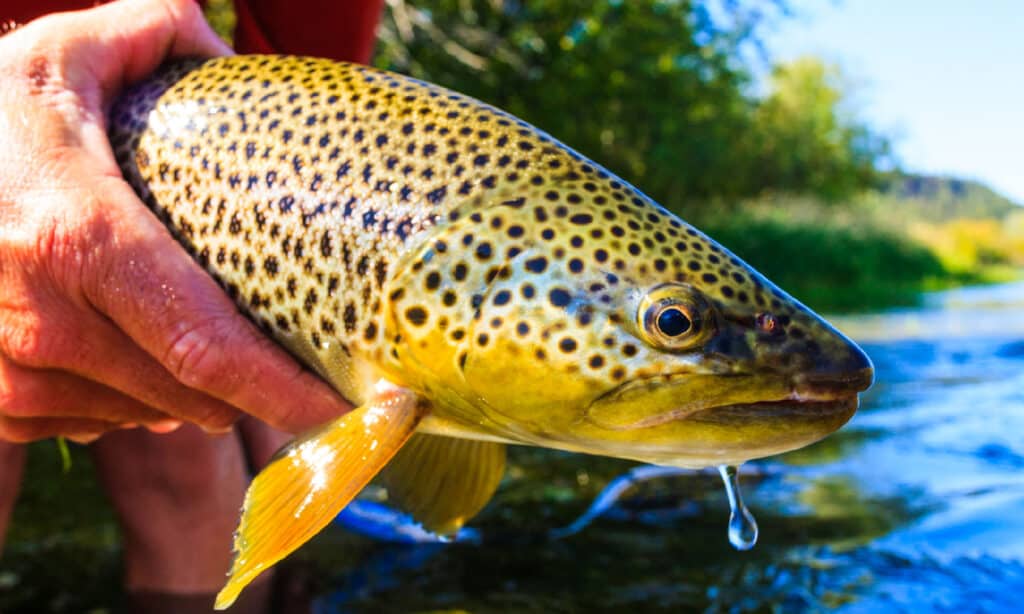
Brown trout are native to Europe and Asia.
©iStock.com/KevinCass
Brook Trout
Common names for brook trout include speckled trout, squaretail, and brookie. Brook trout are native to North America and are admired for their elongated shape and beautiful color pattern. Brook trout are olive-green to brown with pale, wavy lines, yellow spots, red spots circled with blue, a reddish-orange belly, and fins edged in black and white. The tail fin is slightly forked, giving these fish an almost square-shaped tail. Typical stream brookies aren’t known for reaching great sizes, but they can be fun to catch. These fish are commonly 6 to 10 inches, but the state record is 28 inches and 9.2 pounds.
The best times to catch brook trout are spring from April to June when insect hatches peak. Fishing is also good during the spawning season in October and November. Brook trout require cold, clean water and they favor gravel bottoms. Some of the top destinations to fish for brook trout are designated trout parks such as Macedonia Brook State Park and Kent Falls State Park. The Salmon River and Farmington River watersheds are also hotspots. The 9-inch statewide minimum size and 5-fish creel limit also apply to brook trout, but check any specific regulations for the waters in which you plan to fish.
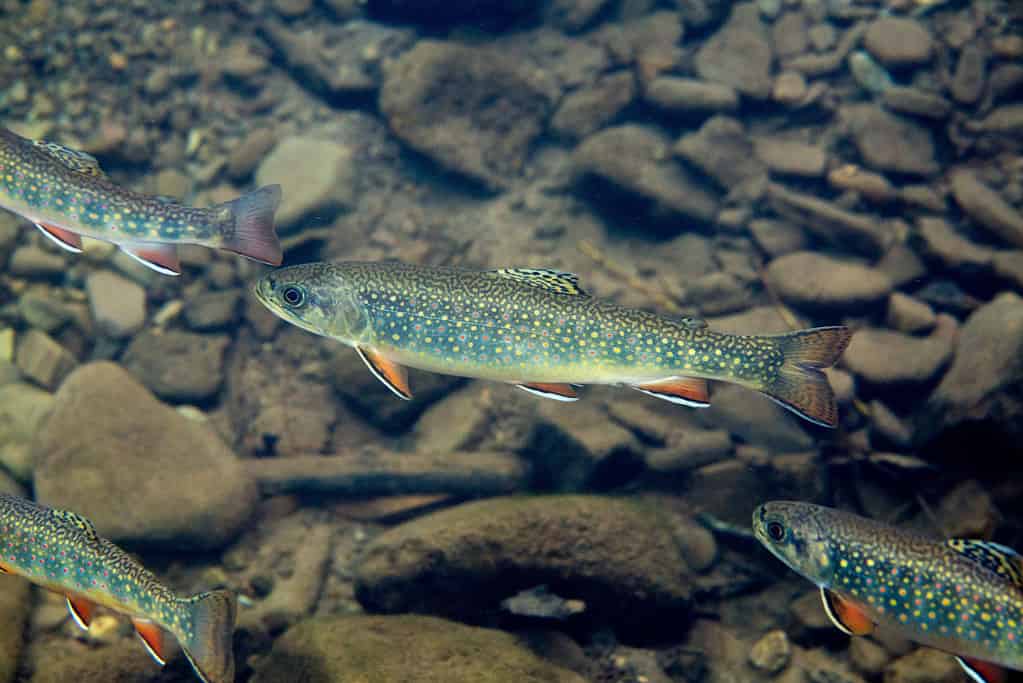
Brook trout require clean, cold water to thrive.
©United States Fish and Wildlife Services / Public domain – Original / License
Atlantic Salmon
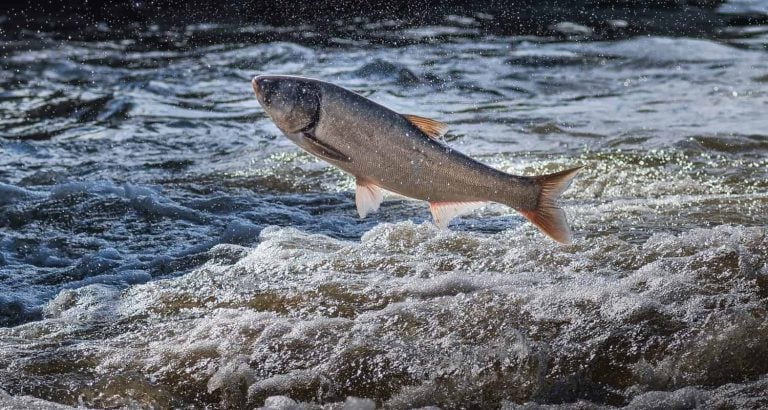
Last on our list of the best fish to catch in Connecticut is the Atlantic salmon. Atlantic salmon nicknames include black salmon, fiddler, and sebago salmon. They have long slender bodies and closely resemble trout. Their backs are usually black, blue, or brown, their bellies are a white or silvery color, and they have dark spots on the body. Landlocked salmon are usually smaller than their saltwater counterparts. In lakes, Atlantic salmon tend to weigh between 2 and 4 pounds, but in salt water, they can reach 8–12 pounds or more.
The best time to fish for Atlantic salmon in Connecticut is late fall to early winter from October through December, as this is right after the state begins its seasonal stocking. Note that the taking of Atlantic salmon is prohibited except in Atlantic Salmon Management Areas and other waters as per the annual Commissioner’s Declaration. Anglers can fish for Atlantic salmon in the Naugatuck River, Shetucket River, Housatonic River, Mount Tom Lake, and Crystal Lake. Check the Connecticut Department of Energy and Environmental Protection’s website for current regulations.
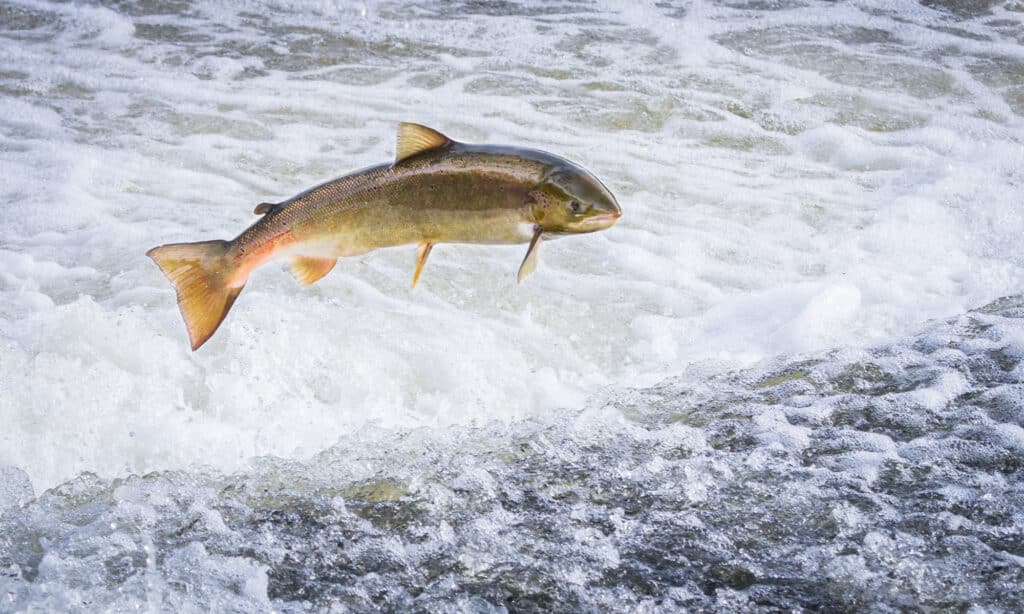
Landlocked Atlantic salmon tend to weigh between two and four pounds.
©Kevin Wells Photography/Shutterstock.com