
Foxes are omnivores that live on every continent except Antarctica. They are characterized by their triangular-shaped ears, pointed snouts, and long bushy tails. There are 12 species in the genus Vulpes, which are the true foxes. However, some animals are commonly called foxes because of their fox-like appearance, even though they are genetically distinct from true foxes. These animals are known as “false foxes.” Rankings include any animal with “fox” in its common name. Join us as we discover the largest foxes in the world, ranked by weight.
#10: Cape Fox
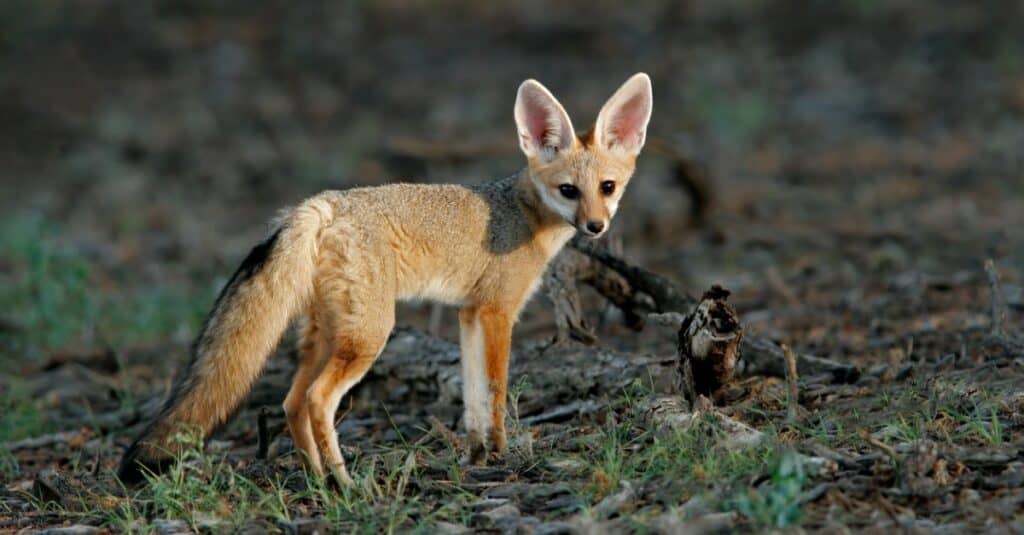
Cape foxes are the only true foxes found south of the equator in Africa.
©iStock.com/EcoPic
Cape foxes (Vulpes chama) weigh between 5.5 and 10 pounds and stand 12 to 14 inches at the shoulder. They are the only true foxes found south of the equator in Africa. Cape foxes are native to South Africa, Zimbabwe, and Botswana, where they generally prefer grassland or lightly wooded regions.
They are usually a silvery gray or fawn color with a black-tipped tail, although their head is a reddish color and their jaw is dark brown. Although they eat some fruits, Cape foxes mainly eat rodents, birds, insects, and reptiles. Cape foxes also sometimes prey on livestock, predominantly young lambs.
#9: Arctic Fox

Arctic foxes have a thick white coat that keeps them warm in tough conditions as well as camouflaging them
©L-N/Shutterstock.com
One of the most distinctive foxes is the Arctic fox. Arctic foxes (Vulpes lagopus) live in the Arctic regions of North America, Greenland, north Asia, and Europe. Wild Arctic foxes are considered to be a small fox, weighing between 6 to 10 pounds and standing about 9 to 12 inches at the shoulder. They are easily recognized by their thick white fur, which not only acts as camouflage in their snowy environment, but also keeps them warm.
Arctic foxes live in one of the coldest environments in the world, surviving in temperatures below -50°C. To endure such cold temperatures, they curl up tightly and tuck their legs and head under their body and tail. This protects their most vulnerable and least insulated areas, as well as creating a smaller surface area so that they lose less heat. Arctic foxes prey on any small animal that they can catch, including lemmings, rodents, seabirds, and fish. They also eat insects, fruit, and carrion.
#8: South American Gray Fox
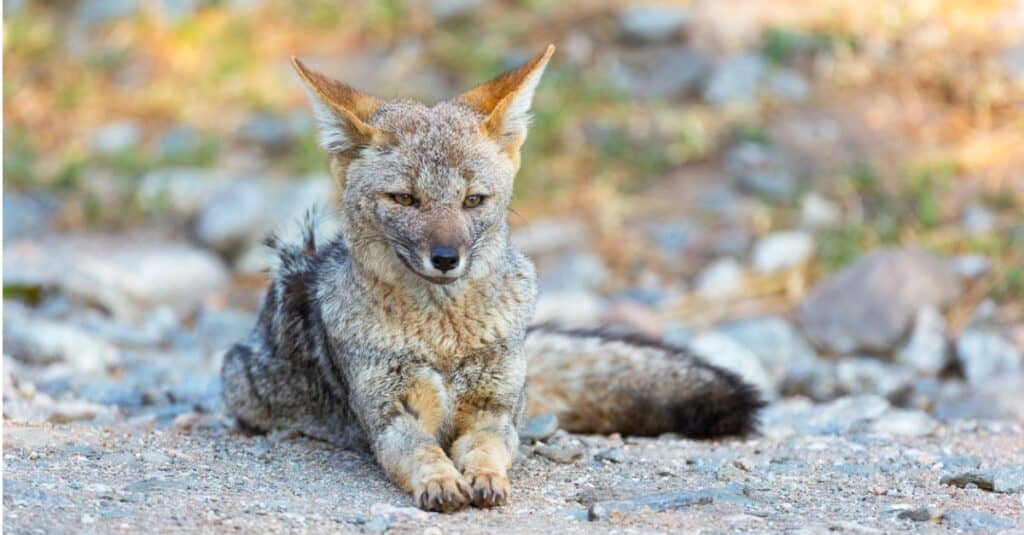
South American gray foxes are often in competition with the much larger Culpeo foxes.
©iStock.com/pablo_rodriguez_merkel
South American gray foxes (Lycalopex griseus), also known as Argentine gray foxes and chillas, are endemic to southern South America where they live either side of the Andes mountains. They live predominantly in Argentina and Chile in a range of habitats, from warm scrublands to cold forest regions. They weigh between 5 and 12 pounds and reach 16 to 18 inches at the shoulder.
South American gray foxes have brindled gray fur with lighter undersides. They have reddish brown on their heads, sides, and legs and their tails may have a dark stripe or tip. They eat a mixture of fruit, rodents, birds, birds’ eggs, arthropods, and small reptiles. Their range overlaps with the much larger Culpeo fox, forcing them to compete for resources.
#7: Bat-Eared Fox
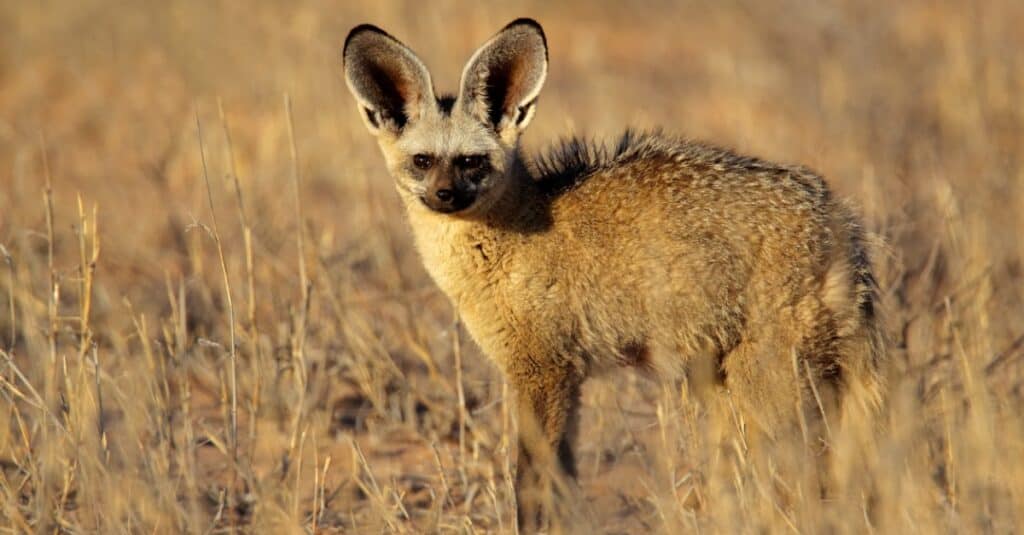
Bat-eared foxes use their large ears to regulate their body temperatures.
©iStock.com/EcoPic
The only member of the Otocyon genus is the bat-eared fox (Otocyon megalotis). Bat-eared foxes weigh between 6 and 12 pounds and stand 12 to 16 inches tall at the shoulder. They are generally tan colored with darker fur on their faces, legs, ears, and tails. These animals are named for their extremely large ears that can reach 5 inches tall. Their ears not only give them excellent hearing, but they also allow the animal to shed heat.
Bat-eared foxes live in eastern and southern Africa. They prefer to inhabit the edges of woodlands or short grasslands that have been grazed by ungulates like zebra and giraffe. Unlike most other foxes, bat-eared foxes prefer a diet of mostly insects. They primarily locate their prey using their hearing, rather than relying on sight or smell.
#6: Tibetan Fox
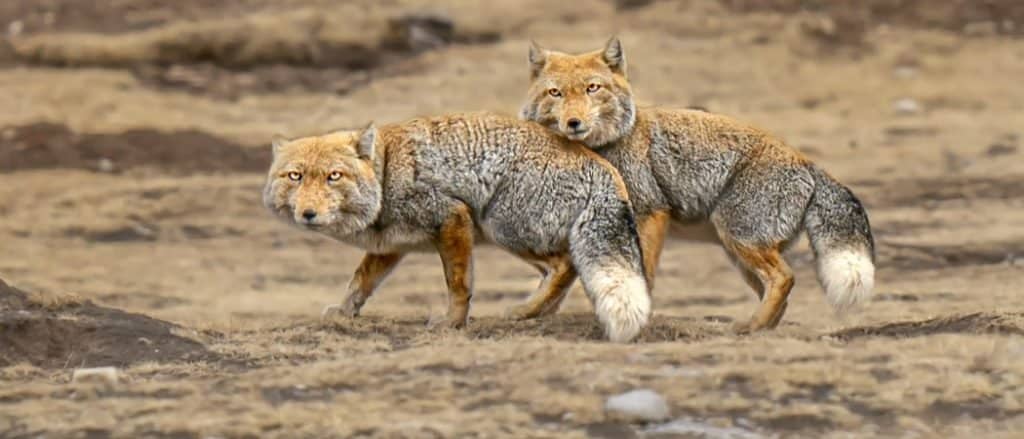
Tibetan foxes live at elevations between 11,500 and 17,100 feet.
©Wang LiQiang/Shutterstock.com
Weighing in at 8 to 12 pounds and standing 12 to 14 inches at the shoulder is the Tibetan fox. Tibetan foxes (Vulpes ferrilata) are endemic to the Tibetan plateau in China and the Ladakh plateau in India. They prefer grasslands and hills at elevations between 11,500 and 17,100 feet. Tibetan foxes are usually tan or gray and have yellowish-orange coloring on their backs, legs, and faces. They are noted for having a narrower muzzle and jaw than other foxes, plus longer canine teeth.
Tibetan foxes prey on rodents, hares, lizards, and especially plateau pikas. They may also eat carrion. Although many foxes are nocturnal, Tibetan foxes prefer to hunt during the daytime because some of their prey animals are diurnal. Mated pairs of Tibetan foxes often live and hunt together, and their kits also stay with them until they are around ten months old.
#5: Gray Fox
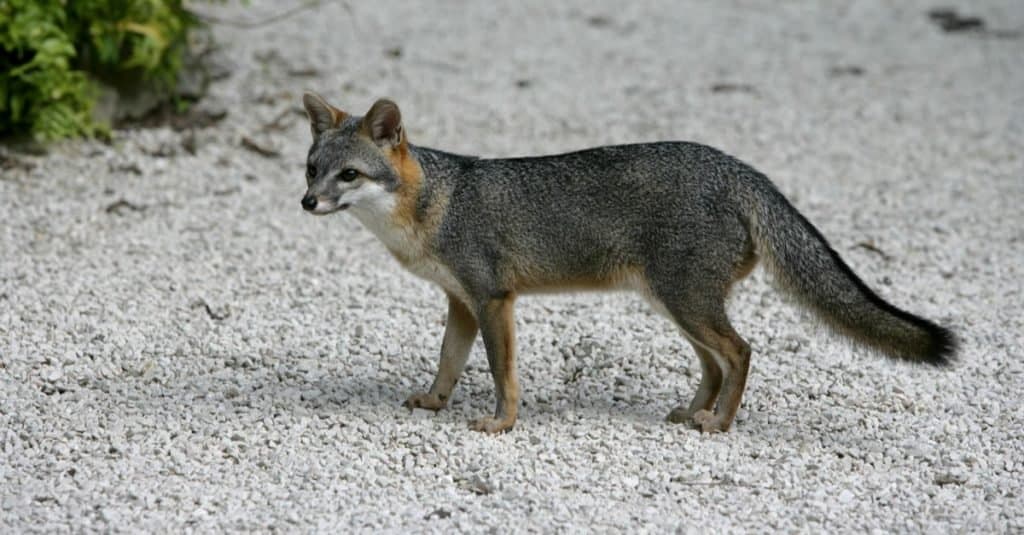
Their long claws make gray foxes one of the few Canid species capable of climbing trees.
©Erni/Shutterstock.com
Gray foxes (Urocyon cinereoargenteus) live in Central and North America in rocky and wooded regions. They were once the most common fox in the U.S., but the red fox is now more common, although gray foxes are still widespread. Gray foxes typically weigh between 7 and 14 pounds and reach between 12 to 15 inches tall at the shoulder. They are mostly gray with reddish-brown on their sides, legs, and heads. They have pale throats and chests and their tails have a distinctive black stripe with a black tip.
Although gray foxes have the typical fox-shaped ears and muzzle, they have longer and more curved claws which allow them to climb trees. They also have oval-shaped pupils, unlike the slit-shaped pupils of most other foxes. Gray foxes are solitary hunters and prey on birds, rodents, voles, rabbits, and insects.
#4: Pampas Fox
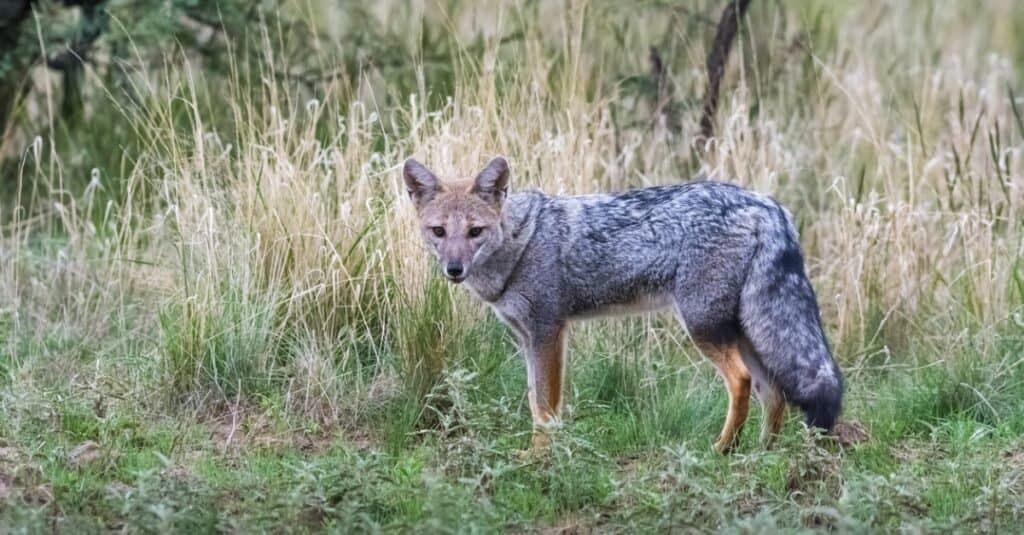
Pampas foxes are found in the Pampas region of South America.
©iStock.com/Foto4440
As their name suggests, Pampas foxes (Lycalopex gymnocercus) can be found in the Pampas region of South America, which primarily includes parts of Argentina, all of Uruguay, and parts of Brazil. Pampas foxes inhabit low elevation grasslands, plains, woodlands, and wetlands. These foxes weigh between 5 and 17 pounds and can reach about 15 to 17 inches at the shoulder. They are grey with red on their heads, necks, and legs. They also have white underparts and a darker muzzle and tail tip.
Pampas foxes mostly live solitary lives, except when forming monogamous pairs to breed and raise their young. They are opportunistic predators with a varied diet depending on season and geographical region. Their diet includes vertebrates such as rodents, hares, birds, and armadillos. They also eat insects, fruit, and carrion.
#3: Crab-Eating Fox
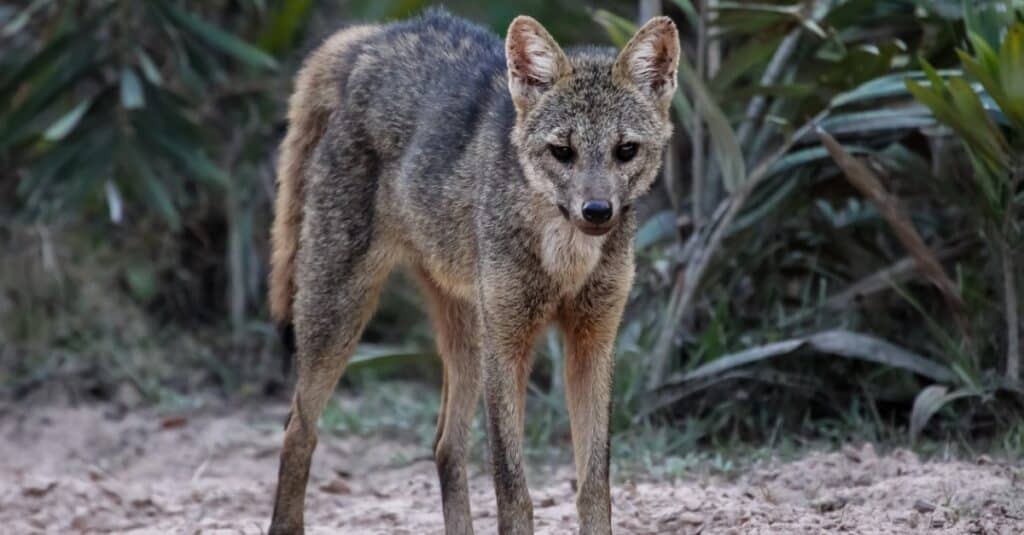
Crab-eating foxes hunt for crabs in the floodplains of central South America.
©iStock.com/Uwe-Bergwitz
The only member of the Cerdocyon genus is the crab-eating fox (Cerdocyon thous). Crab-eating foxes are mainly grayish brown with red on their faces and legs and black-tipped ears and tails. They are a medium-sized fox, weighing from 10 to 17 pounds and reaching height of approximately 14 to 17 inches at the shoulder. These foxes live in the central region of South America in savannas and forests, as well as along woodland river banks.
As their name suggests, crab-eating foxes primarily eat crabs, which they hunt for in the muddy floodplains. They also eat rodents, turtles, turtle eggs, crustaceans, lizards, and insects. However, their diet is determined by the season. They eat more crustaceans and crabs during the wet season, and more insects during the dry season.
#2: Red Fox
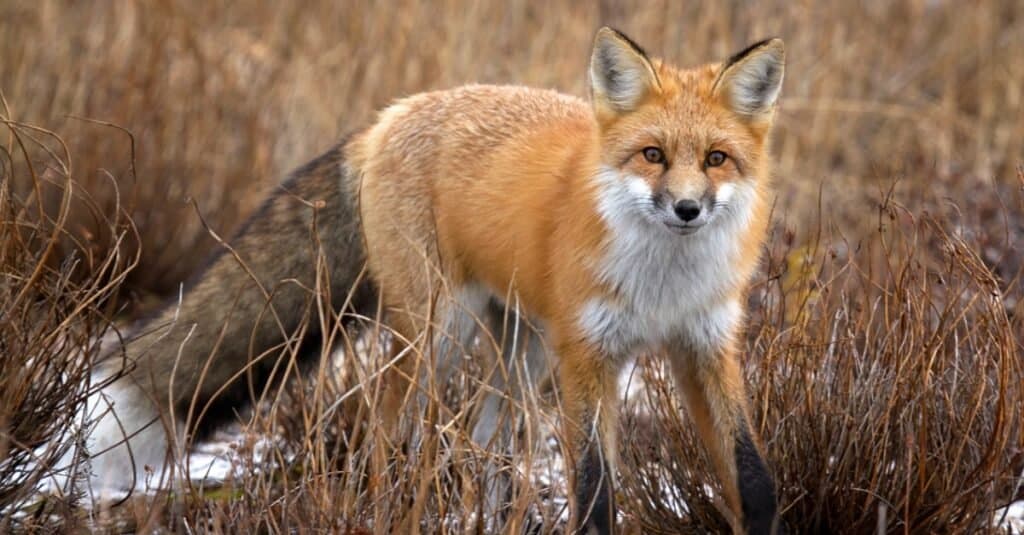
Red foxes are the most widespread of all fox species.
©iStock.com/Lynn_Bystrom
The largest true fox species in the world is the red fox (Vulpes vulpes), weighing from 5 to 31 pounds, depending on the subspecies. Red foxes stand about 14 to 20 inches at the shoulder. They are the most common and widespread of all foxes with over 40 subspecies. Red foxes are characterized by their reddish bodies, as well as white chests and throats. They have dark legs and ears and a brownish tail with a white tip.
Red foxes have one of the largest ranges and are found across Europe, North America, northern Africa, Asia, and even as far north as the Arctic Circle. These foxes are highly adaptable and live in a wide range of habitats. Like all other foxes, red foxes are omnivores and eat a wide range of fruit, insects, and animals, depending on the resources that are available in their habitat.
#1: Culpeo
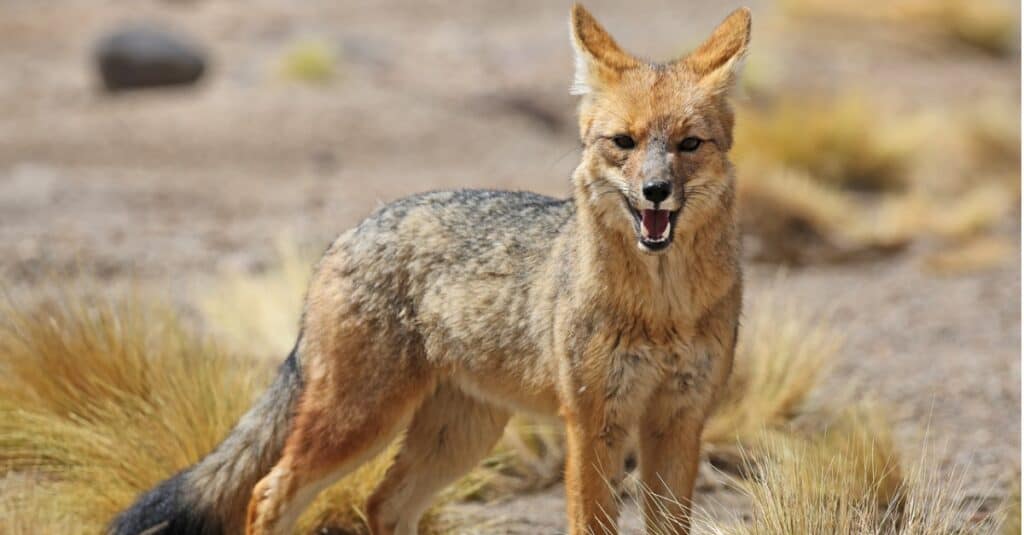
Culpeo foxes are often found in the Andes mountains.
©iStock.com/tane-mahuta
Culpeos (Lycalopex culpaeus) are the largest foxes, weighing 11 to 31 pounds. There are currently no authoritative height measurements, but some sources suggest they can reach 20 inches or taller at the shoulder. They live in western South America across a wide range of habitats, including deserts, rainforests, savannas, and grasslands. They are also frequently found on the western side of the Andes mountains, hence their other name, the Andean fox.
Culpeos have a reddish-brown body and legs. They have a white chin and a gray tail with a black tip. They are opportunistic predators and eat a range of rodents, birds, rabbits, and lizards. Culpeos also often prey on sheep and as a result they have sometimes been hunted. However, they also play an important role in controlling populations of introduced rabbits.