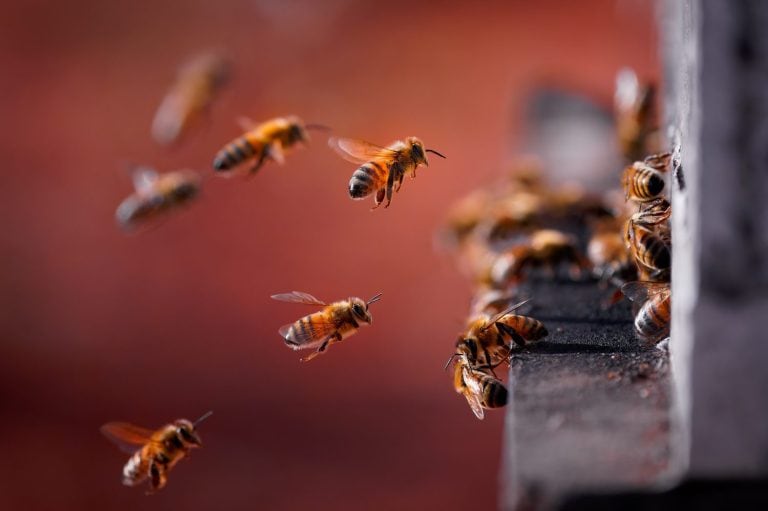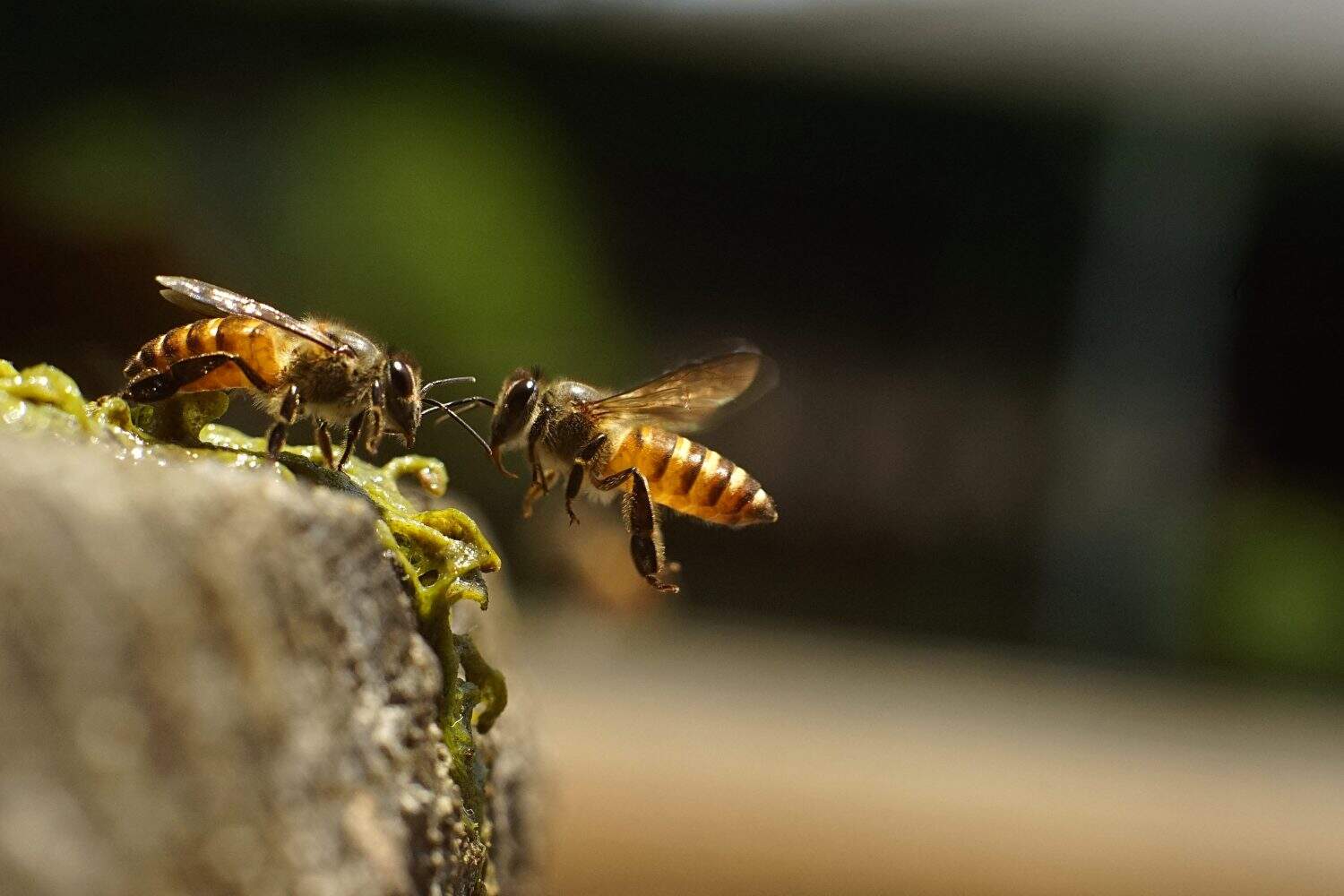

Bees may be tiny creatures, but they are incredibly complex and engage in intricate yet shifting social dynamics. While some bee species have clearly defined roles, others are more flexible, with individuals able to perform multiple tasks as needed. To accomplish these feats, bees use detailed and highly symbolic forms of communication.
While humans have an auditory language and a written one to match, bees talk to each other through more subtle channels. Interestingly, their forms of communication can be beautiful, involving memorable odors and even artful dances. Scientists, however, still debate how exactly these methods work. Let’s learn more about the fascinating forms of bee communication.
Odor Abounds
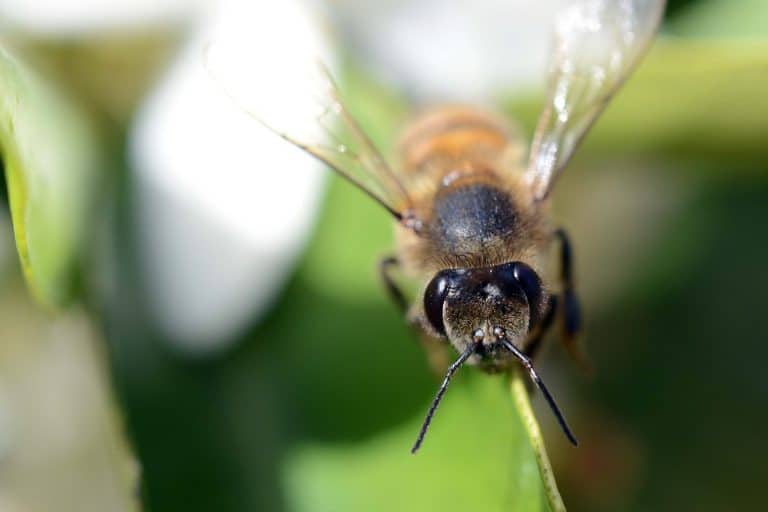
It’s theorized that bees utilize odors and pheromones to communicate with each other.
©duckeesue/Shutterstock.com
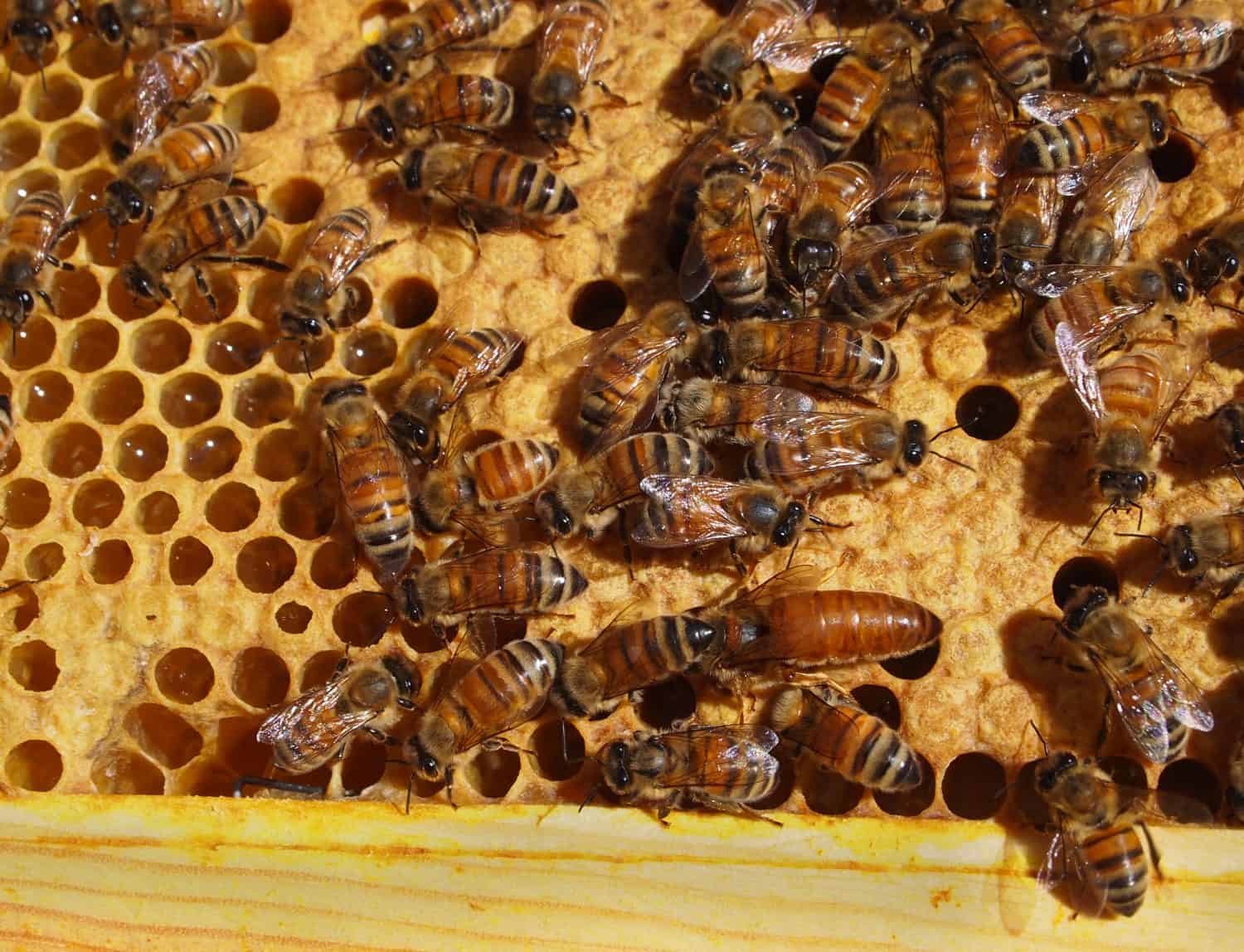
Different bees in the hive produce different pheromones to send signals. The queen produces the “queen mandibular pheromone.” This is arguably the strongest in the hive because it keeps worker bees from being able to reproduce. It also maintains social order and ensures that each type of bee (workers, drones) remains engaged in its specialized duties.
However, honey bees in general produce pheromones. When a bee stings someone or something, it releases an “alarm pheromone” that warns other bees of nearby danger. In response, fellow bees may swarm or sting the perceived threat.
There’s also something called “Nasonov pheromones.” These are produced by worker bees to guide others to new food sources and potential nest locations. These pheromones are so effective that scientists have used them to direct worker bees to crops that need pollination.
Besides pheromones, certain key odors help bees. The broods inside hives emit odors, with eggs, larvae, and pupae giving off slightly different smells. These smells help workers provide proper care and also alert them to larvae that may be sick or unhealthy. There is also a general hive scent which allows members to discern friend from foe.
Dance the Hive Away
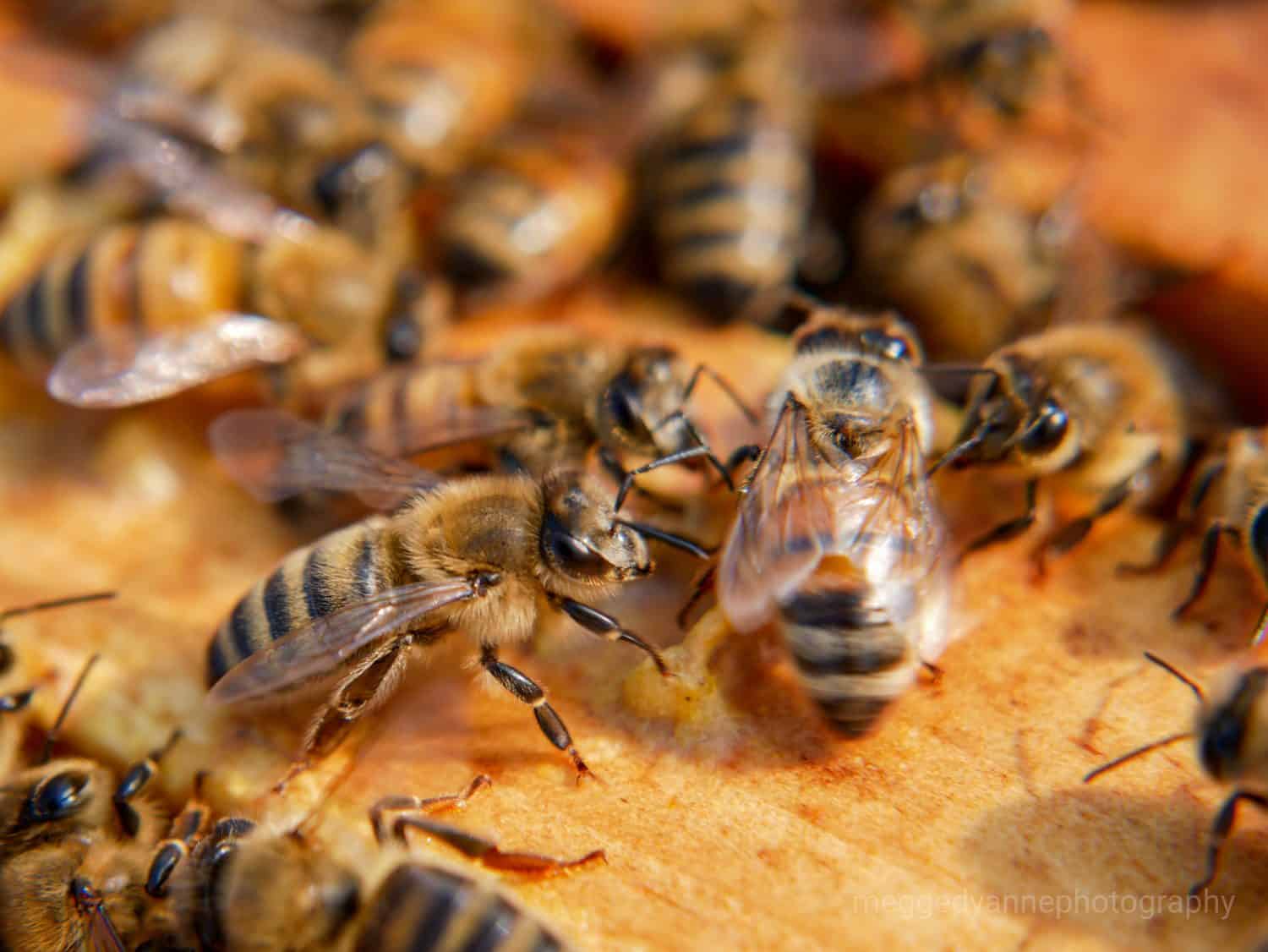
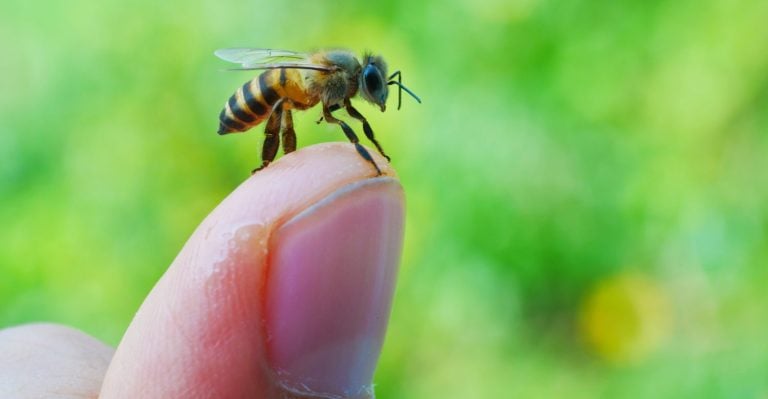
The blurry bee pictured off-center is engaged in a waggle dance.
©MeggedyannePhotography/Shutterstock.com
One of the more fascinating communication methods employed by bees is dancing. It has long been known that Western honey bees perform a maneuver called the waggle dance when they return to the hive. The returning worker bee sets up shop on the honeycomb and dances its heart out. It makes circular patterns with its rump, sometimes moving in waggle or zigzag patterns.
This behavior was described by Aristotle in his treatise “Historia Animalium” over two thousand years ago. It took until 1947 for ethologist Karl von Frisch to definitively correlate these waggle dances to food sources. He found that the twists and turns of a worker bee’s movements corresponded to the distance of food from the hive. Furthermore, von Frisch found that the more passionate the dance, the better the food source. This bit of detective work earned him the 1973 Nobel Prize in Physiology or Medicine.
In the ensuing decades, scientists realized that all species of honey bee engage in the waggle dance, each with a signature style that correlates with food distance. Upon close inspection, the waggle dance is pretty self-explanatory. When Western honey bees dance, for example, a waggle oriented 45° up to the right indicates a food source 45° to the right of the direction of the sun.
Buzz Off
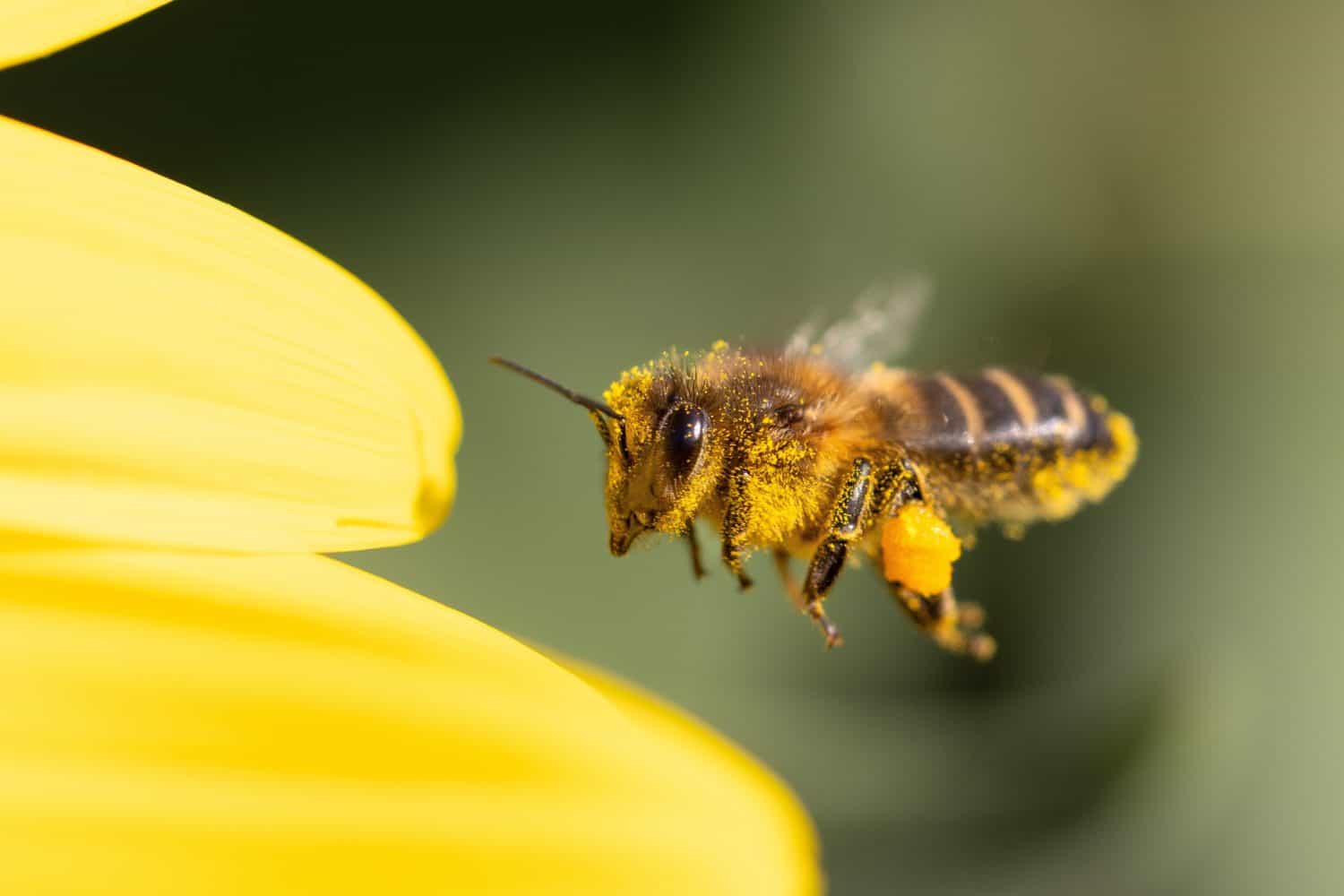
Bees will buzz to both warn each other of threats and direct each other to duties.
©Chedko/Shutterstock.com
Pheromone production and the so-called ‘butt shakes’ may seem subtle, but the vibrational communications used by bees are even more nuanced. All bees in the hive use this vibrational language, with specific buzzes used by different castes to convey distinct messages.
Workers will “pipe” or vibrate against the queen in quick pulses to urge more egg laying and to prepare for swarming to a new colony. Queens can also engage in “piping,” producing a high-pitched buzz, but this usually occurs only when two virgin queens are present in the same hive. It’s less of a collaboration and more of a challenge before they fight for the hive’s top spot.
Workers also vibrate with each other, which can serve as an alarm clock or a ‘hurry up’ signal, prompting others to begin foraging, guarding, or nursing. What’s more, workers can vibrate against the hive’s honeycomb. This acts like an intercom system to the rest of the inhabitants. Using this primitive intercom, bees can signal each other to build more combs, move larvae, or alert the colony to possible threats.
The buzzing you hear near your ear when you get too close to a bee may not mean much to you, but it indicates that bees are active communicators. While sound may be the most obvious form of speaking, there are several fascinating layers to bee communication. Without it, they wouldn’t be able to coordinate and control such complicated, heavily populated hives.