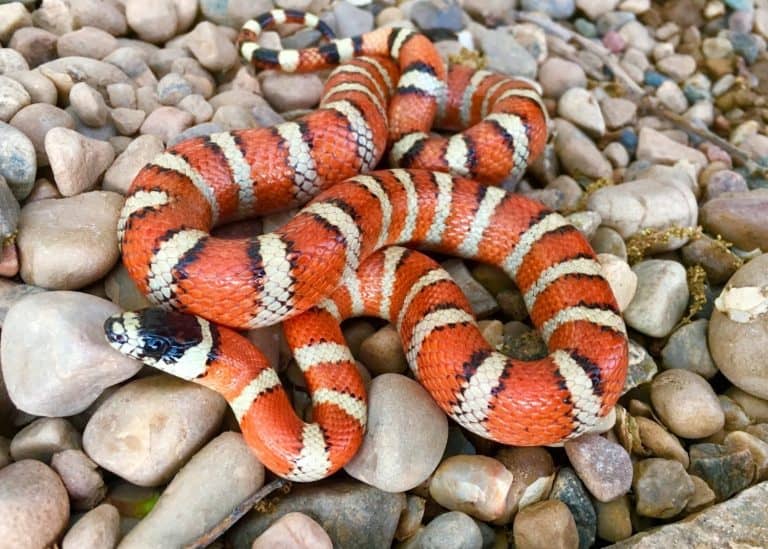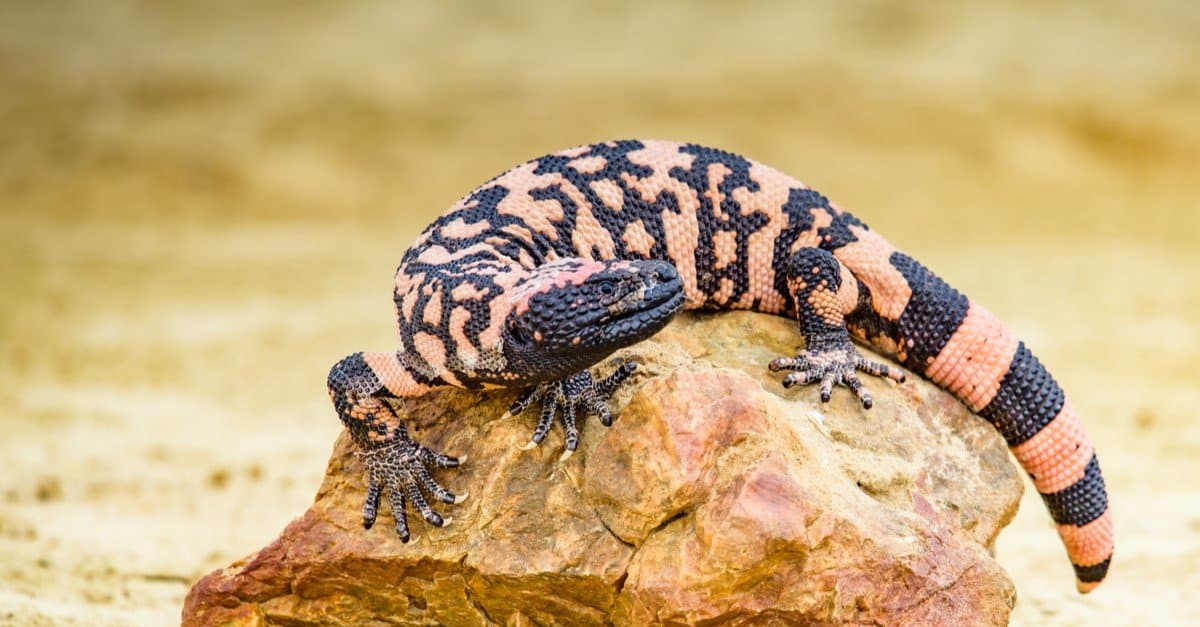

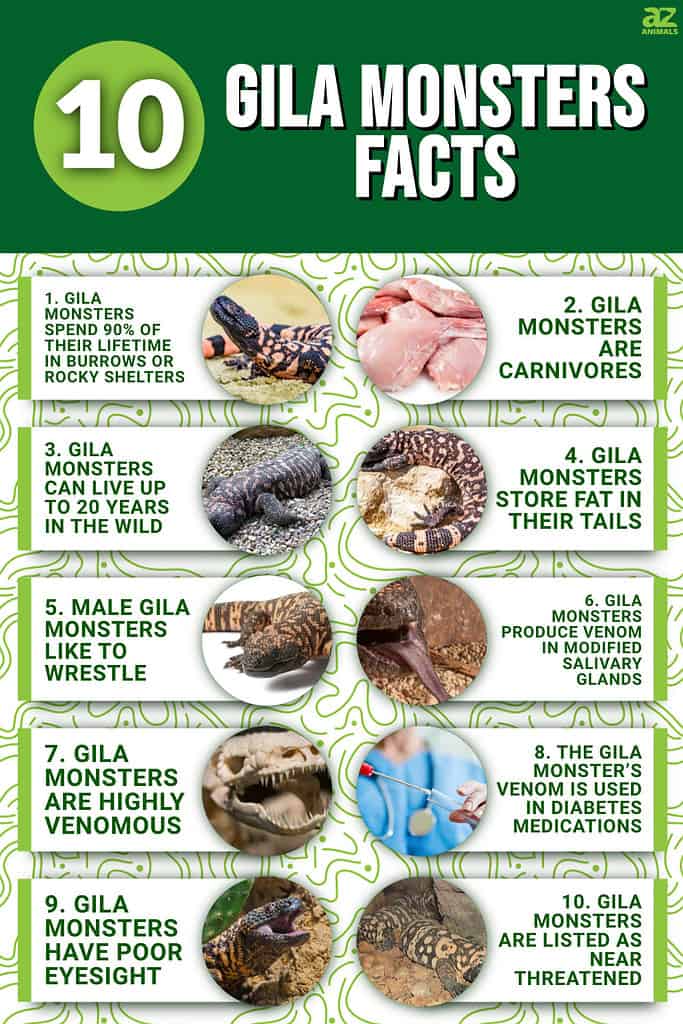
Despite their name, the Gila monster (Heloderma suspectum) is not actually a monster at all. Instead, it is the largest lizard native to the United States. They are also the only venomous lizard native to the US. Gila monsters vary in color, ranging from yellow with black bands to pink or orange with black bands. Their bodies are covered with bumpy-looking scales called osteoderms. Their patterned skin is thought to be a form of camouflage that keeps both predators and prey from seeing them.
They have a fearsome reputation, which has historically led to some of them being killed. Here are 10 incredible Gila monster facts to help you understand these fascinating animals.
1. Gila Monsters Spend 90% of Their Lifetime in Burrows or Rocky Shelters
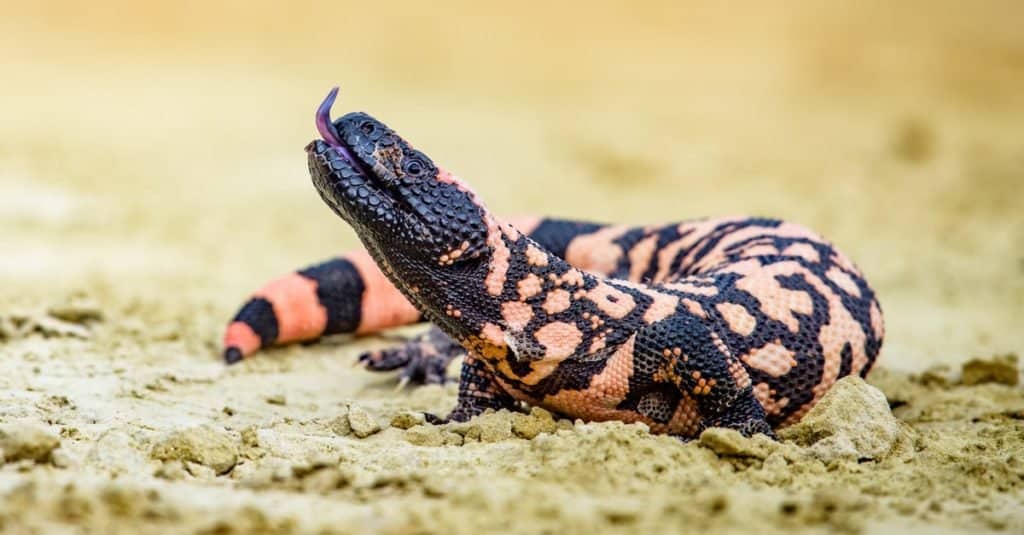
Gila monsters brumate in their burrows during the cold winter months until spring.
©Vaclav Sebek/Shutterstock.com
Gila monsters spend most of their time hidden below the ground — approximately 90% of their time is spent in rocky shelters or in burrows under the ground. Gila monsters brumate in their burrows during the cold winter months until spring. They shift to different shelters every four to five days during the summer. They are active early in the morning during spring and summer to escape the day’s heat. They are typically solitary but may gather in communal areas and share the shelter.
2. Gila Monsters Are Carnivores
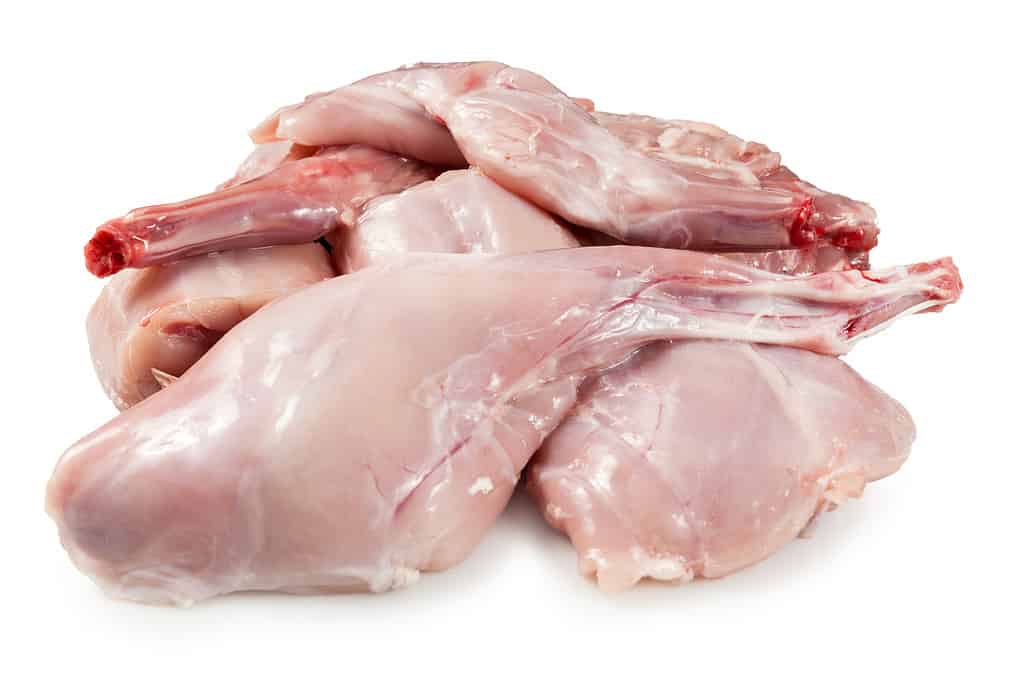
Gila monsters will sink their teeth into most smaller animals.
©Studioimagen73/iStock via Getty Images
Their diet primarily consists of insects, smaller lizards, frogs, carrion, mice, ground squirrels, reptile eggs, and small birds. They are predominantly carnivores. Three to four extensive meals during spring give Gila monsters enough energy for a whole season. However, they will still feed whenever they come across any suitable prey. While adults eat up to one-third of their total body weight in one meal, young ones may swallow up to 50% of their body weight in a single meal.
3. Gila Monsters Can Live Up to 20 Years in the Wild
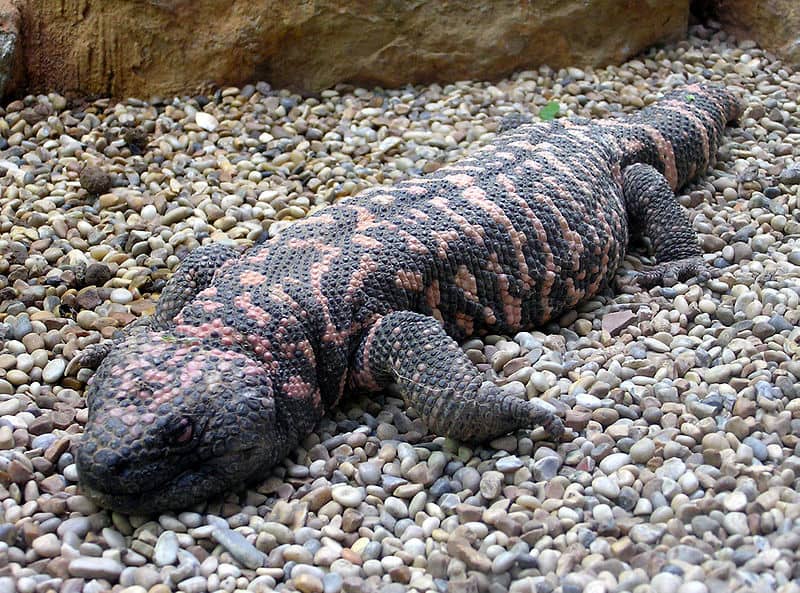
Gila monsters live for approximately 20 years in the wild.
©Arpingstone, Public domain, via Wikimedia Commons – Original / License
The Gila monster has an average lifespan of 20 years in the wild, although they can live up to 35 years in captivity. These lizards are highly vulnerable to predation by other carnivores such as badgers, coyotes, and large birds of prey.
4. Gila Monsters Store Fat in Their Tails
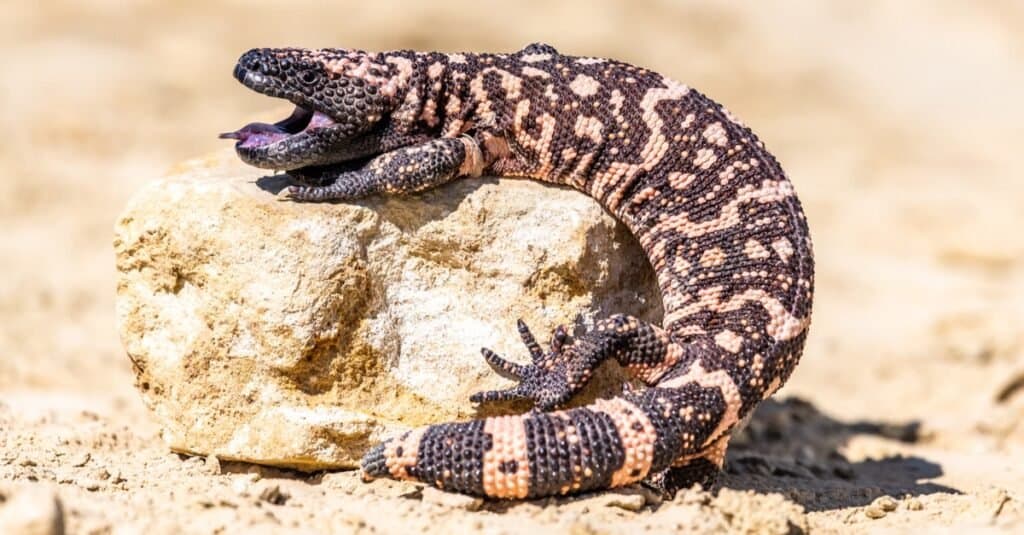
Gila monsters have thick, cylindrical tails that store large amounts of fat.
©Vaclav Sebek/Shutterstock.com
Gila monsters have thick, cylindrical tails that store large amounts of fat. They mainly use this trait during the winter because they brumate from November to March. This adaptation is also essential for their survival when the food supply is diminished.
5. Male Gila Monsters Like to Wrestle
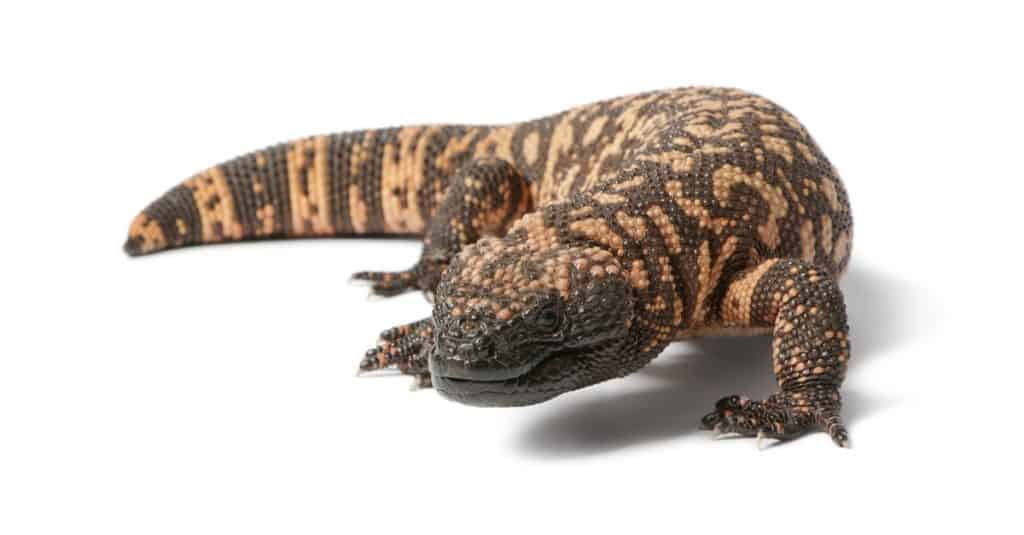
These lizards will fight to assert dominance when trying to win a female’s favor.
©Eric Isselee/Shutterstock.com
Little is known about the social behavior of Gila monsters, but males have been observed engaging in serious fights during the mating season. The dominant male lies on top of the subordinate and pins him using his front and hind limbs. Both lizards try as much as possible to gain the dominant position. They arch their bodies and push against each other while twisting around in an attempt to defeat the other. Males with greater strength and endurance are thought to enjoy greater reproductive success.
6. Gila Monsters Produce Venom in Modified Salivary Glands
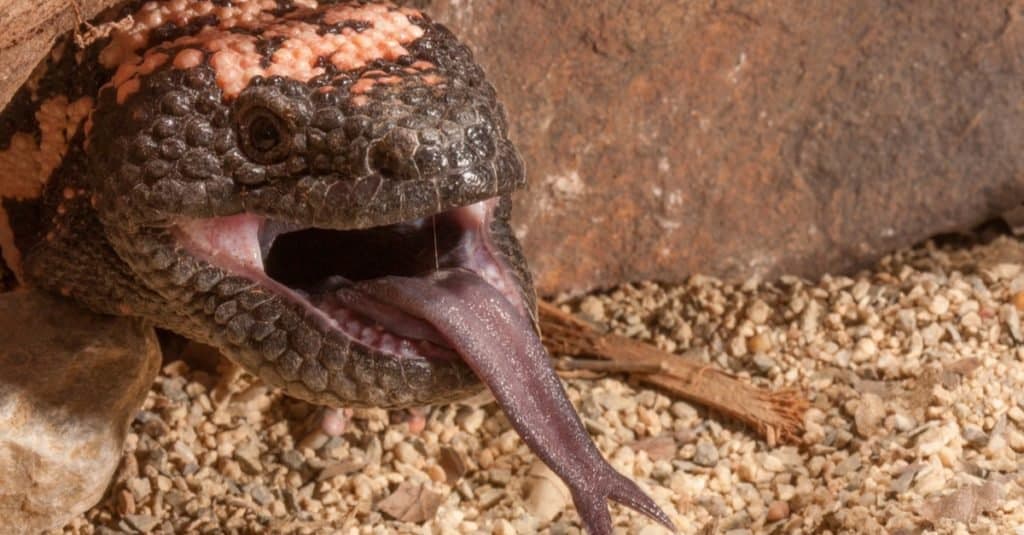
Gila monsters produce venom in modified salivary glands in the lower jaw.
©K Hanley CHDPhoto/Shutterstock.com
Rather than producing venom in the upper jaw, Gila monsters produce venom in modified salivary glands in the lower jaw. Gila monsters lack the strong musculature in the glands above their eyes needed to inject the venom forcibly. Instead, the toxin is propelled from the gland to the teeth and chewed into the victim.
7. Gila Monsters Are Highly Venomous
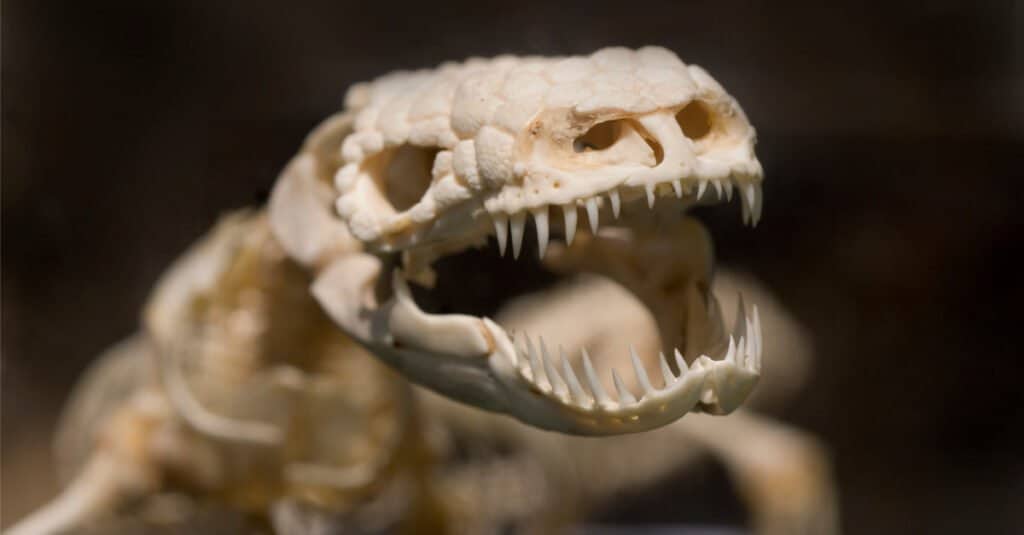
Despite some myths, a Gila monster’s bite isn’t likely to be lethal to humans.
©iStock.com/Windzepher
The Gila monsters’ venom is considered toxic. The venom contains phospholipase A, hyaluronidase, enzymes, and serotonin. Once the Gila monster bites, it generally holds on and injects more of the toxin into the victim. However, Gila monsters don’t typically pose a threat to humans. They are timid animals and tend to avoid humans. However, they have a fearsome reputation. Many myths surround these heavy-bodied lizards, including that their breath is toxic enough to kill humans; they spit venom like the cobra and can leap several feet into the air to attack. These myths are all untrue, but the Giant Gila Monster film further contributed to their exaggerated reputation, though a Mexican beaded lizard portrayed the titular monster, not a Gila monster. The truth is that Gila monsters only attack when provoked, and their bites cause pain, edema, bleeding, nausea, and vomiting.
8. The Gila Monster’s Venom Is Used in Diabetes Medications

Gila monster venom has been used in medicine.
©iStock.com/dusanpetkovic
The U.S. Food and Drug Administration approved a component of Gila monster venom in 2005 for the treatment of type 2 diabetes, known as Glucagon-like peptide-1 receptor agonists. In the same year, the anti-diabetic drug exenatide, popularly known as Byetta, was introduced into the pharmaceutical market.
9. Gila Monsters Have Poor Eyesight
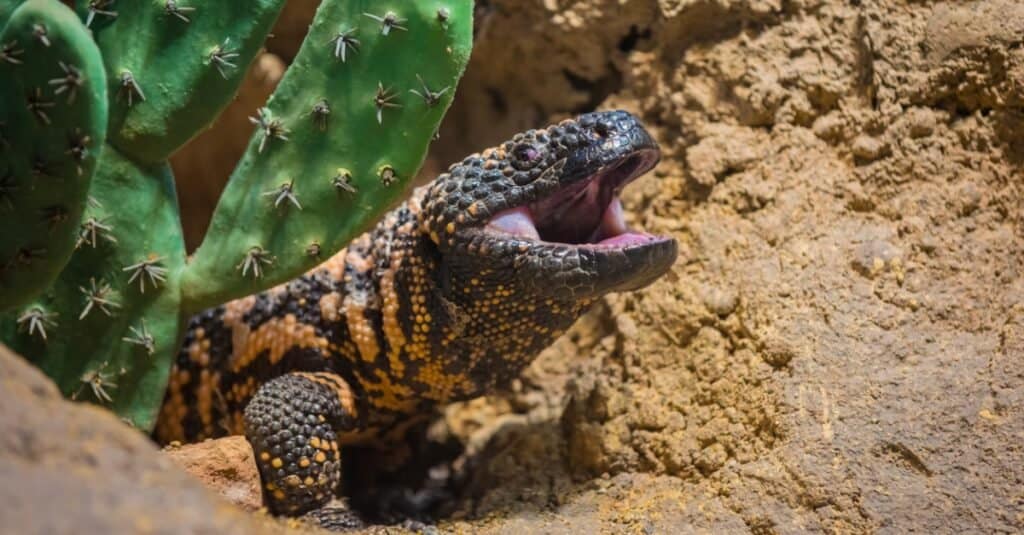
Gila monsters rely immensely on their acute sense of smell to locate prey.
©iStock.com/kwiktor
Gila monsters do not have good eyesight. Instead, they rely mainly on their acute sense of smell to locate prey, especially reptile eggs. Their powerful tongue serves as an orientation and picks up scent molecules as chemical information, which is then immediately transported to the brain to be decoded. Their sense of smell is so strong that they can discover the exact location of eggs buried six inches deep and accurately follow a trail made by a rolling egg.
10. Gila Monsters Are Listed as Near Threatened
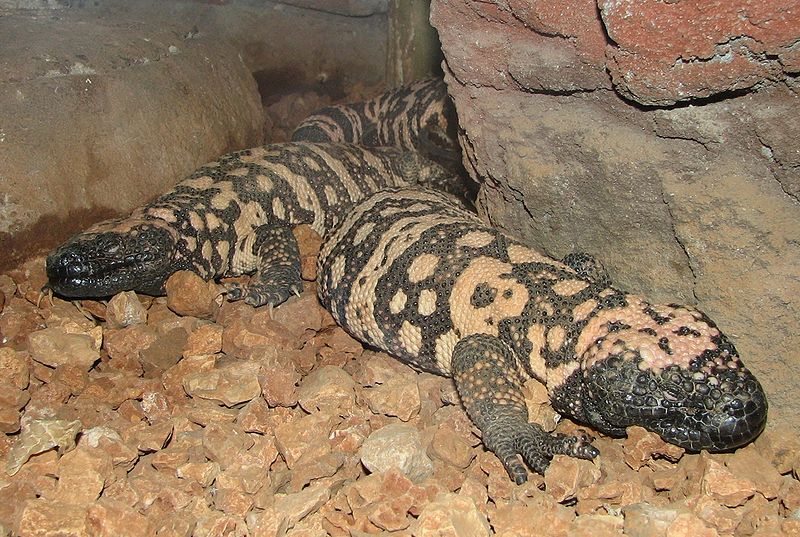
Gila Monsters are under threat.
©Ltshears, Public domain, via Wikimedia Commons – Original / License
The IUCN classifies Gila monsters as near threatened. They face the threat of increased habitat destruction due to urbanization and agricultural development. Gila monsters became the first venomous animals to be legally protected in 1952. They are still protected in all states of their distribution.