

Quick Take
- Most owners start housebreaking too early, and a mini goldendoodle's brain and bladder are only finally ready to make it stick at a specific age. See the housebreaking timeline →
- Mini goldendoodles keep growing longer than most small dogs, and the timeline might surprise you. See when growth stops →
- Switching your pup to adult food at the wrong time can backfire fast. Find out what actually triggers the right moment. Find the right switch time →
- Mini goldendoodles are hyper by nature, but there's a specific age when that energy finally shifts. Most owners don't expect it when it happens. See when energy shifts →
Goldendoodles were created by mixing a poodle with a golden retriever. Like their poodle parent, goldendoodles come in different sizes. The mini goldendoodle is a pint-sized version of this beloved pup. They have a generally hyper disposition until they are 18 months old, making them extremely playful puppies. With a little socialization and obedience training, the mini goldendoodle is easy to love and enjoy as it grows. Read on to learn more about mini goldendoodle milestones.
Mini Goldendoodle Growth Chart by Age
Your specific dog’s size varies with factors like exercise, diet, and genetic composition. In this chart, look at the most likely weights for mini goldendoodles from birth to age 2. Smaller dogs tend to reach their full size by around their first birthday, although one can be certain of a dog’s full size by age 2.
| Age | Male Weight | Female Weight |
|---|---|---|
| Birth | 1 pound | 1 pound |
| 1 Month | 1.5 pounds | 1.5 pounds |
| 6 Weeks | 2 pounds | 2 pounds |
| 2 Months | 2-4 pounds | 2-4 pounds |
| 3 Months | 4-6 pounds | 4-6 pounds |
| 4 Months | 6-10 pounds | 6-10 pounds |
| 5 Months | 10-14 pounds | 10-14 pounds |
| 6 Months | 16-18 pounds | 12-14 pounds |
| 7 Months | 18-22 pounds | 14-16 pounds |
| 8 Months | 22-26 pounds | 16-20 pounds |
| 9 Months | 26-30 pounds | 20-24 pounds |
| 10 Months | 30-32 pounds | 24-25 pounds |
| 11 Months | 32-33 pounds | 25-26 pounds |
| 12 Months | 33-35 pounds | 25-30 pounds |
| 2 Years | 35-40 pounds | 28-32 pounds |
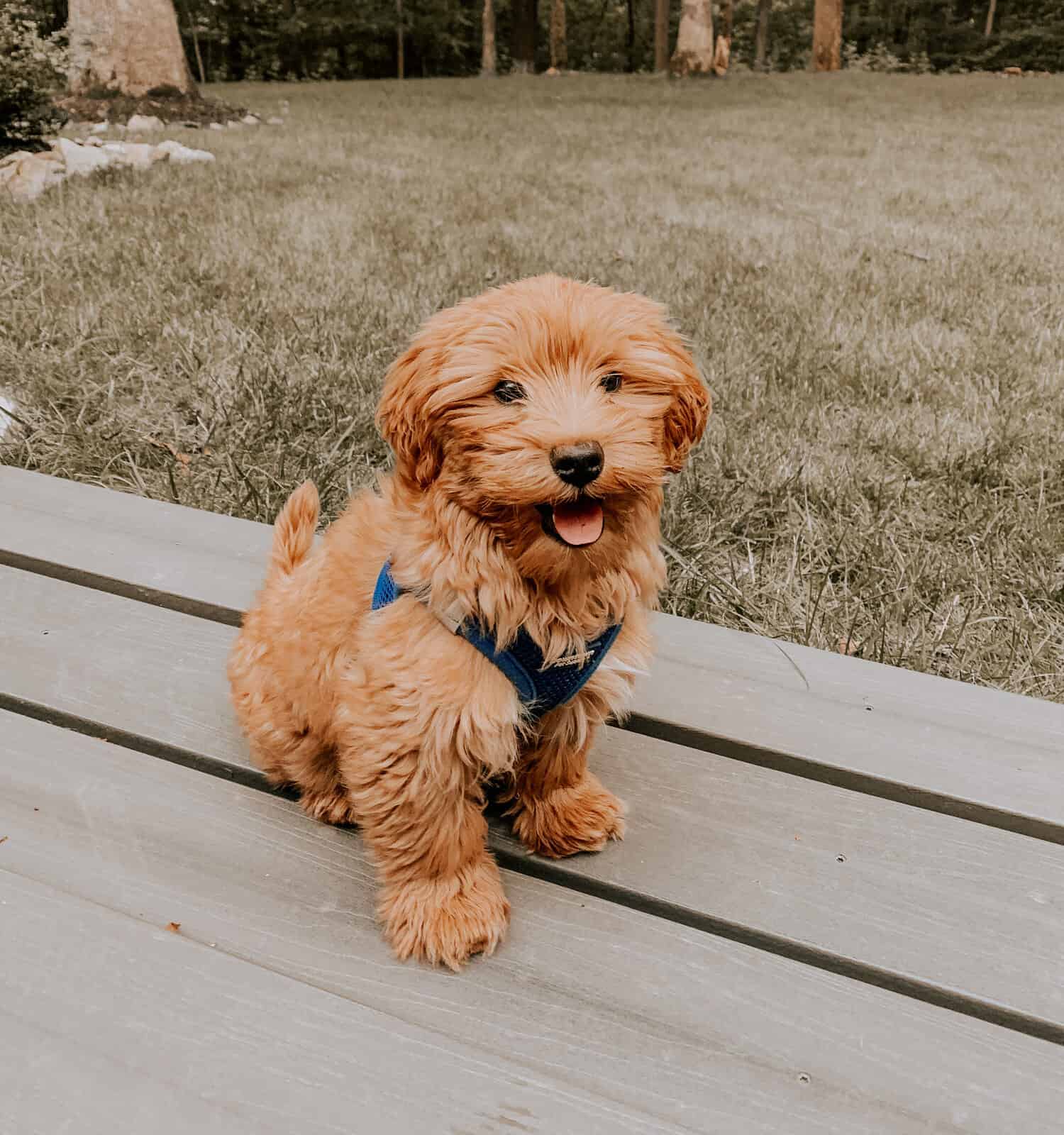
Mini goldendoodle puppies don’t even reach 10 pounds until they are 4 months old.
©JoshHard/Shutterstock.com
When Will My Mini Goldendoodle Stop Growing?
While the mini goldendoodle keeps growing until it is about 2 years old, they slow down after their growth spurt at a year old. To nourish this growing dog properly, give them an ounce of water for every pound they weigh. For example, a 15-pound dog would need 15 ounces of water daily. If you find your dog drinking more, speak with your vet to be tested for the cause of the excess intake.
At 8-12 weeks, your miniature goldendoodle only needs about a half-cup of food a day. By the time they are 4 months old, they need 1 cup of food, broken up into 3 daily meals. Their number of meals drops to twice daily by 6 months old, splitting up to 1.5 cups of food. Once they are a year old, they need 2.5 cups of food, split between two meals each day.
To monitor health conditions that typically impact goldendoodles, bring your adult dog to the vet annually. Once your dog is 7 years old, they need to see their vet twice a year instead.
How Big Will My Mini Goldendoodle Be When It’s Fully Grown?
A mini goldendoodle reaches adult size by the time they are about 2 years old, growing very little after this age. According to the Goldendoodle Association of North America, a mini goldendoodle should measure over 14 inches but under 17 inches at the withers. Breed standards also note that they typically weigh 16-35 pounds. However, some dogs, especially males, may reach or exceed 40 pounds. Diet and exercise also play a role in your dog’s specific size.

Mini goldendoodles typically only reach up to 35 pounds.
©SoySendra/Shutterstock.com
When Should My Mini Goldendoodle Be Spayed or Neutered?
Deciding to neuter or spay your mini goldendoodle should always be discussed with your veterinarian first. As a general rule, most vets recommend that sterilization happens before the first heat for females, which happens between 6-8 months old. With each cycle, a female pup increases her risk of certain cancers, not to mention pregnancies. Male dogs can typically be neutered from 6 months. Speaking with your vet first allows you to determine if any health concerns could prevent your dog from being sterilized.
When Should My Mini Goldendoodle Be House Broken?
Experts note that as a general rule, puppies can only control their bladders one hour for every month of age. By the time your mini goldendoodle is 10 weeks old, they have a strong enough bladder to handle housebreaking. Before 10 weeks, their ability to wait is too hard for their bladder and brain to handle. The entire goldendoodle family is known for their mental acuity, so they grasp any training, including housebreaking, quickly. Still, it takes time to create control between their bladder and brain. The earliest you can expect these lessons to stick is 6 months old.
When you first start housebreaking your mini goldendoodle, it takes time. Some people even take a few days off from work when they first adopt their puppy to acclimate them properly. If you want to crate-train them, professionals don’t recommend confining them for more than 2 to 3 hours when they are 8 weeks old. With each month that they age, add an hour more. Any confined puppy needs at least an hour of activity outside the crate to stretch their legs and release their energy. Bringing them to the same spot every time helps them associate that location with where their “bathroom” is.
No matter the adjustments you make, you need to be consistent. Your dog learns as a response to your behaviors and commands. Teaching them to communicate this need and to expect to go outside on a schedule makes the process easier.
If your dog urinates when they become nervous or excited, avoid the urge to reprimand them. Just like other training, a negative experience while housebreaking could mean more accidents and a longer process. If you keep your patience, your mini goldendoodle won’t take long to gain the confidence to be housebroken.

The earliest you can expect housebreaking lessons to stick is 6 months old.
©iStock.com/Marcello Sgarlato
When Should My Mini Goldendoodle Stop Eating Puppy Food?
The dietary needs of every pup change as they get older, though puppy food is exactly what they need as they start. Their digestive system needs time to mature before they can handle the richer composition of adult dog food. For some dogs, switching at 6-9 months works for their needs. The brand and nutrition in the food you already have for them also play a role.
By the time your dog is six months old, their growth spurt puts them increasingly close to their adult height and weight. This is the perfect sign that they are ready to transition to adult food. If you choose to spay or neuter your mini goldendoodle, the earliest procedures happen around the same time. Both changes come with a difference in the food your dog needs. Their food needs to support their energy demands, and the hormonal changes from sterilization increase those demands.
If your small goldendoodle starts to vomit or have diarrhea, the switch was too abrupt. Gradually transition their meals to a 1:1 ratio of puppy food and adult food to ease the stress. Gradually increase the amount of adult food in their bowl, replacing the puppy food as their bowels stay consistent.
When Will My Mini Goldendoodle Start Losing Teeth?
Your mini goldendoodle will already have its puppy teeth when you adopt them. While they emerge as early as 3-6 weeks old, they start to fall out when your puppy is 3-4 months old. If your mini goldendoodle got its teeth early, they might start to fall out by 2 months old. Most of these teeth end up around your home as they fall out. Don’t worry if your puppy swallows the teeth, as this will not hurt them.
Once the miniature breed starts losing their puppy teeth, the process continues until they are at least 6 months old. By the time they are 6 to 7 months old, all of their adult teeth should be in. If you aren’t sure, take them to your vet.
Along with finding the small teeth around your home and yard, your pup might drool and chew a lot to soothe their gums. Sometimes, their gums become so inflamed that they bleed. During this time, your dog might lose their appetite until the discomfort ends. Any changes in their eating habits will affect their bowel movements. To make the process easier, direct your puppy to chew toys, especially if they try to bite you and others during this time.
Let your vet know when your miniature pup starts to teethe. Keep an eye out for any crowding or excessive pain. Speak with them about solutions for pain or low appetite to support your growing pet’s health.

By the time your pup is 6-7 months old, all of their adult teeth should be in.
©SoySendra/Shutterstock.com
When Should I Start Training My Mini Goldendoodle?
You can start training your puppy as soon as you bring them home. Establishing the right behaviors early helps the puppy to know what you expect while enjoying their fun with the family. As a puppy, they still have a relatively short attention span, but simple commands are easy to learn as young as a few months old.
Introducing the commands helps them to associate the words with the actions, but don’t expect consistency for several months. Some people seek out local dog trainers who work with small dogs, but other pet owners train independently. Clicker training and food rewards make the training easier for your pup to grasp. Group classes are also a fun way to socialize your pup once they reach 8 weeks old and can get the most out of it.
What Commands Should I Teach My Mini Goldendoodle First?
Teaching your mini goldendoodle a few commands helps them to know exactly what to expect and how to please its owner. Learning a few basic commands, like “sit” or “stay,” sets the foundation for every other cue that they learn. If you want to teach them to roll over, knowing simple phrases will establish you as their leader as they learn.
Positive reinforcement is the best way to validate any training with any dog. Mini goldendoodles respond well when they know that their owner is pleased with their ability to perform these commands. Using negativity or overtly forceful tones while training only makes your dog fearful and unable to perform.
When Will My Mini Goldendoodle Calm Down?
As spunky and fun as the mini goldendoodle is, their rambunctious spirit is overwhelming when they are young. Every dog has its personality and home life that contribute to its personality. Mini goldendoodles have a puppy-like personality, which is fairly hyper while young. Even though their first few years, this high-energy disposition is most common until they reach 18 months old.
Some dogs take until 3 years old to adjust to a relaxed disposition. Exposing them to social interactions with other dogs and seeking out local obedience classes help greatly. If your dog is still quite energetic after age 3, taking them out for additional exercise helps them spend the excess energy. They also might need a little more training to manage difficult behaviors.

It’s common for mini goldendoodles to have puppy-like personalities until they reach 18 months old.
©Tanya Consaul Photography/Shutterstock.com
Common Health Issues Your Mini Goldendoodle Might Experience
The biggest advantage of adopting a mini goldendoodle is the precise genetics that go into it. However, the health challenges of the standard goldendoodle carry over, combined with the added challenges of breeding a smaller dog. The biggest concerns for mini goldendoodles include patellar luxation, Von Willebrand’s disease, hypothyroidism, and progressive retinal atrophy.
Maintaining a healthy diet helps these dogs avoid digestive issues like bloating or gastric dilation volvulus. Although it is much more common in large breed dogs with deep chests, gastric dilation volvulus (GDV) can be fatal for any dog. GDV occurs when the stomach fills with gas, fluids, or food and twists on itself. Unfortunately, GDV comes with no warning, and your dog needs emergency attention if you suspect that their stomach is twisted.
Even without these serious conditions, you still need to bring your dog for regular visits for screenings of more common conditions. Bone and joint issues commonly affect these small dogs, though they sometimes have allergy issues and ear infections.