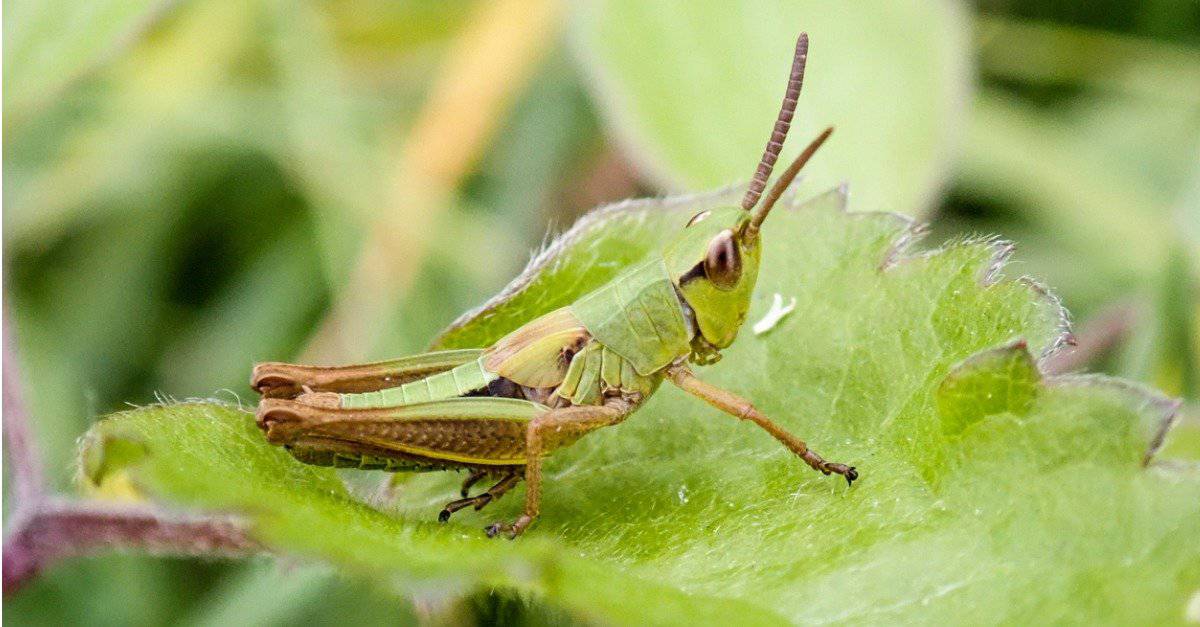

Have you ever watched a grasshopper jumping from plant to plant in a field? Maybe you’ve seen a grasshopper sitting on a flower in your backyard garden. It’s definitely not unusual, considering there are over 10,000 species of this insect worldwide. Some are tiny, like the pygmy grasshopper at less than three-quarters of an inch in length. Others are very large, like the hedge grasshopper, which can grow to a length of three and a half inches.
These insects can be brown, yellow, olive, or even bright green. Some have stripes, while others are solid colors. They have antennae, big eyes, and strong hind legs that can propel them into the air. Whether it’s a small grasshopper with stripes on its body or a big, green grasshopper with red antennae, one question comes to mind: Do grasshoppers bite? Keep reading to find out.
Do Grasshoppers Bite, and If So, How?
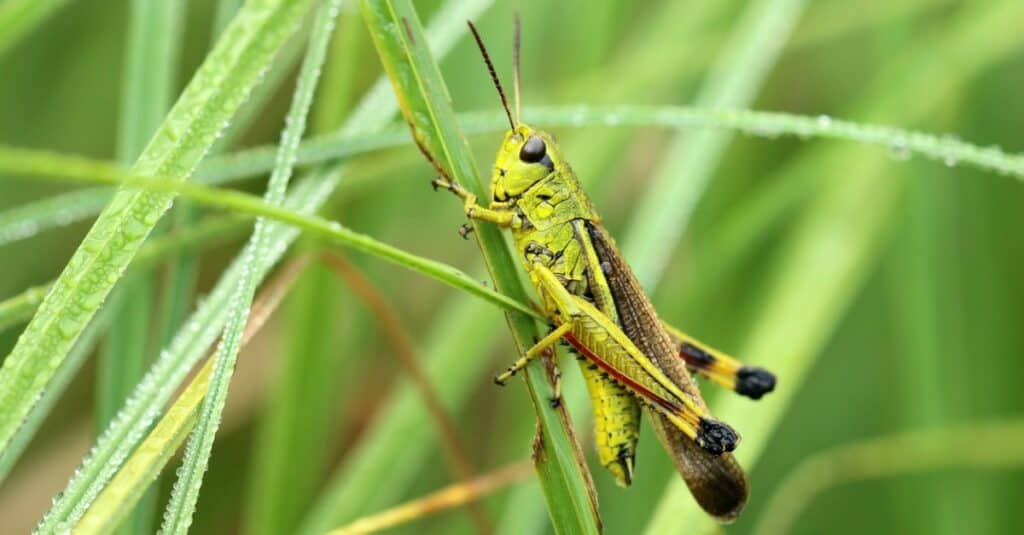
A grasshopper has two jaws called mandibles that allow it to grind its food.
©iStock.com/Eileen Kumpf
Yes, grasshoppers bite. However, when they bite, it’s usually on a piece of food and not a person. Grasshoppers need to tear their food into pieces in order to eat it, but they don’t have teeth. Instead, they have mandibles. When someone refers to a grasshopper’s mandibles, they are talking about this insect’s two jaws. A grasshopper puts a piece of food into its mandibles, then grinds it up so it can be swallowed.
If you looked very closely at the mandibles of a grasshopper, you’d notice that they face in a downward direction. This makes it easier to grab onto a leaf and chew it up. Think of a grasshopper’s mandibles like a pair of scissors cutting off a tiny piece of leaf, then crushing it to mush.
Most grasshoppers are primarily herbivores, so the main part of their diet is plant matter. They eat leaves, flowers, stems, fungi, and grass. These insects venture outside their plant-based diet when plants are not plentiful in their habitat. When this happens, they eat small spiders and tiny flying insects like gnats. The insect has to be small and easy to subdue because grasshoppers are not predators. In addition, some grasshopper species eat carrion and even animal dung.
Do Grasshoppers Bite Humans?
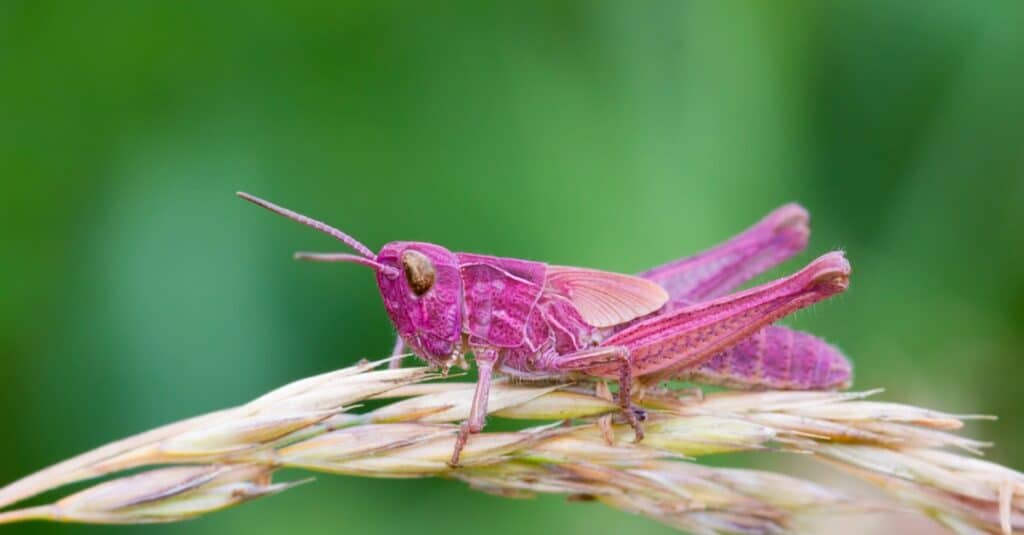
The pink grasshopper, sometimes mistaken for a katydid, is actually a grasshopper with a rare genetic mutation.
©iStock.com/chris2766
Grasshoppers are typically harmless to humans and pets, but they are capable of delivering a mild bite. Like any creature, if a grasshopper feels threatened, it may bite to defend itself. If a person picks up a grasshopper and holds it too tightly, the insect may feel at risk and bite. However, it is more likely to use an alternative way to defend itself, such as regurgitating a bitter, brown fluid intended to deter predators.
Someone bitten by a grasshopper may feel a tiny pinch, but it is unlikely that you will feel anything at all. Remember, a grasshopper’s mandibles are designed to cut leaves and stems, not human skin. The spines on their hind legs can also irritate your skin, which may lead some people to think they have been bitten when they have not.
How to Treat a Grasshopper Bite
Though someone may not feel a grasshopper’s bite, it can cause some mild symptoms to appear on the skin. Sometimes redness and/or mild swelling appear at the site of the bite. The area may start to feel slightly itchy as well.
The first thing to do is to wash the site of the bite with plain soap and water. After drying the area, apply a mild antiseptic. You can also apply calamine lotion to relieve any itching. Grasshopper bites aren’t poisonous, and grasshoppers do not transmit diseases to humans.