
Quick Take
- A hippo's bite force dwarfs a lion's by a shocking margin, which is just one reason lions tend to give them a wide berth. See the bite force comparison →
- The "500 hippo deaths per year" statistic you've probably seen cited everywhere may be completely wrong, and the truth turns out to be more complicated. Examine the disputed numbers →
- Most hippo attacks don't happen the way you'd picture them, and the location makes them nearly impossible to see coming. See where attacks happen →
- Even crocodiles, apex predators that share hippo territory, have learned to tread carefully around them, and the reason why reveals just how formidable hippos are. See how crocs fare →
Hippos are commonly perceived as less dangerous than other wild animals in Africa, but that is far from the truth. Although their rounded features and cute babies may seem inviting, getting too close to a common hippo is extremely unsafe. But why are these large herbivores so deadly? Learn more about hippos and discover exactly why they are considered Africa’s most dangerous land animal.
The Common Hippo
Common hippos are the third largest land animals after elephants and white rhinos. Male hippos average around 3,408 pounds, with a maximum weight of approximately 4,552 pounds. Some sources suggest male hippos can reach up to 9,900 pounds, but according to the San Diego Zoo Wildlife Alliance, this references an older source, and may not be accurate. Female hippos are only slightly smaller than males, averaging approximately 3,053 pounds with a maximum weight of around 4,080 pounds.
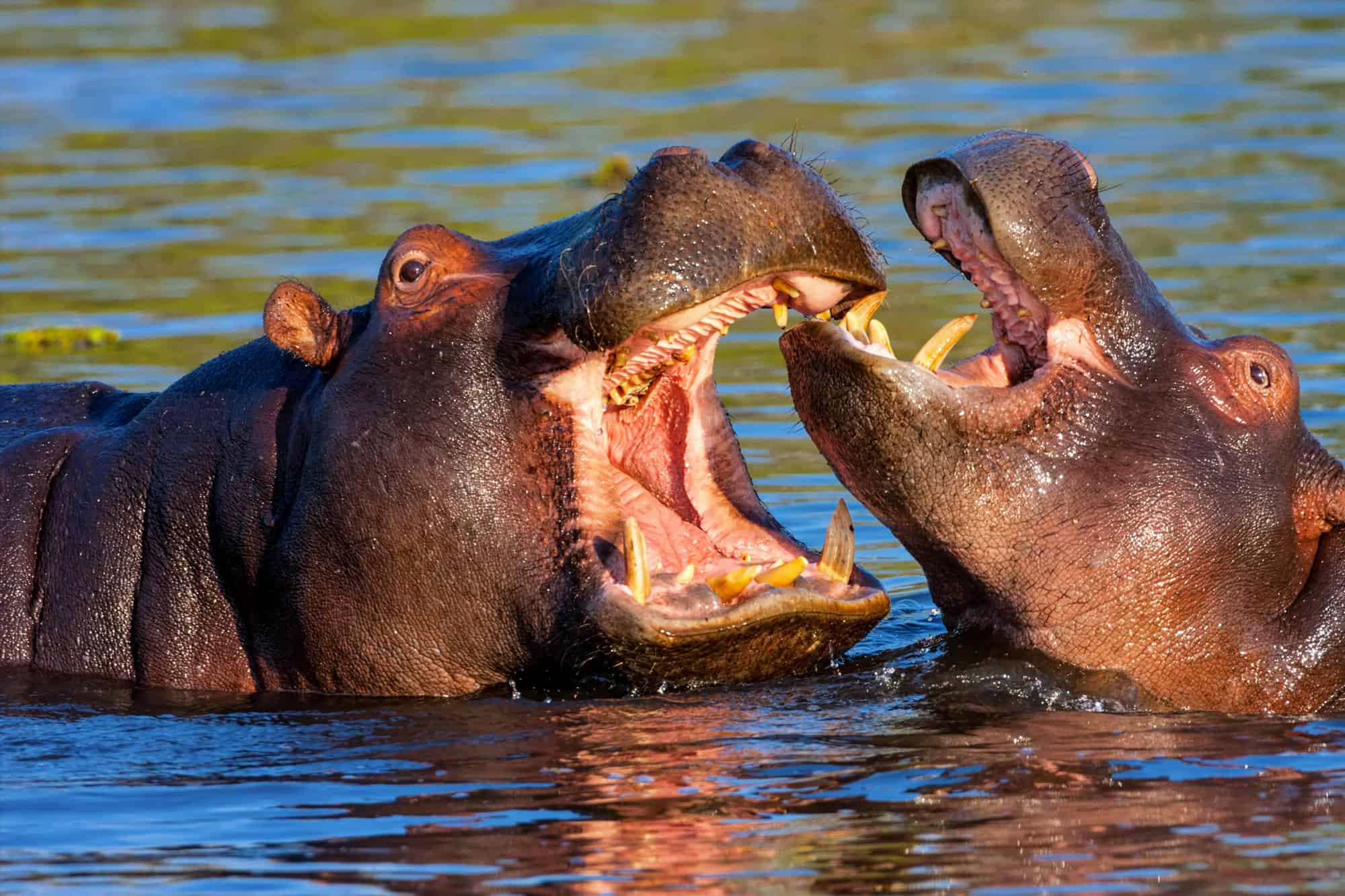
Hippos stand between 4.9 and 5.4 feet tall and measure from 9.5 to 16.6 feet in length, with males being taller and longer. The most noticeable difference between male and female hippos is the larger size of the tusks, heads, and jaws in males. Hippos can open their mouths from 150° to nearly 180°, which is a gape of up to four feet in adult males. A male’s tusk-like lower canines can grow up to 1.5 feet in length, which is around twice as long as a female’s canines. Males have larger heads and jaws that are up to 44% heavier than those of female hippos. The common hippo’s bite force measures 12,600 kPa, while a lion’s is only 4,500 kPa.
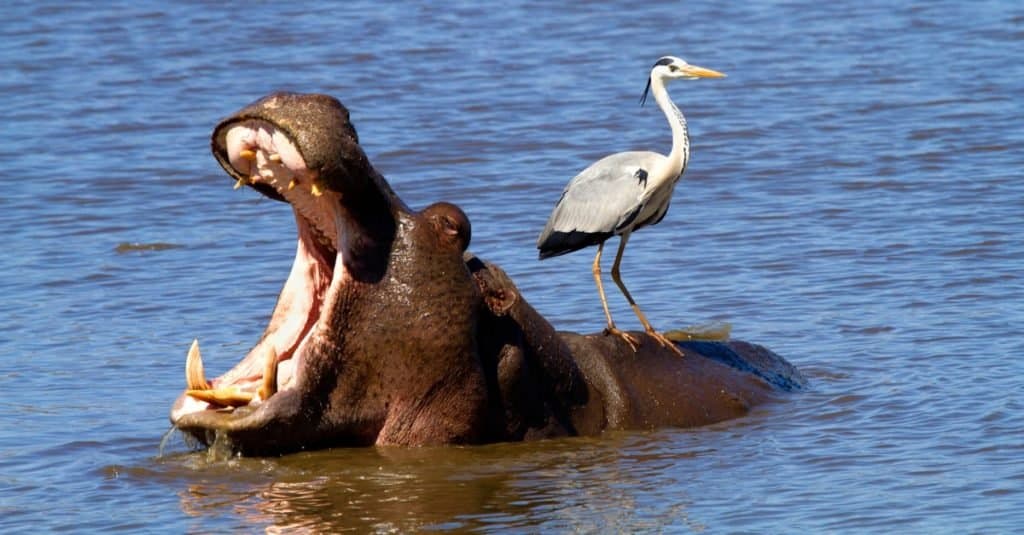
The likelihood of fatality due to a hippo attack is very high.
©Gaston Piccinetti/Shutterstock.com
Hippo Statistics
Several credible sources claim hippos kill up to 500 people each year. Others cite up to 3,000 deaths per year. However, the origin of these statistics is unclear. A 2022 study on human and hippo conflict across Africa challenges these numbers. In fact, researchers say human fatalities from hippo attacks may be less than those from bush elephant attacks. In a Zambian study from 2002-2008, hippos were found to have killed 65 people during that period.
So it may not be strictly accurate to say that hippos kill more people than any other land animal in Africa. Few accurate datasets exist. Many deaths occur near waterways in rural areas and are not officially recorded by authorities. However, some reports have shown that proportionally more people have died from hippo attacks than from any other large land animal, including lions. When hippo attacks occur, the likelihood of fatality is very high. When people do survive the attack, amputation and/or permanent disability is probable.
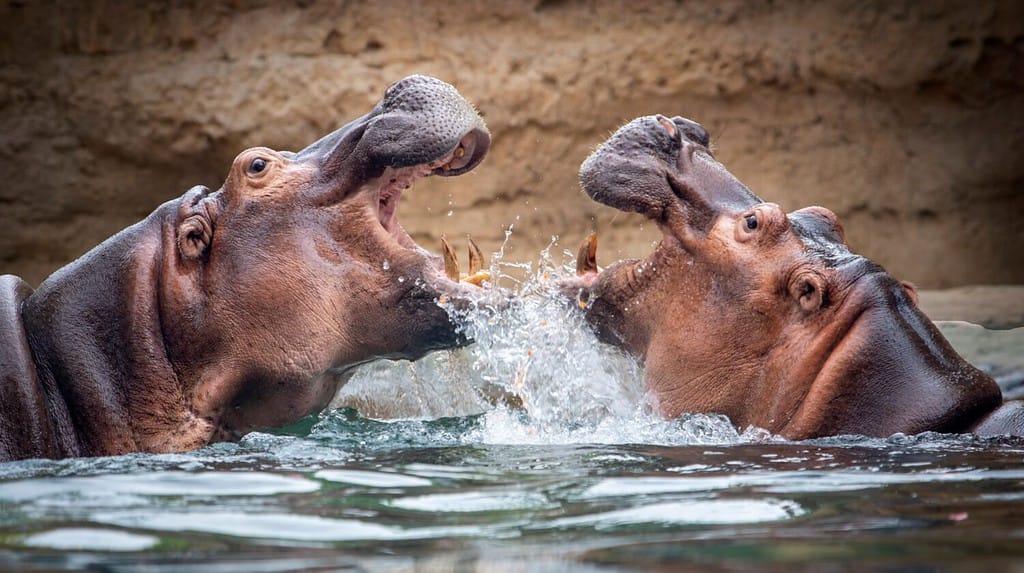
Hippos are not generally territorial on land, but they are very territorial in the water.
©Fayad Hameed/Shutterstock.com
Where Do Hippos Attack?
Hippos generally only attack people who have entered what they consider their territory. Hippos are herbivores and they do not hunt humans. On land, hippos aren’t generally territorial, but getting close to a hippo on land is still dangerous. Despite their stocky legs, an angry hippo can easily outpace a human, reaching up to 19 mph in short bursts, compared to a human’s typical sprinting speed of 12 to 15 mph.
When you enter a hippo’s territory in the water, things can turn dangerous quickly. Hippos typically keep close to the shore in rivers and lakes, submerging themselves to keep cool. However, they will also patrol their territory, readily removing intruders.
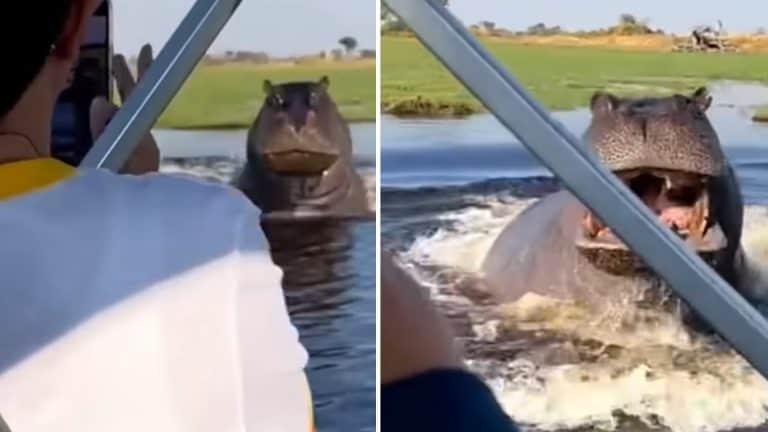
Most hippo attacks come from the water. Hippos often attack small boats and canoes. Since hippos are submerged, they can be incredibly difficult to spot from the surface. If a human floats by while fishing, it’s easy to miss the massive animal at rest. Suddenly, the hippo will launch itself at the boat, usually capsizing it. Once a human is in the water, there is little they can do to stop an attack. Human injury at the water’s edge is also common, as hippos may attack if they become tangled in fishing nets. Young adult men are the demographic most likely to suffer hippo attacks and other wildlife-associated attacks.
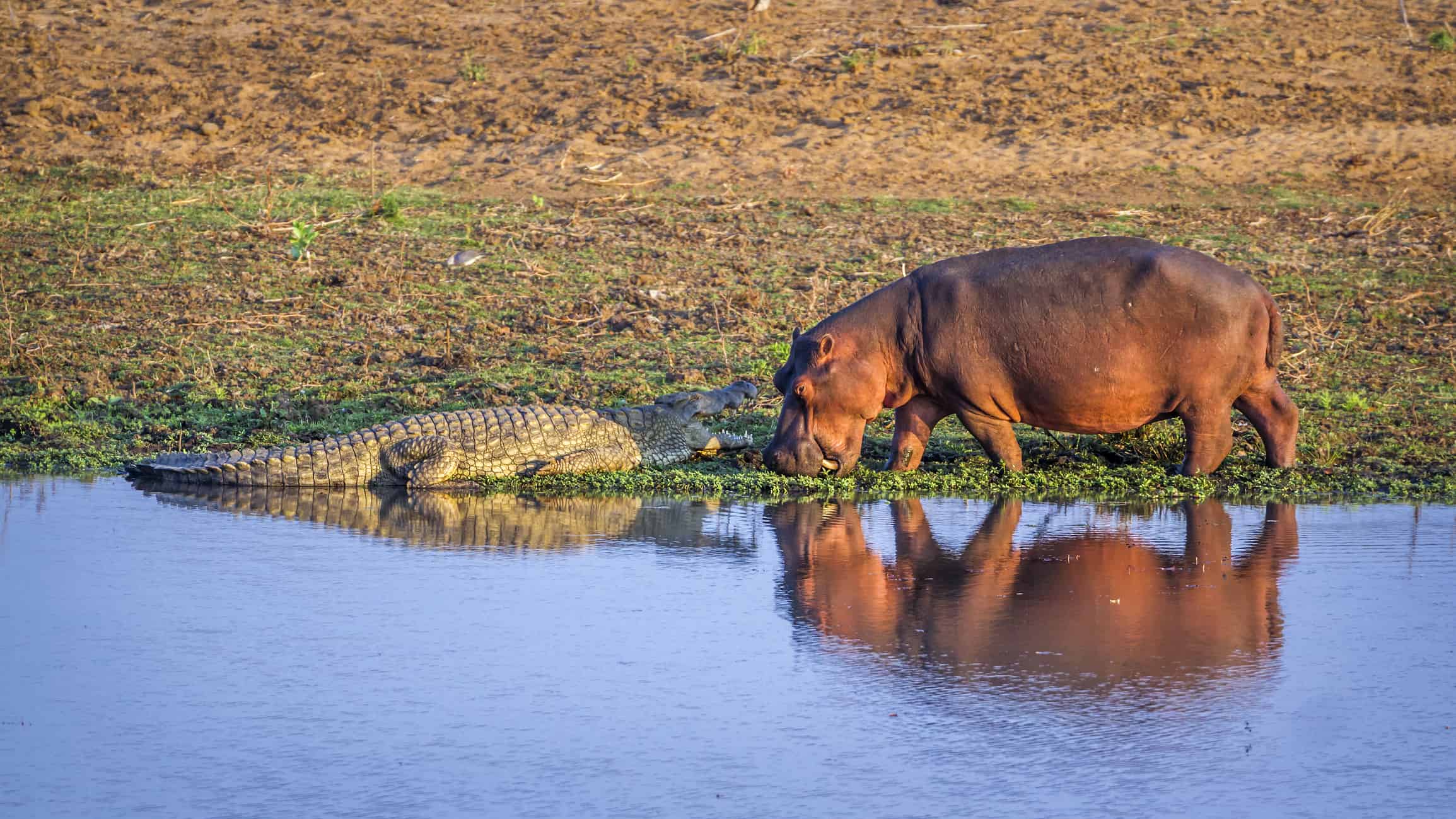
Hippos will also attack other animals that are in their territory.
©Utopia_88/iStock via Getty Images
What Other Animals Do Hippos Attack?
Besides humans, hippos are known to attack lions, hyenas, and crocodiles. Lions and hyenas generally avoid hippos because of how easily a full-grown hippo could kill them. Still, there are occasional instances where desperate lions and hyenas will find an isolated hippo and try to kill it. These encounters rarely result in success for the predators, as hippos are more than capable of defending themselves.
The most common interaction that hippos have is with the crocodile. Since they share territory, conflict is more common. Generally, there isn’t much friction between the two species. However, there are occasional instances of violence. If a female hippo has a calf, any encroaching crocodiles are likely to be chased away. If they don’t learn their lesson, a hippo may outright kill a persistent crocodile.