
Quick Take
- Horseshoe crabs aren't actually crabs at all. Their true classification puts them in surprisingly close company with a very different group of animals. Discover their true classification →
- Their mouth is hidden in a place no one expects, and the way food actually reaches it is unlike anything else in the animal kingdom. See how they eat →
- These animals survived hundreds of millions of years virtually unchanged, and their diet holds a clue to why they're nearly indestructible. Explore their varied diet →
- After catching prey, horseshoe crabs face a problem: they have no true teeth, and their solution is stranger than you'd guess. See how they crush prey →
Horseshoe crabs have existed on Earth for hundreds of millions of years. In fact, horseshoe crabs lived even before the dinosaurs. Despite their ancient origins, horseshoe crabs look nearly the same as their prehistoric relatives. If you think these animals don’t even look like crabs at all, there is a good reason for that. Keep reading to learn more about this strange creature that begins eating with its legs and has a mouth located where its legs meet.
What Are Horseshoe Crabs?
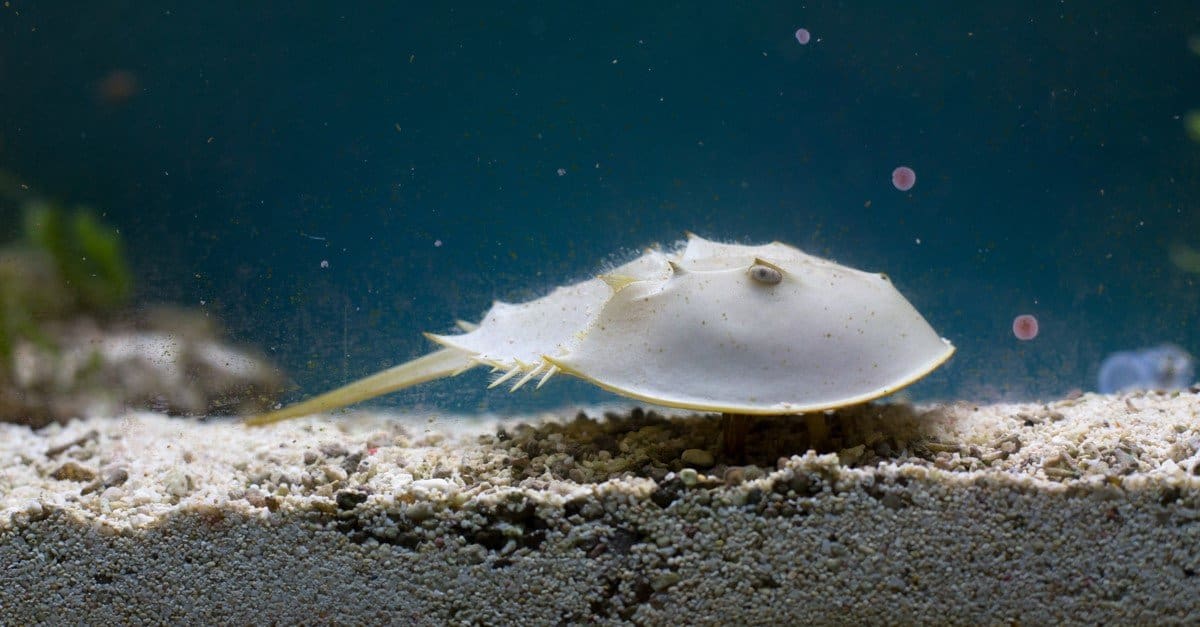
Despite the name, horseshoe crabs are not actually crabs. These invertebrates belong to a group of arthropods that are more closely related to arachnids like spiders and scorpions. Horseshoe crabs are generally brown to olive green in color. Their bodies are made up of three parts: the prosoma, or head, the opisthosoma, which is the abdomen, or posterior part of the body, and the telson, or tail. The largest species is the Atlantic horseshoe crab (Limulus polyphemus), which measures up to 24 inches in length, including the tail, and weighs up to 11 pounds.
There are four species of horseshoe crabs. One species lives in North American waters. The Atlantic horseshoe crab can be found all along the Atlantic coast, from Maine south through the Gulf of Mexico. The other three species of horseshoe crab live in Asia. The tri-spine horseshoe crab (Tachypleus tridentatus), the coastal horseshoe crab (Tachypleus gigas) and the mangrove horseshoe crab (Carcinoscorpius rotundicauda) are distributed in Indo-Pacific Asia.
The Horseshoe Crab Diet
Horseshoe crabs are omnivorous scavengers. They feed on marine worms, clams, crustaceans, decaying animal matter, detritus, and other prey they find in the sediment of the ocean floor. They also consume plant matter such as algae, especially as juveniles.
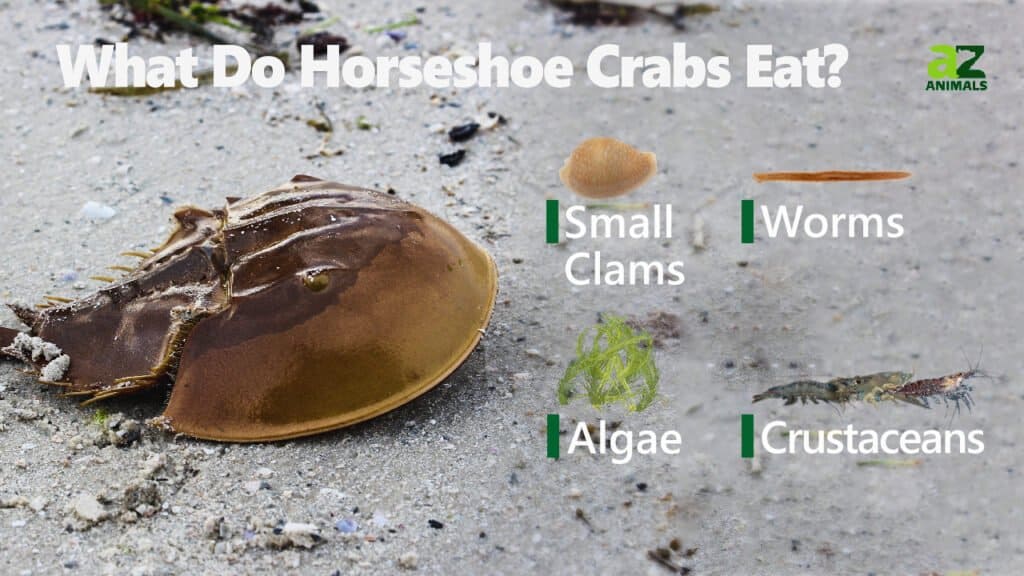
While there is some variation due to habitat, here are some of the common foods horseshoe crabs eat:
- Marine worms such as ribbon worms (Nemertea) and peanut worms (Sipunculus nudus)
- Bazillian snails (Batillaria zonalis)
- Razor clams, surf clams, and soft-shelled clams
- Blue mussels
- Small crabs
- Crustaceans
- Insect larvae
- Plankton
- Algae, including sea lettuce (Ulva lactuca)
- Some fish
- Decaying animal matter
- Other small invertebrate animals
How Do Horseshoe Crabs Forage for Food and Consume Prey?
Horseshoe crabs don’t have many predatory advantages like sharp teeth or venom. Instead, they rely on other methods to capture prey. They generally hunt and night and sweep the seafloor and coastal edges, looking for any slow-moving or stationary prey such as clams or worms. Since they don’t have teeth, whatever they find must be smaller than they are.
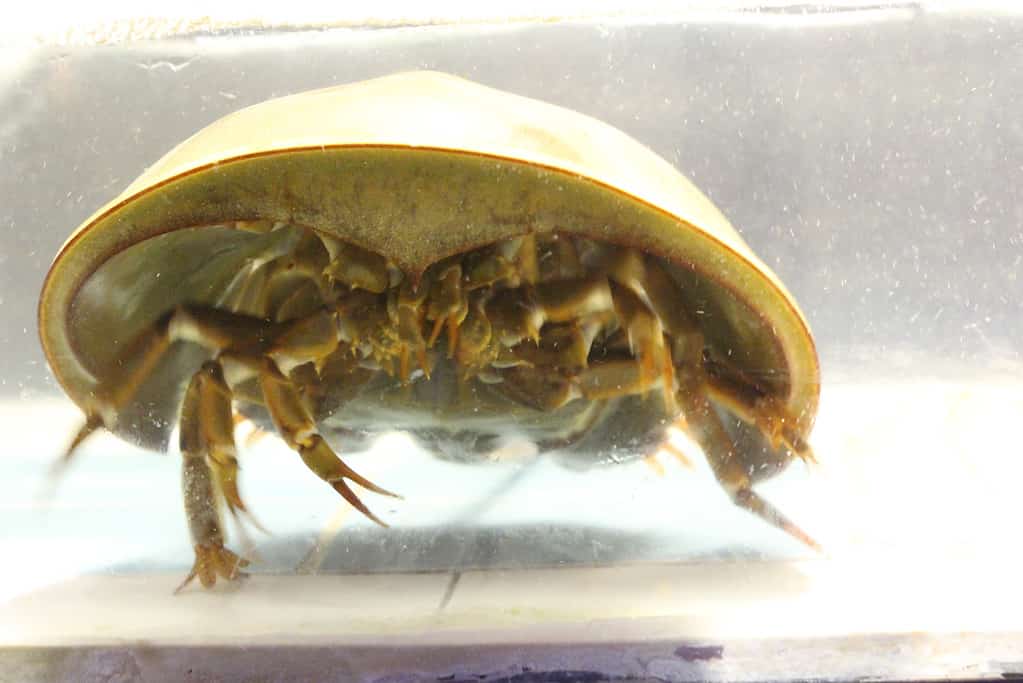
Horseshoe crabs use their strong legs to crush food before passing it to their mouths with their chelicerae.
©Kesorn Weaver/iStock via Getty Images
Once a horseshoe crab finds prey, it grasps the prey with its strong legs and begin breaking it apart with spines at the base of its legs. Like spiders, they have chelicerae, which are small appendages they use to manipulate the food into their mouth, which is located in the center where all their legs meet. The only exception to this method of eating is algae, since it’s soft enough to be eaten without being ground up.
Horseshoe crabs also process their food through a type of crop and gizzard called the proventriculus. The gizzard contains small pieces of gravel and sand to further grind the food before digestion. The flesh is passed into the mid-gut where it will finally be digested, while the hard shell is regurgitated.