
Quick Take
- Hummingbird eggs are smaller than most people imagine, and the everyday object they're compared to will genuinely surprise you. See the surprising size →
- There's a specific biological reason hummingbird eggs are plain white, and that reason has nothing to do with camouflage. Discover why they're plain white →
- Spotting a hummingbird egg in the wild could unexpectedly put you on the wrong side of federal law. Check the federal rules →
- Many hummingbirds deliberately abandon their nests every season, a behavior that reveals something clever about their survival instincts. Learn about nest abandonment →
Understanding hummingbird ecology is important for our floral ecosystems. Where do these little birds build their nests? How big are their eggs? When do the chicks hatch? Most of us have seen adult hummingbirds buzzing around our flowers with the bees, but few have seen the eggs and nests. So let’s take a look at hummingbird eggs, their nests, and all things associated with them.
Hummingbird Egg Size
More than 360 species of hummingbirds exist in the Americas, so egg sizes vary somewhat. The largest hummingbird, aptly named the giant hummingbird, is only 9 inches long. The tiniest full-grown hummingbird, the bee hummingbird, is a mere 2.25 inches in length. Obviously, the larger hummingbirds lay the largest eggs, while the smallest hummingbirds lay the smallest eggs.
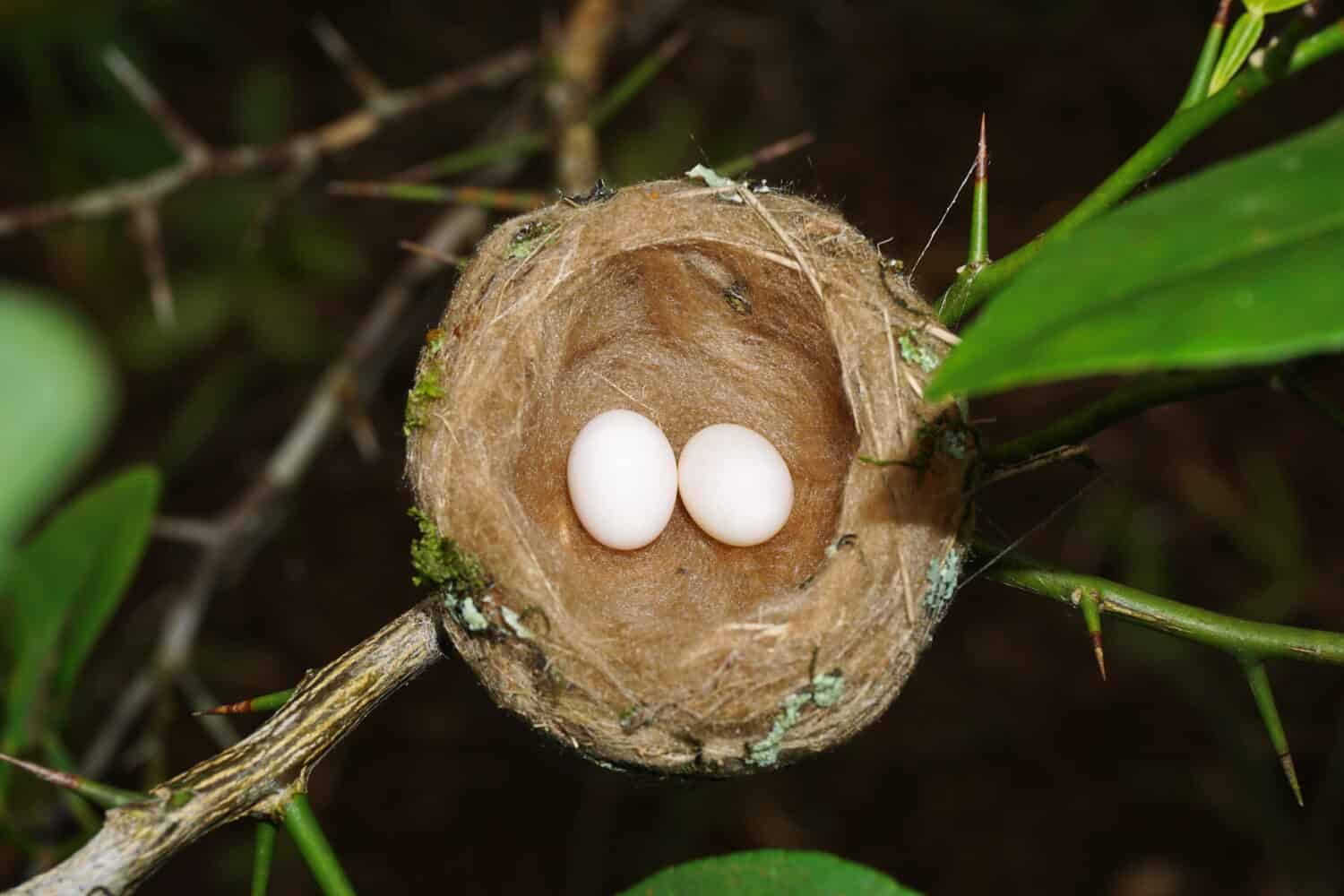
However, hummingbird eggs are roughly the size of a green pea. They generally range in size from 0.5 to 0.8 inches in length. These tiny eggs weigh less than 0.018 ounces. Many birders have compared these beautiful bird eggs to jellybeans or coffee beans.
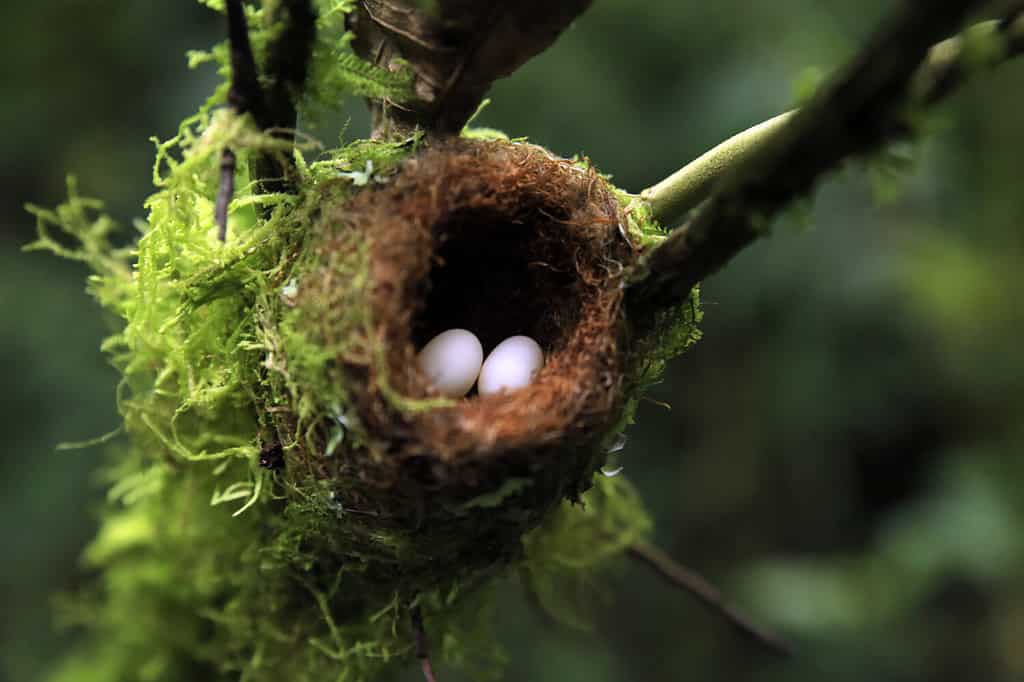
The size of a hummingbird egg varies by species, but they could be as small as half an inch in length.
©Daniel Lamborn/Shutterstock.com
Hummingbird Eggs Appearance
In most cases, hummingbird eggs, no matter the species, are fairly nondescript and come in dull white. They are ovoid in shape, with no patterns or special coloration. Some researchers believe this is because hummingbird eggs sit deep inside the nest cavity covered and camouflaged. The white color helps the hummingbird mother see the eggs, and there is no need for the eggs to be colored for additional camouflage to avoid predators.
Hummingbird Nests
Hummingbirds build nests like most other bird species. The nests tend to be built on horizontal, downward-facing branches in shrubs or trees anywhere from 5 to 90 feet in the air. They may also build the nests in vines or other similar structures, in suburban and urban areas. They cover their nests using spiderwebs, lichen, pine needles, and other natural materials to help them camouflage their young.
Some hummingbirds return to the same basic area each year to breed. However, many build new nests each year. This natural instinct helps prevent infections, diseases, and parasites the little birds could acquire from old building materials.
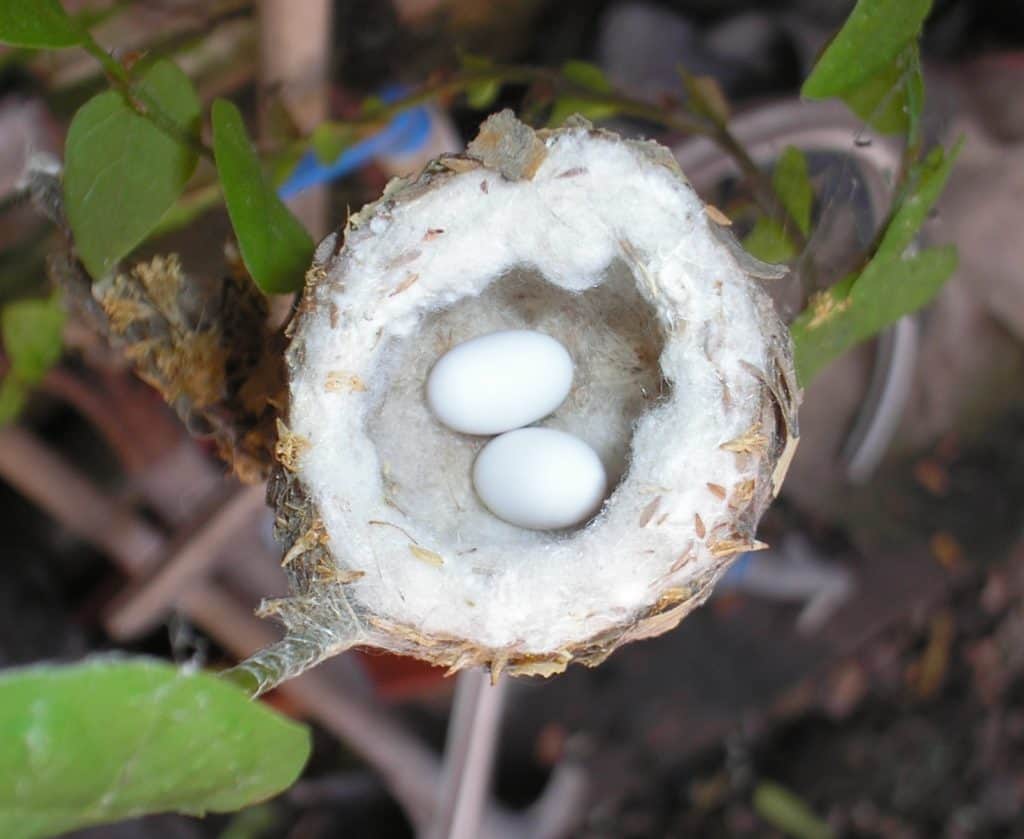
Hummingbirds typically build their nests in trees and shrubs.
When Do Hummingbirds Lay Their Eggs?
Timing for broods varies, depending on the species and the location where the bird resides for the brooding season. For example, in the Southern and Western U.S., non-migratory hummingbirds such as Anna’s hummingbird begin nesting and laying eggs as early as late November through June. In the Eastern and Northern U.S., migratory species like the ruby-throated hummingbird arrive back in the U.S. in the spring and generally lay eggs from April through July.
Clutches of two eggs are typical for hummingbirds. Most commonly, each clutch will contain exactly two eggs, with only occasional exceptions. The birds lay between one and three broods each year.
How Long Does It Take for Hummingbird Eggs to Hatch?
Most hummingbird eggs require approximately 12 to 18 days to hatch from the time of laying, though the exact range varies by species and environmental conditions. Hummingbirds, like many bird species, are born blind and featherless. Over the following weeks, they grow feathers and mature in the care of their mothers. Once they reach around 18 to 28 days of age, they are generally ready to leave the nest.
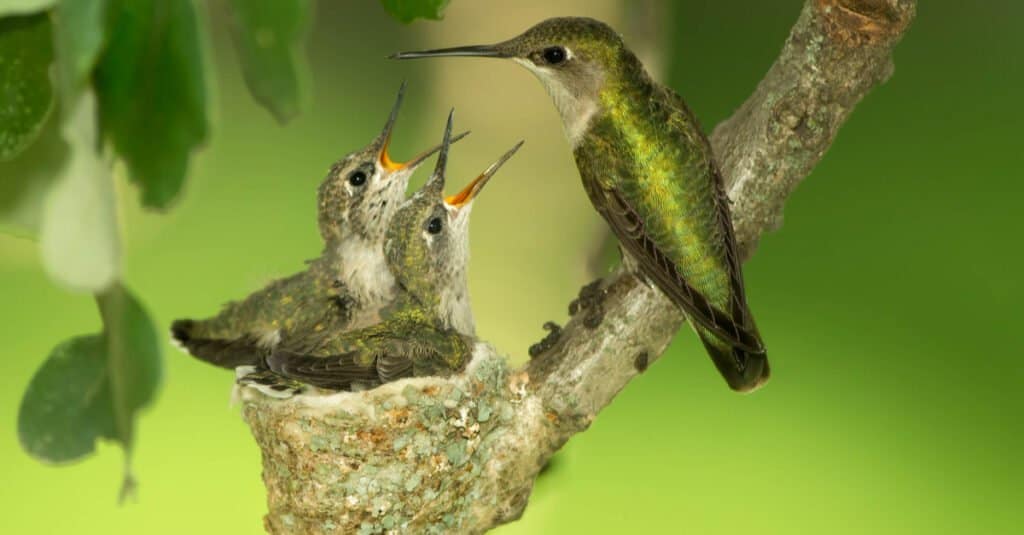
After hummingbirds are born, they rely on their mother’s care for around three weeks.
©Agnieszka Bacal/Shutterstock.com
What Do You Do If You See a Hummingbird Egg?
If you happen across a hummingbird nest or egg, the best thing you can do is ignore it. In fact, hummingbirds are protected by the Migratory Bird Treaty Act (MBTA) of 1918, so disturbing their nests may harm the birds or eggs and could result in federal charges. If for some reason you feel concern over the nest or the egg, contact a licensed wildlife rehabilitation facility or conservation agency for guidance.