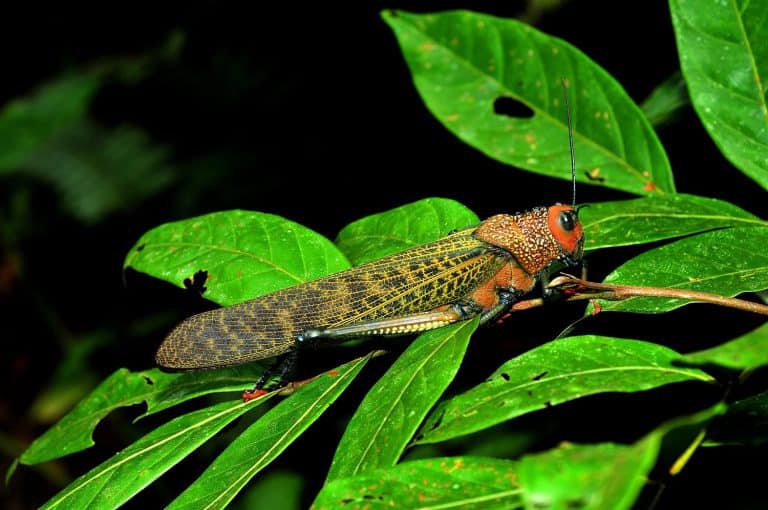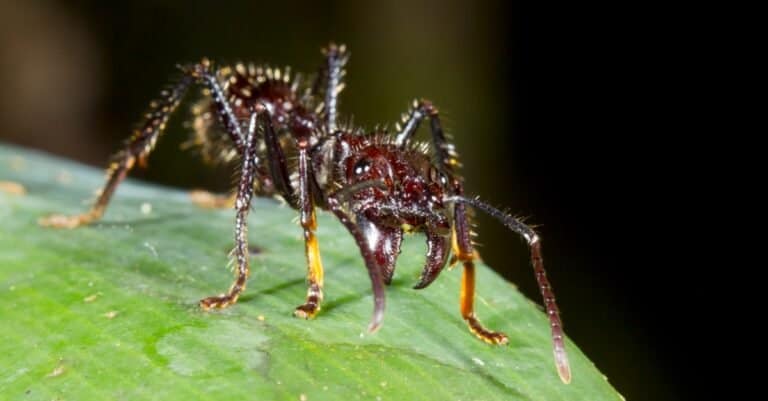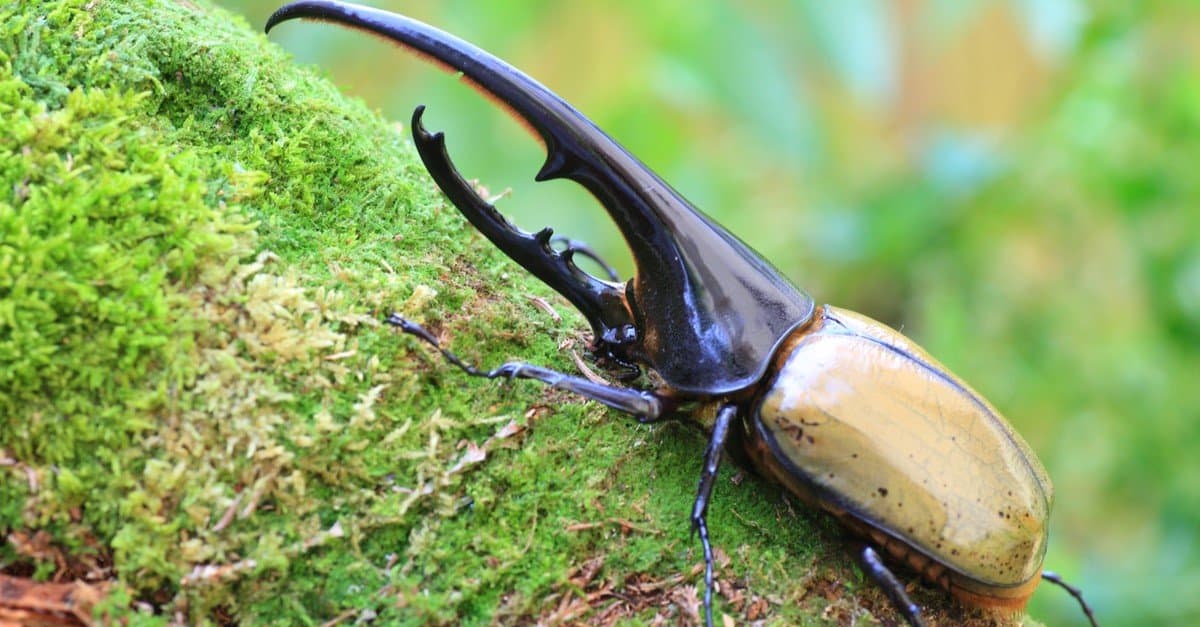

Have you ever had a tiny animal buzz by your head, tickle the back of your neck, or crawl out of your shoe? Well, it may have been one of 900,000 different species of insects. Many people turn away in disgust at the sight of various bugs and insects. Unfortunately, they may not realize that they are giving the cold shoulder to some of the most fascinating creatures on the planet. This article has the buzz on the five most interesting insects in North America.
Blister Beetles
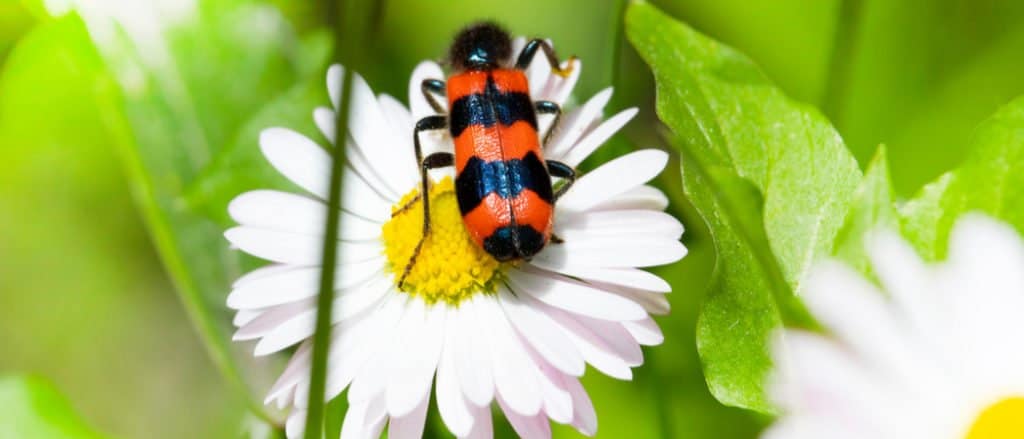
Red Blister Beetle on a chamomile flower.
©studiomirage/Shutterstock.com
A very interesting insect is the blister beetle, a name that describes a family of 7,500 species of beetles across the globe. These beetles earn their name from their interesting anti-predator behavior. When a blister beetle feels threatened, it secretes a blistering agent called cantharidin. This chemical can cause irritation and the formation of blisters across the skin.
Blister beetles have many other interesting defense adaptations. Many species of blister beetles have vibrant coloration. This deters predators because bright colors are associated with poisonous or venomous animals, which is known as aposematism. Blister beetles are toxic when eaten, often infesting hay and grasses used for animal feed, which can prove harmful to livestock.
Blister beetles are hypermetamorphic, which means they go through multiple larval stages, also known as instars. It is common for insects to have multiple larval stages during metamorphosis, however, hypermetamorphic species have instars that are functionally and morphologically distinct. Hypermetamorphic species are collectively very interesting insects!
Hercules Beetles
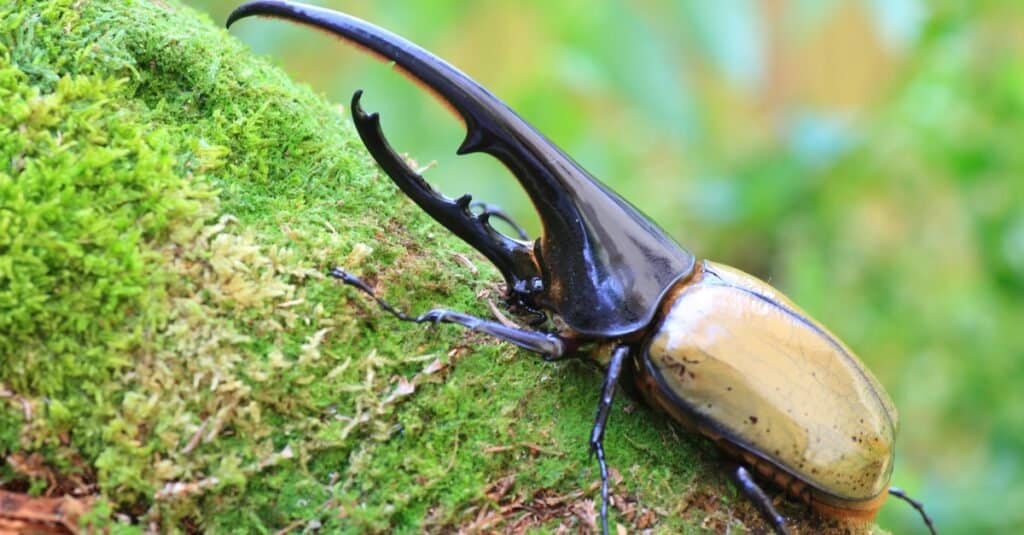
Hercules beetle (Dynastes hercules) on a moss-covered branch.
©feathercollector/Shutterstock.com
The Hercules beetle is a species of rhinoceros beetle, an interesting insect that inhabits the Americas. This beetle lives primarily in Central America but has expanded north into Mexico. The Hercules beetle is not only one of the largest flying insects in the world, but is also the largest of all 400,000 species of beetles. Male Hercules beetles have a long horn that can give them a total body length of up to 7 inches!
Hercules beetle mating behavior is incredibly interesting. Like many animal species, male Hercules beetles compete for mates. This competition is responsible for the sexual dimorphism in the species, especially the large male horns. Sexual dimorphism is when the male and female of a species have drastically different physical characteristics. The male beetles use their horns to pin and throw their opponent when battling for a mate. The battle can cause serious physical injury. Hercules beetles can lift as much as 850 times their body weight.
Hercules beetles are also a crucial factor in the ecosystem. They typically inhabit rainforests where they play an important role. In their larval stage, they feed on decaying wood. By doing this, they are key in the process of plant decomposition and nutrient cycling.
Ants
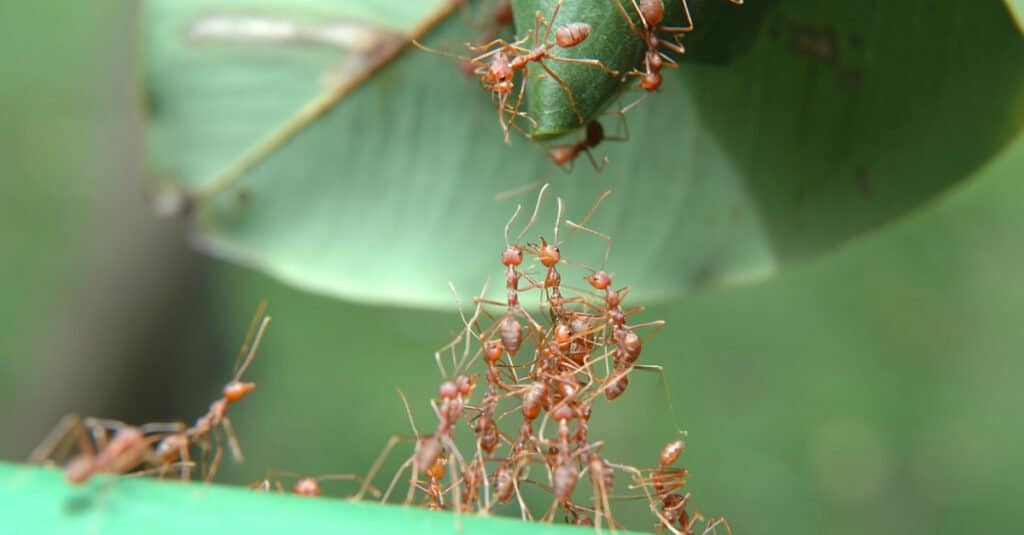
With over 15,000 different species, ants are common, but not boring!
©iStock.com/clickclick1
Ants (Formicidae) exist on all continents except Antarctica. There are over 15,000 species of ants, and despite how common they are, they are incredibly fascinating creatures. Ants have complex social structures and behaviors, a variety of mutualistic relationships with other animal and plant species, unique physical adaptations, and play an important ecological role.
Physical Characteristics
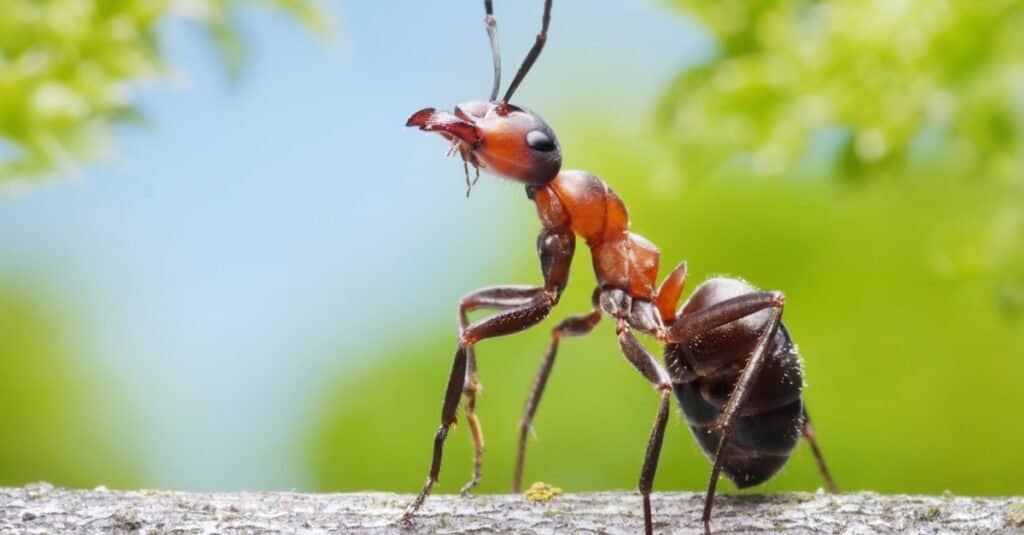
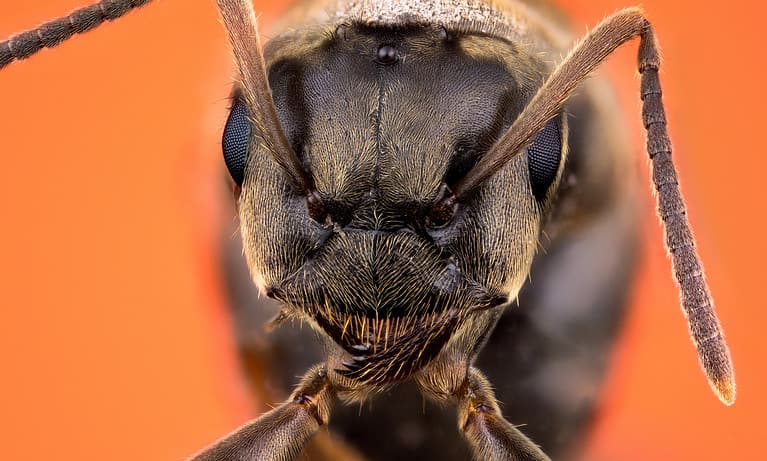
When their nests are disturbed, carpenter ants bite in defense. They also spray a defensive chemical of formic acid, which they can spray into the bite wound.
©iStock.com/Antrey
An ant’s heart is at the tail end of its segmented body. Unlike other insects, ants have bent, jointed antennae and metapleural glands. These special glands secrete an antibiotic agent that prevents bacteria and fungal spores from growing on the ant’s exoskeleton. Some ants are venomous or poisonous, including bulldog ants, bullet ants, and fire ants.
Many species of ants also exhibit polymorphism. This is when there are different physical forms, or morphs, within one species. Polymorphism in many species of ants relates to the ant’s position and role in a social caste system. The size classes of worker ants are classified as minor, median, and major with increasing body size. Some colonies also have drone ants and queens. In the species Carebara diversa, or East Indian harvesting ant, the difference in dry weight between the largest and smallest worker ants is 500-fold! Divisions of labor allow ants to collectively solve complex issues like a society and work as one entity called a “superorganism”.
Periodical Cicadas
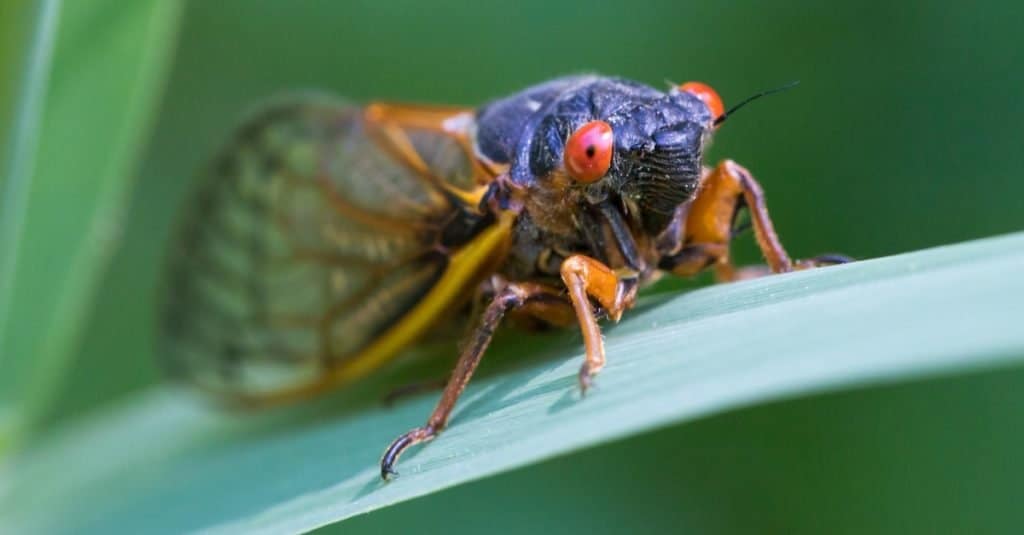
A periodical cicada sitting on a leaf. They use a straw-like appendage to suck nutritious fluids from trees and their roots to help them survive underground.
©Elliotte Rusty Harold/Shutterstock.com
The periodical cicada, belonging to the genus Magicicada, has an incredibly unique life cycle. Periodical cicadas are found in the Eastern, Midwestern, and Southern United States. 15 distinct broods emerge in cycles of 13 or 17 years. They spend 99.5% of their lives underground.
Periodical Emergence
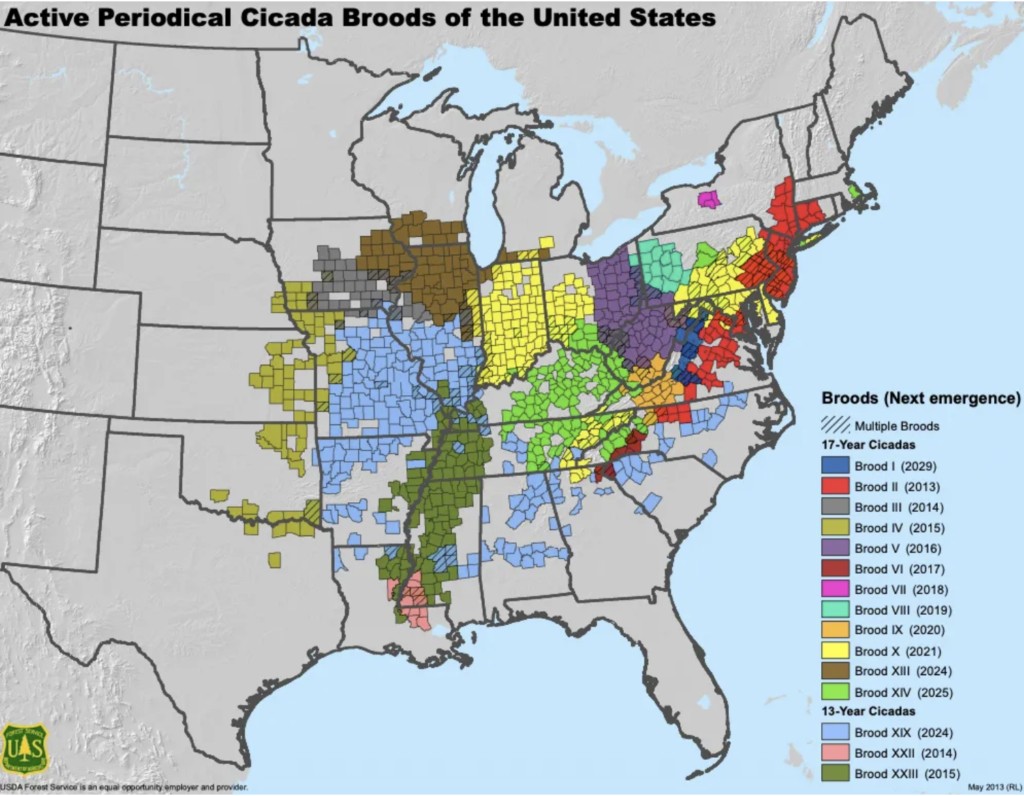
A map of the different cicada broods and their next expected emergence.
©Andrew M. Liebhold, Michael J. Bohne, and Rebecca L. Lilja, Public domain, via Wikimedia Commons – Original / License
What makes periodical cicadas so fascinating is that when a brood does emerge after 13 or 17 years, they emerge simultaneously in huge numbers. The 2021 Brood X emergence included as many as 1.5 million cicadas. Juvenile cicadas, called nymphs, spend years of development underground and emerge during their 5th larval stage. During this stage, the cicadas emerge from the ground and find a high place, such as a tree trunk or telephone pole, to undergo their final molt. Periodical cicadas are only adults for a couple of weeks before dying, so their sole focus is reproducing.
Bumblebees
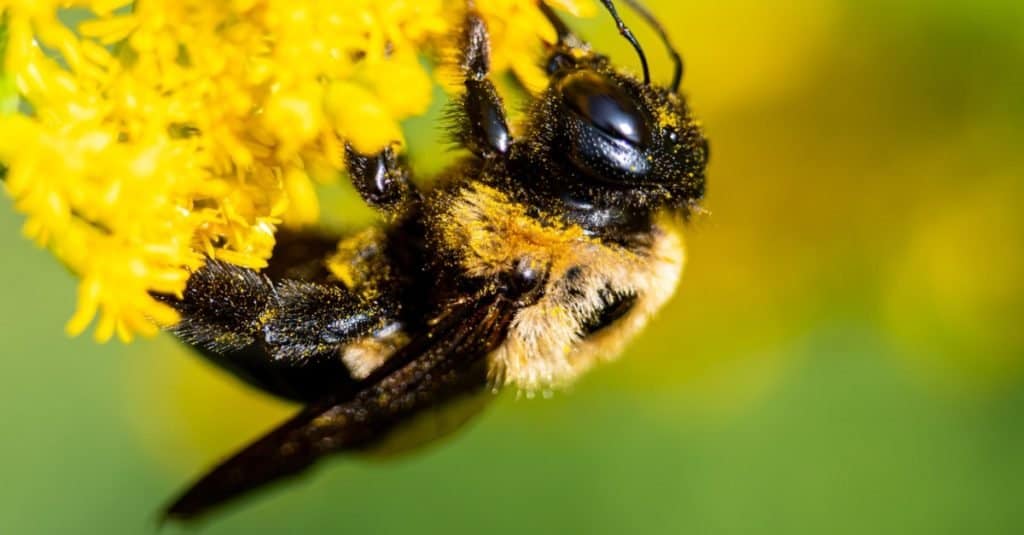
Bumblebees harvest nectar and pollen from flowering plants.
©Brier Mitchell/Shutterstock.com
Bumblebees have incredibly fascinating behavior, social structures, reproductive biology, and a massive ecological role as a keystone species. Similar to ants, bees live in colonies with complex social structures. In a bumblebee colony, there is one fertile queen, many non-reproducing female worker bees, and several fertile male drones. Polymorphism exists that differentiates workers, drones, and queens in physiological ways. Queen bees, for example, as the only reproductive female, must reproduce in high numbers. Queens have a special organ that stores sperm, so when the queen goes on her first and only “nuptial flight” around the hive to collect sperm, she can store it to be used for the duration of her reproductive life.
Bumblebees are a keystone species. A keystone species is one that, if removed from an ecosystem, the ecosystem risks collapsing. Keystone species hold a role that has environmental consequences disproportionate to their population size. Bumblebees have this classification because of their role as pollinators.