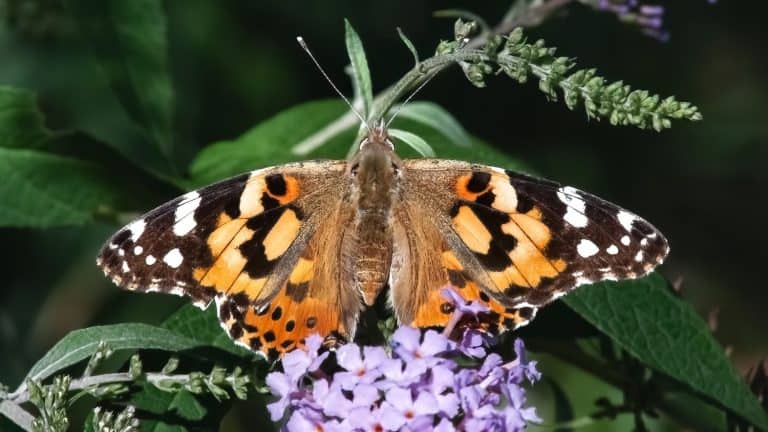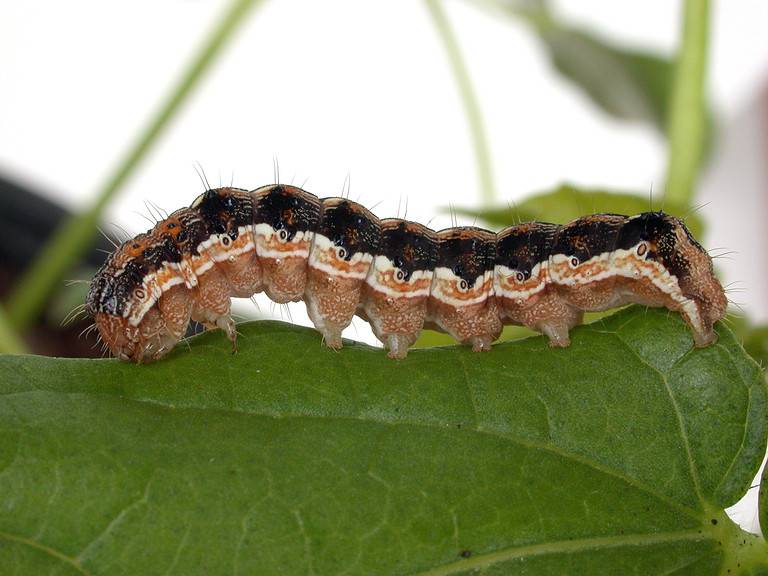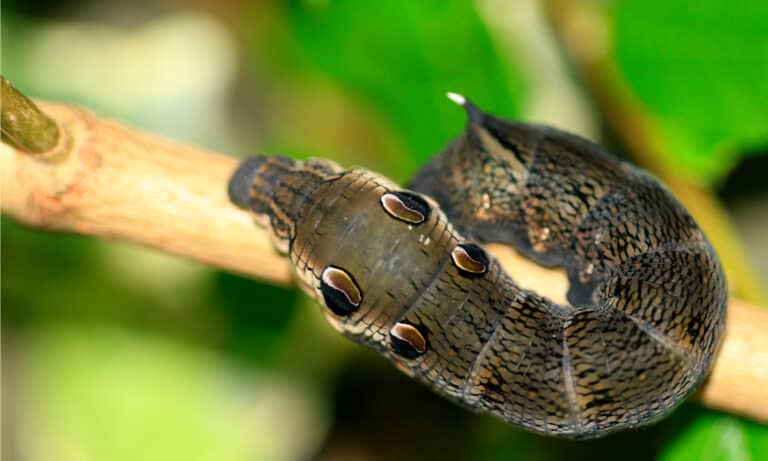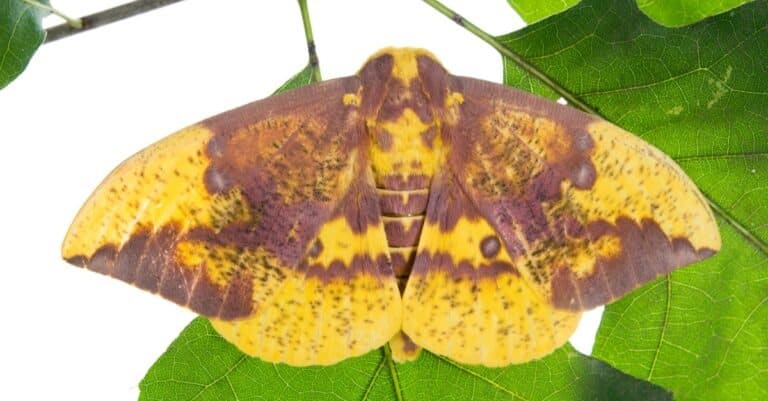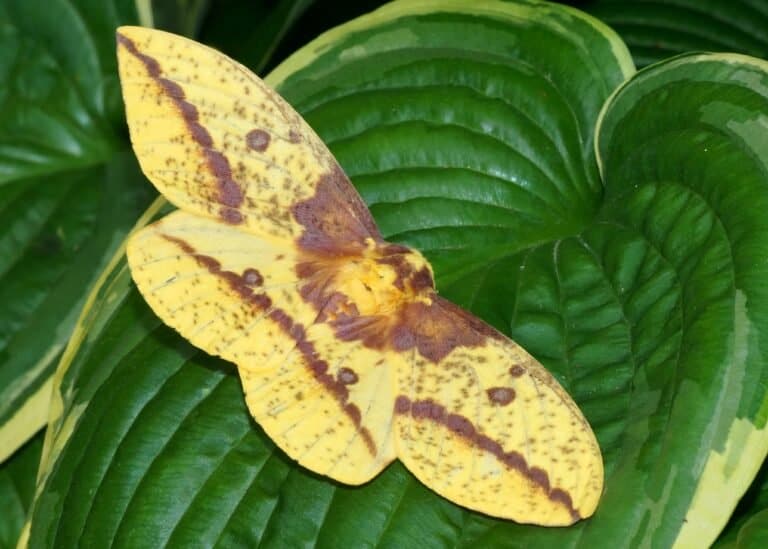

There are 160,000 to 180,000 described species in the order Lepidoptera, which includes all butterflies and moths. Caterpillars are the larval stage of butterflies and moths. The larval stage is the second stage of metamorphosis, by which these caterpillars transform into butterflies and moths. Their metamorphosis includes four stages: egg, larva (caterpillar), pupa, and adult. Butterfly caterpillars will form a chrysalis, while moth caterpillars spin cocoons. Recognized by their vibrant colors and intricate patterns, caterpillars are found on every continent except Antarctica, which lacks the plant life necessary to support them. Caterpillars vary greatly in size. While some species of caterpillars are less than an inch long, many are much larger. Continue reading to discover 12 of the largest caterpillars in the world.
12. Io Moth
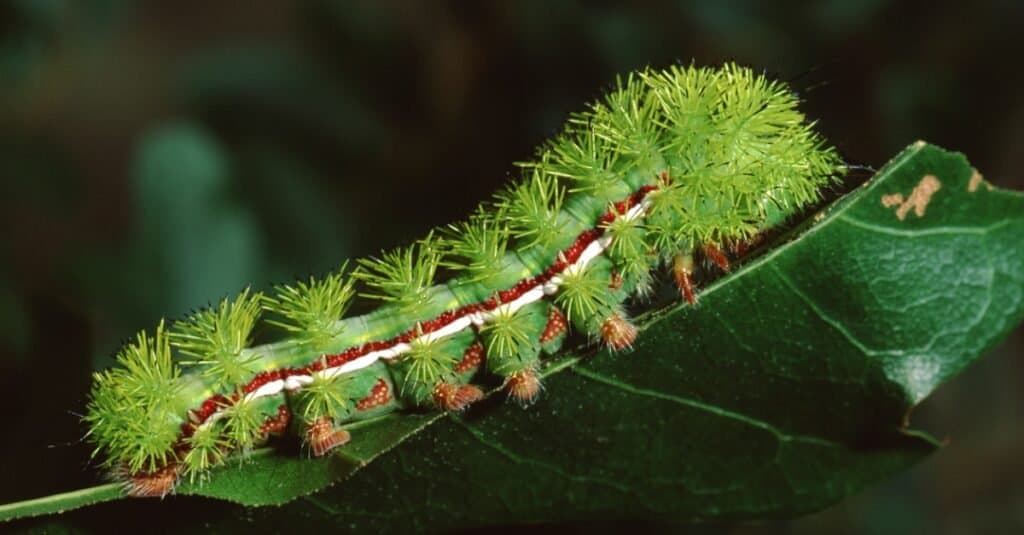
The io moth caterpillar has bristles across its body
©iStock.com/Weber
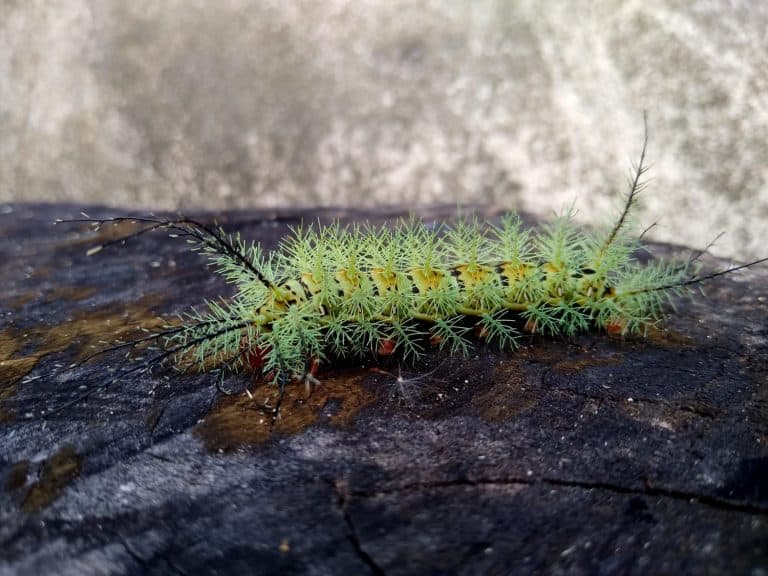
The io moth caterpillar (Automeris io) has a bright green color with a distinctive stripe of white and shades of red or purple along the sides. Bristles cover its back that have a series of hairs on them. Up to three inches long, this species enjoys feasting on birch, blackberry, cherry, clover, elm, hackberry, hibiscus, oak, poplar, sassafras, willow, and wisteria. Try not to handle this caterpillar. The hairs on it back will sting, and the effects can last from minutes to hours. Some people may have an allergic reaction to the venom. Io larvae are active during the summer.
11. Spicebush Caterpillar
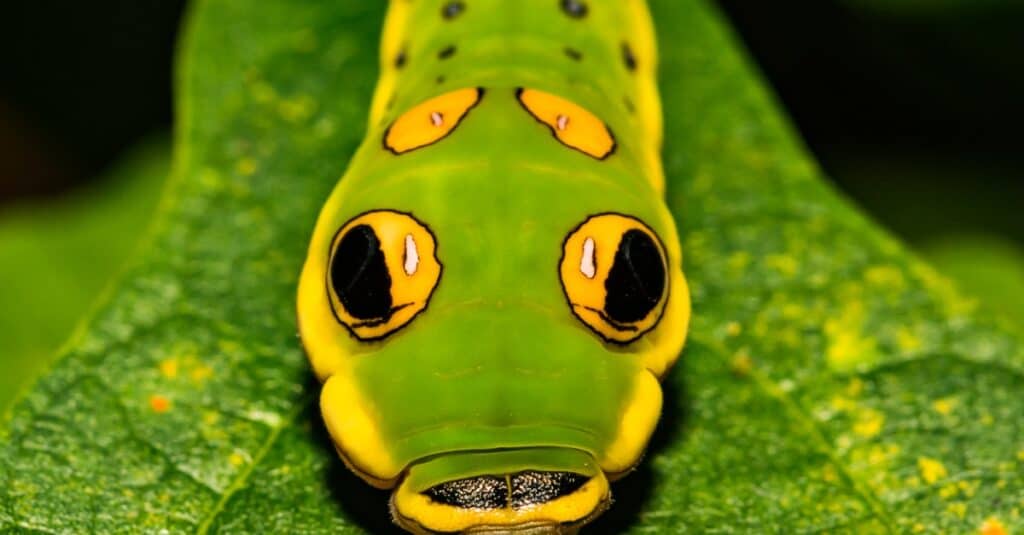
The spicebush caterpillar has markings that appear to be eyes
©iStock.com/JasonOndreicka
Smooth and green, the spicebush caterpillar (Papilio troilus) has yellow or orange eyespots on the sides of the head. It has two more yellow spots on the back of the head. The folded leaves of spicebush, sassafras, sweet bay, prickly ash, and other shrubs serve as both the nesting place and primary food source for this species.
10. Parsleyworm
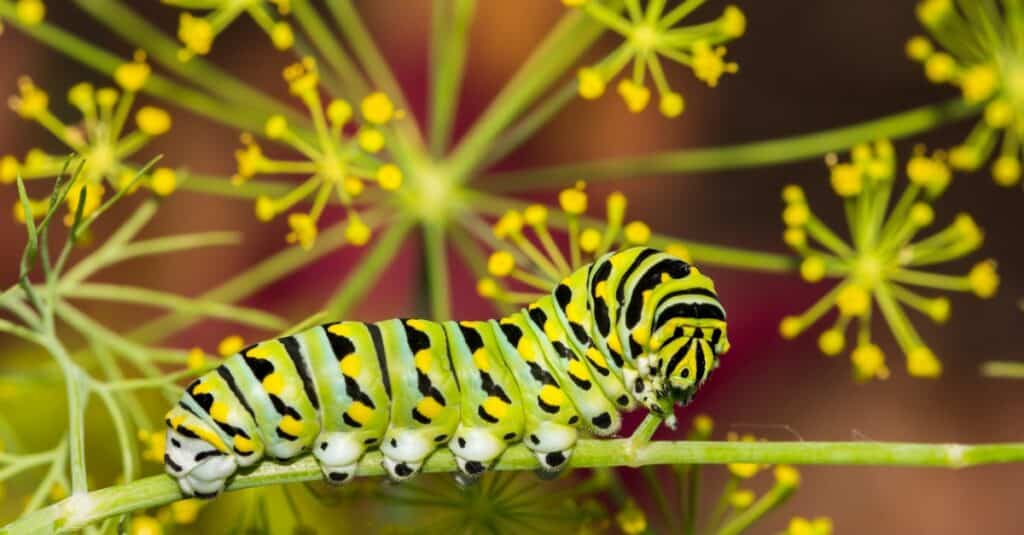
Parsleyworms are the larvae of black swallowtails.
©Jay Ondreicka/Shutterstock.com
The parsleyworm (Papilio polyxenes asterias) is also called celeryworm or carrotworm. These brightly striped caterpillars are the larvae of the black swallowtail butterfly. It is pale or yellow-green with black and white bands across its back, and yellow-orange spots that give this caterpillar a beautifully striped look. The parsleyworm feeds on parsley, parsnip, celery, carrot, dill, caraway, and Queen Anne’s lace. Farmers and gardeners often find them a pest in their crops.
9. Catalpaworm
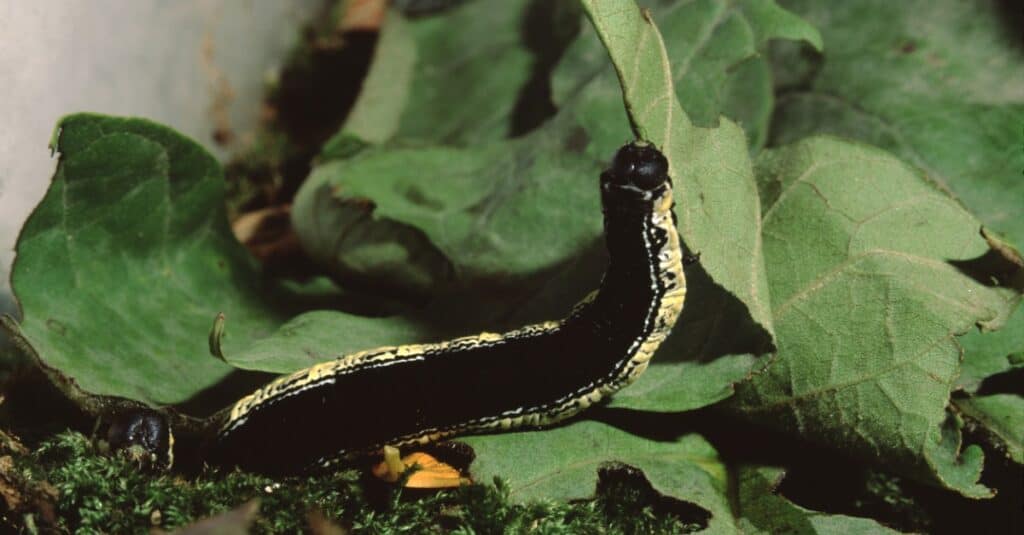
This black velvet beauty will emerge from its cocoon as a catalpa sphinx moth.
©Liz Weber/Shutterstock.com
The catalpa worm (Ceratomia catalpa) or catalpa sphinx moth is either velvet black with green and black stripes or yellow-tan with stripes. It has a trait that looks like a black horn at the tail end. The catalpa worm feeds on catalpa tree leaves and has been known to completely ravage an entire catalpa tree. Up to three inches long, this caterpillar will burrow underground for the next stage of its development. This species will hatch twice per year.
8. Tomato Hornworm
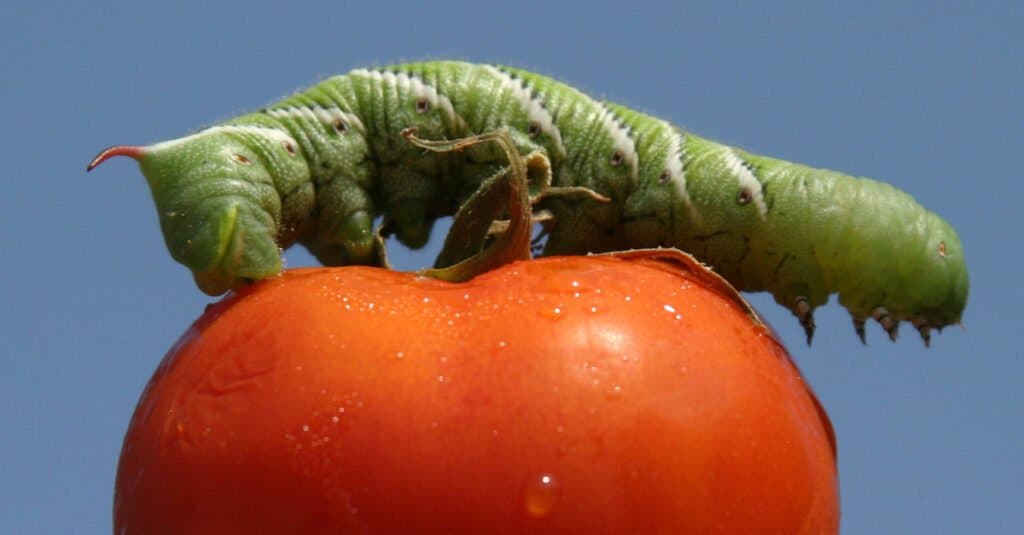
A tomato hornworm feasts on tomatoes, among other produce.
©mikeledray/Shutterstock.com
The tomato hornworm (Manduca quinquemaculata) or five-spotted hawk moth is green and has eight curved stripes on the sides of the body. The tail has a black horn that sticks straight up. Its diet includes tobacco, tomato, eggplant, pepper, potato, and weeds. The larval stage lasts an average of 28 to 36 days.
7. Tobacco Hornworm
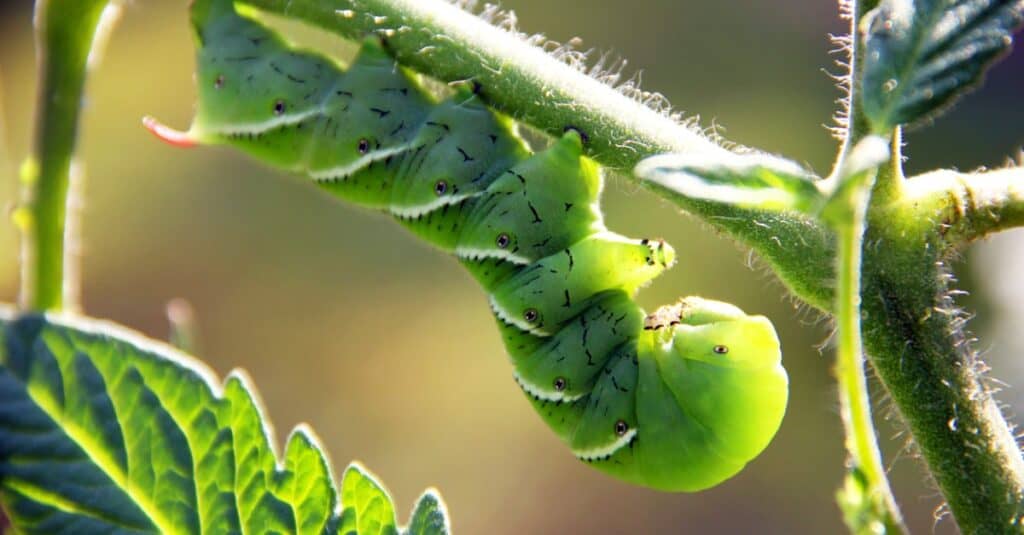
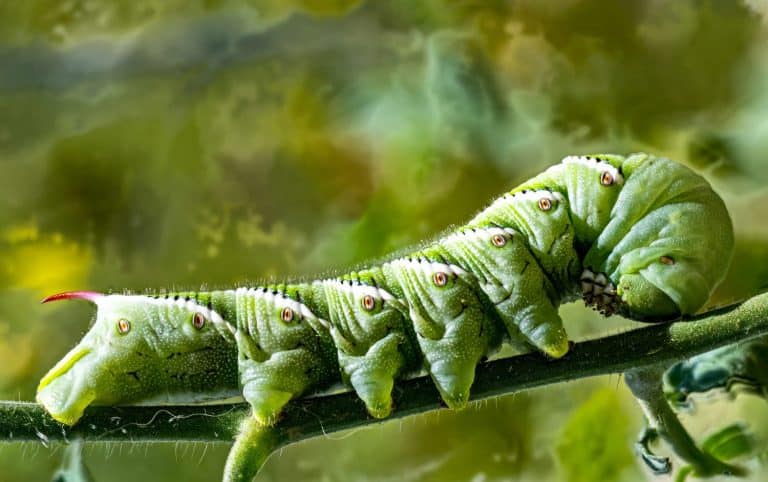
Tobacco hornworms have seven stripes alongside their body.
©iStock.com/lauraag
The Carolina sphinx moth (Manduca sexta) or tobacco hornworm is green with seven diagonal stripes on each side of the body. The tail end has a red curved horn. The tobacco hornworm is similar to the tomato hornworm and feeds on the same plants: tobacco, tomato, eggplant, pepper, potato, and weeds. The larval stage averages the same 28 to 36 days.
6. Promethea Moth
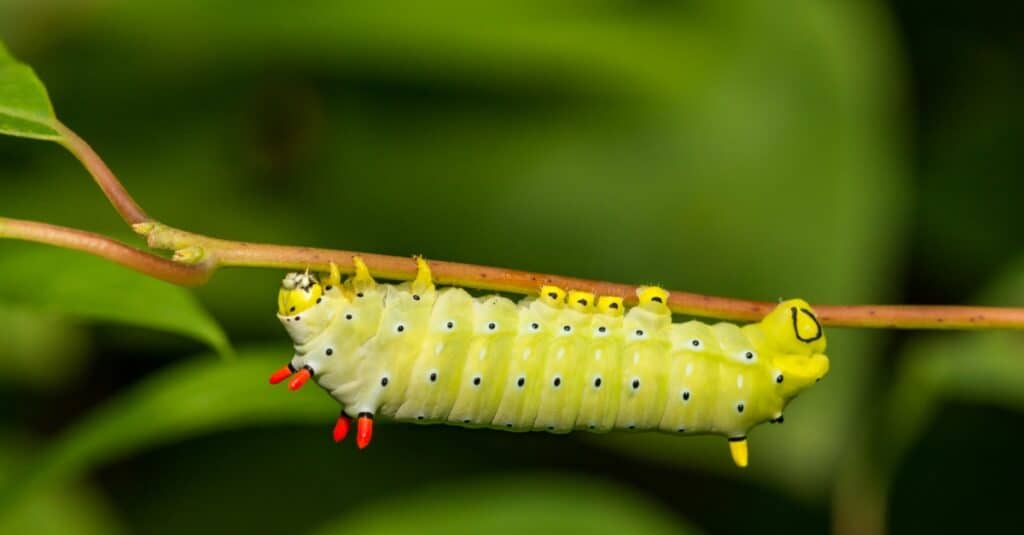
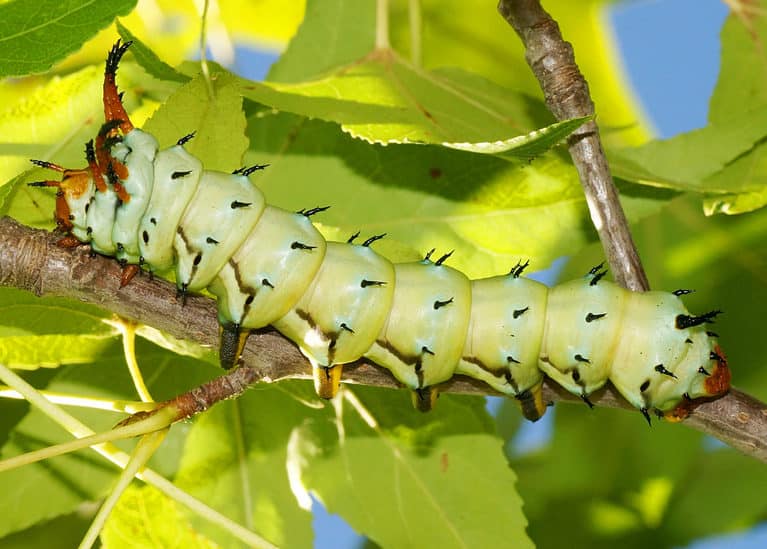
Promethea moths have distinctive spikes.
©Jay Ondreicka/Shutterstock.com
The promethea moth (Callosamia promethea) is also called the silk moth. Smooth and green-blue, this caterpillar has spikes. There are four red-orange ones near the front and one on the yellow tail end. Four small black-blue spots are seen on segments along the back. There are two facial spots on the head. Spicebush, cherry, sassafras, tuliptree, willow, poplar, sweetgum, ash, apple, pear, lilac, wild plum, birch, buttonbush, basswood, maple, and chokeberry are the food of choice for the Promethea Moth. They form a cocoon in a leaf becomes rolled up in the silk and will stay there for 42 to 54 days before emerging.
5. Luna Moth
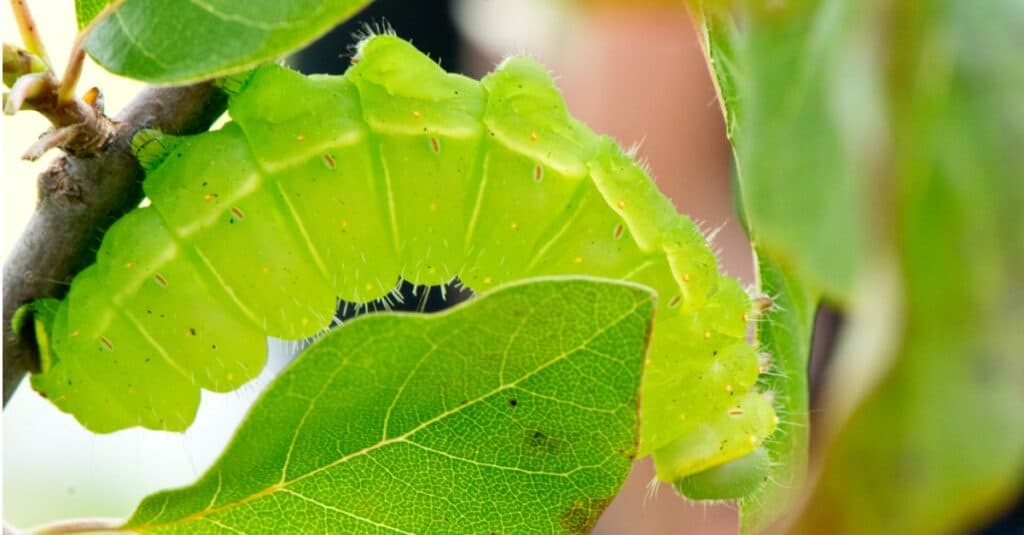
Luna moths have a translucent appearance.
©iStock.com/ErikaMitchell
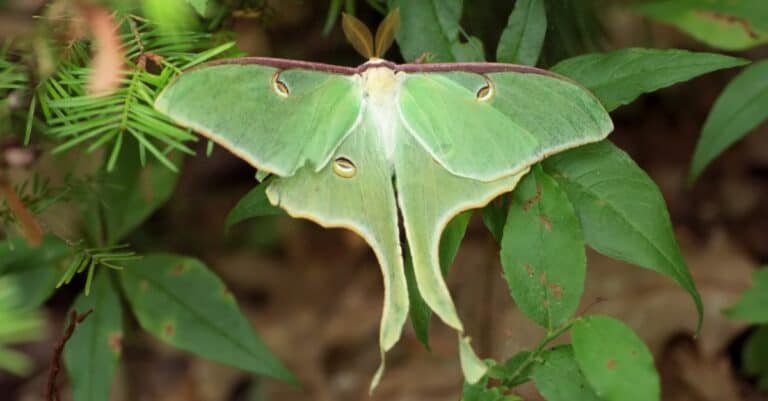
The luna moth (Actias luna) is pale green and has a somewhat translucent appearance. It has a pale yellow line that runs along the lower side. This caterpillar will be up to four inches when fully grown. Preferred food choices are the alder, cherry, walnut, hickory, oak, sweetgum, birch, butternut, beech, willow, chestnut, pecan, hazelnut, and persimmon tree leaves. Unlike many other moths, the luna moth forms its cocoon on the ground among fallen leaves.
4. Imperial Moth
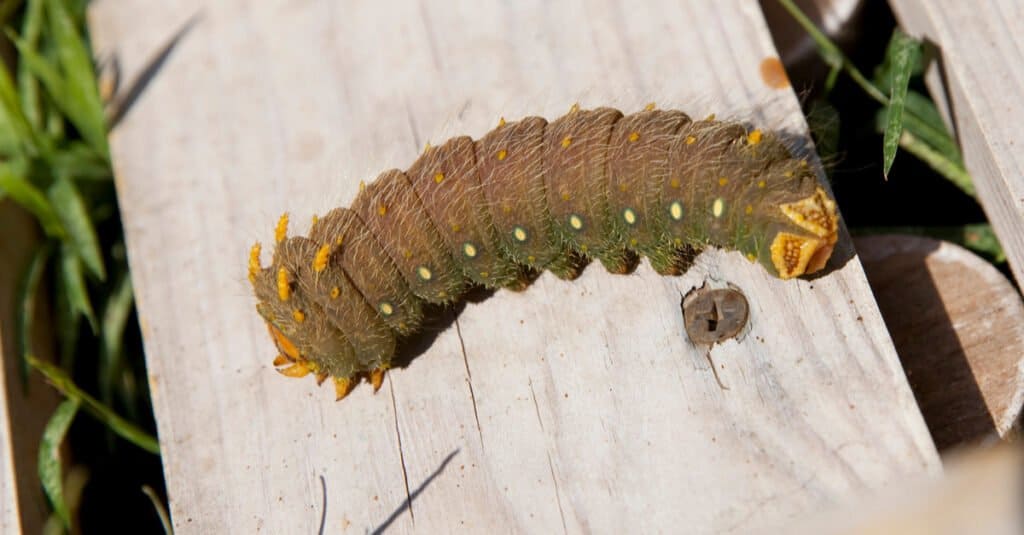
Imperial caterpillars are covered in stiff hairs.
©Jeanne Raises/Shutterstock.com
The larvae of the imperial moth (Eacles imperialis) are yellow-green, tan, or dark brown on the upperside and hunter-green on the underside. They are covered with short, stiff, light blue-green hairs. There are breathing holes along the sides that are white with an outline of aqua and black. Four long, sharp yellow spines are along the back of the orange-yellow head. They feed on trees and shrubs of spruce, pine, oak, maple, sycamore, cherry, birch, alder, elm, sweetgum, sassafras, beech, cedar, and walnut. After a 42-day larval stage, this caterpillar burrows under the soil to wait out the winter.
3. Polyphemus Moth
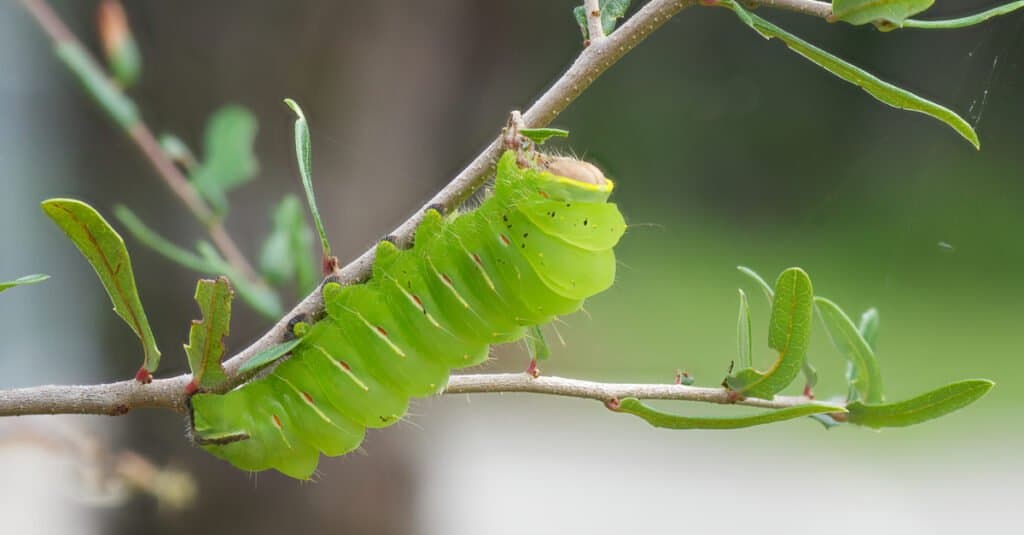
Polyphemus caterpillars can grow up to four inches long.
©Chase D'animulls/Shutterstock.com
The Polyphemus caterpillar (Antheraea polyphemus) is fat, accordion-like, and pale green with little hair. It will reach up to four inches long. Preferred food includes oak, hickory, elm, maple, birch, apple, boxelder, cherry, chestnut, willow, ash, grape, pine, and rose bushes. The cocoon resembles parchment. It is round and rigid. The caterpillar forms its cocoon in the tree or shrub on which it fed and will stay there for 48-50 days.
2. Cecropia Moth
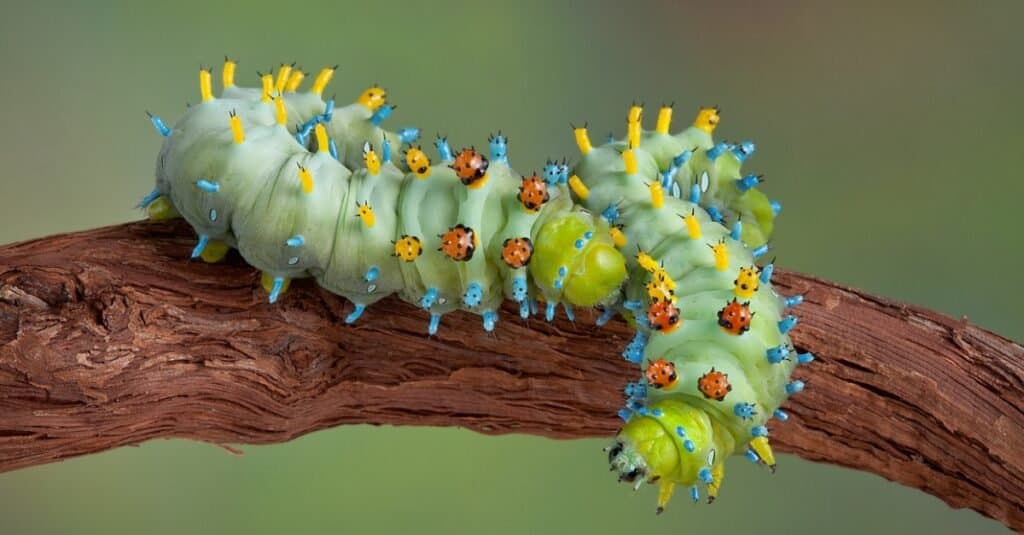
The cecropia caterpillar prefers trees like apple, walnut, and beech.
©Cathy Keifer/Shutterstock.com
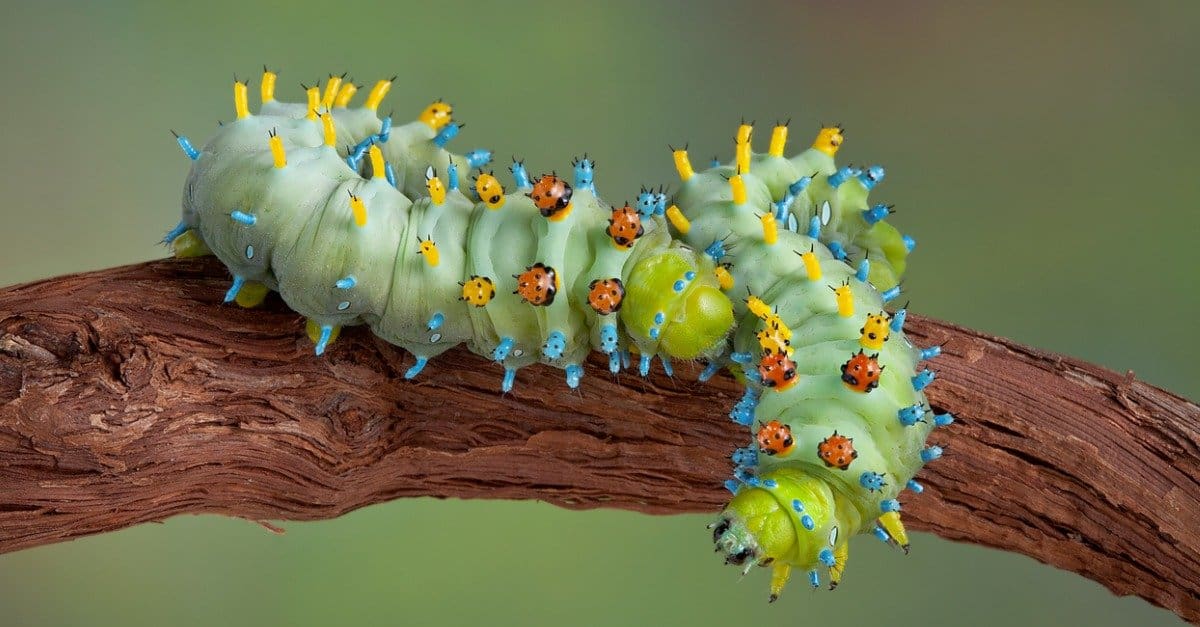
The robin moth (Hyalophora cecropia), or cecropia moth, is black with short bristles reaching four inches long and ¾ inch in diameter. The caterpillar will change from black to green with a blue tinge. It has two pairs of orange and eight yellow knob-like tubercles on the back. There are smaller pale blue and yellow-white tipped tubercles along the sides. This caterpillar chooses wild cherry, plum, elderberry, maple, willow, boxelder, apple, birch, lilac, walnut, pecan, elm, beech, and poplar trees and shrubs as its food choices.
1. Hickory Horned Devil
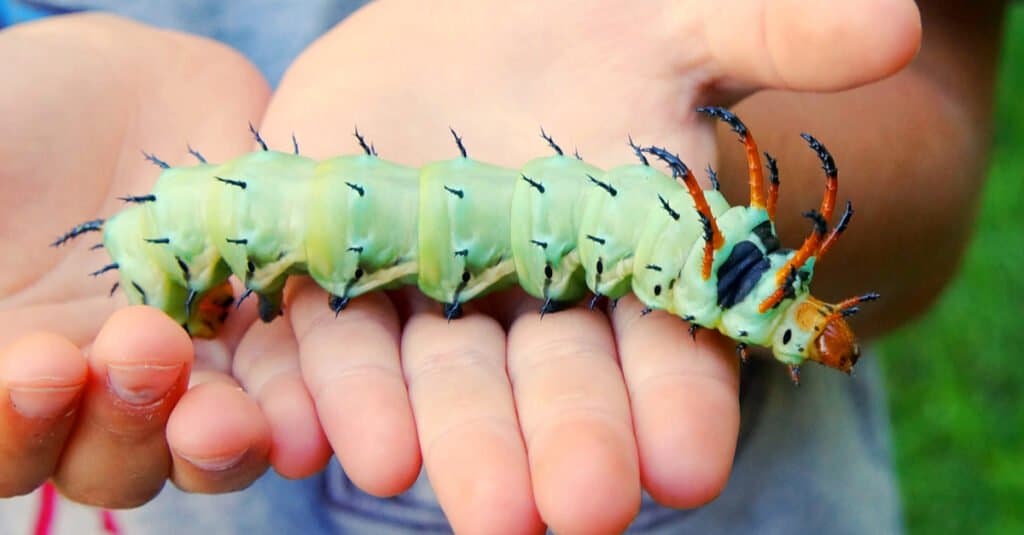
Hickory-horned devils have a distinctive appearance.
©Matt Jeppson/Shutterstock.com
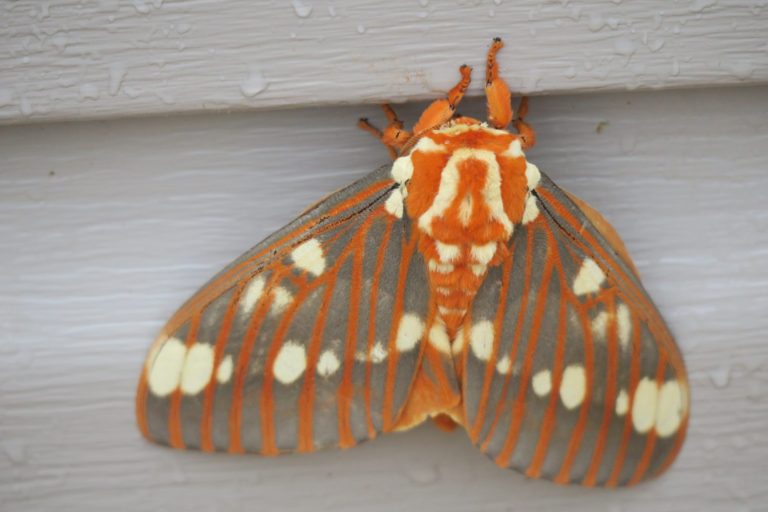
The hickory horned devil (Citheronia regalis) is the larva of the regal moth or royal walnut moth. It earns the name because of its appearance. Its back is covered with bristles that have a series of hairs on them. There are five pairs of long, curving hornlike features on the back of the head area. The remaining body area has shorter spikes that are orange with black tips. The body is a deep blue-green to tan color. This caterpillar grows between five and six inches long and is 0.75 inches in diameter. Feeding for 37 to 42 days, it chooses hickory, walnut, butternut, pecan, ash, lilac, persimmon, sycamore, sumac, and sweetgum leaves. The hickory horned devil burrows underground.