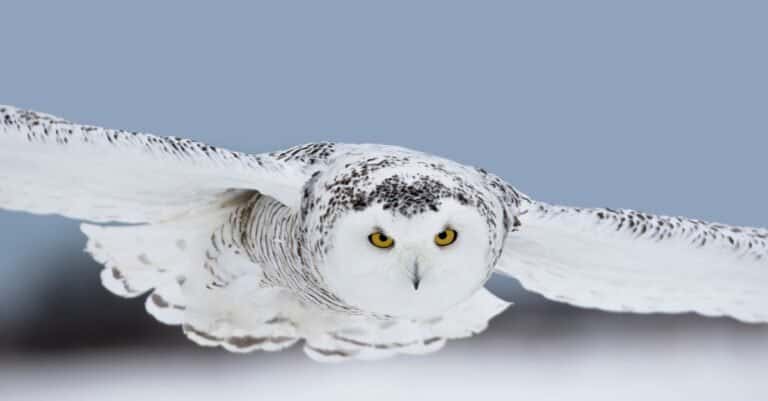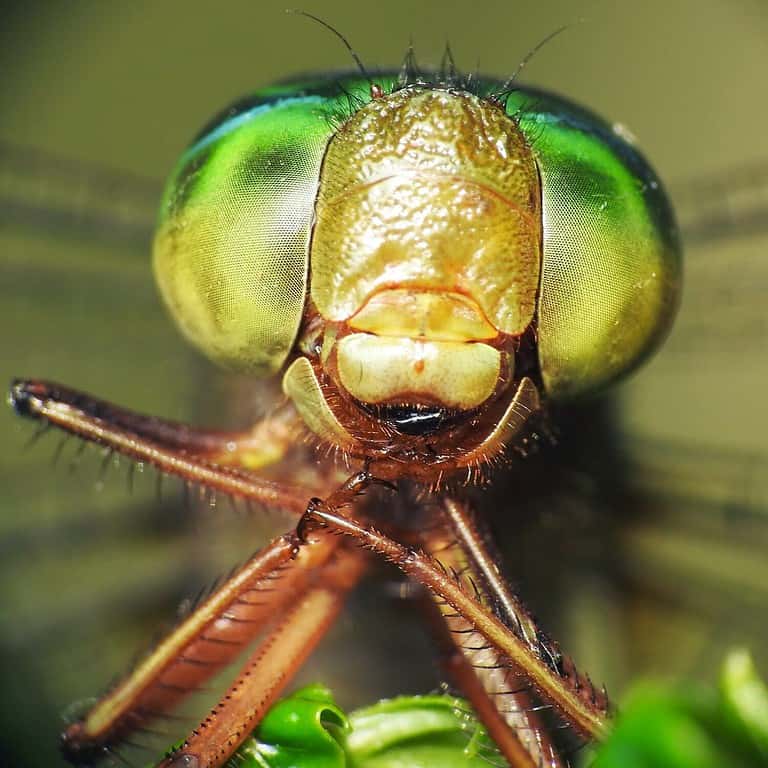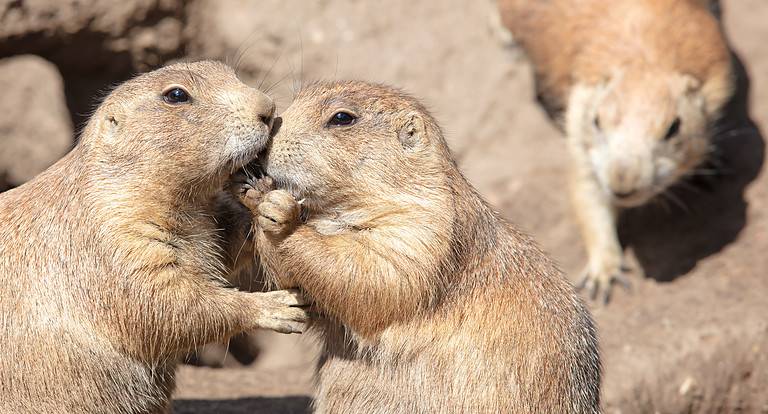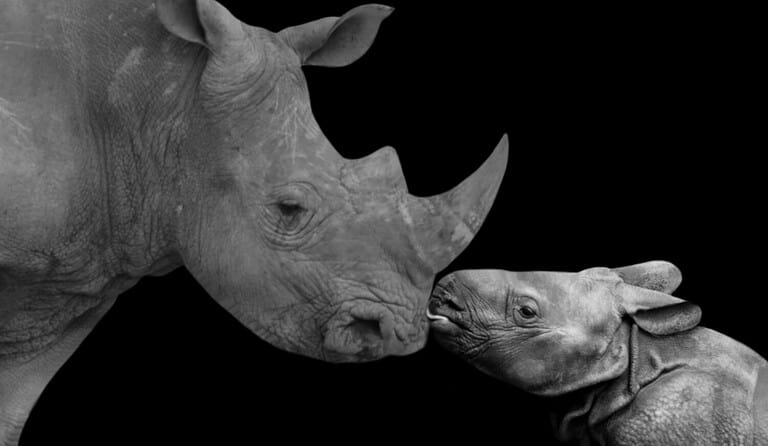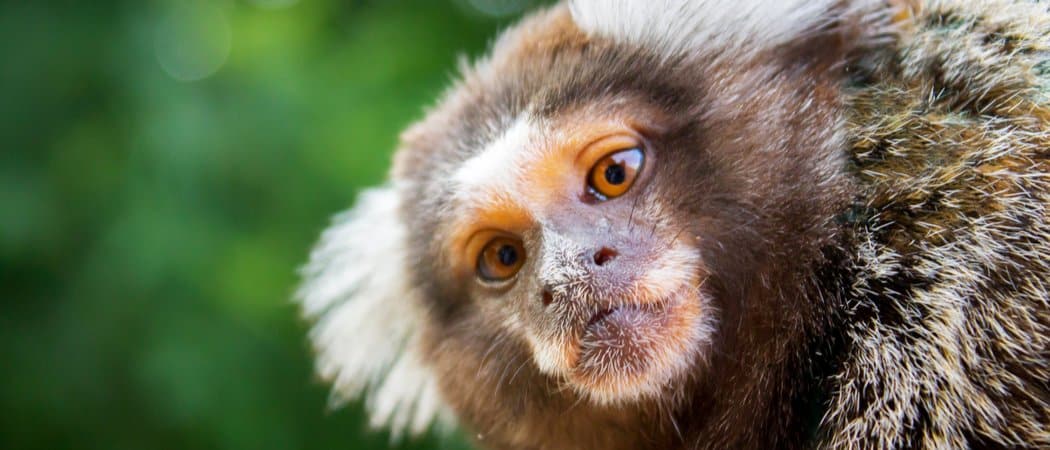

Animals with large eyes are often perceived as adorable due to a psychological phenomenon called kindchenschema, or baby schema. Prominent, large eyes are a key aspect of the kindchenschema, sometimes referred to as the science of cute. Kindchenschema influences perceptions of attractiveness and elicits nurturing and protective instincts, and the 14 large-eyed animals on our list perfectly illustrate why. Continue reading to discover 14 animals with disproportionately large eyes.
14. Tree Frog
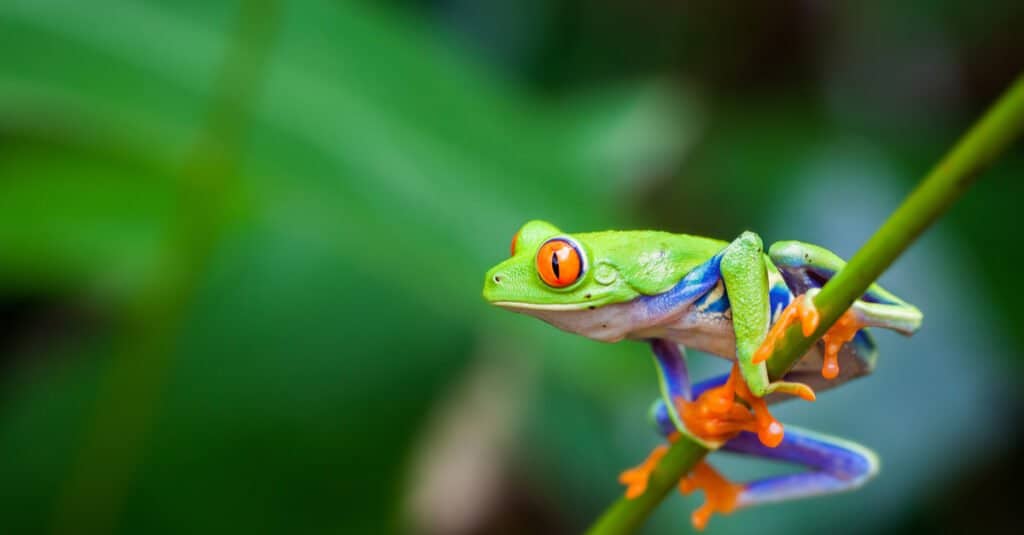
The tree frog scares away predators with its big red eyes.
©Dynamicfoto/Shutterstock.com
The tree frog (Hylidae) has eyes that protrude from its head. Its large eyes are used as a defense mechanism, called startle coloration. Should the tree frog close its eyes, the eyelids, like its body, blend into their leafy ecosystem. If approached by a predator, the frog will open its eyes. The startling action of the large eyes paralyzes the predator, even if only momentarily. In that brief moment, the tree frog has an opportunity to escape.
13. Sphynx Cat
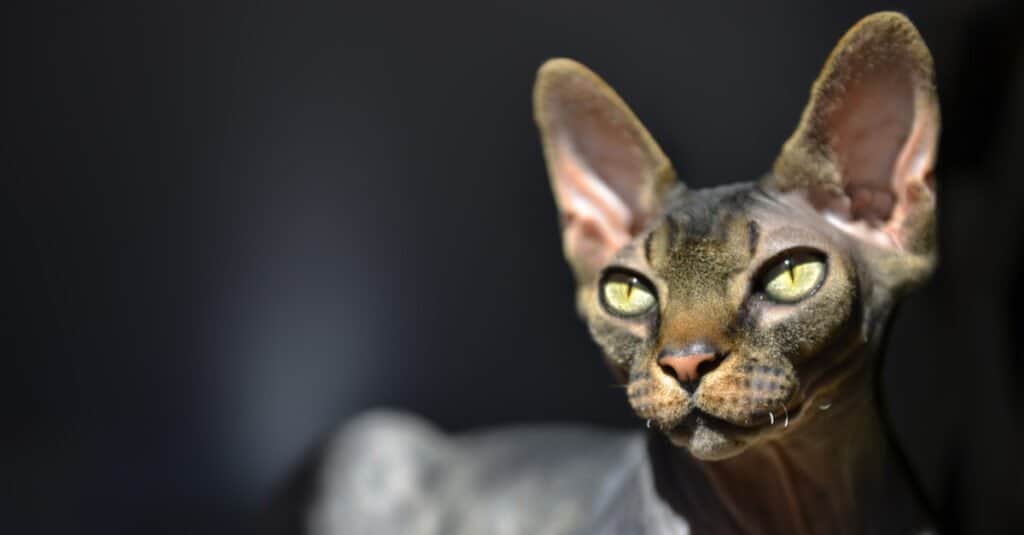
A Sphynx kitten’s eyes typically open within three days of birth, though some kittens are born with their eyes open.
©Sylvie Corriveau/Shutterstock.com
The intensity of Sphynx cat eyes is mesmerizing. Sphynx cats can have a variety of eye colors, including blue, green, gold, copper, and hazel. Their large, almond-shaped eyes and their hairless bodies make Sphynx cats unmistakable. The Sphynx often has sparse or absent eyelashes, leaving its eyes less protected from airborne debris. This lack of natural protection can lead to irritation and secondary infections if the eyes are not cleaned regularly.
12. Swordfish
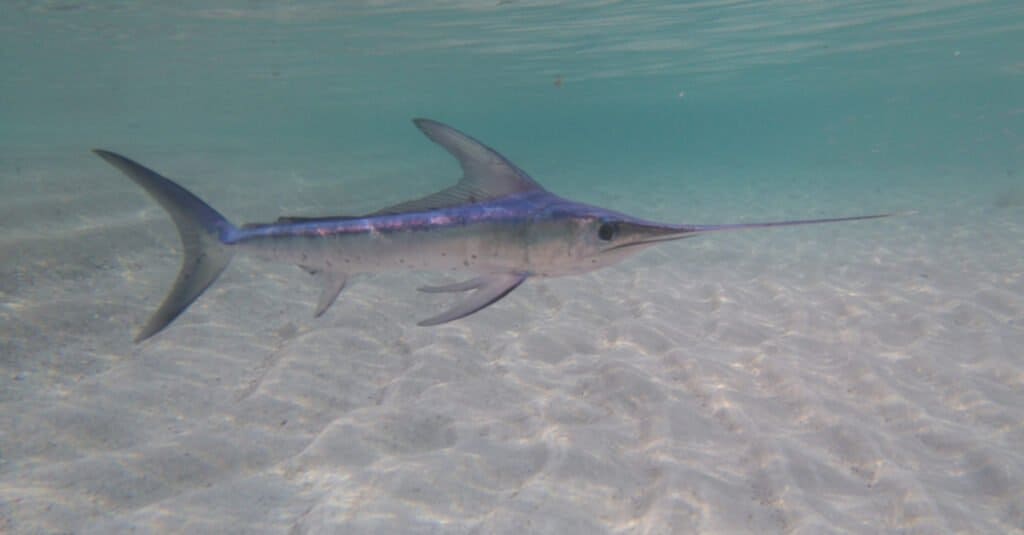
Like other ocean creatures such as the mako shark, swordfish use ocular heating for keen vision.
©SVITO-Time/Shutterstock.com
A swordfish’s eye is the size of a softball. Swordfish (Xiphias gladius) use ocular heating to give them superior vision. Ocular heating is a specialized physiological adaptation that warms the swordfish’s eyes and brain, enhancing its vision in cold, deep waters. Heating is activated by modified eye muscles that generate heat through a process called thermogenesis. By maintaining elevated temperatures in their eyes and brain, swordfish improve neural processing and visual acuity, giving them a hunting advantage in the dark, cold depths of the ocean.
11. Animal with the Largest Eyes: Chameleon
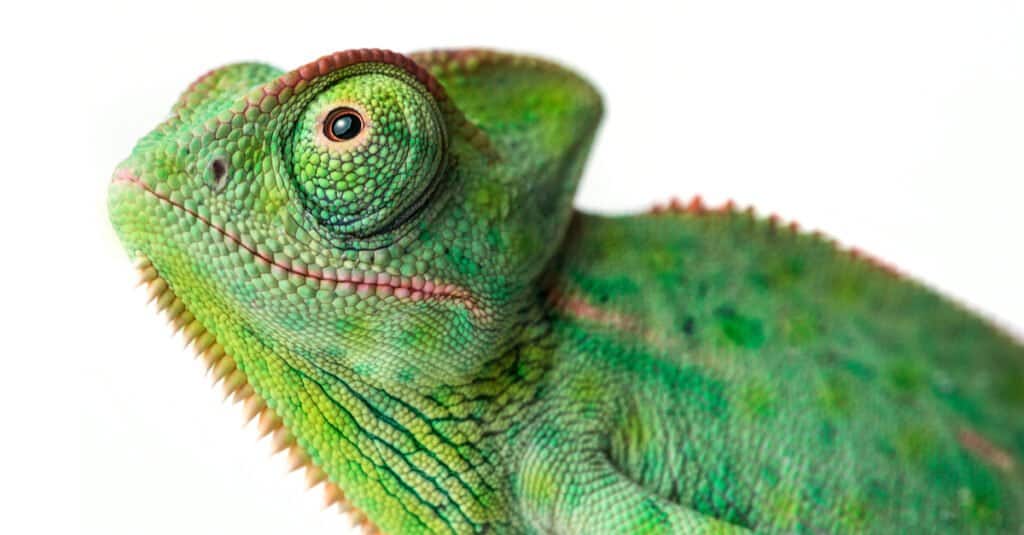
The eyes of a chameleon offer 360-degree views.
©Kuttelvaserova Stuchelova/Shutterstock.com
Chameleons aren’t just masters of disguise; they have the most colorful eyes among animals. Their eyes have multiple layers of skin. Similar to their ability to change skin color, the eye facility helps them blend into the environment to escape danger. The chameleon can move its eyes independently, giving it a combined field of vision that approaches 360 degrees. They can also switch their vision between binocular and monocular. This feature lets them view a scene with both eyes or form two images, one with each eye.
10. Horsfield’s Tarsier
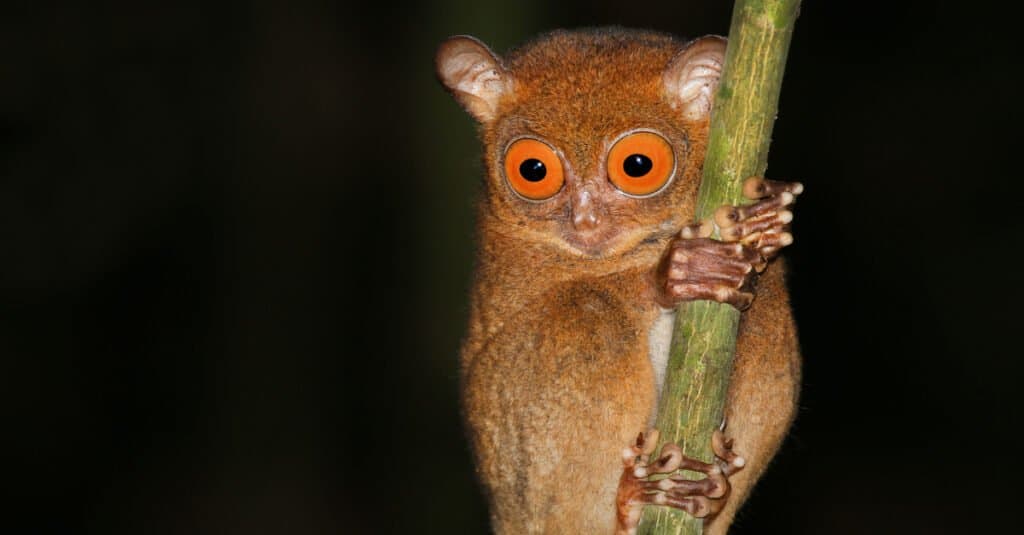
The nocturnal Horsfield’s tarsier has eyes bigger than its brain.
©Ryan M. Bolton/Shutterstock.com
Horsfield’s tarsier (Tarsiidae) is a small, relatively uncommon haplorhine primate species found in the lowland jungles of Southeast Asia. In the world of mammals, the tarsier has the largest eyes-to-body-size ratio. Each eye has the same volume as the tarsier’s brain. The tarsier is a furry little critter with thin limbs. Nocturnal, tarsiers use their thin ear membranes to capture sound while they forage and feed. The tarsier is also proficient in jumping, leaping, and climbing.
9. Colossal Squid
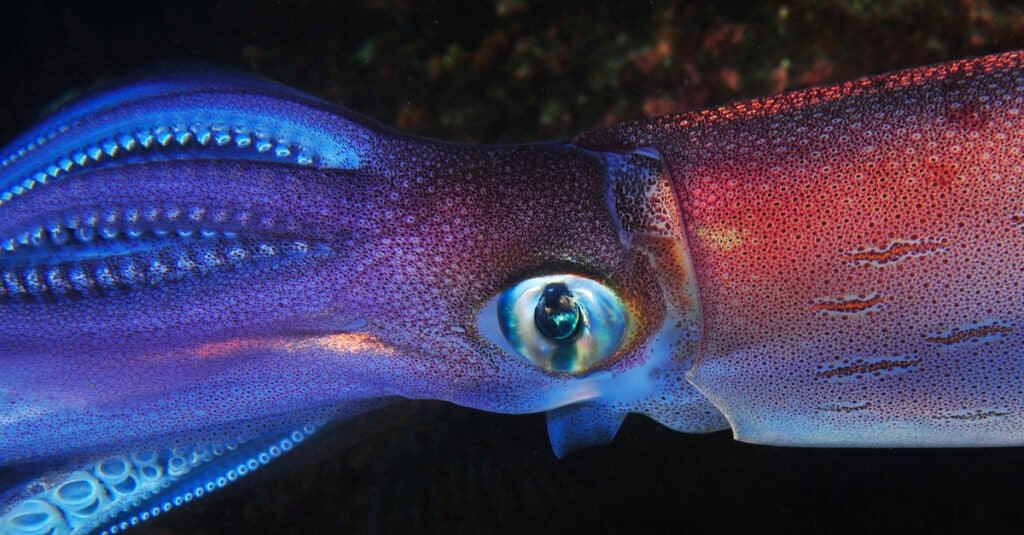
The colossal squid has enormous eyes that assist it in finding prey in the dark ocean depths.
©Rui Palma/Shutterstock.com
The colossal squid (Mesonychoteuthis hamiltoni) is one of the world’s largest animals. It resides in the deepest waters of Antarctica. Besides its eyes, the creature has other unique attributes, including being the largest invertebrate on the planet. Sperm whales in the squid’s regions show scars from battles with the colossal squid. The eyes of the colossal squid face forward to give them proper distance sight. In the little light of the depths, they can spot food and predators. Each eye can reach up 11 inches in diameter, making them among the largest eyes of any animal.
8. Rabbit
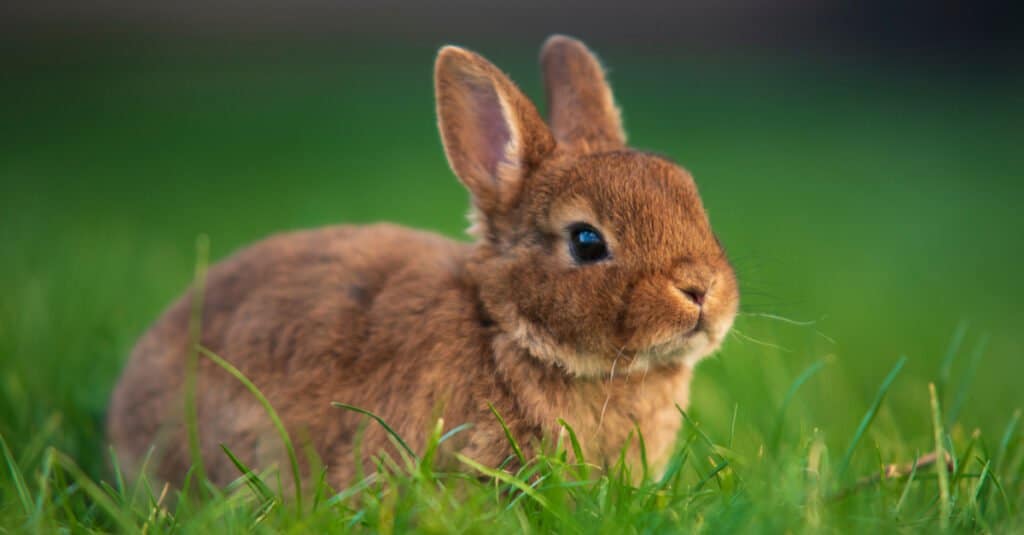
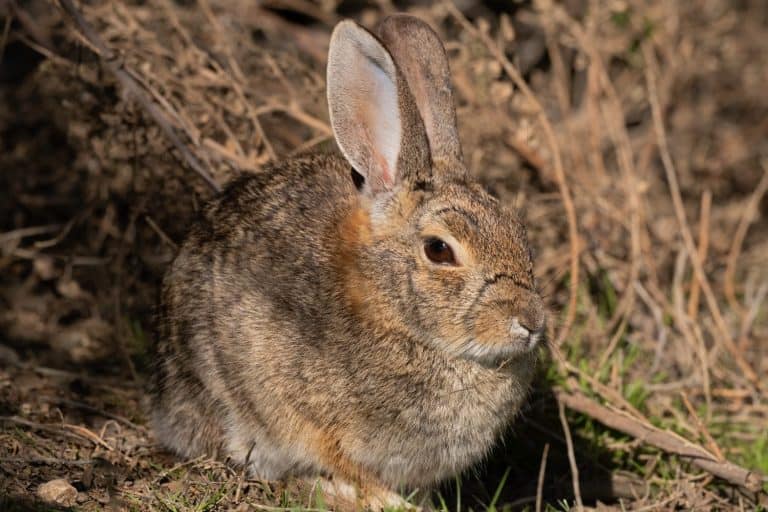
Rabbits have large eyes on the sides of their heads, which enables them to spot predators from more than one direction.
©Borievky/Shutterstock.com
Rabbits are mammals belonging to the order Lagomorpha. Rabbit eyes come in a variety of colors but tend to be dark. Rabbit eyes are located on opposite sides of their head. This gives rabbits a panoramic field of vision. Without turning their heads, rabbits can see nearly 360 degrees, including above their head, with only small blind spots in front of their nose and behind their hea. But their sense of smell and whiskers compensate for this deficit. Rabbits can also sleep with their eyes open, closing them only when they feel safe.
7. Dog

Unlike humans, dogs have a membrane that acts as a third eyelid to protect their eyes.
©Nature Art/Shutterstock.com
When we say puppy eyes, we’re talking about that sad, inquisitive, BIG-eyed gaze so many dog lovers can’t resist. Studies show that dogs generally have eyes similar in size to humans. However, dogs have a larger cornea and a bigger iris. That feature is what gives your pooch the ability to create those incredibly expressive eyes. Dogs also have a tapetum lucidum, a layer in the eye that reflects light, which is why dogs’ eyes seem to glow in the dark.
6. Lemur
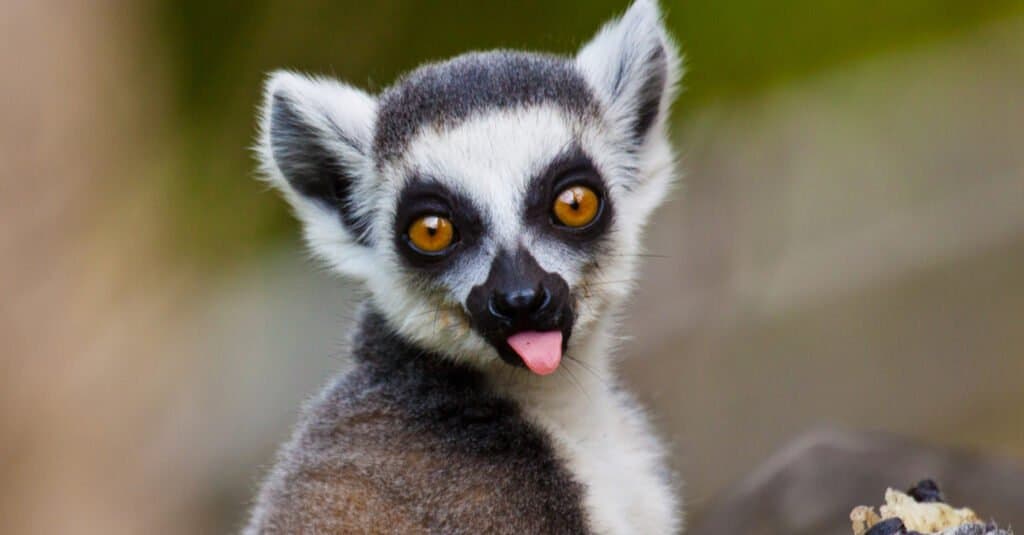
Highly social animals, lemurs live in troops.
©Jearu/Shutterstock.com
Lemurs (Lemur Catta) have tiny snouts and small heads, giving their eyes the appearance of being extremely large. These furry little primates can have a variety of eye colors, including amber, blue, brown, gray, and green. Their eyes have a reflective layer, the tapetum lucidum, which enhances their vision in low-light conditions. The blue-eyed black lemur (Eulemur flavifrons) is the only primate besides humans known to have blue eyes.
5. Owl
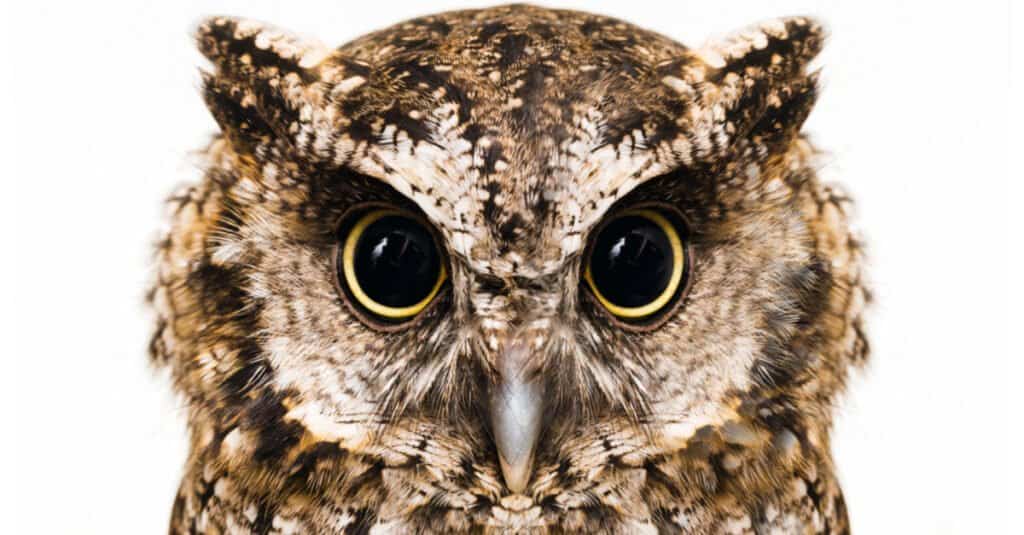
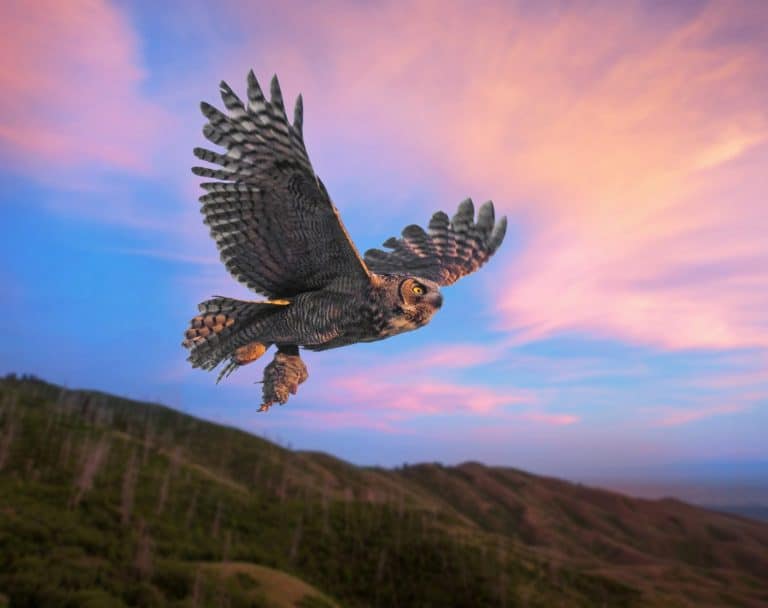
Binocular vision allows owls to see in three dimensions and gauge distance.
©RHJPhtotoandilustration/Shutterstock.com
Owls (Strigiformes) have large, round eyes. Nocturnal, the owl sees well in low light, offering a great advantage for hunting. Owls have some of the best night vision among animals, surpassing that of cats. The great grey owl (Strix nebulosa) has huge black pupils that allow it to see better than any other nocturnal animal. Owl eyes are immobile. Owls can only see directly in front of them, necessitating the turning of their head, which they can rotate 270 degrees in either direction.
4. Pygmy Marmoset
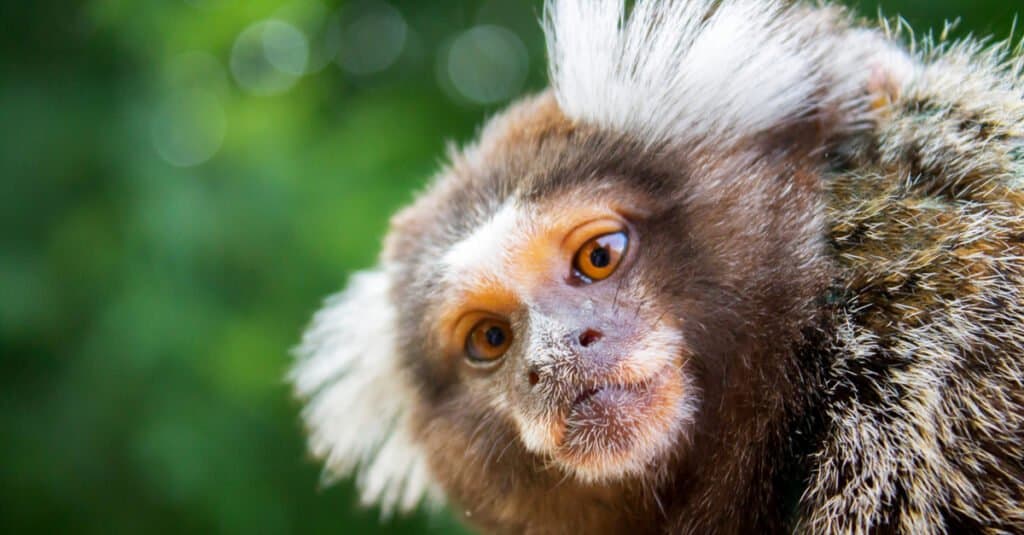
Though they are the smallest marmoset species, pygmy marmosets have large eyes.
©donikz/Shutterstock.com
The pygmy marmoset (Cebuella), an arboreal primate, has keen eyesight for spotting predators and food. These tree-dwelling primates are known for their expressive eyes. They have highly acute vision, and some females possess trichromatic color vision, which is rare among mammals. Marmosets are also known to follow gaze direction, both of humans and other marmosets.
3. Ostrich
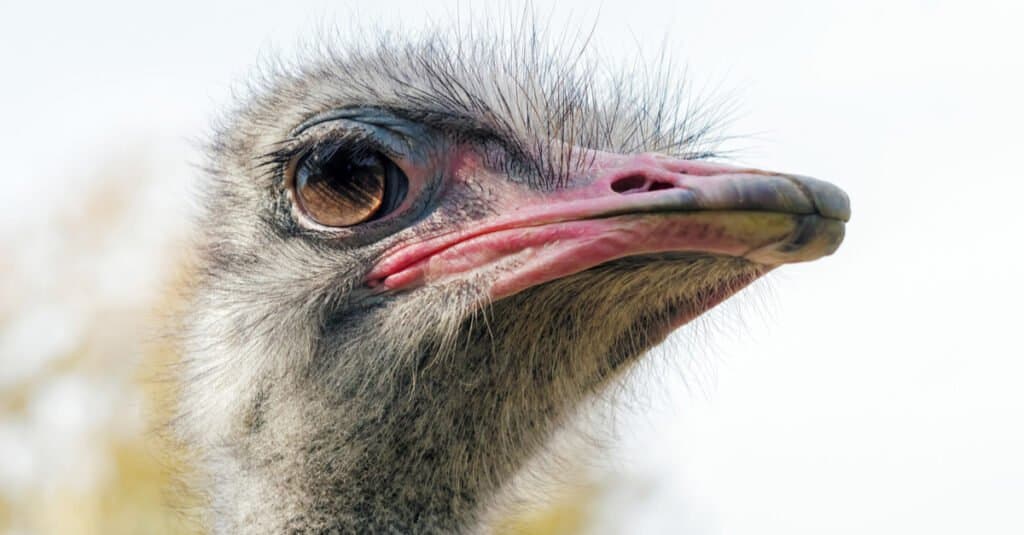
The ostrich has the largest eyes of any bird in the world.
©Allexxandar/Shutterstock.com
The ostrich (Struthio camelus) has the largest eyes of any land animal. Their eyes have a diameter of two inches, making them about the size of a pool ball and five times larger than a human’s. As Mother Nature tends to balance things out, the ostrich’s brain is smaller than its eyeballs. Ostriches have excellent eyesight and can spot predators or objects at great distances in daylight.
2. Zebra Black Spider
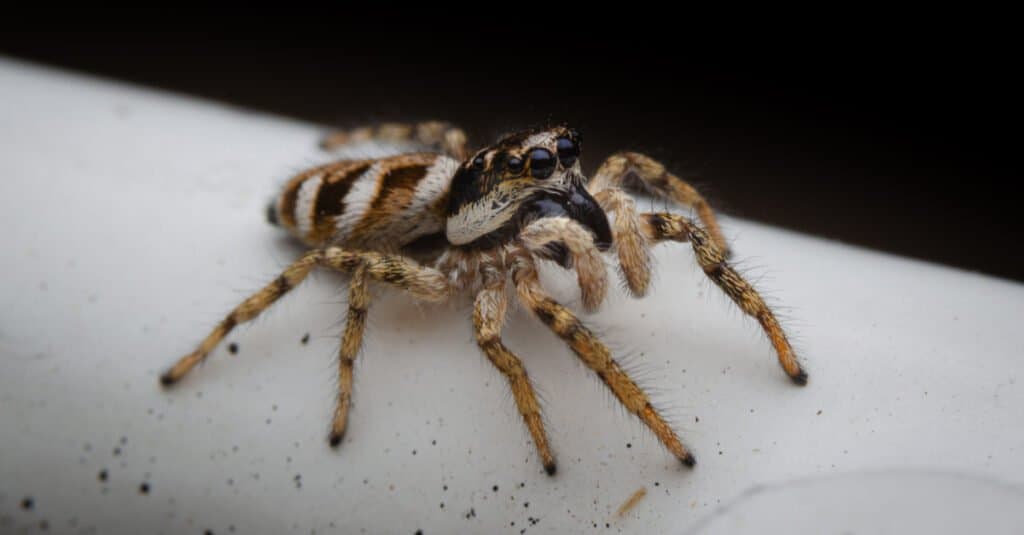
The zebra black spider has excellent binocular vision.
©Mario.Pieper/Shutterstock.com
The zebra black spider (Salticus scenicus) is a small jumping spider with a stocky, striped body and short legs. Relative to its body size, this spider has large eyes. Their eyes are the largest feature of their faces and tend to be dark. Zebra black spiders have eight eyes. The two large eyes on the front of the head provide binocular vision. The other six eyes are on the sides of the head, giving the spider a 360-degree panoramic view of its surroundings.
1. Slow Loris
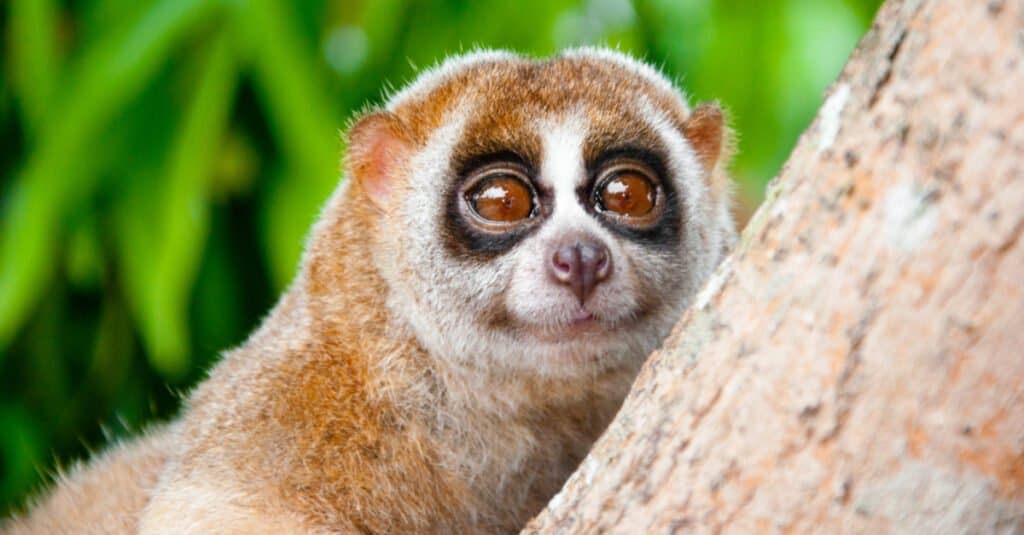
With its big, round eyes, the slow loris is a nocturnal hunter.
©kunanon/Shutterstock.com
The slow loris (Nycticebus) has big, expansive, saucer eyes. Don’t let their appearance fool you. They may look like the cutest stuffed animal, but their bite is dangerous. The venom delivered through a slow loris’ bite is capable of causing necrosis. While slow lorises primarily use their venom in conflicts with other lorises, their bites can also be dangerous to humans. When threatened, the slow loris is likely to remain motionless and wait for the danger to pass.