
Quick Take
- Minnesota does not have an official state animal, but it has a state bee, bird, butterfly, and fish.
- The common loon was designated the state bird in 1961 due to their abundant populations in the state.
- The rusty-patched bumble bee was designated the official state bee in 2019 to raise awareness about the need for conservation.
- A Mahtomedi 4th-grade class proposed the monarch butterfly as Minnesota’s official state butterfly.
Minnesota is located in the north-central part of the U.S. in the Upper Midwest region. The state is home to diverse natural landmarks, from glacial lakes to northern forests and tallgrass prairies. These habitats support white-tailed deer, moose, timber wolves, Canada lynx, bobcats, otters, badgers, elk, bald eagles, and many other iconic animals. Although Minnesota hasn’t officially designated a state animal, it does have an official state bee, bird, butterfly, and fish. Read on to learn more about these animals and discover why they were chosen to represent the state.
1. Rusty-Patched Bumble Bee – State Bee
The rusty-patched bumble bee (Bombus affinis) is endemic to eastern North America. Worker and male bees are covered in bands of yellow and black hair. They can be identified by the brownish-orange patch on the second segment of their abdomen. They also have a black, thumbtack-shaped marking on their thorax. However, queen bees do not have either of these markings. Unfortunately, the rusty-patch bumble bee is listed as an endangered species in the U.S. and parts of Canada. These large bumble bees inhabit underground nests, often in abandoned rodent burrows, in colonies from 200 to over 1,000 bees.
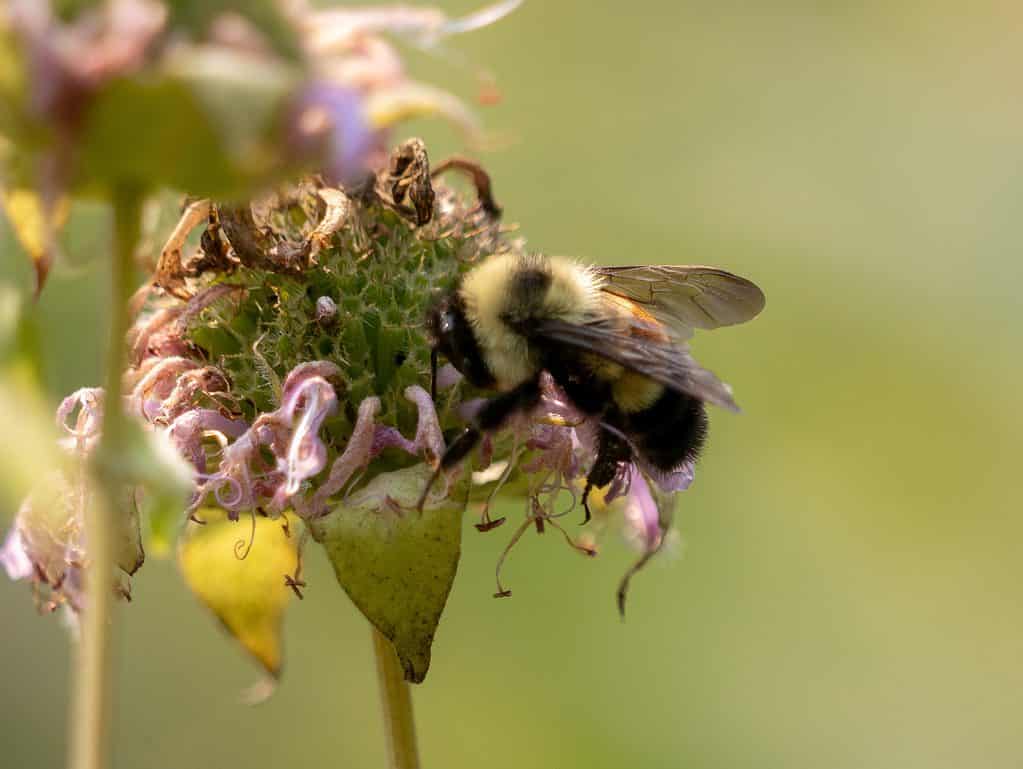
The rusty-patched bumble bee was designated as the state bee of Minnesota in 2019
©Taxomony/Shutterstock.com
Rusty-patched bumble bees are important pollinators of crops, as well as wild flowering plants. It was designated as the state bee of Minnesota in 2019 to raise awareness about the need for conservation and to highlight the role of these pollinators in the state’s ecosystem. Although numbers have declined as much as 95%, there are still small populations in the eastern broadleaf forests in the southeastern corner of the state.
2. The Loon – State Bird
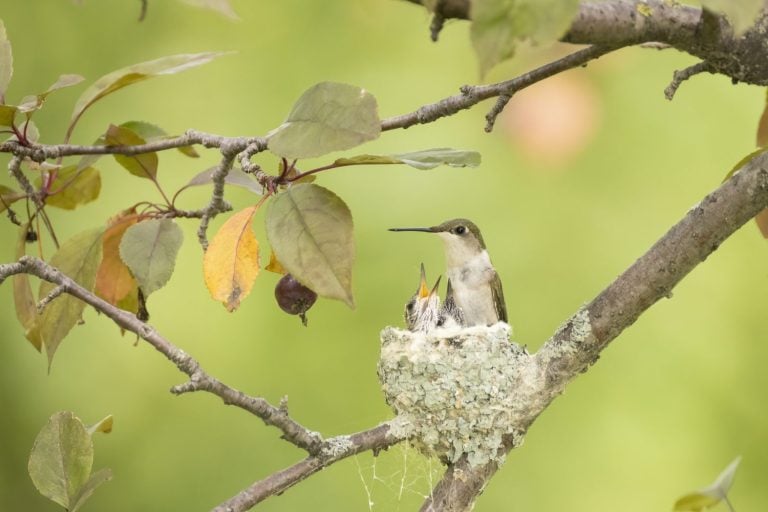
Common loons (Gavia immer) are aquatic diving fowl native to North America and Europe. During the summer, breeding birds are intricately patterned in black and white. During the winter, their colors fade to gray upperparts and white underparts. These birds have red eyes, dagger-like beaks, and short tails that typically cannot be seen. They are large birds that can grow up to 3 feet long, with wingspans measuring over 4 feet.
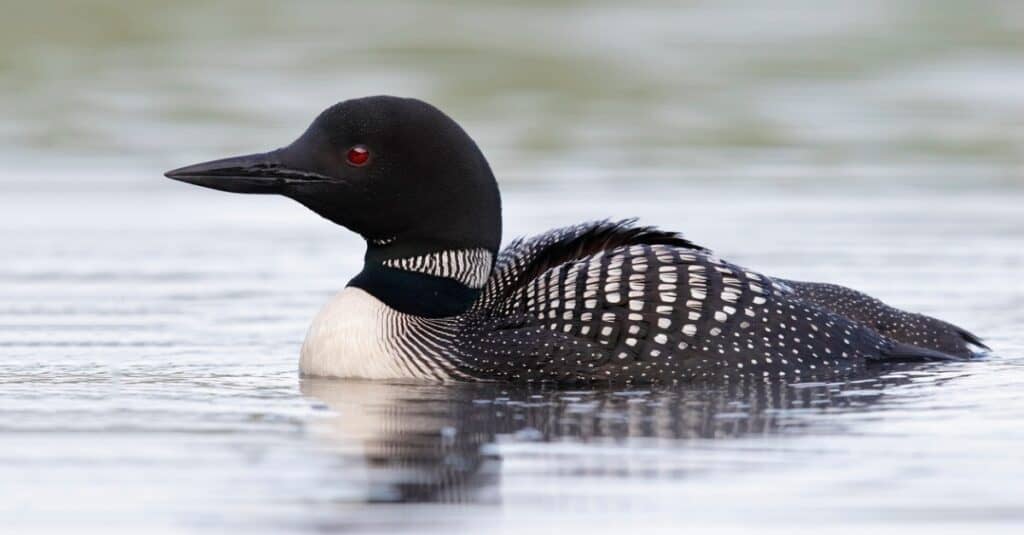
The common loon became the state bird in 1961 due to its historical abundance in the state.
©iStock.com/BrianLasenby
Loons can be very vocal, and the eerie call of one loon often results in a chorus of answering calls. They typically breed on remote lakes in the northern U.S. and Canada, but during the winter and migration, these birds can also be seen in rivers, estuaries, and along coastlines. In 1961, the common loon became the state bird of Minnesota due to its abundance on northern lakes during the summer months. However, recent studies indicate the population is now in decline.
3. The Monarch – State Butterfly
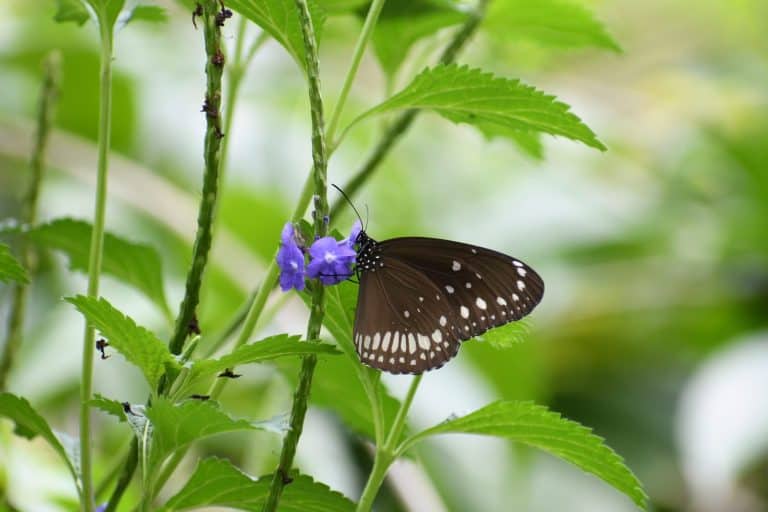
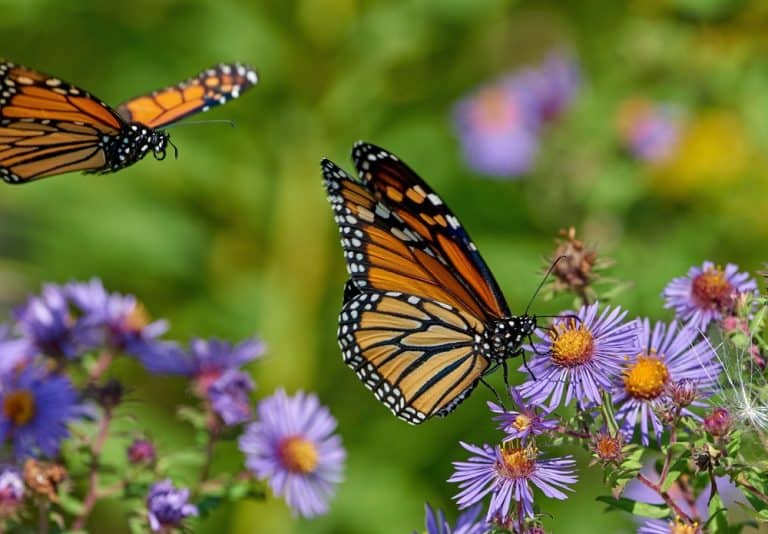
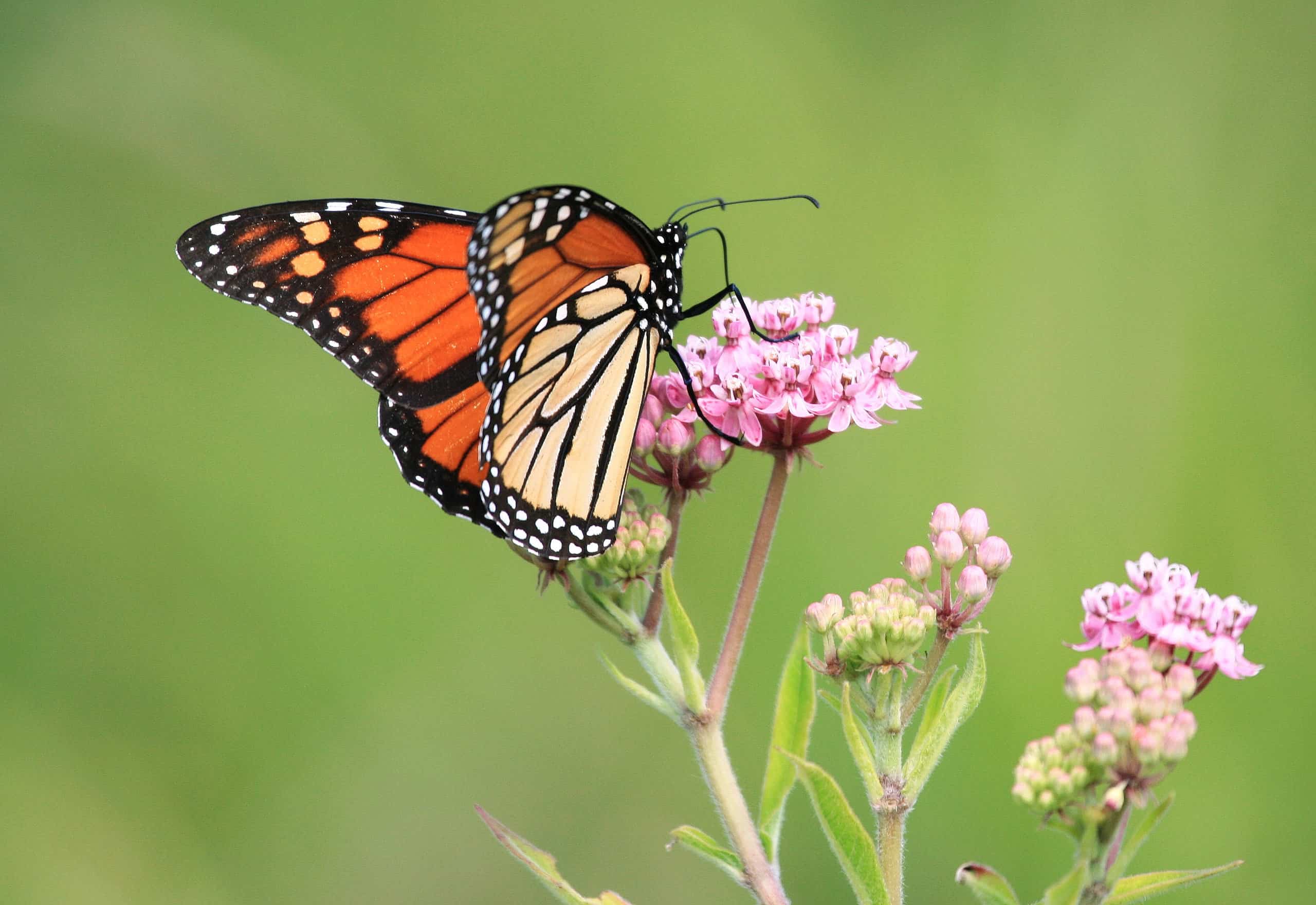
The Monarch butterfly (Danaus plexippus) is one of North America’s most iconic butterfly species, easily recognized by its bright orange wings, black veins, and white markings. Their bright colors are a warning to predators that they are toxic. Monarch butterflies lay their eggs on their host plant, milkweed, which contains toxins called cardenolides. Monarchs are large butterflies, with wingspans of up to 4 inches.
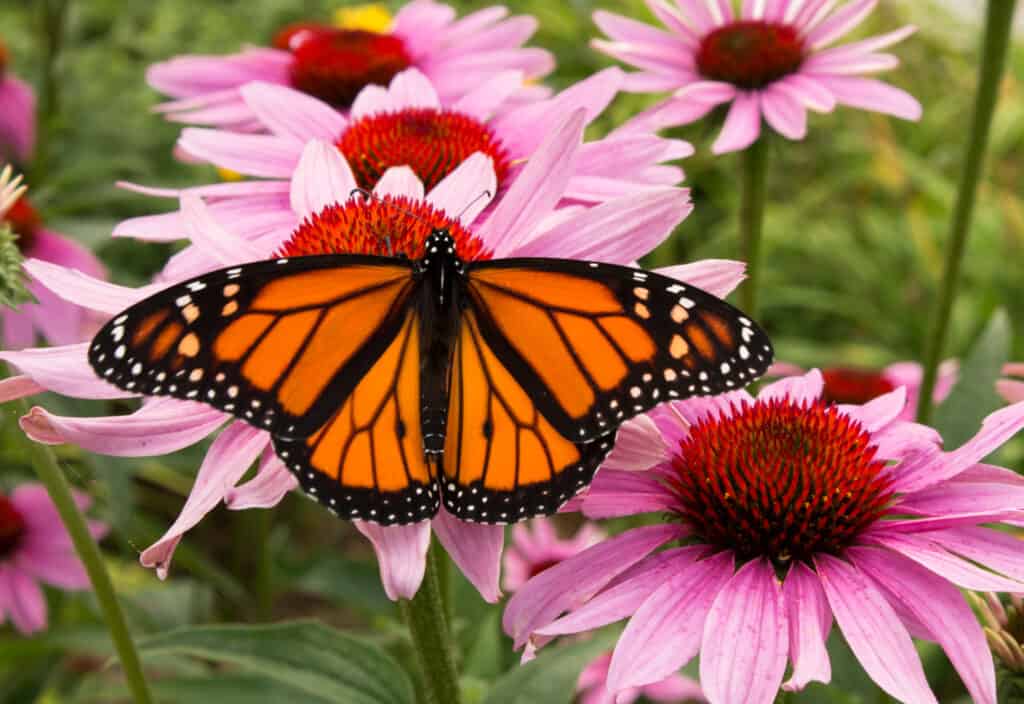
A fourth-grade class in Mahtomedi nominated the Monarch as a state symbol.
©Media Marketing/Shutterstock.com
Monarch butterflies are common in fields, gardens, and parks across Minnesota from May through October. Up to four generations of monarchs may be hatched during this short time. However, only the last generation will migrate to Mexico during the fall. A fourth-grade class at Anderson Elementary in Mahtomedi nominated the monarch as a state symbol. It was designated Minnesota’s state butterfly in 2000.
4. The Walleye – State Fish
The walleye is a freshwater fish native to the northern U.S. and Canada. It is a popular game fish in Minnesota and can be found throughout the state’s lakes and rivers. However, they are most prevalent in the cold, clear lakes in the northern forests. They prefer deep water, where they remain during the day, but at night, you can find them in shallower waters. These fish have opaque, silvery eyes that are sensitive to light, which enhances their vision in low-light conditions.
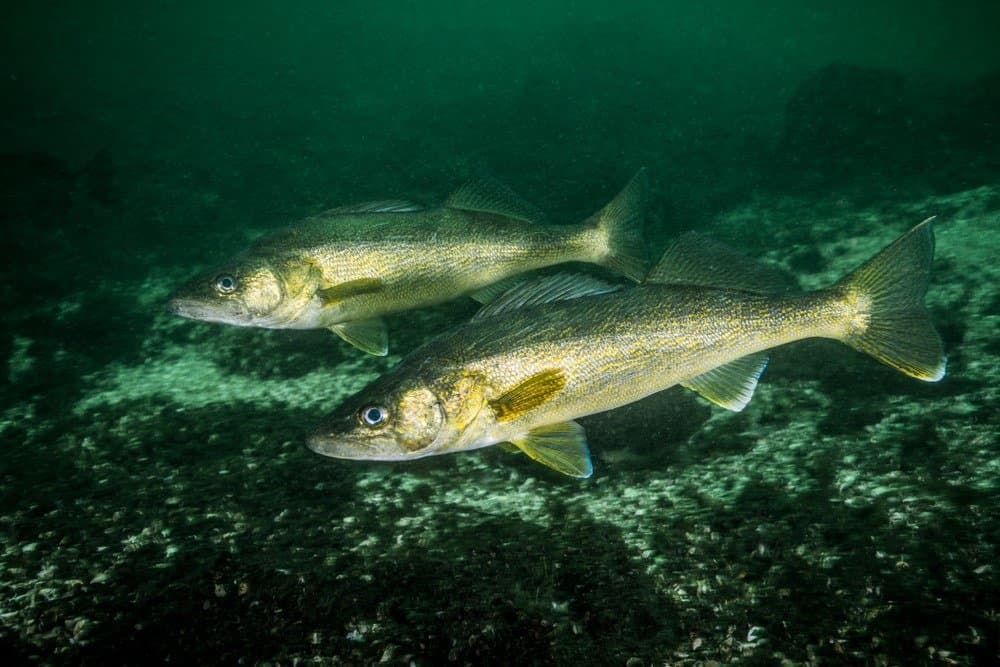
Walleye are a popular game fish in the clear lakes of the northern forests of Minnesota.
©RLS Photo/Shutterstock.com
The average walleye measures between 15 and 20 inches in length and weighs less than 3 pounds. However, they have the potential to grow up to 42 inches long and weigh over 20 pounds. The largest walleye ever caught in Minnesota was said to weigh 17 pounds and eight ounces, measuring 35.75 inches long. The walleye became the official Minnesota state fish in 1965.