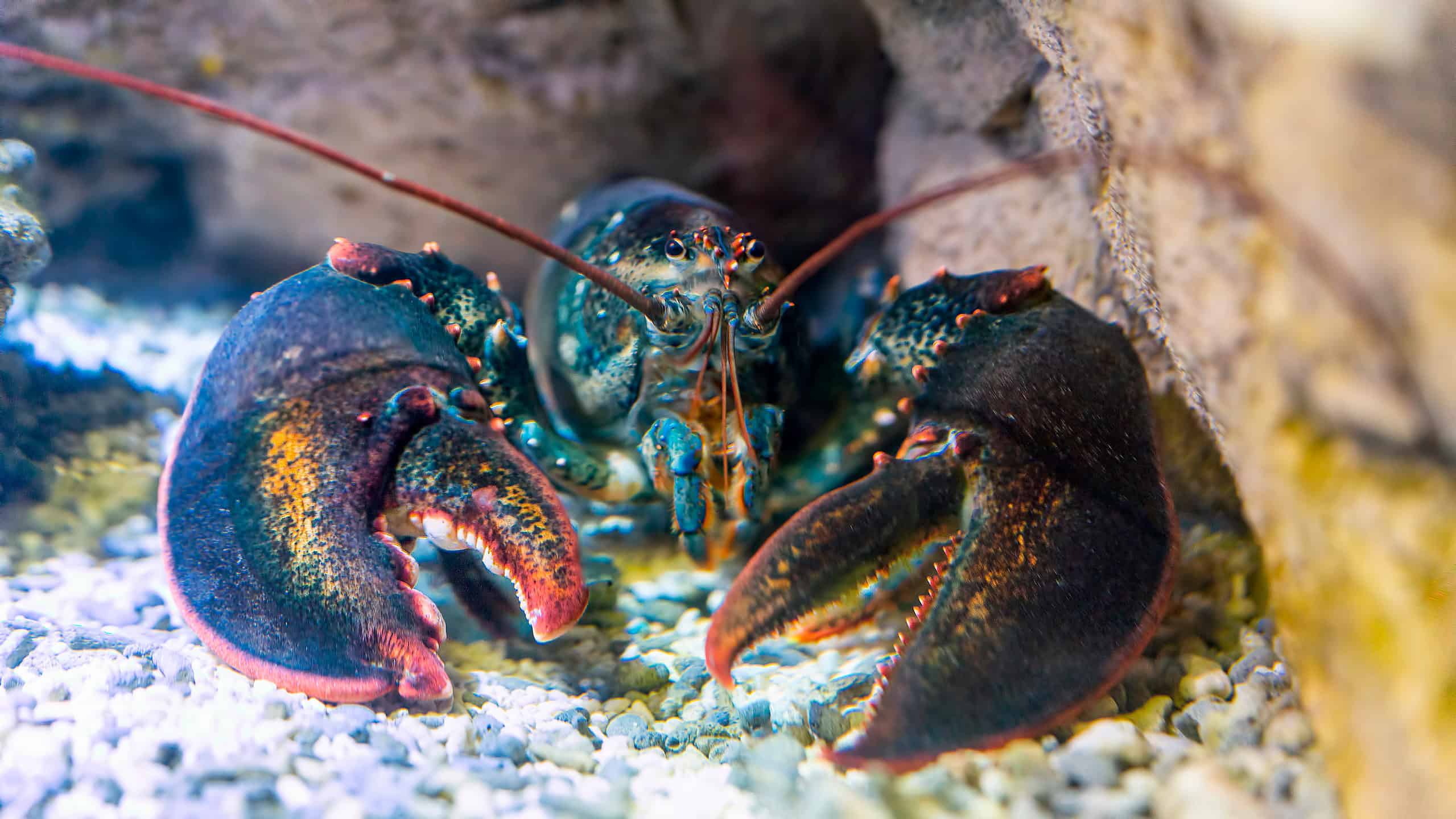

When you think of a fancy, candlelit dinner complete with a white tablecloth, what’s on the table? Lobster? They are not only an important commercial product, but they are also important contributors to their ecosystems around the world. Their heavily muscled tails and large pincers make them easy to recognize, both in the wild and on a dinner plate. So, how large was the largest lobster ever caught, and how do they grow so large? Keep reading to discover these answers and more.
All About Lobsters
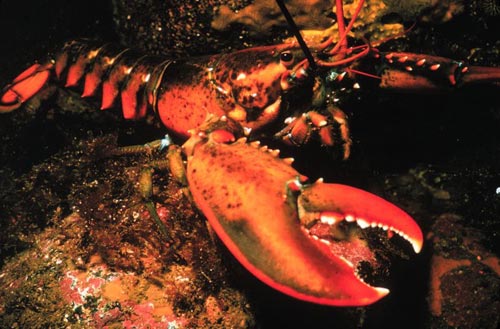
Due to the presence of copper-containing hemocyanin in their bloodstream, lobsters have blue blood.
©NOAA Photo Library / CC BY 2.0, Flickr – Original / License
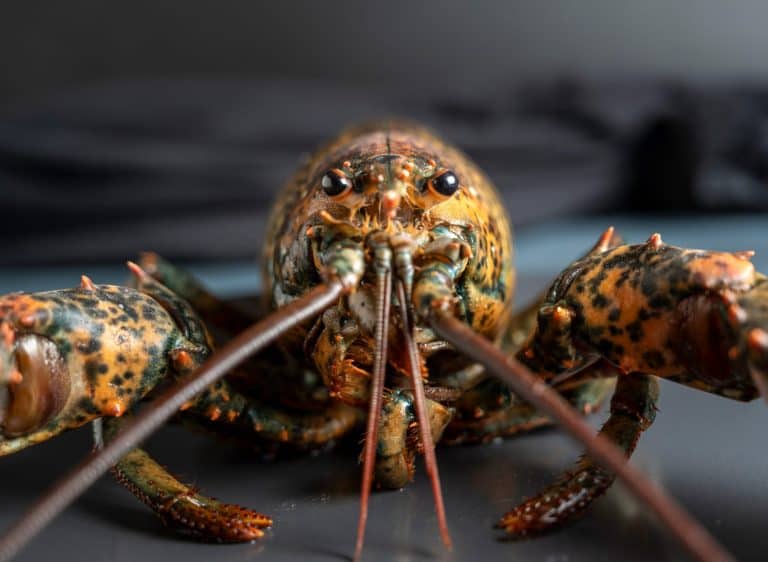
Lobsters are crustaceans, which are a subgroup of arthropods. Lobsters are the largest arthropods by weight in the world. Other crustaceans include barnacles, crabs, crayfish, krill, prawns, and woodlice. Most commercially caught lobsters weigh 1-4 pounds and are 10-20 inches long. These crustaceans inhabit oceans around the world, though they are most numerous in the North Atlantic, where they live solitary lives in rocky crevices or burrows.
Although it’s difficult to accurately determine the age of wild lobsters, they are thought to live between 40 and 50 years. As omnivores, lobsters have a relatively broad diet. They typically eat other crustaceans, worms, mollusks, fish, and some vegetation. There have been observations of cannibalism, but this is rare. Misinterpretations of cannibalism can result from examining the stomach contents of lobsters, which consume their shed skin after molting. Lobsters are prey for humans, a variety of large fish, other crustaceans, and eels.
Where Can You Catch Lobsters?
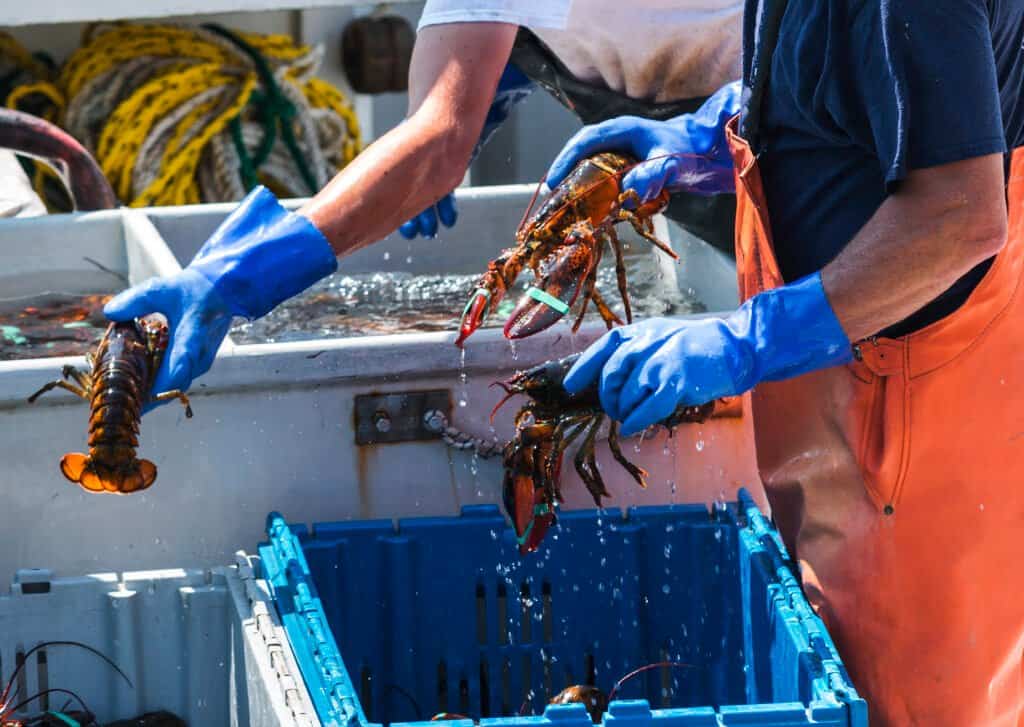
Maine lobsters on a fishing boat are sorted into bins.
©iStock.com/WoodysPhotos
Lobster fishing is fundamental to the North Atlantic commercial fishing economy. In Maine, lobster fishing generated over $528 million in revenue in 2024, with 2023 revenue reaching $611 million. However, Nova Scotia, Canada, is the self-proclaimed lobster capital of the world, exporting approximately $2.9 billion worth of lobster annually, with about 67% sold to the United States. California spiny lobsters are common on the Pacific Coast and are very popular among recreational fishers. The most common method of catching lobsters is using a baited one-way trap, called a lobster pot.
Lobster fishing, both by hobbyists and for commercial purposes, relies on many different techniques. In addition to the lobster pot, lobster fishing can include trawling, gill nets, hand-fishing, and spearfishing. Trawling and gill net usage are heavily restricted and, in many countries, are only permitted for commercial use.
The Largest Lobster Ever Caught
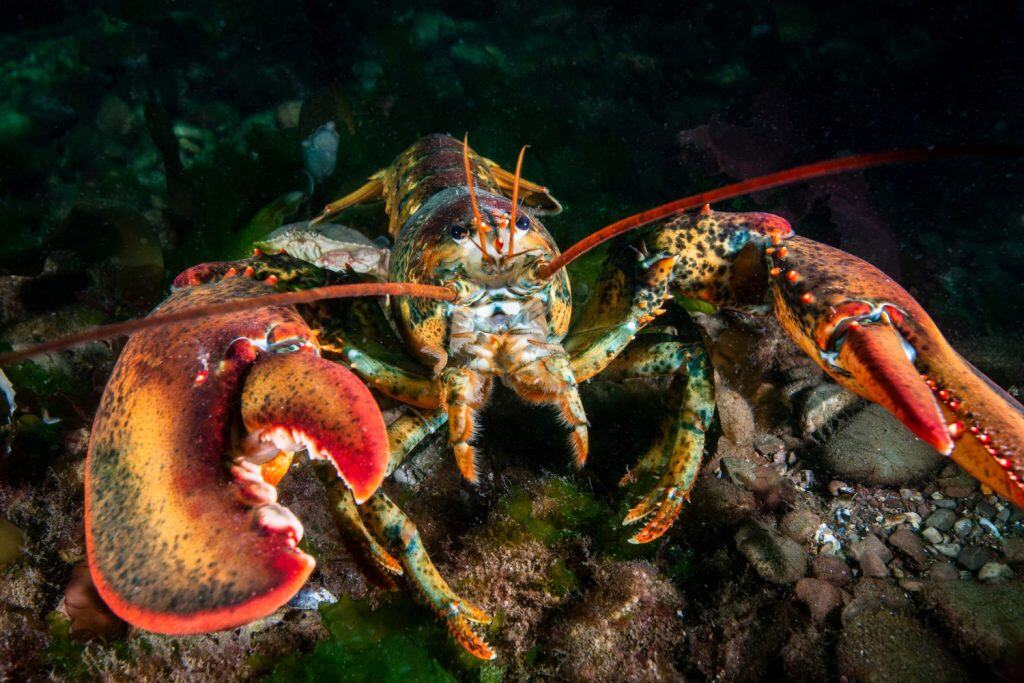
An American lobster holds the record for the largest lobster ever caught.
©RLS Photo/Shutterstock.com
The Guinness World Record for the largest lobster ever caught was awarded to a lobster that weighed a whopping 44 pounds and 6 ounces. It measured 3 feet and 6 inches from the tip of the claw to the end of the tail. This lobster was an astonishing catch made in Nova Scotia, Canada, in 1977.
The enormous crustacean is believed to be over 100 years old. Lobsters continue growing throughout their lives, so a longer-lived lobster has the potential to grow well above average size. The record-holding Nova Scotian lobster belonged to the species Homarus americanus, also known as the American lobster.
Six of the Largest Lobsters on Record
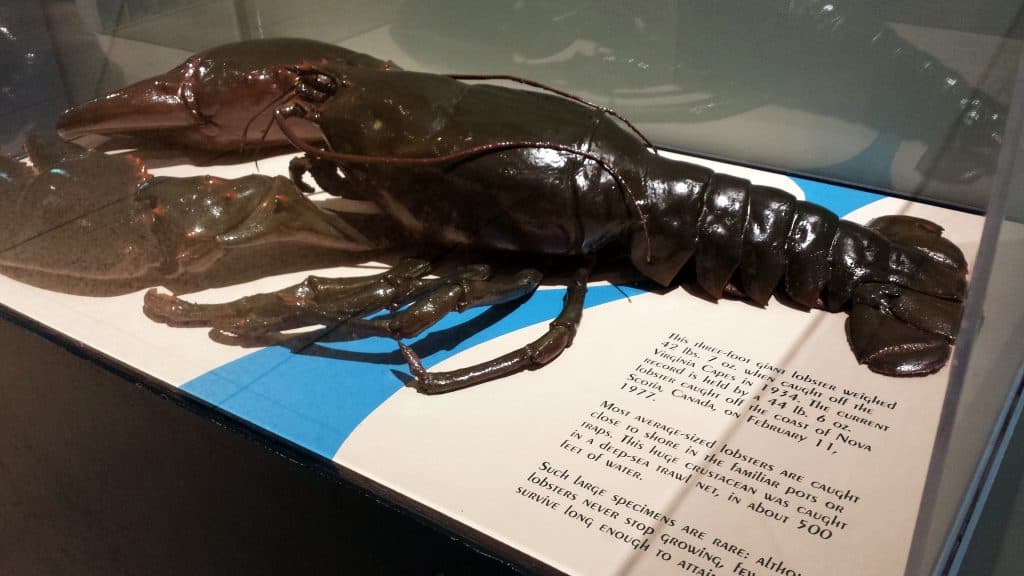
Mike was a 42 pound, 7 ounce lobster caught in 1934 off the Virginia Capes.
As mentioned above, one reason lobsters get so large is because they never stop growing. Humans produce an enzyme called telomerase in the early stages of life that aids growth; however, lobsters never stop producing this enzyme. That means that the biggest lobsters are also the oldest.
If lobsters never stop growing, why aren’t even more massive lobsters found? In short, as lobsters age, the energy required to molt becomes too great, and they stop shedding. With a rapidly aging exoskeleton, lobsters become prone to infections, and scar tissue fuses their shells to their bodies. This causes most lobsters to perish before they reach truly enormous sizes.
Let’s take a look at six of the largest lobsters ever recorded.
- 22 pounds: Louie the lobster had been kept for 20 years at a Long Island clam bar before being released back into the wild in 2017. The media described this lobster as 132 years old.
- 23 pounds: A lobster that became the main attraction at Jordan Lobster Farms on Long Island.
- 27 pounds: In 2012, a 27-pound lobster nicknamed Rocky was caught in Maine. The lobster was 40 inches long and had massive claws. It was returned to the ocean.
- 37.4 pounds: The largest lobster ever caught in Massachusetts was Big George. He was caught off Cape Cod in 1974.
- 38 pounds: A lobster nicknamed Ike was caught off the Virginia Capes in 1934. He was later put on display at the Museum of Science in Boston, Massachusetts.
- 42.4 pounds: Ike’s buddy Mike was also caught off the Virginia Capes in 1934. Mike was likewise put on display at the Museum of Science in Boston, shown in the image above.
Lobster Conservation Status
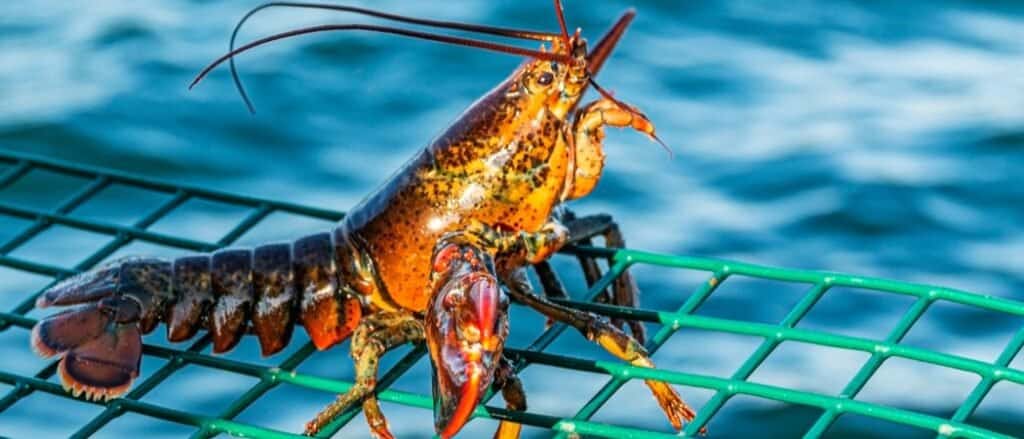
The American and European lobster have a conservation status of Least Concern.
©WoodysPhotos/Shutterstock.com
While increasingly unsustainable fishing practices pose a threat to global lobster populations, lobster populations continue to hold their own and are considered a species of Least Concern by the International Union for Conservation of Nature (IUCN). Implementing limits on lobster harvests around the world provides hope that populations will increase over generations.