
Quick Take
- There are over 3,500 unique mosquito species across the globe.
- The mosquito fish is believed to be the most effective fish species for mosquito control.
- Juvenile turtles are estimated to be able to consume 1,000 to 2,000 mosquito larvae daily.
- Aquatic and semi-aquatic spiders consume mosquito larvae.
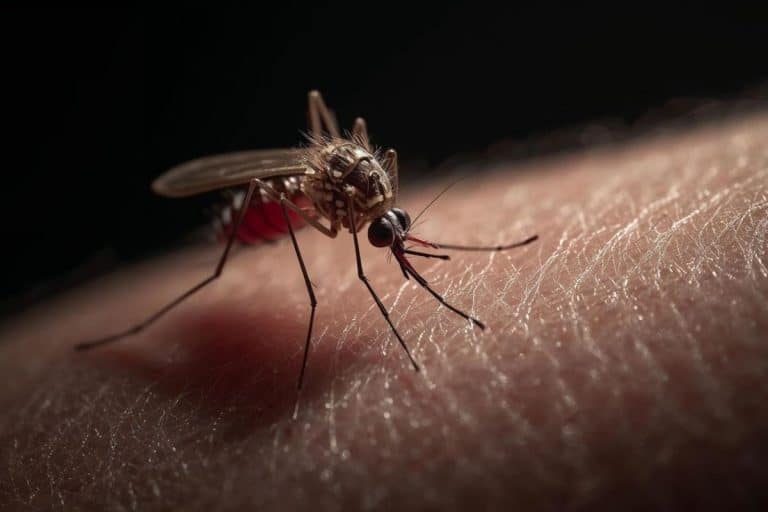
Mosquitoes are small, flying, biting insects found everywhere except Antarctica. They belong to the family Culicidae in the order Diptera, a group considered to be true flies. Across the globe, there are more than 3,500 species of mosquitoes. In the continental United States and its territories, you can find more than 200 species of mosquitoes. In both their larval and adult forms, mosquitoes are an important part of the food web. But what predators eat mosquitoes? Read on to learn more about the animals that prey on mosquitoes.
The Background on Mosquitoes
Among the thousands of mosquito species, only around 12 species spread germs that can make humans ill. This includes Culex mosquitoes, or typical mosquitoes, which are responsible for West Nile virus, as well as heartworm in dogs. Others are considered nuisance mosquitoes. In addition to animals that eat mosquitoes, humans are also a danger to these insects due to the use of pesticides and other control measures.
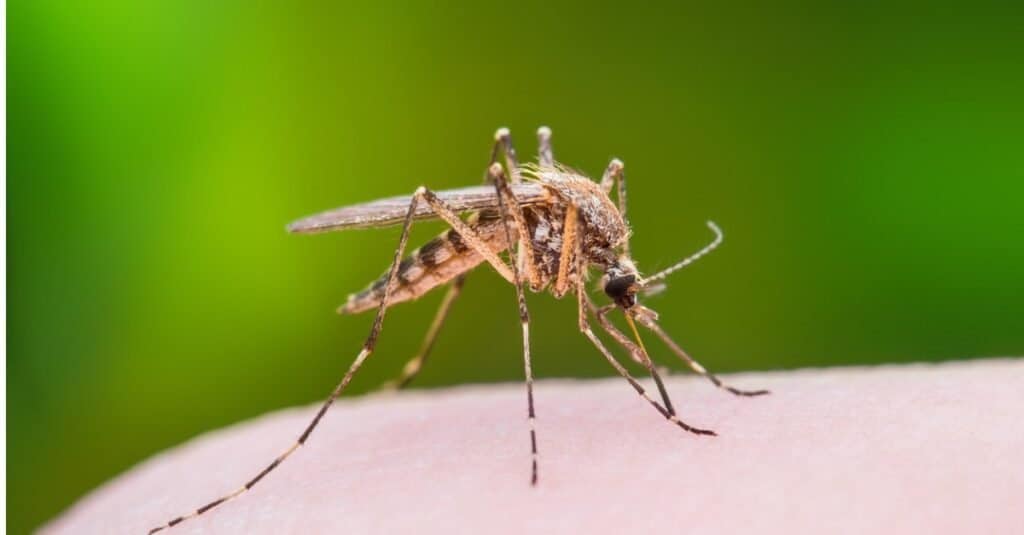
There are over 200 species of mosquitoes in the U.S. and U.S. territories.
©iStock.com/nechaev-kon
All mosquitoes go through a four-stage life cycle, including egg, larva, pupa, and adult stages. However, different species favor different aquatic habitats in which to lay their eggs. While predators in permanent bodies of water help keep mosquito populations down, other types of standing water, such as swamps, marshes, ditches, and puddles, are fertile breeding grounds. Newly emerged adults feed on plant-based sugars found in nectar and fruit. Only adult females require blood for the necessary nutrients to support egg development. Luckily, there are many animals that eat mosquitoes, helping to control their populations.
What Eats Mosquitoes?
Mosquitoes and mosquito larvae are preyed on by a wide variety of animals, from other insects to mammals. Predators include fish, crustaceans, dragonflies and damselflies, amphibians, reptiles, aquatic and semi-aquatic arachnids, birds, bats, and many other vertebrates and invertebrates. Some carnivorous plants have even been shown to prey on mosquito larvae. Take a closer look at some of mosquitoes’ most significant predators in the paragraphs below.
Fish
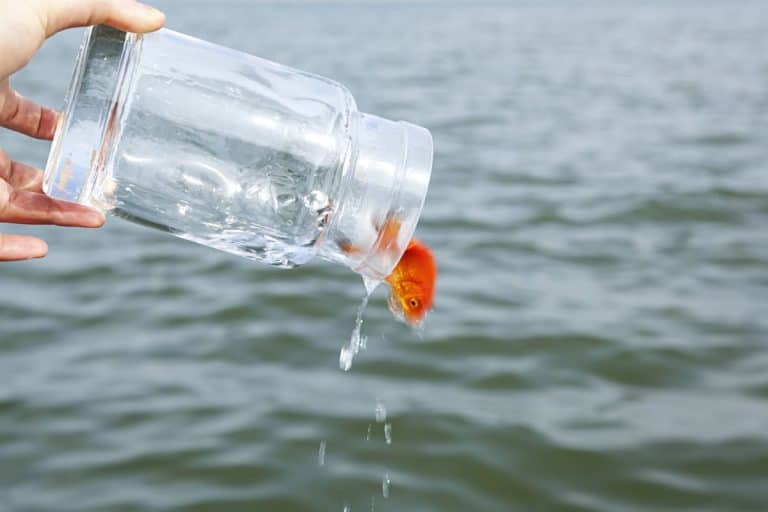
Fish are among the most effective natural predators of mosquitoes. Bluegills, goldfish, catfish, guppies, and mosquito fish are just a few of the fish that eat mosquito larvae. However, the mosquito fish is believed to be the most effective species for mosquito control. They are routinely used as a biological control measure across the country. These fish eat mosquito larvae as soon as they hatch and are reputed to be capable of consuming three times their weight in larvae per day.
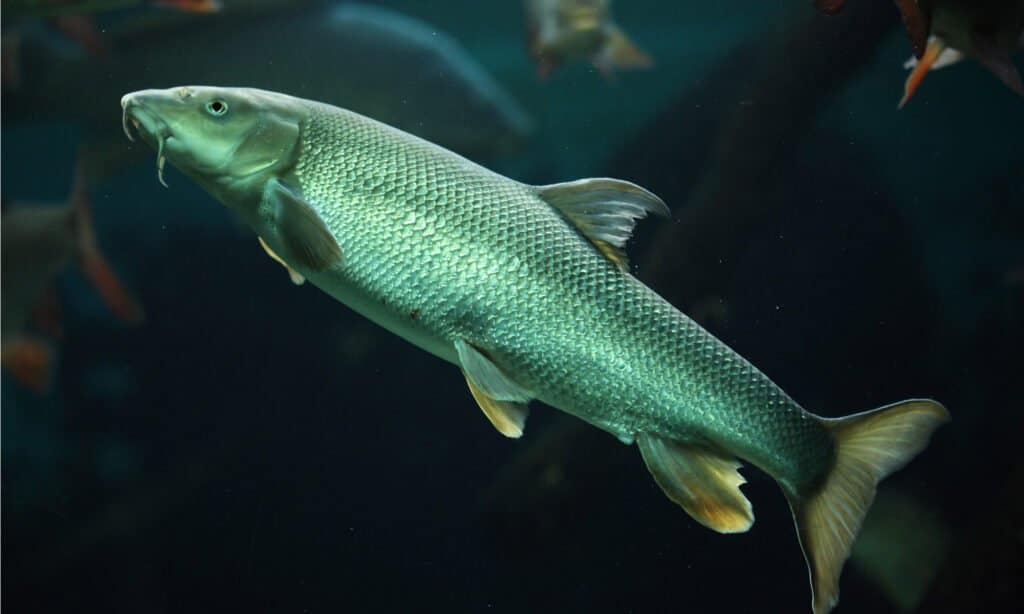
Fish are natural mosquito predators.
©Vladimir Wrangel/Shutterstock.com
Crustaceans
Tiny crustaceans called copepods aggressively prey on mosquito larvae. Researchers have found that in tests, copepods kill up to 90% of mosquito larvae. One species, Macrocyclops albidus, is so aggressive, it will even kill mosquito larvae when it is not hungry. Scientists believe this microscopic predator may be the most effective biological control agent for mosquito control to date. Tadpole shrimps and some decapods have also been recorded preying on mosquitoes.
Dragonflies and Damselflies
Dragonflies and damselflies are also natural predators of mosquitoes at all stages of their life cycle. Many different species of dragonfly and damselfly larvae consume mosquito larvae, while adult dragonflies and damselflies eat adult mosquitoes. One dragonfly or damselfly naiad can consume an average of 40 mosquito larvae per day, which researchers estimate is equivalent to a 45% reduction in the mosquito larval population.
Reptiles
Geckos and turtles are just a few of the reptiles that have proven to be efficient mosquito predators. In fact, researchers believe juvenile freshwater turtles can consume over 500 mosquitoes in the 3rd and 4th instar (stages between molts) per day. Juveniles aged 1-2 years are estimated to be able to consume 1,000 to 2,000 mosquito larvae daily. A study from Louisiana also found that red-eared slider turtles kept in residential roadside ditches reduced the mosquito larvae and pupae population by more than 99%.
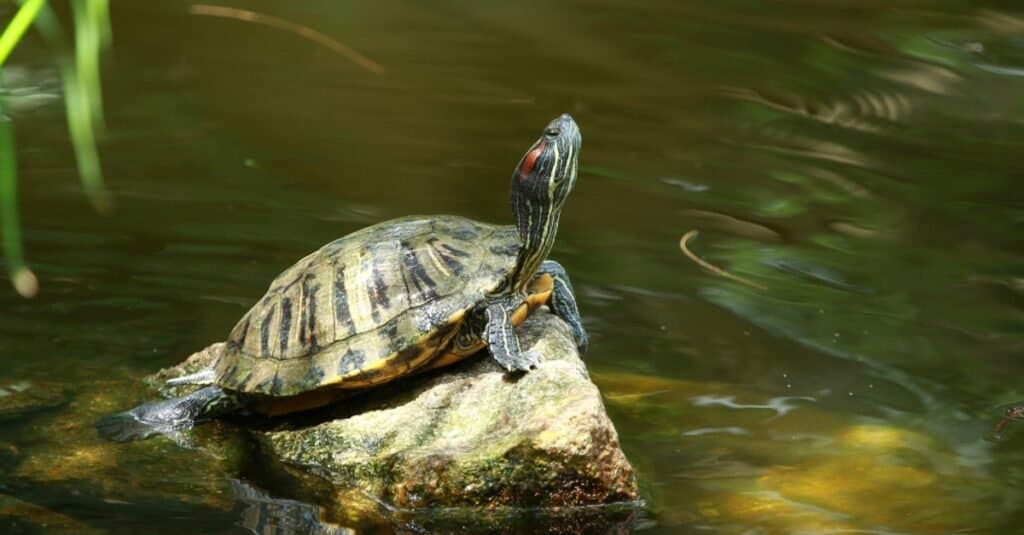
Freshwater turtles such as red-eared sliders can consume hundreds of mosquito larvae and pupae each day.
©dawi88888/Shutterstock.com
Amphibians
Some toads, tadpoles of certain toad and tree frog species, salamanders, and newts consume mosquitoes and/or mosquito larvae. Larval mole salamanders have been estimated to consume almost 400 mosquito larvae per day. Although only a few tadpoles eat mosquito larvae, many tadpoles compete with mosquito larvae for resources, which can prevent the larvae from obtaining the food they need to survive to adulthood.
Spiders
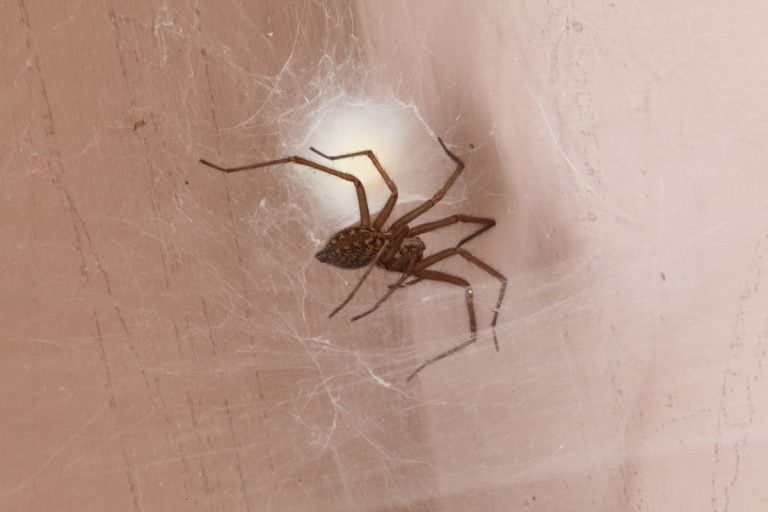
Aquatic and semi-aquatic spiders including the European diving bell spider or water spider, the widely distributed fishing spiders, pirate wolf spiders, and thin-legged wolf spiders are known to prey on mosquito larvae. Two jumping spiders, Evarcha culicivora from Lake Victoria in Kenya and Uganda and Paracyrba wanlessi from Malaysia also specifically prey on mosquitoes. Spiders are opportunistic predators, so many other spider species will eat mosquitoes if mosquitoes get trapped in their webs.
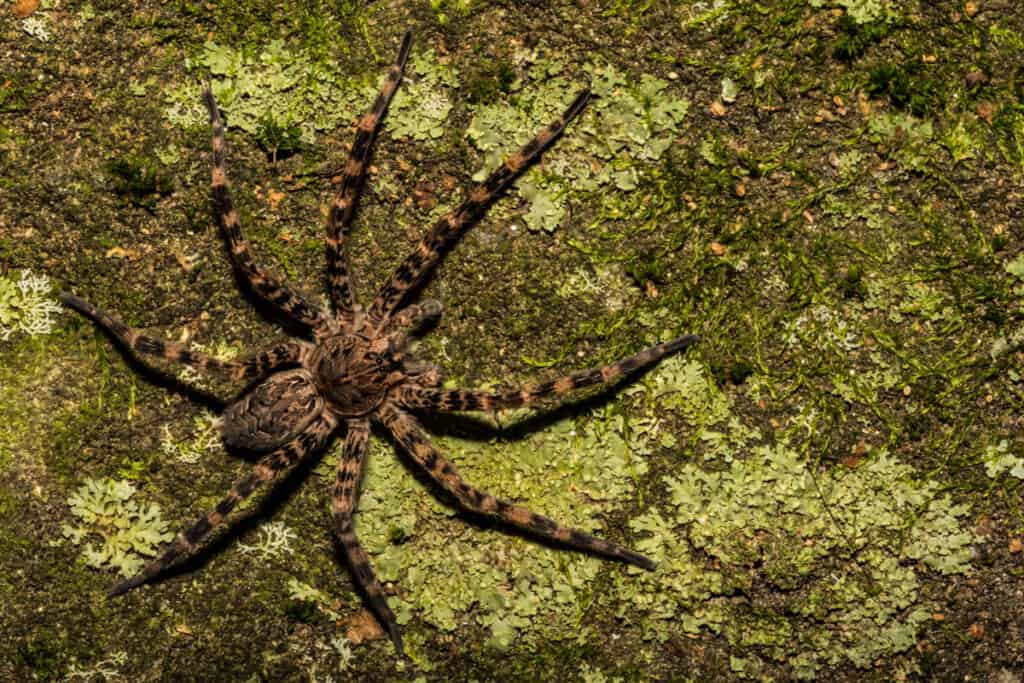
Aquatic and semi-aquatic spiders, including fishing spiders, are known to consume mosquito larvae.
©iStock.com/JasonOndreicka
Birds
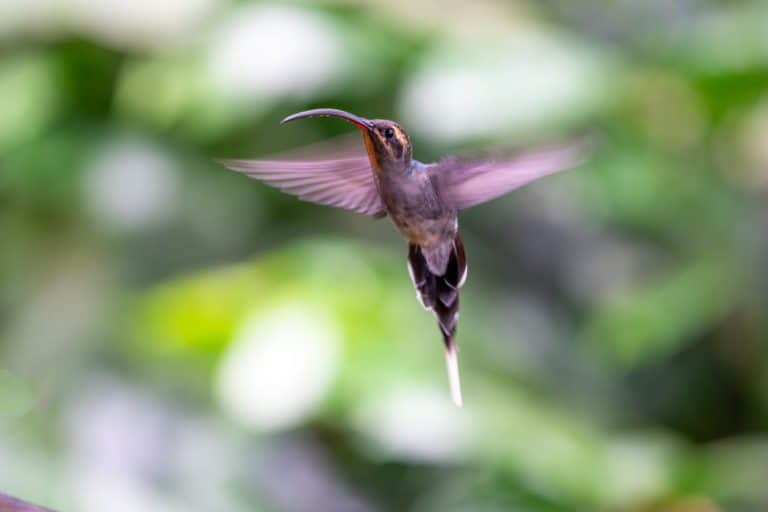
As insectivores, many birds also eat mosquitoes. However, some of the stories often repeated on the internet are simply not true. Purple martins do not eat thousands of mosquitoes per day. In fact, studies have shown that mosquitoes are not a significant part of a purple martin’s diet at all. Swallows, songbirds, waterfowl, and hummingbirds are just a few types of birds that have been documented to consume mosquitoes or larvae. As opportunistic feeders, birds are not considered to have a significant impact on mosquito populations as control agents.
Bats
Bats are also considered to be one of the most aggressive mosquito predators. However, like birds, bats are also opportunistic feeders. Although they are not known to prioritize mosquitoes outside of controlled laboratory conditions, studies have shown bats will consume many different mosquito species when available.