
Quick Take
- Mayflies emerge overnight in the millions, and the biology behind that timing is stranger than it looks. See the July emergence →
- The same light that draws mayflies to your window is quietly sabotaging their survival. See how light confuses them →
- Mayflies don't eat as adults, and that single fact explains everything about why they swarm. Explore the swarming biology →
- Switching one thing about your outdoor lighting could dramatically change your mayfly experience this July. Find the lighting fix →
Those familiar with mayfly swarms know the summer months mean these insects come out in droves. While often confused with dragonflies due to their aquatic lifecycles, mayflies belong to a different order (Ephemeroptera) than dragonflies (Odonata). Their swarms can be annoying, but they actually signal healthy waterways. Therefore, while it may not seem like a positive, the more mayflies that appear each season, the healthier the local ecosystem is overall.
July Mayfly Swarms Are Massive
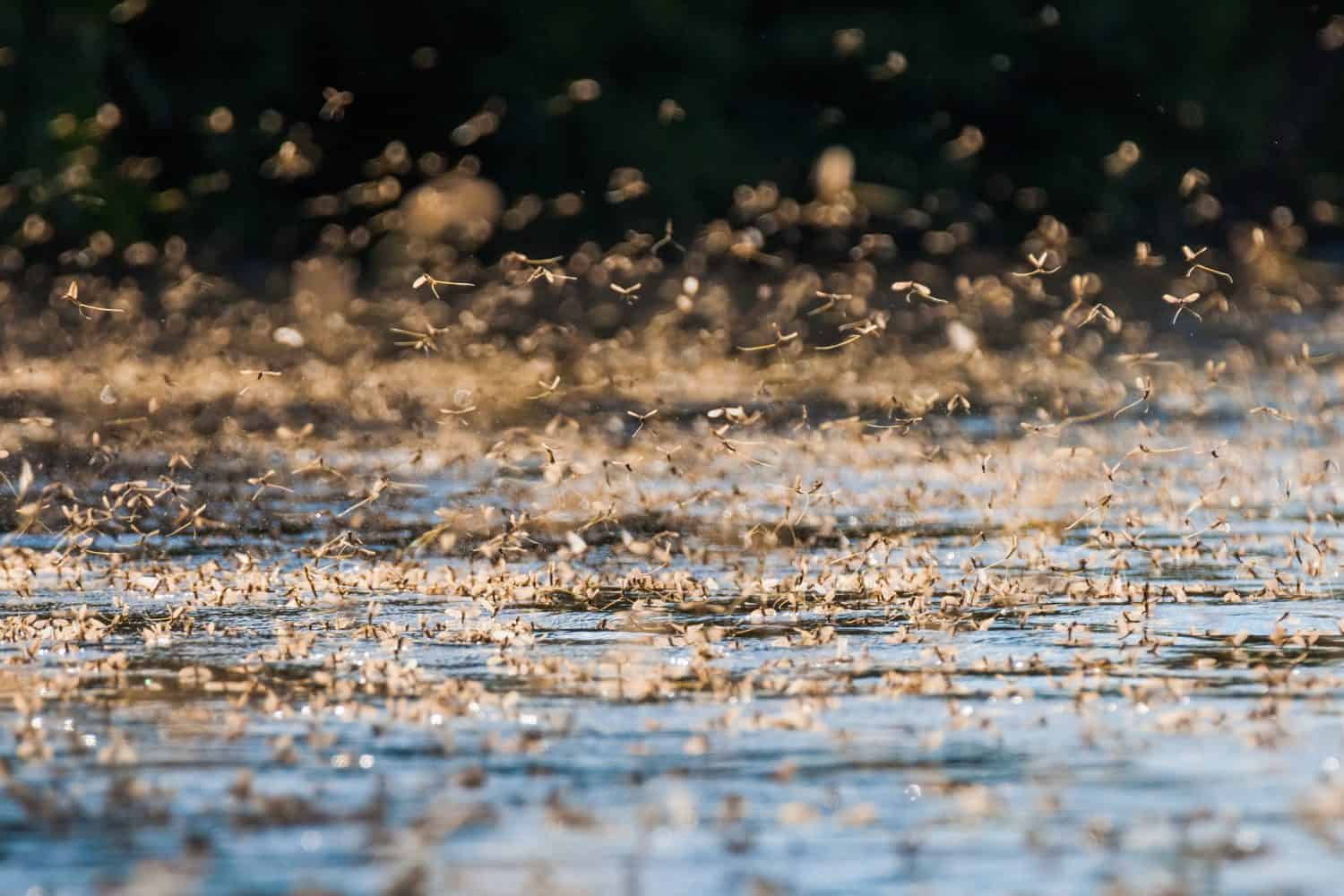
In different parts of the United States, summertime not only signals warmer weather but also spectacular swarms of mayflies. These insects can appear overnight, creating thick swarms that blanket the sky.
Mayflies begin to make an appearance in May. However, their peak season is July. This is when the waterways—where mayfly eggs were laid and nymphs have lived for months or even years—begin to warm to 60°F. The increase in temperature triggers mayfly nymphs to mature into winged insects simultaneously.
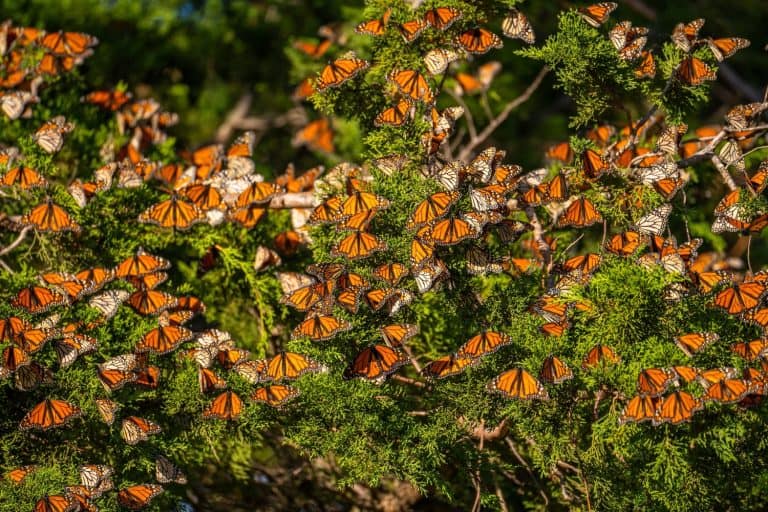
Mayfly swarms are at their peak in July.
©Igor Srdic/Shutterstock.com
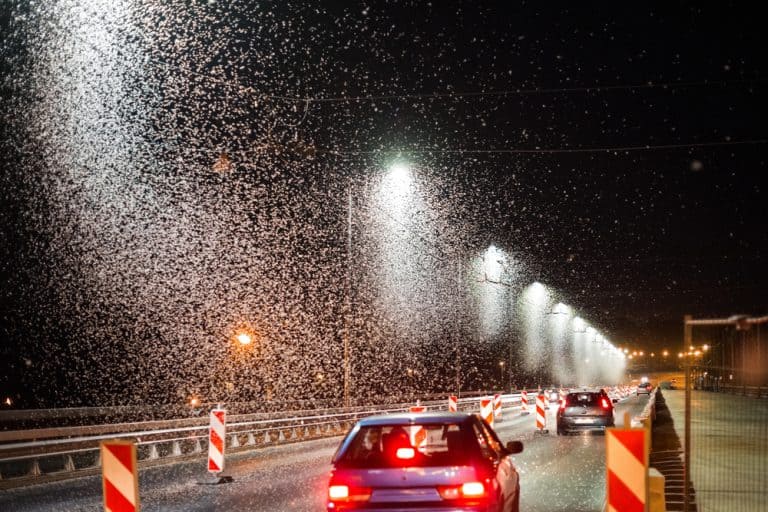
Because millions of mayflies take to the skies at one time, it can feel like cities and towns near rivers, lakes, and streams are being invaded. This is especially true when watching the mayflies swarm around streetlights and lit-up windows at night.
Over the course of July, the mayflies will both live and die in large groups. Blankets of dead mayflies will litter streets, doorways, banks of waterways, and even the surface of the water. But just as quickly as they appear, mayflies will vanish, while the next generation develops beneath the water’s surface until they are ready to emerge.
Why Do So Many Mayflies Swarm At Once?
It is not a figment of the imagination that one day there are no mayflies, and the following day there are millions or even billions in a swarm. This is all part of the strategy behind the mayfly life cycle that helps ensure future generations survive.
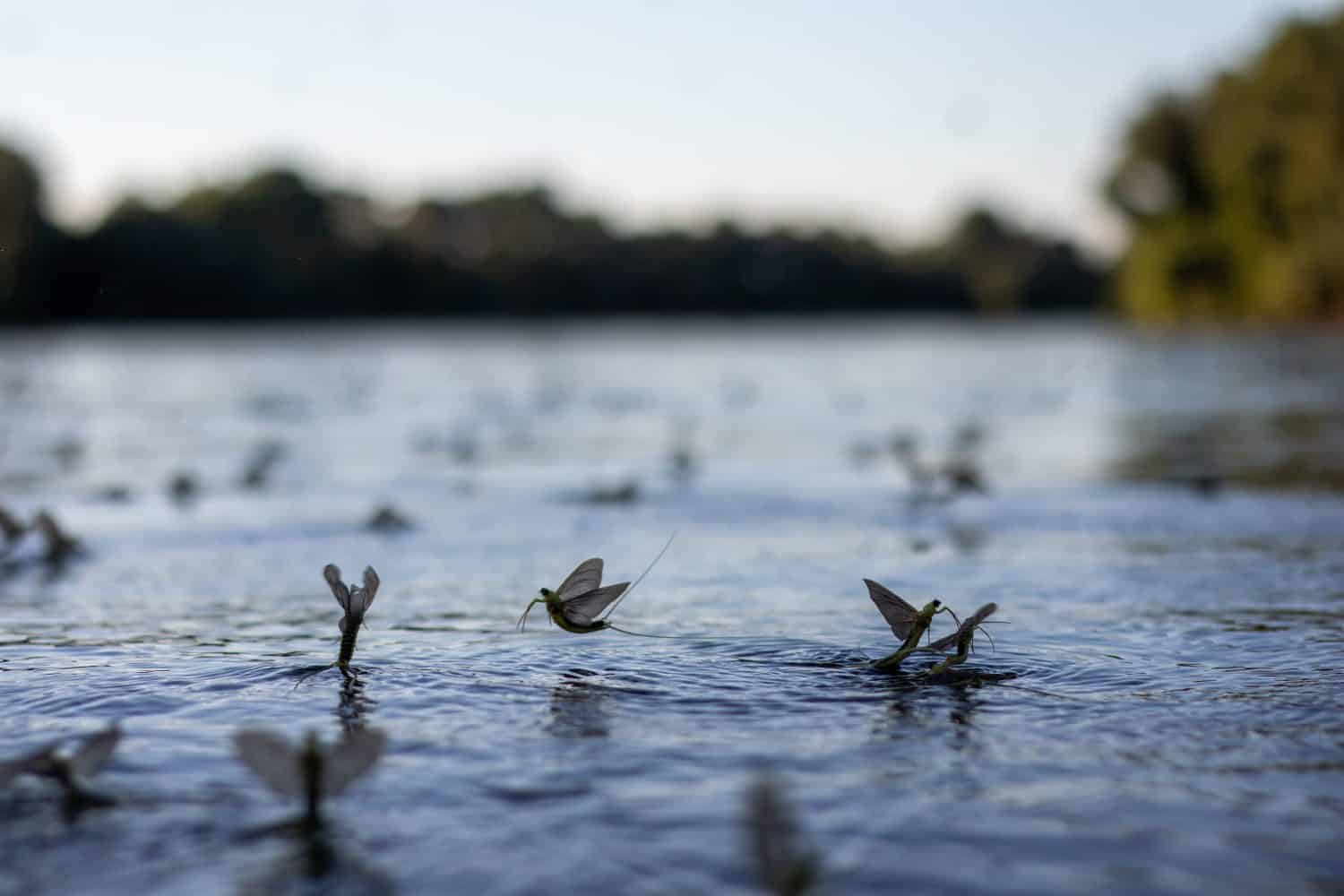
When mayflies are fully developed, they will emerge from the water in large groups. This phenomenon is known as synchronized emergence.
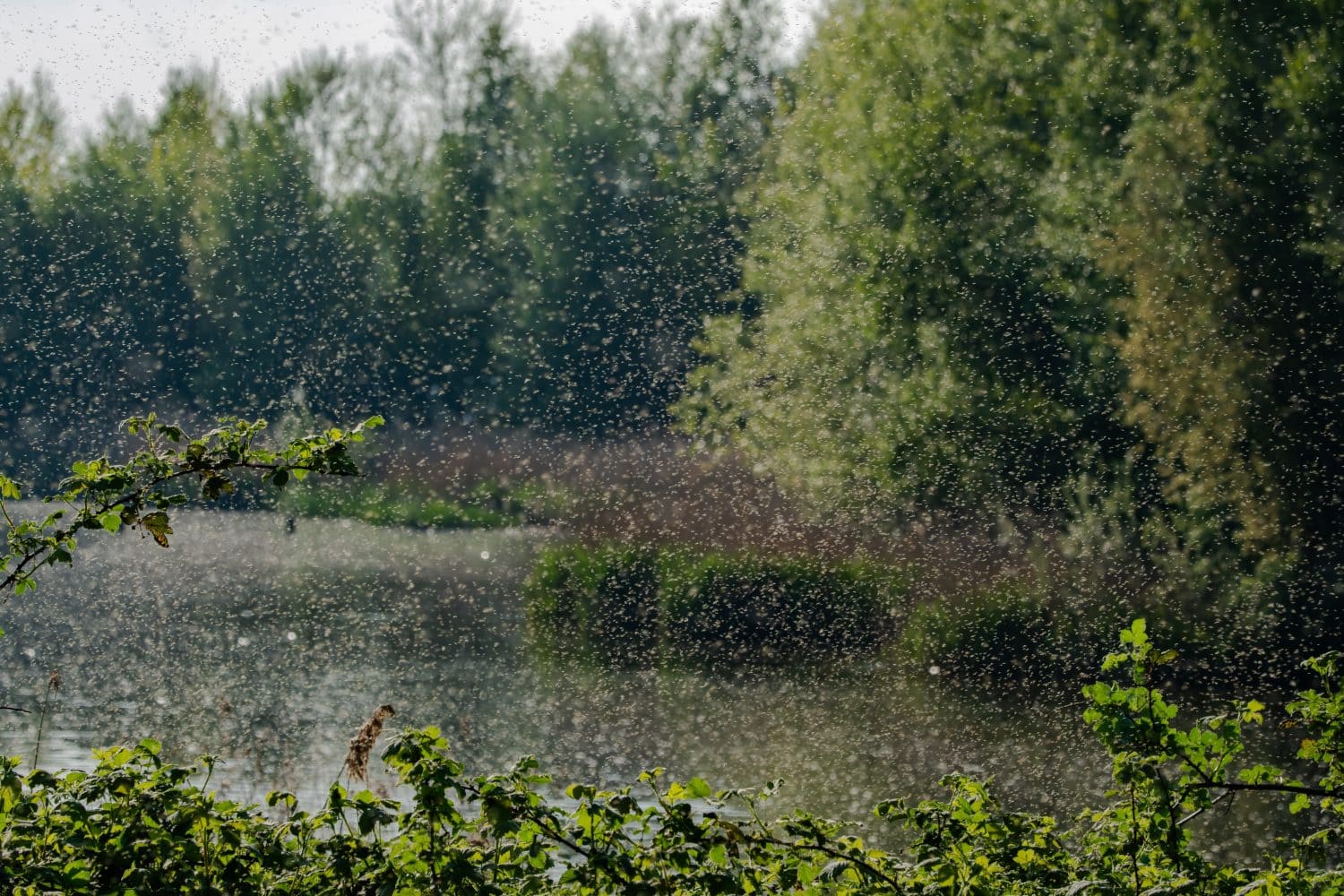
Mayflies emerge in the millions at a time to both mate and overwhelm predators.
©Robertvdsluis/Shutterstock.com
There are two main reasons why mayflies emerge from the water as winged adults all at once. The first is mating: the sole reason mayflies mature is to mate. Adult mayflies do not feed, devoting their brief lives almost entirely to reproduction. Depending on the species, mature mayflies live only a few hours to a few days.
The second reason mayflies create such massive swarms is that they want to overwhelm their predators. With so many mayflies, predators physically cannot catch them all. Consequently, this strategy increases the chances that mature mayflies will successfully mate and return to waterways to lay eggs before their brief adult lives end.
Mayflies Are Strongly Attracted to Light
Mayflies are strongly attracted to light, but not all light sources affect them equally; some types of light are more attractive to mayflies than others.
The reason mayflies are strongly attracted to light is that they have a short window of opportunity to mate as adults. Mayflies will seek out light, as it helps them to identify other mayflies to mate with. There is no pull to light for feeding purposes, as mature mayflies do not have mouths.
It is the moonlight or sunlight that they instinctively look for. But artificial light has become a draw since its inception. This has led to confusion among mayflies, who, instead of seeking out vertical light that brings them back to the water to lay eggs, chase horizontal light. This can lead to fewer eggs being laid by the species.
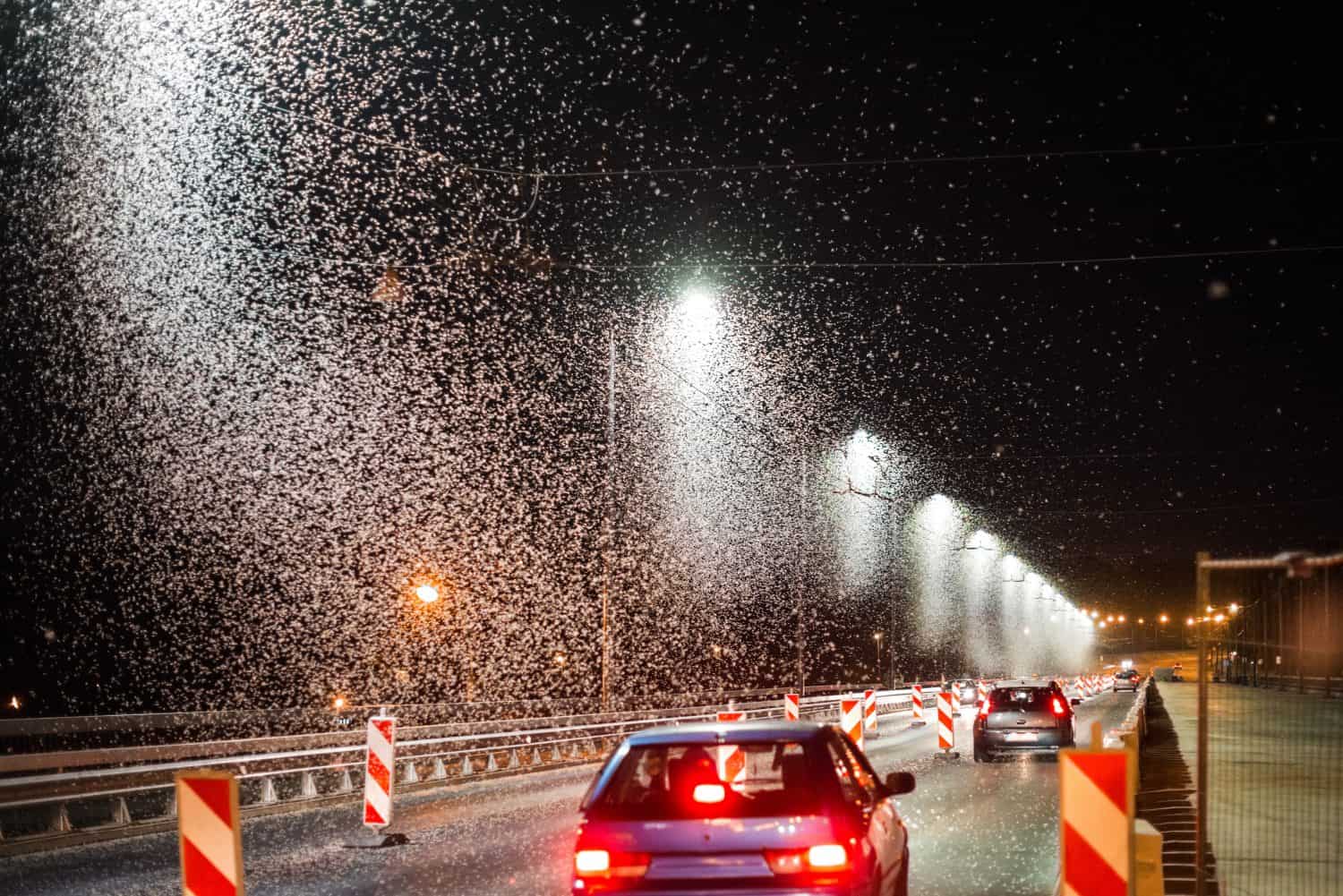
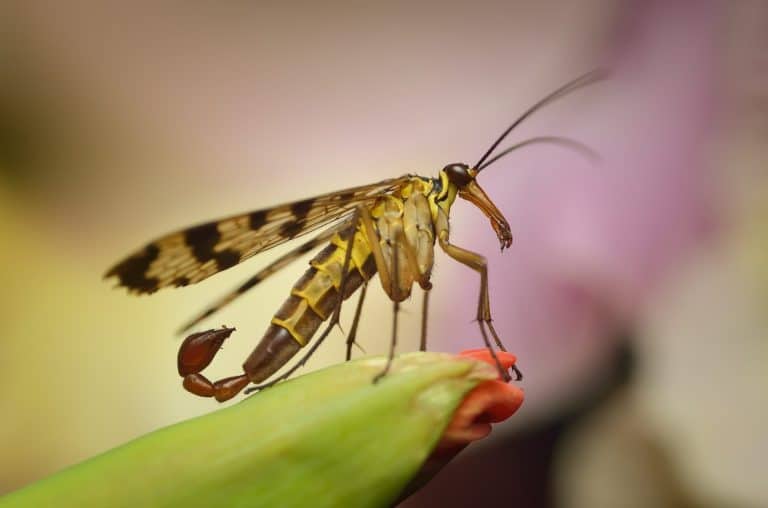
Mayflies are attracted to UV light, blue light, green light, and polarized light.
©sigiuz/Shutterstock.com
The different types of light that mayflies are most attracted to include:
- Ultraviolet light
- Blue light
- Green light
- Polarized light
Mayflies tend to avoid yellow, orange, and amber lights. This is why pest experts recommend changing outdoor lights to one of these options for those who live in regions where mayflies swarm each year. This means fewer mayflies will be attracted to these light sources, resulting in less interaction with the swarms searching for mates.
Mayflies Are Prey for Multiple Species
Mayflies spend most of their lives as nymphs underwater. However, they are an important prey source for animals both above and below the water’s surface throughout their lives.
During the nymph stage, mayflies feed on algae and plants as they grow. At this stage, predators, such as frogs and fish, rely on the mayfly nymphs for sustenance. These same creatures are then eaten by birds, illustrating that mayflies are an important part of the food chain even before they emerge as adults.
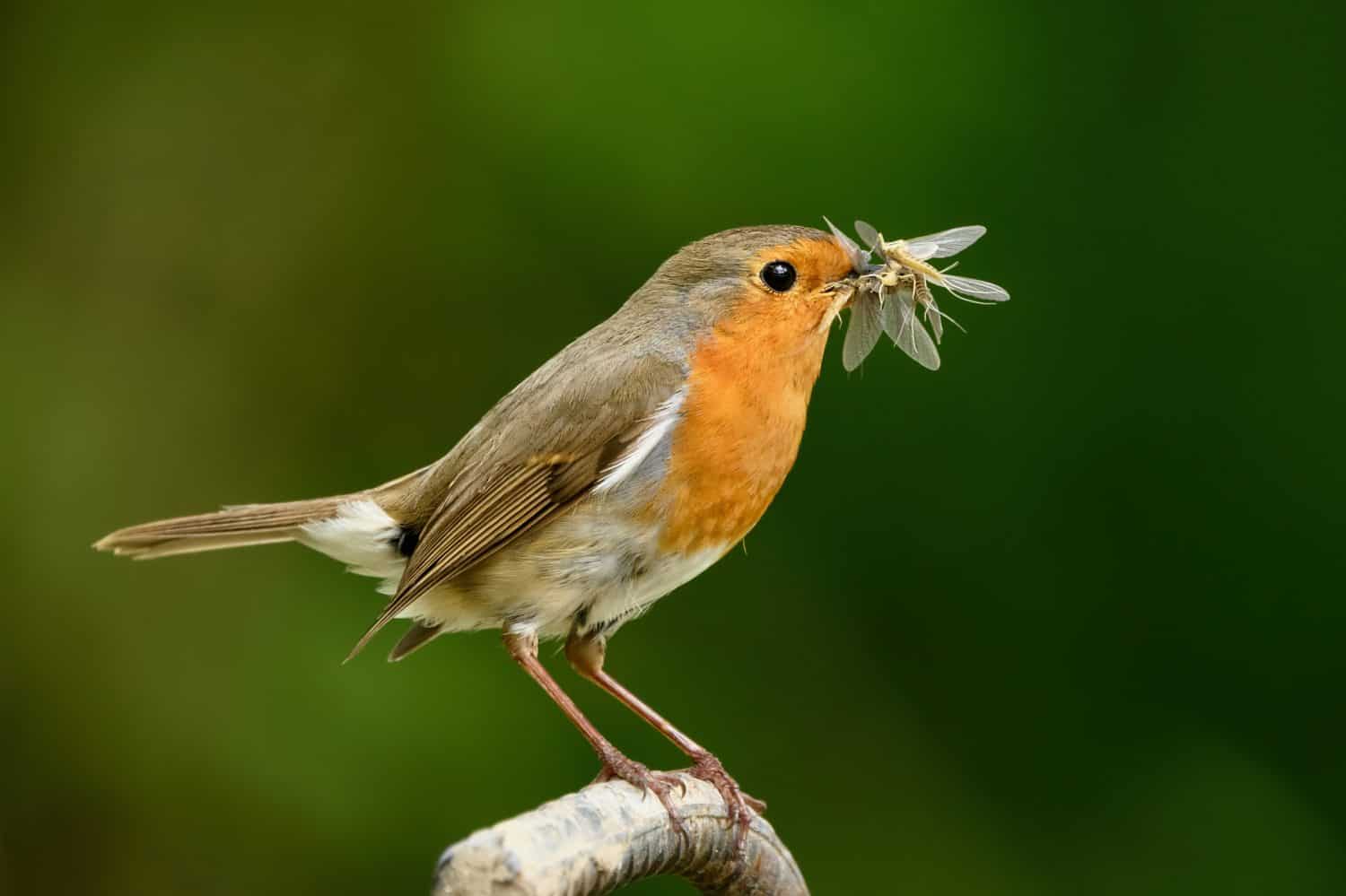
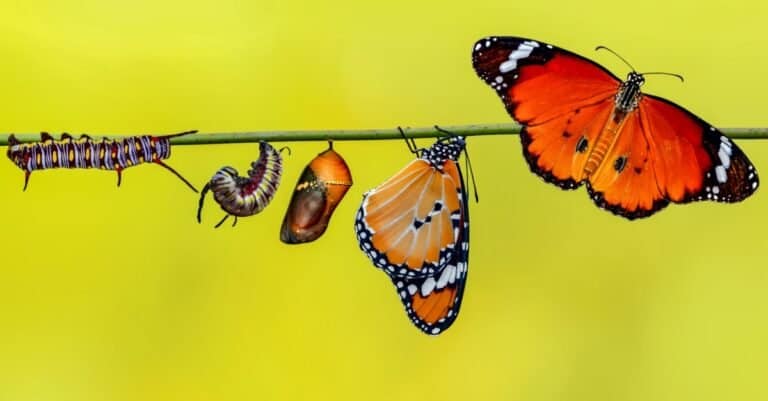
Mayflies create a tasty meal for various bird species.
©3733403/Shutterstock.com
Once the mayflies reach maturity, they take to the skies en masse. When this occurs, they become easy targets for various bird species, including swallows, eastern kingbirds, nighthawks, and more. Even bats will partake in feeding upon mayflies during the summer.
Mayflies are an important part of the food chain regardless of what stage of life they are in. While they may prove to be an annoyance when they create swarms in July in different regions of the U.S., their presence is the direct result of healthy waterways, which indicates an overall healthy ecosystem.