
Quick Take
- The adult moth is innocent. The real crop destroyer hides inside a completely different life stage most people overlook. See the real culprit →
- One caterpillar operates under three separate identities and costs American farmers hundreds of millions of dollars every year, yet most people have no idea it is the same insect. Meet the triple-identity pest →
- Some of these larvae go beyond simply feeding. They move in coordinated masses capable of stripping entire fields bare before farmers can respond. Watch the coordinated swarms →
- An invasive pest introduced over 300 years ago has since quietly colonized every U.S. state where a single crop is commercially grown. Trace the 300-year invasion →
Moths are a diverse group of insects belonging to the order Lepidoptera, with estimates of more than 160,000 species distributed globally. Despite their reputation for ruining wardrobes and crops, fewer than 1% of all moth species are considered pests, and adult moths do not destroy clothes or crops because they completely lack the mouthparts needed to chew solid matter. Only moth larvae (caterpillars) have jaws designed to cut and chew. Continue reading to learn about six moths whose larval stage can cause significant damage to crops across the United States.
Spongy Moth
The larvae of the spongy moth (Lymantria dispar) are highly destructive, leaf-eating pests that are currently distributed across much of the United States. These aggressive caterpillars are generalist foragers capable of feeding on the foliage of more than 300 plant species, directly affecting American agriculture by decimating commercial nursery stock, ornamental landscape trees, and forests.
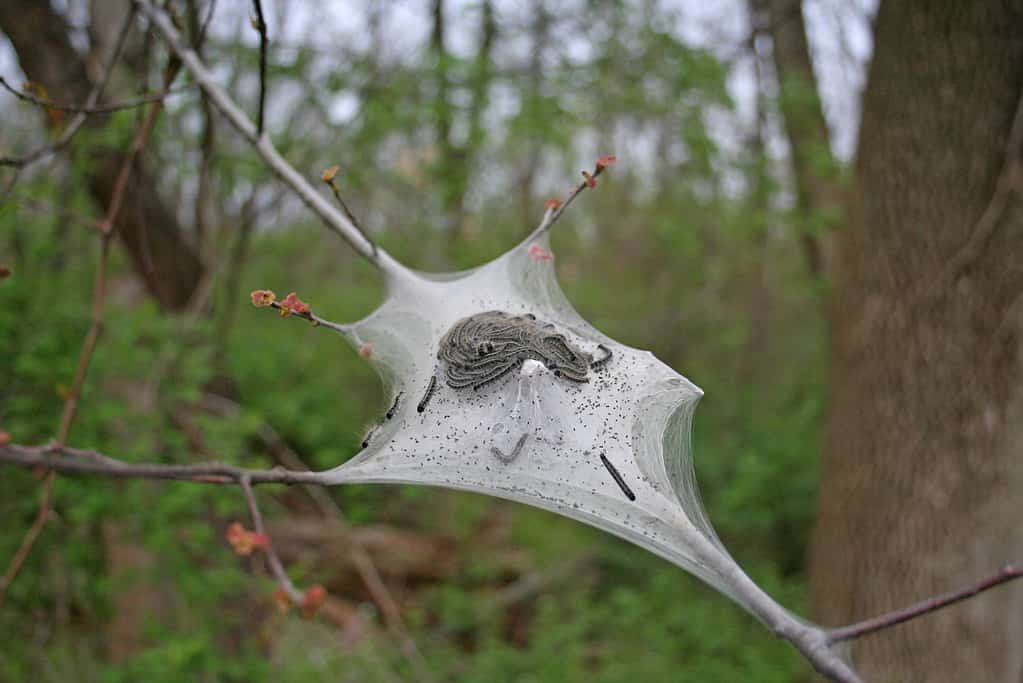
Spongy moth larvae on tree branches.
©Beth Schroeder/Shutterstock.com
While their preferred food sources are hardwood trees such as oaks and birches, during major population outbreaks they will shift their focus to agricultural food crops. By stripping fruit and hardwood trees of their leaves, the larvae stunt plant growth, which, over years, can cause the trees to die. Federal quarantine regulations prohibit the uninspected interstate transport of regulated articles such as wood, landscape plants, and Christmas trees from quarantined areas unless they have been inspected or certified.
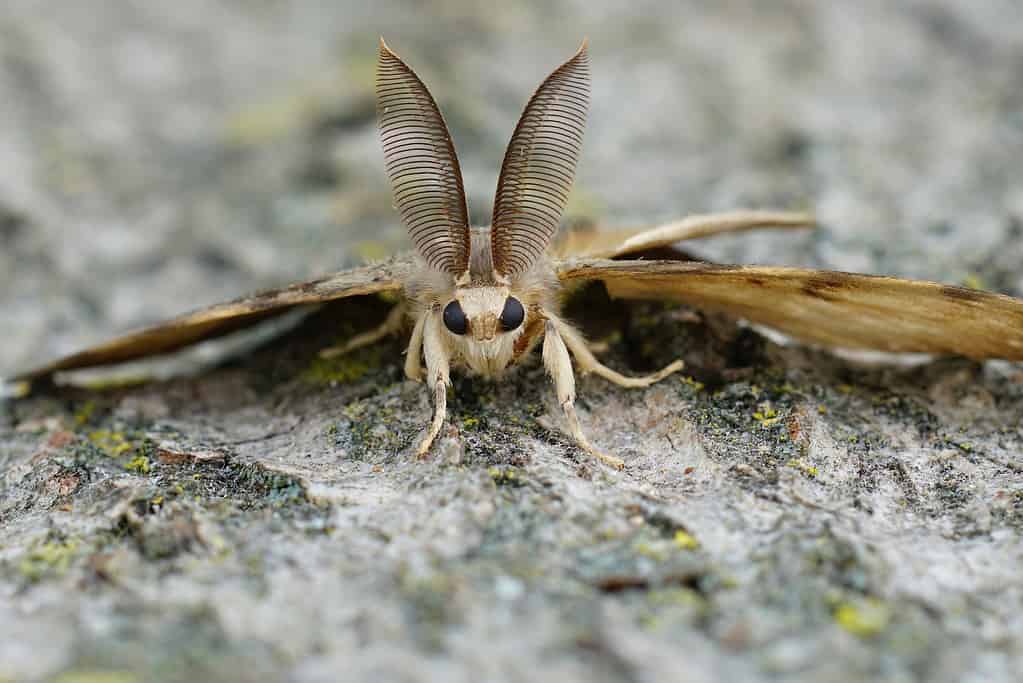
A male spongy moth with its bat-like antenna.
©iStock.com/Wirestock
European Corn Borer
The larvae of the European corn borer (Ostrinia nubilalis) are highly destructive, boring agricultural pests found throughout most of the corn-growing regions of the United States east of the Rocky Mountains.
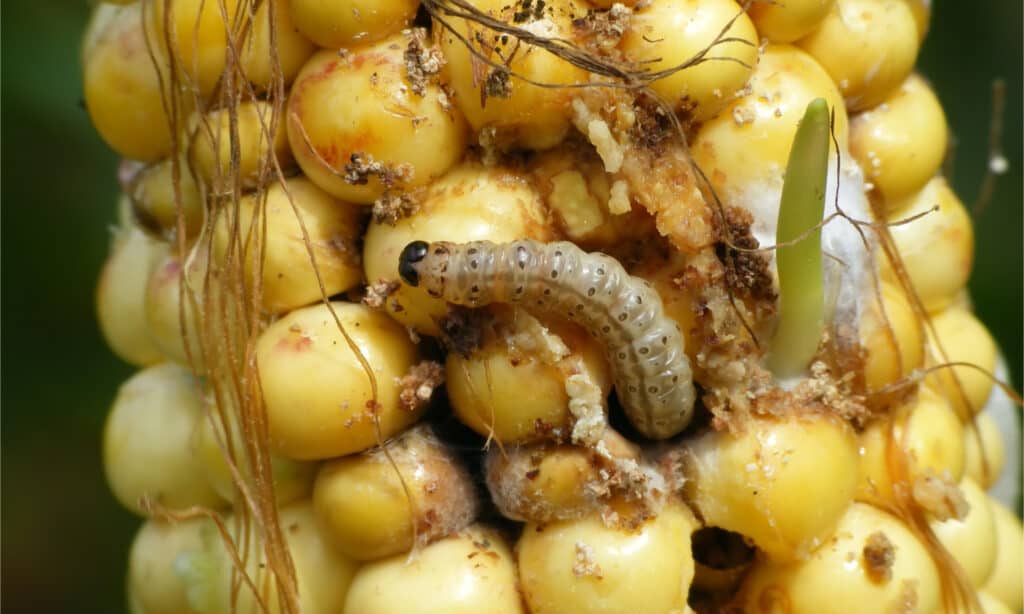
European corn borer caterpillars will eat more than corn.
©Tomasz Klejdysz/Shutterstock.com
These flesh-colored, spotted caterpillars are internal feeders that spend this stage of their life cycle tunneling deep inside the stalks, stems, and fruits of their host plants.
While they are known for destroying millions of bushels of corn, they are generalists that can also damage vegetable and grain crops. By boring inside these plants, the larvae weaken the stalks so severely that entire fields can suffer collapse.
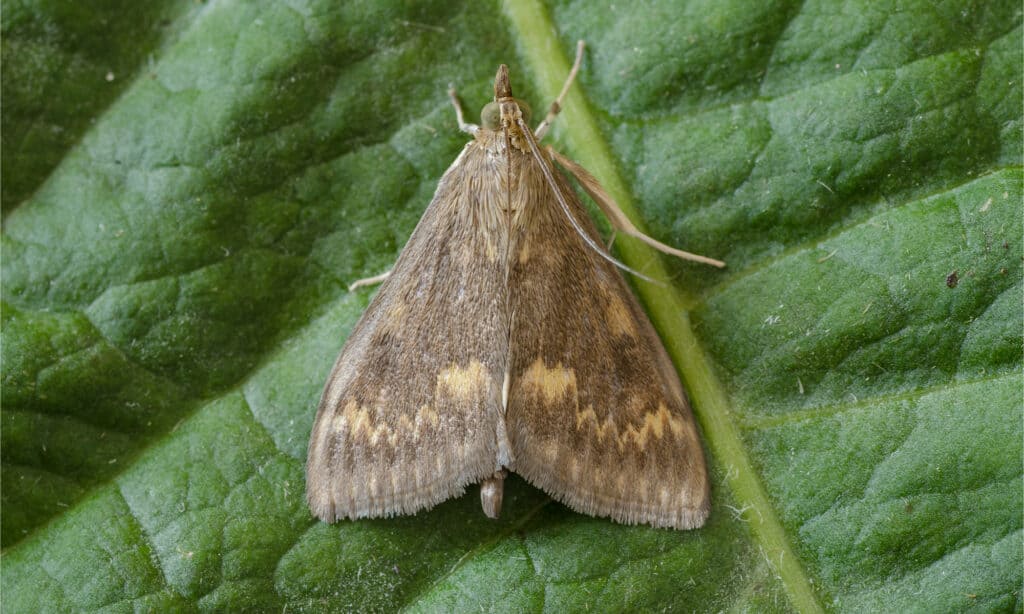
European corn borer moths have light yellowish-brown color and dark, irregular, wavy bands across their wings.
©DJTaylor/Shutterstock.com
Diamondback Moth
The larvae of the diamondback moth (Plutella xylostella) are destructive, surface-feeding agricultural pests distributed throughout every major vegetable-growing region of the United States.
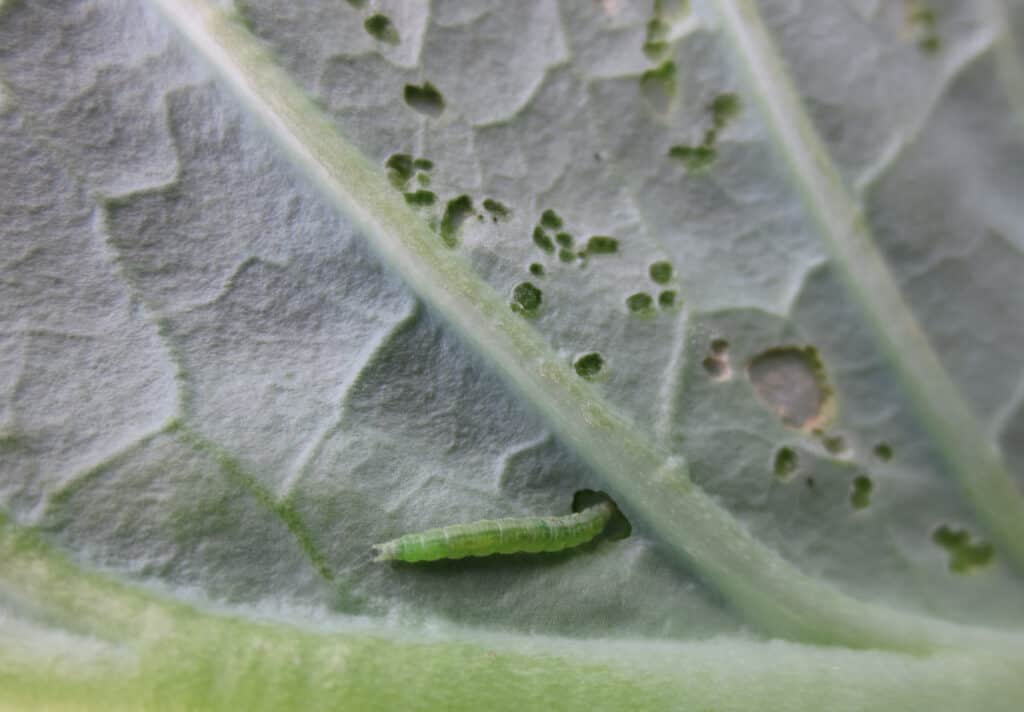
A diamondback moth in its larval stage.
©Lam Van Linh/Shutterstock.com
These small, pale-green caterpillars feed exclusively on cruciferous crops, including broccoli, cabbage, cauliflower, Brussels sprouts, kale, and collard greens. Their extensive chewing stunts plant growth, delays maturity, and completely ruins the marketability of the produce.
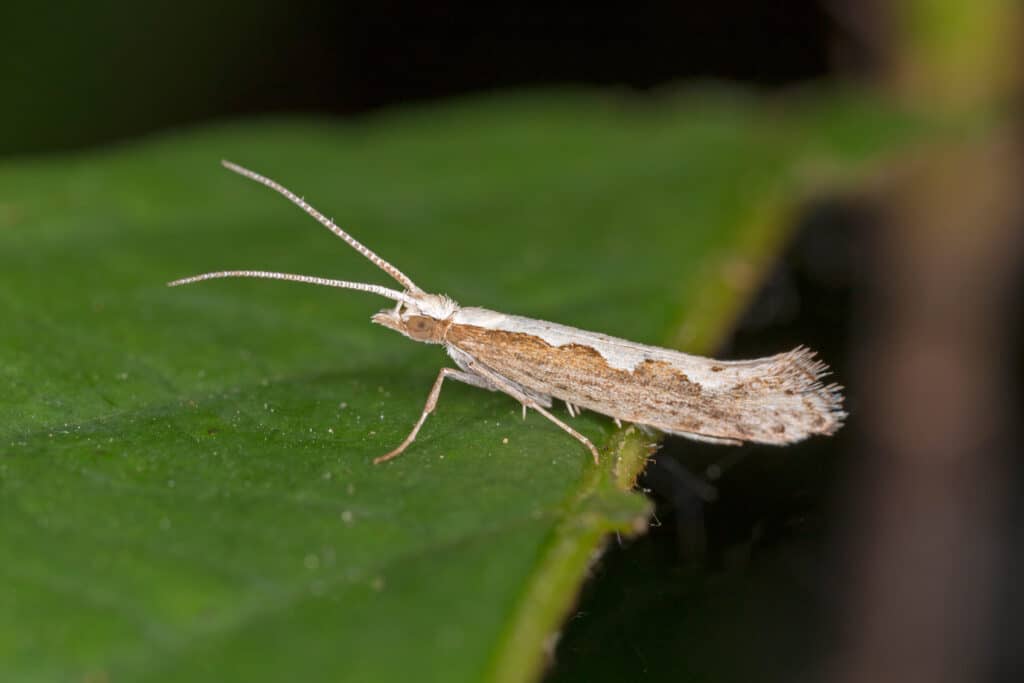
Diamondback moth, or cabbage moth, belongs to the family Plutellidae.
©Ihor Hvozdetskyi/Shutterstock.com
Fall Armyworm
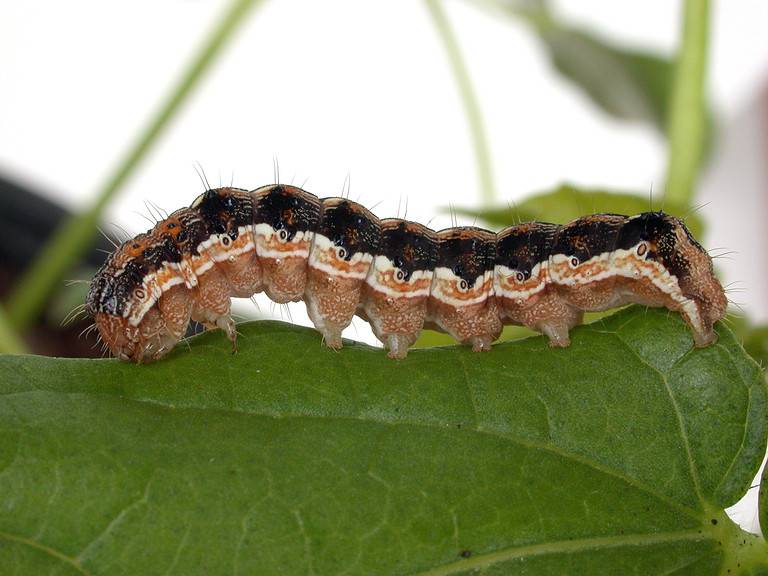
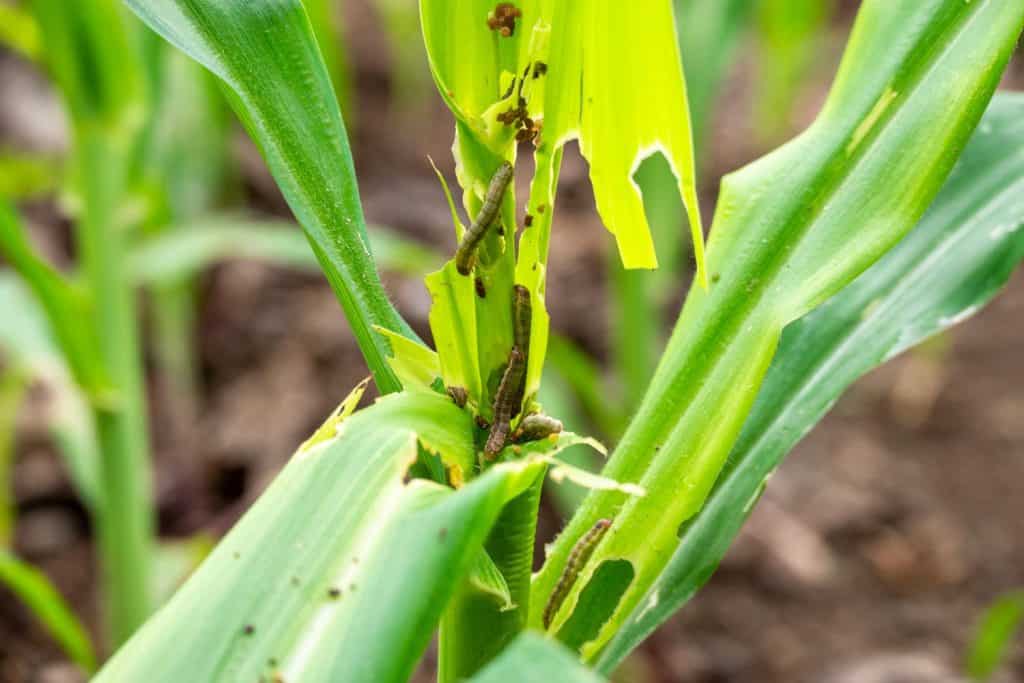
The larvae of the fall armyworm (Spodoptera frugiperda) are highly destructive, migratory agricultural pests, with permanent, year-round breeding populations in the tropical and subtropical climates of South Florida and South Texas, from which adult moths launch annual spring and summer migrations across the Eastern and Midwestern United States.
©Kiran Nagare/Shutterstock.com
These striped, olive-green to black caterpillars earned their name from their tendency to move in coordinated numbers (armies) to strip fields bare. While they strongly prefer plants in the grass family, they are known to consume over 80 different plant species. Armyworms cause severe damage to crops such as rice, cotton, alfalfa, soybeans, peanuts, tomatoes, and potatoes.
Corn Earworm/Cotton Bollworm/Tomato Fruit Worm
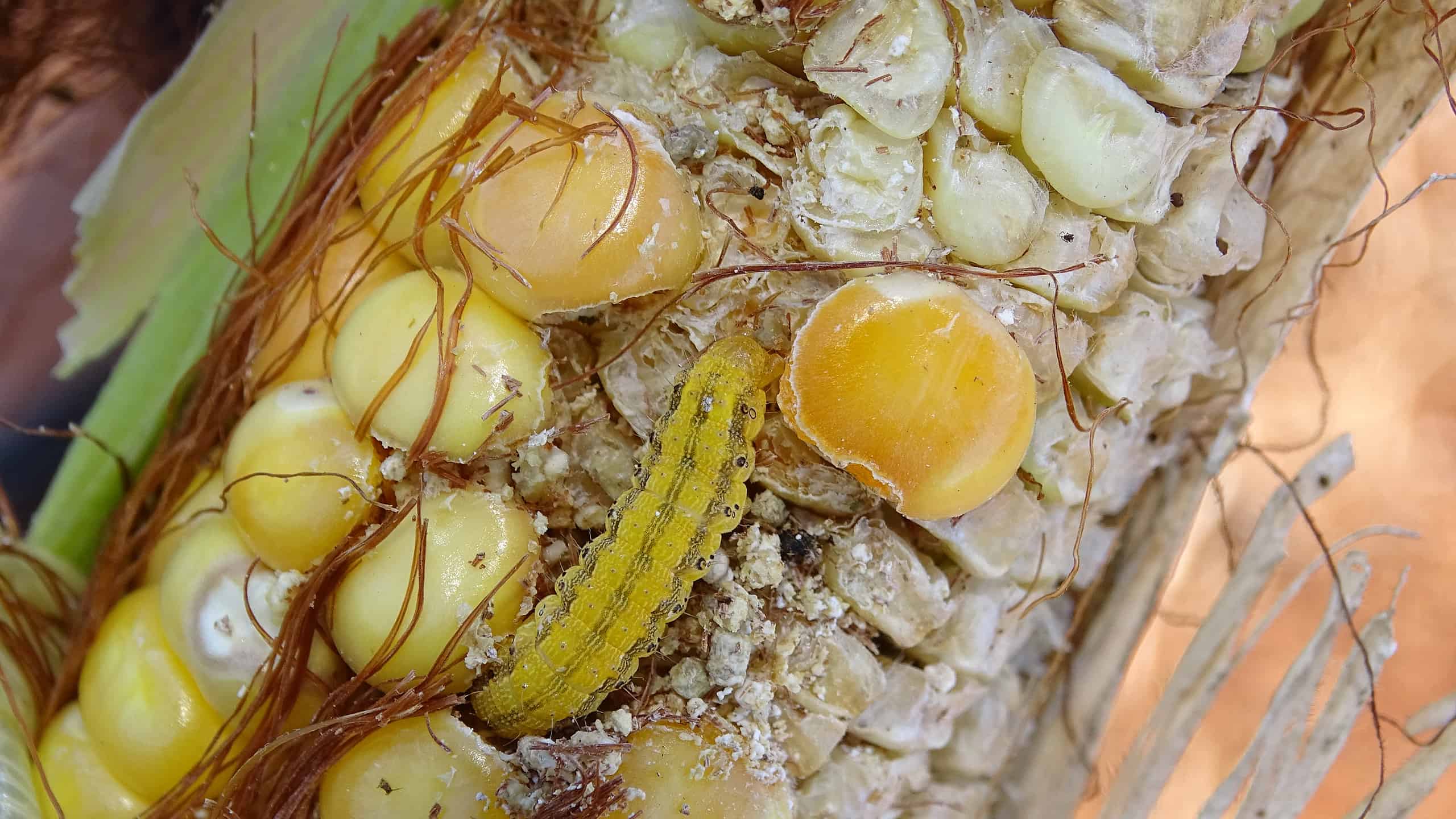
Helicoverpa zea, commonly called the corn earworm, cotton bollworm, or tomato fruitworm, is considered one of the most economically devastating agricultural pests in the United States. It frequently ranks among the costliest insects for American farmers, causing significant annual crop losses and control expenditures estimated in the hundreds of millions of dollars.
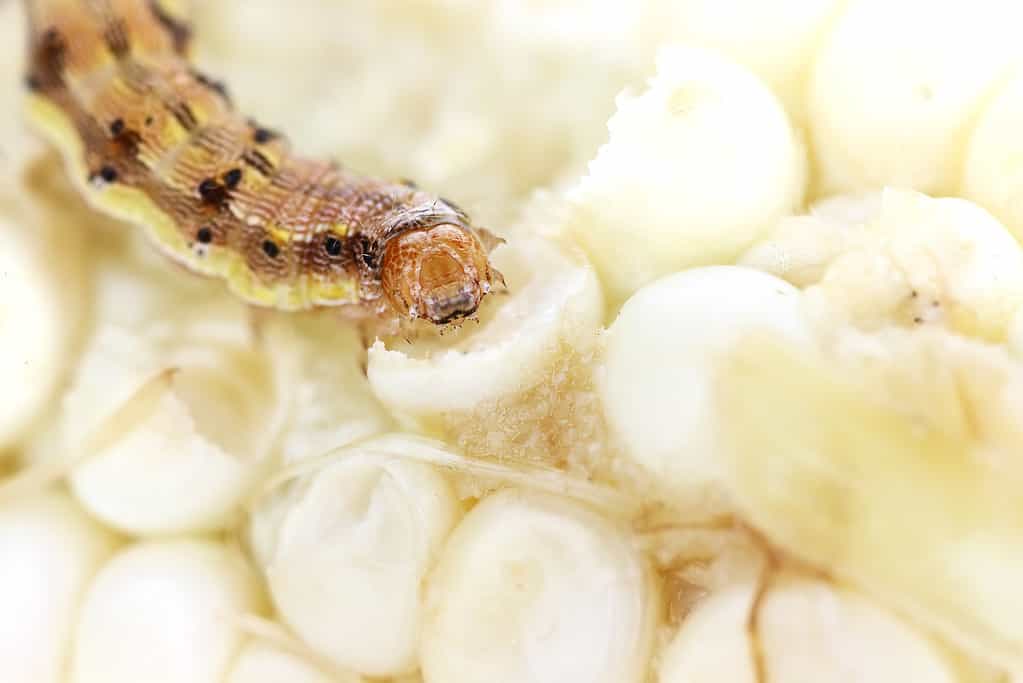
Corn earworm eating fresh white corn on the cob.
©Stephanie Frey/Shutterstock.com
Distributed across the entire country, with permanent, year-round overwintering populations limited to the Southern United States and large annual migratory breeding flights into the Midwest and Northeast. These striped caterpillars devour the reproductive and fruiting structures of plants, including sweet corn, field corn, cotton, tomatoes, and grain sorghum. They also severely damage soybeans, peppers, eggplants, okra, and strawberries, causing immediate rot from secondary fungal pathogens.
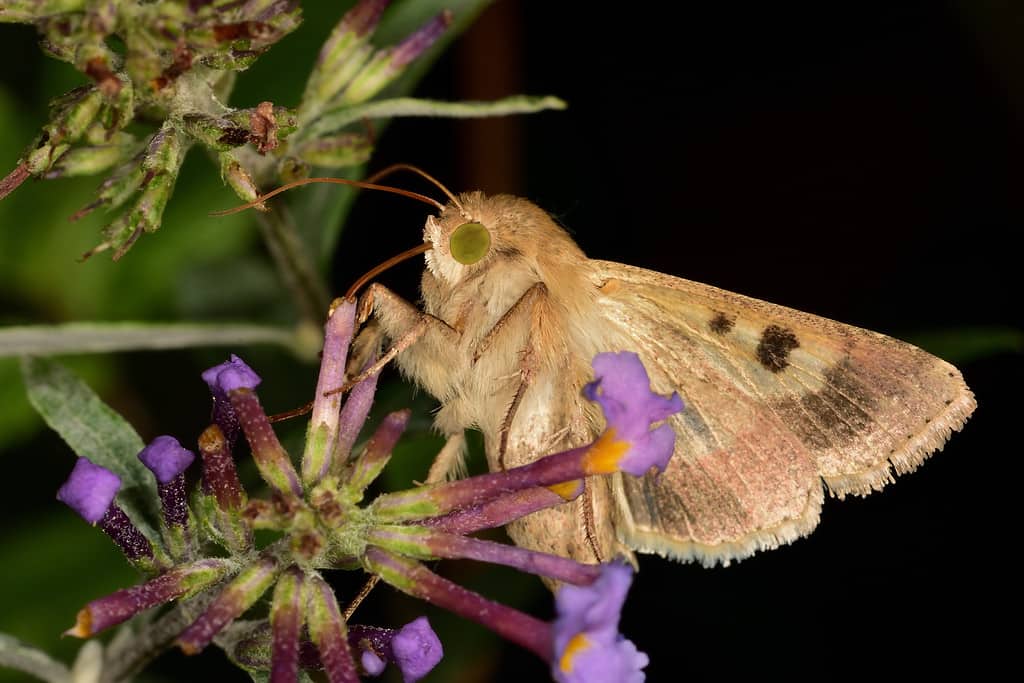
In its adult stage, the corn earworm moth only sips nectar from plants.
©Davide Bonora/Shutterstock.com
Codling Moth
The larvae of the codling moth (Cydia pomonella) are global agricultural pests found across six continents, including North America, Europe, Asia, parts of South America, Australia, and Africa. The caterpillars primarily feed on fruits such as apples and pears, but they are also known for destroying stone fruit crops, including plums, peaches, and cherries.
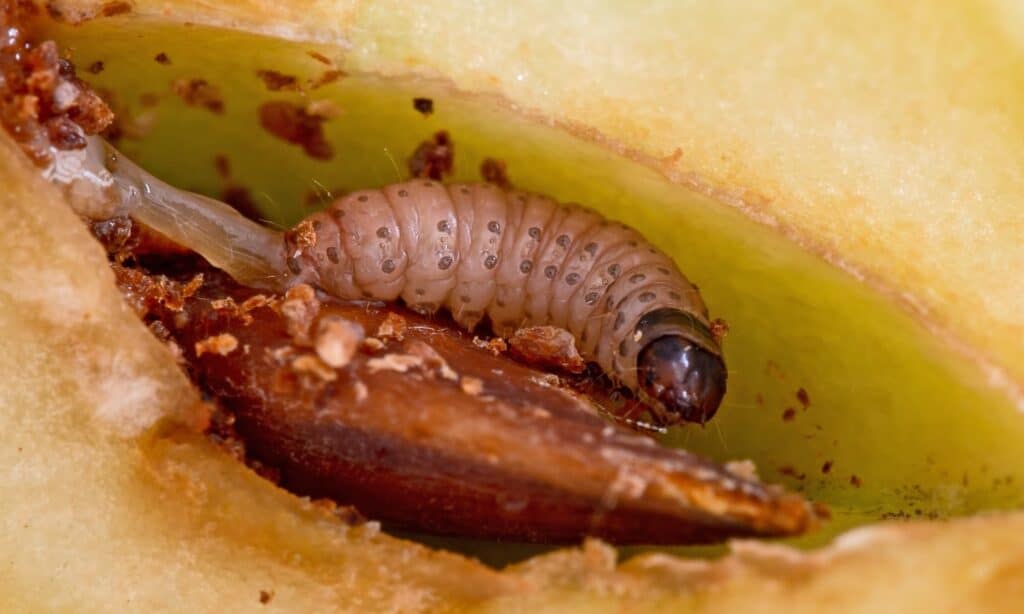
Codling moth larvae feed on fruits such as apples and pears in orchards and gardens.
©iStock.com/Goldfinch4ever
The larvae bore directly into the developing fruit, leaving behind unsightly tunnels filled with dark excrement called frass. Codling moth larvae are considered a major pest in the United States, where they are recognized as the primary insect pest of apples and pears nationwide.
First introduced from Eurasia in the early 1700s, the codling moth has firmly established itself in every U.S. state where apples are commercially grown.
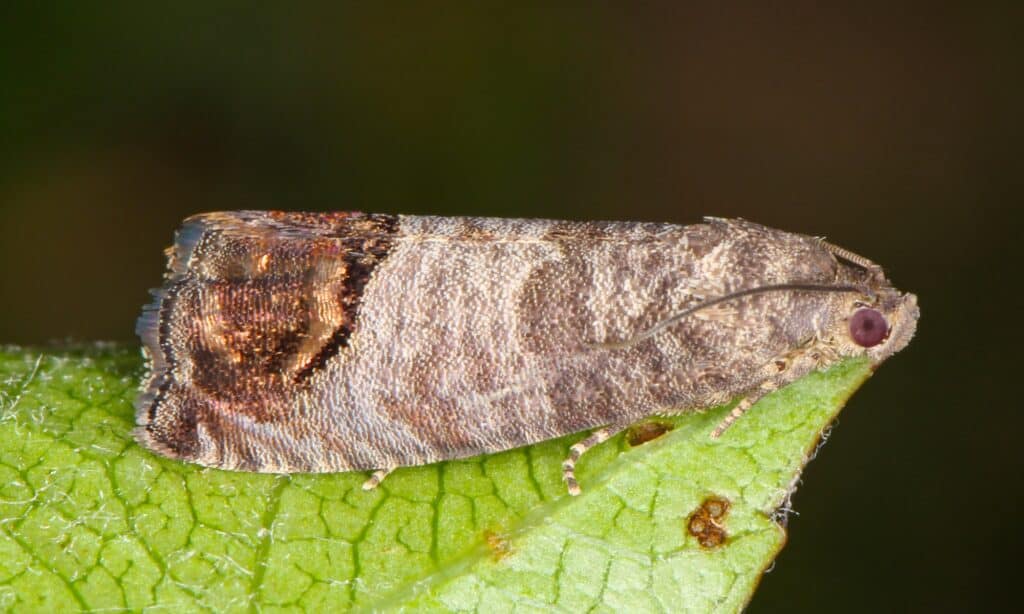
In its adult form, the codling moth is not a threat to crops.
©iStock.com/Tomasz Klejdysz