
Quick Take
- Migrating fall armyworms use both visual and geomagnetic cues to synchronize their seasonal migrations, researchers found.
- These findings could guide further research for migration of other species.
- Fall armyworms are some of the most damaging agricultural pests.
- Researchers hope the findings will help future studies identify ways to influence migratory patterns for crop control and prevention.
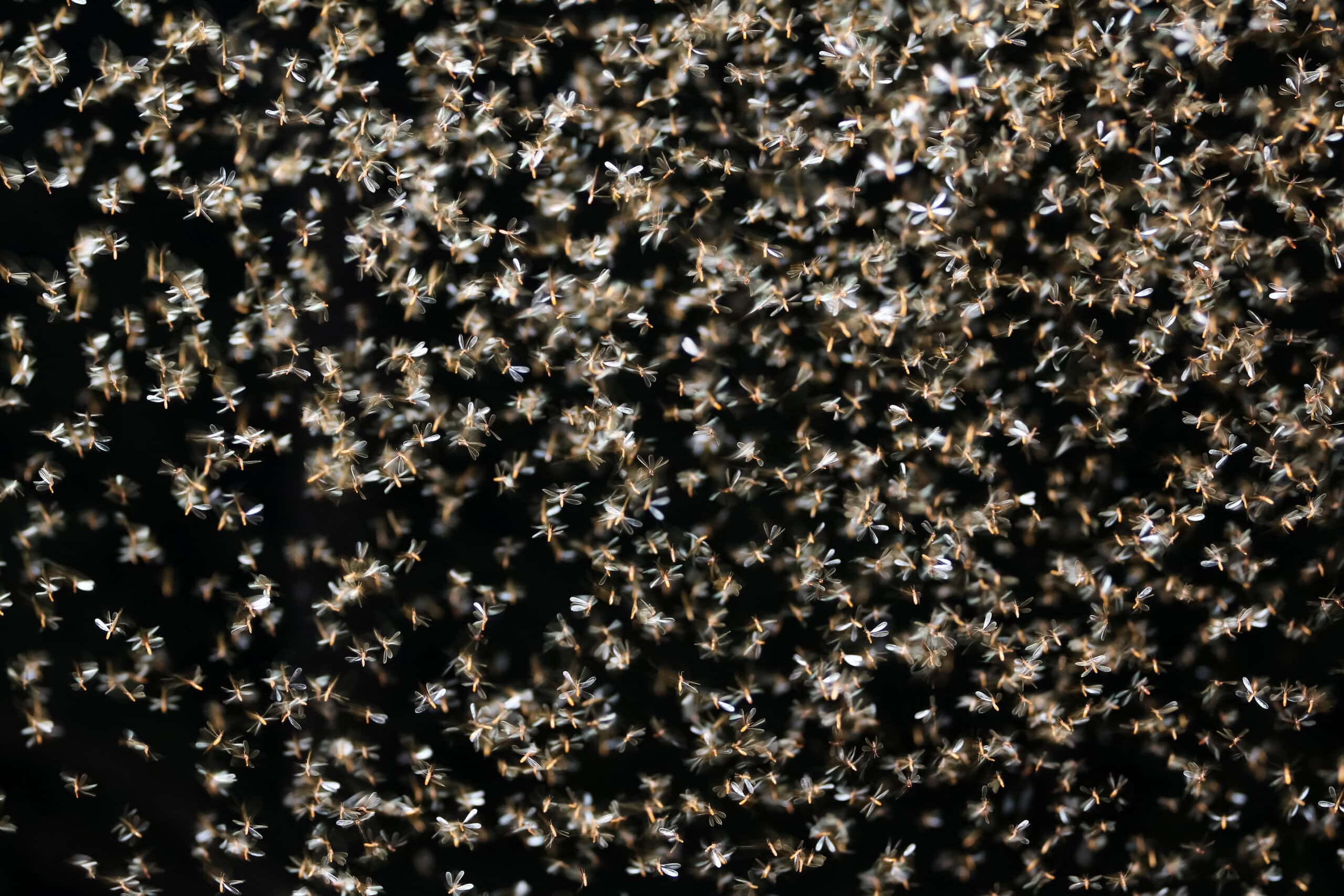
Researchers in China believe some nocturnally migrating insects, including highly destructive and invasive moths, use both visual cues and the Earth’s geomagnetic field to complete their long-distance migrations.
Their findings, revealed in a study published in eLife on March 3, 2026, could help other researchers studying animal migration and navigation patterns.
The Focus of the Study
The researchers focused on large nocturnal moth species that complete long-distance, multigenerational migrations in the spring and fall across North America and Eurasia. In the springtime, these noctuid moths head north on a one-way trip to their summer breeding grounds. In the fall, their offspring head back south to warmer winter climates.
Researchers already suspected the Earth’s magnetic field played a role in the moths’ seasonal migrations, but they wanted to know how and why.
Yi-Bo Ma, a master student at the State Key Laboratory of Agricultural and Forestry Biosecurity, Nanjing Agricultural University, China and co-first author of the study, stated in a press release about the study, “Although many of these species are thought to use Earth’s magnetic field, particularly at nighttime when navigation is more challenging, the sensory basis of this navigation has yet to be investigated.”
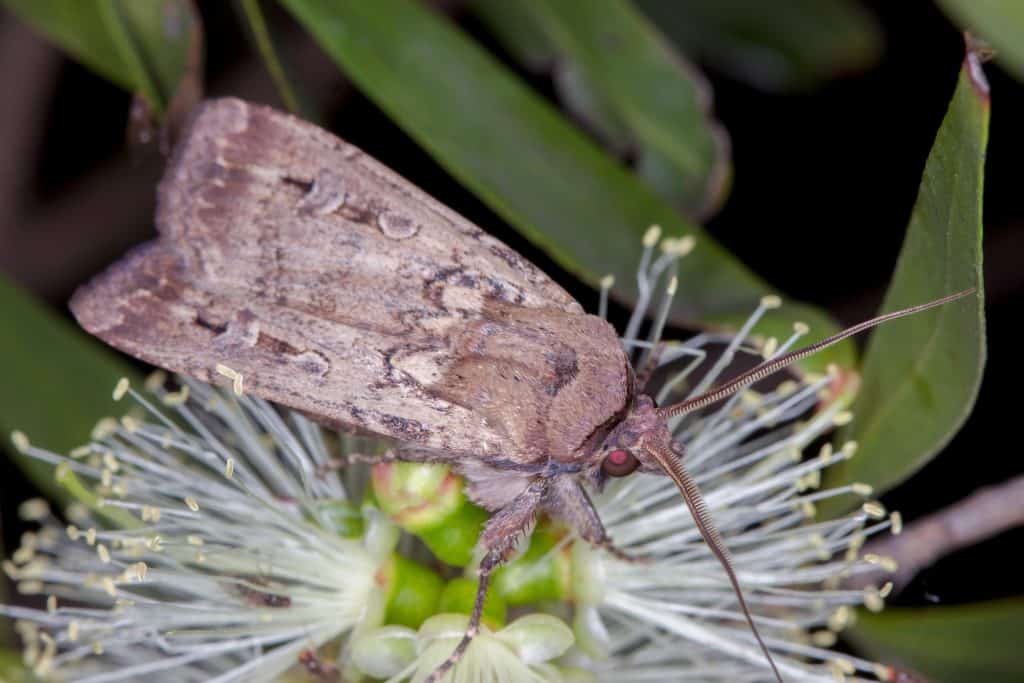
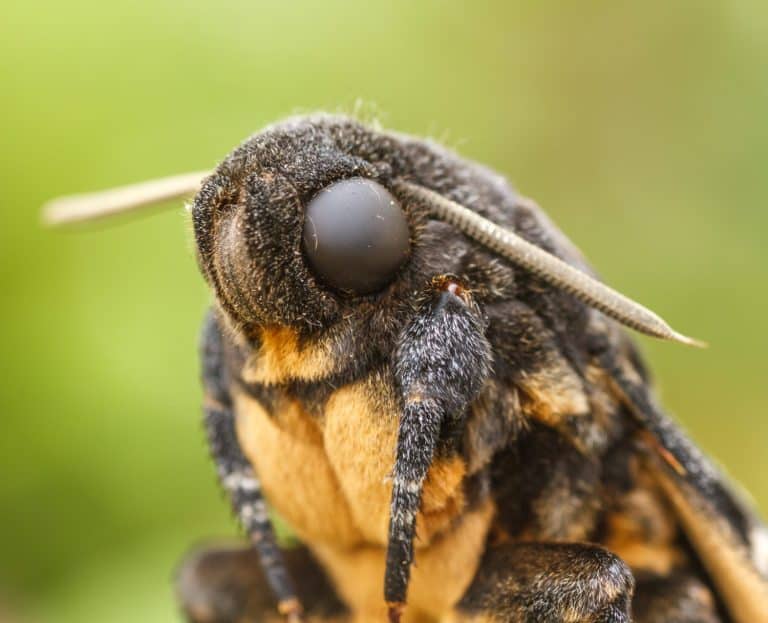
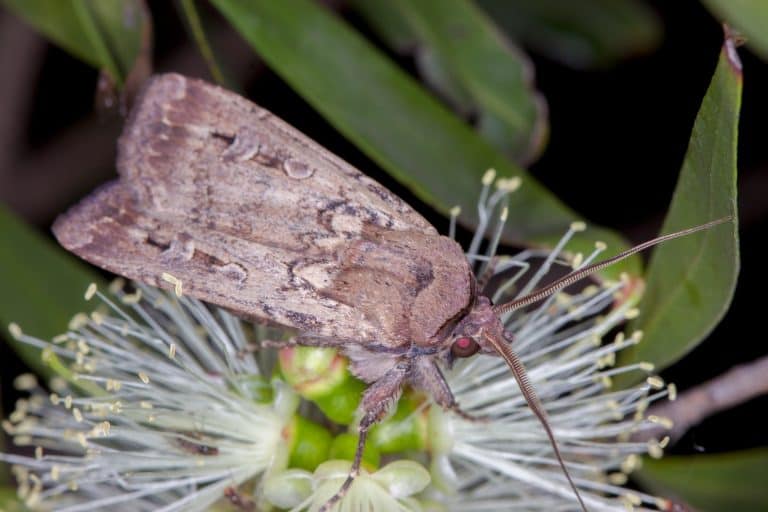
The bogong moth is known to rely on geomagnetic cues during their short migrations in Australia.
©Andrew Allen Photography/Shutterstock.com
The researchers noted that there is already scientific knowledge that confirms at least one moth species relies on geomagnetic cues during migration. “The one exception to this lack of knowledge is the Bogong moth of Australia, which uses a magnetic compass integrated with a stellar compass and visual cues to guide its migration,” said co-first author Gui-Jun Wan, Associate Professor at the State Key Laboratory of Agricultural and Forestry Biosecurity, Nanjing Agricultural University in the same press release.
However, the Bogong moth is unique because its migratory pattern is limited to a much smaller geographic location in southeast Australia. Moths that travel greater distances could rely on very different cues.
To find out how visual and geomagnetic cues interact for moths that migrate across multiple latitudinal lines, the team focused on one of the most invasive crop pests: the fall armyworm, Spodoptera frugiperda.
Why Did Researchers Choose the Fall Armyworm?
Researchers chose the fall armyworm not only because it travels great distances during migration, but also because of its invasive nature. These noctuid moths, in their larval form, are some of the most destructive agricultural pests in the world.
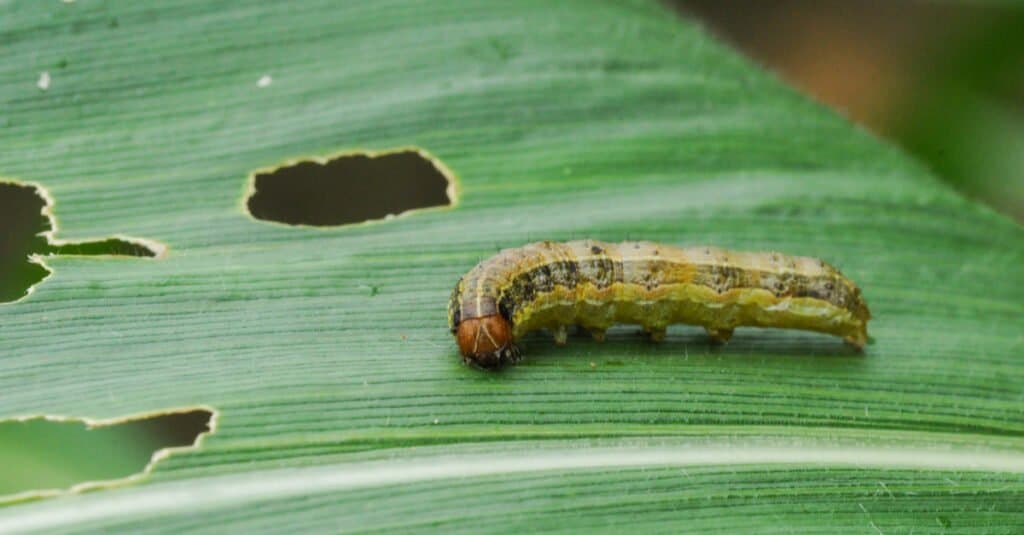
The fall armyworm, the larval form of the armyworm moth, is the most common armyworm found chewing plants in yards or pastures.
©kale kkm/Shutterstock.com
Large populations can move across a field in sync and devour nearly all vegetation in their path. They’re not particular, either. While they prefer corn, they’ll eat almost anything. This puts a wide range of agricultural crops in danger.
Determining what these moths rely on during migration could help mitigate crop damage.
The Research Explained
The researchers conducted the study in four stages, using a group of tethered moths in a controlled environment. The team tested how the moths reacted to two kinds of “compasses”–geomagnetic cues and visual cues.
Stage 1 – Setting the Baseline
The researchers first aligned both the visual and geomagnetic cues to mimic the moths’ natural environment at the start of the migration. The moths had no problem flying as a group in the correct direction in this “normal” setting.
Stage 2 – Mixing Things Up
Next, the team rotated the magnetic field by 180 degrees while keeping the visual cues in the same spot. The moths began their journey in unison, following the visual cues. But something about the magnetic field being off quickly caused confusion among the group, and they quickly lost their orientation.
Stage 3 – Realigning In a New Direction
Then, the researchers realigned both the magnetic and visual cues, with both being rotated 180 degrees. With the two signals aligned, even in a totally different direction than the baseline, the moths were again able to regroup and fly together toward the new direction.
Stage 4 – Resetting to Normal
Finally, the team put both the visual and magnetic cues back to their original settings to see how the moths would react. The group reoriented itself and moved together toward the original heading. The team also tested this with lab-raised moths to ensure it wasn’t a learned trait in the wild. Both groups produced the same results, demonstrating that this navigational skill is a biological trait.
The Research Summarized
The testing also showed that the moths rely most often on visual cues, but that the Earth’s magnetic field also played a role in guiding them.

The Earth’s geomagnetic field is used by noctuid moths to navigate during seasonal migrations.
©Piotr Krzeslak/Shutterstock.com
When the two cues were aligned, the moths could navigate like normal. When the two cues conflicted with each other, the moths became confused and lost their direction. The study’s findings suggest that noctuid moths need both visual and geomagnetic help to complete a successful migration.
The Study’s Impact
This research was just the first step towards understanding the factors that influence the long-distance migration of noctuid moths. Researchers hope their findings will propel other researchers to study other species to see if they share the fall armyworm’s reliance on both visual and geomagnetic cues to migrate.
There is another reason this study’s findings are important.
Gao Hu, Professor at the State Key Laboratory of Agriculture and Forestry Biosecurity, Nanjing Agricultural University, and the study’s senior author, states in the press release, “Gaining a better understanding of their migratory behaviors and the sensory basis for them could help inform future strategies for controlling some of these invasive pest species.”