
Quick Take
- Orcas, often called killer whales, are the apex predators of the ocean.
- Pods use coordinated hunting strategies, communicating with one another through unique calls, clicks, and whistles.
- Even predatory sharks such as the great white fear and avoid orcas.
- Wild orcas have never been documented to kill a human, but captive orcas have been involved in 4 human fatalities.
Orcas (Orcinus orca), often referred to as “killer whales,” are not actually whales. They’re the largest members of the dolphin family, Delphinidae. The name is believed to have originated with 18th-century Spanish sailors, who called orcas “ballena asesina,” or whale killers, because they preyed on whales. A mistranslation into English resulted in the name killer whales, but are orcas really killers, and are they dangerous to humans?
All About Orcas
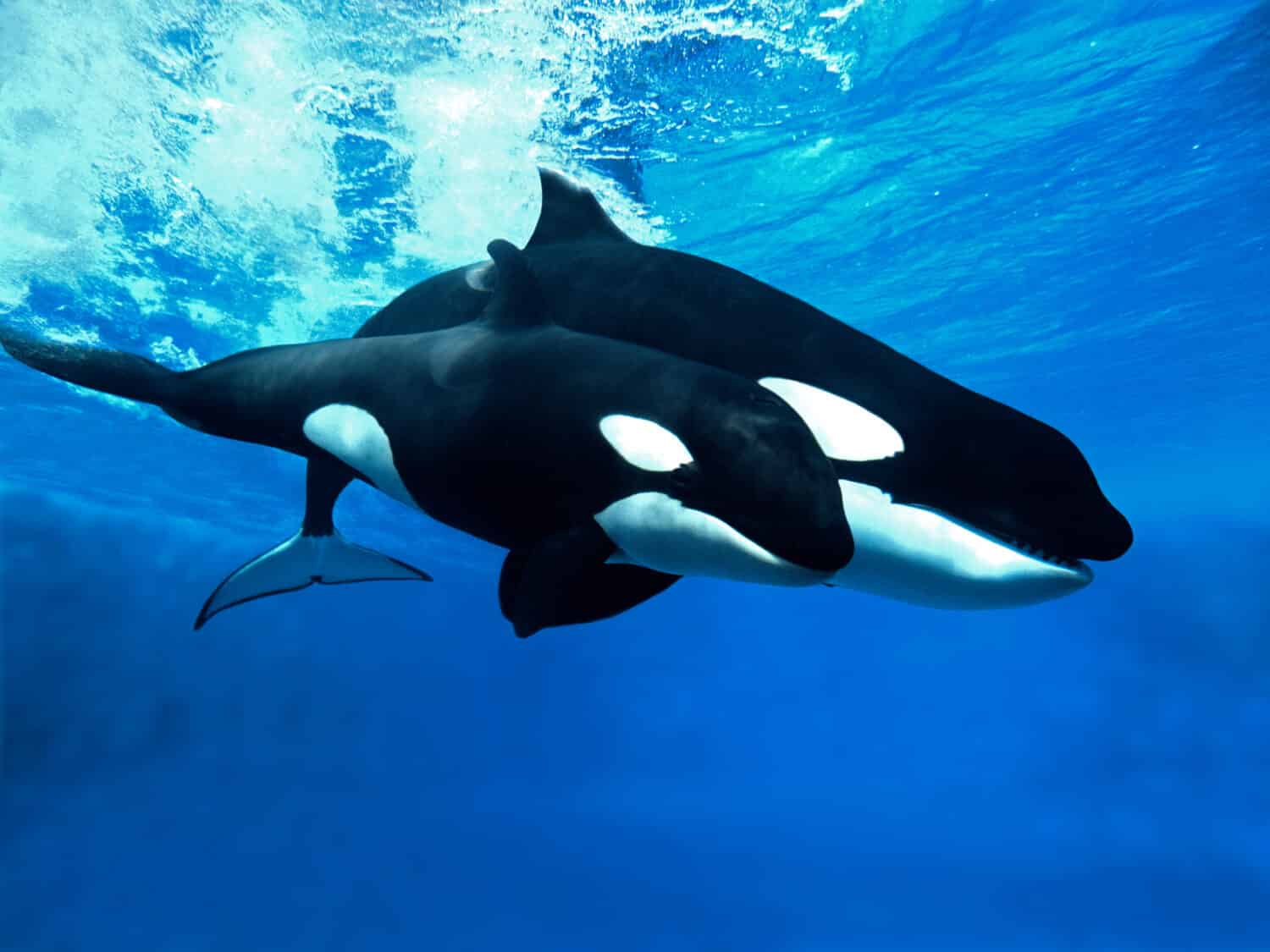
Orcas can weigh up to 11 tons and reach 32 feet in length. They have the largest dorsal fins of any ocean mammal, measuring up to 6 feet tall. They are black on top and mostly white on the underside. Viewed from above, the black is camouflaged against the dark water. Viewed from below, the white blends with the sunlit ocean, making it difficult for other marine animals to see them. Orcas can reach top speeds of 30mph.
Orcas have from 40 to 56 conical, interlocking teeth that measure around 3 inches long. These teeth are used for tearing and ripping, but not chewing, as prey is eaten whole or in chunks. Orcas also have the second-largest brain among marine mammals, after bottlenose dolphins. They live in every ocean on Earth, including the cold waters of the polar regions.
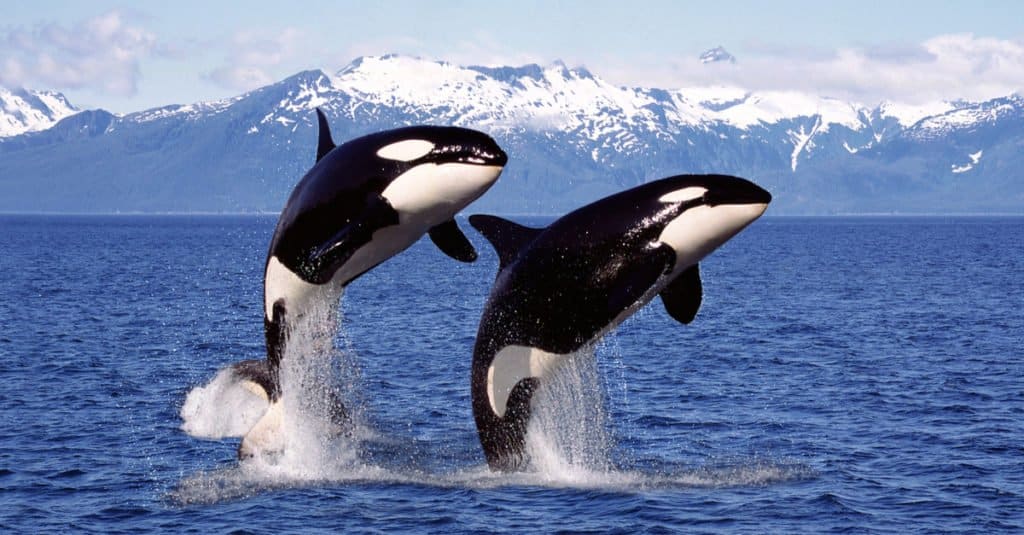
Killer whales are not whales; they are dolphins.
©slowmotiongli/Shutterstock.com
The Ocean’s Top Predator
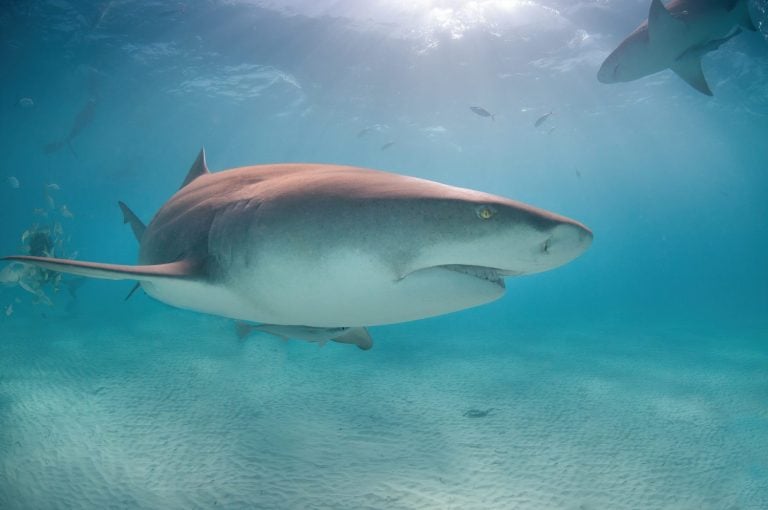
We often think of great white sharks as being the ocean’s apex predators. However, orcas have no natural predators, and even great whites fear and avoid them. Researchers have discovered that when orcas come near great whites’ feeding grounds, the sharks flee and do not return for up to a year.
So, why do these predatory sharks fear orcas? Orcas are highly social and typically hunt in pairs or groups, while great white sharks are often solitary. Orcas have been documented attacking sharks by flipping them upside down to cause paralysis or by slamming them repeatedly in the sides to cause internal damage. Then, the orcas consume the shark’s liver, leaving the rest of the carcass.
Hunting Strategies
Orcas also hunt other shark species, fish, rays, cephalopods, and marine mammals, including seals, sea lions, large whales, porpoises, and dolphins. Their diets depend on their habitats, as well as the learned hunting strategies of each population. Different lineages or subspecies of orcas are often referred to as ecotypes. Some ecotypes exclusively eat fish, while others consume mostly marine mammals. As noted above, the groups often use coordinated hunting strategies, communicating with one another through calls, clicks, and whistles that are unique to each ecotype. Take an in-depth look at some of the orcas’ other hunting techniques.
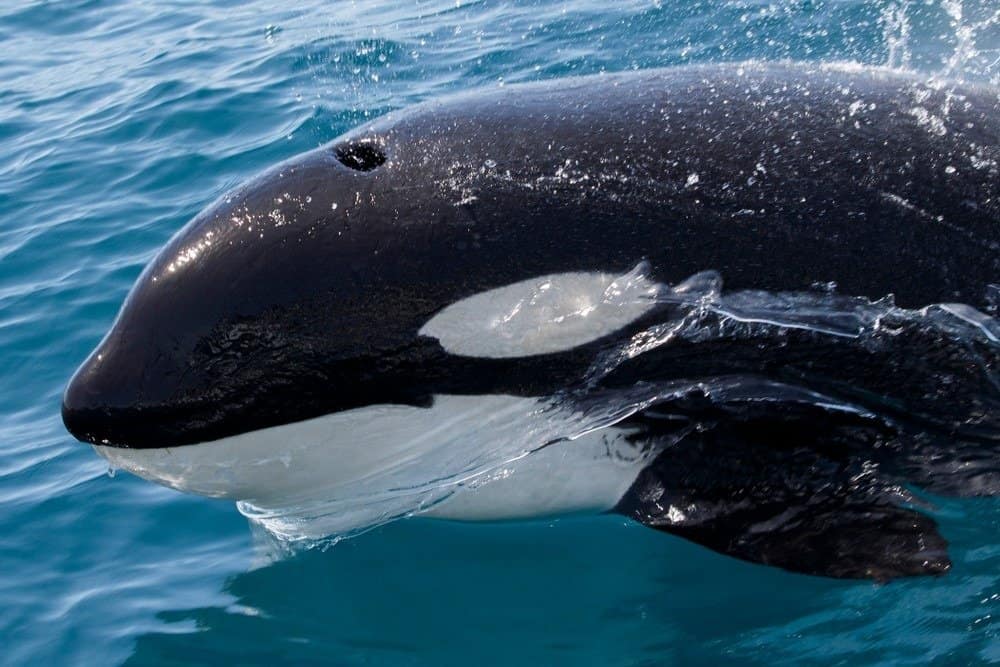
The killer whale’s size, intelligence, speed, and interlocking teeth make it a formidable predator.
©Tory Kallman/Shutterstock.com
The Wave Wash
Killer whale pods inhabiting the Antarctic ice shelf favor Weddell and Crabeater seals. The orcas line up and swim together toward the ice floe where a seal is resting. Just before reaching the ice, they dive, creating a surge of water that washes the seal off of the ice and into the ocean. If the seal manages to hold on, the ice is sometimes broken into smaller pieces, increasing the effectiveness of subsequent attacks.
Carousel Feeding
Killer whales also use a technique called carousel feeding when hunting fish. For example, in Iceland, killer whales feed on schools of fish, primarily herring. The orcas surround the fish, crowding them into tighter formations. Then, they slap the water with their tails, creating a shockwave that stuns the fish, allowing the orcas to feed on them one at a time.
Intentional Beaching
Researchers have found that orcas in Patagonia, the sub-Antarctic Indian Ocean, and the Pacific off the coast of Washington State have been recorded intentionally stranding themselves to catch seals and other marine mammals. These haul-out sites are usually in shallow, difficult-to-navigate waters. Scientists believe the orcas are using this technique to scare their prey into the water rather than to capture them directly.
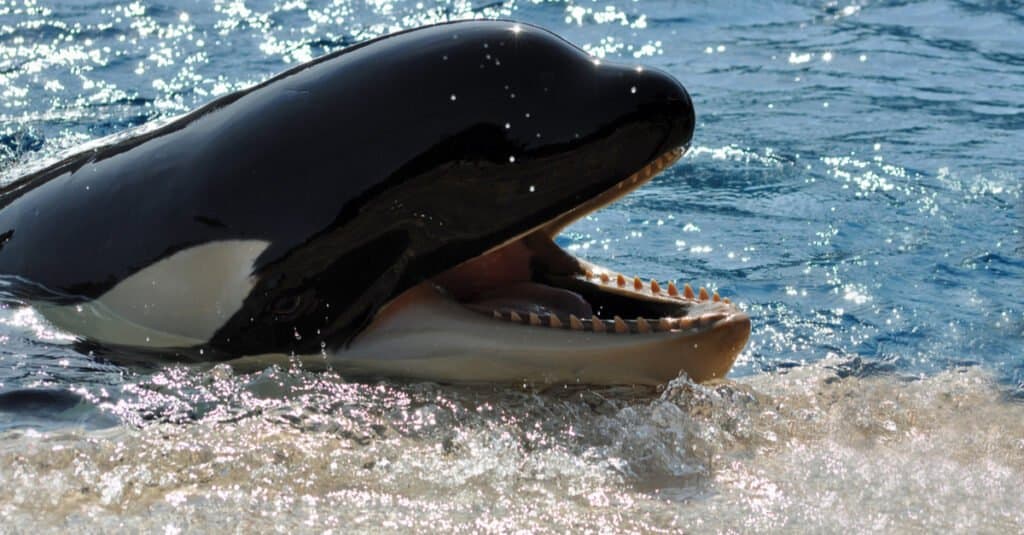
Killer whales intentionally beach themselves to scare prey into the water.
©Heather Renee/Shutterstock.com
Blowhole Blocking
Orcas also attack animals larger than themselves. They have been called the “wolves of the sea” because, when hunting large prey as a pod, they single out the weakest individuals. For example, the orcas take turns biting, ramming, and pulling on a whale’s fins to exhaust it. Then, they launch themselves onto the animal’s back, preventing its blowhole from reaching the surface and causing it to drown. The orcas then consume the most nutrient-rich parts, such as the tongue, blubber, and skin, leaving the rest for scavengers.
Are Killer Whales Dangerous to Humans?
Given their massive size, power, and predatory nature, killer whales could potentially eat humans. However, humans are not part of their natural diet, and orcas are not typically dangerous to people in the wild. Aggressive encounters with humans are rare, and there are no documented fatal attacks by wild killer whales.
However, killer whales in captivity are a different story. Orcas have shown increased levels of aggression toward humans in captivity. There have been four documented fatalities and at least 150 reported aggressive incidents involving captive killer whales. Experts believe that the chronic stress and psychological trauma from cramped living conditions, forced social groupings, and lack of natural stimulation may cause these intelligent animals to become aggressive toward humans, other whales, and even themselves.