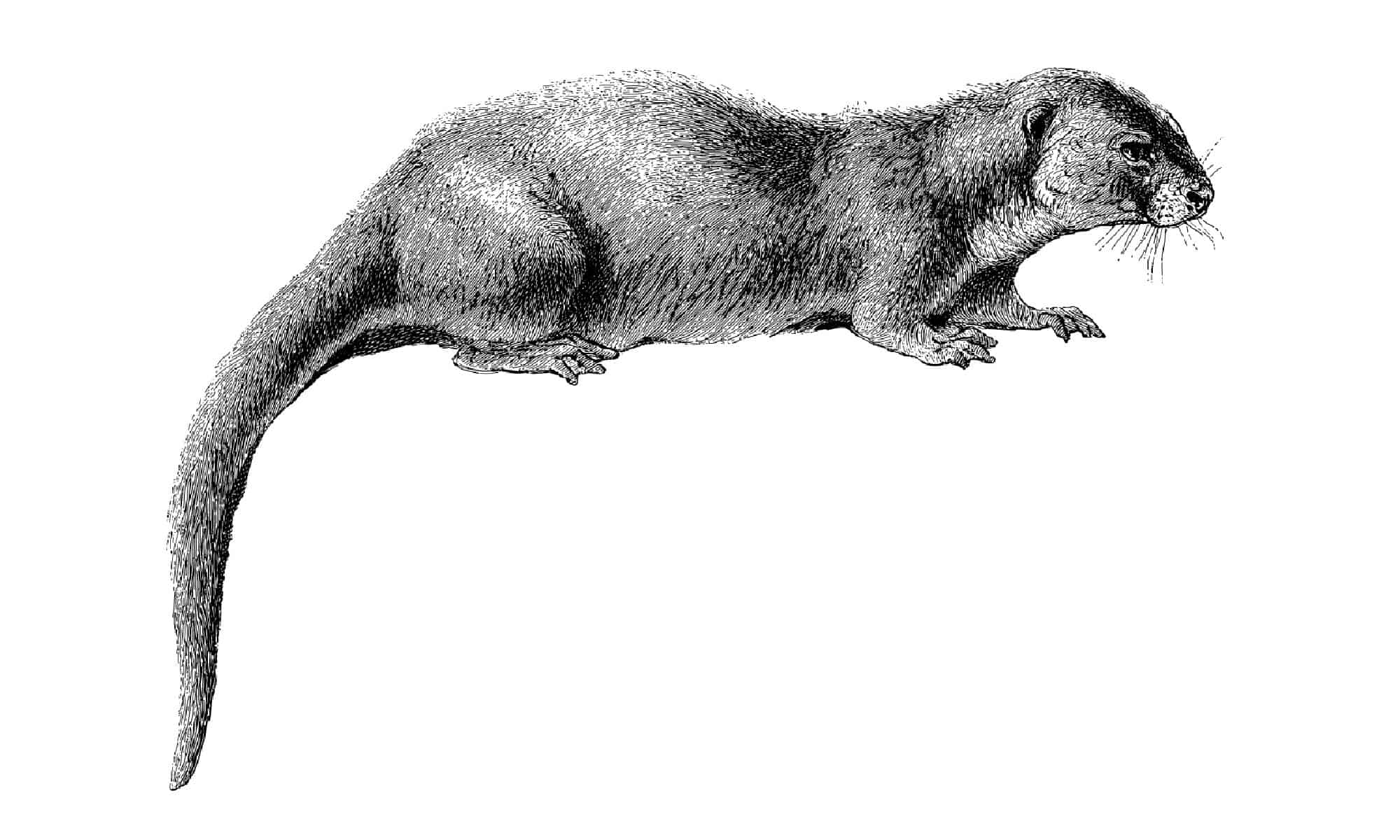

Otters are semi-aquatic carnivorous mammals that belong to the Mustelidae family, which includes wolverines, weasels, and ferrets, among others. They are adept swimmers that hunt on land and in the water. There are now 14 known species of otters worldwide, ranging from the cat-sized Asian small-clawed otter to the 6-foot giant river otter. However, 2.5 to 3.5 million years ago, there was an otter that would have towered over the largest living otter species. Keep reading to discover Enhydriodon omoensis, the largest otter that ever lived.
How Big Was the Largest Otter That Ever Lived?
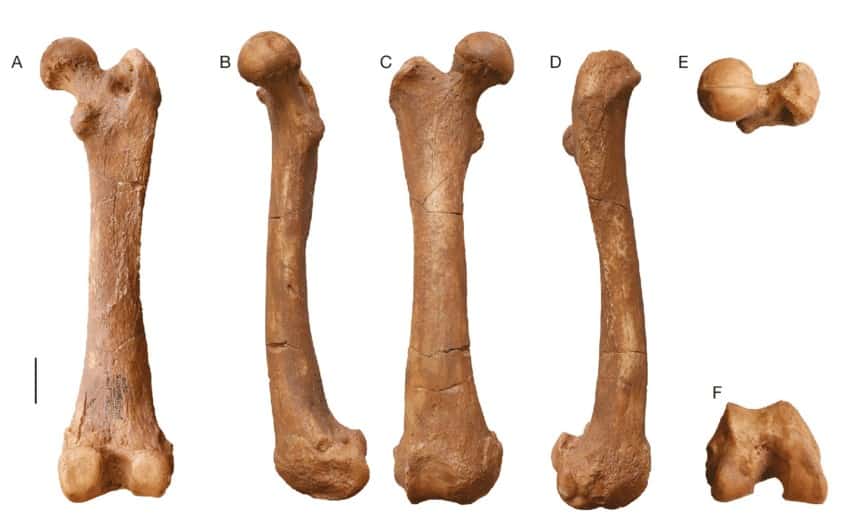
Views of the right femur of Enhydriodon omoensis, including A: ventral, B: medial, C: dorsal, D: lateral, E: proximal, and F: distal.
©Camille GROHÉ, Kevin UNO, & Jean-Renaud BOISSERIE / CC BY 4.0 – Original / License
Enhydriodon omoensis belongs to an extinct genus of the Mustelidae family. These otters roamed the earth from the late Miocene to early Pleistocene epochs, about 10 to 2.5 million years ago. Measuring up to 10 feet long and weighing over 440 pounds, it was the size of an adult lion. Some researchers have also compared the extinct otter to a bear. Its femur alone, shown in the image above, was 12.8 inches long. Paleontologists were able to estimate the otter’s weight from the size of its femur and teeth.
This ancient otter was massive compared to modern otters. The largest modern otter species are the giant otter from South America (Pteronura brasiliensis) and the sea otter (Enhydra lutris). Giant otters can reach 6 feet in length and weigh up to 75 pounds. While sea otters only measure up to 5 feet long, they are often heavier, weighing up to 100 pounds. This means Enhydriodon omoensis would have been 4 to 5 feet longer and 4 to 5 times heavier than the largest otters living today. It also weighed around five times as much as Australopithecus afarensis, a hominin species considered to have been one of our earliest relatives.
The Discovery
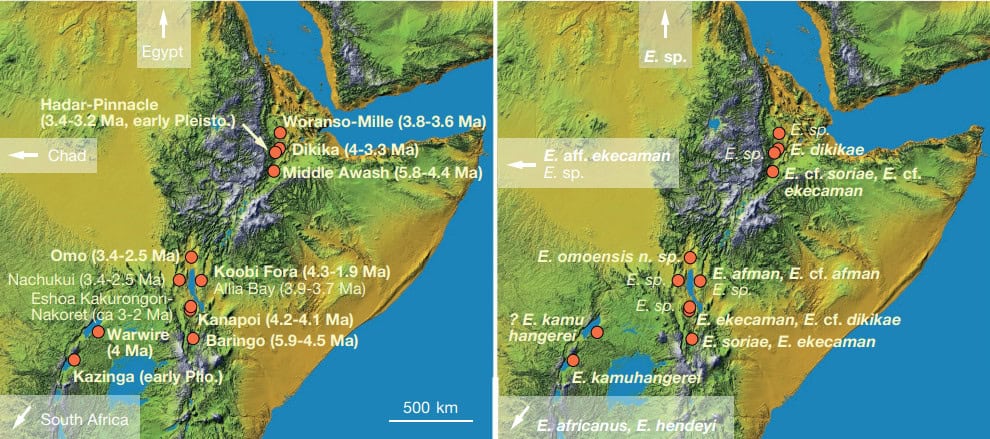
Remains of Enhydriodon omoensis and other extinct otters were found in the Lower Omo Valley of Ethiopia.
©Camille GROHÉ, Kevin UNO & Jean-Renaud BOISSERIE, Comptes Rendus Palevol / CC BY 4.0 – Original / License
The fossils ascribed to Enhydriodon omoensis were discovered in the Lower Omo Valley in southwestern Ethiopia. The remains were dated to between 3.4 and 2.5 million years ago. Although the species was only described in 2022, remains of giant otters had been found in the area for decades. In 1967, an international team of scientists began to survey the Lower Omo Valley. Then, in the early 1970s, a gigantic femur was unearthed. A 2008 study determined that the femur was from a large otter. However, it wasn’t until 2019 that the researchers who described Enhydriodon omoensis returned to the Lower Omo Valley to search the area where the fossils had been found.
That giant femur, along with dental specimens, were all attributed to this new species of giant otter. Scientists determined that the remains of Enhydriodon omoensis were far larger than the previously documented remains of other Enhydriodon species, making it the largest otter ever found. Scientists believe the otter had an extremely large, rounded head with a short, sharply angled neck. Although much of their morphology could support an aquatic lifestyle, there is currently no consensus among scientists. The femur is extremely long, but most aquatic mammals have shorter femurs to facilitate swimming. While some researchers believe these otters may have had an aquatic lifestyle similar to modern sea otters, others suggest they were more terrestrial.
The Giant Otter Diet
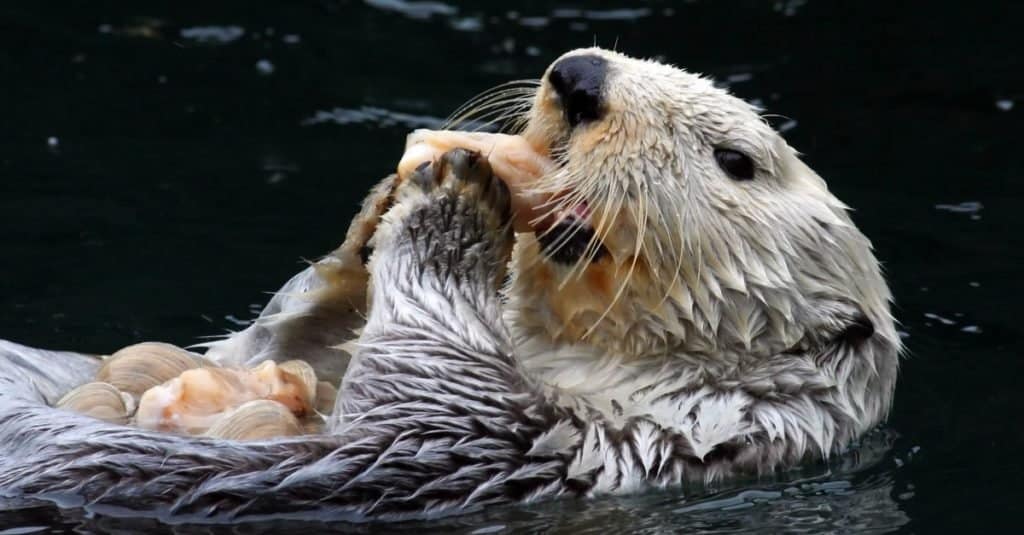
Some researchers believe that giant otters had a diet of hard-shelled organisms similar to extant sea otters.
©Kirsten Wahlquist/Shutterstock.com
Like modern otters, Enhydriodon omoensis was thought to have a diet that consisted of hard-shelled aquatic organisms. Enhydriodon species have bunodont teeth that resemble those of living sea otters. These teeth are large, flat, and have low crowns. This type of teeth is common in animals with varied diets and is well-suited for crushing and grinding food. Researchers also found fossils of Etheria elliptica, a type of freshwater oyster that was first considered to be the otters’ most likely food source.
However, when the scientists measured the isotopes in the enamel of the otters’ teeth, they found that Enhydriodon omoensis consumed more terrestrial prey than they had expected. Scientists suggest that instead of being aquatic or semi-aquatic with a strictly carnivorous diet, this giant otter may have been terrestrial and omnivorous. It could also have been an opportunistic predator, foraging for organisms in the water, plus hunting prey and scavenging carcasses on the banks of the Omo River.
When and Why Did Enhydriodon Go Extinct?
Enhydriodon omoensis was among the last of the giant otter species. They went extinct around the time of the Plio-Pleistocene transition, roughly between about 2.7 and 2.4 million years ago. The period was notable for a fundamental shift from warmer, more humid conditions to colder, more arid conditions.
Many climate changes occurred in the eastern African rift during the period, which may have contributed to the extinction of Enhydriodon omoensis and many other large carnivores in the region. Researchers also suggest that habitat reorganization may have influenced the evolution of early hominins, who may have competed for resources.