
Quick Take
- What does it take to tell two giant stick insects apart, and why did scientists get it wrong for so long? See how scientists revised taxonomy →
- Thousands of citizen scientists photographed these insects, yet two species still slipped through undetected. Here's how that's even possible. Discover how two species were missed →
- One newly found species lives in a forest so endangered it has fewer than 1,000 hectares left, a situation whose implications go far beyond stick insects. Explore the Mabi forest findings →
- Stick insect plagues can devastate crops, and this research reveals the identification mistake that complicated every control effort. Understand stick insect plagues →
Have you ever wondered what insect detectives do? Here, we share the findings of some fascinating research on stick insects in Australia. Despite the fact that thousands of these creatures have been described on citizen (community) science websites such as iNaturalist and Atlas of Living Australia, it turns out that there are still some undiscovered species. This is how they were identified and why it matters so much.
Stick Insect Taxonomy
Scientists from the University of Sydney, Australia, have revised the classification of some large insects and reinstated a third. It turns out that the animals that experts assumed were two separate species are actually five separate species. They have a range that extends from northern NSW through coastal Queensland and into the tropical north.
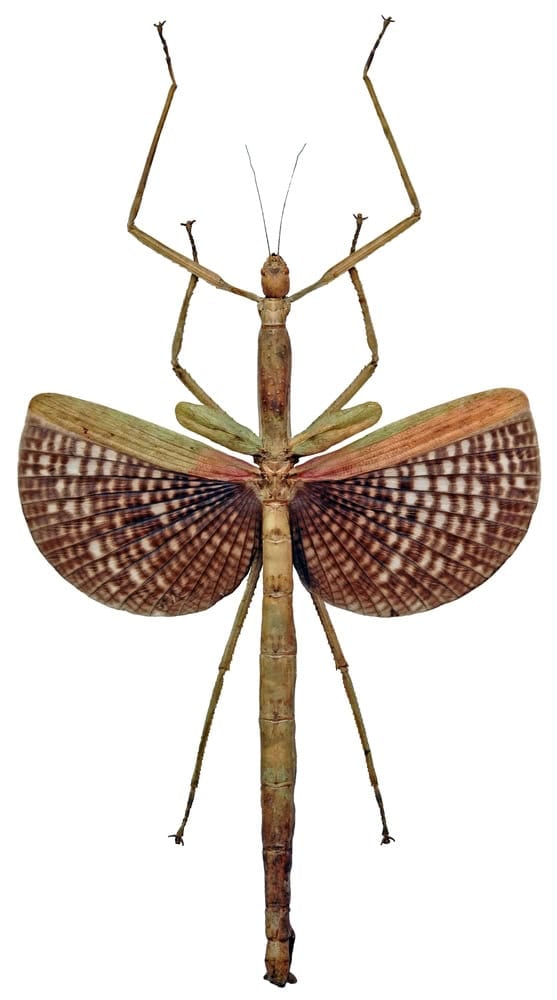
New spevies of Anchiale stick insects have been found.
©Insectpedia/Shutterstock.com
Taxonomy is the science of the classification of living things. Organisms are organized into hierarchical groups based on shared traits. Many of these traits can only be identified via detailed observations and measurements in a laboratory. The animals that we know of as stick insects belong to the class Insecta and are in the order Phasmatodea. Thousands of stick insects exist globally, and many are likely still unclassified.
What We Know About Stick Insects
The most obvious characteristic of a stick insect is that they look like a stick, but there is a lot more to them than that! They have developed many unusual shapes as a camouflage strategy so that they can blend in with foliage in their surroundings. They do this to avoid predators. All of the thousands of stick insect species have some basic features in common, like segmented legs and compound eyes. These insects also like to live in grasslands, woodlands, and forests.
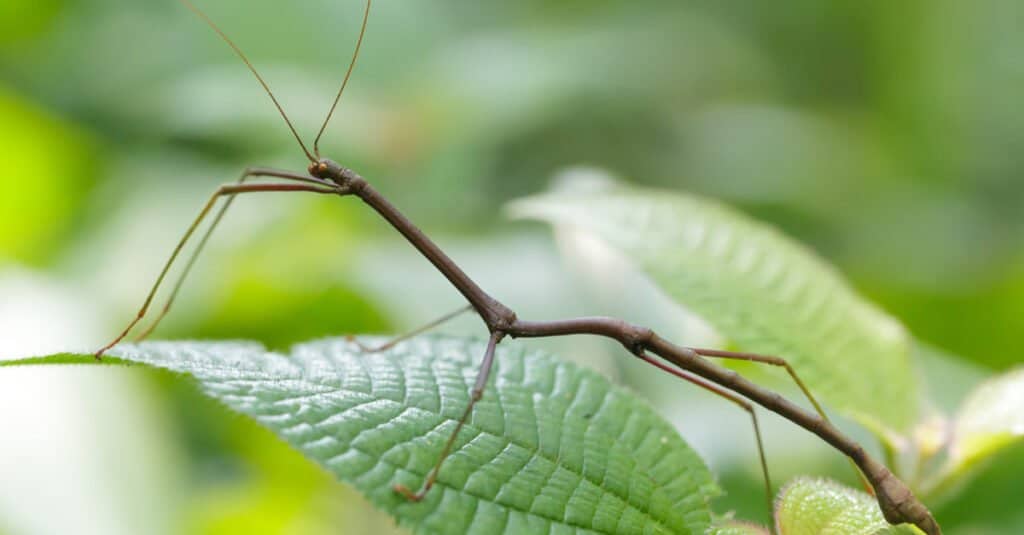
Though many stick insect species need a male to fertilize the eggs, some can reproduce without fertilization.
©Stephane Bidouze/Shutterstock.com
Stick insects eat leaves, which they consume using their powerful mandibles. The rest of their time is spent trying not to get eaten themselves! These guys are a prey species for loads of other animals, including birds, small mammals, bats, and other insects. They evade detection by keeping still and behaving like a leaf or a twig.
Stick Insects and Humans
There are more than 200 stick insect species living in Australia and probably many more. Many are found in gum trees, but some are spotted in gardens. Many people also keep stick insects as a pet. Others, however, are viewed as a pest! Stick insects can form swarms, or plagues, which are population outbreaks. These have been recorded in Australia as well as in North America and China. Female stick insects can lay hundreds of eggs. More importantly, some offspring can develop from unfertilized eggs so they don’t even have to mate with a male. This produces a lot of new stick insects at the same time! The swarms can be highly destructive and have a financial impact on agriculture if they settle on food crops.
New Stick Insects Discovered
Researchers combined information from insects obtained from museum collections, captive populations, and surveys. They used careful imaging and measurements of anatomical features together with DNA extraction and analysis. This includes things like wing length and shape.
The scientists discovered that one of the insects had been misidentified and an entirely new species was declared. It was named Anchiale robusta. Another new species, Anchiale mabiensis, was identified in Queensland’s Mabi rainforest on the Atherton Tablelands. This species has a particularly unusual egg structure. They appear to have a lid-like structure at one end.
Why This Matters
This research recognizes five stick insect species, two of which are newly described. It underlines the importance of protecting threatened ecosystems that may be home to species that we have not even classified yet! Also, stick insects can form plague-like population outbreaks that cause a lot of damage to vegetation. This research has shown that more than one species is implicated in these events. It is hoped that this information will inform future control measures. Speaking in this Press Release from The University of Sydney, Dr Braxton Jones, lead author of the published research, said: “Even among some of Australia’s most photographed and frequently reported insects, we’re still finding species that have escaped scientific recognition.”
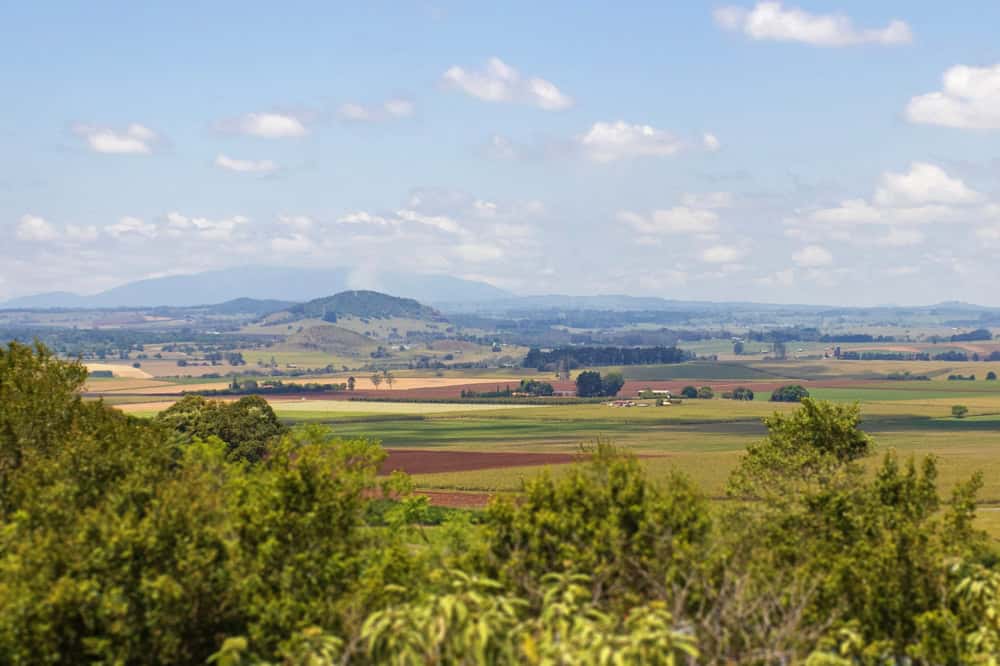
Mabi Forest is a type of rainforest that occurs in North Queensland.
©Randell Burke/Shutterstock.com
These findings are also important because Anchiale mabiensis was found in Mabi Forest. This is a type of rainforest that occurs in North Queensland and is designated as a critically endangered ecological community. There are only around 954 ha of the forest left, and it is fragmented into small, isolated patches. Clearance for agriculture and timber logging has destroyed vast areas of the forest.
The forest is already recognized as home to some endangered species such as the large-eared horseshoe bat and the spectacled flying-fox. Sadly, some other animals that made the forest their home have already become locally extinct because the remaining sections are too small to maintain their populations. This research shows that there could be as-yet-unrecognized insects living in this precious landscape.