
Quick Take
- There are at least 19 owl species that inhabit or visit the continental U.S.
- Adult owls have few predators, but smaller species, sick or injured owls, nestlings, and eggs are at greater risk of predation.
- Ground-nesting owls such as the short-eared owl and burrowing owl are particularly vulnerable to predatory mammals.
- Owls also hunt and kill other owls due to competition for food and territory.
Owls belong to an order of birds called Strigiformes, which is divided into two families: Strigidae, or typical owls, and Tytonidae, which include barn owls. There are around 250 owl species worldwide, inhabiting nearly every environment from forests and deserts to the Arctic tundra. At least 19 species inhabit or visit the contiguous United States. Owls are raptors, also known as birds of prey, with hooked beaks and sharp talons. So, which animals prey on these feathered predators? Read on to find out.
Who Hunts the Hunter?
Owl species vary in size from tiny, sparrow-sized elf owls to gigantic Blakiston’s fish owls with wingspans of 6.5 feet. Regardless of size, adult owls are at the top of the food chain with few natural predators. However, animals that are unwilling to attack healthy adult owls may prey on sick owls, nestlings, or eggs. Larger raptors, mammals, and reptiles are the primary threats to owls.
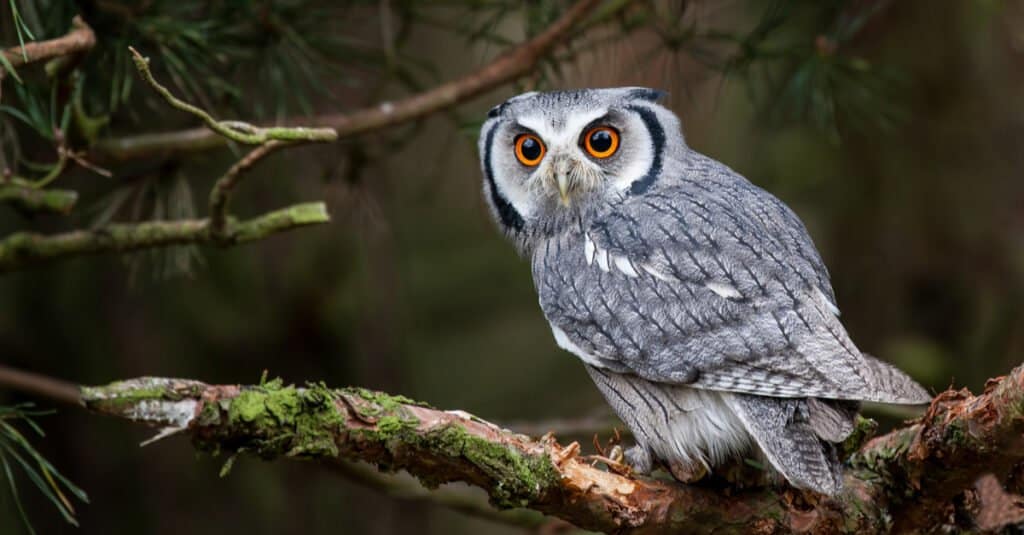
Owls are at the top of the food chain, so which animals eat owls?
©Alan Tunnicliffe/Shutterstock.com
Other Raptors
Large hawks, such as red-tailed hawks and goshawks, along with peregrine falcons and common buzzards are some of the primary predators of smaller owls. Young, injured, or sick owls are particularly vulnerable to these avian predators. Ravens and crows are known to consume great horned owl eggs. Northern goshawks are fierce defenders of their nests and may also prey on owls that they perceive as a threat.
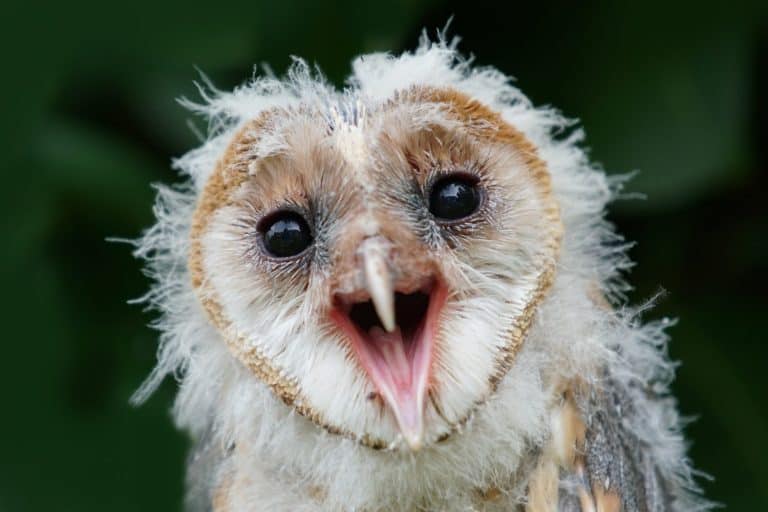
Large owls, such as eagle owls and great horned owls, also attack smaller owls. Great horned owls are aggressive predators and have been recorded eating screech owls and barn owls. Owls may also kill other owls they view as competition. For example, barred owls are a threat to northern and California spotted owls because they compete for territory and resources.
Mammals
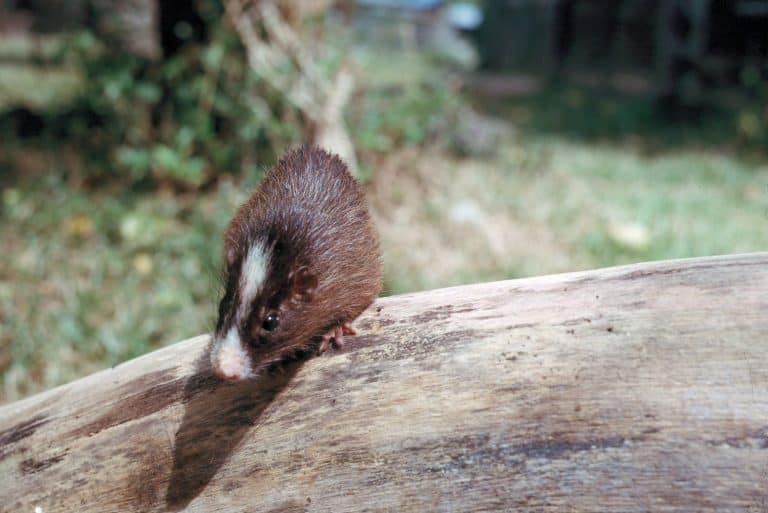
Few mammals hunt owls, but foxes, raccoons, opossums, coyotes, bobcats, badgers, skunks, and domestic or feral cats may take advantage of owls that are vulnerable or out in the open. Raccoons, foxes, opossums, and cats are known to raid owl nests to consume eggs and nestlings.
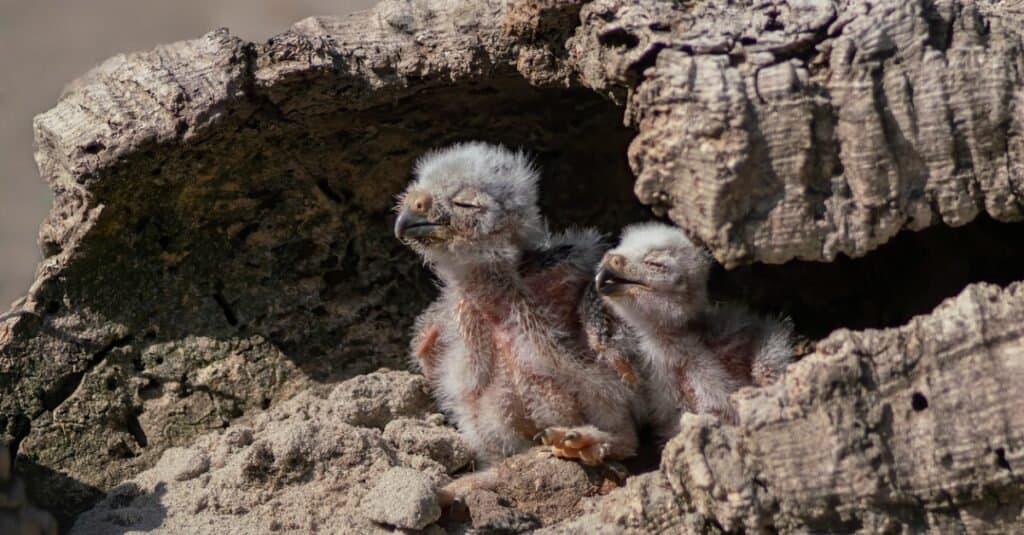
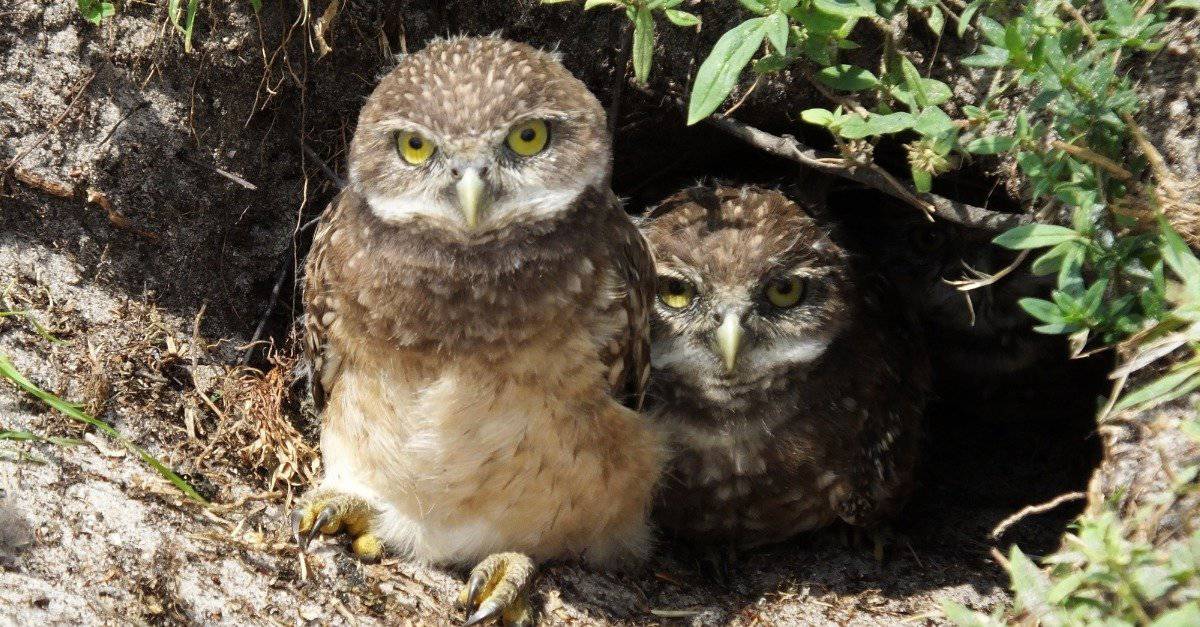
Young burrowing owls are at risk from predatory mammals and reptiles.
©iStock.com/AGD Beukhof
Coyotes and bobcats may also attack owls when the birds are feeding on large prey on the ground. Ground-dwelling owls such as the short-eared owl and the burrowing owl especially at risk from predatory mammals. Badgers are significant predators of burrowing owls. Researchers found that in some areas, badgers were responsible of up to 90% of burrowing owl nest predation.
Reptiles
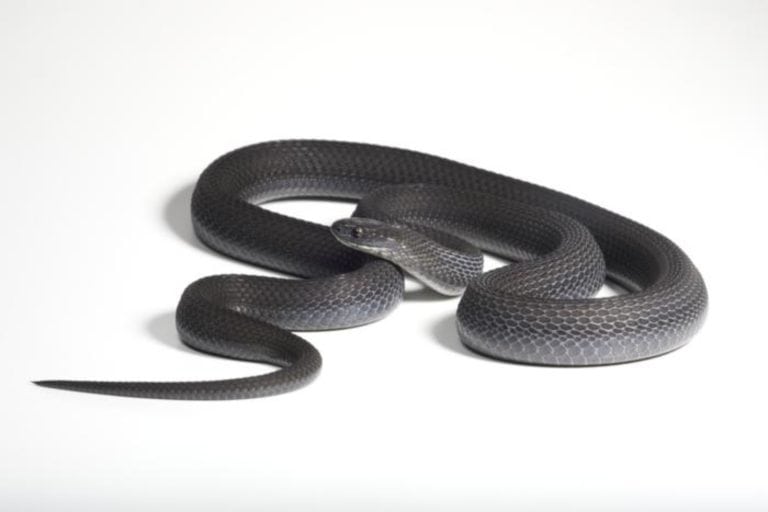
Some snake species prey on owl nestlings, eggs, and small owl species. Since most owls nest in trees, typically only arboreal or semi-arboreal snakes pose a threat. Researchers in India recorded a rock python preying on a large mottled wood owl, but predation events by snakes on large, adult owls are uncommon.
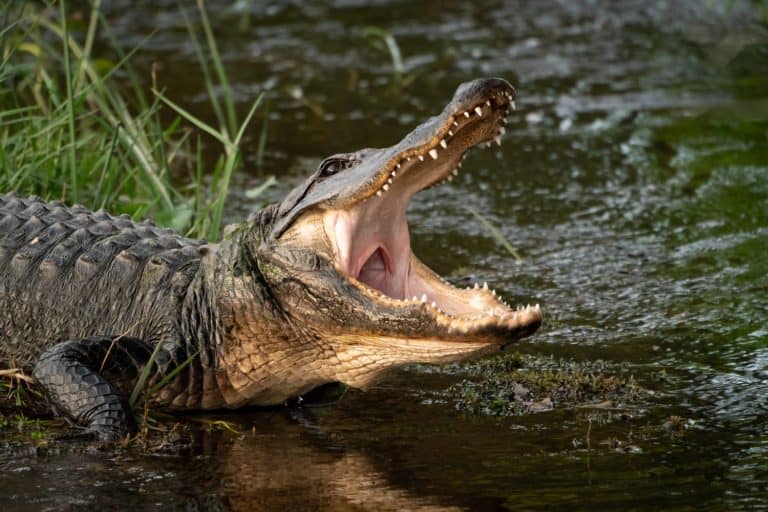
However, burrowing owls make their nests underground, so gopher snakes, coachwhips, and rattlesnakes are known to enter their burrows to prey on eggs, nestlings, and even adults. The Florida burrowing owl is also listed as being at risk of predation from large, invasive constrictors, which can include pythons, boa constrictors, and anacondas. Black and white tegus, Nile monitor lizards, and green iguanas have also been recorded preying on Florida burrowing owls.