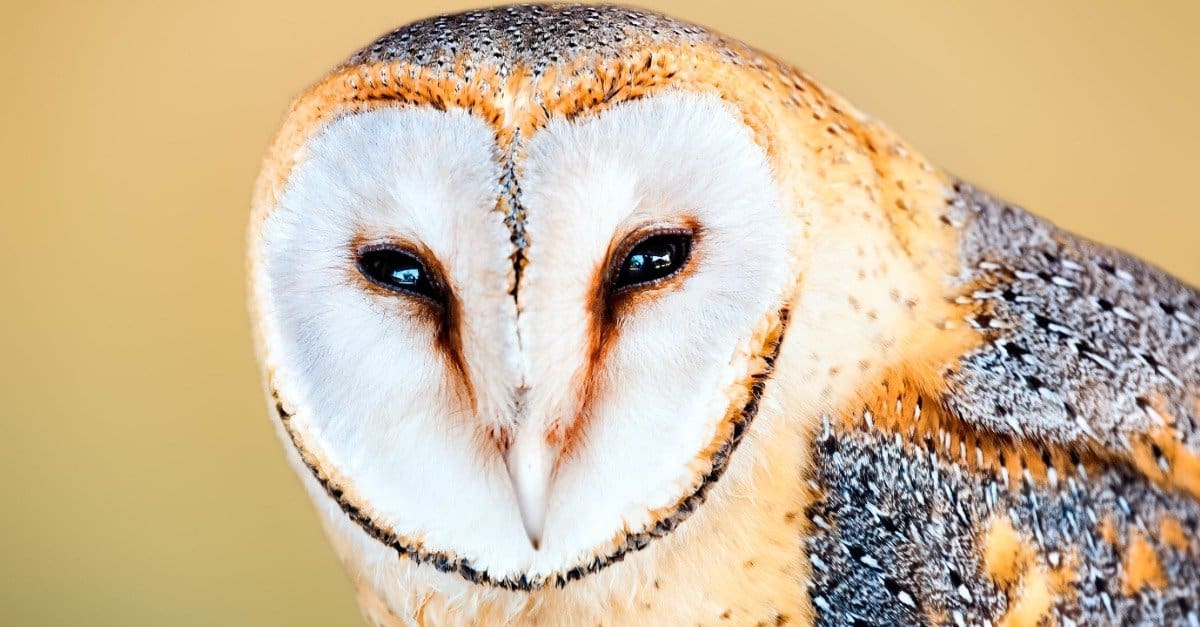

Owls are mysterious birds with huge eyes and a haunting hoot. They appear intelligent and intimidating, and their mysterious symbolism has made them the subject of many folktales and stories. We can only see them occasionally, when we are lucky enough to catch a glimpse during their nightly hunts. Owls are divided into two families: the true or typical owls and the barn owls. What keeps these feathered creatures going every day? Read on to learn more about what owls eat and how they hunt for prey.
What Do Owls Eat?
The diet of an owl depends on its species, which varies due to the climate of its habitat and its geographic location. All owls have carnivorous diets, but what they eat depends on the resources available in their environments. Some owls eat carrion, but the general rule is that they eat prey that they kill themselves. Owls typically eat insects, small mammals, amphibians, reptiles, other birds, and fish. The table below provides specific dietary information for different owl species.
| Owl Species | Diet |
|---|---|
| Golden-masked owl | Insects, rodents, rabbits, and birds |
| Barn owl | Birds, fish, rodents, and other small mammals |
| Tawny owl | Insects, mice, voles |
| Snowy owl | Lemmings, voles, and fish |
| Barred owl | Insects, fish, amphibians, reptiles, other birds, mice, rabbits, and other mammals |
| Scops owl | Small insects, small vertebrates, small mammals |
| Screech owl | Field voles, wood mice, bank voles, and birds |
| Eagle owl | Birds, hares, and foxes |
| Long-eared owl | Scorpions, snakes, amphibians, birds, rodents, and other small mammals |
| Little owl | Earthworms, beetles, and other invertebrates, small birds, and small mammals |
| Short-eared owl | Field voles and other small mammals, birds |
| Great horned owl | Scorpions, snakes, amphibians, birds, rodents, other small mammals |
Hunting for Food
Being nocturnal animals, owls are active during the night. There are a few exceptions, such as the northern hawk-owl, which is primarily diurnal, and the burrowing owl, which is crepuscular and often active during both day and night. Owls hunt for their prey but avoid hunting in the same area where they roost. They have excellent hearing and special feathers that dampen sound, allowing them to locate prey while in flight and ambush their target more easily. Many owls can find and capture prey using only sound.
Owls that live in desert habitats or other open landscapes hunt by flying and scanning the area for prey. However, most owls hunt from a perch. When prey appears, they swoop down and grab their prey with their sharp talons and powerful feet. They may also directly snatch it with their beaks, as is the case with insects. When they capture a small animal, they carry it off to a tree and immediately begin tearing the flesh with their talons or piercing it with their sharp, hooked beaks.
Owl Consumption and Digestion
Like other birds, owls cannot chew their food. When they hunt for prey, they either swallow it whole or tear it into smaller pieces to swallow. Some owl species partially pluck the feathers from their prey before eating. Although they can swallow bones, teeth, fur, and feathers, that doesn’t mean they can digest them.
Once the prey is swallowed, it passes through the esophagus and comes to rest in a glandular stomach, where acids help break down the meal. Fleshy portions such as meat, fat, or organs are then passed through another stomach for further digestion. The indigestible parts are formed into pellets, which the owls later regurgitate.