
Highly intelligent, sociable, and just plain fun to watch, the carnivorous otter is an aquatic member of the Mustelidae family. Their lithe bodies, along with their webbed toes and feet, enable them to glide smoothly through the water and catch prey. There are 13 species of otters worldwide. Most of them are semi-aquatic freshwater species, including the North American river otter, the Eurasian otter, the giant otter of the Amazon, the Asian small-clawed otter, and several African otter species. However, the sea otter of the North American Pacific coast and the marine otter of the South American Pacific both spend the majority of their lives swimming and hunting in the ocean. But what do these otters eat?
What Do Freshwater Otters Eat?
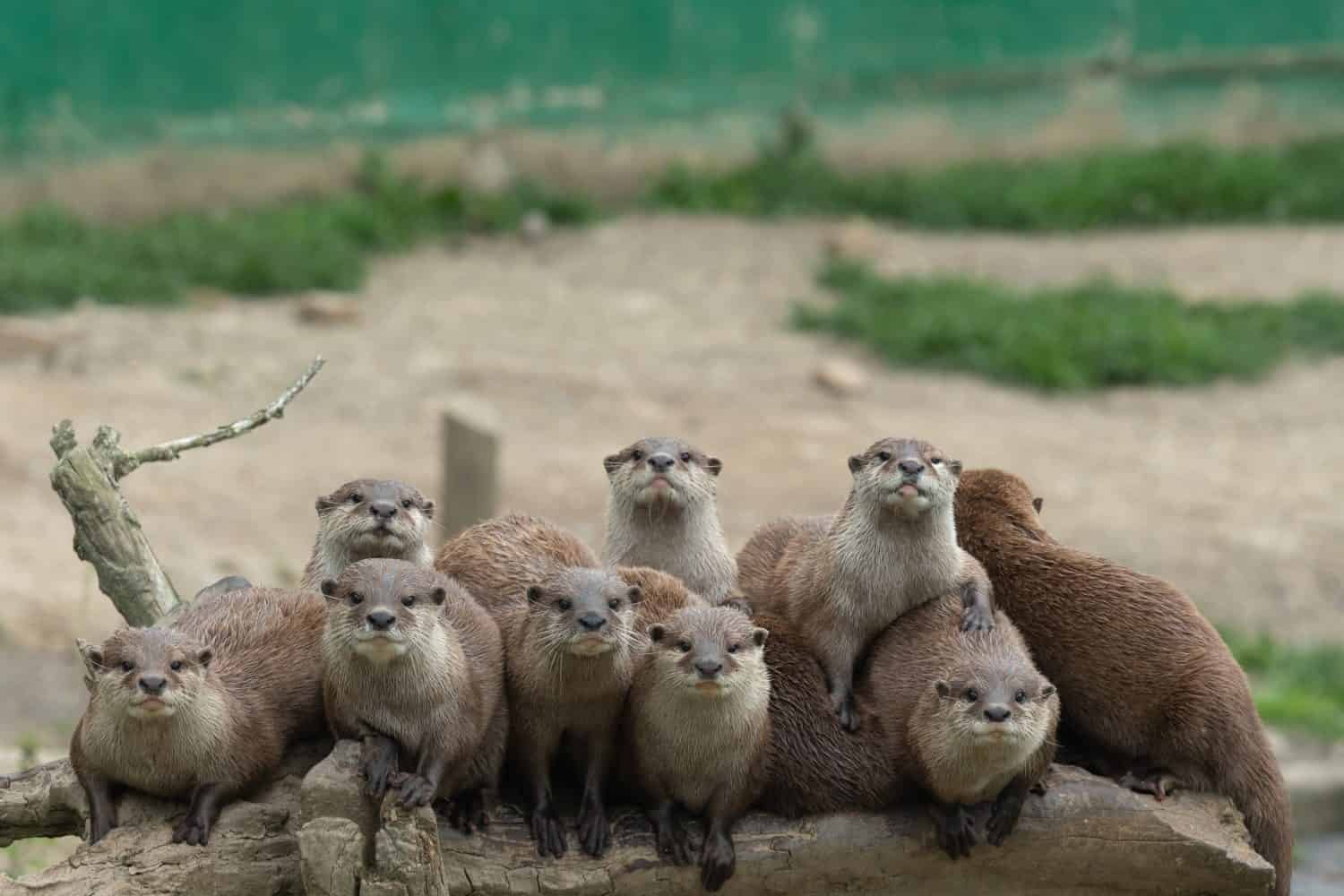
Asian small-clawed otters live in the wetlands and coastal swamps of Southeast Asia, China, the Philippines, and Indonesia.
©Tom Meaker/Shutterstock.com
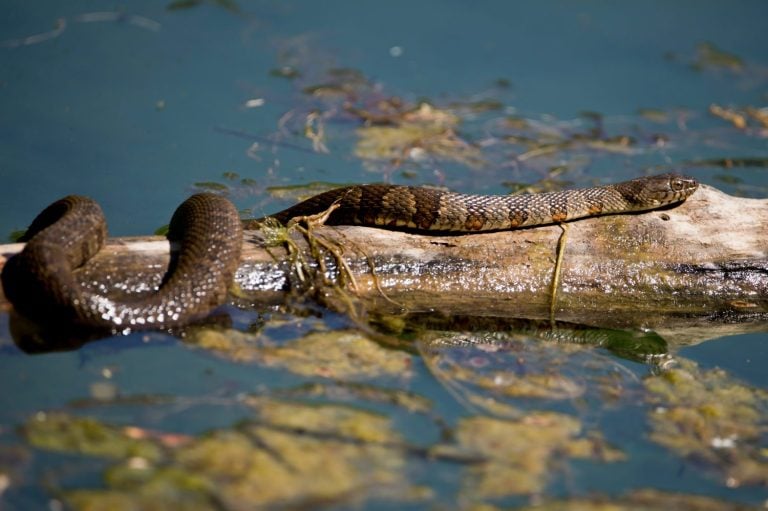
River otters are considered to be generalist carnivores. This means they will eat almost anything they can catch. Some of their favorite foods include fish, crabs, crayfish, frogs, turtles, snakes, birds, and bird eggs. However, their diet varies depending on where they live. For example, giant otters from the Amazon are highly dependent on cichlids, catfish, piranhas, and caiman.
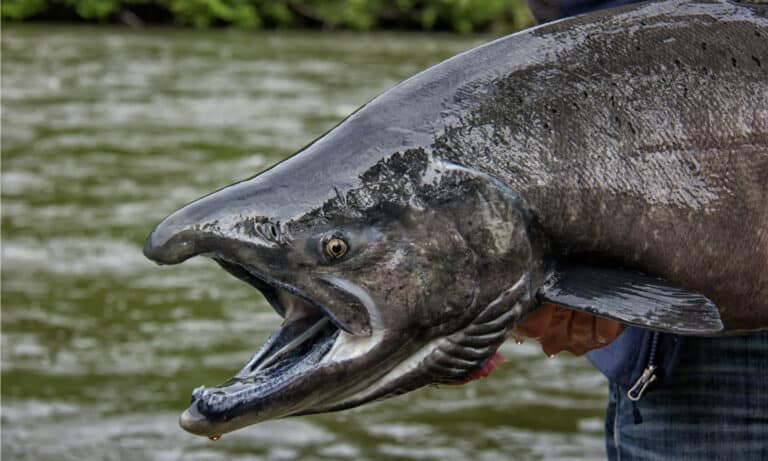
In contrast, the North American river otter relies heavily on crayfish, trout, salmon, and suckers. They do, however, prefer to eat larger fish because slow-moving prey is easier to capture. As carnivorous mammals, they consume little, if any, plant matter in their diet, except for the occasional aquatic plant or root. They spend a lot of time hunting food and burn off much of that energy, leaving little to waste. These mustelids are also partial to some natural sweetness, such as apples, berries, cherries, grapes, and tomatoes.
Here are the top 10 foods the average freshwater river otter eats:
- Fish
- Crayfish
- Crabs
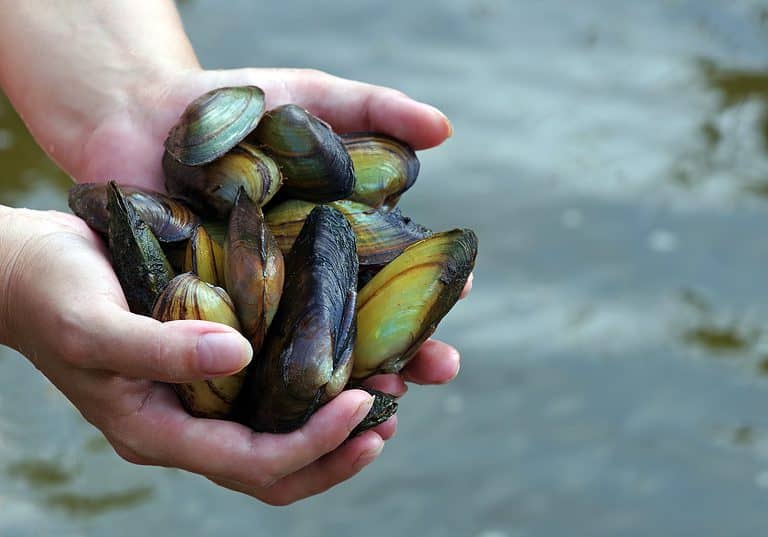
- Clams
- Frogs
- Turtles
- Snakes
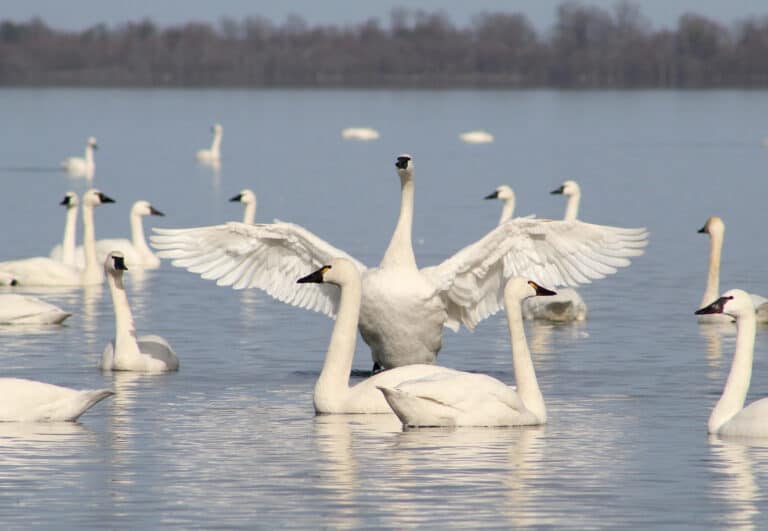
- Birds
- Eggs
- Snails
How Do River Otters Find Food?
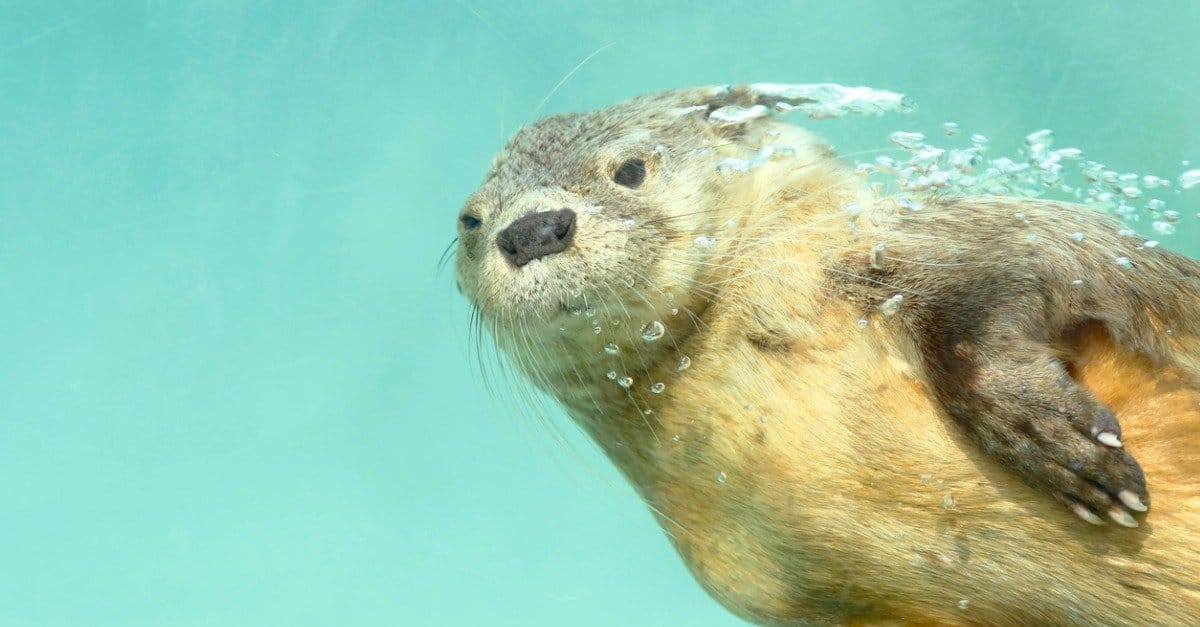
Otters have several important adaptations that enable them to hunt in their aquatic environments. The long whiskers are so sensitive that they can find prey along the sandy bottom of the river even when their other senses may be impaired. Their ergonomic bodies and the webbing between their toes allow them to maneuver exceptionally well in the water, enabling them to lunge at prey over short distances. River otters can also dive to depths of around 60 feet. Plus, their sharp canine teeth help them quickly kill their prey and chew through the meat.
River otters do most of their hunting in freshwater rivers, lakes, and marshes, but they sometimes come up on shore for a quick meal as well. Unless they are part of a larger group, the female river otter must provide for her pups alone, while the male generally hunts only for himself. However, Asian small-clawed otter males do actively participate in raising offspring and will bring food to the mother and the pups. Fortunately, because of their thick fur, freshwater otters do not need to store food or hibernate for the winter. They can hunt under the frozen ice and still remain warm and comfortable.
The Marine Otter’s Diet
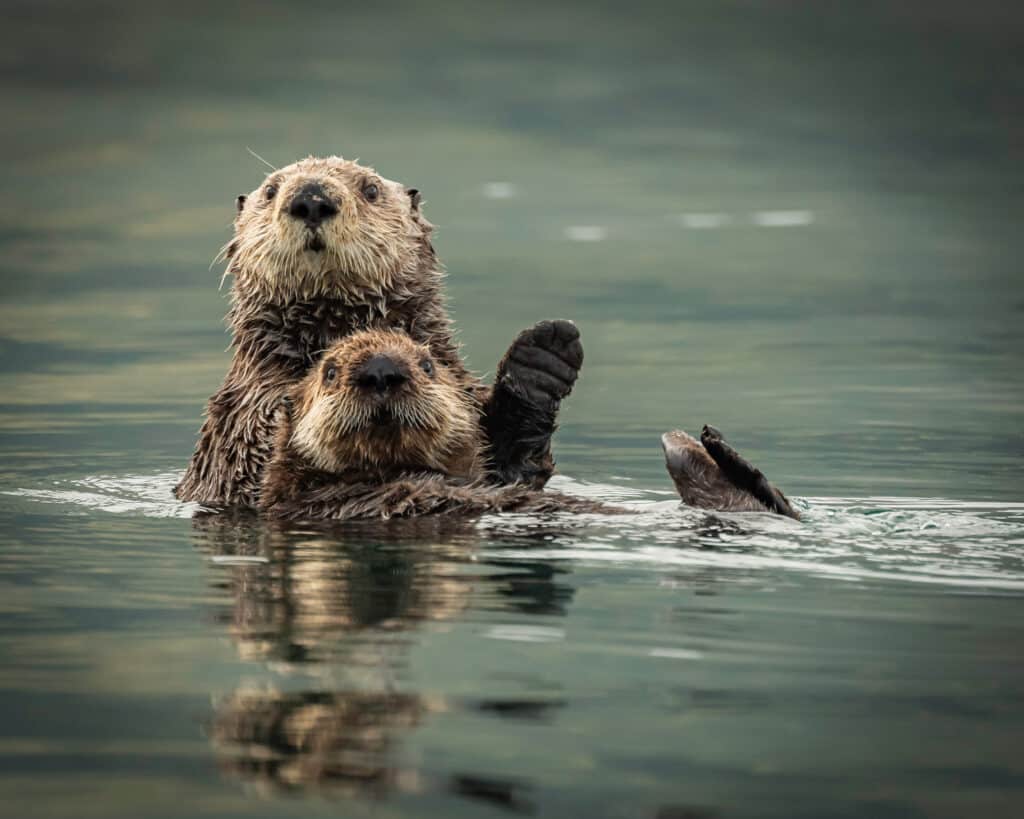
Sea otters inhabit the coastal waters of the northern and eastern North Pacific Ocean.
©Laura Hedien/Shutterstock.com
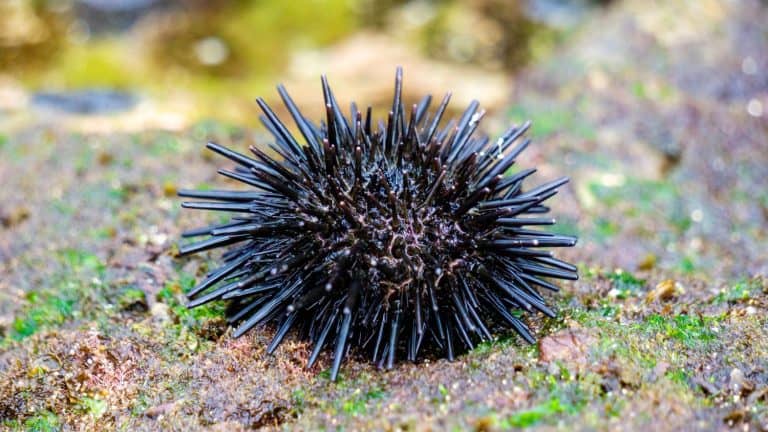
Sea otters are just as voracious. Even though they spend about half the day resting, they need to keep warm and swim often. In order to power their high metabolisms, it’s estimated that they consume around 25% of their body weight every single day. This means that a 40-pound otter would need to consume at least 10 pounds of food. Some of their favorite foods are sea urchins, sea stars, crabs, squid, clams, mussels, and snails.
Fish represent a smaller part of the sea otter’s diet when compared with the river otter’s diet. By all accounts, sea otters play a vital role in marine ecosystems by controlling prey populations. Too many sea urchins can kill off kelp forests, reducing the ecological diversity of the coastal ecosystem. Since sea otters were hunted to near extinction, the state of Oregon has experienced significant loss of its kelp forests, driven in part by dramatic increases in sea urchin populations. Fortunately, there are active planning efforts to reintroduce sea otters to Oregon in hopes of restoring the kelp ecosystem.
These are the top 10 foods consumed by the average sea otter:
- Sea urchins
- Sea stars
- Crabs
- Squids
- Clams
- Mussels
- Snails
- Worms
- Fish
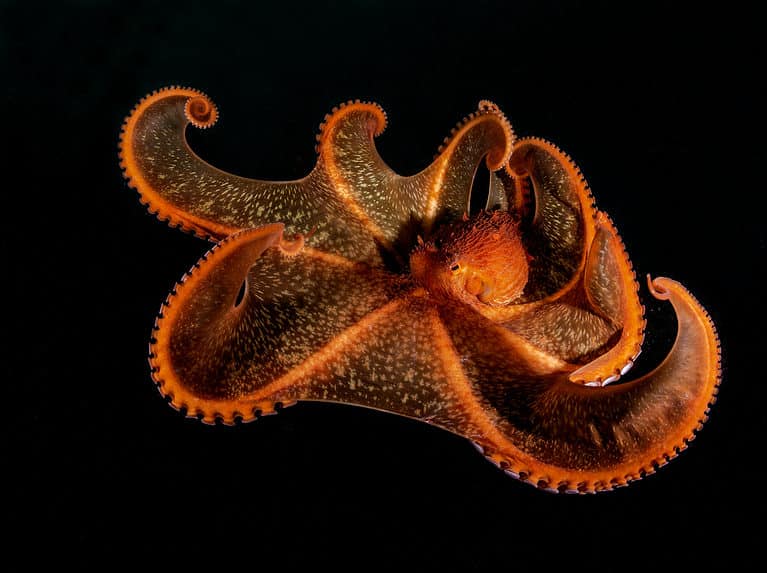
- Octopuses
How Do Marine Otters Hunt for Food?
Sea otters do almost all of their hunting in the water and rarely hunt on land. They dive down to the bottom of the shallow coastal shelves and hunt for tiny morsels among the kelp and sand. They can stay underwater for around five minutes and reach depths of around 200 feet. Their fully webbed hind flippers enhance their incredible swimming skills.
Sea otters are also remarkably clever. These versatile and intelligent creatures are one of the few known animals that use tools to obtain their food. To break open the hard shells of small marine invertebrates, the sea otter will lay the food on its stomach and smash it open with a small rock. It also bashes its prey against larger rocks. If it has any leftover bits of uneaten food, the sea otter will store them in loose skin flaps, referred to as pockets, located just under each forearm. The pockets also provide a handy storage space for its tools.