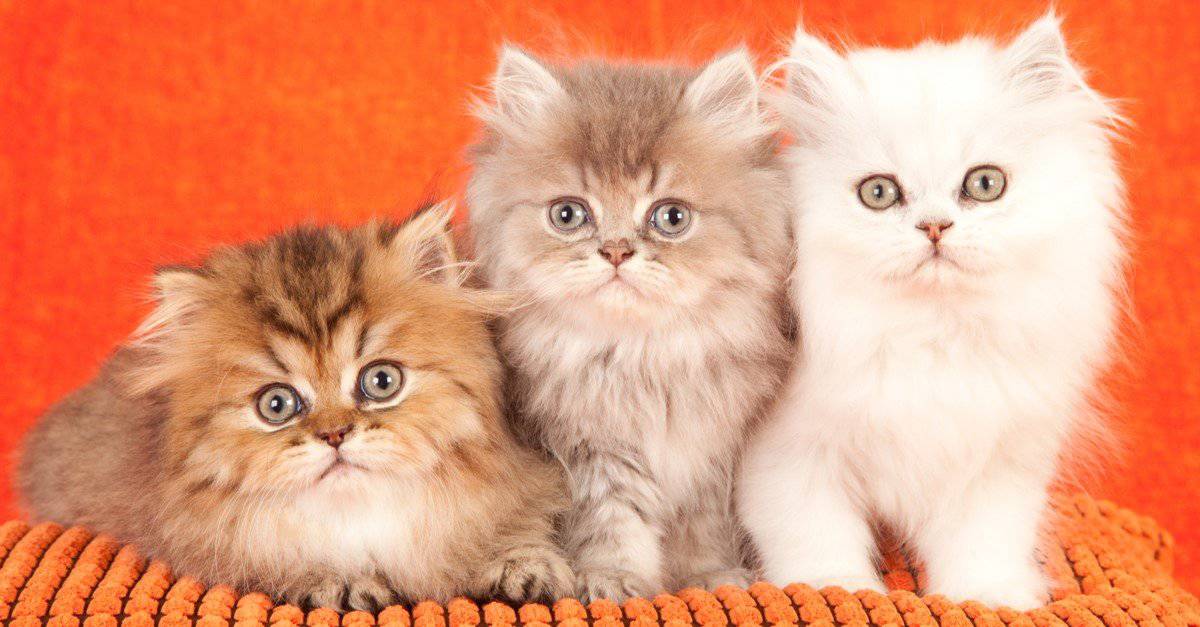

The Persian is one of the most popular and well-loved cat breeds, known for its loyal and affectionate temperament, adorably round face and eyes, and long, luxuriously silky fur. If you’re thinking of adopting a Persian feline companion of your own, it can be helpful to get to know the differences between males and females of the breed before making your decision. Below, we’ll take an in-depth look at three key differences between male and female Persian cats, along with an overview of the breed itself.
Persian Cat Breed History and Overview
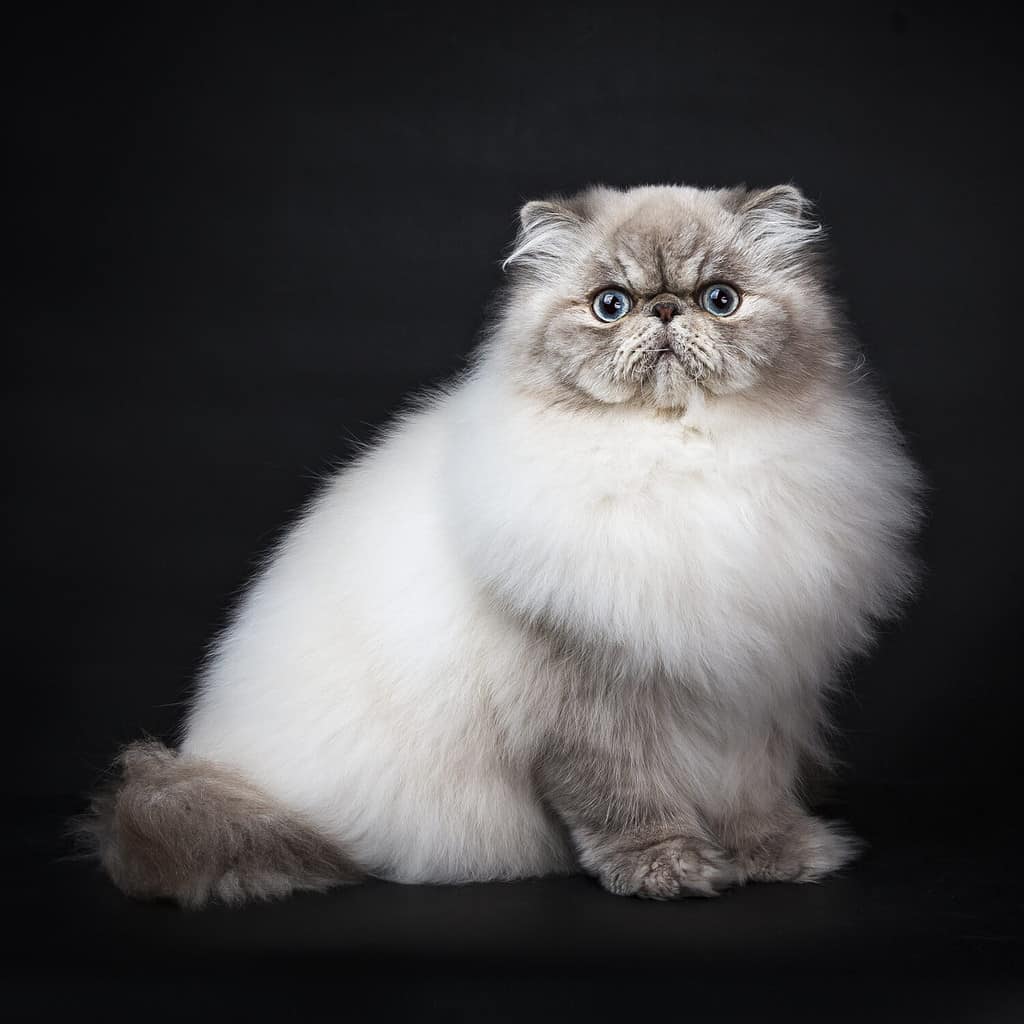
Two main varieties of the Persian cat exist today: the modern flat-faced type pictured here and the more traditional doll-faced variant.
©Nynke van Holten/Shutterstock.com
In addition to being one of the most popular cat breeds on the planet, the Persian is a very old cat breed with a rich history. Its origins aren’t fully known, but its ancestors were first documented in the 1600s. They were most likely imported from the Middle Eastern Iranian Plateau to the Italian Peninsula by various European explorers, most notably Italian author and composer Pietro Della Valle.
Della Valle, in particular, wrote about the cat breed in his travels to the Greater Khorasan region of the Middle East, describing them as “a most beautiful race of cats” native to the area. The name “Persian” for the breed came a bit later, after the cats arrived in Europe. By the late 1800s, Persian cats existed throughout Europe and parts of India.
Over time, two distinct varieties of the Persian cat were developed: the traditional “doll-faced” variety and the more modern “flat-faced” type. It has also historically been a favored pet of European royalty due to its uniquely regal appearance and calm, affectionate, and playful temperament. The first Persian cat was officially displayed at a cat show in 1871 in London. In 1906, the breed was among the first to be registered with the Cat Fancier’s Association. Today, the breed remains incredibly popular as a show and general companion cat.
Anatomical Differences
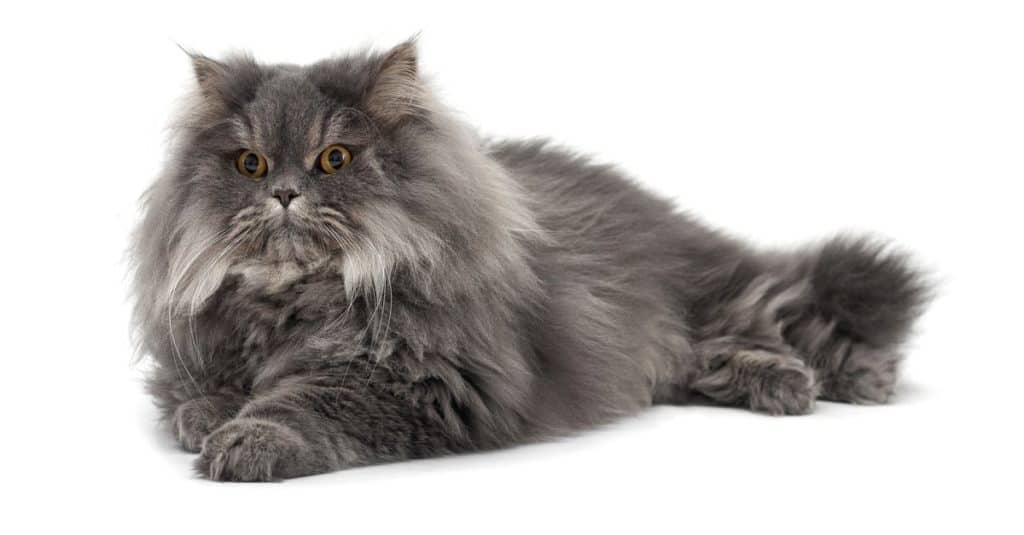
The most obvious difference between male and female Persian cats is their anatomy, specifically their genitalia.
©pets in frames/Shutterstock.com
When your Persian cat is around four to six weeks old, you should be able to determine their sex. Aside from their difference in size, their genitalia is the most obvious difference between males and females. The best way to tell the difference is by the appearance of and distance between the anus and either the vulva or the penile opening and testicles.
Experienced cat breeders often describe the difference in genitalia as resembling either an “upside-down exclamation point” or a “semicolon.” Female Persian cats will have an upside-down exclamation point appearance to their genitalia, while males’ genitalia more closely resemble a colon or semicolon.
Additionally, the distance between the anus and genitalia is larger with male Persian cats. The distance between the anus and vulva in female cats is only around half an inch. However, the distance between the anus and testicles in males is around an inch or more. Even the genitals of a neutered male will still have this same general appearance, although the scrotum will be empty rather than containing intact testicles.
One important factor to keep in mind is that it can be slightly more difficult to determine the sex of cats and kittens with long fur around their genitalia, such as the case with Persians. Having an experienced groomer carefully trim the fur around the legs and genital area can help you better determine your cat’s sex, quickly identify any issues or abnormalities, and keep their genital area clean from feces and urine.
Size Differences
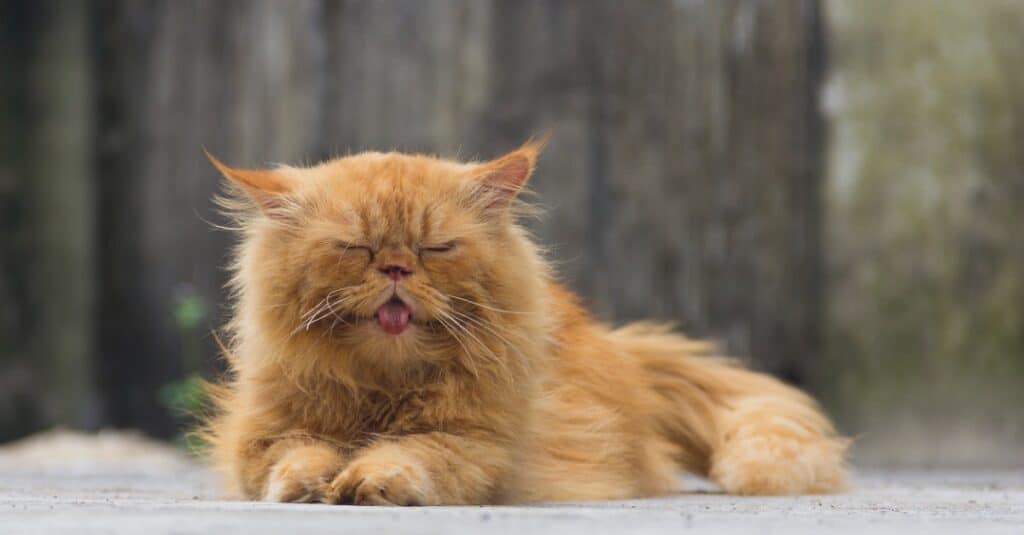
As with most cat breeds, male Persian cats tend to be larger and heavier than females.
©iStock.com/adamdowdee282
The next most obvious difference between male and female Persian cats is their overall size and general appearance. As a medium-sized breed, most Persians average between 7 and 13 pounds. Males are on the larger end of the spectrum, usually weighing between 9 and 13 pounds. Females are towards the smaller end, weighing around 7 to 10 pounds by comparison.
Both male and female Persian cats have broad, short bodies with short legs and necks. Their paws are relatively large, and their chests are deep and wide. The head of the Persian cat is the most distinctive, generally large and round, with short, rounded ears. Depending on the type of Persian cat, the face can have either a very short, upturned, pug-like muzzle (flat-faced) or a slightly longer, more traditional, yet still fairly short snout (doll-faced).
Male Persian cats also tend to have fuller cheeks than females. This is largely due to higher testosterone levels, with intact, unneutered males in general having especially large, full cheeks. The difference is less noticeable in neutered males, though the cheeks are still larger than in females.
Personality and Temperament Differences
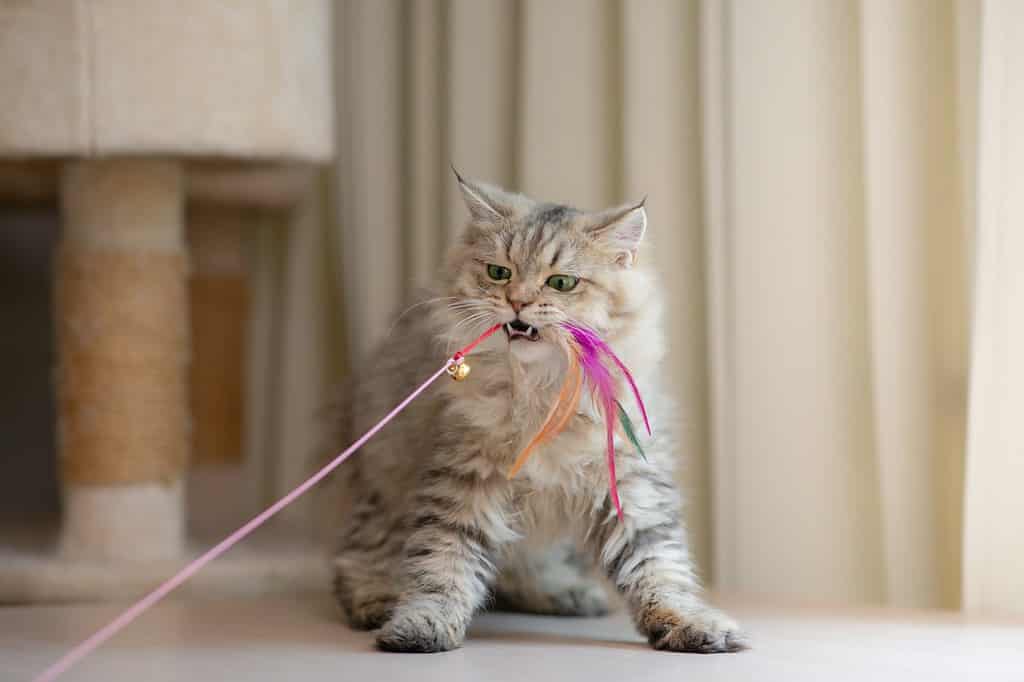
Male Persian cats may be more outgoing and social than females, but this can vary by the individual.
©ANURAK PONGPATIMET/Shutterstock.com
The final difference between male and female Persian cats is much more subtle and variable but still worth mentioning. Overall, males and females of this breed are very intelligent, affectionate, and loyal. They have calm yet playful temperaments. This outstanding personality is a large part of why Persian cats are so popular as a breed.
However, some pet owners and breeders note that male Persians can be more social, vocal, openly affectionate, and outgoing. In comparison, females of the breed can be more standoffish, quiet, and aloof — at least at first — towards people they aren’t familiar with.
Of course, this does not mean you should necessarily choose a male over a female Persian, as both sexes make wonderful additions to any home. There are many exceptions, with some females being outgoing and some males being shy and quiet. Early socialization also plays a role in how kittens interact with humans, regardless of whether the kitten is male or female.