
Living on farms and in the wild, pigs are highly intelligent and wonderful animals to be around. While they are often found in domesticated situations, it is important to ask the question: how long do pigs live?
If you are considering bringing a pet pig home to meet your family and live on your farm, knowing how to care for it is equally important as knowing how long it lives. This article will address all of your questions if you read on.
How Long Do Pigs Live?
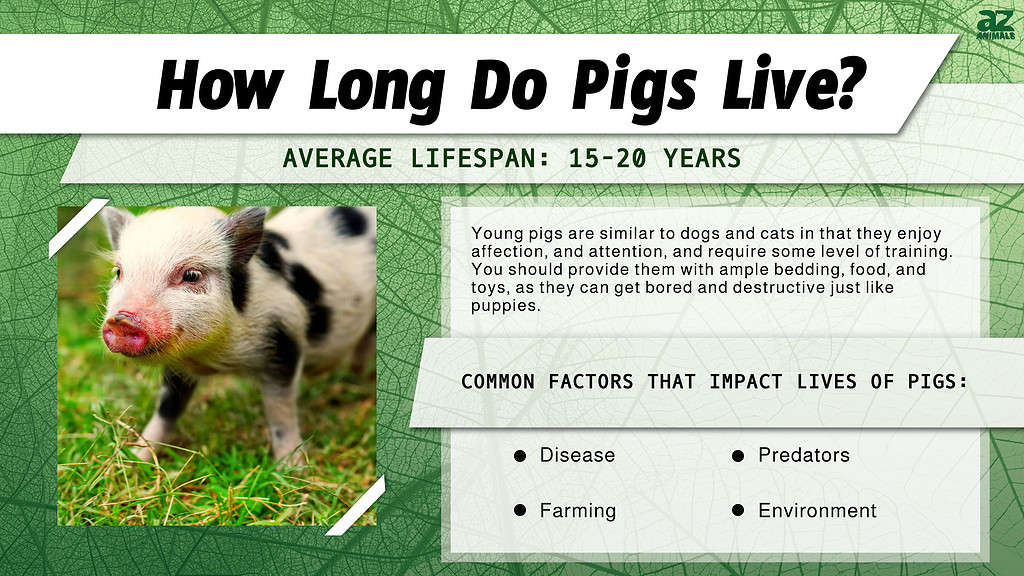
The natural lifespan of a pig is 15 to 20 years. However, they are not often allowed to live twenty years on farms as they are popular livestock animals. This is because if they are being grown for food, they are usually slaughtered at six months to one year of age.
Wild pigs only live four to 10 years on average, based on their environment and possible predators. Pet pigs, however, can live as long as 20 years or more. Wild pigs live significantly shorter than domesticated ones because they are often victims of predator and prey situations.
The oldest pig in the world was named Baby Jane and lived to be 23 years old. The pig’s age was verified by Guinness World Records. Before Jane, a 23-year-old pig named Ernestine took home the crown of the world’s oldest pig. There are also several reports of pigs living past 20 years, beyond just Baby Jane and Ernestine.
Taking care of your pet pig should be something that you strive for. No matter the age, a pig needs different things at different points in its life cycle. If you have adopted a piglet instead of a grown pig, you may be curious to know what it needs.
The Average Pig Life Cycle
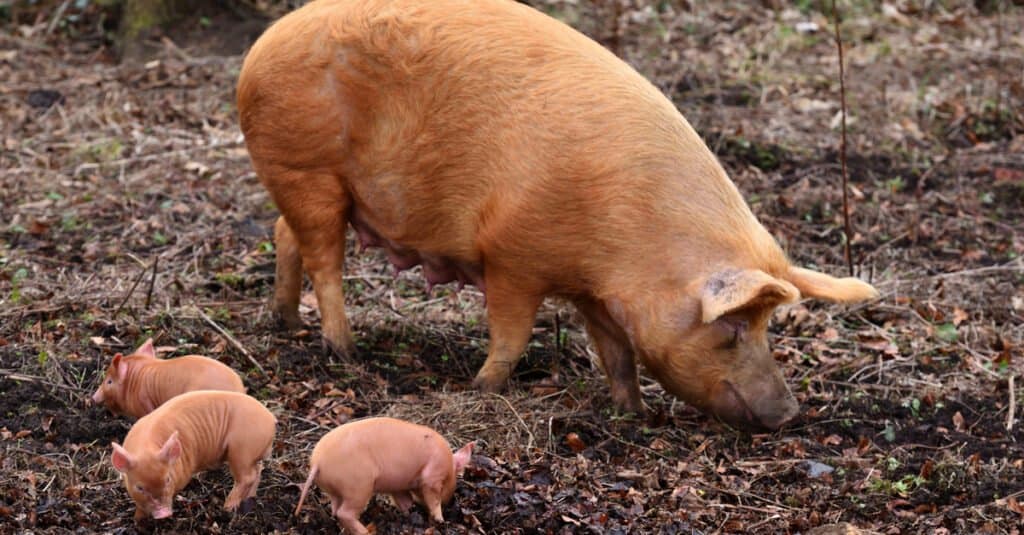
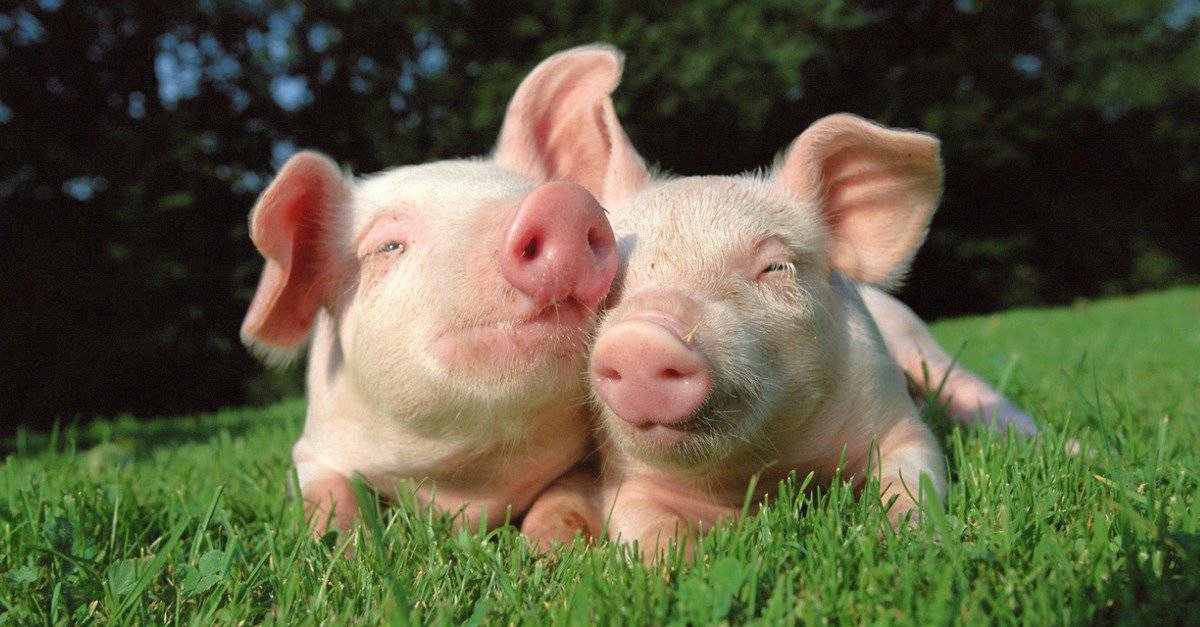
Pigs can live for 15 to 20 years.
©Mike Russell/Shutterstock.com
Both wild and domesticated pigs have a similar life cycle. This is what it’s like for them, from birth to adulthood.
Newborn
Female pigs usually give birth to their young after approximately four months of pregnancy. Once the sow has given birth, these piglets need to feed on her milk immediately. Piglets also need to be kept warm, as they tend to have difficulties regulating their internal body temperature during the first few weeks after being born.
Newborn pigs need access to their mother or to milk at all times. For the first week of their lives, all they will do is drink milk and sleep. Their mother’s milk is important, as it includes many helpful nutrients and minerals needed to fight infection and allow their babies to grow strong.
Piglets, or Young Adults
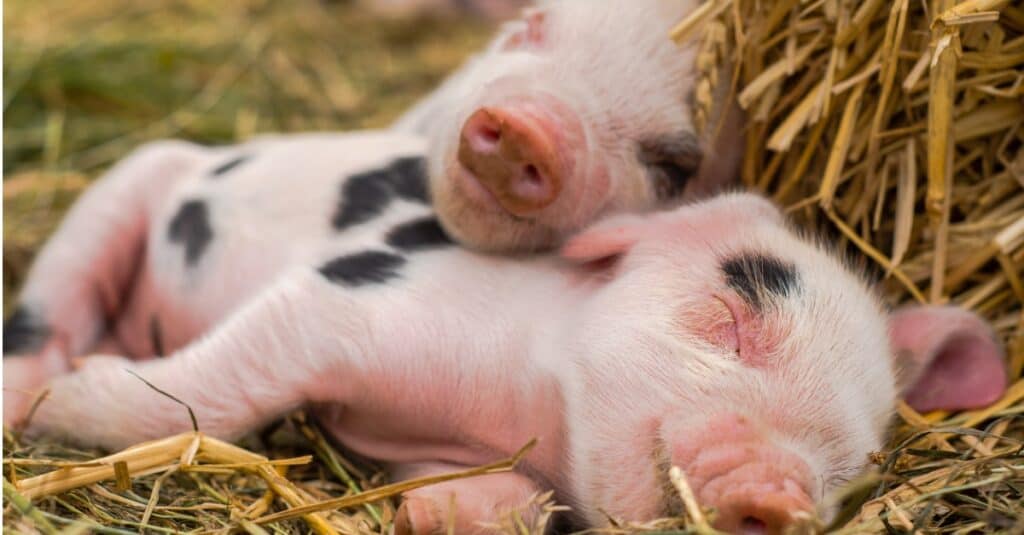
Newborn pigs need access to their mother or to milk at all times.
©iStock.com/Ian_Redding
Young pigs can be weaned from their mothers after six to eight weeks, although in commercial settings they may be weaned as young as four weeks. The piglets will continue to grow well into their adult years, but it is important to socialize them while they are young. If you are considering adopting a pet pig into a home with other pets, you should allow them to get to know one another at this time.
Young pigs are similar to dogs and cats in that they enjoy affection and attention. You should provide them with ample bedding, food, and toys, as they can get bored and destructive just like puppies. Your young pig should be fed commercial-grade pig pellets or food and fresh vegetables.
Adult Pigs
Once a pig reaches sexual maturity, it is considered an adult. This age can vary greatly. It usually happens between six months to one year of age, but it will depend on the individual pig and the specific breed of pig. If you have a male pet pig, then you should consider castrating it, just like you would a cat or dog.
Pigs reach a senior age of around 8 to 12 years old. Like other animals, pigs are prone to arthritis, tooth decay, and eyesight issues. However, they usually maintain their reliable and impressive sense of smell well into their old age.
Adult pigs can weigh anywhere from 40 to hundreds of pounds, depending on the breed and gender of the pig. Exceptionally large boars can weigh up to 1,000 pounds, though most adult boars typically weigh between 500 and 800 pounds depending on the breed.
Male pigs usually outweigh female pigs, and keeping your pig at a healthy weight for its specific breed is important. From pot-bellied pig to mini pig, you should always pay attention to what your pig is eating, and how much, as they can quickly become overweight.
How to Extend the Lifespan of Your Pet Pig
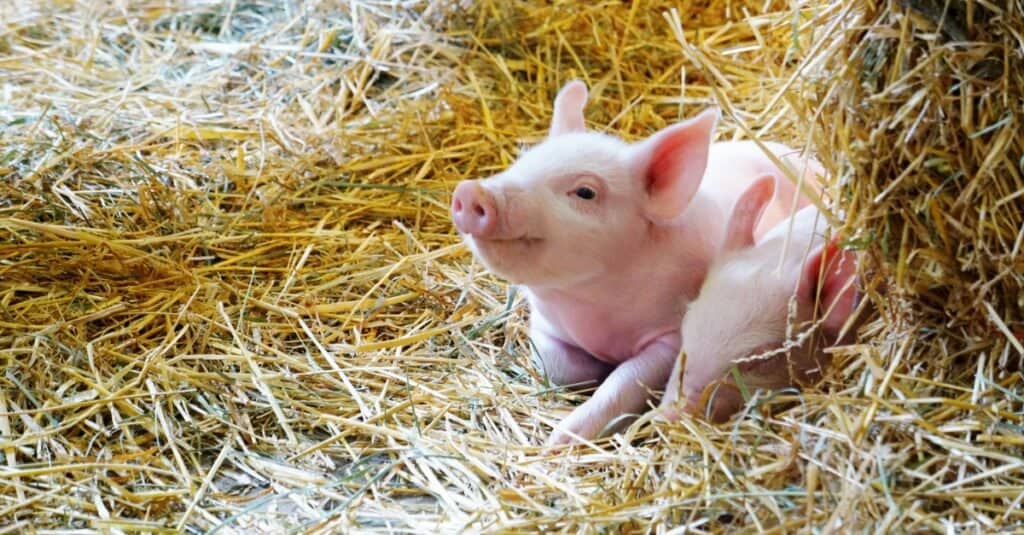
Adult pigs can weigh anywhere from 40 to hundreds of pounds, depending on the breed and gender of the pig.
©iStock.com/NalinneJones
If you have a pet pig, either indoors or on your farm, knowing how you can extend the life of your companion is important. You can improve your pet pig’s quality of life through any of the following tips:
- Offer vegetables: Commercially made pig food is typically a complete mix and contains the correct amount of nutrients and vitamins for your pig. However, you can still supplement their diet with fruit and vegetables. Apples, carrots, and peppers are excellent pig treats.
- Watch out for mischief: Pigs are incredibly intelligent animals, but this doesn’t mean that they stay out of trouble. Quite the opposite! Your pet pig can get up to a lot of trouble if left unattended or improperly trained. For example, your pig can learn how to escape through fences and gates. Therefore, it’s important to ensure that they have a sturdy pen with good fencing and adequate shelter.
- Let them root and sniff: Pigs need to be allowed to sniff and root around in rocks and dirt. Pigs are natural foragers, as proven by our use of them to look for truffles. You should make sure that your pig has the opportunity to investigate dirt, not only for their development and intelligence but also for the necessary minerals found in the soil. Pigs also love to wallow in the mud, so if you’ve got somewhere suitable, then your pig will enjoy a mud bath!