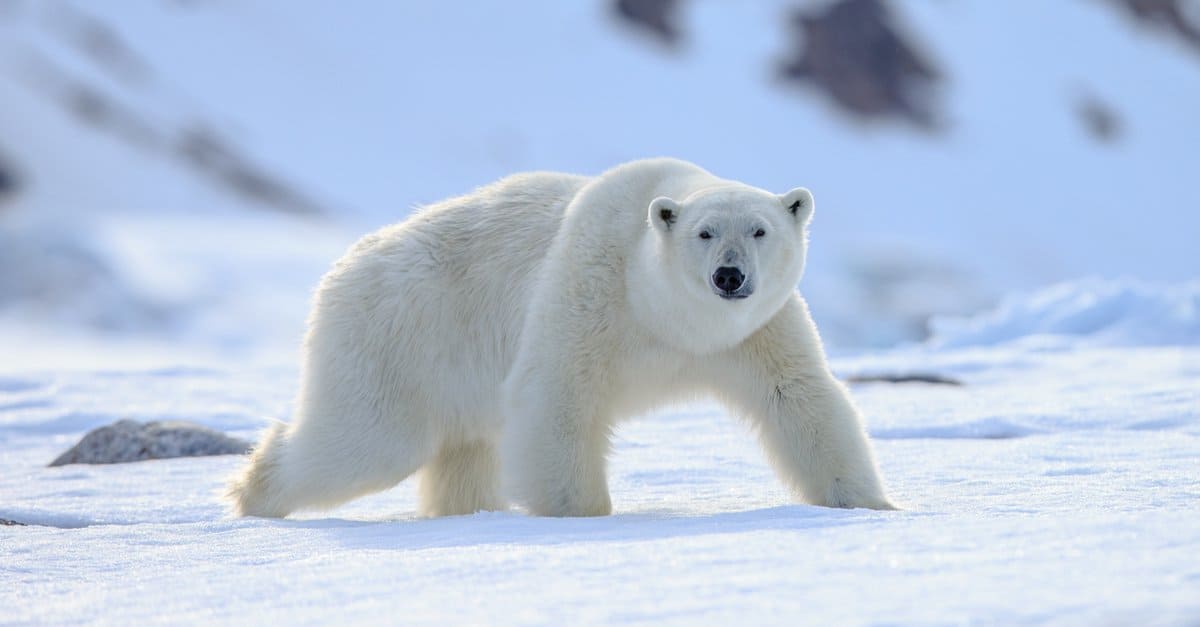

Estimates show that there are between 22,000 and 31,000 polar bears left in the world, which does not include the 300 or so polar bears in captivity. However, a Reuters article indicates that polar bears in Canada’s Western Hudson Bay have declined by 27% over five years. This resulted in only 618 polar bears in that region in 2021. Experts predict that the world’s polar bear populations will collapse by the year 2100 if greenhouse emissions are not controlled.
What is a Polar Bear?
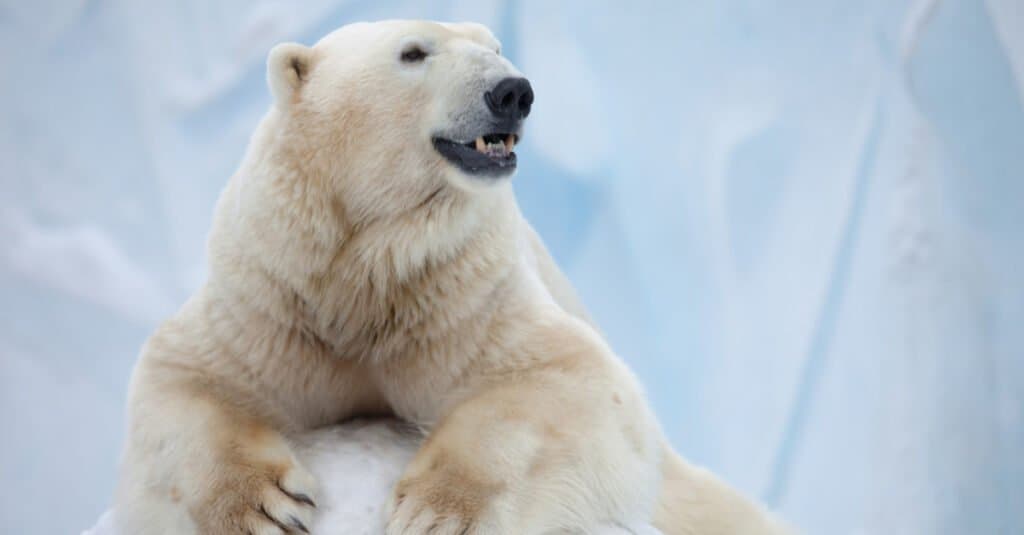
Polar bears are the largest land carnivores on Earth.
©Zhiltsov Alexandr/Shutterstock.com
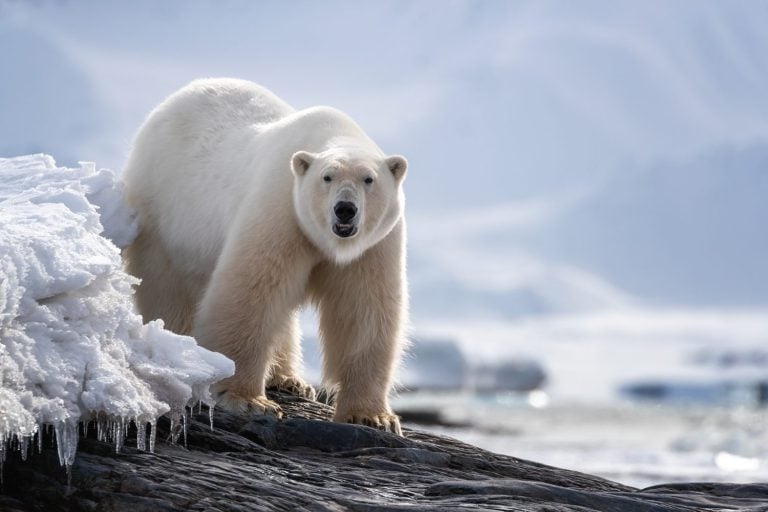
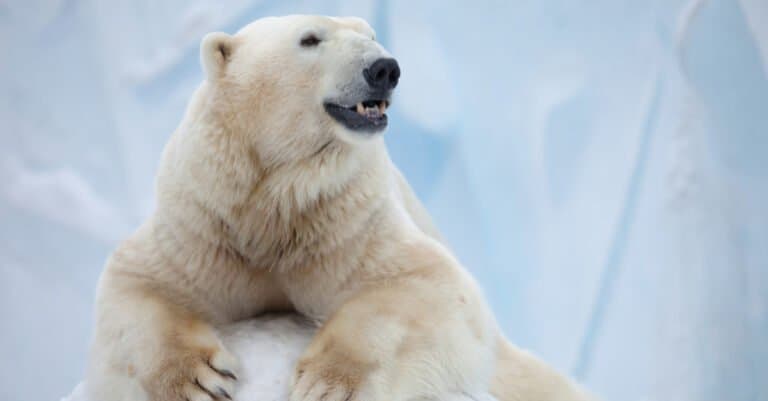
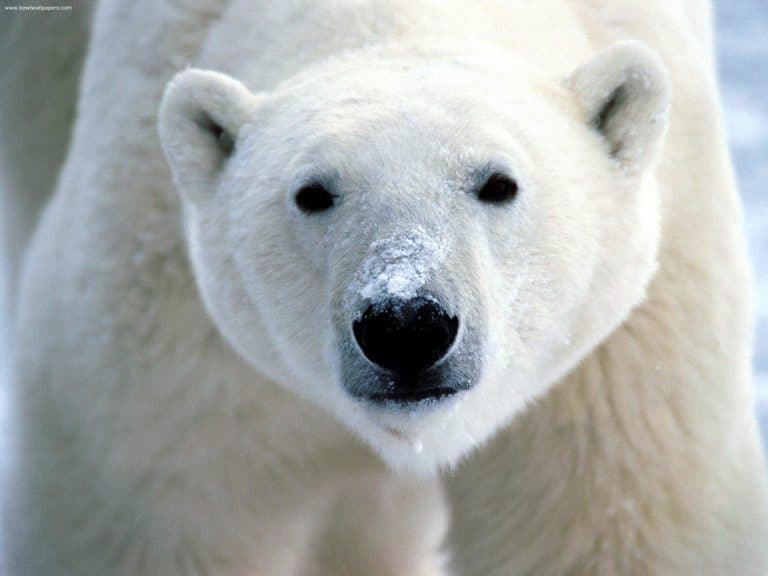
Polar bears, scientifically known as Ursus maritimus, are the largest bear species in the world. Not only that, but they are the largest land carnivores on Earth. They are known for their massive size, their ability to weather extreme cold, and their striking white appearance.
But did you know that polar bears are not actually white? Their skin is black, but two layers of fur hide it. The undercoat is dense, while the outer coat is translucent, reflecting the color of its surroundings. Since polar bears live among ice and snow, they appear white. Besides acting as efficient camouflage, this outer hair also helps to trap heat from the sun for warmth.
Polar bears are physically large, with bulky shoulders, a thick layer of fat for insulation, and massive paws to help them swim.
Female polar bears can grow up to 6 to 8 feet in length and weigh 300 to 700 pounds. Male bears are much larger, sometimes twice or even three times as big as the females. Male polar bears have a maximum length of 8 to 10 feet, while their weight usually falls between 800 to 1,300 pounds. To put it in perspective, they are even larger than the fearsome Kodiak bear!
How Many Polar Bears Are Left in the World?
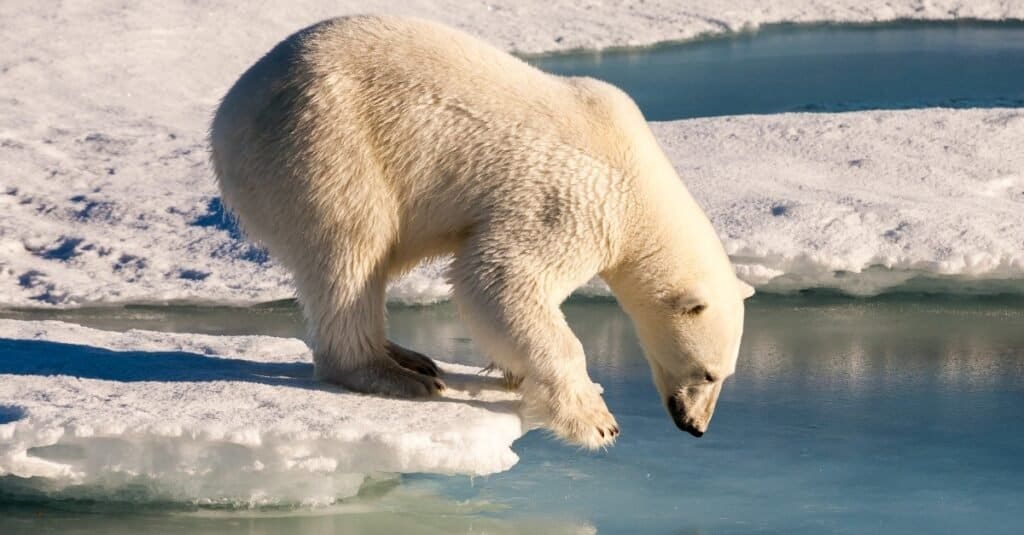
There are approximately 22,000 to 31,000 polar bears left in the world.
©Mario_Hoppmann/Shutterstock.com
Estimates show that there are between 22,000 and 31,000 polar bears left in the world. This does not include the 300 or so polar bears in captivity.
The World Wildlife Fund (WWF) lists polar bears as Vulnerable. This means that their population is decreasing, and although they are not classified at one of the most serious levels, extinction is still a threat. Conservationists often consider the polar bear to be the “poster child for climate change,” as their status has been a matter of serious concern for decades.
Several factors negatively impact polar bear populations, and these include:
Climate Change
As our climate warms, the Arctic ice is melting. Polar bears rely on ice for nearly every aspect of their lives, including hunting, resting, travel, mating, and even denning. As the ice melts, the water levels rise. This reduction in habitat size forces polar bears further inland, increasing the likelihood of conflicts with people.
Moving inland also increases the difficulty of catching prey. Polar bears use ice as a platform for hunting seals, their favorite meal. Seals use air holes in the ice when they surface for air, giving bears a chance to attack them. Seals also use the ice to bask, leaving themselves vulnerable to predation by the polar bears.
Pollution
Pollution is a serious threat to polar bears. The Arctic may seem clean and fresh, but in reality, it is full of pollutants. These chemicals, metals, and plastics are brought to the Arctic by air and ocean currents, where they are ingested by organisms at the bottom of the food chain. As other animals eat these organisms, the pollutants are carried up the food chain. By the time polar bears ingest them, the pollutants are highly concentrated and able to cause significant damage.
Hunting
With their ferocious reputation and luxuriant fur, polar bears make a tempting target for trophy and sport hunters. The United States has outlawed polar bear hunting except for Alaskan Natives. No limit has been imposed on them, provided they are not wasteful. However, this type of hunting is still legal in some parts of Canada.
Where Are Polar Bears Found?
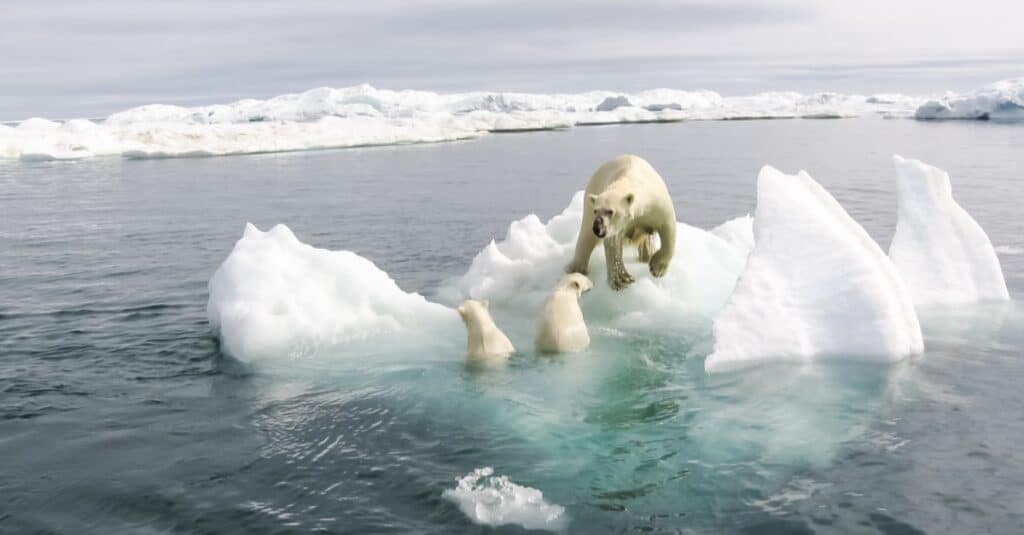
Polar bears mostly live north of the Arctic Circle.
©iStock.com/avstraliavasin
Polar bears mostly live north of the Arctic Circle, though some populations live southward in Canada’s Hudson Bay. Polar bears reside in the United States (Alaska), Canada, Russia, Greenland, and certain Norwegian islands. They live mostly on the ice, though as climate change causes widespread melting, humans may encounter them inland. Also called sea bears, polar bears are excellent swimmers, moving as fast as 6 mph in the water.
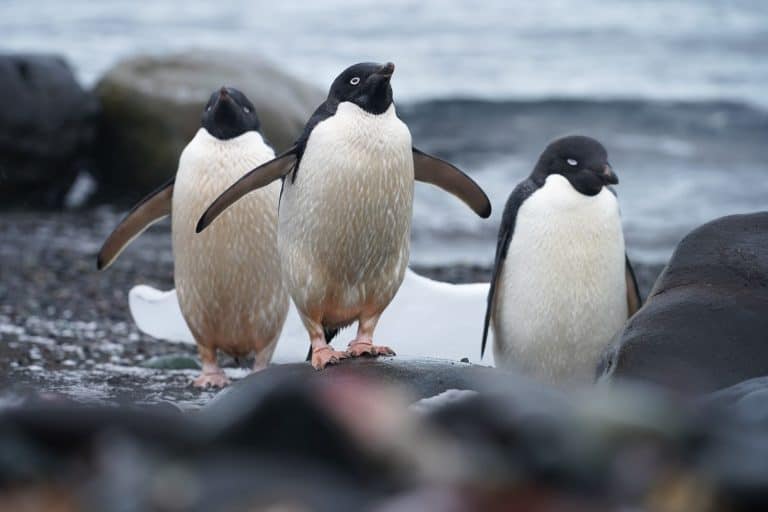
However, though Arctic and Antarctic environments are similar, from the bitter cold to the availability of ice and seals, bears of all kinds only exist in the Northern Hemisphere and do not live in Antarctica. This is due to where they happened to evolve and not necessarily environmental factors. The Arctic and Antarctica have never been connected, so polar bears never had the chance to migrate.
Ecologists speculate that polar bears would fare well in Antarctica. A little too well, perhaps. The local populations of seals, birds, and penguins are not accustomed to large land predators and would probably not be wary enough. This would likely lead to overfeeding and the collapse of the ecosystem.
Polar Bear Diet and Predators
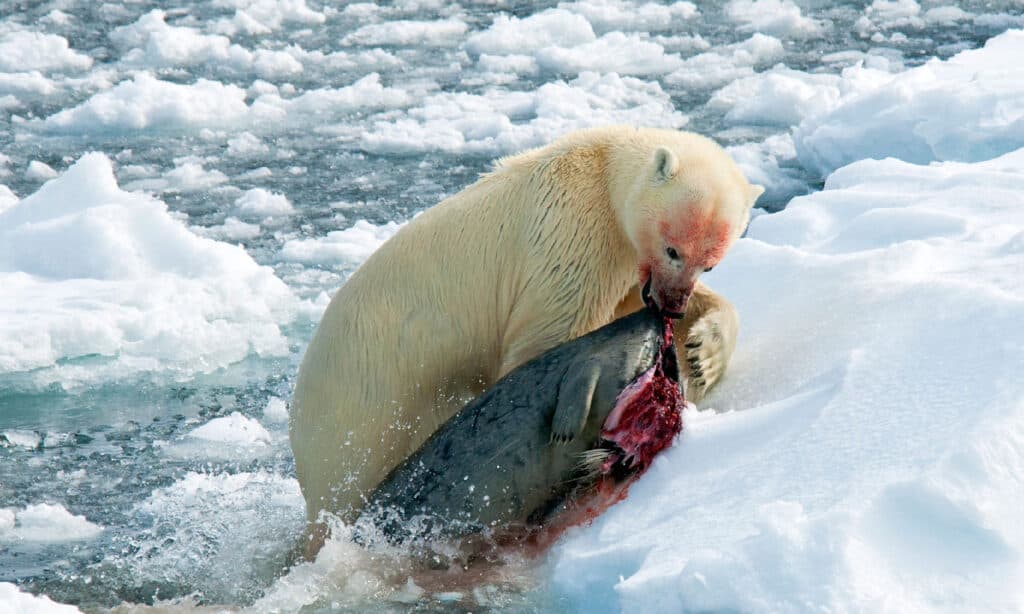
A polar bear’s preferred prey is the ringed or bearded seal, as they contain a large amount of blubber.
©iStock.com/AGAMI stock
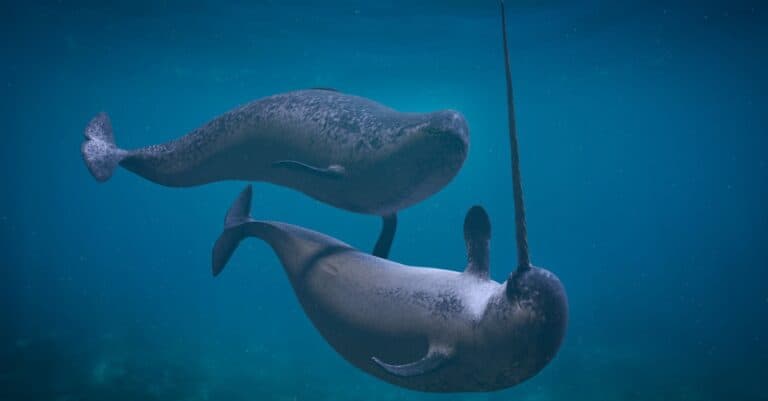
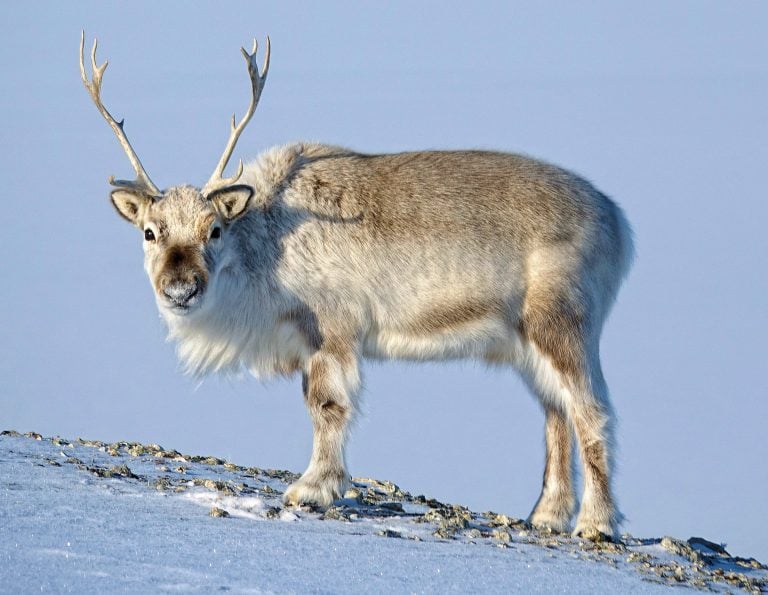
Polar bears are apex predators, relying on the meat and fat of their kills to survive. Their favored prey are seals, particularly ringed and bearded seals. These animals have an extremely high-fat content; this is necessary for polar bears to maintain their own fat stores. They eat mostly the skins and blubber, often leaving the meat for other carnivores. Other sources of food include narwhals, beluga whales, walruses, muskox, reindeer, fish, eggs, and rodents. Berries and garbage may supplement their diet.
Now for the real question: do polar bears hunt humans? The answer is yes; sometimes they do. This has become more of a problem as their habitat shrinks and they are driven more inland. Polar bears prefer nonhuman prey, but they will eat whatever they can find if their regular food supply is scarce. Attacks by these predators are often fatal due to their enormous strength.
Polar Bear Reproduction and Lifespan
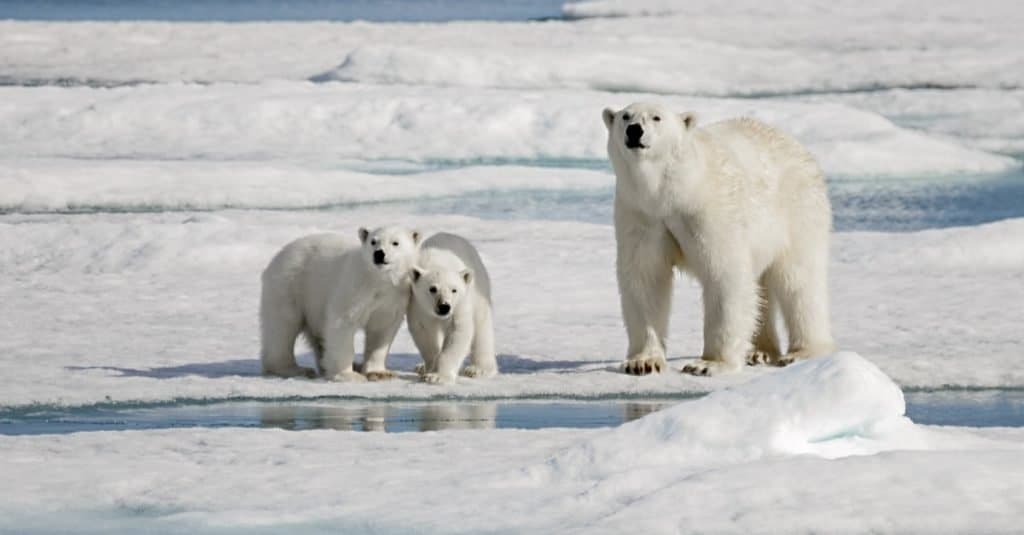
Polar bear females give birth to 1-4 cubs at a time.
©Alexey Seafarer/Shutterstock.com
Polar bears usually breed from April to May. The cubs gestate for up to nine months, after which the female gives birth to a litter of 1 to 4 cubs. After digging out a den, she takes them into hibernation until the spring. Cubs are usually weaned at 2 to 3 years, after which they leave their mother and strike out on their own. Polar bears are solitary animals, except for a female with cubs.
In the wild, polar bears can live as long as 25 to 30 years. That number can increase to more than 30 years in captivity.
Polar bears are powerful predators at the very top of the food chain. Whether found in the wild or in captivity, they are a magnificent sight.