
P
Species Profile

Pyrenean Shepherd

Canis lupus familiaris

Small dog. Big mountain work.
lynea/Shutterstock.com

Pyrenean Shepherd Distribution

Click a location to explore more animals from that region

Origin Location

This map shows the native origin of the Pyrenean Shepherd. As a domesticated species, they are now found worldwide.

Loading map...

Found in 1 country

Size Comparison

Human 5'8"
Pyrenean Shepherd 1 ft 5 in

Pyrenean Shepherd stands at 25% of average human height.

Shepherd Dog - Pyrenean Shepherd

At a Glance

Domesticated
Also Known As Berger des Pyrénées, Chien de berger des Pyrénées, Pyr Shep, Pyrénées Shepherd, Pyrenean Sheepdog
Diet Omnivore
Activity Diurnal+
Lifespan 4 years
Weight 15 lbs
Status Not Evaluated
Did You Know?

Also called the Pyrenean Shepherd; traditionally served as the flock-driving herding dog.

Scientific Classification

The Pyrenean Shepherd is a small-to-medium herding dog breed developed in the Pyrenees, traditionally used to manage and move sheep and other livestock. It is known for agility, high energy, and close working partnership with handlers.

Kingdom
Animalia
Phylum
Chordata
Class
Mammalia
Order
Carnivora
Family
Canidae
Genus
Canis
Species
Canis lupus

Distinguishing Features

  • Small, athletic herding-dog build with very high agility and endurance
  • Alert, intense expression; quick, reactive working style
  • Coat varieties commonly described as rough-faced (long-haired) and smooth-faced (short-haired) depending on registry.
  • Strong herding instinct; highly trainable but can be sensitive and energetic

Physical Measurements

Males and females differ in size

Height
1 ft 6 in (1 ft 4 in – 1 ft 9 in)
1 ft 5 in (1 ft 3 in – 1 ft 6 in)
Length
2 ft 4 in (1 ft 8 in – 2 ft 9 in)
Weight
24 lbs (15 lbs – 33 lbs)
22 lbs (15 lbs – 29 lbs)
Tail Length
11 in (9 in – 1 ft 2 in)
9 in (2 in – 12 in)
Top Speed
30 mph
running

Appearance

Primary Colors
Secondary Colors
Skin Type Domestic dog skin with pigmented areas; medium sensitivity-benefits from coat and skin maintenance.
Distinctive Features
  • Small-to-medium herding breed (Pyrenean Shepherd), built for speed, agility, and endurance in rugged terrain.
  • Distinct from the base species (gray wolf) by compact size, domesticated temperament, human-directed working partnership, and wide coat-color variation.
  • Often two coat varieties: rough-faced (longer, harsher coat) and smooth-faced (shorter face hair, slightly sleeker look).
  • Narrow, wedge-shaped head; semi-erect to erect ears; bright, alert expression suited to close handler communication.
  • Light, athletic frame with quick, springy gait; excels in agility, herding, and high-intensity work.
  • Not to be confused with Great Pyrenees/Pyrenean Mastiff: far smaller, a herder rather than a livestock guardian.
  • Care needs: very high daily exercise and mental work; thrives with training, jobs, and structured activity.
  • Grooming: regular brushing to prevent mats (especially rough-faced); check behind ears and in friction areas.
  • Health concerns seen in the breed: hip dysplasia, patellar luxation, epilepsy, and progressive retinal atrophy (screening recommended).
  • Management: maintain lean body condition, joint-friendly conditioning, and routine eye/orthopedic evaluations.

Sexual Dimorphism

Sexual dimorphism is modest: males are typically slightly taller and more robust. Males may show a fuller ruff and heavier coat impression, while females often appear finer-boned and more streamlined.

  • Slightly taller and heavier on average
  • More robust head and neck; may look more substantial in coat
  • Often broader chest and heavier bone structure
  • Slightly smaller and lighter on average
  • Finer bone and narrower chest
  • Often a more streamlined overall outline

Did You Know?

Also called the Pyrenean Shepherd; traditionally served as the flock-driving herding dog.

Often worked alongside the much larger Great Pyrenees, which guarded the sheep while the Pyr Shep moved them.

Two coat/face types are recognized: Rough-Faced and Smooth-Faced.

Famous for agility-world success thanks to its speed, tight turns, and handler focus.

Bred for mountain work: tough feet, endurance, and weather-ready coat for harsh Pyrenean conditions.

Used by the French military in World War I as messenger and search dogs, valued for bravery and trainability.

Unique Adaptations

  • Lean, light frame and springy gait optimized for rapid direction changes on uneven mountain terrain-distinct from the base wolf-derived domestic dog by strong selection for agility over power.
  • Weather-shedding coat and protective furnishings (especially Rough-Faced type) suited to cold, wet uplands; lower grooming load than many long-coated breeds but still needs regular brushing.
  • Exceptional endurance-to-size ratio: capable of sustained trotting and repeated sprints while managing flocks.
  • Strong human-directed working style: selected for responsiveness to shepherd signals rather than independent guarding behavior (contrasting with livestock guardian breeds).

Interesting Behaviors

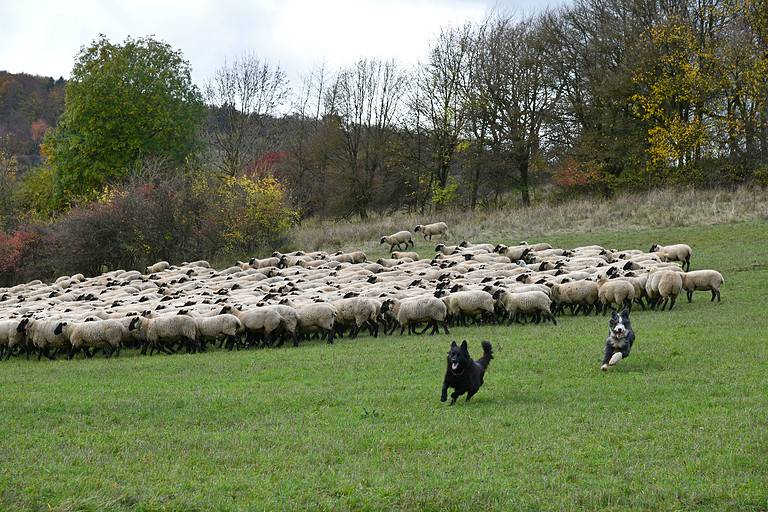
  • Quick, agile herding behavior used to move and manage livestock, reflecting strong herding instinct shaped by selective breeding in the domestic dog.
  • Shadowing a trusted handler: many individuals naturally check in frequently and work best with consistent cues and teamwork.
  • Heel-nipping and body-blocking (especially with running children or other pets) if herding drive isn't redirected to sports/training.
  • High alertness and vocal signaling-prone to watchdog barking unless taught quiet behaviors early.
  • Problem-solving and route-finding: will look for gaps, corners, or alternate paths to reach a goal (including escaping yards).
  • "Busy" energy indoors if under-exercised; settles best after both physical exercise and brain work (scent games, obedience, tricks).

Cultural Significance

The Pyrenean Shepherd (Canis lupus familiaris) is a small herding dog from the Pyrenees. It helped move flocks seasonally, working with big guardians like the Great Pyrenees. Today it stands for French herding heritage in dog sports worldwide.

Myths & Legends

Mountain herding tradition often tells of a mountain pair: the nimble Pyrenean Shepherd (Canis lupus familiaris) that moves sheep, and the large Great Pyrenees that stands guard during seasonal flock moves.

World War I anecdotes from French military use recount small Pyrenean herding dogs carrying messages through artillery fire and locating wounded soldiers-stories that helped cement their reputation for courage and devotion.

In rural Pyrenean storytelling, the "little shepherd of the mountains" is remembered as a dog that could turn a scattered flock with a whistle and a glance-an oft-repeated shepherd's tale celebrating skill over size.

The breed's name itself is part of its cultural legend: it is often described as the shepherd dog of the Pyrenees, distinct from the region's famous giant guardians.

Conservation Status

NE Not Evaluated

Has not yet been evaluated against the criteria.

Population Stable

Life Cycle

Birth 5 pups
Lifespan 4 years

Lifespan

In the Wild
1–10 years
In Captivity
10–17 years

Reproduction

Mating System Polygynandry
Social Structure Managed Domestic
Breeding Pattern Serial
Fertilization Managed Selective
Birth Type Managed_selective

In domestic Pyrenean Shepherds, mating is usually controlled by humans via planned pairings; without control, dogs show a flexible, multi-partner (polygynandrous) tendency. Pair bonds are not stable, and dams provide primary care with substantial human support.

Behavior & Ecology

Social Pack Group: 3
Activity Diurnal, Crepuscular, Cathemeral
Diet Omnivore High-value animal protein (e.g., cooked lean meat or meat-based training treats)

Temperament

Breed vs base species (wolf): more human-oriented, biddable, and selective-breeding intensifies herding instincts over hunting.
High energy, agile, fast-reacting; thrives on active jobs and complex training challenges.
Herding drive: strong motion sensitivity; may chase/heel-nip without early impulse-control training.
Highly intelligent and independent-minded; can be stubborn if under-stimulated or inconsistently handled.
Typically reserved with strangers, devoted to family; early socialization reduces wariness and reactivity.
HUBS (herding breeds): common patterns include handler focus, motion reactivity, vocal alerting; intensity varies by line.
Care requirements: daily vigorous exercise plus mental work (obedience, agility, herding, scent games).
Care requirements: consistent positive training, clear boundaries, and decompression time; avoid harsh corrections.
Coat/grooming: rough- or smooth-faced varieties; regular brushing, mat prevention, and seasonal shedding management.
Health concerns: hip dysplasia, patellar luxation, epilepsy/seizures, eye issues (PRA/cataracts), allergies/skin sensitivity.

Communication

Sharp alert barking when detecting movement or unfamiliar approach.
High-pitched yaps during excitement, play, or herding work.
Whining/whimpering to solicit attention, reassurance, or increased activity.
Low growls for boundary-setting; more likely under stress or resource guarding.
Intense eye contact and body blocking to control movement; breed-typical herding pressure.
Circling and quick directional feints to steer livestock or other dogs.
Muzzle nudges and light heel-nips can appear without training; redirect to appropriate outlets.
Ears-forward, weight-shift, and crouch signals indicate readiness to chase or gather.
Tail carriage and whole-body tension changes rapidly, reflecting high arousal sensitivity.
Scent investigation and marking are present but less central than visual control during work.

Habitat

Biomes:
Alpine Temperate Forest Temperate Grassland Mediterranean Boreal Forest (Taiga) Tundra Desert Hot Desert Cold Savanna Tropical Dry Forest Tropical Rainforest Temperate Rainforest Freshwater Wetland Marine +9
Terrain:
Mountainous Hilly Valley Plateau Rocky
Elevation: Up to 14763 ft 9 in

Ecological Role

Domesticated omnivorous canid functioning as a human-associated working predator/forager surrogate; specialized as a livestock herding and management partner rather than a wild apex predator like the base species (wolf).

Livestock herding and flock management (reduces grazing pressure mismanagement and improves husbandry efficiency) Rodent/pest deterrence around farms and homesteads (behavioral presence; occasional predation) Human companionship and working partnership (social and economic value) Support for active human activities (canine sports/search-style tasks when trained)

Diet Details

Other Foods:
Fruits Vegetables Grains and starches Fungi and plant matter

Human Interaction

Domestication Status

Domesticated

Canis lupus familiaris are domestic dogs that come from gray wolves (Canis lupus) and were bred by people over time. The Pyrenean Shepherd developed in the Pyrenees as a small-to-medium, agile herding dog. It has strong handler focus, high energy, strong herding instinct, and a compact athletic build. It works in herding and sport and can be an active pet.

Danger Level

Low
  • Herding-related nipping or ankle/heel targeting, especially in under-trained adolescents or high-arousal contexts (children running, bikes, joggers)
  • Mouthiness/rough play if insufficient exercise, enrichment, and impulse-control training
  • Fear-based snapping in poorly socialized individuals
  • Injury risk from high-speed collisions/jumping in tight spaces (more likely to cause accidental knocks than intentional harm)

As a Pet

Suitable as Pet

Legality: Generally legal to own as a domestic dog breed in most jurisdictions. Subject to standard dog regulations (licensing, vaccination/rabies compliance, leash ordinances). Breed-specific bans are uncommon for Pyrenean Shepherds, but local rules vary; verify city/HOA and import rules if applicable.

Care Level: Experienced

Purchase Cost: $800 - $2,500
Lifetime Cost: $18,000 - $45,000

Economic Value

Uses:
Livestock management (herding labor) Companion animal market Dog sports and training services Breeding and kennel services Veterinary and preventive healthcare
Products:
  • Herding services (moving/containing sheep and goats; farm utility)
  • Performance in dog sports (agility, obedience, herding trials)
  • Breeding stock and puppies (ethical breeding programs)
  • Training/boarding/daycare demand due to high activity needs

Relationships

Ecological Equivalents 5

Animals that fill a similar ecological role in their ecosystem

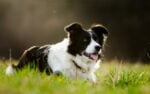
Border Collie
Border Collie Canis lupus familiaris Similar herding niche: high-drive livestock management and a close handler partnership. Compared to many collie-type herders, Pyrenean Shepherds are typically smaller, extremely agile, and often more "busy" or high-arousal; they usually require substantial daily exercise plus training and mental work to prevent nuisance behaviors (barking, destructiveness).
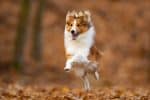
Shetland Sheepdog
Shetland Sheepdog Canis lupus familiaris Small-to-medium herding companion that thrives on continuous engagement and structured training. Like the Pyrenean Shepherd, it can be sensitive or reactive without early socialization; both benefit from positive reinforcement and clear routines.
Australian Kelpie
Australian Kelpie Canis lupus familiaris An endurance herding dog developed for intensive stock work, paralleling the Pyrenean Shepherd's athleticism and work ethic. Both breeds commonly need off-leash running (where safe), task-based play (fetch, herding-style games), and advanced obedience/sport outlets such as agility and rally.
Maremma Sheepdog
Maremma Sheepdog Canis lupus familiaris Uses the same pastures with sheep and goats but acts as a guardian rather than a herder. Contrasts with the Pyrenean Shepherd, which actively moves and controls stock, and is often paired with the Great Pyrenees.
Eurasian lynx
Eurasian lynx Lynx lynx Shares mountain and foothill ecosystems in parts of the Pyrenees and overlaps in predator-prey dynamics involving small ungulates and lagomorphs; included as a non-canid ecological comparator within the same broader landscape food web.

The Pyrenean shepherd, also known as the Pyrenean sheepdog or the Pyr shep, is a small-to-medium-sized breed that has ancient roots, with herding dogs in the Pyrenees dating back thousands of years, though the breed as recognized today was developed more recently. They are one of the smallest traditional herding breeds used by sheep ranchers in the Pyrenees Mountains of France.

Pyrenean shepherds are energetic and have great stamina, which enables them to run long distances at high altitudes. They are intelligent and mischievous, with a great deal of nervous energy. They are shy around strangers but devoted to their families and excellent with children. Their coats come in two main types: rough-faced (long or demi-long) and smooth-faced (short on the face, medium on the body), in a variety of colors, requiring regular brushing, at least weekly for rough-faced types. The long-haired variety has an endearing “scruffy dog” appearance that makes them look charming and mischievous. This breed does need a lot of mental and physical stimulation, so they do best with a family that can give them the time and attention they need. They are not great pets for inexperienced dog owners.

3 Pros and Cons of Owning a Pyrenean Shepherd

ProsCons
Can be good with children.  Pyrenean shepherds are shy around strangers but are known to be affectionate and playful with children. Given their high energy level, they can be a good fit for an active household. They need to be trained not to “herd” children by chasing and nipping at them.Excitable and “barky.” These dogs have a great deal of nervous energy, and they bark a lot. They are alert, excitable, and protective. These are great qualities if you need to be alerted to the approach of strangers, but not if you or your neighbors require a quiet pet.
Healthy and long-lived. This is considered a generally healthy breed with few endemic health conditions. They may live to 17 years or more. Crave stimulation. Pyrenean shepherds have abundant energy that needs to be worked off with running, playing fetch, and performing obedience and agility tasks. They will become anxious, bark, and destroy things if left alone too long.
Choices of low-care coats. Pyrenean shepherds may have long, medium, or short hair in a wide range of color combinations. Their coats are coarse and shed minimally, requiring only brushing every week or two. “Iffy” with strangers and pets. Pyrenean shepherds are wary of strangers and other animals. Their herding instincts make them protective of their family and can cause dominant behaviors toward other animals.

The Best Dog Food for a Pyrenean Shepherd

Regardless of breed, your dog should be provided with high-quality dog food, manufactured or home-prepared from the most natural ingredients possible, without artificial additives or poor-quality fillers. Spending a little more for higher quality can save you from expensive vet bills as your dog gets older.

Because Pyrenean shepherds are a particularly active breed, it is especially important to provide them with a high-protein diet. Wet or dry dog food will work, along with a small amount of meat scraps or meat broth to make their food savory and protein-rich.
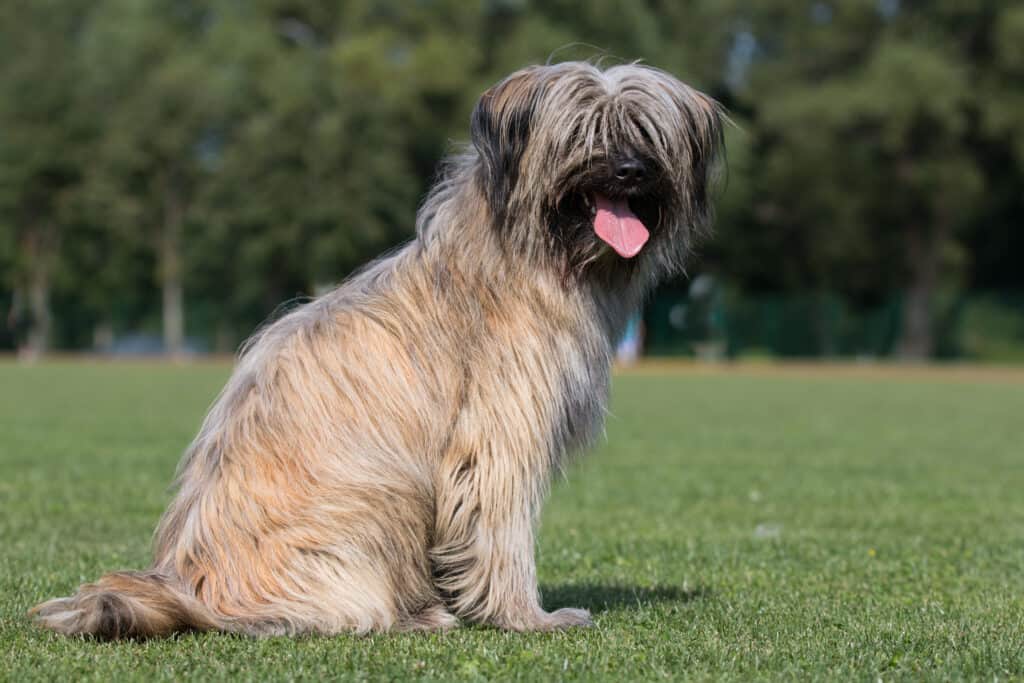
Pyrenean shepherd

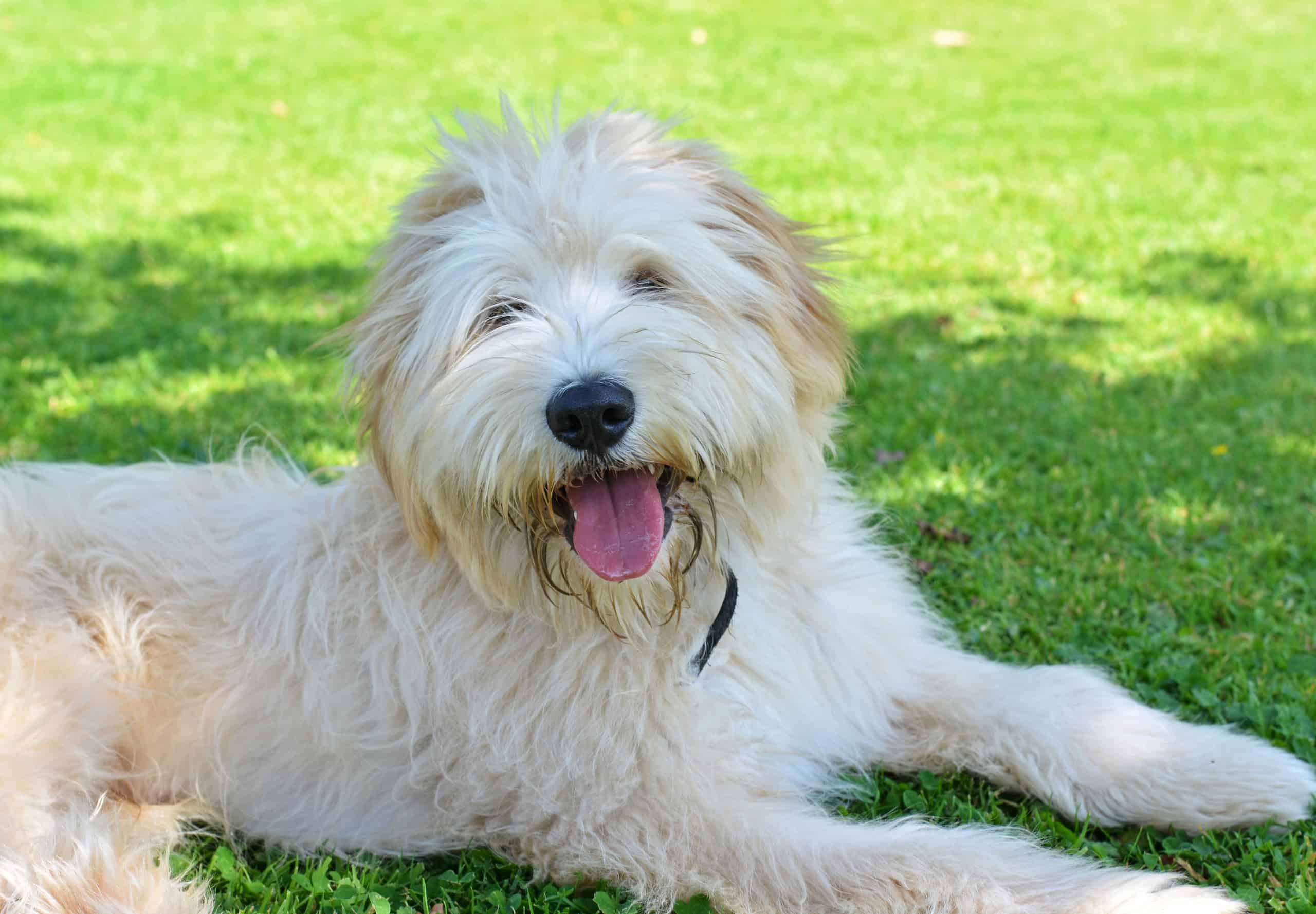
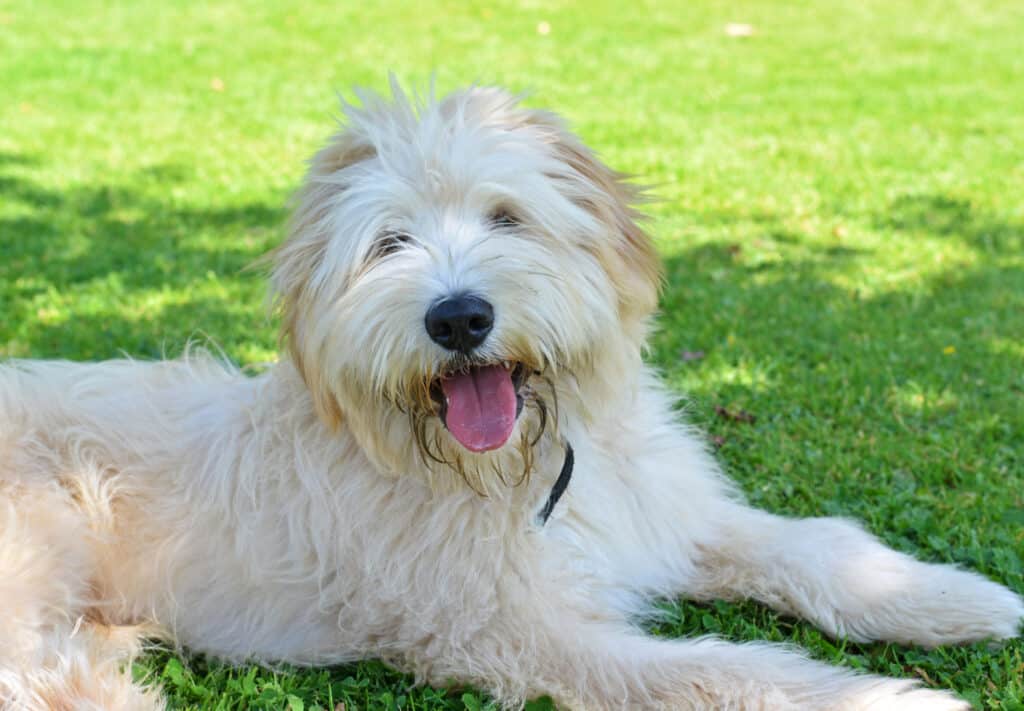
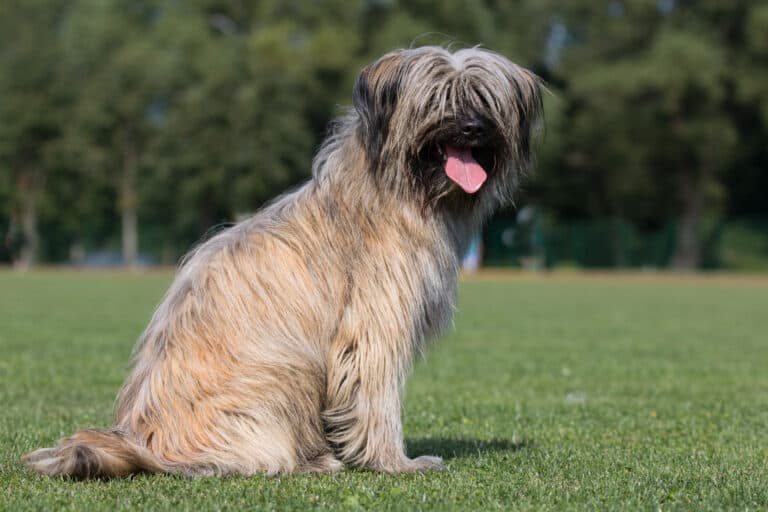
Some Pyrenean shepherds have sandy colored fur.

Pyrenean Shepherd Size and Weight

The Pyrenean shepherd is a small-to-medium-sized dog, with males averaging 16 to 21 inches tall and females averaging 15 to 20 inches tall. Males and females can weigh anywhere from 18 to 33 lbs when fully grown.

Pyrenean Shepherd Common Health Issues

Pyrenean shepherds are a healthy breed with few known health issues. They can live for 16 or more years. The American Kennel Club recommends that they receive evaluations for potential problems with the patella, hips, or eyes. Some of their common conditions are:  

Pyrenean Shepherd Temperament and Behavior

True to their origins as outstanding herding dogs, Pyrenean shepherds have strong traits of intelligence, independence, courage, loyalty, and versatility. Their typical personality is exuberant, playful, enthusiastic, and affectionate. Their behavior with children is excellent: they enjoy playing and performing tricks.

Another positive behavior is that they are good protectors, being wary of strangers and vocal about any perceived threats. No one will be able to approach your yard or door without your dog keeping you well-informed! This trait can also make them tricky to deal with if you have other pets. Their herding instincts may make them hyper-protective or want to dominate and herd other animals.

How To Take Care of Pyrenean Shepherds

Maintenance and Grooming

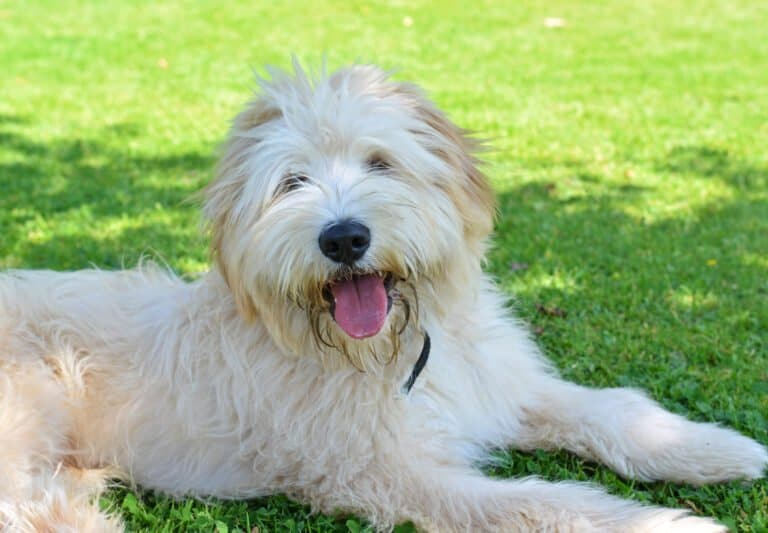
Because Pyrenean shepherds have been developed as working dogs, not for a desired appearance, there is great variation in their coats. The coloration can be fawn, grey, blue, brindle, or black, and they sometimes have white on their chest and legs. Their coats may be long, medium (goat-haired), or short (smooth-faced). The coat may lie flat or be slightly wavy and charmingly scruffy-looking.

Their coats feel coarse, and they do not have much of an undercoat. Their fur does not mat or shed very much. The fur of those with long coats may cord naturally. Owners should brush medium and short-haired varieties every two weeks or so. Long-haired Pyrenean shepherds should be brushed weekly. All breeds of dogs should have their nails regularly trimmed and their teeth brushed to maintain their appearance and prevent potentially life-threatening infection.

Training

Bred as herding dogs, Pyrenean shepherds like having a job or activity to do. Because they have such high energy and are eager to please their owners, they are a very trainable breed. An interesting trait of these dogs is that they were bred to herd using their bodies, not using eye contact as some other breeds do. As a result, they can more easily develop an intuitive sense of what they should do. Reward-based methods using clickers, verbal praise, and small treats work very well with them. Because of their high training needs, these dogs are not a good match for inexperienced dog owners.  

Exercise

Pyrenean shepherds are extremely energetic! Owners who like running and would enjoy teaching a dog to play fetch and performing obedience and agility tasks will appreciate the personality traits of this breed. They can be trained to run alongside a bicycle, which is a win-win for cycling enthusiasts. These dogs will become anxious and will bark excessively, dig, and create general mayhem if left alone too long. They can adapt to life in either a home or an apartment, if given enough stimulation, attention, and opportunities to exercise vigorously.

Puppies

Pyrenean shepherds tend to be suspicious and reserved toward strangers and other animals. This means that as puppies, they need a great deal of socialization to become well-mannered family pets.

They reach full maturity at about three years old. They bond intensely with their families, so it is difficult for them to form new attachments to another family if they are rehomed. Prospective owners should not choose this breed unless they are firmly committed to the dog for life, which can be more than 15 years.
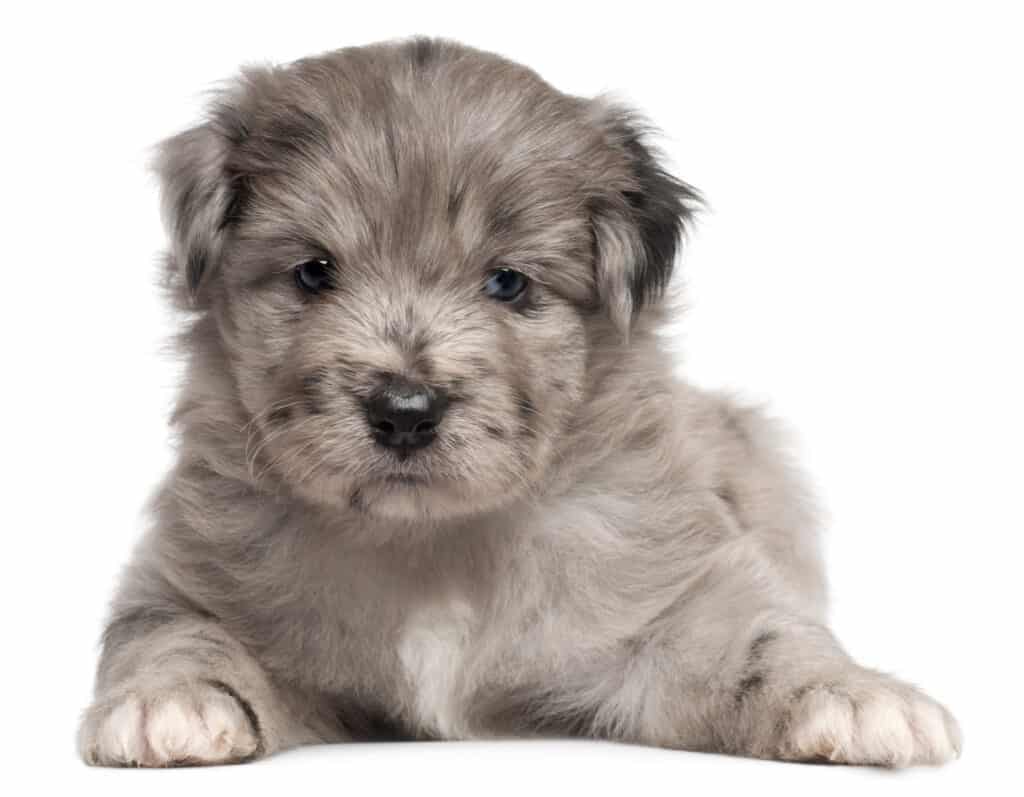
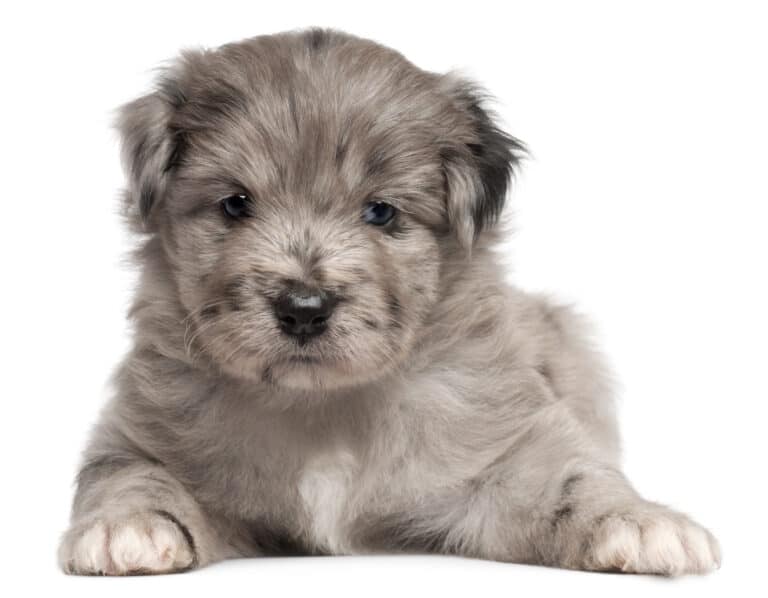
Pyrenean shepherd puppy

Pyrenean shepherd puppies need a great deal of socialization to become well-mannered family pets.

Pyrenean Shepherds And Children

This breed can be an outstanding companion to children and is more than able to keep up with their level of activity. Pyrenean shepherds are nervous, hyper-alert dogs, though, so they can easily become alarmed by unexpected movements and noises from unfamiliar children. These dogs may chase and nip at children as they would sheep. Owners should correct this behavior immediately and consistently so the dog learns its subordinate place in the hierarchy of the family.

Dogs Similar to the Pyrenean Shepherd

  • Great Pyrenees: This breed is from the same region of France and is used to guard flocks rather than herd them. It is larger and not as well-suited to apartment life as the Pyrenean shepherd, but it does get along better with strangers and other dogs.
  • Australian Shepherd: This is a herding dog, larger than the Pyrenean shepherd, with similar requirements for attention and exercise, but it is easier to acclimate to a household with children.
  • Border Collie: This breed is similar in size and weight to a Pyrenean shepherd and also a herding dog with a similar personality. It is the most intelligent dog breed. They are popular family dogs that are less expensive than similar breeds.
View all 246 animals that start with P

Sources

  1. Wikipedia / Accessed November 17, 2022
  2. BreedTips / Accessed November 17, 2022
  3. American Kennel Club / Accessed November 17, 2022
  4. VetStreet / Accessed November 17, 2022
  5. Pet Net ID / Accessed November 17, 2022
Drew Wood

About the Author

Drew Wood

Drew is a college professor and freelance writer who graduated from the University of Virginia. His travels have taken him to 25 countries and 44 states, where he has enjoyed learning about wildlife in a wide range of environments. In addition to his love of animals, he enjoys scary movies, landscaping, strategy games, and philosophical discussions over a cup of coffee. He is also an emotional support human to a neurotic Spanish Water Dog and a hyperactive Chihuahua mix.

Thank you for reading! Have some feedback for us?


Pyrenean Shepherd FAQs (Frequently Asked Questions)

A Pyrenean Shepherd puppy costs on average $500-$800. Yearly expenditures for food, veterinary care, medicine, and supplies commonly costs about $650 a year.