



R
Species Profile

Ragamuffin

Felis catus

Teddy-bear cat, heart of gold
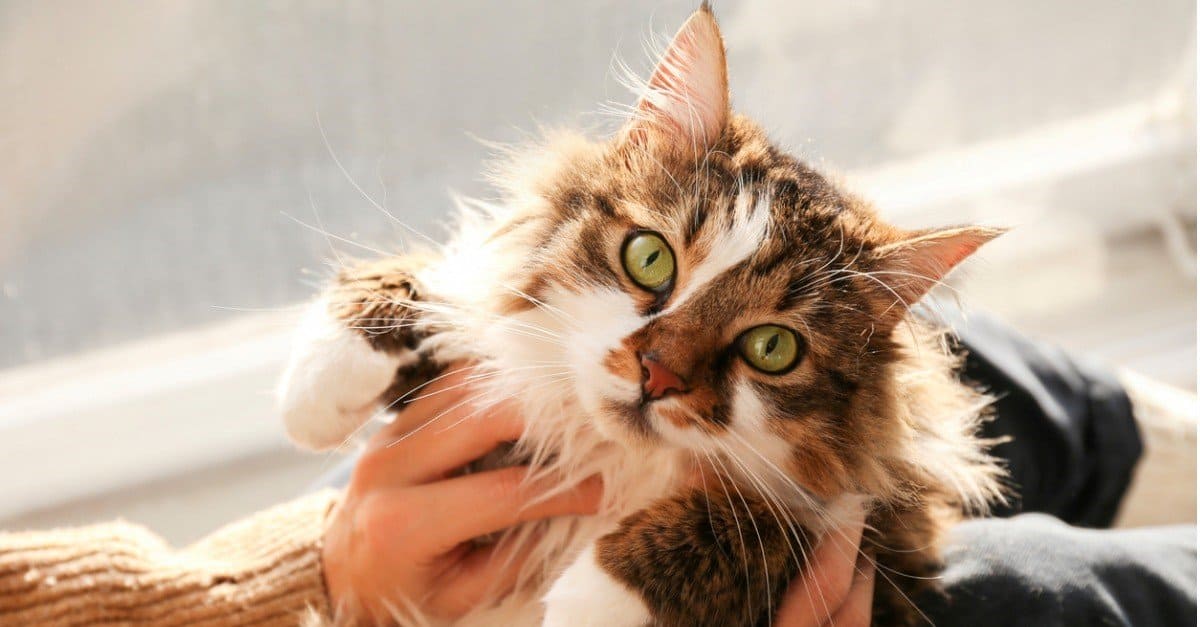
iStock.com/Evrymmnt

Ragamuffin Distribution

Click a location to explore more animals from that region

Origin Location

This map shows the native origin of the Ragamuffin. As a domesticated species, they are now found worldwide.

Loading map...

Size Comparison

Human 5'8"
Ragamuffin 10 in

Ragamuffin stands at 15% of average human height.

Ragamuffin sitting on a woman's lap

At a Glance

Domesticated
Also Known As Raggie, Rags, Raggy
Diet Carnivore
Activity Crepuscular+
Lifespan 14 years
Weight 9.1 lbs
Status Not Evaluated
Did You Know?

Ragamuffins are a domestic cat breed, selectively bred for size, coat plushness, and an unusually docile, affectionate personality.

Scientific Classification

The Ragamuffin is a domestic cat breed known for a large, sturdy build, long plush coat, and notably docile, people-oriented temperament.

Kingdom
Animalia
Phylum
Chordata
Class
Mammalia
Order
Carnivora
Family
Felidae
Genus
Felis
Species
Felis catus

Distinguishing Features

  • Large, heavy-boned body with a soft, plush, medium-to-long coat
  • Often very tolerant, calm, and affectionate temperament
  • Wide variety of coat colors and patterns recognized in breed standards

Physical Measurements

Males and females differ in size

Height
♂ 11 in (10 in – 1 ft 1 in)
♀ 10 in (9 in – 11 in)
Length
♂ 2 ft 11 in (2 ft 7 in – 3 ft 3 in)
♀ 2 ft 9 in (2 ft 6 in – 3 ft 1 in)
Weight
♂ 19 lbs (13 lbs – 24 lbs)
♀ 13 lbs (10 lbs – 15 lbs)
Tail Length
♂ 1 ft 2 in (12 in – 1 ft 4 in)
♀ 1 ft 1 in (12 in – 1 ft 3 in)
Top Speed
28 mph
running

Appearance

Primary Colors
Secondary Colors
Skin Type Typical domestic cat skin with a dense, plush semi-long coat; thick undercoat and a prominent neck ruff in many individuals.
Distinctive Features
  • Domestic cat breed (Felis catus), selectively bred for large, sturdy frame and gentle temperament.
  • Large, heavy-boned body with broad chest and substantial musculature; slower-maturing than many cats.
  • Plush, rabbit-like semi-long coat with dense undercoat; tends to resist heavy matting but still needs routine grooming.
  • Round head with full cheeks, short-to-moderate muzzle, and large expressive eyes; overall "teddy bear" look.
  • Notably docile, people-oriented, and affectionate; typically tolerant of handling and indoor family life.
  • Distinguished from the base domestic cat by consistent breed type (size, plush coat, round features) and standardized temperament selection.
  • Care: brush 2-3 times weekly (more during shedding), keep nails/teeth maintained, and provide daily interactive play to prevent weight gain.
  • Health concerns seen in the breed/population: hypertrophic cardiomyopathy (HCM) risk, possible polycystic kidney disease (PKD) lines, obesity from low activity, and dental disease; prioritize screening, balanced diet, and regular veterinary checks.

Sexual Dimorphism

Males are typically larger and heavier-boned with broader heads and more pronounced jowls. Females are smaller and finer-framed but share the same plush coat and rounded features.

♂
  • Heavier overall body mass; broader chest and neck.
  • Broader head with more prominent cheeks/jowls.
  • Often develops a fuller ruff and overall coat volume.
♀
  • Smaller, lighter frame with a more refined head shape.
  • Less pronounced jowls; slimmer neck profile.
  • Coat remains plush but may look slightly less voluminous.

Did You Know?

Ragamuffins are a domestic cat breed, selectively bred for size, coat plushness, and an unusually docile, affectionate personality.

They're closely related to Ragdolls; the breed developed in the 1990s from Ragdoll-type lines with carefully planned outcrosses to broaden the gene pool.

Many Ragamuffins mature slowly-some keep "kittenish" growth and behavior longer than typical domestic cats, reaching full size later.

Their coat is long and very plush but often less prone to severe matting than some longhaired breeds-still needs routine grooming.

The breed standard allows many colors and patterns, making the "teddy-bear" look possible in lots of variations.

Because they're so people-oriented, they're often described as "puppy-like" and may follow family members from room to room.

Unique Adaptations

  • Breed-distinct build: large, sturdy frame with substantial bone and a broad chest-more "cobby" and heavyweight than the average mixed-breed house cat.
  • Plush, dense coat: a rabbit-like, soft texture that provides insulation; requires brushing (typically 1-2x/week, more during seasonal shedding) to reduce mats and hairballs.
  • Docile, affiliative temperament: selection for calm sociability makes many Ragamuffins notably tolerant and people-focused compared with the baseline domestic cat population.
  • Slow maturation: extended growth period means nutrition and weight management should be planned to avoid excess body condition as they fill out.
  • Health considerations (screening is key): like many large domestic cats, lines may be at risk for hypertrophic cardiomyopathy (HCM); responsible breeders may use cardiac screening/echocardiography. Some lines may also monitor for kidney disease (e.g., PKD in cats broadly) depending on ancestry.
  • Care needs shaped by temperament: their easygoing nature can predispose them to inactivity and weight gain-measured feeding, daily play, and environmental enrichment are important.

Interesting Behaviors

  • Shadowing/"helper" behavior: calmly trailing humans around the home and settling nearby rather than staying solitary.
  • High handling tolerance: many accept being held, cuddled, or gently passed between family members more readily than average cats (individuals vary).
  • Soft, persistent social bids: sitting close, touching with a paw, or quietly vocalizing for attention instead of demanding yowls.
  • Play style tends toward interactive and gentle-wand toys, fetch-like games, and puzzle feeders often work well.
  • Low-conflict temperament: commonly integrates well with respectful children, dogs, and other cats when introduced gradually.
  • Comfort-seeking: choosing warm laps, soft blankets, and elevated perches with a clear view of their people.

Cultural Significance

The Ragamuffin (Felis catus) is a modern companion domestic cat breed liked for a gentle, good-with-families nature and teddy-bear looks. Loving, longhaired cats help show cats as close human companions worldwide (e.g., Egypt, Japan).

Myths & Legends

Ancient Egypt: cats were closely associated with the goddess Bastet, a protector of home and family; household cats inherited a cultural aura of guardianship and good fortune.

Japan: the "beckoning cat" tradition portrays a cat inviting luck and customers-an enduring folk symbol of prosperity connected to domestic cats generally.

Celtic/Scottish Highlands: tales of the "fairy cat" describe a powerful black cat spirit that could bless or curse households, reflecting long-standing respect and wariness toward cats in folklore.

Medieval and early-modern Europe: stories and superstitions cast cats as familiars accompanying witches-narratives that shaped cultural attitudes toward domestic cats for centuries.

Ragamuffins came from Ragdoll-related cats in the 1990s. Early names like 'Cherubim' preceded 'Ragamuffin.' The origin story says they were outcrossed and hardy, an 'everycat' lineage, not one closed line.

Conservation Status

NE Not Evaluated

Has not yet been evaluated against the criteria.

Population Stable

Life Cycle

Birth 4 kittens
Lifespan 14 years

Lifespan

In the Wild
12–16 years
In Captivity
10–20 years

Reproduction

Mating System Polygynandry
Social Structure Managed Domestic
Breeding Pattern Transient
Fertilization Managed Selective
Birth Type Internal_fertilization

Ragamuffins follow typical domestic-cat polygynandry, though breeding is usually human-managed for temperament and coat traits. Males may mate with multiple females during estrus; no pair bond forms, and queens primarily rear kittens after internal fertilization.

Behavior & Ecology

Social Colony Group: 2
Activity Crepuscular, Cathemeral
Diet Carnivore High-protein, meat-based wet food (e.g., poultry such as chicken or turkey)

Temperament

Breed-distinctive: notably docile, people-oriented, and handling-tolerant compared with average domestic cats.
Affectionate "lap-cat" tendency; often seeks physical contact and may follow caregivers room-to-room.
Generally low reactivity; less prone to defensive scratching/biting, though boundaries still matter.
Moderate play drive; may be less athletic/jumpy than many cats-provide safe, accessible enrichment.
Sociability is consistently high across the breed; individuals vary from quiet and cuddly to playful and clownish.
Many accept strangers and other pets readily; shy individuals benefit from slower, structured introductions.
Care: long plush coat needs regular brushing to prevent mats; extra attention to ruff, belly, and behind ears.
Care: weight management is important-calmer temperament can predispose to obesity without play routines.
Health concerns (breed-associated): hypertrophic cardiomyopathy risk; consider screening/echocardiograms in breeding lines.
Health concerns (reported): possible polycystic kidney disease in some lines; periodic renal monitoring recommended.
Care: dental hygiene and routine veterinary exams; indoor lifestyle reduces injury and infectious disease risk.

Communication

purr
soft meow
trill/chirp
murmur
growl Rare, stress-related
hiss Rare, fear-related
slow blink and relaxed eye contact to signal trust
head-butting (bunting) and cheek rubbing to mark social bonds
kneading on blankets/laps during comfort-seeking
body flop/relaxed sprawl when seeking attention or feeling secure
tail-up greeting posture when approaching favored humans
gentle paw taps to request petting or play
scent marking via facial glands; usually subtle in well-socialized individuals

Habitat

Biomes:
Temperate Forest Temperate Grassland Mediterranean Desert Hot Desert Cold Tropical Rainforest Tropical Dry Forest Savanna Boreal Forest (Taiga) Tundra Alpine Wetland Freshwater Marine +8
Elevation: Up to 14763 ft 9 in

Ecological Role

Domestic mesopredator associated with human households; primarily a provisioned predator with potential incidental hunting impact if allowed outdoors.

Rodent suppression around homes/barns (when hunting occurs) Incidental control of some small pest species (e.g., mice, occasional insects) Companionship to humans (social ecosystem service)

Diet Details

Main Prey:
Mice and other small rodents Small birds Rabbits and young lagomorphs Lizards and small reptiles Insects

Human Interaction

Domestication Status

Domesticated

Felis catus came from Near Eastern wildcats (Felis lybica) after a long time living with people — cats helped control rodents at early settlements and later were bred. The Ragamuffin breed was made in the United States in the 1990s from Ragdoll lines with outcrossing to add genetic diversity; bred for large, plush, very people‑friendly lap cats.

Danger Level

Low
  • Scratches or bites (typically mild; infection risk if untreated)
  • Allergic reactions to dander/saliva (can be significant for sensitive individuals)
  • Zoonotic/household risks shared by domestic cats: ringworm (dermatophytosis), Campylobacter/Salmonella (rare; more associated with raw diets), toxoplasmosis exposure from litter (important for pregnant/immunocompromised people), fleas/ticks and associated dermatitis
  • Trip hazard from underfoot, affectionate behavior

As a Pet

Suitable as Pet

Legality: Generally legal to own as a companion animal in the United States and most jurisdictions where domestic cats are permitted; subject to local ordinances (licensing, vaccination/rabies requirements, leash/containment rules, breeding permits, limits on number of pets, and HOA/rental policies).

Care Level: Moderate

Purchase Cost: $800 - $2,500
Lifetime Cost: $18,000 - $45,000

Economic Value

Uses:
Companionship and family pet Cat fancy (pedigree breeding and cat shows) Therapy/ESA potential (temperament-dependent, not guaranteed) Pet-industry services (grooming, boarding, training, veterinary care) Shelter/rescue and rehoming economy (domestic cats broadly) HUBS-human interaction range across Felis catus: indoor companions; working cats for rodent control; community/feral colonies managed via TNR; shelter/rescue systems; cultural and media roles; scientific/veterinary research as a model species in limited contexts
Products:
  • Pedigree kittens (pet/show quality)
  • Stud services and breeding rights (where allowed/ethical)
  • Show participation (titles can increase breeding value)

Relationships

Related Species 7

Wildcat
Wildcat Felis silvestris Shared Genus
African wildcat Felis lybica Shared Genus
Sand cat
Sand cat Felis margarita Shared Genus
Black-footed cat Felis nigripes Shared Genus
Jungle cat Felis chaus Shared Genus
Eurasian lynx
Eurasian lynx Lynx lynx Shared Family
Lion
Lion Panthera leo Shared Family

Ragamuffin cats have a fairly brief history, only having been recognized as a separate breed from the ragdoll in the last three decades. Taking care of this type of cat requires regular grooming, a good diet, and a willingness to be followed around constantly for the sake of their loving personality. Though they are often born all white, you’ll enjoy seeing their colors come in as they get older.

Ragamuffins vs. Ragdolls

Both of these breeds are loving with their families, and they have fairly large builds. After all, they ARE related, though the ragdoll was first. When you look closely, their eye shape is much different. Plus, the Ragdoll tends to have a much longer coat. Both require weekly grooming, and both shed extensively.

In their personalities, the ragamuffin tends to be a lot more comfortable with change, though they love to socialize regardless. With a history of being confused for one another, understanding this difference can help you decide on the pros and cons as you find the right pet.
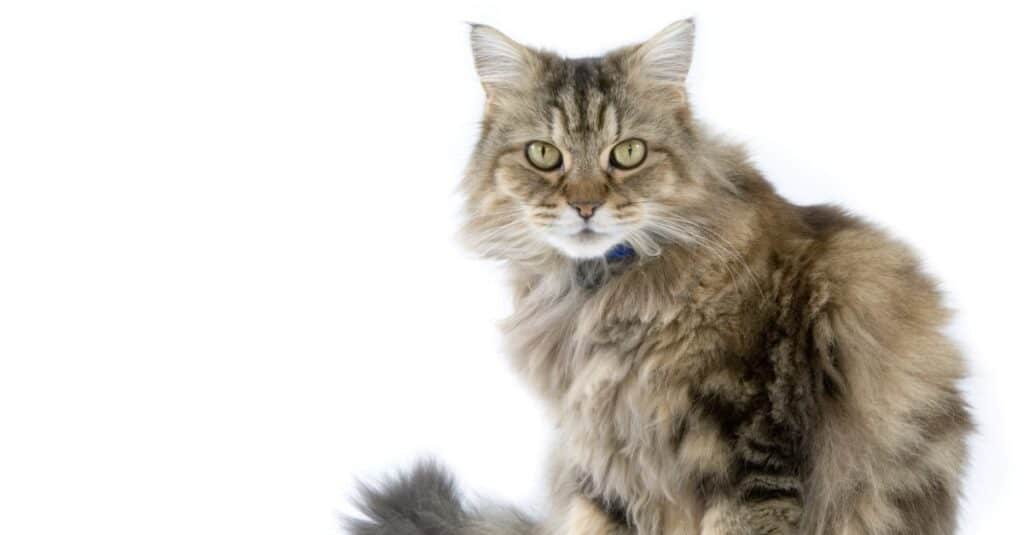
Fluffy ragamuffin cat in the studio, isolated on white background.

The name Ragamuffin was adopted for the breed in 1994, though its development began earlier.

Evolution

The Ragamuffin was developed in 1994 from a breed known as “Cherubim” that was bred by Ann Baker of Riverside, California. Mystery surrounds the development story, which started in the 1960s. It is believed that Ragamuffins were created by crossing a Ragdoll with other long-haired cats, such as Turkish Angoras, Himalayans, Persians, and other long-haired domestic cats. Ragamuffins were granted registration status by The Cat Fanciers’ Association in 2003 and full championship status in 2011.

Traits: What to Know Before You Buy

Before adopting and dreaming up names for the sweet personality of the ragamuffin cat, there are a few factors to consider. While you may see these traits as pros and cons, they are simply facts to help make the best decision for your household.

  • The most notable qualities of the Ragamuffin cat are its friendly personality and its thick yet incredibly soft fur. They are only meant to be kept as indoor pets.
  • While this cat breed has incredible intelligence and may even be trainable, they are very lazy and needy. You won’t have to look far for this cat; he is probably already following you around the home.
  • The Ragamuffin cat is fairly healthy, but hereditary conditions — like hypertrophic cardiomyopathy and polycystic kidney disease — should be monitored closely by a vet.
  • Sometimes, they have more than one eye color, which is a condition referred to as heterochromia. Most often, their eye color is blue in different shades.
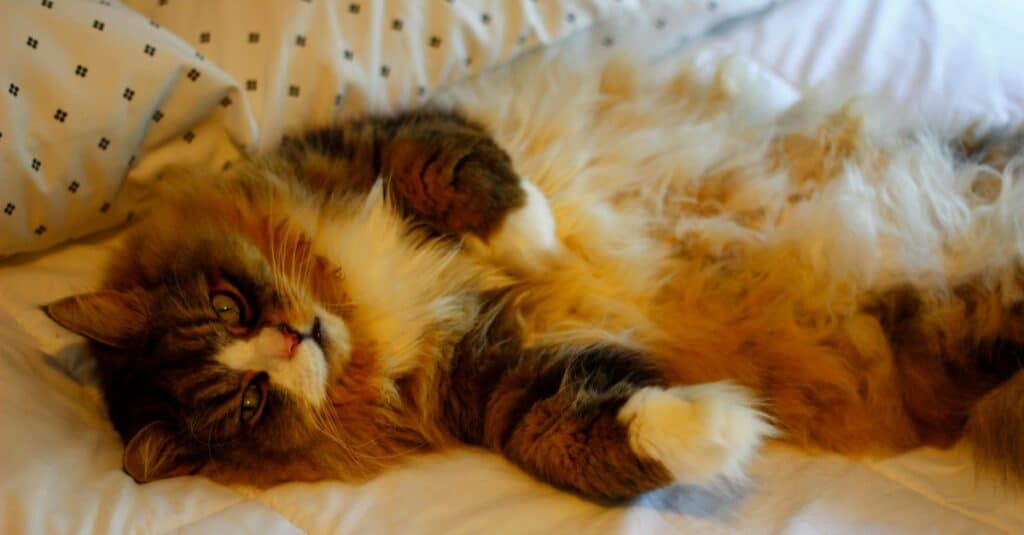
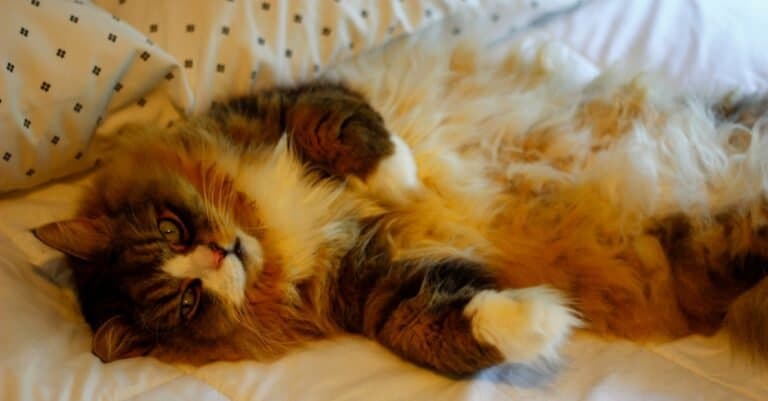
Ragamuffin cat sleeping on a bed with white sheets.

Ragamuffins are sweet companions who follow you wherever you go.

Personality

With all of the beautiful attributes of the ragamuffin, perhaps the most appealing is the friendly personality. This cat breed is known for the sweet temperament that they show to their owners, often following them around the home as a way to show their love. Their docile personality makes them incredible companions for anyone, especially for people who want to relax at the end of a long day with their furry friend.

As lovable as the personality of this cat breed is towards adults, they are also incredibly patient with children who are still learning how to be around their pets. Whether cuddling or playing, the ragamuffin cat seems happy to be in your care. They can get a little vocal at times (which is one of their pros and cons), but it is all meant to be in adoration.

Even if you’re a dog person, this cat might fit the bill. Their playful and intelligent nature makes it easy to teach them tricks and even to train them to fetch. With the right exposure, the ragamuffin may walk on a leash as well.

Size and Weight
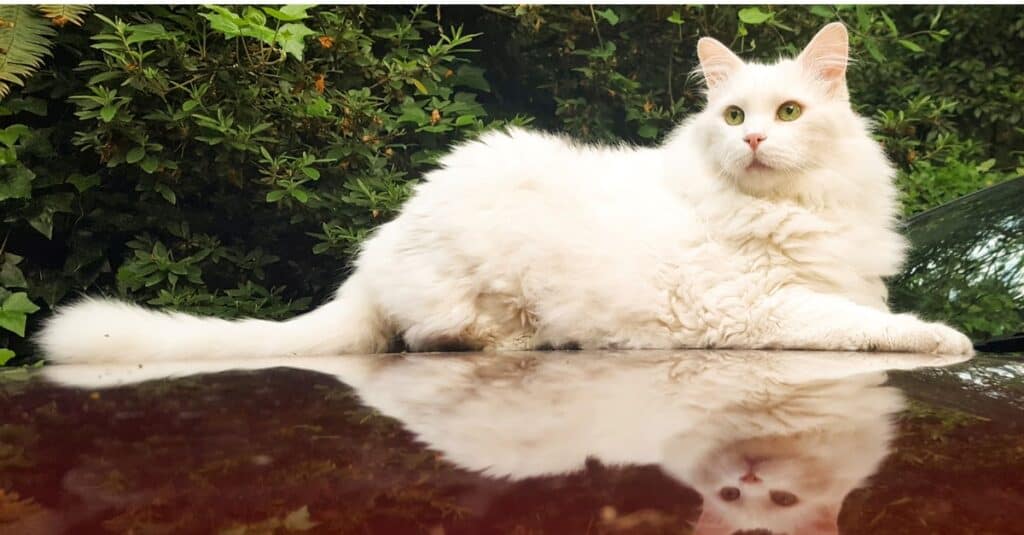
Heaviest and Fattest Cats - Ragamuffin

Ragamuffins are prone to overeating, making it incredibly challenging to keep a stubborn member of this breed from gaining weight.

Ragamuffin cats are known for their large size, so it should come as no surprise that the males have an average weight of up to 20 lbs. Females, on the other hand, are smaller, ranging from 12 lbs. to 15 lbs. at their adult weight. On record, the largest ragamuffin cats have been no more than 20 lbs., which is primarily due to their large frame. Their coats make them look like their weight is even greater, giving a fluffy and soft texture to adults and kittens alike.

Ragamuffin cats are in good company with other hefty domestic breeds. The British shorthair tends to be about the same size among males and females, but the Ragdoll cat is the closest by far. With the signature long hair, the ragamuffin cat actually used to be referred to as a mix of the ragdoll. However, its recognition as its own breed is still fairly recent history, only dating back about 30 years.

Price to Own a Ragamuffin

Depending on their physical characteristics, location, and other factors, the average cost to purchase a ragamuffin kitten is $800 to $1,500. However, if the breeder has established itself with a high-titled breeding line, the cost goes up from $1,200 to $2,000. Adults don’t cost nearly as much.
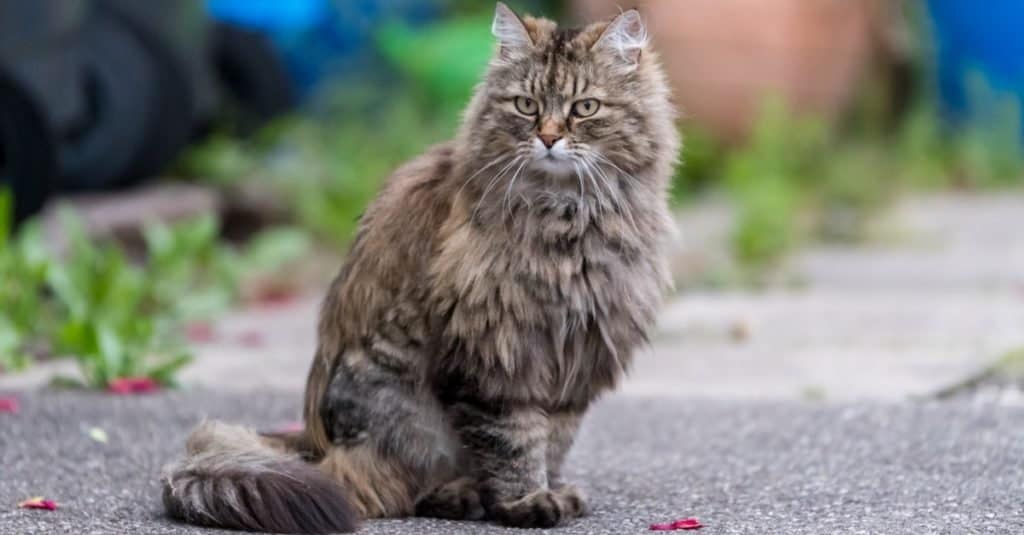
Fluffiest Animals: Ragamuffin Cat

Ragamuffin kittens are expensive, but adults can be found for much less.

Feeding any cat costs between $120 and $500 each year, depending on whether the feline needs a particular diet. Annual visits to the vet, assuming that nothing is wrong, cost about $110, but the biggest amount of spending you’ll do is on grooming. These cats need to be regularly brushed to stay on top of the shedding, so you’ll either need to find a groomer or get the tools yourself.

The most expensive ragamuffin cats typically are kittens, but a solid white coat is often rarer than other variations, adding to the cost. Keep in mind that kittens are usually all-white in their coat at birth. Black and white, orange, and white, and other combinations are easy to find. The hardest is a solid white ragamuffin.

For anyone who wants to go through a breeder, the price isn’t always shown online. You might have to sign up for a waitlist or search through many reputable sources to find the right match.

    Kittens
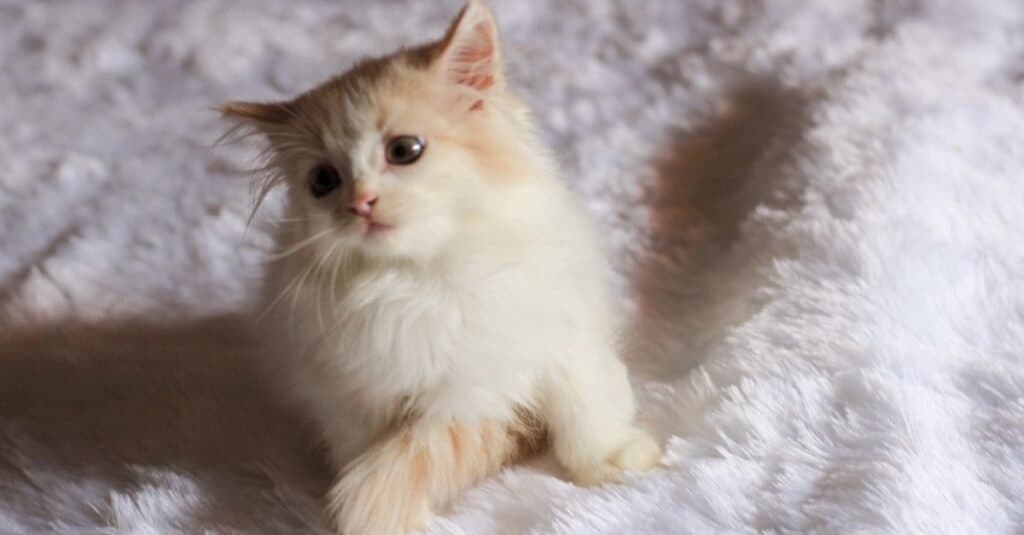
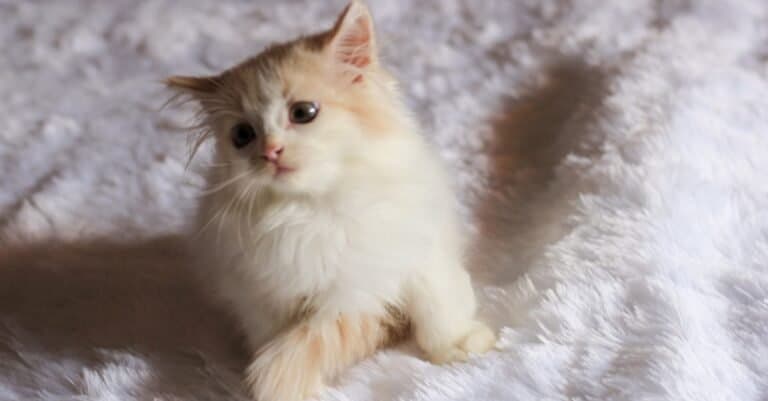
    A cute Ragamuffin kitten playing on the bed.

    Most Ragamuffin kittens are born white and develop different colorations as they mature.

    Perhaps the most interesting aspect of a ragamuffin cat’s life is as a kitten. When they are born, they are only white. It isn’t until this breed starts to mature that it has any other color patterns. Even their eyes can stand out, as the breed is prone to heterochromia (a condition that causes two different colors in their eyes).

    Ragamuffin kittens typically need to stay with their mothers until they are 12 weeks old, weighing about 3.7 lbs. by then. Ragamuffin cats typically reach sexual maturity between 5 and 12 months of age, which is why many breeders recommend neutering them before they reach 1 year old. When this cat reaches its full size, the females are the smaller of the breed at 10 to 15 lbs. Males, on the other hand, can weigh over 20 lbs., reaching a length of 15 to 20 inches (not including the tail).

    Whether cat or kitten, ragamuffins are great companions in homes with children.

    Lifespan

    Ragamuffin cats tend to take a while before they mature, which is why some of them have a lifespan of 18 years. They don’t actually reach their full adult size until they are four years old, but the average lifespan is between 12 and 16 years, depending on their health.
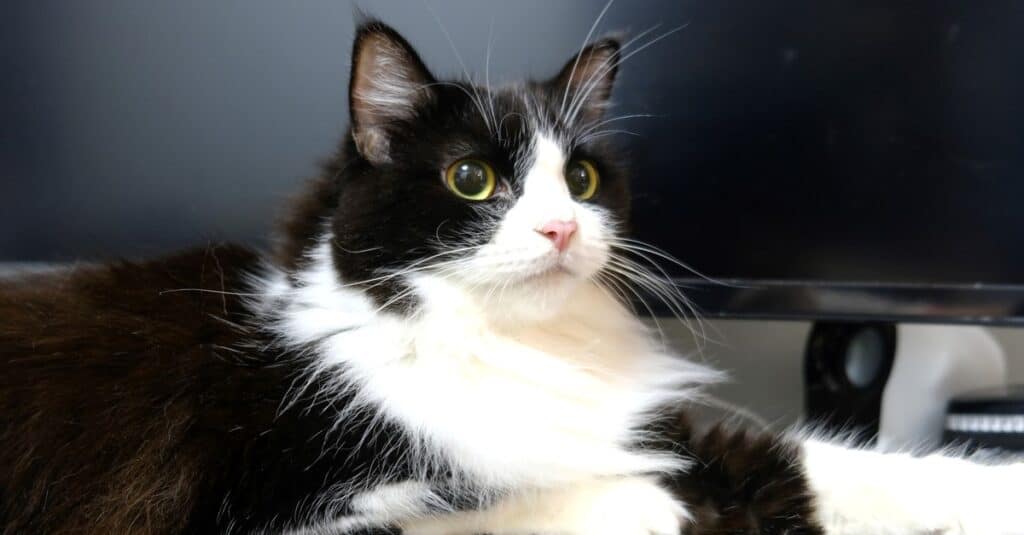
    Ragamuffin cat Lying on its stomach.

    Ragamuffins are generally healthy and can live up to 18 years.

    For the most part, you won’t have to worry about your ragamuffin’s health. However, they carry the genes for a few hereditary issues like hypertrophic cardiomyopathy and polycystic kidney disease. Since this cat’s length and weight are substantial, maintain a healthy diet. Without a good diet, the ragamuffin can become obese quickly. Give them high-quality cat food daily to maintain a healthy weight through their diet.

    Breed vs. Mixed

    Ragamuffin cats are known for so many beautiful characteristics, from their expressive eyes to delicately soft fur. However, finding a mix of a Ragamuffin and another cat isn’t uncommon. Some of the special qualities that a ragamuffin cat must have include its medium-long fur that doesn’t mat, its medium to large size, and its heavy-boned frame.

    If you aren’t sure if your cat is mixed, start with the texture of the coat. If the fur isn’t as soft as a rabbit’s fur, your cat is likely mixed with another breed. Colors won’t really disqualify the cat, but the affectionate and friendly nature of the ragamuffin cat is crucial. Cats that prefer a more solitary mentality may not be entirely purebred.
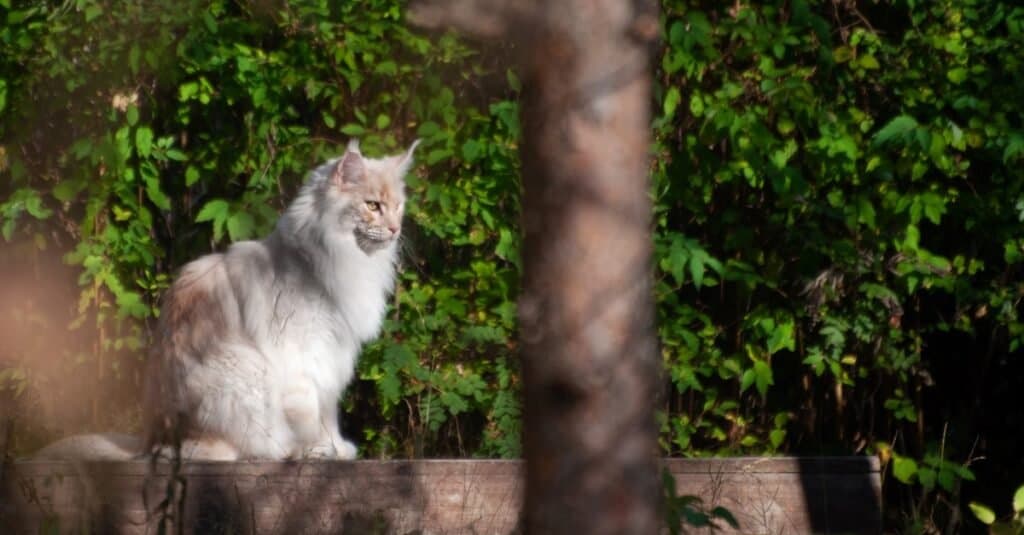
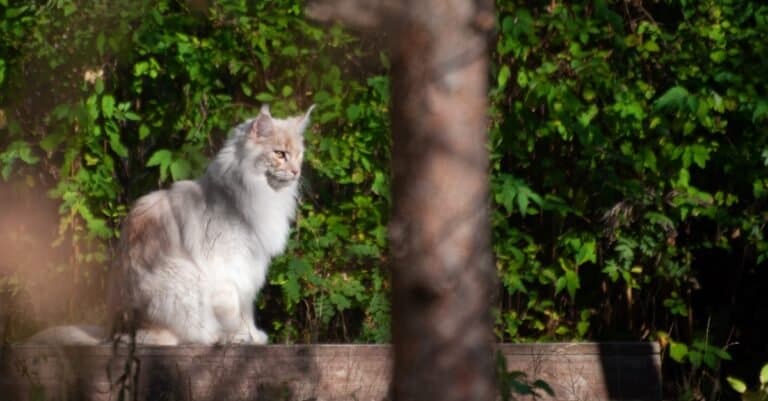
    White ragamuffin cat sitting in the backyard.

    White ragamuffins are the rarest type.

    Types of Ragamuffin Cats and Colors

    The CFA standards for the ragamuffin clearly state that ragamuffin cats are found in many different colors and patterns. The most common colors are brown, blonde, black, and white, which are found in solid, tabby and white, tortoiseshell, and mink patterns. While it isn’t important to be symmetrical, some breeders prefer this look.

    Most often, their eye color is blue or green.

    View all 181 animals that start with R

    Sources

    1. Hill's Pet / Accessed November 19, 2021
    2. The Cat Fanciers' Association / Accessed November 19, 2021
    3. ASPCA Pet Health Insurance / Accessed November 19, 2021
    4. Hepper / Accessed November 19, 2021
    5. Excited Cats / Accessed November 19, 2021
    6. Ragamuffin Cat Fanciers / Accessed November 19, 2021
    7. Vetstreet / Accessed November 19, 2021
    8. Love To Know / Accessed November 19, 2021
    9. Wikipedia / Accessed November 19, 2021
    10. The Happy Cat Site / Accessed November 19, 2021
    Lisha Pace

    About the Author

    Lisha Pace

    After a career of working to provide opportunities for local communities to experience and create art, I am enjoying having time to write about two of my favorite things - nature and animals. Half of my life is spent outdoors, usually with my husband and sweet little fourteen year old dog. We love to take walks by the lake and take photos of the animals we meet including: otters, ospreys, Canadian geese, ducks and nesting bald eagles. I also enjoy reading, discovering books to add to my library, collecting and playing vinyl, and listening to my son's music.

    Thank you for reading! Have some feedback for us?


    Ragamuffin FAQs (Frequently Asked Questions)

    The Ragamuffin cat has a long and large body, featuring a long tail with a fluffy and soft coat. This domestic cat previously was thought to be a variation of the Ragdoll cat. However, the two were recognized as separate breeds by the mid-1990s.