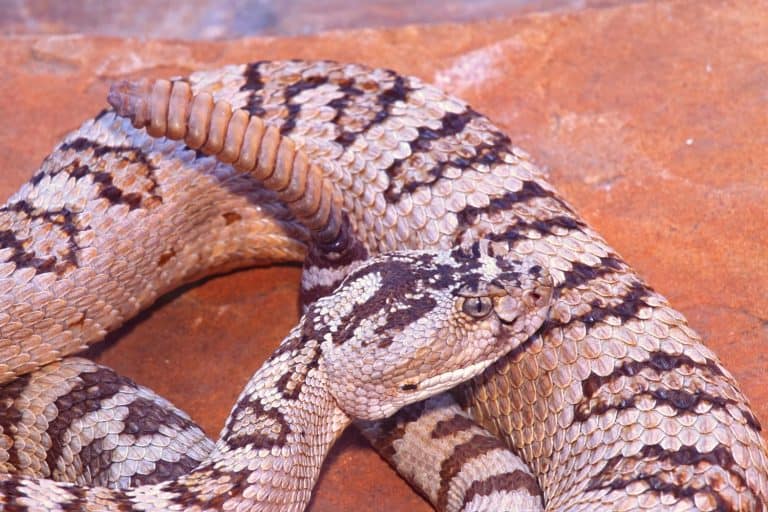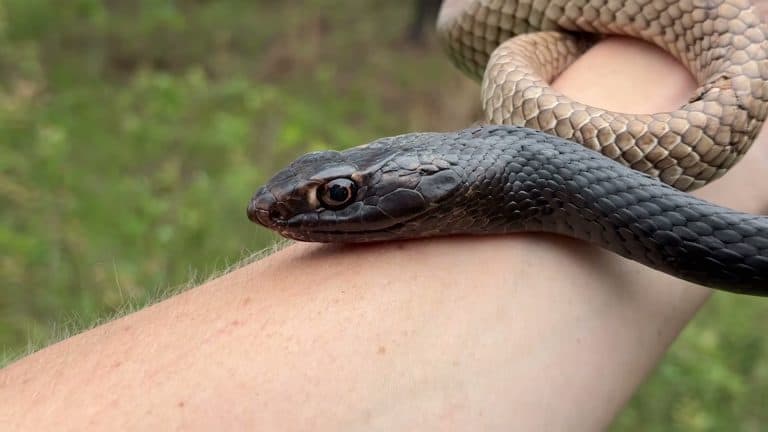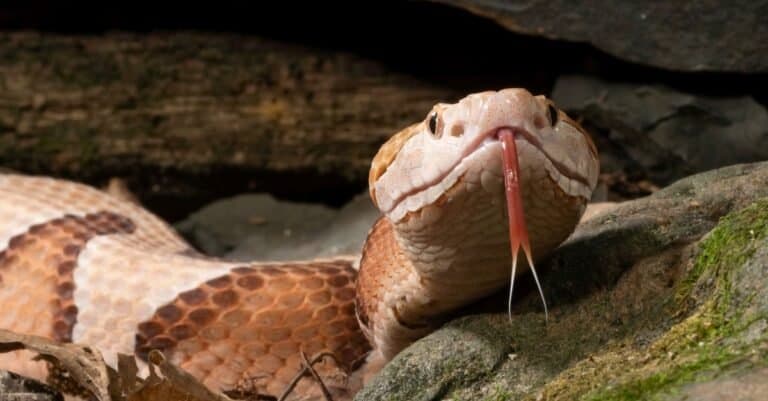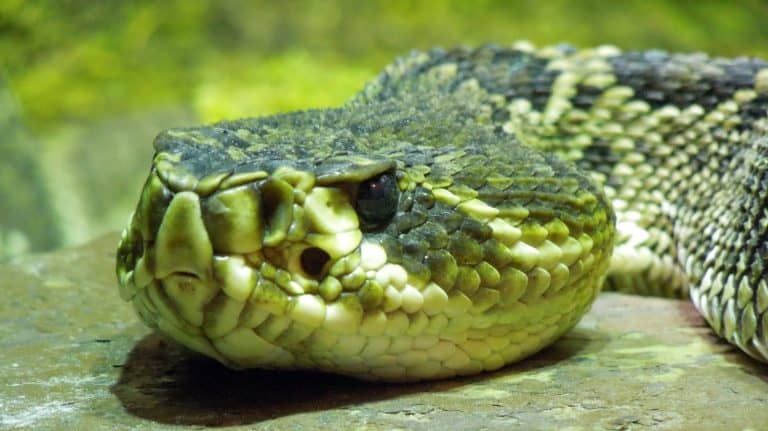

North Carolina has a unique environment and climate. Within the borders of this southeastern state, there are three different biomes, 13 national parks, and four national forests. The immense ecological diversity in North Carolina also includes 37 different species of snakes. Most of the snakes in the state are nonvenomous and harmless. However, there are six venomous snakes in North Carolina.
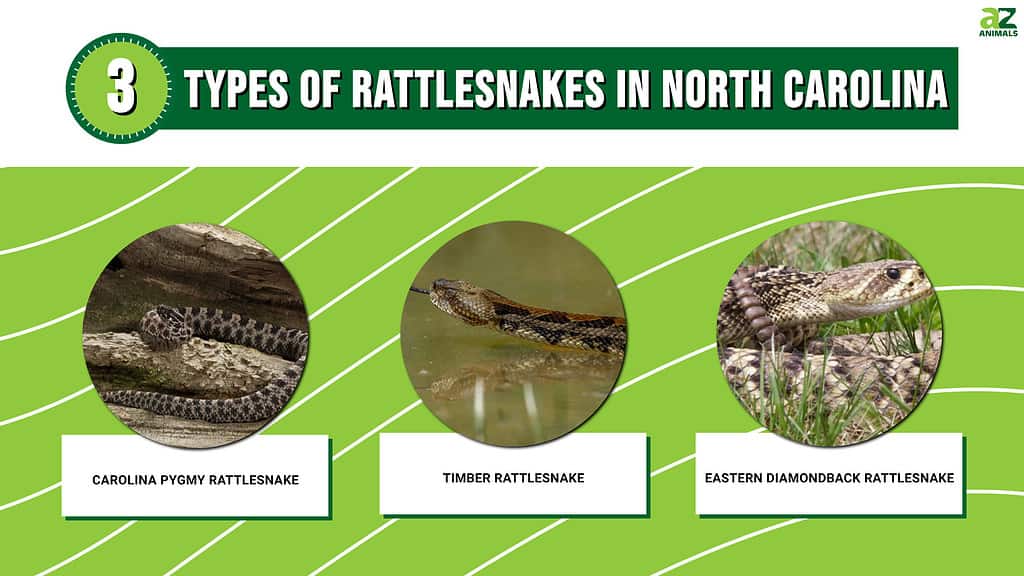
Five of these venomous snakes are various pit vipers with similar identifying characteristics. Pit vipers have venom glands on both sides of their heads. These large glands give the snakes triangular-shaped heads like large arrowheads. Pit vipers also have elliptical pupils and heat-sensing facial pits between their eyes and nostrils. Three of these pit vipers in North Carolina are rattlesnake species. Let’s take a closer look and learn about the three types of rattlesnakes in North Carolina.
All of North Carolina’s rattlesnakes are protected under the North Carolina Endangered Species Act. If you happen to see one of these snakes, let them know!
1. Carolina Pygmy Rattlesnake
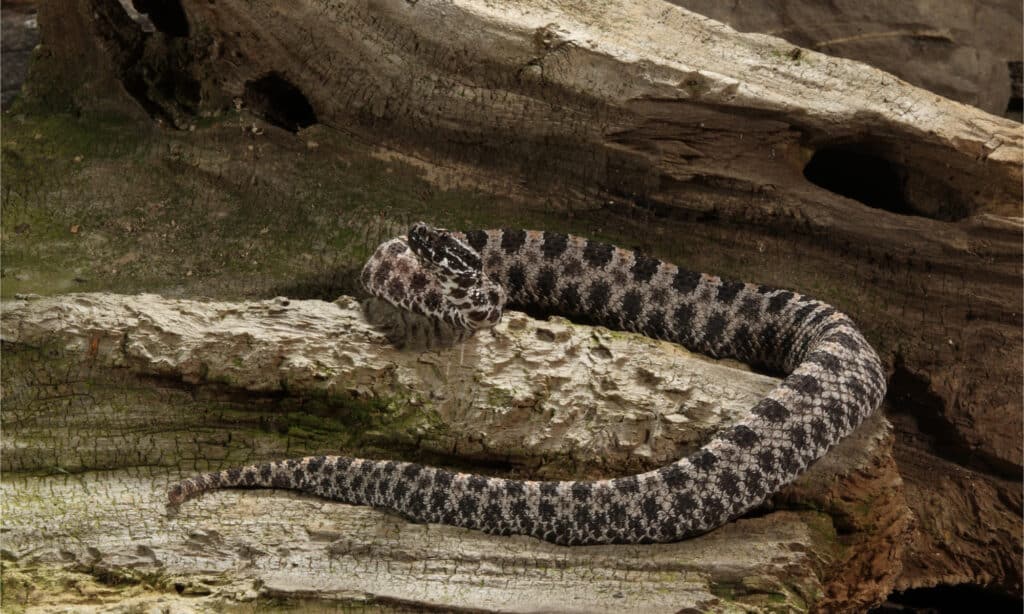
The Carolina pygmy rattlesnake is one of three different subspecies of the pygmy rattlesnake.
©Dennis W Donohue/Shutterstock.com
| Carolina Pygmy Rattlesnake | |
|---|---|
| Range | Extreme Southeast North Carolina |
| Length | 15-20 inches |
Carolina pygmy rattlesnakes only live in the extreme southeastern regions of North Carolina. These snakes tend to favor sandhills and areas in the southeastern Coastal Plains. However, there have been possible reports of pygmy rattlesnakes in Crowder’s Mountain State Park in west-central North Carolina.
Carolina pygmy rattlesnakes are the smallest rattlesnake species in the United States, growing between 15 and 20 inches long. Although they are small, these snakes have thick bodies. Pygmy rattlesnakes are tan, gray, or lavender. Numerous dark spots are running along the middle of their backs and the sides of their bodies. Some snakes have an additional orange dorsal stripe on their backs. However, their colors can vary depending on where they are located. For example, Carolina pygmy rattlesnakes living in Pamlico, Beaufort, and Hyde counties tend to have more red or pinkish coloring.
How Dangerous is the Carolina Pygmy Rattlesnake?
The venom of the Carolina pygmy rattlesnake is dangerous. However, because of its small size, it cannot inject large amounts of venom with its bite. Adult snakes eat mice, lizards, frogs, and other small snakes. Young Carolina pygmy rattlesnakes look like miniature adults, except that they have yellow-tipped tails. They twitch the end of their tails to lure small lizards closer for meals.
2. Timber Rattlesnake
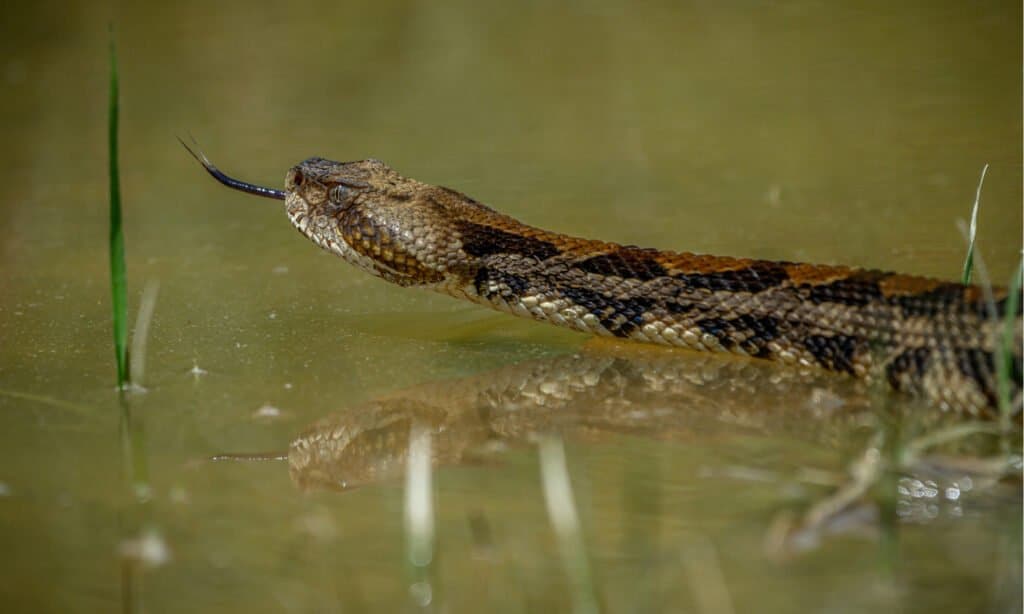
Timber rattlesnakes can strike quickly, but they are usually more reluctant to bite.
©Tim Malek/Shutterstock.com
| Timber Rattlesnake | |
|---|---|
| Range | Western and Eastern Regions of North Carolina |
| Length | 36-60 inches |
Timber rattlesnakes live in the western and eastern regions of North Carolina. These snakes are commonly found in the eastern Coastal Plains region as well as the Blue Ridge Mountains. They once lived in North Carolina’s Piedmont as well. However, because of agriculture and human development, most of the timber rattlesnakes have disappeared from this area. Timber rattlesnakes live in a wide variety of habitats. They are often found in wooded areas, forests, scrublands, wetlands, fields, and marshes.
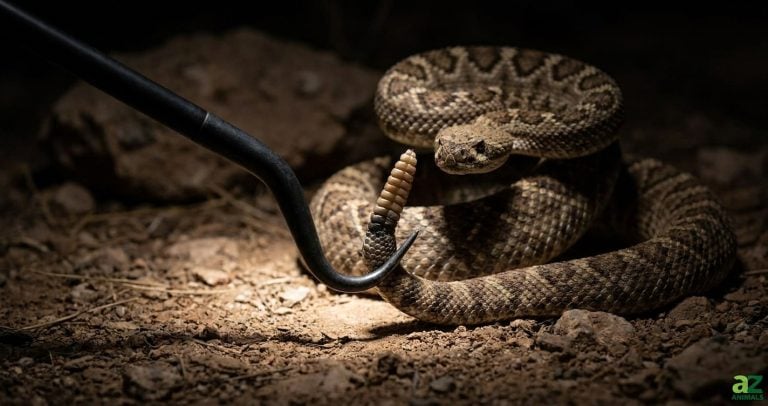
Timber rattlesnakes are large, typically reaching between 36 and 60 inches long. They usually have a gray, black, or yellow background color. Dark V-shaped crossbands run along the length of their bodies and end in a black tail and rattle. However, the coloration of timber rattlesnakes can vary depending on where they live. For example, timber rattlesnakes in the Coastal Plain of eastern North Carolina often have a red or pinkish color. These snakes commonly have an orange or brown dorsal stripe running along the middle of their backs as well.
How Dangerous is the Timber Rattlesnake?
During the spring and fall, timber rattlesnakes are more likely to be out looking for food. When it gets hot in the summer, however, these snakes retreat to the shade and hunt in the early mornings and at night. Timber rattlesnakes mostly eat rodents, but they will eat birds on occasion. These snakes have extremely toxic venom that can kill humans, but they rarely bite. In fact, timber rattlesnakes are typically docile and very reluctant to bite or attack. Like eastern diamondbacks, timber rattlesnakes also rely on their excellent camouflage coloration to help them hide from any potential threats or dangers.
Female timber rattlesnakes do not mate until they are around six to 11 years old. They mate in the fall or late summer and give birth to five to 20 baby snakes the following year. However, they only reproduce every two or three years, so it takes some time for these snakes to build up their population numbers.
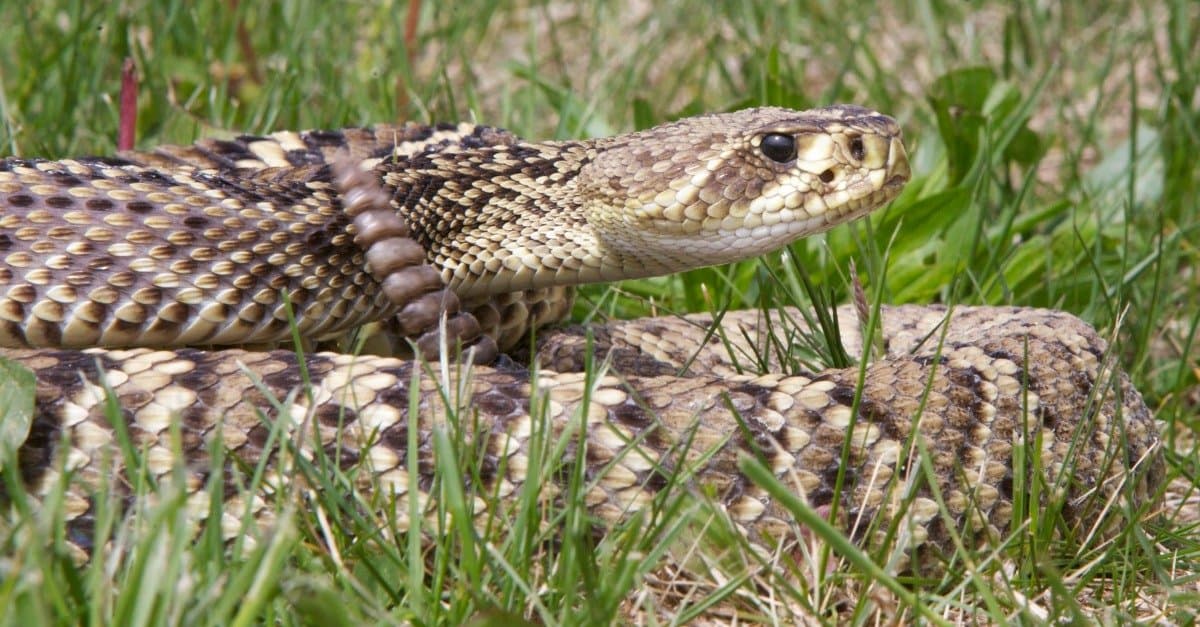
3. Eastern Diamondback Rattlesnake
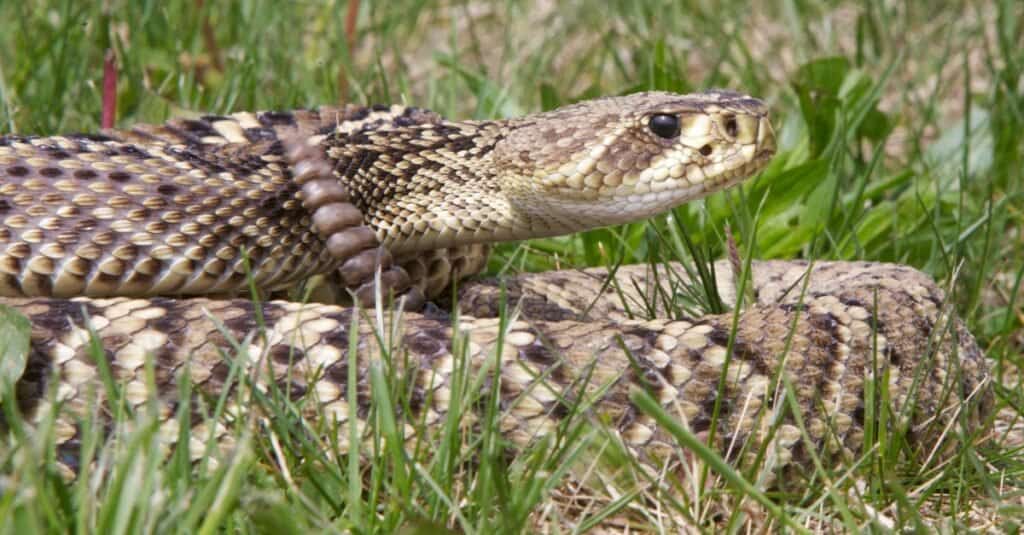
The eastern diamondback rattlesnake was a symbol on one of the first flags of the United States.
©iStock.com/NajaShots
| Eastern Diamondback Rattlesnake | |
|---|---|
| Range | Southeastern North Carolina |
| Length | 33-72 inches |
Eastern diamondback rattlesnakes live in southeastern North Carolina. These snakes can survive in many different types of habitats. They are particularly fond of sandy pine flatwoods along the Coastal Plain. However, there are very few snakes left in these regions. The populations of eastern diamondback rattlesnakes in North Carolina have suffered greatly due to human persecution and habitat destruction. Today North Carolina’s eastern diamondback rattlesnakes are protected by state laws.
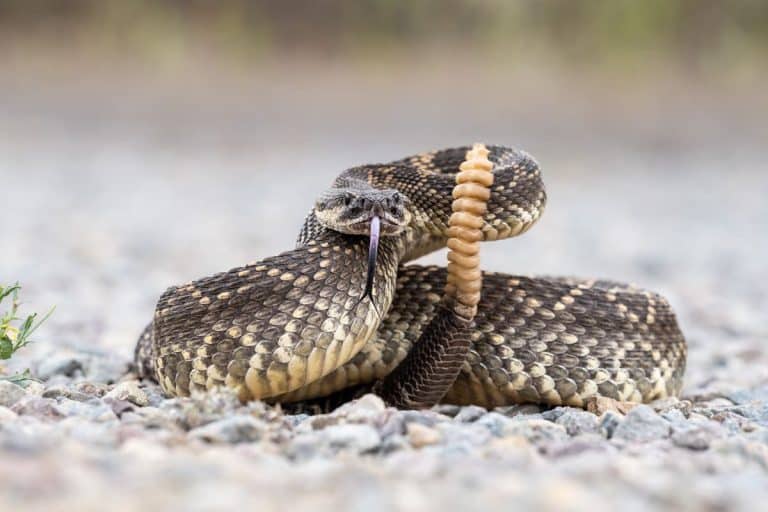
Of the known species of rattlesnakes, the eastern diamondback is the largest. This snake is usually 33 to 72 inches long. However, it can sometimes reach 90 inches long and weigh over 10 pounds. Eastern diamondback rattlesnakes have tan or gray bodies that are thick and heavy. These snakes’ name comes from the dark diamond patterns that run along the middle of their back. These diamond markings are outlined in black and white. The end of their tail has dark bands and a segmented rattle. There are also two dark stripes on both sides of their head.
How Dangerous is the Eastern Diamondback Rattlesnake?
Eastern diamondback rattlesnakes are not only big, but they are also extremely deadly. In fact, these snakes are one of the most dangerous snakes in the United States. The venom of the eastern diamondback rattlesnake is extremely potent. Due to the snakes’ large size, they can also inject a lot of their toxic venom into each bite.
However, eastern diamondback rattlesnakes are not aggressive. In fact, they primarily rely on their camouflage colors and patterns to keep them hidden. Generally, when an eastern diamondback rattlesnake is disturbed, it will attempt to escape rather than bite. If the threat persists, the snake will vibrate its rattle loudly as a warning. If the snake feels it is still in danger, it will then bite as a last resort. Eastern diamondback rattlesnakes primarily use their venom to ambush and subdue their prey. These snakes eat mammals like rabbits and rodents.