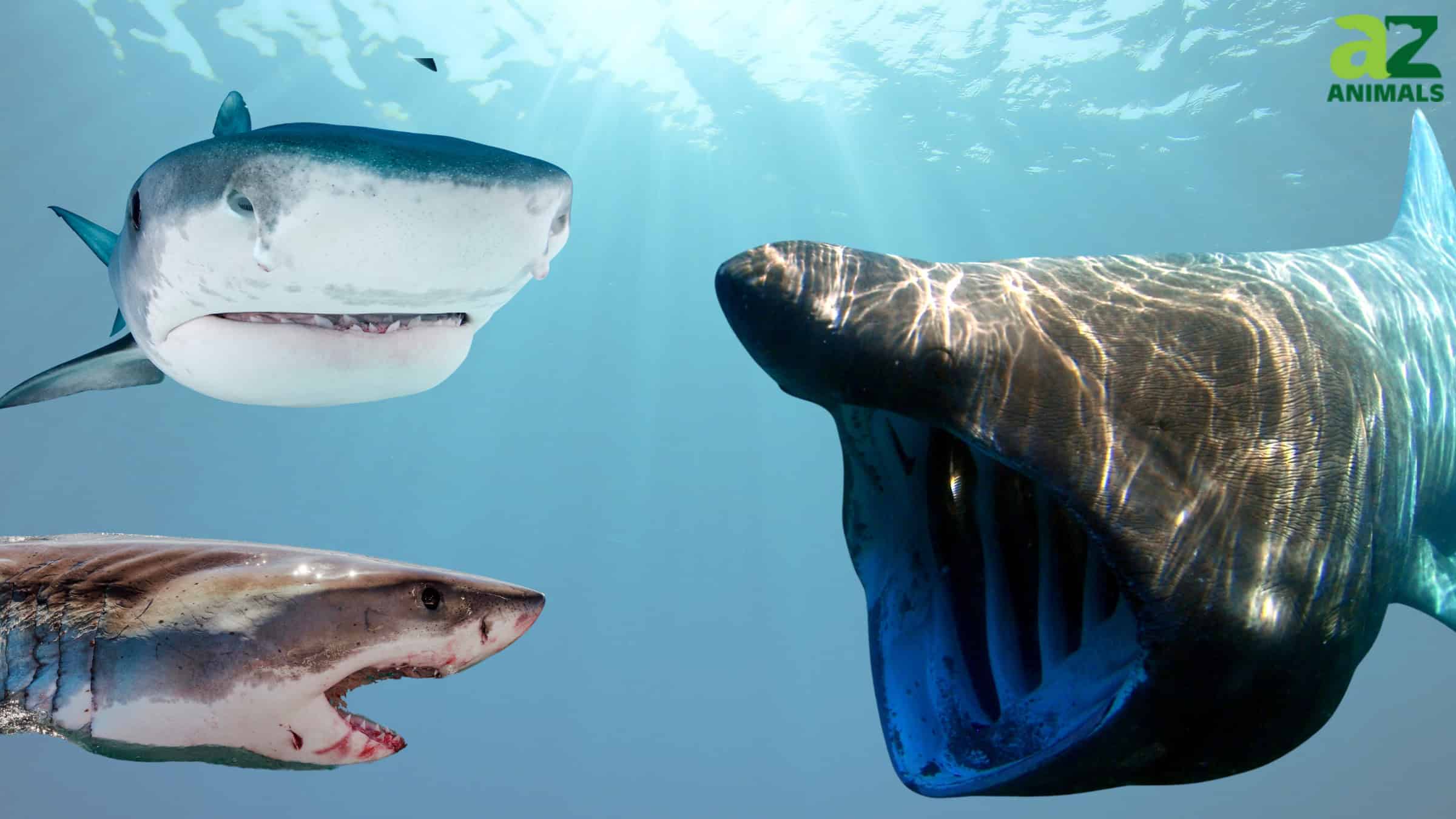

When it comes to ocean predators, size matters, and sharks have a sizable advantage in that department. While not all shark species are large, several species can take pride in being the largest fish in the sea, because, although some whales outsize sharks, they are technically mammals. The majority of sharks are carnivores; however, some of the biggest shark species are planktivores, feeding on tiny organisms like plankton and crustaceans.. Dive in to discover more about the top 10 biggest sharks in the world.
10. Longfin Mako
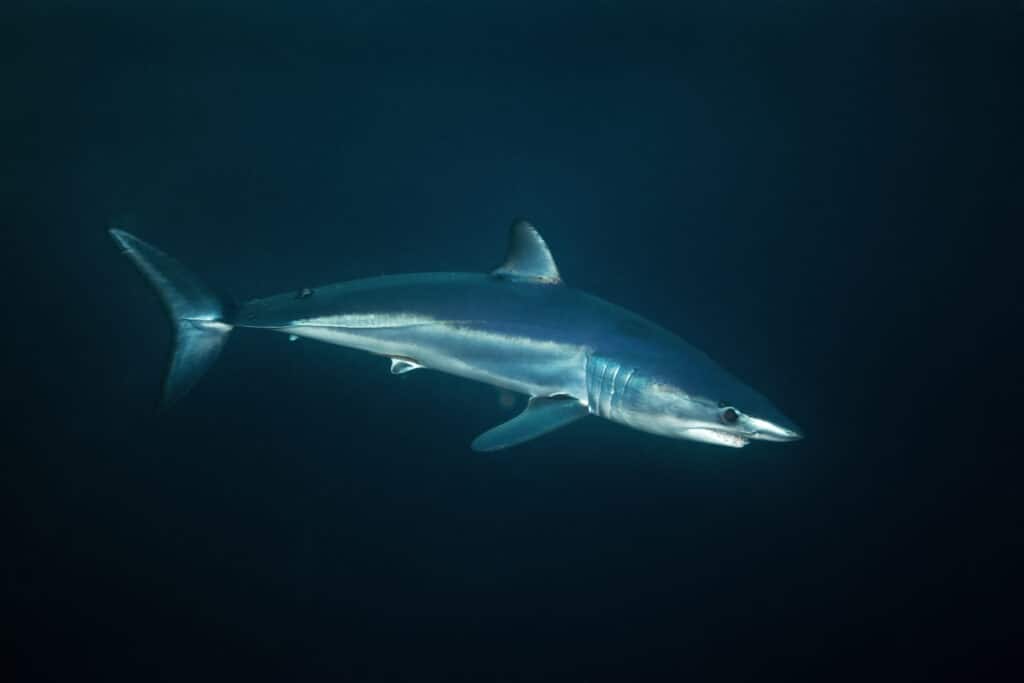
Reaching 14 feet long, the longfin mako shark has a long, slender body.
©Martin Prochazkacz/Shutterstock.com
Found around the world in temperate and tropical waters, the longfin mako (Isurus paucus), as its name suggests, has disproportionately long pectoral fins. This species can grow to about 14 feet long and weighs an average of 154 pounds. The longfin mako shark eats fish, squid, octopus, and cuttlefish.
Longfin mako sharks are ovoviviparous, meaning that embryos develop inside eggs within the mother’s uterus, but hatch before being born as live young. The mother continuously releases unfertilized eggs, providing a food source for her developing pups. This method of nourishment is called oophagy, or egg-eating.
9. Bluntnose Sixgill Shark
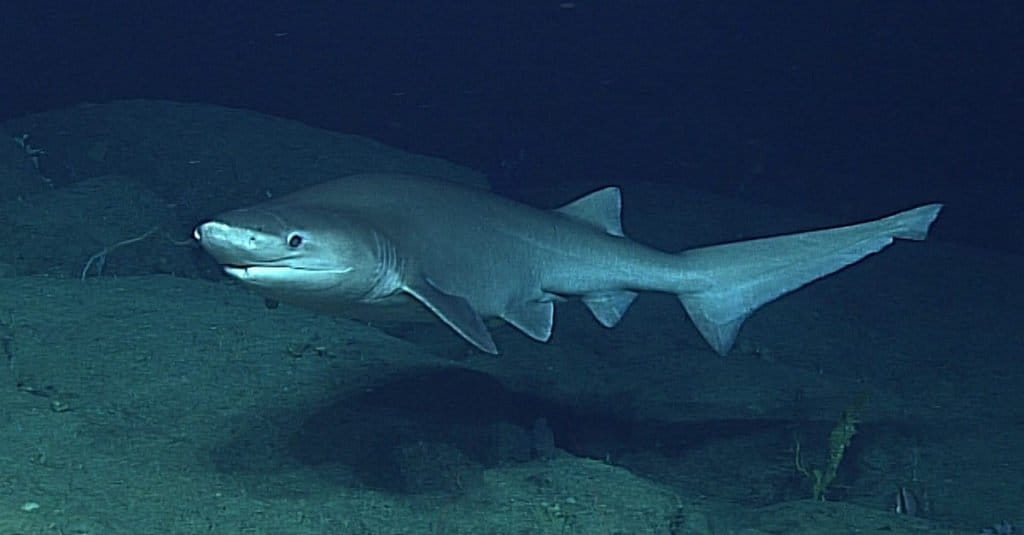
The sixgill shark can grow to 20 feet long.
©NOAA Ocean Explorer from USA / CC BY-SA 2.0 – Original / License
Found around the world in tropical and temperate waters, the bluntnose sixgill shark (Hexanchus griseus) averages 15.8 feet long but may grow as long as 20 feet. This shark species typically weighs between 800-1,100 pounds. Also called the cow shark, the bluntnose sixgill shark is found deep in the ocean and eats whatever it can tackle with its protruding jaws, including giant octopuses. Bluntnose sixgill sharks have a blunt head, small eyes that lack a protective nictitating membrane, and a single dorsal fin. The bluntnose sixgill shark is not dangerous to humans unless threatened or provoked. Its conservation status is near threatened.
8. Common Thresher Shark
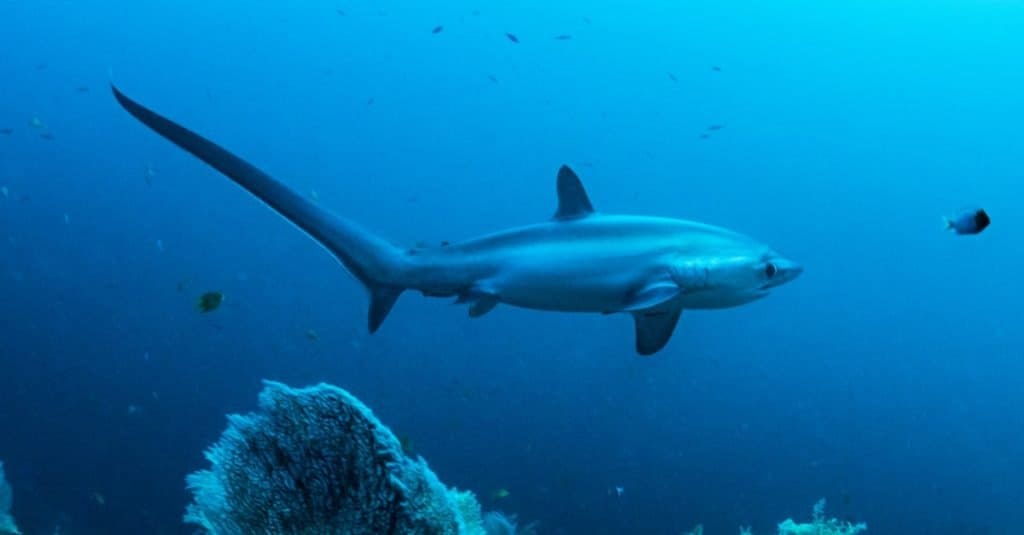
Considered a vulnerable species, the common thresher shark is hunted for its fins, meat, and liver oil.
©Shane Gross/Shutterstock.com
The common thresher shark (Alopias vulpinus), is the largest of the three thresher shark species. Also called the Atlantic thresher shark, this species can grow up to 20 feet long and weigh 1,100 pounds. Much of the shark’s length is taken up by its tail, which gives the animal its name and is used to stun its prey. Though the conservation status of this species is vulnerable, they continue to be hunted for sport, for culinary uses, and for the oil in their livers.
7. Great Hammerhead
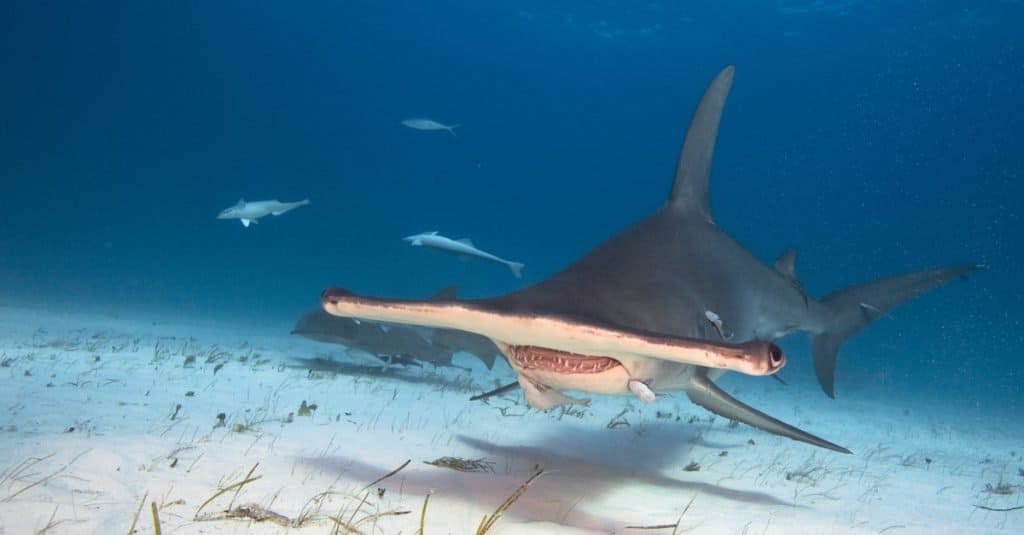
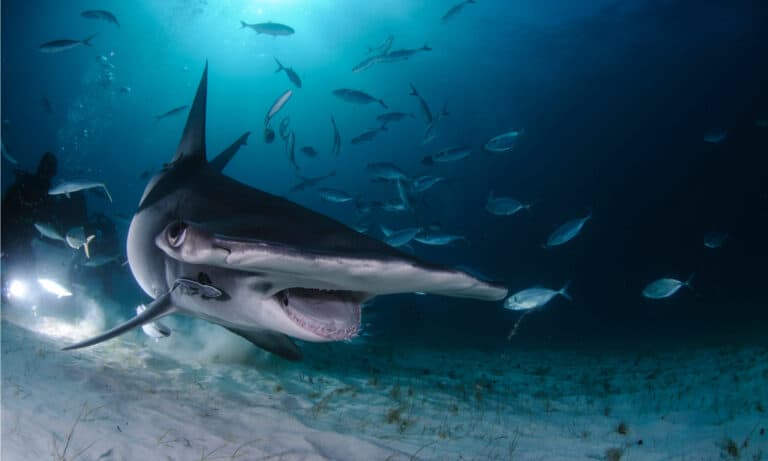
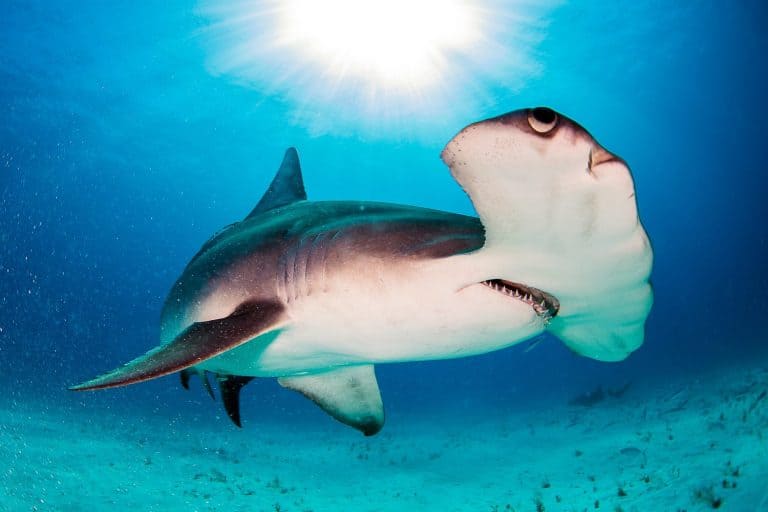
The great hammerhead shark can reach as much as 20 feet long.
©frantisekhojdysz/Shutterstock.com
The great hammerhead shark (Sphyrna mokarran) is the largest of the hammerheads. It is found in tropical and temperate waters worldwide, typically in coastal areas. This species is not only bigger than other hammerheads, but also has a nearly straight front margin with a central notch, unlike the scalloped hammerhead, which has a rounded, scalloped edge, or the bonnethead, which has a shovel-like head. Scientists believe that the fish developed its hammer, or cephalofoil, to stun stingrays, its favorite meal.
Great hammerhead sharks are typically between 11-15 feet long and weigh 500 pounds or more.
Great hammerhead sharks can give birth to as many as 55 pups. If they survive to adulthood, great hammerheads can live as long as 50 years. The great hammerhead shark is considered critically endangered.
6. Greenland Shark
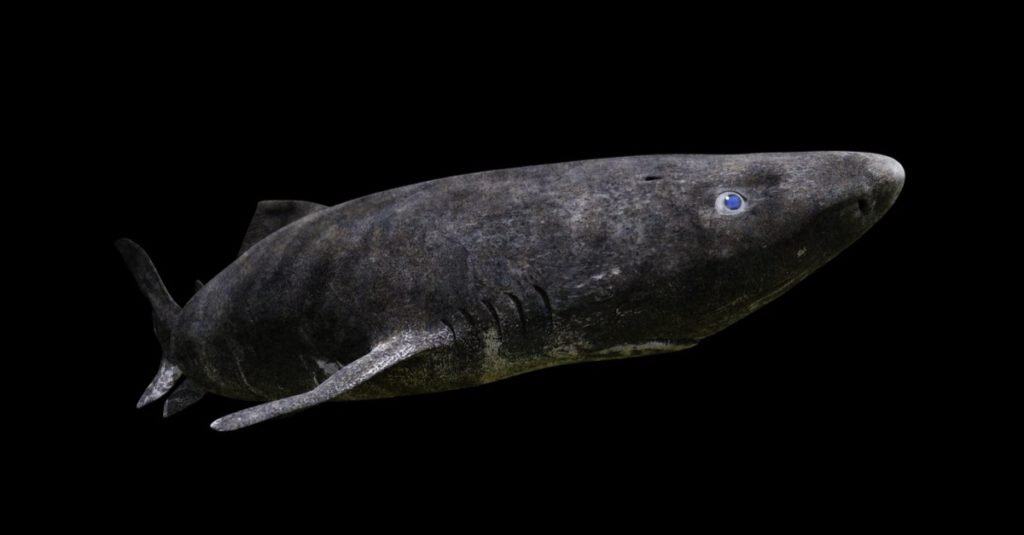
Greenland sharks continue to grow throughout their lives.
©Dotted Yeti/Shutterstock.com
This 24-foot-long fish is one of the longest-lived creatures. Biologists believe the Greenland shark (Somniosus microcephalus) can live up to 400 years, with some estimates suggesting even longer lifespans. This long-lived species doesn’t even start to reproduce until it’s between 100 and 150 years old. Because it lives so long and reproduces so slowly, efforts are being made to protect this animal, whose conservation status is vulnerable.
The Greenland shark eats fish and squid found in the cold waters of the North Atlantic and the Arctic. The fish comes upon its prey while the prey is asleep and simply sucks it whole into its mouth. It has also been found with the remains of mammals in its stomach, but scientists believe this is from scavenging.
Because it contains trimethylamine N-oxide, the flesh of the Greenland shark is poisonous to humans.
5. Great White Shark
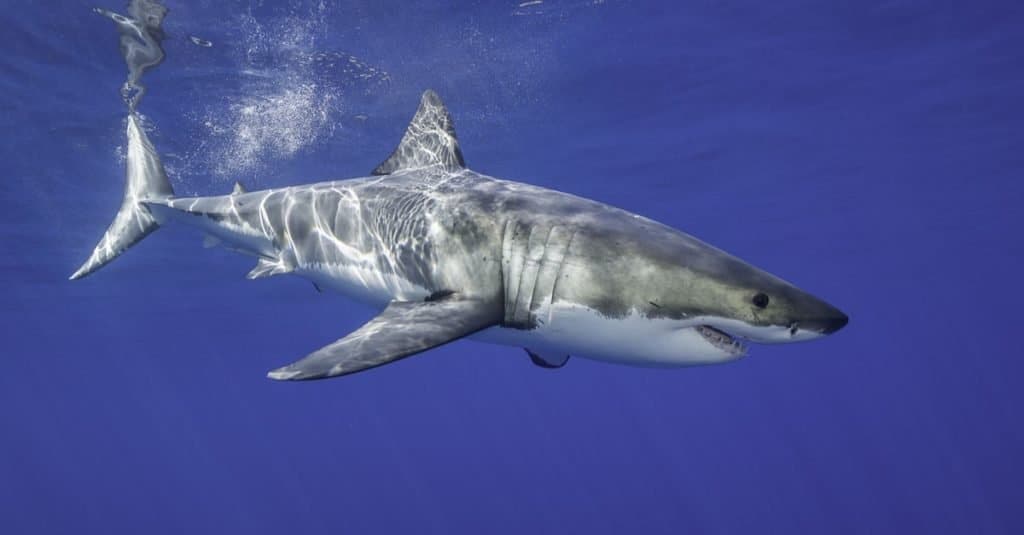
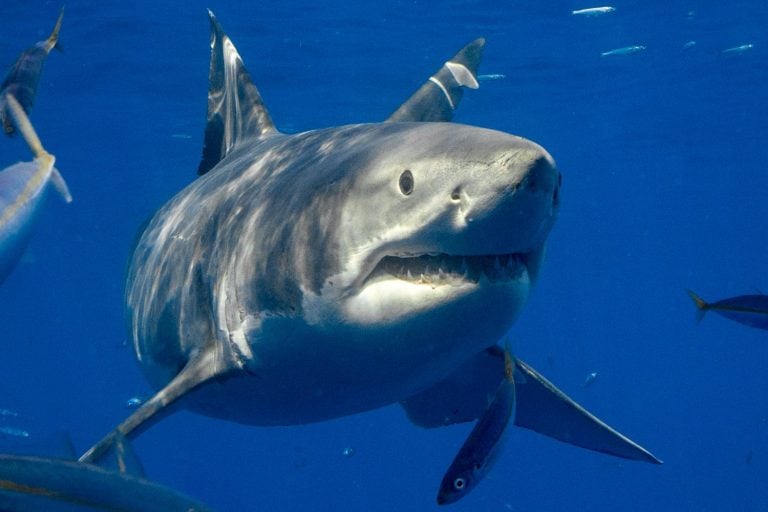
The great white shark generally grows to 20 feet long.
©wildestanimal/Shutterstock.com
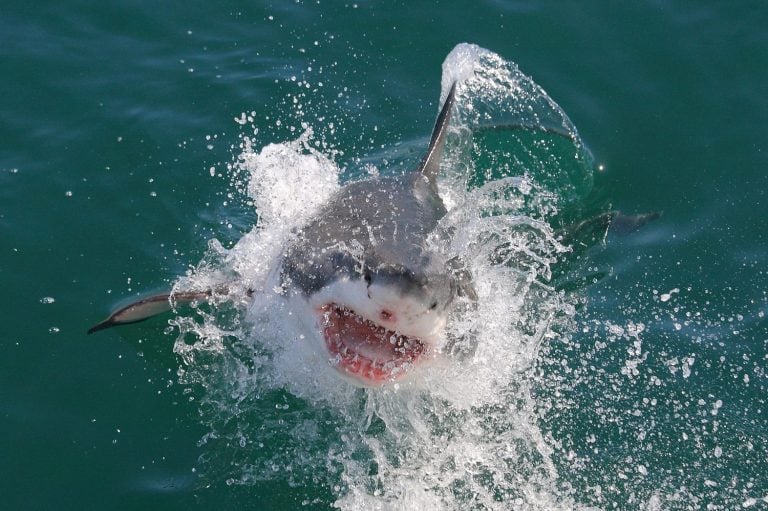
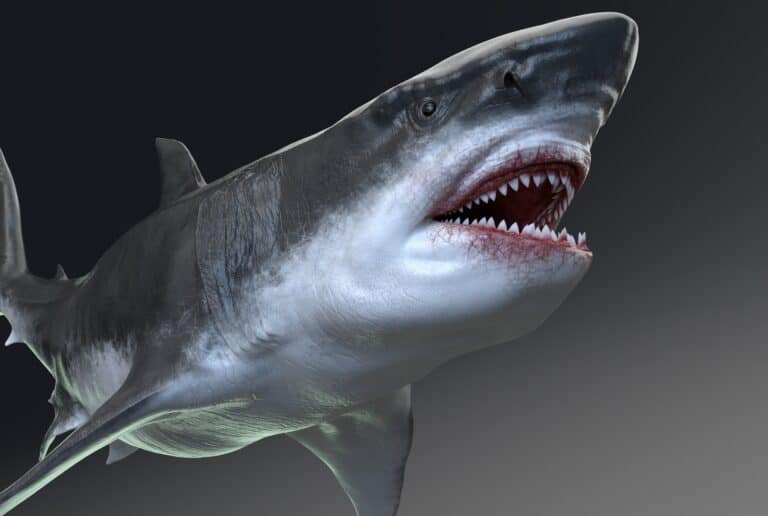
While it’s not the largest shark in the world, Great white sharks (Carcharodon carcharias) typically grow to between 11 and 16 feet long, with rare individuals reaching up to 20 feet. Great whites can weigh up to 5,000 pounds. The great white’s diet includes pinnipeds, porpoises, dolphins, sea turtles, seabirds, tuna, and other sharks. The great white also has no problem taking chunks out of larger whales.
The fish is found in waters all over the world, except at the Poles, with concentrations around Japan, Oceania, Chile, the Northeastern United States, California, and the Mediterranean Sea. Great whites are often found in the North Atlantic, drawn by the eddies of warm water found there.
4. Tiger Shark
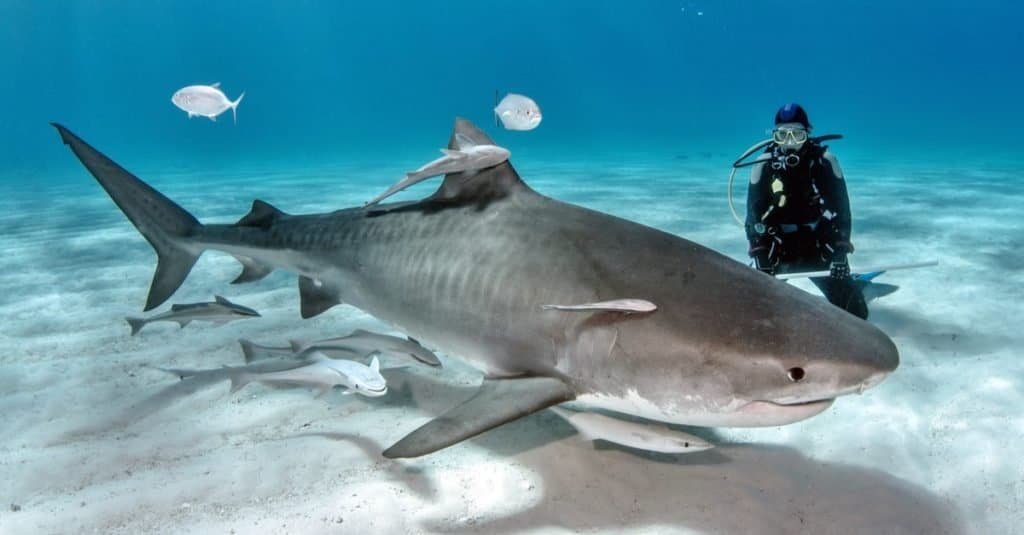
Tiger sharks can reach up to 24.6 feet long.
©Tomas Kotouc/Shutterstock.com
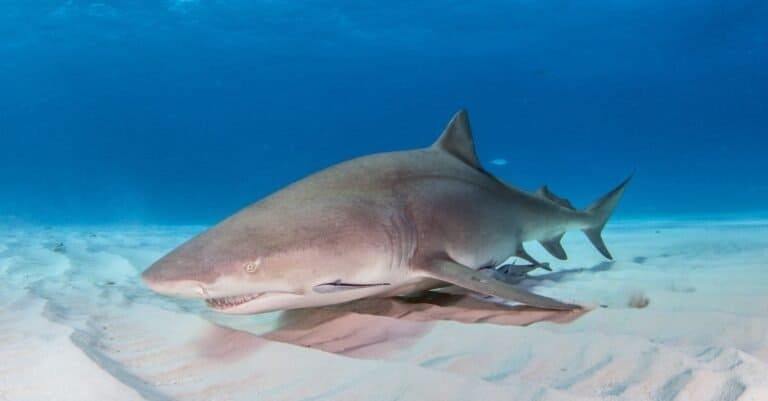
Galeocerdo cuvier, the tiger shark, can reach up to about 18 feet long, though most are smaller. Tiger sharks weigh between 850 and 1,400 pounds. This species gets its name from the stripes found on its body.
Known to eat anything it can get its impressive jaws around, tiger shark prey includes seals, squid, sea turtles, dolphins, fish, jellyfish, crustaceans, other sharks, and injured whales as large as humpbacks. Tiger sharks are found most often near the coast in warmer waters, near the equator.
3. Megamouth
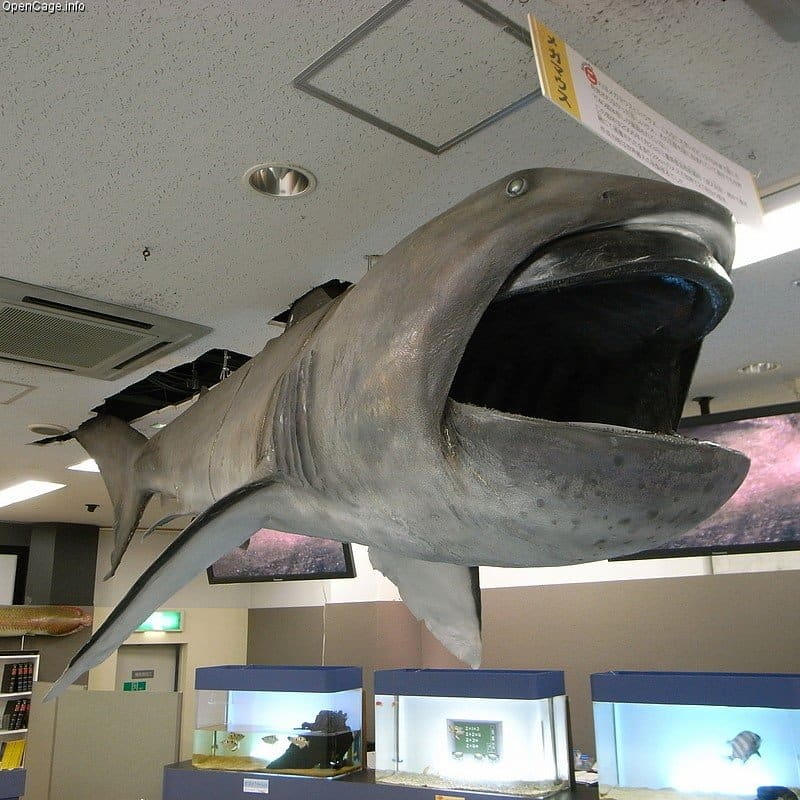
The average length of a megamouth shark is about 16 feet.
The megamouth shark (Megachasma pelagios) is a deep-water shark with a huge head, a flabby body, a thresher-like tail, and prominent lips. These sharks range between 11 feet in length for males to 23 feet in length for females. These behemoths weigh 1,750 pounds or more.
The megamouth has been spotted in waters around Japan, Hawaii, and California. Megamouth sharks can dive to a depth of 3,280 feet. Though its mouth is huge, its teeth are small and useless. It keeps its mouth open as it swims to pull in plankton and other small prey such as jellyfish.
2. Basking Shark
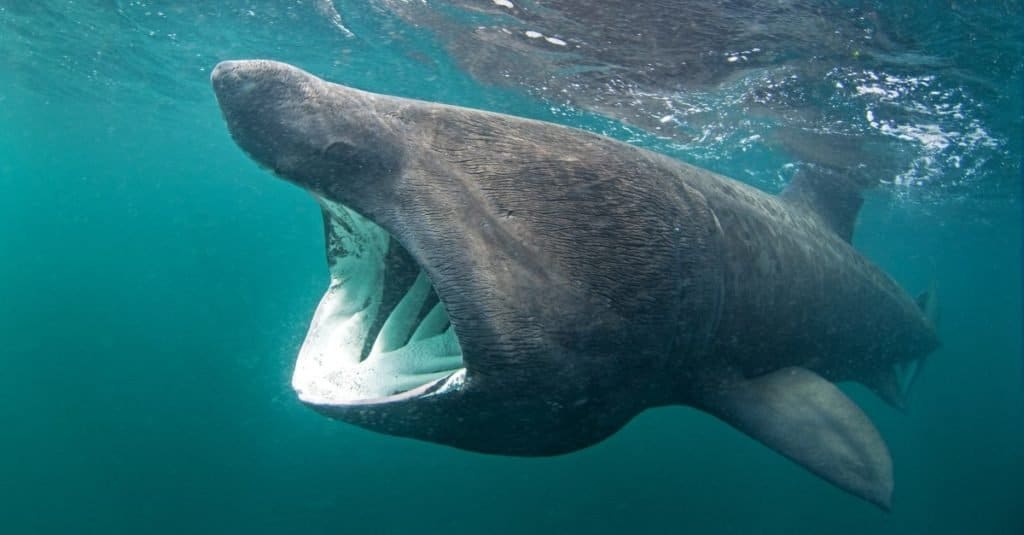
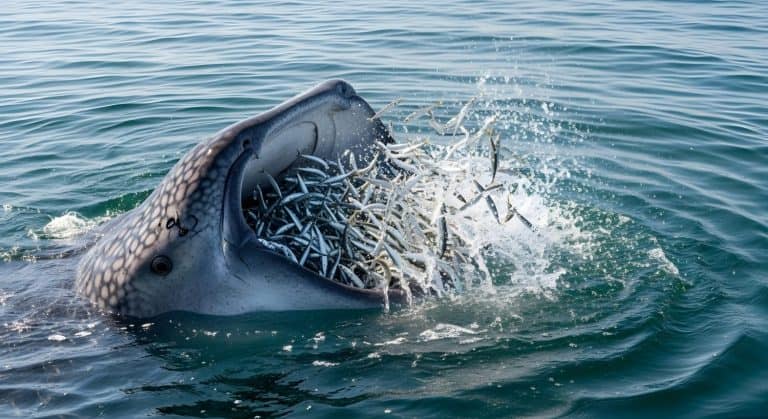
The most impressive feature of the basking shark is its mouth, which opens up to 1 meter wide.
©Martin Prochazkacz/Shutterstock.com
At up to 40 feet long, the basking shark (Cetorhinus maximus) is the second-largest shark in the world. The species gets its name because it’s often found feeding at the water’s surface, appearing to bask in the sunlight. Found all over the world in temperate waters, these slow-moving mammoth fish are planktivores. Basking sharks have hundreds of teeth, but they are small, curved, and not useful. The fish depends on its gill rakers to catch the plankton as it’s pulled into the mouth along with seawater. Unsurprisingly, gill rakers get worn out and are replaced and regrown continuously.
This animal has been overfished for its meat, its fins, and its liver oil. Its conservation status is endangered. Basking sharks swim thousands of miles in the summer and winter in search of rich feeding grounds.
1. Whale Shark
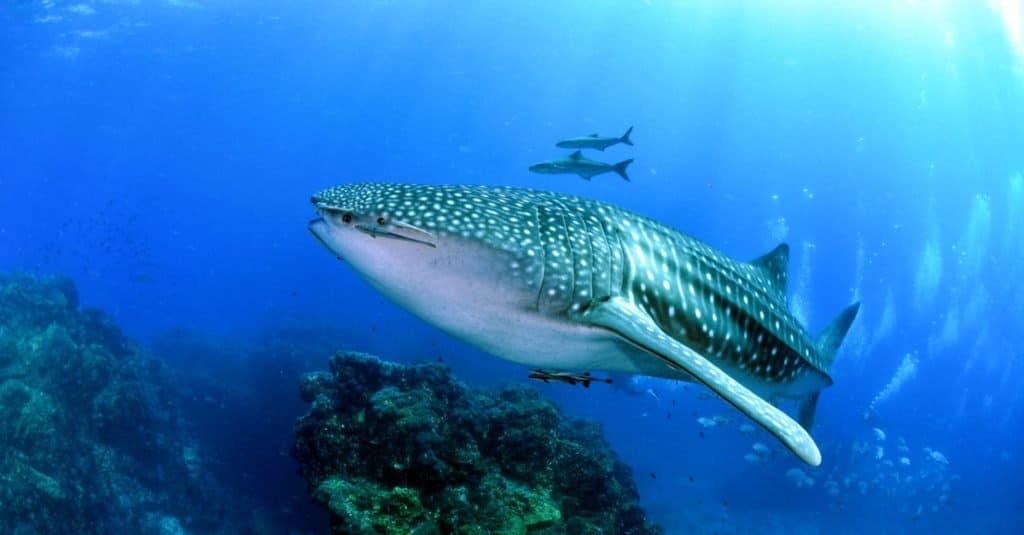
A whale shark is the biggest fish in the world at around 55.7 feet long.
©weera bunnak/Shutterstock.com
The whale shark (Rhincodon typus) is the largest shark species at an impressive 40 feet long. Whale sharks weigh 20,000 to 30,000 pounds. The species is often referred to as a carpet shark because of the beautiful pattern on its hide, which is dark gray with white stripes accentuated with dots, resembling a carpet.
As filter feeders, whale sharks simply open their mouths and swim forward, allowing food and seawater to enter as they suck in their prey. This includes not only plankton but fish eggs, small fish, and small squid.
The whale shark has dermal denticles not only on its body but also on its eyes. Like those on the body, they are there for protection. The animal can also retract its eyes completely into its body. It is found in warmer waters in the open ocean and near the coast and is endangered.