Quick Take
- Most sharks would die in freshwater, yet one species cracked a biological loophole that lets it thrive in lakes far from the ocean. See the biological loophole →
- A golf course in Australia once harbored sharks for nearly two decades, and the way they got there is stranger than you'd expect. Read the golf course story →
- One freshwater lake forces sharks to do something no other body of water on Earth has ever made them do. Discover the unique behavior →
- A 2026 discovery in the Panama Canal raised an unsettling question about two shark populations that were never supposed to meet. See the 2026 Canal discovery →
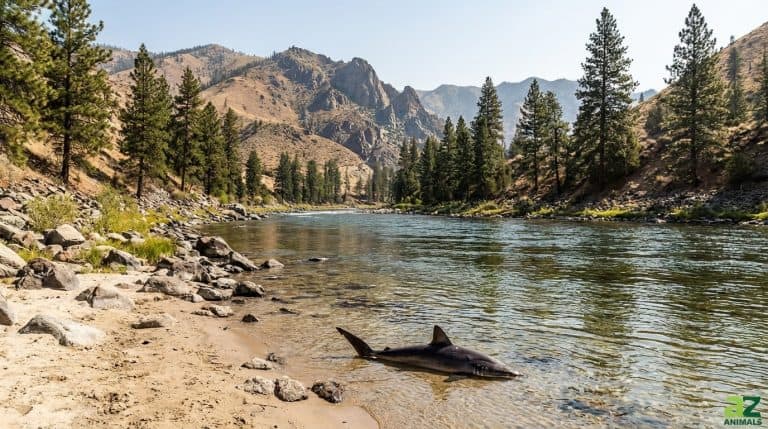
There are over 500 known species of sharks living in all of the world’s oceans. Although it may sound unbelievable, there are some sharks that can live in freshwater as well as saltwater. Learn how some sharks can live in freshwater environments, and discover which lakes these sharks may be inhabiting.
Why Can’t Most Sharks Live in Freshwater?
Most sharks are unable to tolerate freshwater. Their bodies are adapted to maintain a specific salt and water balance through a process called osmoregulation. Sharks also contain high concentrations of urea (a waste product containing nitrogen) and other organic compounds that help them retain water. Since their body fluids are as about as concentrated as the ocean, they do not lose too much water to the surrounding seawater through osmosis. Their kidneys and a specialized organ called the rectal gland help regulate any excess salts.
However, if a normal shark were to spend too much time in freshwater, water would move into the shark’s body from the surrounding freshwater through osmosis. The shark would gain too much water, potentially causing its cells to swell and become damaged. Its salt and other important compounds would become diluted or would disappear. Without the proper balance of water and ions, the shark’s cells and organs could not function normally, eventually leading to organ failure and death.
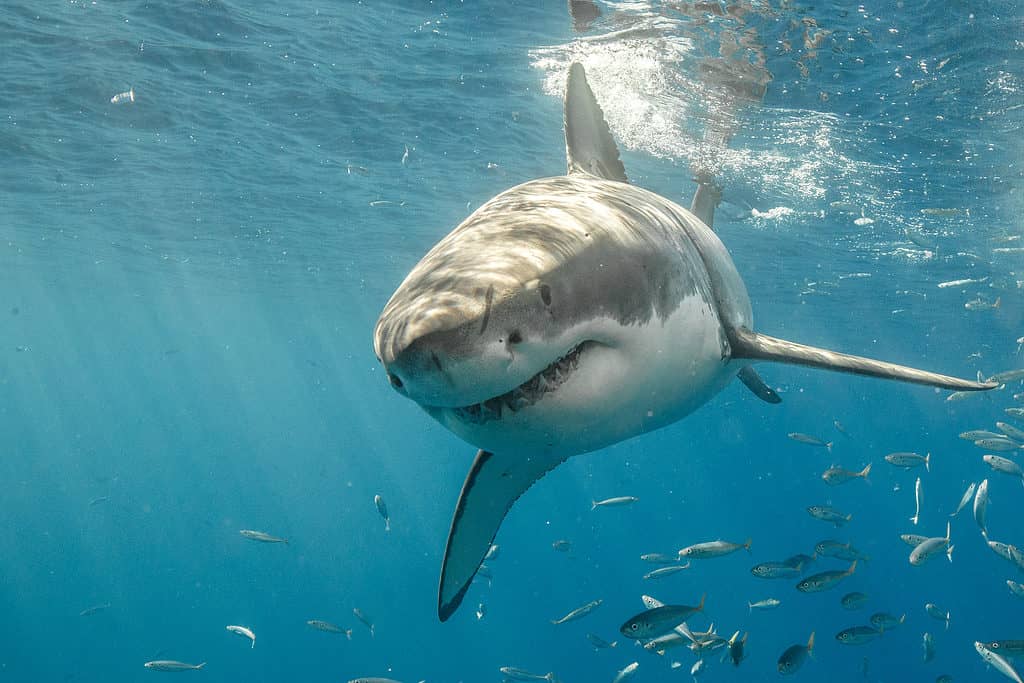
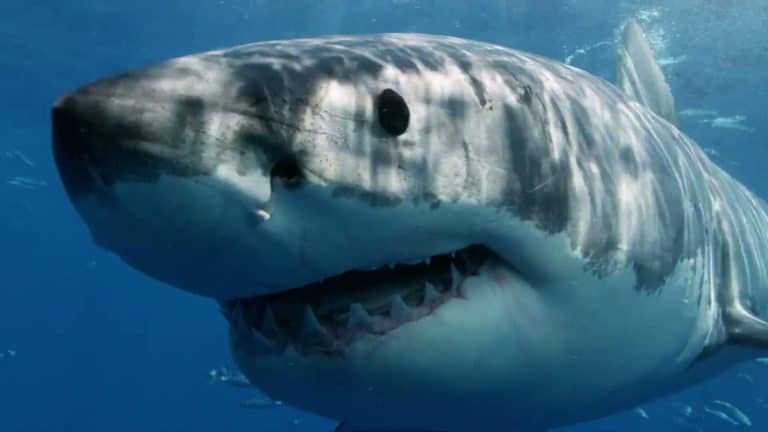
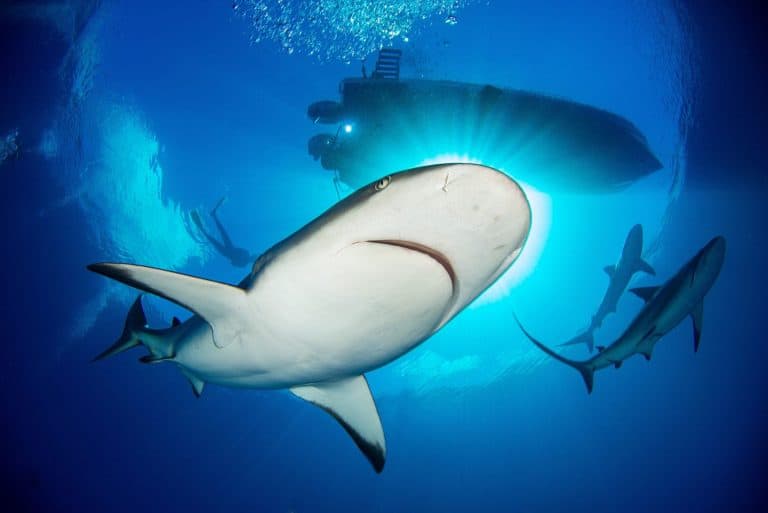
Great white sharks cannot survive in freshwater.
©iStock.com/ShaneMyersPhoto
How Can Some Sharks Live in Freshwater?
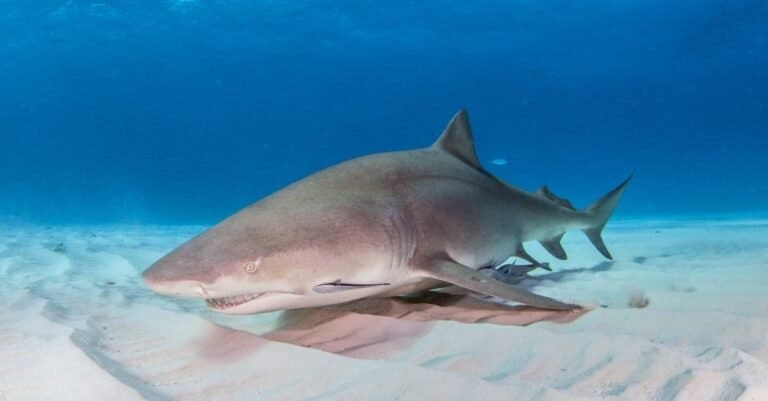
Bull sharks (Carcharhinus leucas) can live in both saltwater and freshwater because their bodies are adapted to control their osmoregulation. When they enter freshwater, their kidneys produce more diluted urine to get rid of the extra water. However, they can adjust how much urea and salt their bodies retain so they do not lose the necessary salts. These special adaptations allow bull sharks to maintain the proper balance of water and salt in their bodies so they can survive in freshwater and brackish water environments. Bull sharks have been recorded in lakes and rivers worldwide.
The Ganges shark (Glyphis gangeticus) can also adjust its internal salt and water balance to survive in freshwater or brackish water. However, there have never been any scientific records or reports of Ganges sharks in any lake. These river sharks inhabit warm, turbid tropical freshwater rivers, brackish estuaries, and inshore coastal marine waters in India and Bangladesh.
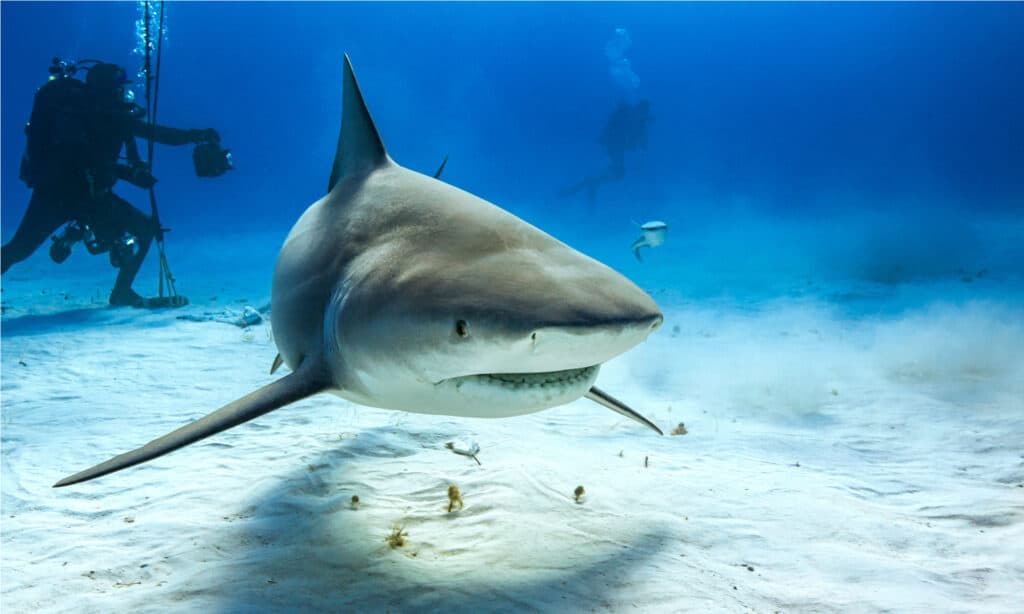
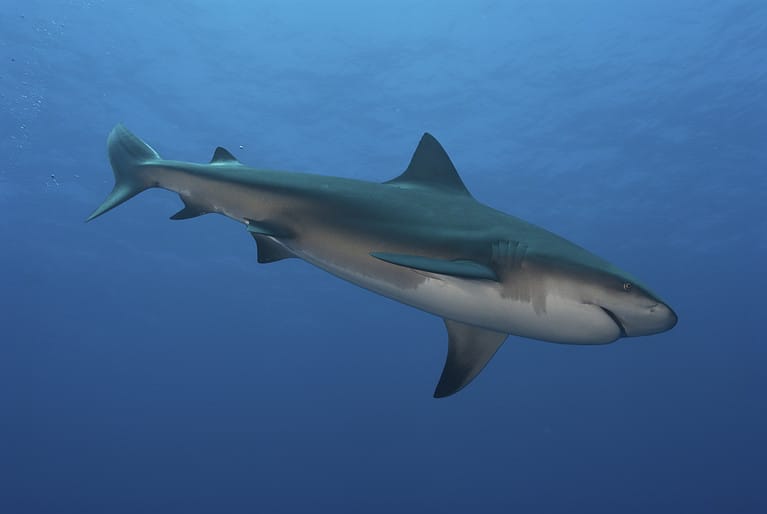
Bull sharks are able to survive in saltwater, brackish water, and freshwater.
©Carlos Grillo/Shutterstock.com
Lakes Where Bull Sharks Have Been Recorded
Bull sharks are the only shark species that has been recorded to live in freshwater lakes. Although bull sharks may not currently be inhabiting all of these bodies of water, the following list details lakes where bull sharks have historically been recorded and where there have been credible sightings.
1. Lake Nicaragua in Nicaragua
Bull sharks travel up the San Juan River to Lake Nicaragua and sometimes spend years in the lake before returning to the Caribbean. Lake Nicaragua is a freshwater lake, and it’s the largest in Central America. What’s amazing about these bull sharks is their ability to jump over a series of eight rapids on their way to the lake, much like a salmon. This behavior hasn’t been demonstrated by bull sharks anywhere else in the world and is unique to the Lake Nicaragua shark.

Bull sharks reach Lake Nicaragua by jumping a series of rapids, which is unique behavior for these sharks.
©Subphoto.com/Shutterstock.com
2. Carbrook Golf Club in Queensland, Australia
There are reports of 6 bull sharks once living in the lake at Carbrook Golf Club. While there is no direct route from the golf course to the nearby Logan River, Flooding in the 1990s allowed bull sharks to make their way to the lake on the golf course, where they lived for approximately 17 to 20 years. After flooding in 2013, sightings dwindled and the sharks disappeared. Locals believe the sharks may have returned to the river and back to the ocean over 8 miles away.
3. Lake Pontchartrain in Louisiana
A bull shark attacked a 7-year-old boy swimming in Lake Pontchartrain in 2014. It was the first recorded case of a bull shark attack at this location. There have been sharks up to 4 feet long caught by anglers at the lake, and there are reports of sharks up to 6 feet long in the water. Juvenile bull sharks are the most frequently spotted in the lake, as the area serves as a seasonal nursery ground for young bull sharks born near the Chandeleur Islands. They make their way into the lake every summer, moving back out to the Gulf of Mexico in the fall.
4. Lake Maracaibo in Venezuela
Lake Maracaibo in western Venezuela is a large tidal basin that is directly connected to the Caribbean Sea through the Gulf of Venezuela. Researchers note that only contemporary information on bull sharks in the lake is photos of large juvenile bull sharks. However, they consider that the presence of pups in the Gulf of Venezuela means Lake Maracaibo is likely still an important nursery for these sharks as recently as 2025.

Bull sharks use Lake Maracaibo as a nursery.
©Katja Tsvetkova/Shutterstock.com
5. Lake Izabal in Guatemala
Bull sharks have historically been documented in the Lake Izabal-Río Dulce System in Guatemala. Lake Izabal drains into the Caribbean Sea via the Río Dulce, which is a relatively shallow river with no major rapids, making it easy for bull sharks to move inland. Scientific surveys and occasional sightings, such as cell phone video taken near Castillo de San Felipe in 2021, indicate that the sharks still sometimes enter the lake.
6. Lake Bayano in Panama
Lake Bayano is a manmade tropical lake in Panama created by a dam on the Bayano River in 1976. Researchers indicate that the impoundment had bull sharks in it at one time. However, researchers determined a self-sustaining breeding population was unlikely because the trapped breeding stock was too small and there was no access to coastal marine waters to reproduce.

The bull shark population in Lake Bayano was not sustainable because the breeding stock was too small.
©Albert Kok at Dutch Wikipedia (Original text: albert kok), Public domain, via Wikimedia Commons – Original / License
7. Lake Gatun, Panama
In a 2026 study, researchers reported the first confirmed record of a bull shark in Lake Gatun, which is the freshwater body of the Panama Canal. A bull shark was captured in the lake around 18 miles from the Canal’s Pacific entrance. There have also been recent captures by the fisherman who caught the study shark, as well as a video of sharks at the seaward entrance of the new Pacific locks. Researchers believe this indicates possibilities for contact between Pacific and Atlantic bull shark populations through the Panama Canal.