Quick Take
- Sharks have outlasted five mass extinction events, though the survivors weren't the ones you'd expect.
- Some sharks look so identical that only DNA can tell them apart, which is why we still don't know how many species exist.
- One shark order contains more than half of all known shark species, yet most people have never heard it named.
- At least two shark orders are so flat and wide that experts routinely mistake them for rays, and these sharks have very different ways of hiding in plain sight.
According to the Shark Database, there are currently 549 known shark species. The earliest shark fossils indicate they have been on Earth for around 450 million years. Sharks have survived five mass extinction events because of their adaptability to diverse habitats, flexible diets, and global distribution. Although larger species died, smaller sharks and those that inhabited deep water survived, and their ancestors swim our seas today. Modern sharks are divided into nine orders, based on common evolutionary origin and broad biological traits. Read on to learn more about the different shark orders and the species that belong to each order.
Why Don’t We Know the Exact Number of Shark Species in Each Order?
In the orders listed below, genera and species numbers may be a range. Researchers continually find and formally describe new species, so official taxonomies change rapidly as new species are discovered. Exact counts are also uncertain because some sharks look nearly identical, requiring DNA evidence to find genetic differences. Some species live far deeper than human technology can reliably reach, and there are few specimens of rare species, leaving gaps in our knowledge about their biology.
1. Mackerel Sharks (Lamniformes)
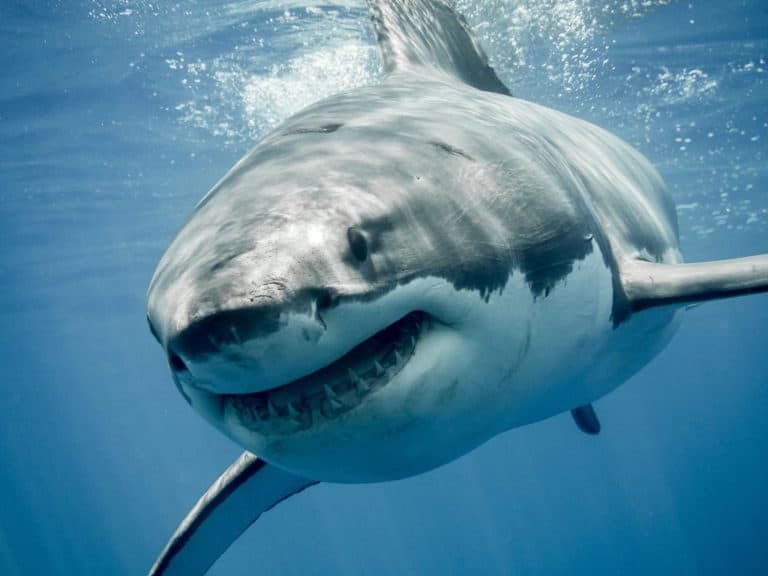
The mackerel order consists of 7 families, 10 genera and 15-17 species. Mackeral sharks are a relatively diverse group that do not have a single defining characteristic. However, they can generally be identified by a heavy, torpedo-shaped body, conical snout, two dorsal fins, a smaller anal fin, long tail fins (caudal fins) that are typically crescent-shaped, five pairs of gill slits on each side, mouths that extend beyond their eyes, and no nictitating membrane (third eyelid) on their eyes. Many members, including the great white and mako sharks, have a special circulatory system called “rete mirabile.” This system allows their body temperature to remain warmer than the surrounding water, giving them greater speed, power, and visual sensitivity in cold water.
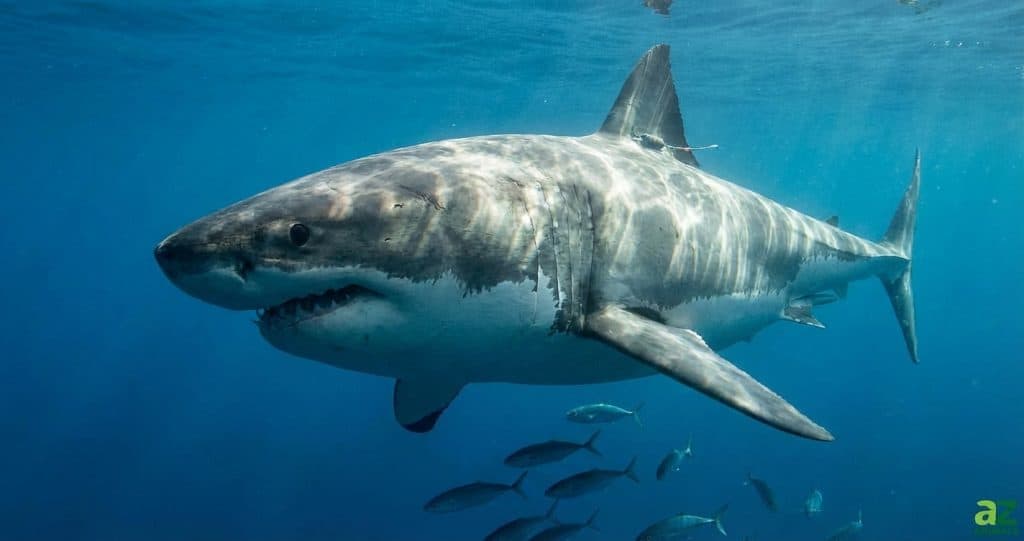
The great white shark can keep its body temperature warmer than the surrounding water.
©A-Z Animals
Major Families and Species:
- Lamnidae (Mackerel/White sharks): Made up of large, fast, predatory species including the great white shark, shortfin mako, longfin mako, porbeagle, and salmon shark
- Alopiidae (Thresher sharks): The three species of thresher sharks are known for extremely long, scythe-like tails used like whips to stun prey
- Odontaspididae (Sand Tiger sharks): Large, sluggish coastal sharks with protruding, needle-like teeth
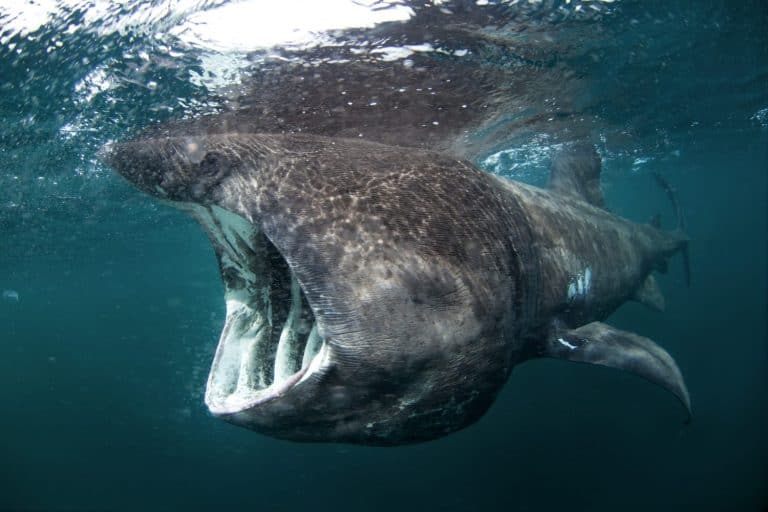
- Cetorhinidae (Basking sharks): The second-largest living fish is whale-like, filter-feeding on plankton
- Megachasmidae (Megamouth sharks): A rare, deep-water filter feeder with a massive mouth that extends beyond its eyes
- Mitsukurinidae (Goblin sharks): A rare, deep-sea species with a long, flat snout and an extendable jaw
- Pseudocarchariidae (Crocodile sharks): The smallest mackerel shark with extremely large eyes and long, protruding, needle-like teeth
2. Dogfish and Sleeper Sharks (Squaliformes)
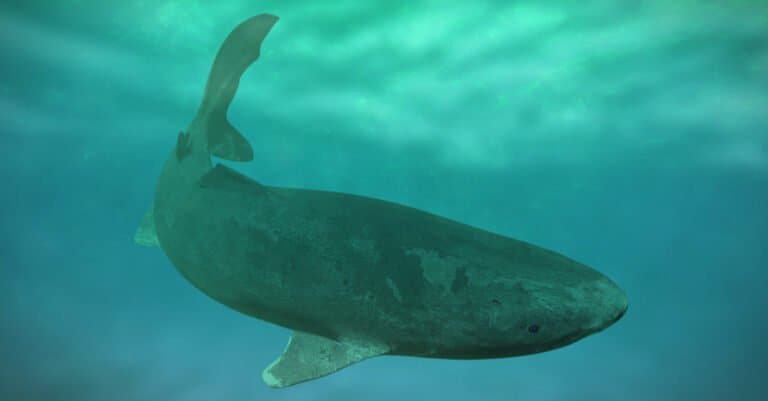
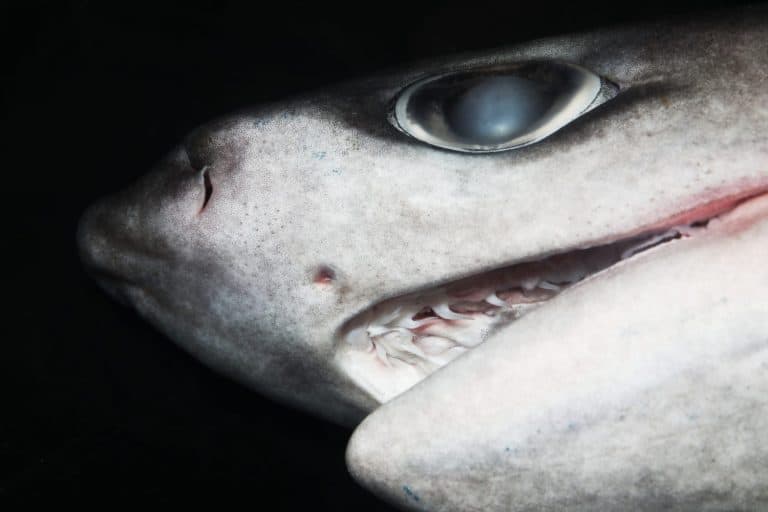
The dogfish and sleeper shark order includes 7 families, 22-24 genera, and about 113 species. These sharks are primarily characterized by the lack of an anal fin. Most species also have a spine in front of the first of two dorsal fins. They have five gill slits on either side. The majority of these species are deep water sharks, and some are also bioluminescent.
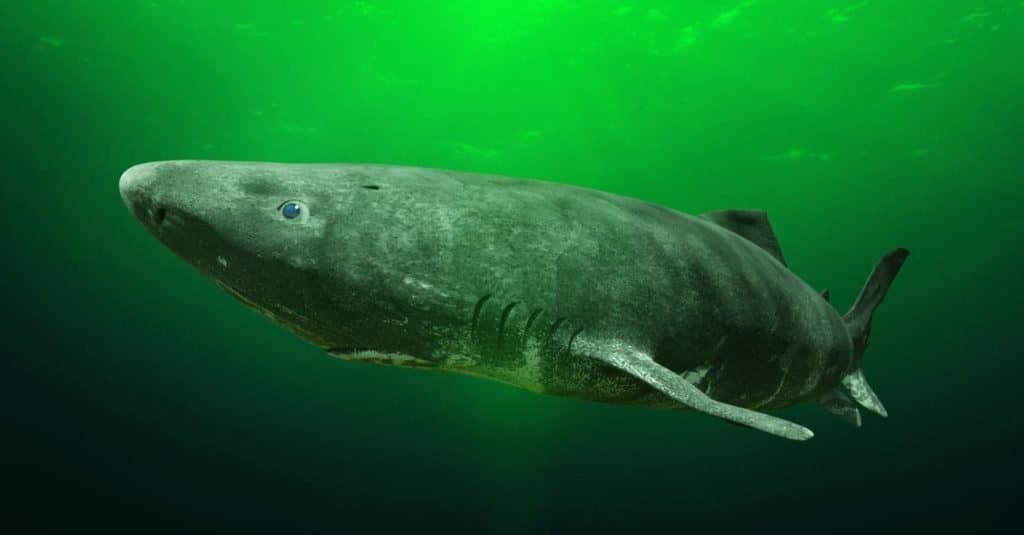
Greenland sharks are widely considered to be the longest-living vertebrates.
©Dotted Yeti/Shutterstock.com
Major Families and Species:
- Squalidae (Spiny dogfishes): These dogfish sharks have a sharp spine in front of each dorsal fin that can inject venom
- Somniosidae (Sleeper sharks): Massive, sluggish predatory sharks that inhabit frigid, deep waters, including the Greenland shark and Pacific sleeper shark
- Centrophoridae (Gulper sharks): Deep-water sharks with long, grooved fin spines and large green eyes
- Dalatiidae (Kitefin sharks): Deep-water species that are the largest known luminous vertebrates, includes the cookiecutter shark known for biting off round, cookie-shaped chunks of flesh from other marine vertebrates
- Etmopteridae (Lanternsharks): Small deep-sea sharks known for their bioluminescence.
- Oxynotidae (Rough sharks): Deep-water sharks with pig-like faces, triangular bodies, large, sail-like dorsal fins, and dermal denticles like coarse sandpaper
3. Cow and Frilled Sharks (Hexanchiformes)
The cow and frilled shark order consists of 2 families, 4 genera, and 6 species. Cow and frilled sharks are considered to be the most primitive sharks living today. These sharks have only one dorsal fin and either six or seven gills. They also lack a nictitating membrane.
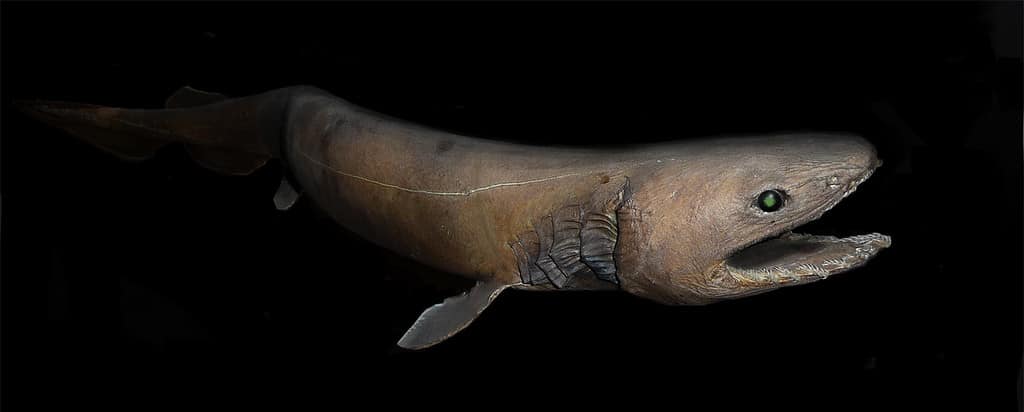
The frilled shark has six pairs of ruffled gill slits.
©Citron / CC-BY-SA-3.0 / Wikimedia Commons – Original / License
Major Families and Species:
- Chlamydoselachidae (Frilled Sharks): Frilled sharks and Southern African frilled sharks are primitive, eel-like, deep water sharks with flexible jaws and six pairs of ruffled gill slits that look like a collar
- Hexanchidae (Cow Sharks): These sharks have six or seven pairs of gills and primitive bodies that give them the appearance of ancient sharks. Cow sharks include the bigeye sixgill shark, bluntnose six-gill shark, broadnose sevengill shark, and sharpnose sevengill shark
4. Sawsharks (Pristiophoriformes)
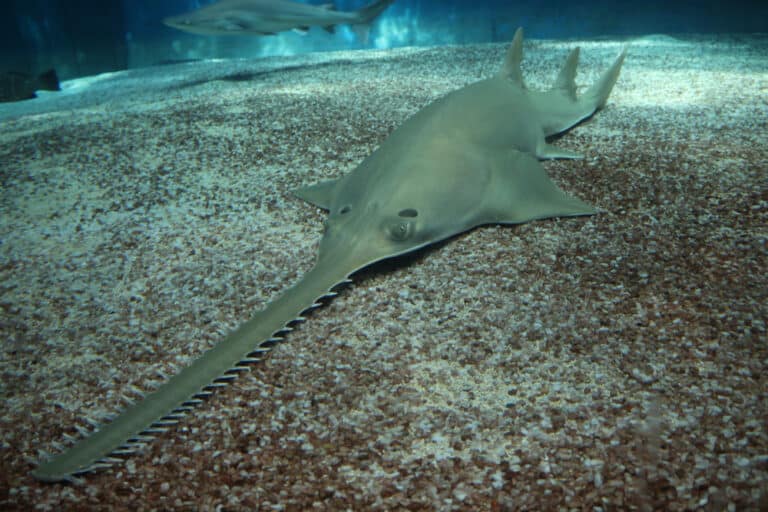
The sawshark order includes just 1 family divided into 2 genera. There are a total of 10 recognized species. Often misidentified as rays, these sharks have long, flat snouts edged with saw-like teeth. They also have small, whisker-like sensory barbels on their snouts and five or six gill slits, depending on the species.

Sawsharks have long, flat snouts edged in saw-like teeth.
©Arzi/Shutterstock.com
Major Families and Species:
- Pristiophoridae (Sawsharks): The ten species of sawsharks include the Bahamas sawshark, Lana’s sawshark, African dwarf sawshark, Warren’s sixgill sawshark, Anna’s sixgill sawshark, Kaja’s sixgill sawshark, American sawshark, longnose sawshark, Japanese sawshark, and the tropical sawshark.
5. Angelsharks (Squatiniformes)
Angelsharks belong to a single family with just one genus. There are currently around 24 valid species. Like sawsharks, the bottom-dwelling angelsharks are often mistaken for rays. These sharks have flattened bodies and large, wing-like pectoral and pelvic fins. They have five gill slits on the sides of their heads, small barbels on their snouts, they lack an anal fin, and the lower caudal lobe is larger than the upper lobe.
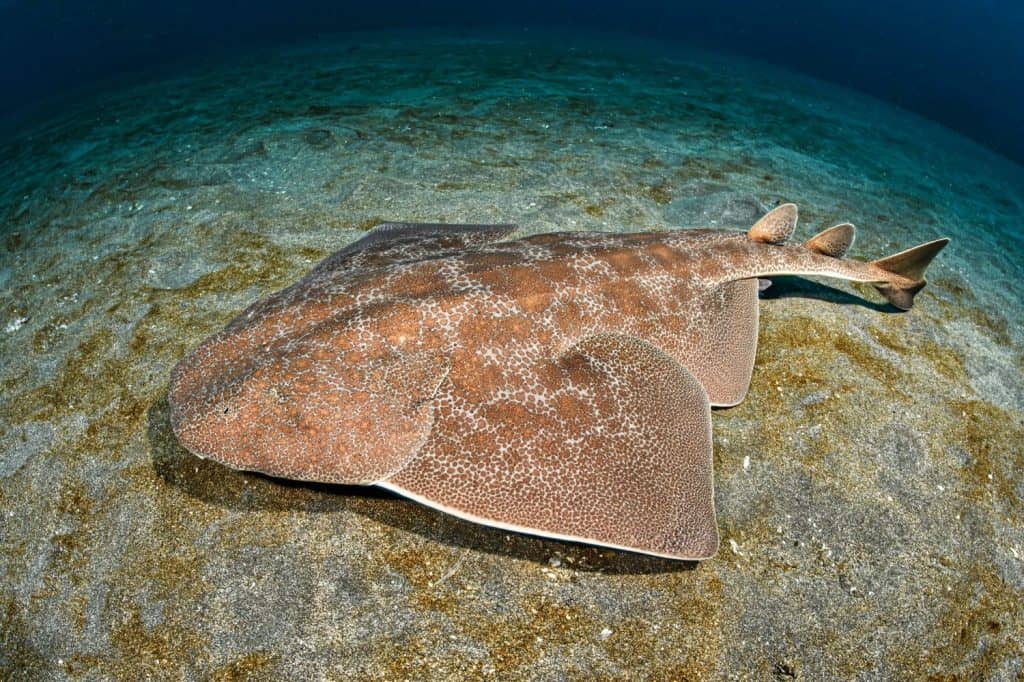
Angelsharks are often mistaken for rays due to their wide, flat bodies and wing-like fins.
©Martin Voeller/Shutterstock.com
Major Families and Species:
- Squatinidae (Angelsharks): The common angelshark is the most well-known species. Although it was once the most widespread, it is now endangered except around the Canary Islands. The Pacific angelshark is common off the coast of California, while the Australian angelshark can frequently be found in the waters off southern Australia.
6. Bullhead Sharks (Heterodontiformes)
Bullhead sharks are another small order with only one family, one genus, and 10 known species. These sharks have short, blunt heads with distinct ridges over their eyes. They have sharp spines in front their two dorsal fins. Bullhead sharks also have two types of teeth for different prey. Their genus name, “Heterodontus,” meaning “different teeth,” derives from this trait.
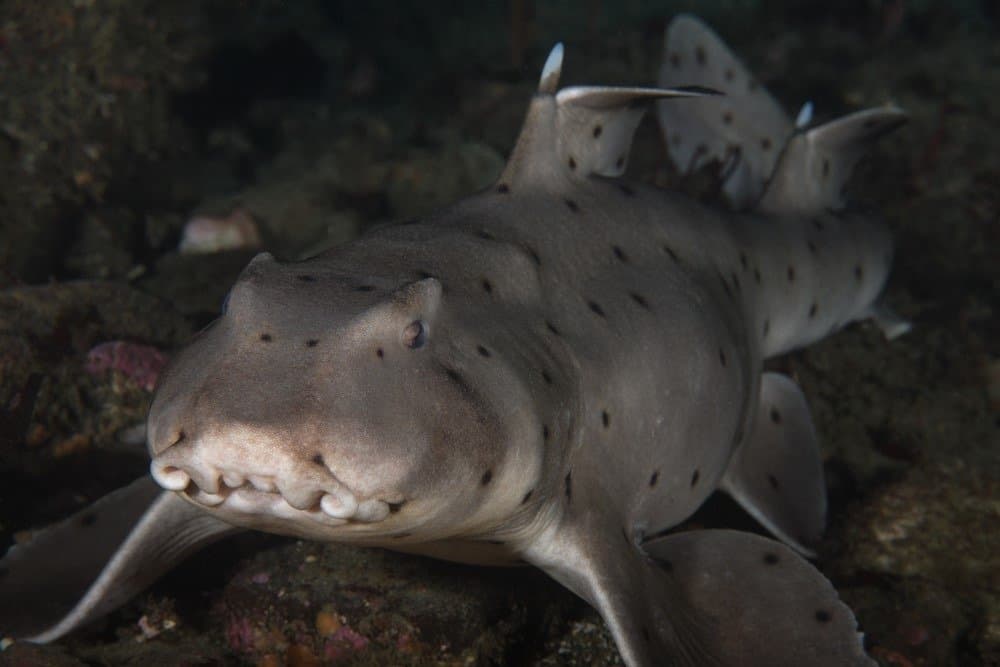
The horn shark is native to the coastal waters of California.
©Philip Garner/Shutterstock.com
Major Families and Species:
Heterodontus (Bullhead sharks): Bullhead sharks are only found in the tropical and temperate waters of the Pacific and Indian Oceans. The 10 species of bullhead sharks include the horn shark, crested bullhead shark, Japanese bullhead shark, Mexican horn shark, Port Jackson shark, Galapagos bullhead shark, whitespotted bullhead shark, zebra bullhead shark, Oman bullhead shark, and the painted horn shark.
7. Carpet Sharks (Orectolobiformes)
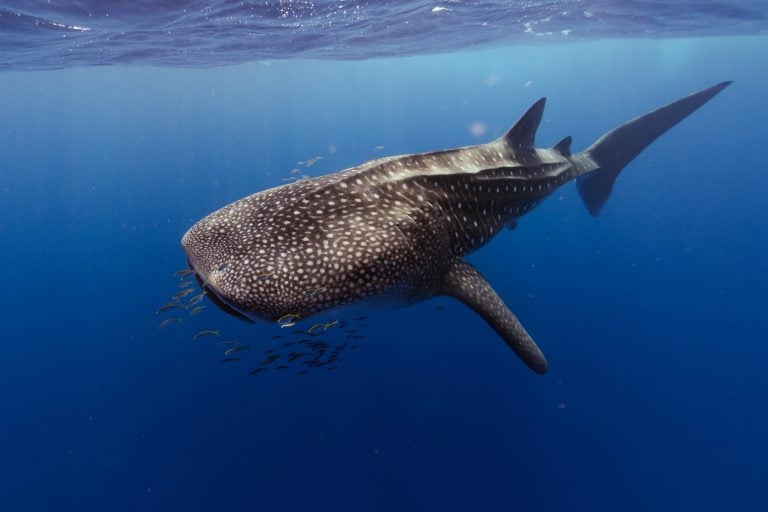
The carpet shark order is very diverse and have a wide range of sizes from small to gigantic. There are 7 families, 13 genera, and 40–45 species in this order. Many of these species have intricate, carpet-like color patterns on their skin. They have five gill slits and two spineless dorsal fins. Many species also have barbels and nasoral grooves, or deep channels that connect the nostrils to their short mouths.
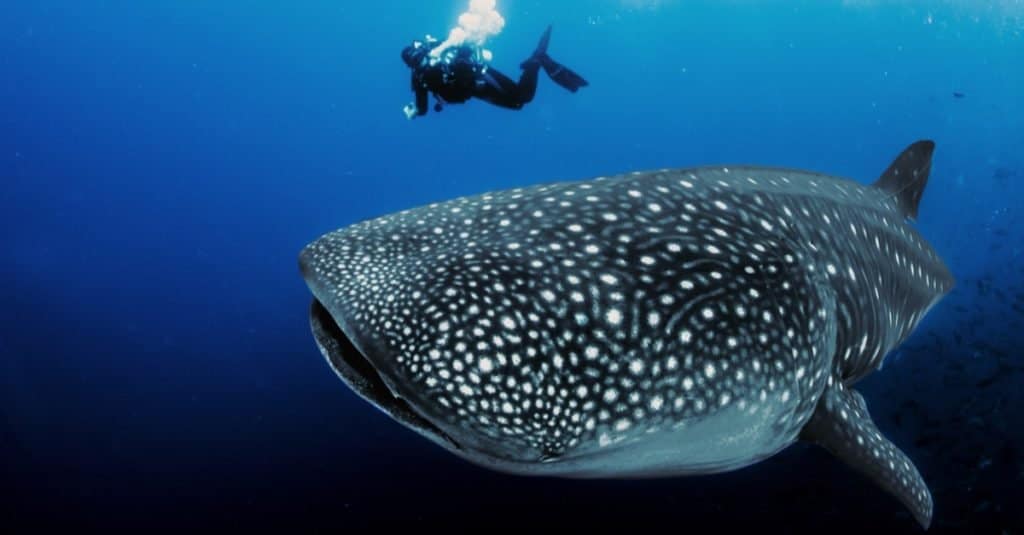
The largest carpet shark is the whale shark, which is also the largest fish on Earth.
©Lindsey Lu/Shutterstock.com
Major Families and Species:
- Brachaeluridae (Blind sharks): Two species of small, bottom-dwelling sharks with small but functional eyes and prominent nasal barbels. They appear to close their eyes when lifted out of the water
- Ginglymostomatidae (Nurse sharks): Four species of slow, bottom-dwelling sharks with wide, rounded heads, barbels, small eyes, downward-facing mouths, and uniform skin
- Hemiscylliidae (Bamboo and epaulette sharks): These small, bottom-dwelling sharks are known as longtail carpet sharks. Juvenile bamboo sharks have dark, vertical bands resembling bamboo. Epaulette sharks have paddle-shaped pelvic and pectoral fins they use as “feet” to propel themselves in a walking-type motion
- Orectolobidae (Wobbegongs): These sharks have flattened bodies with a fringe of fleshy skin surrounding their mouths and the sides of their heads, as well as intricate color patterns to help them camouflage in their reef habitats
- Parascylliidae (Collared carpet sharks): Small, slender sharks that grow no more than 3 feet in length, with spots, blotches, and other markings, including the dark, collar-like band near their gills
- Rhincodontidae: (Whale sharks): The largest fish in the sea, reaching over 40 feet long and weighing an average of around 40,000 pounds
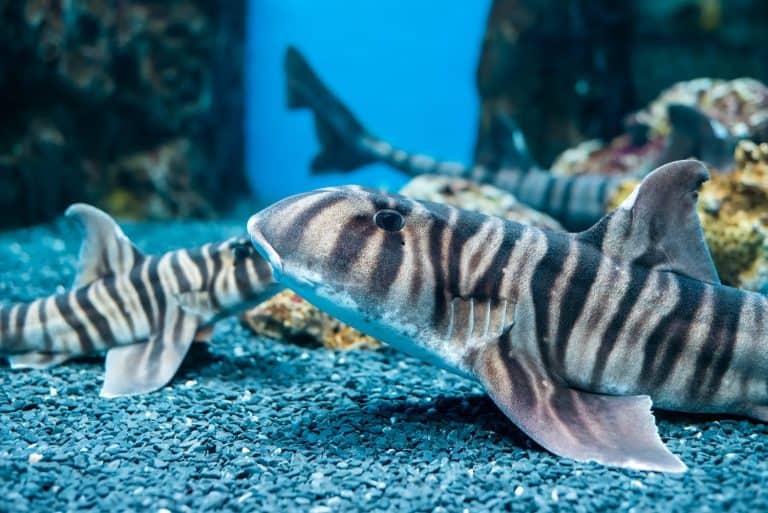
- Stegostomatidae: (Zebra sharks): Juveniles are dark with white stripes, but adults generally have dark spots on cream-colored bodies. Zebra sharks have ridges running down their backs and a large tail fin nearly as long as the rest of the body
8. Ground Sharks (Carcharhiniformes)
The ground shark order is the largest, with 8 families, 50-55 genera, and over 270 species. More than half of all known shark species are ground sharks. This diverse order is characterized by two dorsal fins, an anal fin, five gill slits, an elongated snout, and a nictitating membrane.
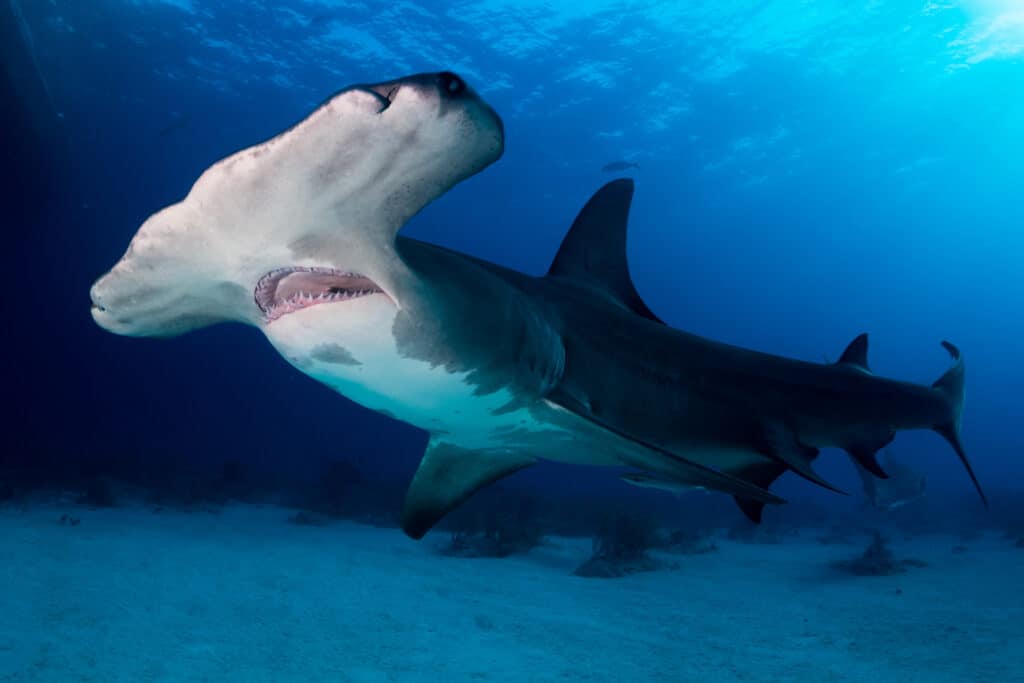
Ground sharks encompass more than half of sharks, including hammerheads.
©HakBak/Shutterstock.com
Major Families and Species:
- Carcharhinidae (requiem sharks): Fast, migratory, predatory sharks found in warm, open oceans and coastal waters, including bull sharks (unique for their ability to tolerate freshwater), tiger sharks, and oceanic whitetip sharks
- Hemigaleidae (weasel sharks): Small-to-medium coastal sharks that look like small requiem sharks, found primarily in the Indo-Pacific
- Leptochariidae (barbeled houndsharks): The sole species in this family, it has tiny barbels on its nostrils and can be found along the west coast of Africa
- Proscylliidae (finback catsharks): Very small, slender, and mostly harmless bottom-dwelling sharks found in deep tropical waters
- Pseudotriakidae (false cat sharks): Sluggish, deep-sea sharks with soft, flabby bodies that are said to resemble a dark, waterlogged sofa
- Scyliorhinidae (cat sharks): The largest family of sharks, with over 100 small, bottom-dwelling species with cat-like eyes; they can be found in temperate and tropical oceans worldwide
- Sphyrnidae (hammerhead sharks): There are 10 hammerhead species in two genera, including great hammerheads and scalloped hammerheads; they are instantly recognizable by their T-shaped heads called a cephalofoil, which improves their field of vision, sensory tracking, and maneuverability
- Triakidae (hound sharks): Harmless small- to medium-sized sharks found in coastal waters worldwide, known for their slender bodies and a preference for feeding on crustaceans; includes leopard sharks and smooth-hound sharks
9. Prickly and Bramble Sharks (Echinorhiniformes)
The prickly and bramble shark order contains one family, one genus, and two rare species. They are large, heavy-bodied, bottom-dwelling sharks with large, thorny skin denticles.
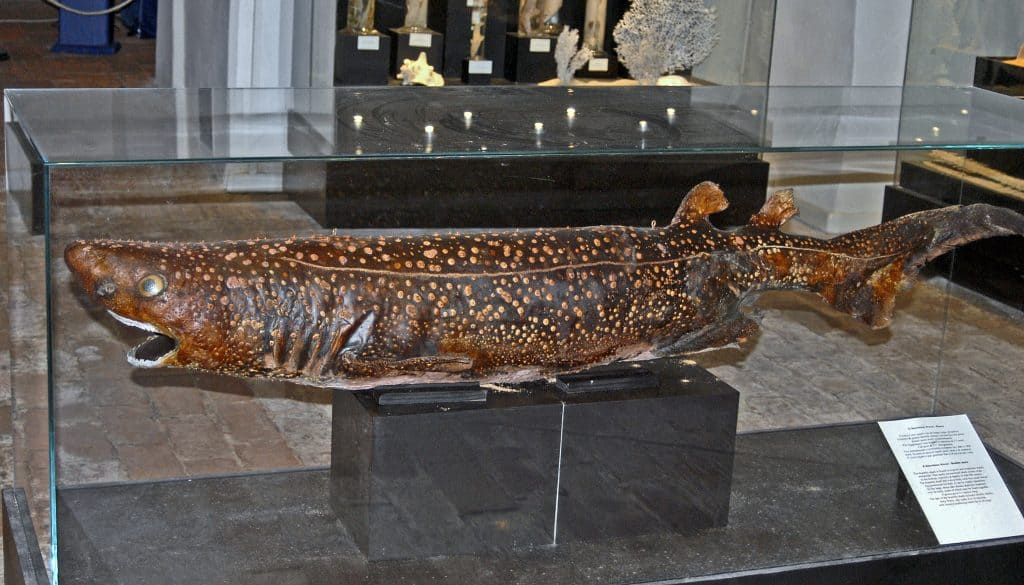
Bramble sharks have thorn-like scales called dermal denticles.
Major Families and Species:
- Echinorhinidae (Prickly and Bramble sharks): Both sharks favor continental shelves and slopes, but the prickly shark inhabits the Pacific, while the bramble shark is more widely distributed. Prickly sharks have a more uniform layer of denticles, but bramble sharks have fewer, more widely spaced denticles that can sometimes merge together. Bramble sharks are smaller, reaching up to around 10 feet in length, while the prickly shark grows to about 13 feet.