
Sharks are a type of elasmobranch fish, which means they have cartilage skeletons and 5-7 gill slits on each side of their heads. There are over 500 shark species across all of the oceans in the world, including the waters of the Arctic and Antarctic. Many of these sharks are apex predators in their respective ecosystems. They are often described as lone hunters, but some sharks are actually very social. So, what is a group of sharks called, and why are they called that? Read on to find out.
What Were Sharks Originally Called?
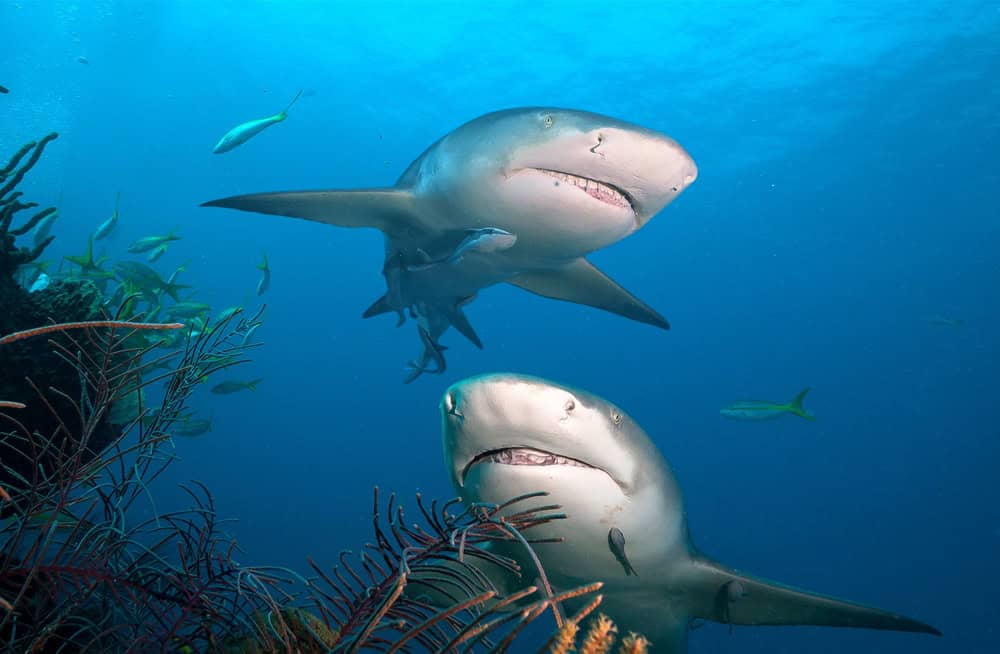
Sharks were originally called sea dogs.
©frantisekhojdysz/Shutterstock.com
Sharks were called “sea dogs” by sailors until the 16th century. It was common to choose an animal’s name based on their physical characteristics and behaviors. Like dogs, sharks have long snouts, sharp teeth, and an acute sense of smell. Sharks also exhibited dog-like behaviors, such as following ships and hunting in packs. A shark’s young are still called pups, just like young dogs.
In 1569, the word “sharke” became known in English. Researchers believe the word was made popular by naval commander Sir John Hawkins’ sailors, who had returned to England with a shark specimen that was exhibited in London that year. However, it was believed to have been in use as early as 1442. A letter written by Thomas Beckington, Bishop of Bath and Wells and secretary to King Henry VI, refers to a fish as a shark. Some linguists suggest the most likely origin could have been a Middle English word borrowed from the German “schurke,” meaning “villain” or “predator,” or the Dutch word “schurk,” with the same meaning.
Shark Social Behavior
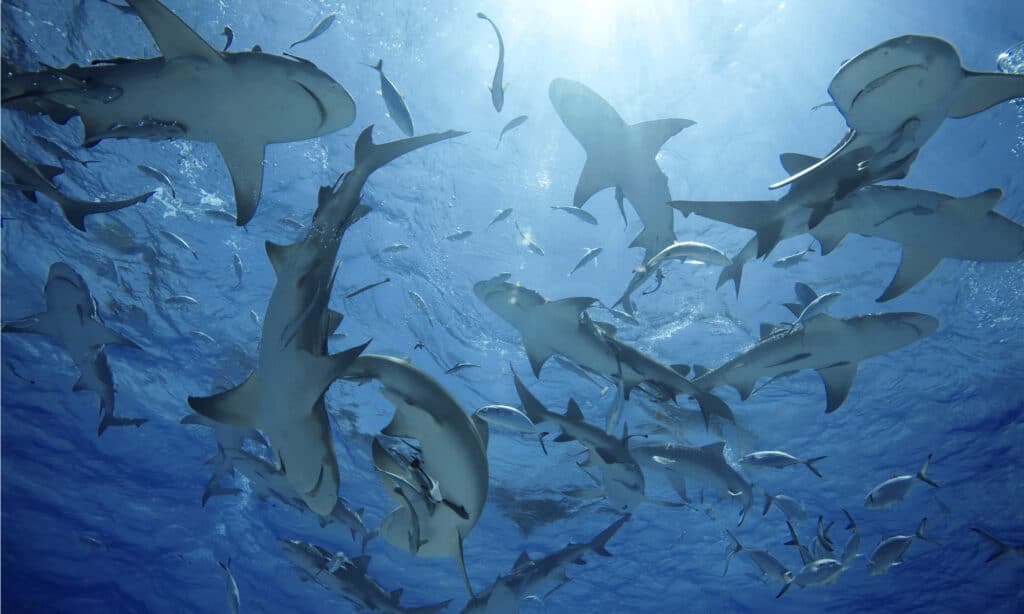
Not all sharks are solitary hunters. Some shark species are very social.
©Yann hubert/Shutterstock.com
It may seem strange that there is a collective noun for animals that are depicted as solitary predators. However, social behavior in sharks varies by species and by individual. Some shark species are social animals with complex social structures. Even sharks that are normally solitary, such as great white sharks, have been shown to form social associations and hunt cooperatively. Hammerhead sharks also come together to form large groups during migration.
Sand tiger sharks have networks of up to 200 “friends” that they associate with during the year. They even have “best friends,” or sharks they have engaged with over 20 times in a year. Grey reef sharks are highly social, forming stable daytime schools that can last for several years. Scientists believe that forming pairs and groups aids in hunting. Sharks can share information about resources and cooperate to locate and catch prey.
What Is a Group of Sharks Called?
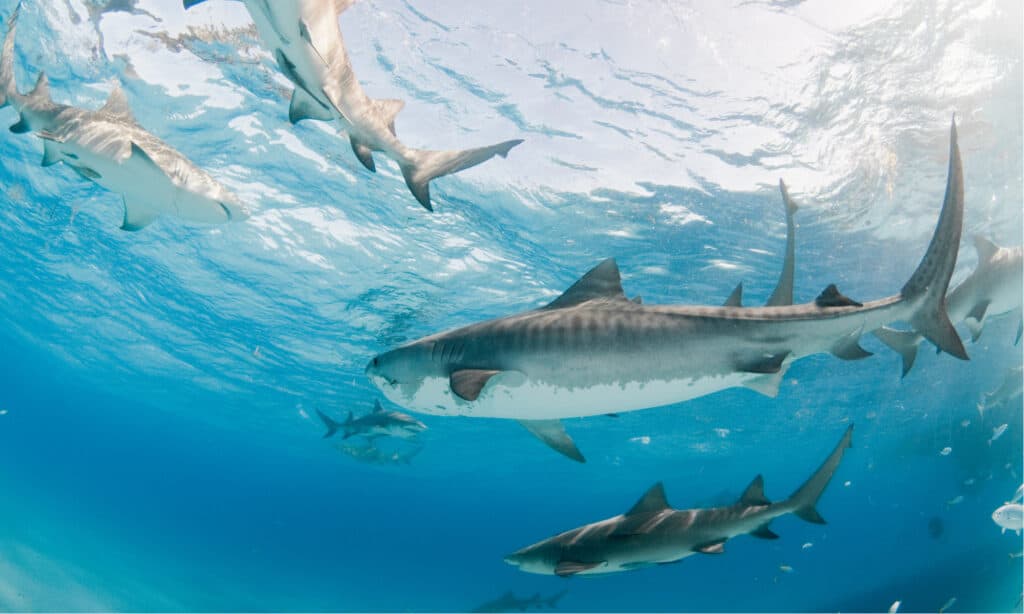
A group of sharks is most commonly called a shiver.
©Fiona Ayerst/Shutterstock.com
The most common collective noun for a group of sharks is shiver. However, school and frenzy are also frequently used. Discover where these terms originated below.
A Shiver of Sharks
The origin is unknown, but some speculate that “shiver,” which describes trembling caused by cold or fear, refers to the feelings of terror that sharks can evoke. Other sources suggest that it comes from the old English word “shive,” meaning a slice or shard, to describe how sharks seem to slice through the water.
A School of Sharks
The word “school” for a group of sharks comes from the general use of the word for any group of fish. The term itself is thought to originate from the Middle Dutch word “schole,” meaning a crowd or troop, or the Old English word “scolu,” also meaning a multitude or crowd of fish. It is believed to have been in use in reference to groups of fish since the late 14th century.
A Frenzy of Sharks
Frenzy most likely originated from the term “feeding frenzy.” The 1958 book “Shark Attack” by V.M. Coppleson is believed to have with popularized the term “feeding frenzy” to describe the crazed, frantic behavior of a group of feeding sharks. The collective noun “frenzy” is derived from this behavior.