
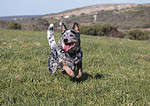
S
Species Profile

Shollie

Canis lupus familiaris

Brains, bravery, and boundless drive
Colin Dewar/Shutterstock.com

Shollie Distribution

Click a location to explore more animals from that region

Origin Location

This map shows the native origin of the Shollie. As a domesticated species, they are now found worldwide.

Loading map...

Size Comparison

Human 5'8"
Shollie 1 ft 11 in

Shollie stands at 34% of average human height.

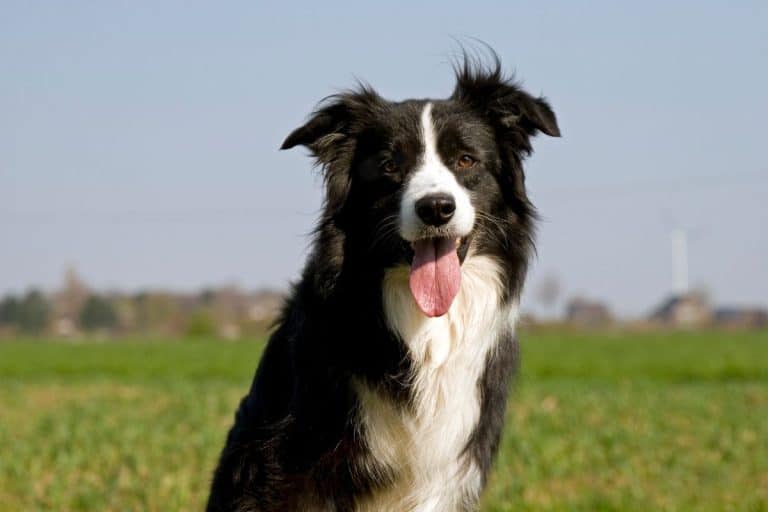
German Shepherd - Border Collie

At a Glance

Domesticated
Diet Omnivore
Activity Diurnal+
Lifespan 5 years
Weight 36 lbs
Status Not Evaluated
Did You Know?

A Shollie isn't a standardized "breed" but a purposeful cross (German Shepherd Dog × Border Collie), so looks and temperament can vary widely-even within a litter.

Scientific Classification

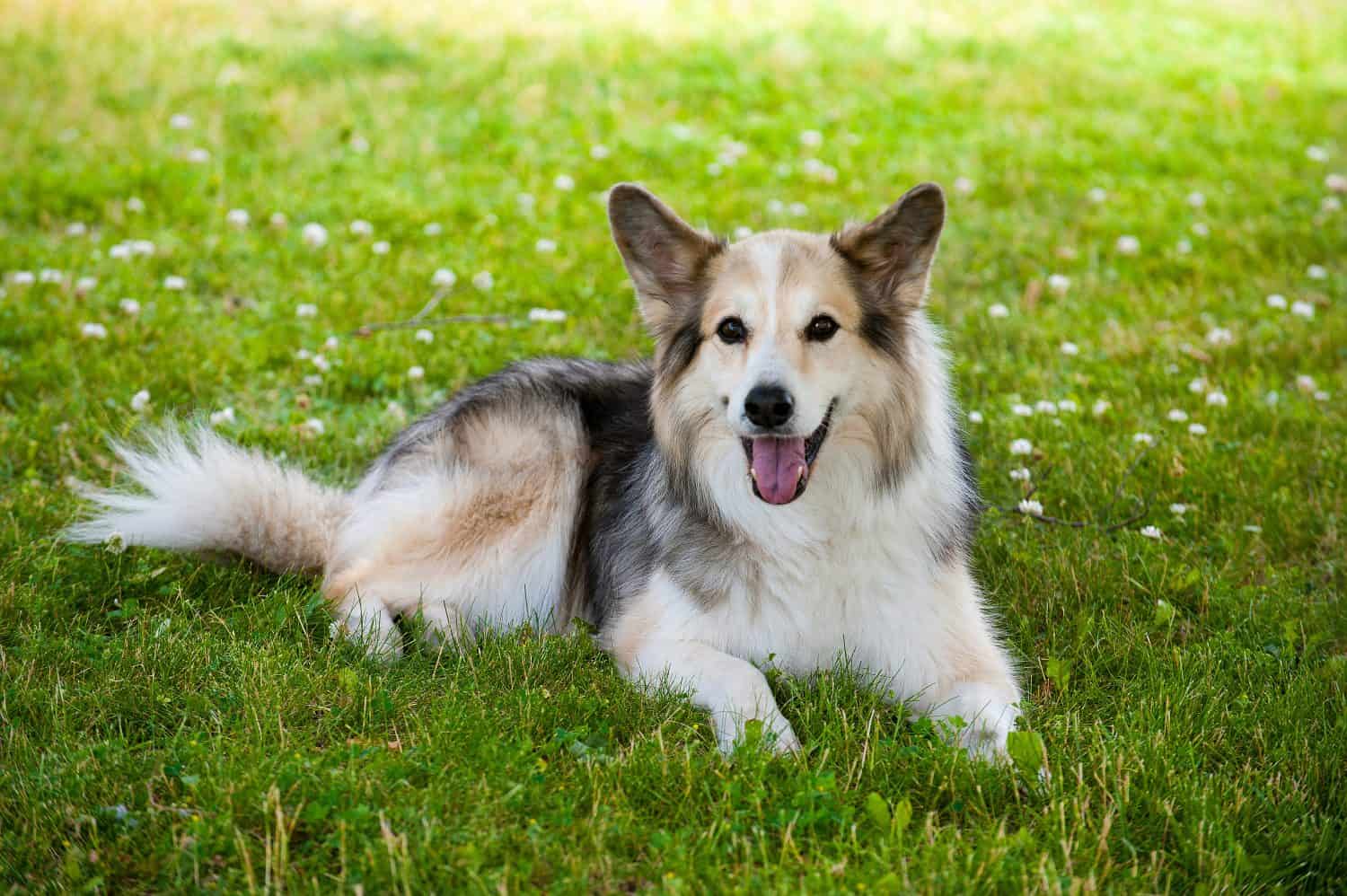
The Shollie is a hybrid (designer) dog produced by crossing a German Shepherd Dog with a Border Collie. It is not a separate biological species; it is a domestic dog (a domesticated lineage of the gray wolf).

Kingdom
Animalia
Phylum
Chordata
Class
Mammalia
Order
Carnivora
Family
Canidae
Genus
Canis
Species
Canis lupus

Distinguishing Features

  • Medium-to-large, athletic build typical of herding/working dogs
  • Often high energy and high trainability (influenced by both parent breeds)
  • Coat and coloration highly variable; may resemble German Shepherd patterning or Collie-type markings
  • Commonly strong herding/guarding/alert behaviors

Physical Measurements

Males and females differ in size

Height
♂ 1 ft 12 in (1 ft 9 in – 2 ft 2 in)
♀ 1 ft 10 in (1 ft 7 in – 2 ft)
Length
♂ 3 ft 11 in (3 ft 4 in – 4 ft 5 in)
♀ 3 ft 7 in (3 ft 1 in – 4 ft 1 in)
Weight
♂ 62 lbs (44 lbs – 84 lbs)
♀ 53 lbs (40 lbs – 66 lbs)
Tail Length
♂ 1 ft 3 in (1 ft 1 in – 1 ft 6 in)
♀ 1 ft 4 in (1 ft 1 in – 1 ft 7 in)
Top Speed
30 mph
running

Appearance

Primary Colors
Secondary Colors
Skin Type Domestic canine skin, moderately thick and well-pigmented; typically supports a dense double coat (weather-resistant guard hairs with insulating undercoat).
Distinctive Features
  • Crossbreed (German Shepherd Dog × Border Collie), not a distinct species; appearance and temperament vary by parent influence.
  • Athletic, medium-to-large frame; deep chest with tuck-up, built for endurance and speed.
  • Coat commonly medium length with dense undercoat; moderate feathering on legs and tail.
  • Ears often erect or semi-erect; alert expression with pronounced brow and agile head carriage.
  • Long, bushy tail often carried low with a slight curve; Collie-like plume common.
  • High exercise and mental-stimulation needs; thrives with daily training, running, and jobs.
  • Grooming: frequent brushing (especially seasonal shedding); check ears, paws, and coat for mats.
  • Health risks may include hip/elbow dysplasia, degenerative myelopathy, epilepsy, and bloat risk; eye issues (e.g., CEA) and possible MDR1 drug sensitivity can occur depending on lines.

Sexual Dimorphism

Males are typically taller, heavier, and broader through head, neck, and chest. Females are usually slightly smaller and more refined, often with a lighter bone structure; coat length and coloration patterns are generally similar in both sexes.

♂
  • Broader skull and thicker neck ruff; more pronounced chest width.
  • Higher average body mass with heavier bone and musculature.
♀
  • Slightly narrower head and chest; more streamlined outline.
  • Lower average weight; often a finer, lighter build.

Did You Know?

A Shollie isn't a standardized "breed" but a purposeful cross (German Shepherd Dog × Border Collie), so looks and temperament can vary widely-even within a litter.

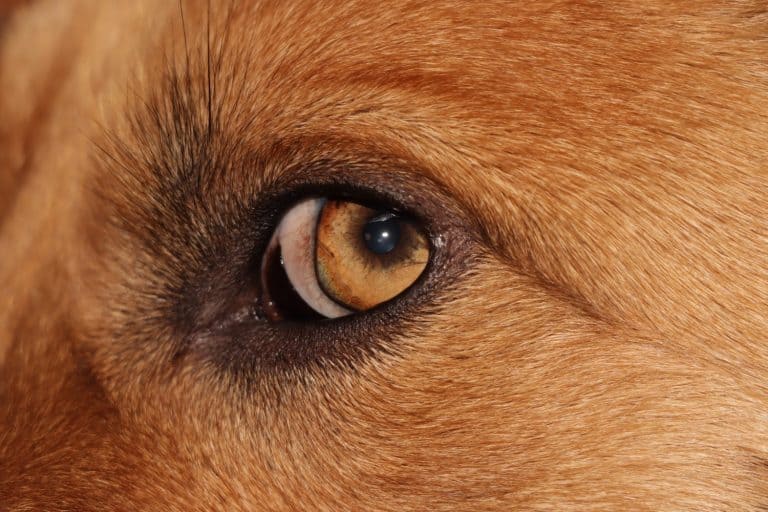
Many inherit the Border Collie's "eye" (a focused stalking stare) and the German Shepherd's natural guarding instincts-an intense combo that needs guidance.

Coats often land in the "double-coat" zone: weather-resistant and seasonally heavy-shedding, especially in spring/fall.

They commonly excel in dog sports that reward speed + precision: agility, flyball, obedience, rally, dock diving, scent work.

Because both parent breeds are working dogs, Shollies tend to thrive with a "job" (structured training, tasks, or sport) rather than purely casual exercise.

They're frequently sensitive to handler feedback-clear, consistent cues and reward-based training typically outperform harsh corrections.

Many Shollies are Velcro dogs: deeply people-oriented and happiest when included in daily activities and training routines.

Unique Adaptations

  • Human-directed cooperation: compared with the wild gray wolf (Canis lupus), domestic dogs-including Shollies-are far more attuned to human gestures and cues (like pointing) due to domestication.
  • Work-ready athleticism: long stride, strong hindquarters, and quick acceleration support sprinting/turning typical of herding and protection work.
  • Double-coat insulation (common): a dense undercoat plus guard hairs helps regulate temperature and shed water/dirt, but demands regular brushing.
  • Behavioral "switching": many can move from high-intensity drive to close handler engagement when trained-useful for sports, service tasks, or structured work.
  • Enhanced trainability through mixed working lines: many Shollies combine the Border Collie's rapid learning with the German Shepherd's steadiness under guidance (individuals vary).

Interesting Behaviors

  • Intense visual focus ("the eye") and crouch-stalk movement when excited-especially around moving kids, bikes, or other pets.
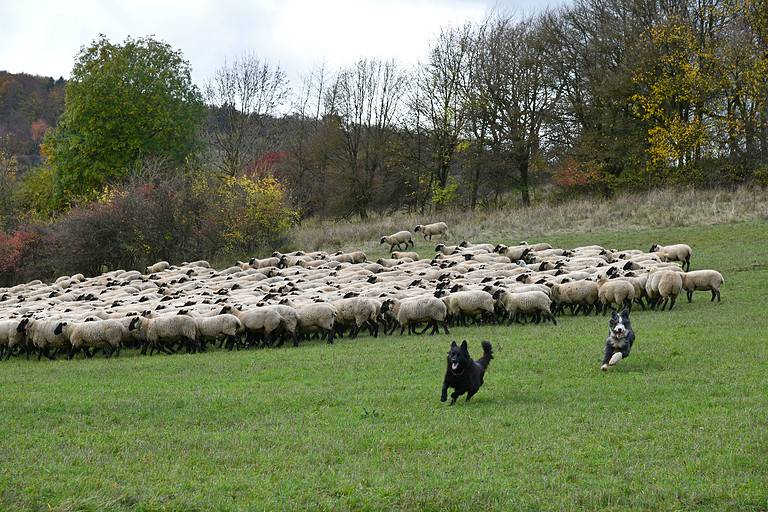
  • Circling, nudging, and "traffic-copping" (trying to gather family members into one room), reflecting herding heritage.
  • Patrol loops and alert barking at novel sounds-often more pronounced if the German Shepherd side is strong.
  • Problem-solving and "DIY obedience": opening doors, learning routines quickly, anticipating commands, and sometimes inventing games.
  • Shadowing a favorite person room-to-room; may show separation stress if under-stimulated or left alone too long.
  • Mouthiness/heel-nipping in adolescence, especially if play and impulse control aren't taught early.
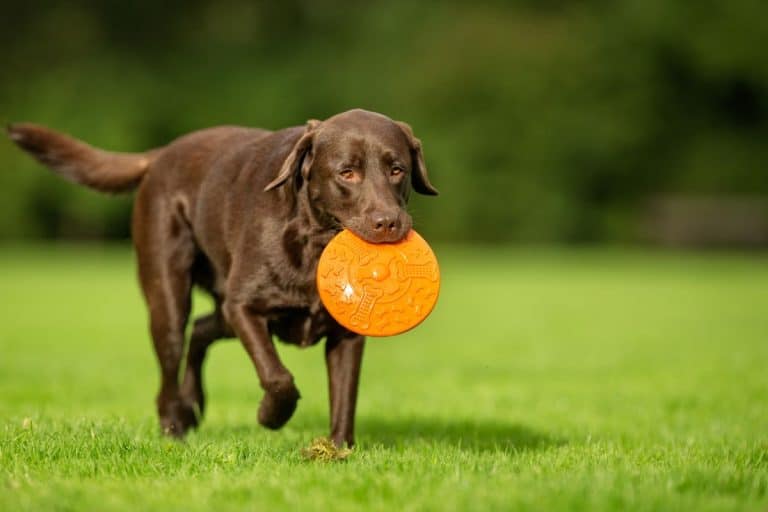
  • High toy/prey interest (chasing balls, frisbees), sometimes paired with strong scent curiosity that makes sniff-walks very enriching.

Cultural Significance

Shollies are a modern "designer" cross of the German Shepherd Dog and Border Collie. People breed them to be smart, athletic pets good at agility and obedience. Not a recognized purebred, they reflect a trend toward companions for sport and work.

Myths & Legends

Rome's founding tale tells of Romulus and Remus, twins nursed by a she-wolf-an enduring legend tying Canis lupus to protection, fate, and the birth of a city.

In Norse mythology, the great wolf Fenrir is bound by the gods, with prophecies that he will break free during Ragnarok-an emblem of untamed power and destiny.

Scottish folklore tells of a "fairy hound," a large green supernatural dog whose appearance is considered an omen; it is said to roam the Highlands and is linked to the otherworld.

Plains and Arctic Indigenous traditions include many wolf stories where Wolf is a teacher or pathfinder-sometimes guiding people to game, modeling family loyalty, or shaping the land (varies by nation).

German Shepherd history carries famous cultural anecdotes: Rin Tin Tin, a rescued wartime puppy, became a Hollywood star in the 1920s and helped popularize the breed worldwide.

Border Collie lore often centers on 'Old Hemp' (late 1800s), a foundational stud said to have set the style for modern Border Collie herding-calm, controlled, and intensely responsive to the shepherd.

Across parts of Europe, black dogs feature in supernatural legends (guardian or ominous "black hounds"); Shollies with dark coats sometimes inherit these symbolic associations in modern storytelling and local superstition.

Conservation Status

NE Not Evaluated

Has not yet been evaluated against the criteria.

Population Stable

Life Cycle

Birth 6 pups
Lifespan 5 years

Lifespan

In the Wild
2–10 years
In Captivity
10–14 years

Reproduction

Mating System Promiscuity
Social Structure Managed Domestic
Breeding Pattern Transient
Fertilization Managed Selective
Birth Type Internal_fertilization

As a managed domestic hybrid, Shollies typically breed through human-directed pairings; without management, dogs show opportunistic promiscuity with brief consortships. No stable pair bonds; males may mate with multiple females during estrus; dams provide most care.

Behavior & Ecology

Social Pack Group: 4
Activity Diurnal, Crepuscular, Cathemeral
Diet Omnivore Meat-forward foods (especially chicken or beef), often paired with high-value training treats.

Temperament

Species context (domestic dog): highly social, human-directed cooperation; flexible group living compared to wild wolf packs.
Breed distinction (Shollie): combines GSD guarding/handler focus with Border Collie intensity, speed, and herding drive.
HUBS-common across Shollies: very high trainability, strong work ethic, and quick pattern learning; needs structure.
HUBS-variation: temperament ranges from vigilant/protective (GSD-leaning) to sensitive/drivey (BC-leaning).
Typically confident and alert; may be reserved with strangers without early, positive social exposure.
Can display herding behaviors (stalking, circling, nipping heels) toward children, pets, or running objects.
Potential reactivity risk: motion sensitivity and barrier frustration; benefits from impulse-control training.
Separation sensitivity possible due to high attachment; thrives with predictable routines and enrichment.
Care requirements: 1-2+ hours daily exercise plus mental work (training, scent games, agility, herding-style outlets).
Care requirements: early socialization, cooperative handling, and reward-based training; harsh methods can increase fear/avoidance.
Health concerns (hybrid risk from parent breeds): hip/elbow dysplasia; maintain lean body condition and joint-friendly exercise.
Health concerns: degenerative myelopathy (GSD lines), epilepsy (BC lines), and allergies/dermatitis in some individuals.
Health concerns: Collie-associated eye issues (e.g., CEA) may occur; routine ophthalmic screening advisable.
Health concerns: MDR1 drug-sensitivity can occur in collie ancestry; consider genetic testing before certain medications.
Grooming/care: moderate to heavy shedding; regular brushing and nail/ear care reduces discomfort and irritability.
Best-fit homes: experienced, active handlers; can struggle in low-activity apartments without daily engagement.

Communication

alarm barking Stranger/novel stimuli
short barks during herding-style arousal
whines/whimpers for attention or frustration
growls for boundary-setting or resource guarding cues
howls occasionally, especially in response to sirens or group vocalizing
rich body language: ear set, tail carriage, weight shifts, freezing and hard-stare
herding stare/eye and crouch to control movement; may escalate to circling or nipping
scent marking and investigation of urine/feces for social information
muzzle nudges, pawing, and contact seeking with preferred humans
play signals: play-bow, bouncy gait, self-handicapping with familiar partners
appeasement signals: lip-licking, head turns, sniffing ground; common in sensitive individuals
handler-oriented check-ins: frequent eye contact and positional alignment during work/training

Habitat

Biomes:
Temperate Forest Temperate Grassland Mediterranean Boreal Forest (Taiga) Tundra Alpine Desert Hot Desert Cold Savanna Tropical Dry Forest Tropical Rainforest Wetland Freshwater Marine +8
Terrain:
Plains Hilly Mountainous Valley Plateau Coastal Island Riverine +2
Elevation: Up to 17060 ft 5 in

Ecological Role

Human-associated domestic mesopredator/omnivore; primarily a companion and working/herding/guarding dog rather than a wild hunter, but may opportunistically prey on small animals when free-roaming.

livestock herding and management support property guarding/deterrence search-and-rescue and detection work (individual dependent) companionship and human mental-health support localized pest control via deterrence/predation of rodents (when unmanaged)

Diet Details

Main Prey:
Rodents Rabbits and hares Squirrels and other small mammals Ground-nesting birds and poultry Carrion
Other Foods:
Grasses Berries and soft fruits Vegetables Grains and starchy plant foods

Human Interaction

Domestication Status

Domesticated

Shollie (German Shepherd × Border Collie) is a modern mixed breed, not a separate species. They have high energy, strong herding or guarding drives, and need 1.5–3+ hours of exercise, training, and mental work daily. Best with experienced handlers for sport or service. Health risks come from parent lines (hip/elbow dysplasia, degenerative myelopathy, epilepsy, allergies, eye issues).

Danger Level

Moderate
  • Bite risk if poorly socialized, fear-reactive, or inadequately managed/trained (risk increases with size/strength)
  • Herding-related nipping/chasing, especially toward running children or small animals
  • Protective/territorial behavior and stranger wariness (more likely if German Shepherd traits are prominent) leading to defensive aggression without proper socialization
  • Injury from jumping/collisions due to high arousal and athleticism
  • Resource guarding in some individuals, especially without early training/management

As a Pet

Suitable as Pet

Legality: Shollies are usually legal as pets because they are domestic dogs. Local breed or German Shepherd-type rules, landlord or HOA limits, or insurance rules can apply, so check local laws and housing or insurance company rules.

Care Level: Experienced

Purchase Cost: Up to $2,500
Lifetime Cost: $18,000 - $50,000

Economic Value

Uses:
Companion animal Working and sport dog Service/assistance prospect (experienced programs/handlers) Training and pet services market
Products:
  • companion/household pet value
  • professional training services (obedience, behavior modification, sport training)
  • canine sport participation (agility, rally, obedience, flyball)
  • working roles (hobby herding, property alert/guardian role in some households)
  • pet industry spending (food, grooming tools, enrichment toys, veterinary care, insurance)

Relationships

Ecological Equivalents 5

Animals that fill a similar ecological role in their ecosystem

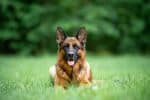
German Shepherd Dog
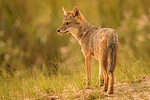
German Shepherd Dog Canis lupus familiaris Direct parent breed. Confers working-dog traits to the Shollie: strong handler focus, protective nature, and ease of training. Unlike the gray wolf, it was bred for obedience and for solving problems cooperatively with people. Health overlaps include risk of hip and elbow dysplasia, a lean body type, and similar management needs such as controlled puppy exercise and daily training.
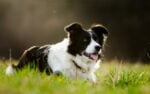
Border Collie
Border Collie Canis lupus familiaris Direct parent breed, conferring a strong herding drive, high energy, and quick reactions. Shollies often need structured exercise and mental work to prevent anxiety and destructive behavior; monitor exercise during growth and watch for eye or nerve problems.
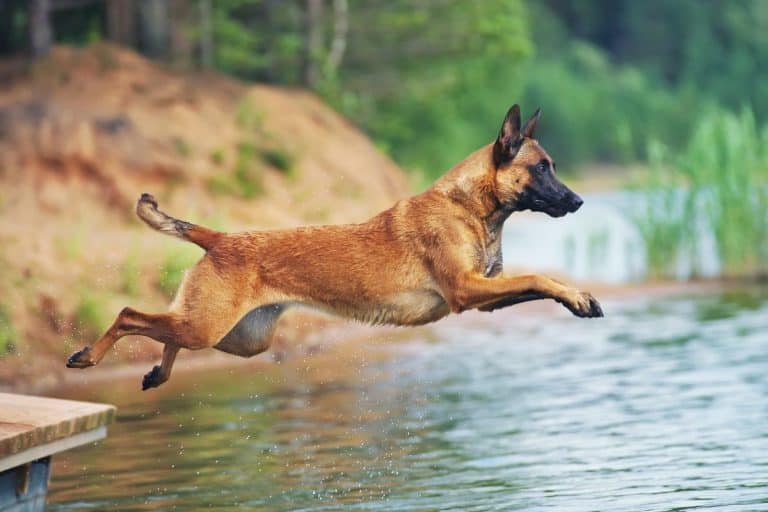
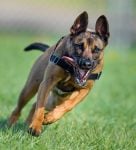
Belgian Malinois
Belgian Malinois Canis lupus familiaris Similar niche as a high-drive, handler-oriented working dog (sport, protection, search and rescue). Like many Shollies, they tend to thrive with advanced obedience and task training and daily aerobic exercise; without that outlet they can become reactive or develop compulsive behaviors.
Australian Cattle Dog
Australian Cattle Dog Canis lupus familiaris Occupies a comparable niche as an athletic herding/utility dog, with similar tendencies toward nipping/herding behaviors, high vigilance, and exceptional endurance. Management parallels include extensive enrichment, clear and consistent boundaries, and joint-safe conditioning such as strength work and controlled-impact activities.
Gray wolf
Gray wolf Canis lupus Both are running, social meat-eaters that hunt over large areas. Shollies are domesticated, often smaller, have varied coats, are less fearful or aggressive around people, and rely on humans for food and care instead of group hunting.

Quick Take

  • Reaching a 29-inch height and 80-pound weight requires meeting specific developmental requirements.
  • The 1-hour daily activity requirement creates a severe risk of destructive behaviors for certain owners.
  • These devoted companions produce unexpected results by herding small children around the home.
  • A thorough parental background check is a vital scouting step for identifying future health risks.

Shollies are a hybrid, or designer, dog breed. They are a mix between a German Shepherd and a Border Collie. These dogs are energetic, devoted, and loyal. They are a large dog breed that sheds quite a bit and requires a large amount of exercise. In return, they will be loving companions and are a great choice for families with children. Shollies are a relatively new and increasingly popular mixed breed.

An infographic detailing the Shollie dog breed's traits, including size, pros and cons, health risks like bloat, and their intense exercise requirements.
A brilliant protector that needs a job. Discover why this high-energy mix requires a specific lifestyle before it starts herding your family around the house. © A-Z Animals

3 Pros and Cons of Owning Shollie

ProsCons
Loyal to the family: Throughout their lifespan, Shollies will take after their German Shepherd parent and remain loyal to their adoptive family.Heavy Shedder: Shollies have medium-length hair but are extremely heavy shedders. This means that owners will need to give them a daily brushing session.
Great with kids: The temperament of this hybrid breed makes them great for kids. They are friendly and loyal, making great companions for play. They will treat your children like their own puppies.Not Good in Small Spaces: Shollies need an incredible amount of exercise — at least an hour per day. They are also fairly large dogs. These traits combined do not make them ideal pets for those living in apartments.
Very Intelligent: These dogs are very smart. They are revered for their trainability and skills in agility games.Doesn’t Like Strangers: Because this crossbreed is so loyal to its owners, thanks to its German Shepherd heritage, it may take a while for your Shollie to feel comfortable around guests or new additions to the household.
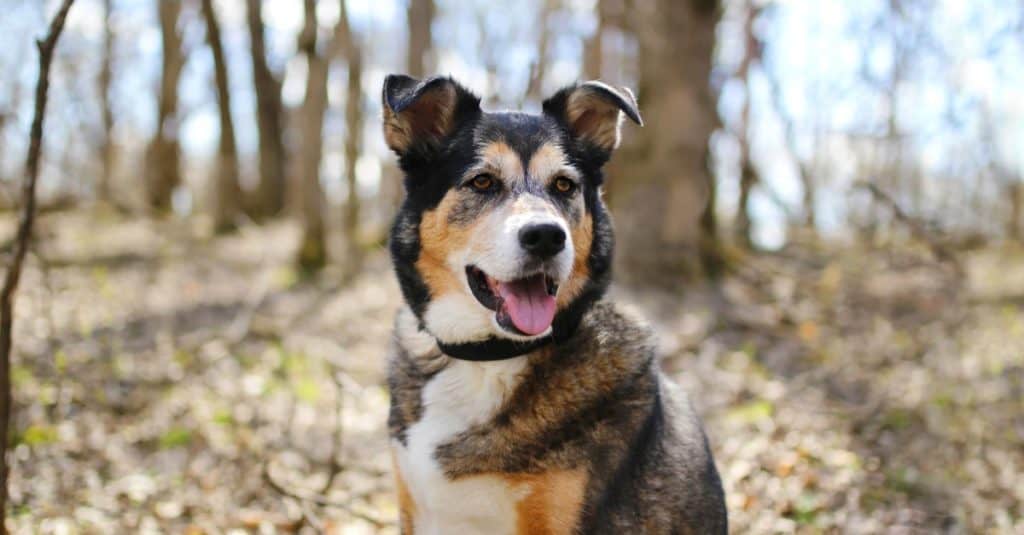
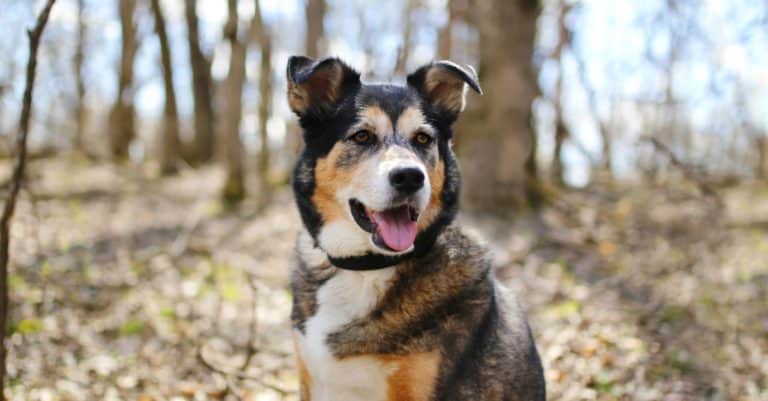
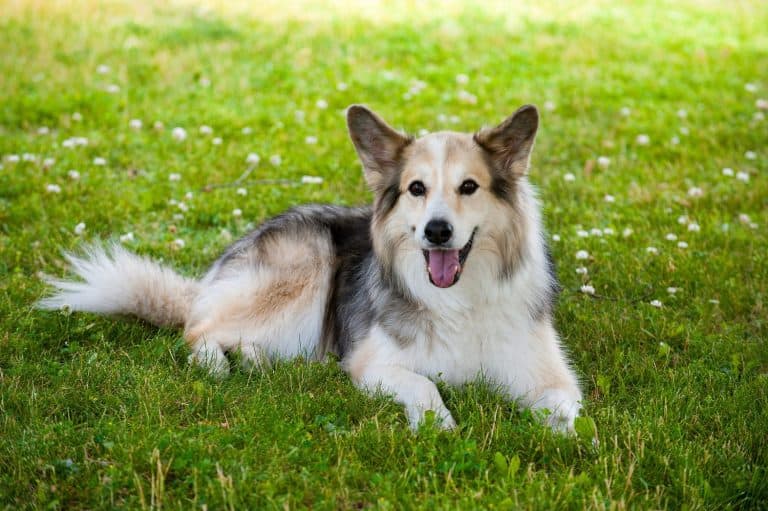
A beautiful old, German Shepherd - Border Collie Mix breed dog, Shollie, is sitting outside in the deciduous forest, listening with his ears perked up.

These canines are highly intelligent and are known for their ability to be trained as well as their proficiency in agility competitions.

Size and Weight

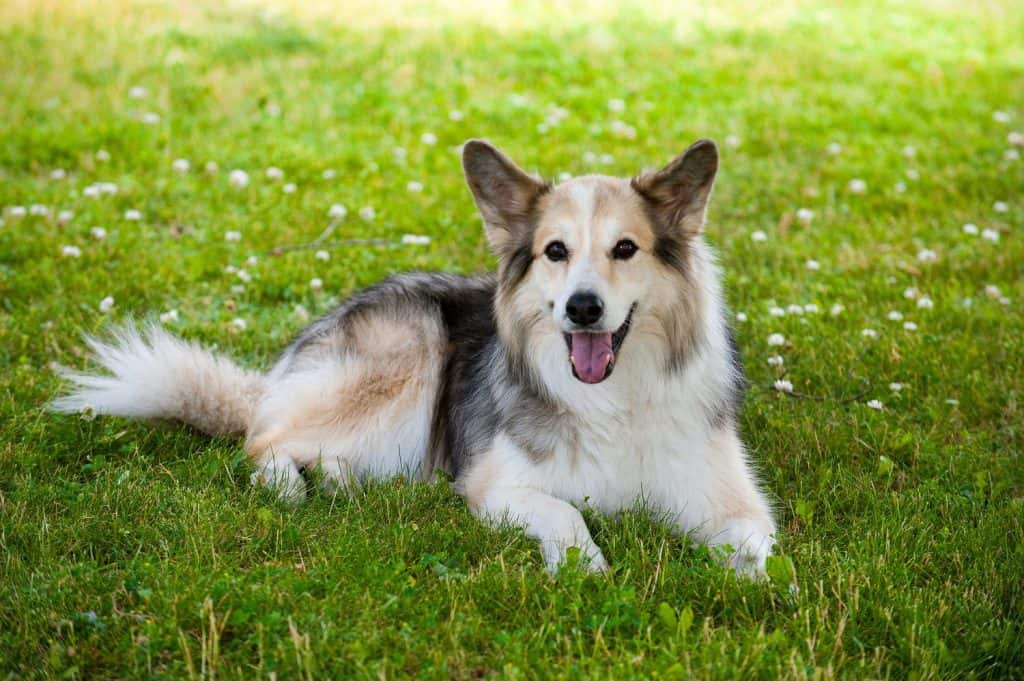
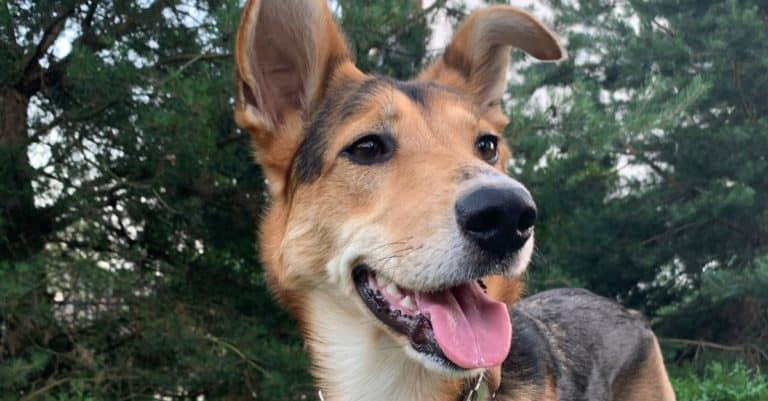
Shollies are a large dog breed. They have medium-length hair and come in a wide variety of colors such as black, brown, black and white, red, gray, or brindle (black, vertical stripes like a tiger). This hybrid breed can be anywhere from 21 to 29 inches tall and weigh between 70 and 80 lbs.
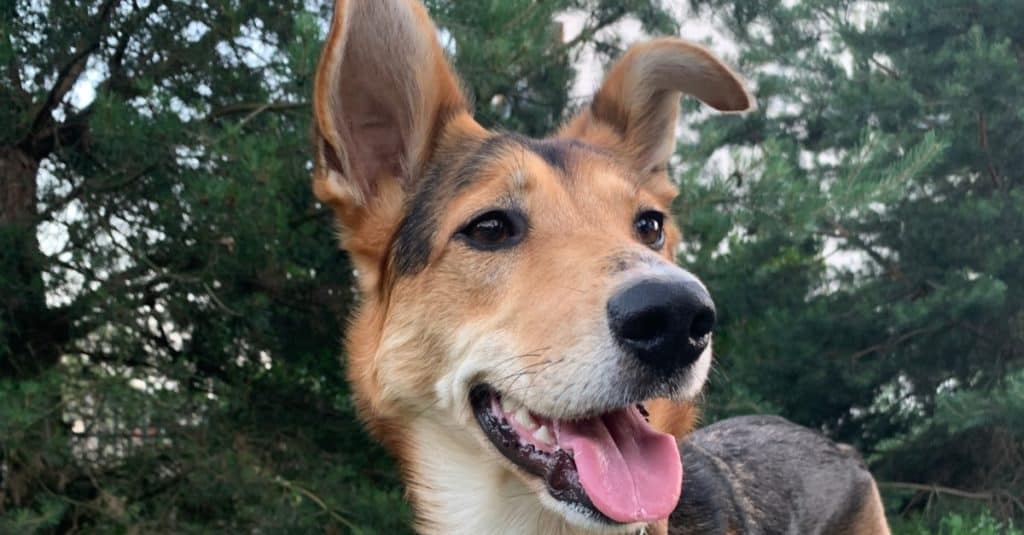
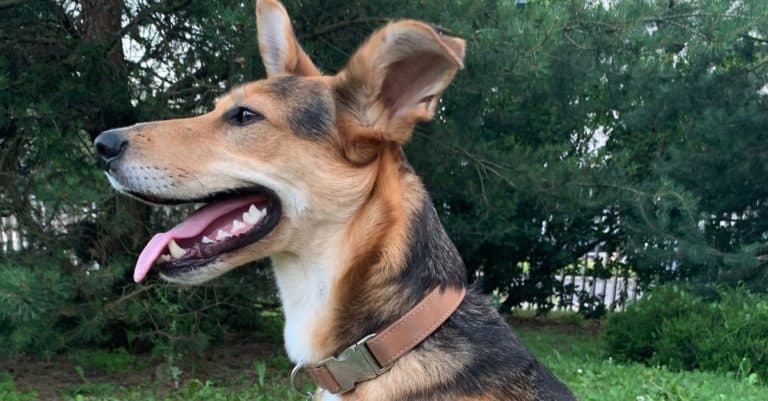
Border Collie Mix German Shepherd, Shollie, standing in a field

The size of this mixed breed can range from 21 to 29 inches in height and weigh between 70 and 80 pounds.

Evolution and Origins

The Shollie is a hybrid breed resulting from the breeding of a German Shepherd and a Border Collie, which are both popular breeds, but despite their popularity, the Shollie is not widely known and is recognized by organizations such as the Dog Registry of America and the American Canine Hybrid Club, but not by major purebred kennel clubs.

Shollies, which are a crossbreed of German Shepherd and Border Collie, can have various coat colors, including the typical black and brown pattern of German Shepherds, as well as light brown, white and brown, golden, or black and white; they are intelligent and eager to learn and require an owner who can provide ample exercise and attention.

Furthermore, Shollies are a designer breed resulting from the crossbreeding of a German Shepherd and a Border Collie, known for their energy, loyalty, and devotion. They are a big shedder and require plenty of exercise.

Common Health Issues

This crossbreed is typically a very healthy dog breed. However, like most other designer breeds, Shollies are capable of inheriting illnesses that are common in their Border Collie and German Shepherd parents. Bloat is an illness that causes air and pressure to build up in the stomach, cutting off circulation to the back legs and causing a medical emergency. Another problem is hip and elbow dysplasia, causing pain when the dog walks or runs.

Temperament
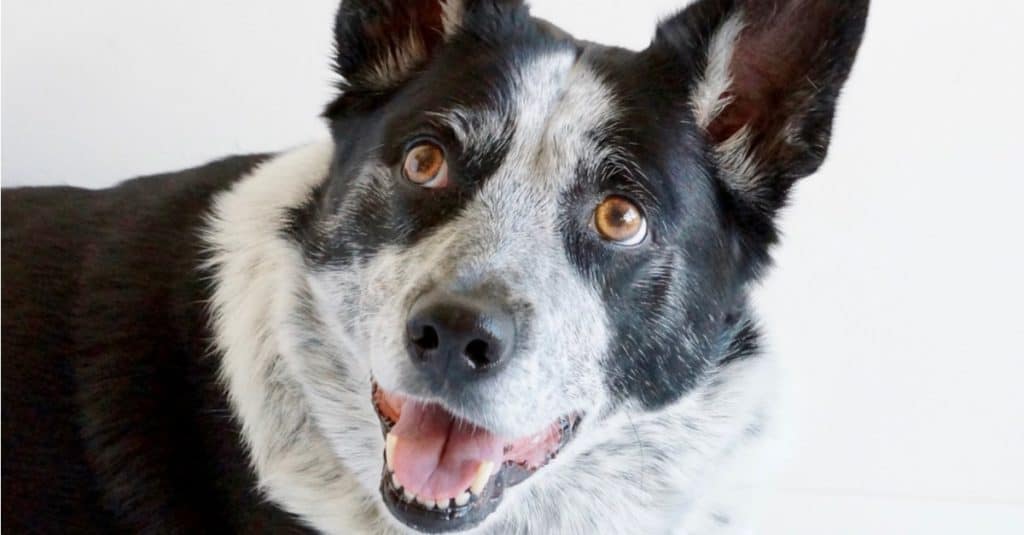
Close-up of Shollie, isolated on white background

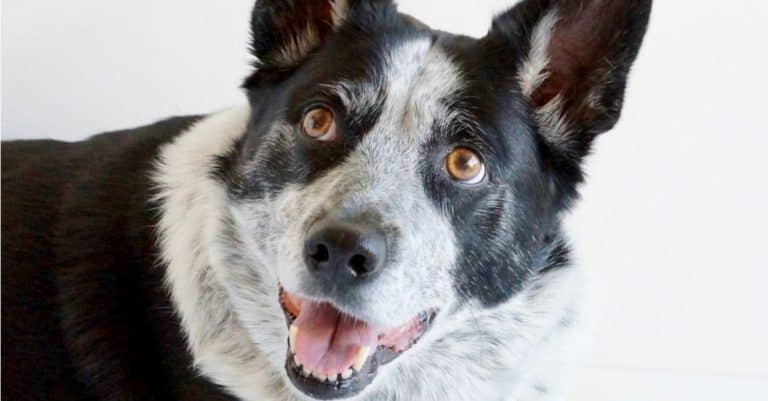
Shollies have a protective temperament and are a highly energetic breed.

Shollies are a very energetic breed with protective temperaments. If you rescue a Shollie, you’ll own a dog that works well with kids if socialized to them from a young age. Puppies that bond with their family members will grow into loyal members of the household throughout their lifespan.

These dogs need at least an hour of exercise every day to curb destructive behaviors like chewing furniture. However, this is a small price to pay for such a loyal companion. They make a great partner for those with active lifestyles or those who want a dog suited for tests of strength and intelligence, like agility or dock jumping. Shollies are ill-suited for apartment life and would much prefer a large, open area to run around in.

Because of their German Shepherd heritage, these dogs may be unkind to or wary of strangers and guests in your home. In this regard, they also make good guard dogs.

How To Take Care of Shollie

Shollies are a crossbreed that requires a fair amount of upkeep. They need to be groomed and exercised very regularly in order to remain healthy and happy. However, the payoff is a smart and energetic companion who makes a great addition to a busy, active household.

The Best Dog Food

Shollies require high-quality food to maintain their active lifestyle. This food may come at a high price, but it is essential for a long lifespan and a healthy dog. For dogs susceptible to bloat, owners should use caution not to allow exercise and meal times too close together. Always consult your veterinarian when deciding on properly feeding your pet Shollie.

Shollie puppy food: Puppies require different nutrition from adult dogs, so always choose food specially formulated for puppies when feeding your young Shollie.

Shollie adult food: Shollies will need to be monitored to make sure they do not gain too much weight, which will hurt their joints and cause discomfort. Food with a high amount of protein and real meat will help them maintain their high energy levels.

Maintenance And Grooming

Shollies will require daily brushing to maintain a healthy coat and prevent excessive shedding. Owners can use this opportunity to check their dog’s ears for grime, as well as their teeth for general cleanliness. Brushing can be a great bonding experience between a rescue Shollie and its owner. Shollies who spend a lot of time outside may need their paw pads cleaned and trimmed to keep debris from getting stuck inside.

Training

If you’re looking for a smart, attentive designer breed, the Shollie is an excellent choice. These intelligent dogs will be eager to learn and love to learn tricks and skills like agility and fetch. Both the German Shepherd and the Border Collie parents contribute traits of being hard workers who love to learn.

The best way to break a Shollie of any bad habits is to start training early and to make sure this large breed gets plenty of time to run around and release pent-up energy.

Exercise

Shollies are a highly active breed, and those who live a sedentary lifestyle should not consider this breed. At a minimum, they require an hour of exercise a day, and a large yard to run around in is considered a bonus. They enjoy activities like herding and agility, which benefit both their minds and their bodies. They are also excellent bonding exercises as both dogs and owners learn from each other.

Puppies

Shollie puppies should be rescued or obtained from reputable breeders only. They should be in good health, and the parents’ background info should be double-checked. Shollie puppies should have a high amount of energy — puppies that are lazy or slow may have an underlying health issue. Begin training your Shollie puppy early to teach them good behaviors and bond with them right away.
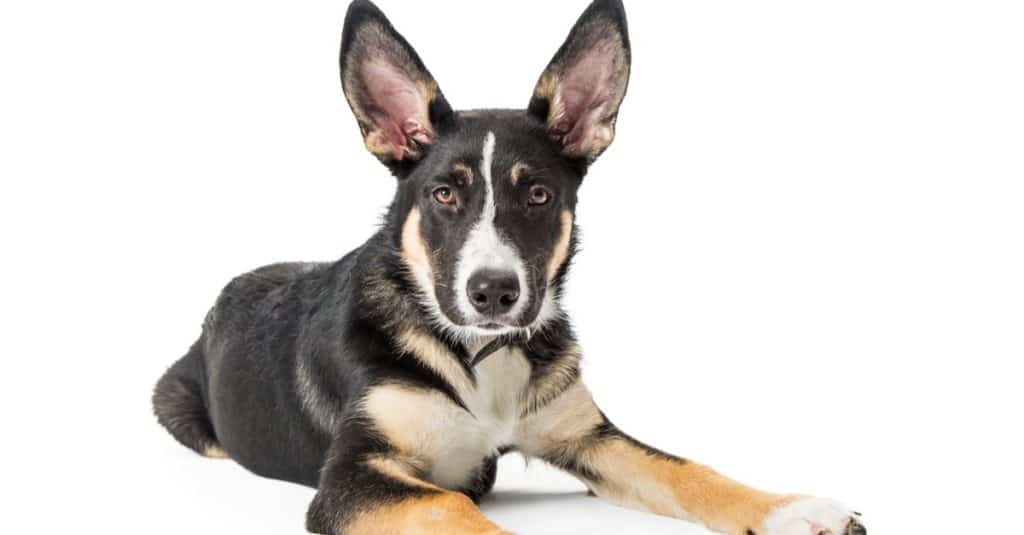
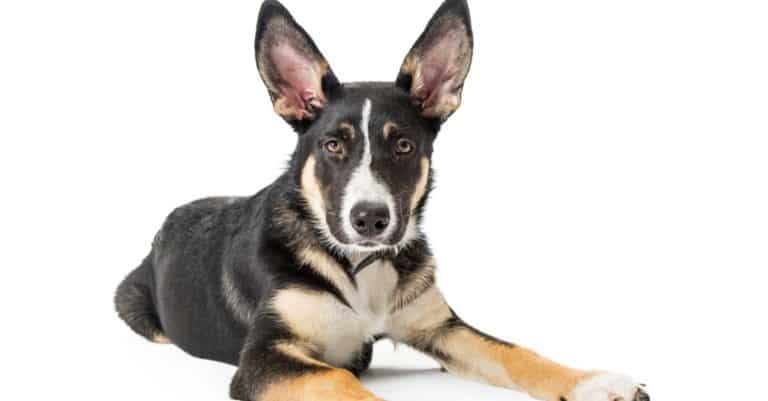
Young Shepherd and Border Collie mixed breed, Shollie, dog with big perky ears lying down on white background.

Shollies can make great companions for young children if they are introduced to the family at a young age.

Shollie And Children

If Shollies are integrated into the household at a young age, they will be excellent companions for young children who see as part of the family. Shollies are herding dogs, so they may try to “herd” young children around the house and yard. These are large dogs, so some amount of roughhousing and play can be tolerated.

However, Shollies are also wary of strangers. Keep this in mind if any children enter your Shollie’s space that they are not familiar with.

Dogs similar to Shollie

  • Border Collie: This herding dog is one-half of the Shollie mix breed heritage. They provide the intelligence and love of agility games with a friendly, energetic spunk.
  • German Shepherd: The German Shepherd is the other half of the Shollie mixture. This protective breed will always be a loving companion and protector of the household.
  • Australian Shepherd: These beautiful herding dogs are renowned for their coat colors and their herding abilities.
View all 391 animals that start with S

Sources

  1. Dogtime / Accessed April 19, 2021
  2. The Happy Puppy Site / Accessed April 19, 2021
  3. Petfinder / Accessed April 19, 2021
  4. Doggie Designer / Accessed April 19, 2021
  5. Love Your Dog / Accessed April 19, 2021
  6. Rover / Accessed April 19, 2021

Rebecca Bales

About the Author

Rebecca Bales

Rebecca is an experienced Professional Freelancer with nearly a decade of expertise in writing SEO Content, Digital Illustrations, and Graphic Design. When not engrossed in her creative endeavors, Rebecca dedicates her time to cycling and filming her nature adventures. When not focused on her passion for creating and crafting optimized materials, she harbors a deep fascination and love for cats, jumping spiders, and pet rats.
Connect:

Thank you for reading! Have some feedback for us?


Shollie FAQs (Frequently Asked Questions)

A Shollie is a newly popular hybrid breed. It is a crossbreed between a German Shepherd and a Border Collie.