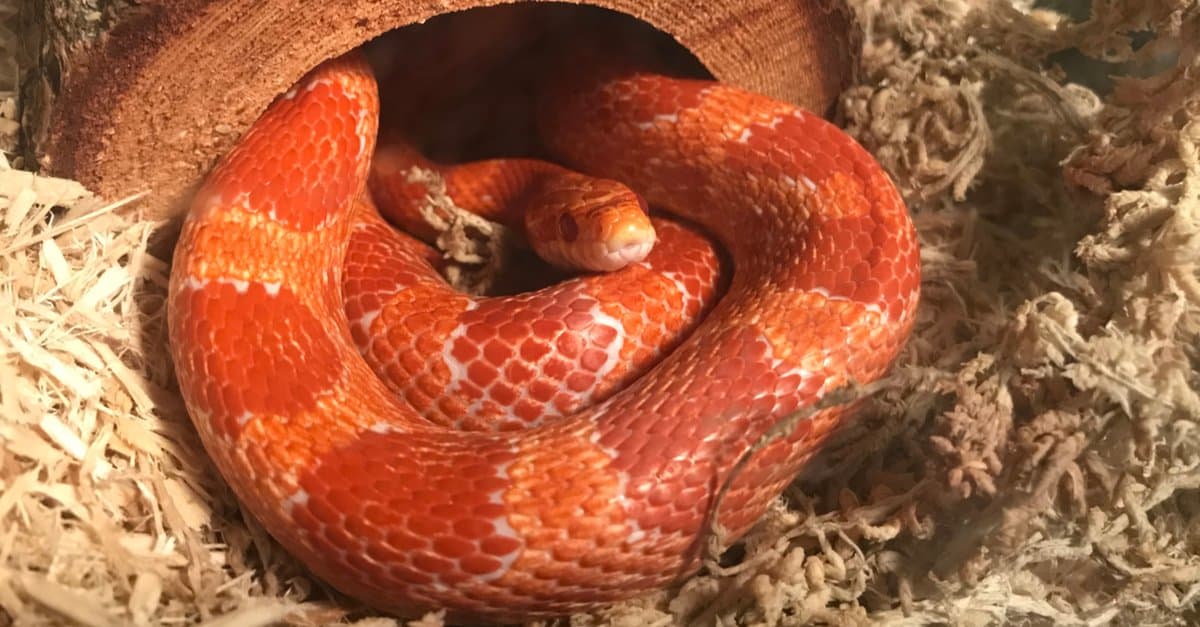

Clad in bright orange and red patterns, the corn snake is endemic to the Southeastern United States. In the wild, it lives in large fields, tall trees, forest openings, and abandoned or empty buildings, where it feeds on rodents, bird eggs, amphibians, and other reptiles. The origin of the name isn’t known, but it is possible that the snake’s color patterns were thought to resemble corn or that it’s often found near grain stores. While superficially resembling a venomous copperhead, this harmless snake is a huge benefit to people by keeping populations of disease-carrying vermin in check; it’s closely related to the non-venomous rat snakes. Continue reading to learn more about these fascinating reptiles and how big they can get.
Corn Snake Size
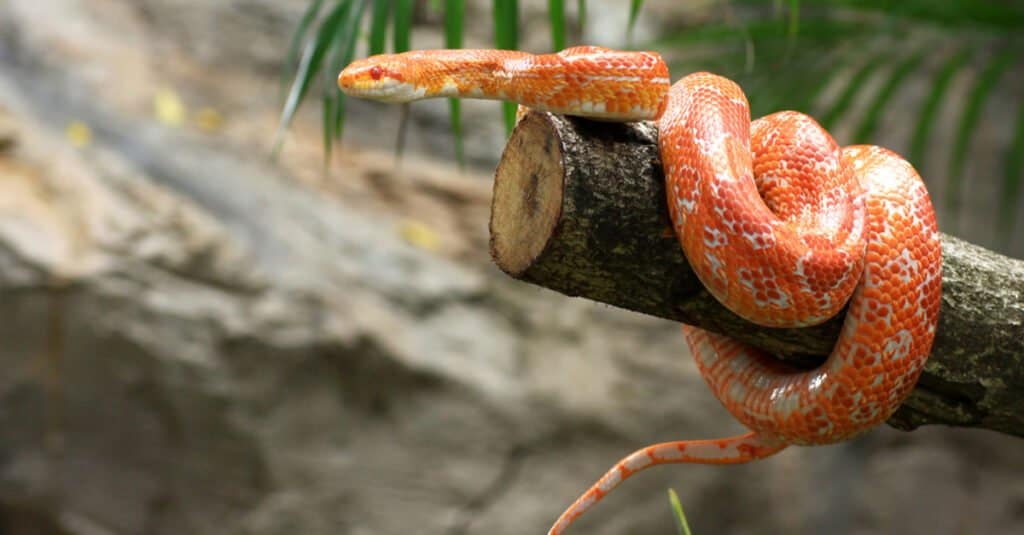
A corn snake is generally considered mature when it reaches two to three years of age.
©KAMONRAT/Shutterstock.com
A healthy, full-grown adult corn snake typically reaches a length of between four and six feet and a diameter of about an inch, and weighs around 1.5 pounds. Their impressive size is first evident immediately after hatching when they measure eight to 12 inches long. This is followed by a period of rapid growth. By the time they are six months old, juvenile corn snakes are between 20 and 30 inches long. Once they are a year old, corn snakes should measure between 35 and 40 inches long. By their third year, corn snakes are considered mature and often measure up to four feet long. Although they continue to grow throughout their lives, their growth rate slows down significantly with age.
How Often Does a Corn Snake Shed?
Wild corn snakes live for 6 to 8 years, while those in captivity can live for 15 to 25 years when well cared for.
©Jose Bergadá/iStock via Getty Images
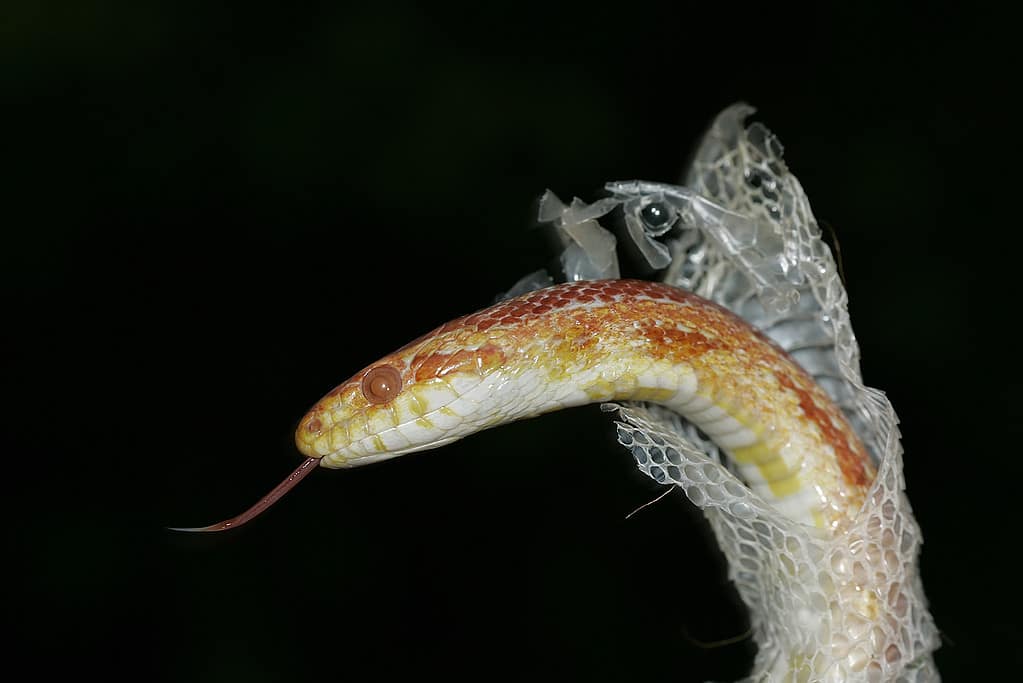
Snakes shed their skin, a process called molting or ecdysis, primarily to allow for growth and to remove parasites. As snakes grow, their skin doesn’t, so they need to shed the old, tight layer for a new, roomier one. Shedding also helps snakes get rid of mites and other parasites that may have attached to their old skin.
Juvenile corn snakes shed every three to five weeks. However, as they begin to age, the time between molts increases to five to eight weeks. Once they reach adulthood, corn snakes molt four to six times per year, a frequency that is maintained throughout their lives.
In the wild, corn snakes live for 6 to 8 years, while those in captivity can live for 15 to 25 years.
Pet Corn Snakes and Best Practices
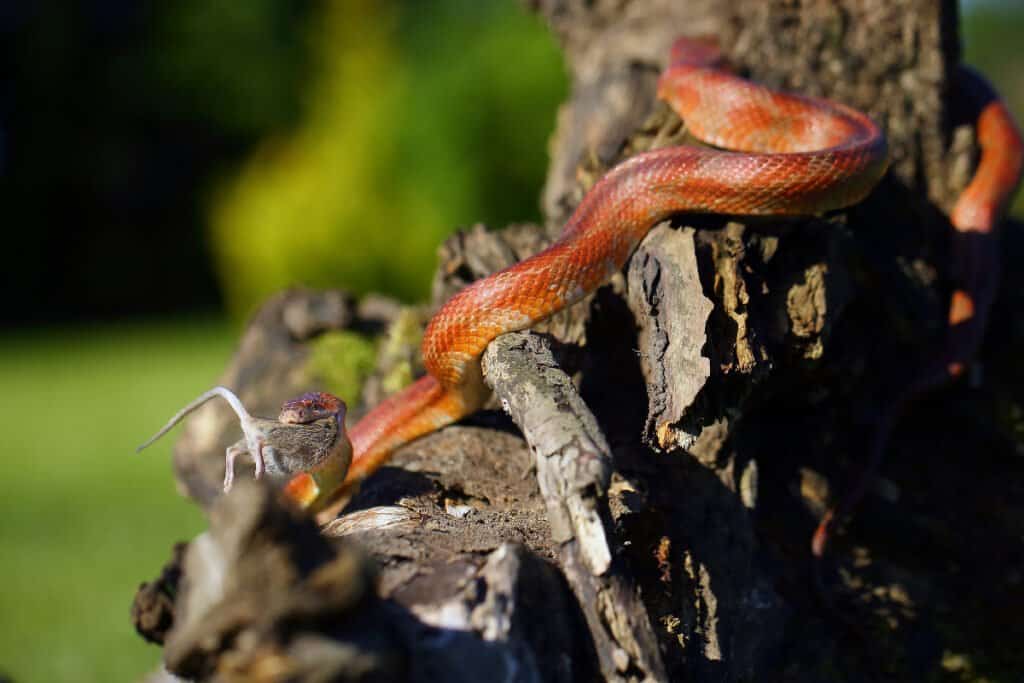
Corn snakes are carnivorous, feeding primarily on rodents, such as mice and rats.
©Karel Bartik/Shutterstock.com
A well-cared-for snake should achieve all of its growth benchmarks with ease, eventually reaching a full length of four to six feet. Diet is the most important factor in the growth of a young snake. Guardians should provide a frozen mouse or rat, thawed or warmed (not microwaved) to room temperature, about once every week or two, preferably during the daytime.
The environment also plays an important role in snake health. The habitat should be set to an appropriate temperature (usually between 70 degrees and 85 degrees Fahrenheit) and humidity level, between 40% and 60% under normal circumstances, and as much as 70% when it’s shedding.
While corn snakes benefit from a regular day-night cycle with visible light, they do not require ultraviolet (UV) light exposure. Providing 8 to 12 hours of visible light per day is sufficient.
While genetics play a role in a corn snake’s growth, proper nutrition and care during its juvenile stage are more important.
Appropriate Habitats for Adult Corn Snakes
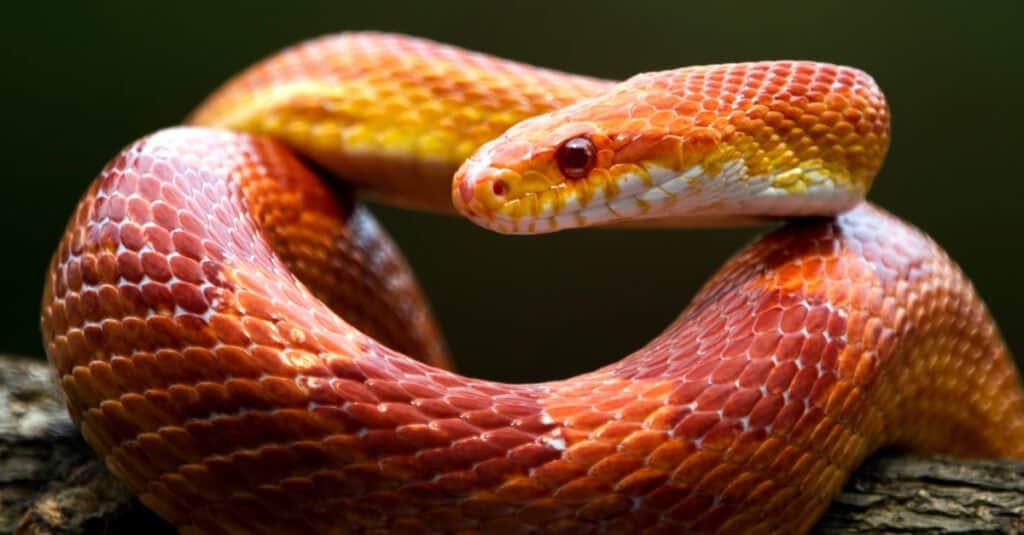
Corn snakes are most active from March to November.
©Kurit afshen/Shutterstock.com
The maximum habitat size for a full-grown corn snake should be somewhere in the range of 20 to 40 gallons. The tank should have a secure, locking lid to prevent escape. Juvenile corn snakes require less space. If you’re caring for a juvenile corn snake, a larger tank may be tempting, but experts recommend increasing the tank size gradually as the snake grows. A juvenile placed in a tank that is too large may feel intimidated. A tank that is too small can make the snake feel trapped or bored.