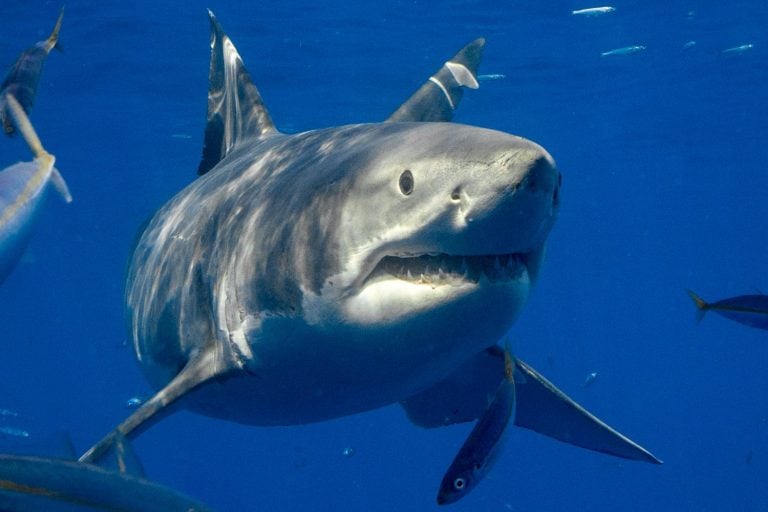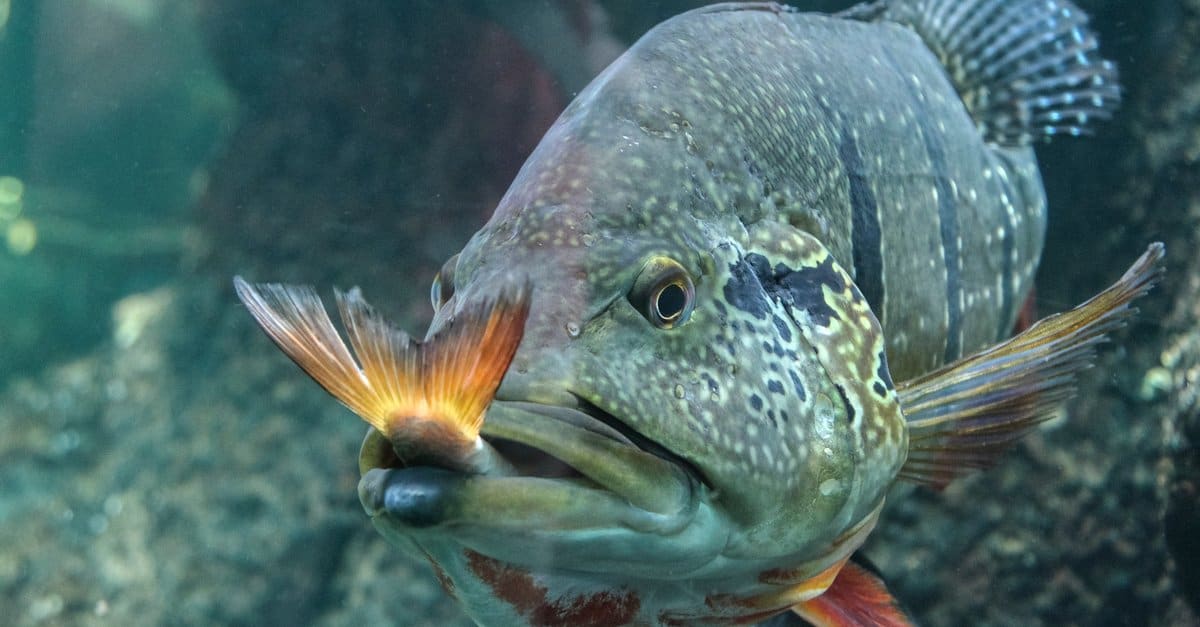

Fish rank as the most diverse group of vertebrates in the world. Scientists recognize over 37,000 distinct species, with many more waiting to be discovered. Most fish fall into the ray-finned group of bony fish. However, other groups include cartilaginous fish and jawless fish. Fish live at every depth and in every type of marine environment, from surface feeders to bottom feeders, and from freshwater to saltwater habitats. In this article, we’ll dive deep into the diet of different types of fish. Keep reading to find out what fish eat and how they hunt and forage for food.
Fish Diets
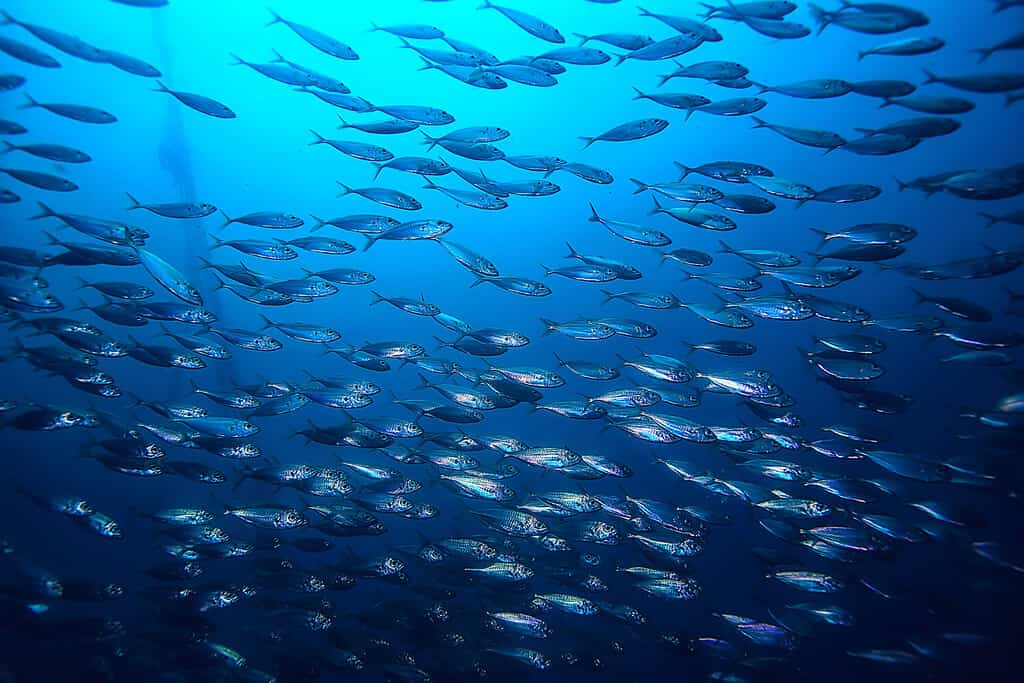
Most fish are opportunistic omnivores.
©Kichigin/Shutterstock.com
Just as fish species are extremely diverse, so are the foods that they eat. While some fish are classified as carnivores, others are herbivores or omnivores. Some fish feed on small organisms, algae, or detritus, while others only go after larger prey such as other fish. Typically, the foods that a fish eats vary based on its biology, size, and environment.
The majority of fish are opportunistic omnivores. Few fish eat a primarily plant-based diet, but there are some exceptions. For example, parrotfish feed on coral, while damselfish live off algae that grow on coral. Other fish, such as great white sharks, are carnivorous. Typically, fish eat whatever foods are most abundant in their environment, except fish that have evolved to eat a specific food. For example, scale-eating fish primarily live off the scales of other fish.
It would be impossible to list all the different foods that every fish species eats. Therefore, we’ve narrowed the list down to 10 foods that fish commonly eat. These foods include:
- Plankton
- Jellyfish
- Cephalopods
- Algae
- Crustaceans
- Mollusks
- Worms
- Insects
- Other fish
- Small amphibians and reptiles
Freshwater Fish vs. Saltwater Fish

Freshwater fish eat more insects than ocean fish do.
©bbevren / iStock via Getty Images
Geography also plays a major role in a fish’s diet, as fish are limited in their choice of food by their habitats. For example, river fish eat insects and insect larvae, worms, small crustaceans, mollusks, aquatic plants and algae, and other fish. A wide variety of insects is readily available in rivers, including mayflies, dragonflies, damselflies, midges, mosquitoes, and water beetles. Some larger fish will also prey on small reptiles and amphibians.
Saltwater fish also eat crustaceans and fish, but unless they live in coastal areas and feed off the surface, insects will not be a primary food source. Conversely, plankton is not as significant a food source for freshwater fish as it is for saltwater fish. Larger fish, including some whales and sharks, also eat marine animals like squid, octopus, and krill. Some large predatory sharks, such as great white sharks, may occasionally prey on mammals like seals and sea lions, but this is rare and not typical of most fish species. Ocean fish generally have a more varied diet, as the ocean offers a wider range of potential food sources than freshwater rivers, lakes, ponds, and marshes.
How Do Fish Hunt and Forage for Food?
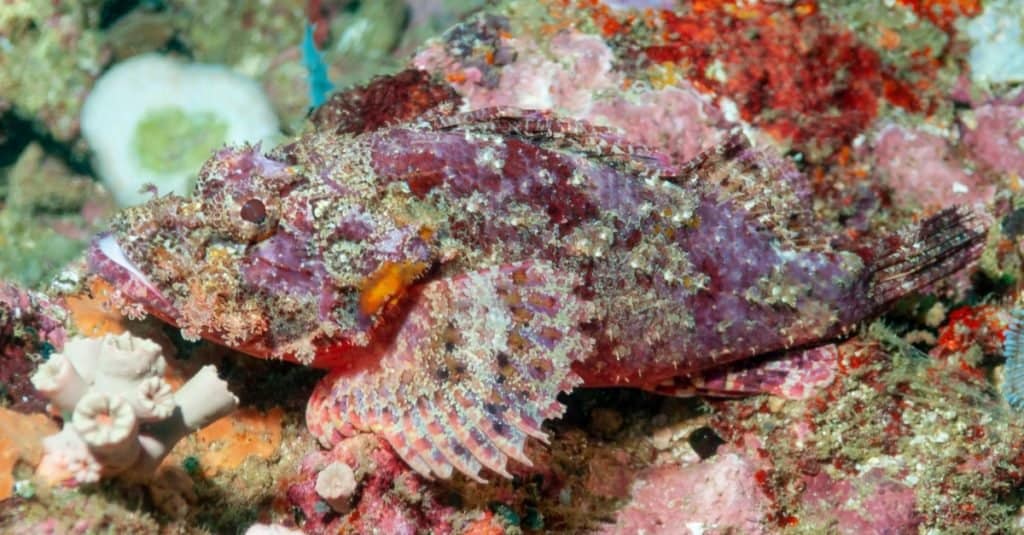
The scorpion fish camouflages itself to hunt for prey.
©Jesus Cobaleda/Shutterstock.com
Over millions of years, fish have evolved highly attuned senses to help them locate food. Many fish that live closer to the surface possess color vision suited for daylight. Deep-sea fishes have developed larger eyes suitable for seeing in low or no light. Some species also rely on lateral lines to help them detect the motion of the water and changes in pressure.
In addition, fish use a process known as chemoreception that enables them to “smell” in water. Chemoreceptors allow fish to taste objects they touch and smell chemicals present in the water. Others, such as sharks, can determine which direction a scent is coming from and detect one part per million of blood present in seawater.
Generally speaking, most fish rely on stealth and speed to catch live prey. Predatory fish will swim around until they locate a target, then sneak up on it until they’re close enough to catch it by surprise. Some fish, like the goatfish, hunt in groups and use strategies to distract, disorient, and pick off prey.
Fish like the scorpion fish use camouflage, which enables them to wait until unsuspecting prey swims by. Others, such as the stargazer, bury themselves in the sand and then lunge out to ambush prey. Finally, bottom-feeding fish typically scour the seafloor in search of detritus or leftover remains from the meals of other marine animals.