
Snakes get rid of waste in the same way that other animals do. Once everything has been completely digested, the waste goes through an opening near the end of the tail. However, because snakes’ bodies are long tubes and they swallow their food whole, digestion is not as straightforward as it is in other animals. Keep reading to learn more about snakes’ digestive process and find out how snakes poop.
Four Quadrants of the Snake
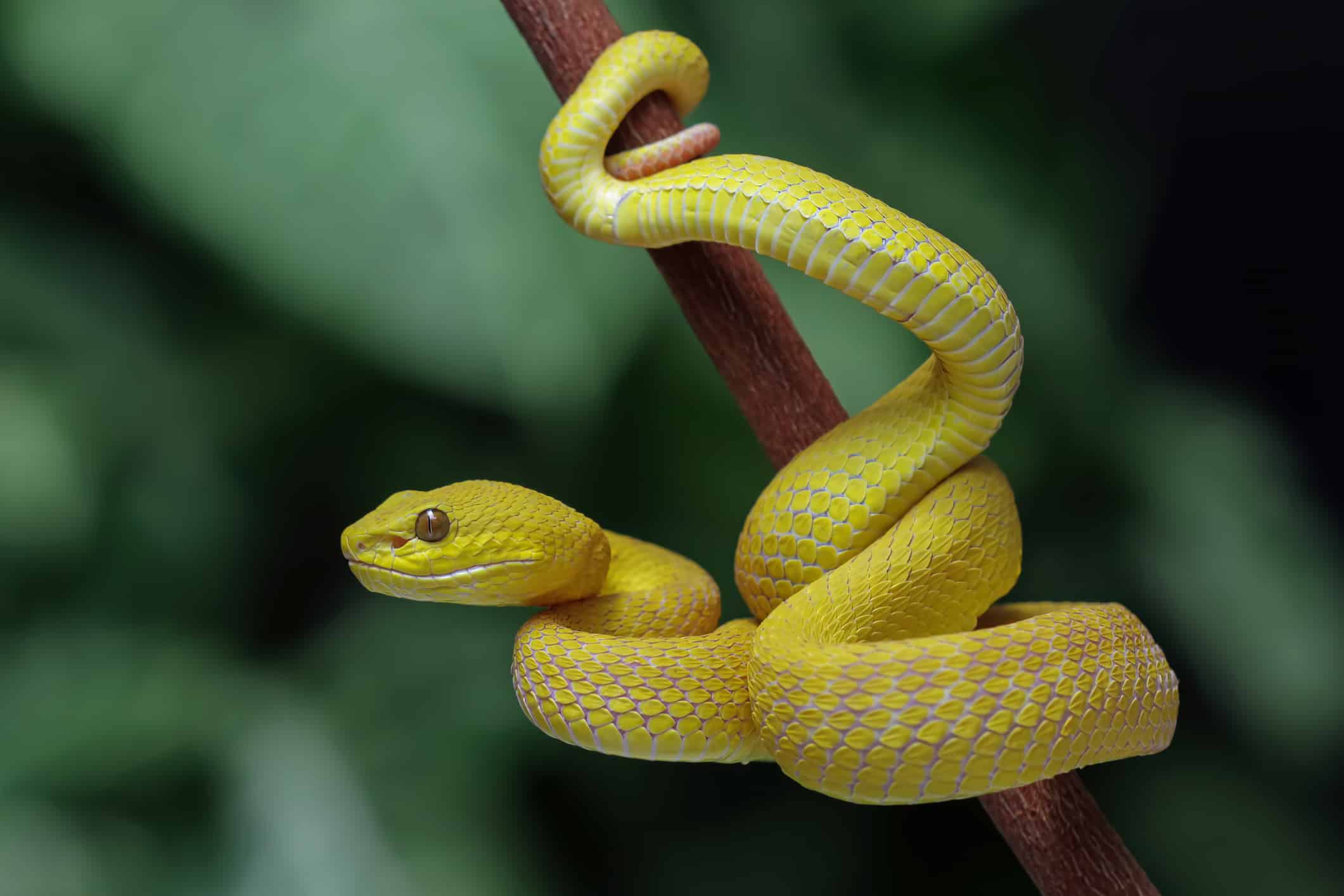
Biologists divide the snake’s body into four quadrants that coincide with the placement of their internal organs.
©Worraket/Shutterstock.com
Before discussing the specifics of snake digestion, it helps to understand some of the basics of snake anatomy. Biologists divide the snake’s body into four quadrants that coincide with the placement of its internal organs. Since food passes straight from the head to the tail, it’s relatively easy to trace the digestive process from start to finish through each quadrant.
The first quadrant contains the mouth, trachea, and esophagus. It also houses the heart and several glands that are not directly related to digestion. The esophagus continues through the second quadrant, which also contains the lung and liver.
The esophagus terminates directly into the stomach in the third quadrant, where the snake’s body starts to break down the ingested material. As the food breaks down, it passes into the small intestine. Then it moves to the large intestine, which is located in the fourth quadrant, before being excreted through the cloaca.
Food Consumption
A snake’s eating habits are directly related to how it poops. Some species consume large meals at infrequent intervals, particularly in the wild. A snake may consume an entire rabbit and may not eat again for weeks or months. This means that they digest and eliminate a large amount of waste all at once. However, it won’t defecate again until after its next meal.
After a large meal, a snake’s body mass can increase significantly. Typically, 5-10% of a snake’s body weight may be composed of feces after a large meal, though in rare cases it can reach up to 20% However, domesticated snakes that eat many smaller meals will pass smaller amounts of waste more frequently than their wild counterparts. Owners of pet snakes are advised to research the ideal meal frequency and size according to the species, age, and weight of their pet.
Initial Digestion
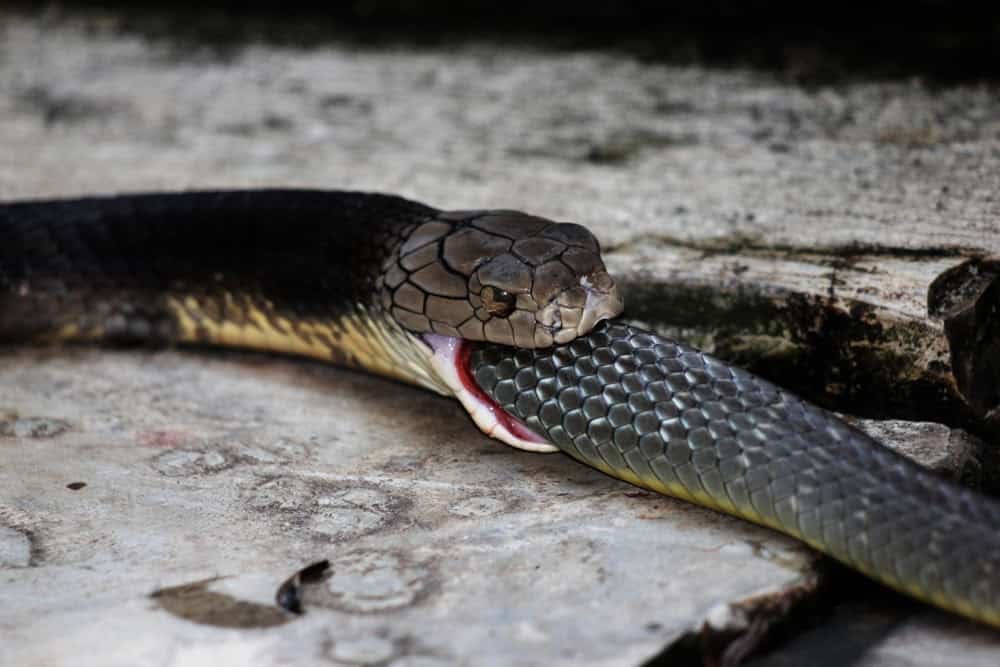
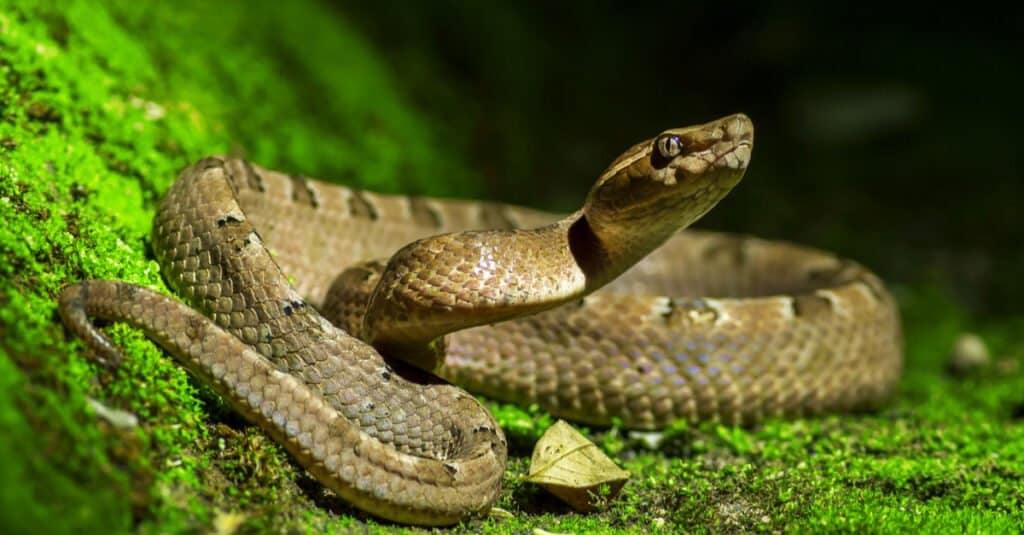
Snakes do not chew their food; they swallow it whole.
©Padodo/Shutterstock.com
Humans and many other mammals begin the digestive process in their mouths, but this is not the case for snakes. Snakes do not chew their food, so their teeth are primarily for injecting venom or latching onto their target. Their saliva also doesn’t have the same properties as that of mammals, so it mostly serves to protect the interior tissue and lubricate the esophagus.
Food passes through the esophagus in much the same state that it entered the snake’s mouth. The esophagus has folds that allow it to expand to accommodate large prey. This tube-like organ secretes various enzymes and acidic chemicals that break down solid matter into smaller bits. Wave-like movements in the esophagus push the food down into the stomach.
The snake’s stomach secretes gastric juices and digestive enzymes, which further aid the digestive process. Food can remain in a snake’s stomach much longer than it does in a mammal. Some meals linger for days or weeks before passing to the intestines.
Nutrient Extraction
Once it has been thoroughly broken down by the stomach, food material passes through a valve called the pylorus. This leads into the small intestine for the absorption of nutrients. The first section of the small intestine is called the duodenum and is built with a thicker wall than the rest of the organ. Several organs and glands, including the pancreas and liver, secrete various chemicals into the intestines to facilitate digestion.
The length and shape of the small intestine vary among snake species. Some are essentially straight from the stomach to the colon, while others have loops that extend their effective length to ensure more efficient absorption of nutrients. In either case, the small intestine eventually empties into the large intestine, which completes the nutrient extraction process and prepares waste for elimination.
Final Waste Disposal
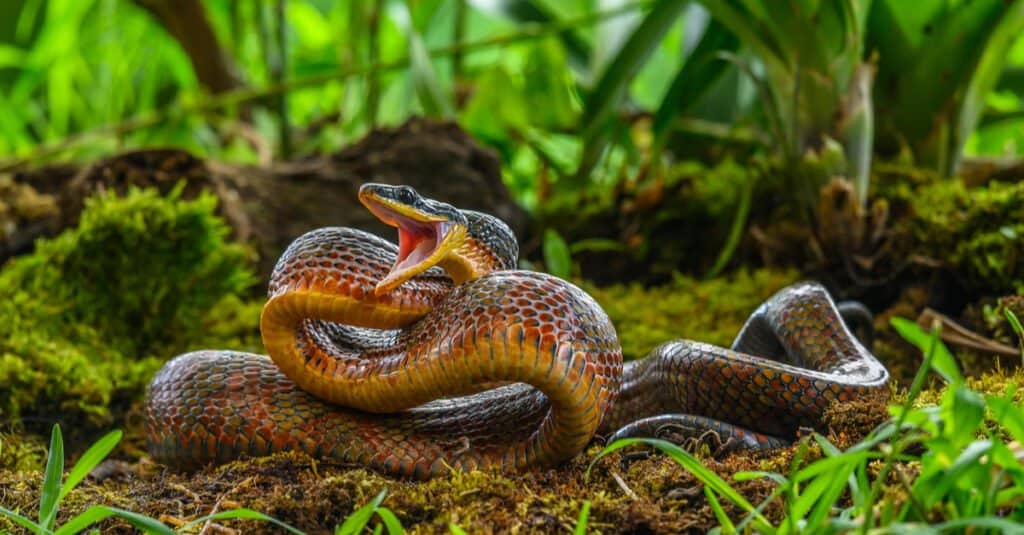
Snakes typically deposit the waste from a meal all at once.
©Vaclav Sebek/Shutterstock.com
Snakes typically deposit the waste from a meal all at once, so feces are stored up near the end of the large intestine until all of the food has been fully digested. The large intestine terminates in a chambered structure called the cloaca, which also functions as the point of elimination for urine. The coprodaeum collects feces, and the urodaeum collects urine from the ureters and reproductive products, which are eggs in females and sperm in males.
Feces and urine are eliminated simultaneously after being passed into the rearmost chamber of the cloaca, which is known as the proctodeum. This chamber collects all of the animal’s waste material before passing it out of the body. Depending on the species, snakes may have spurs and scent glands around this opening. The outside of the opening is called the vent.
Potential Complications
The extreme nature of snake eating and defecation habits can be the source of serious health risks. Impaction is a particularly dangerous complication of the digestive process. This happens when food or waste matter becomes lodged in the digestive tract, typically the intestines, and does not move for prolonged periods. This can prevent nutrients from entering the animal’s bloodstream and ultimately rupture the organ, leading to death.
Vent prolapse is another serious complication that can arise spontaneously but is often associated with extreme constipation or impaction. Straining when passing excrement can push part of the intestine outward and typically requires immediate medical intervention. Several types of bacterial and protozoan infections can disrupt a snake’s digestive system and ability to pass feces safely.