
If you sat down to make a list of animals that can bite, which ones would you include? Your list would likely contain dogs, cats, foxes, bears, and other mammals. If you included insects on your list, you’d probably name mosquitoes, ticks, and spiders. Yet, what about butterflies? Continue reading to learn the answer to the question: Do butterflies bite? Also, find out whether caterpillars can bite.
Do Butterflies Bite?
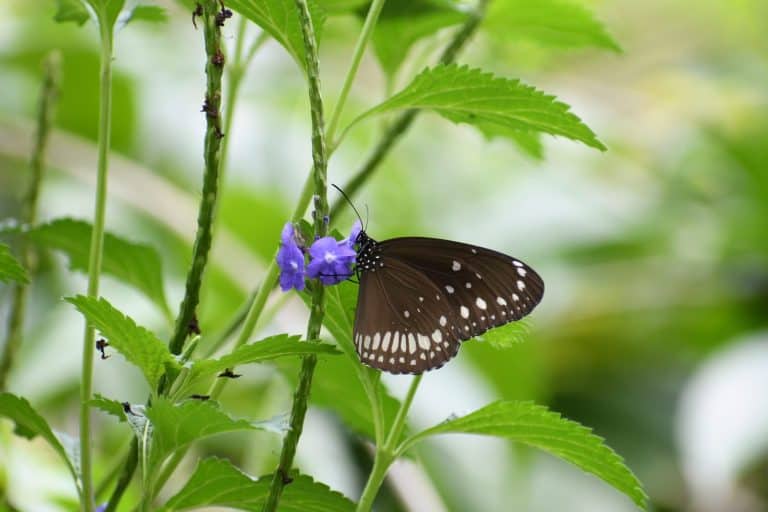
No, butterflies do not bite. Butterflies do not have teeth or pincers, so they are unable to bite. Yet, if they don’t have teeth, how do they chew their food? They don’t have to. These insects survive on a liquid diet. Butterflies drink flower nectar and suck up sugary juices from rotting fruit. This is why you see butterflies fluttering near fruit that’s fallen onto the ground beneath a tree.
Butterflies also lack spiky hairs or stingers, so they can’t bite or sting humans, other insects, or animals. Their tube-like proboscis is used for sucking up liquids. Although other insects like mosquitoes also use a tube-like proboscis for drinking blood, a butterfly’s proboscis is not designed for this purpose. Think of the proboscis as a straw you use to enjoy your favorite drink. When a butterfly is finished drinking its meal, it rolls up its proboscis so it doesn’t get in the way when it flies off.
Furthermore, these beautiful fliers drink muddy water in a behavior called puddling. They do this to obtain nitrogen, amino acids, and other nutrients from the muddy liquid. Sometimes butterflies drink blood to benefit from the nutrients contained in that bodily fluid, but not human blood. Some butterfly species feed on fluids from dead animals or carcasses, obtaining nutrients such as salts and amino acids. A butterfly isn’t able to pierce skin with its proboscis, so it drinks blood from existing wounds.
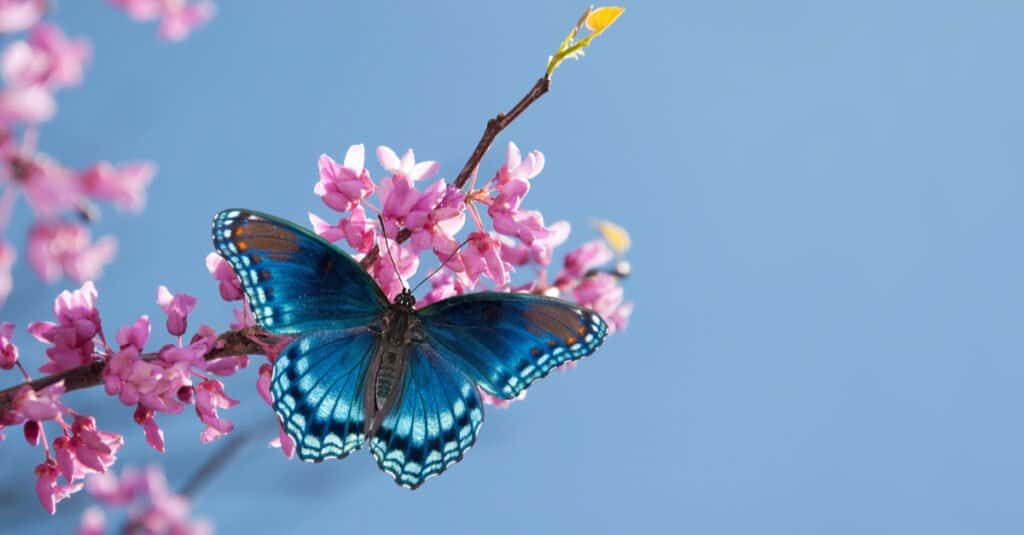
Butterflies do not have teeth or pincers, so they cannot bite.
©Sari ONeal/Shutterstock.com
Why Do Butterflies Look Like They Are Biting?
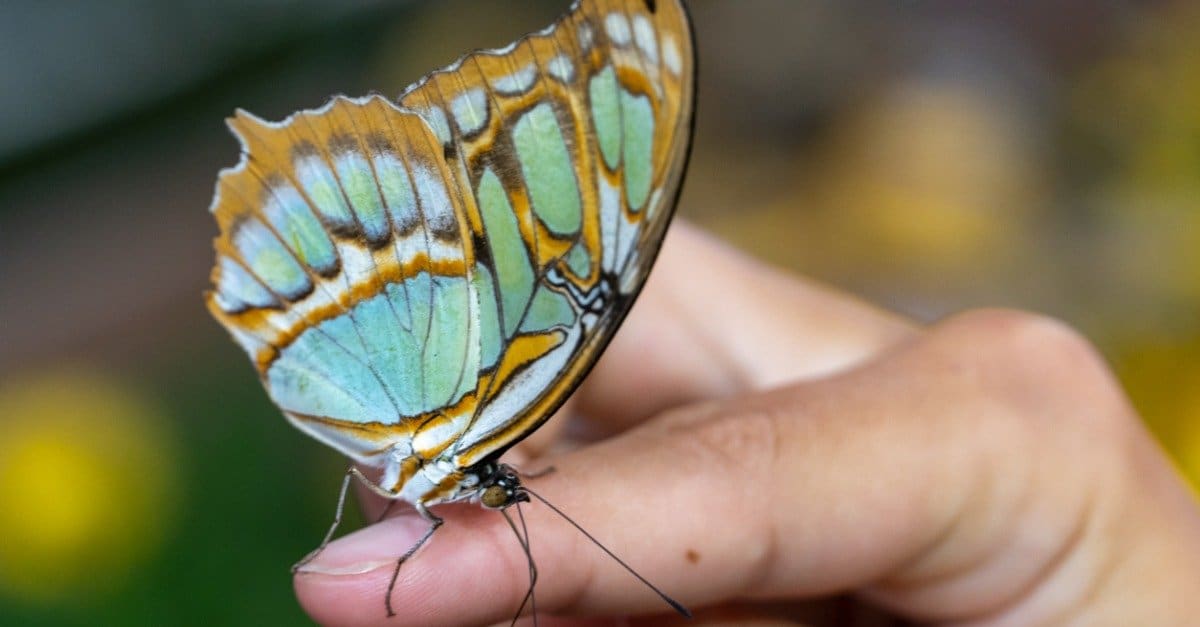
If you’ve ever toured a butterfly exhibit or even stood still for a while in a local park, you may have been lucky enough to have one of these insects land on your hand or arm. If you watched the butterfly’s behavior closely, you may have noticed it lowering its proboscis to your skin. However, as you now know, butterflies cannot bite. So, what is it doing? Butterflies drink sweat. To some people, this looks like the insect is about to bite.
It has taste receptors in its feet, so the moment it lands on a sweaty arm or hand, a butterfly knows it’s time to drink. When a butterfly detects something poisonous or bitter-tasting with its feet, it flies away to avoid ingesting anything harmful. Butterflies drink sweat because of the salt in it. A tiny butterfly proboscis on your skin may feel a little ticklish, but it certainly won’t hurt. It’s amazing to think that a person’s sweat can serve as nourishment for a butterfly.
How Do Butterflies Defend Themselves Against Predators?
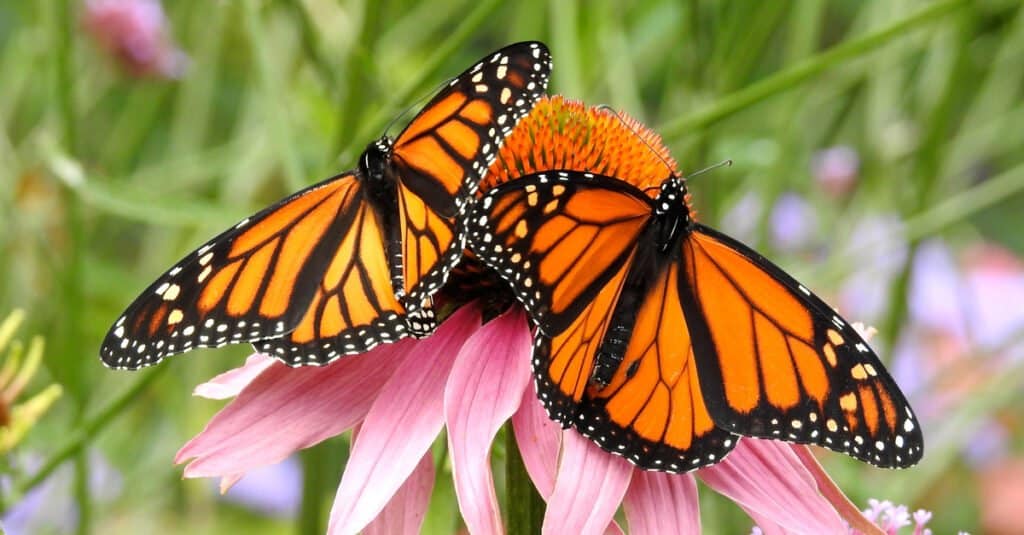
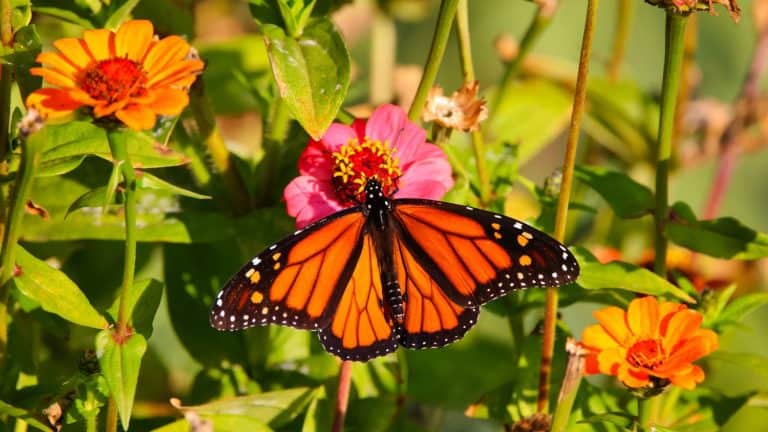
The beautiful, bright colors of the monarch butterfly help it to protect itself.
©Kate Besler/Shutterstock.com
If butterflies can’t bite or sting, how can they protect themselves against predators? Their bright colors are more than just decoration. These colors serve as a signal to predators that the insect is poisonous. This warning is enough to keep some predators from trying to capture it. A monarch butterfly is a great example.
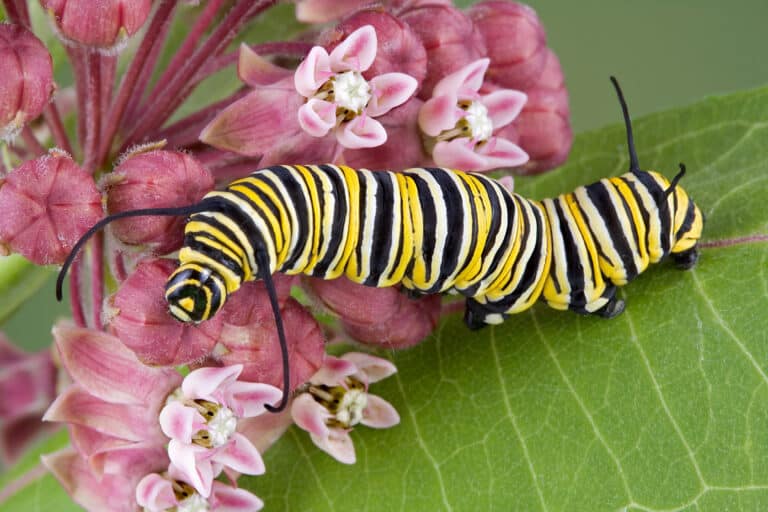
Milkweed is the main diet of monarch butterfly caterpillars. This plant contains toxins called cardiac glycosides. Cardiac glycosides can make an animal very sick or even kill it. Consequently, most animals stay away from milkweed. Yet, monarch butterfly caterpillars are an exception to the rule.
Over time, monarch butterfly caterpillars developed a resistance to the poison contained in milkweed. They’re one of the few insects that can feed on it. After consuming the milkweed, caterpillars carry the poison inside their bodies. As you may have guessed, this is an excellent defense against predators. Adult monarch butterflies retain some of this poison. A bird that tries to eat a monarch butterfly is going to become very sick from the toxins.
Eventually, birds that share a habitat with monarch butterflies become familiar with the butterfly’s colors and wing pattern. They learn to stay away from monarchs, knowing they contain poison. So, a monarch butterfly doesn’t need the ability to bite because it has a secret weapon.
Do Caterpillars Bite?
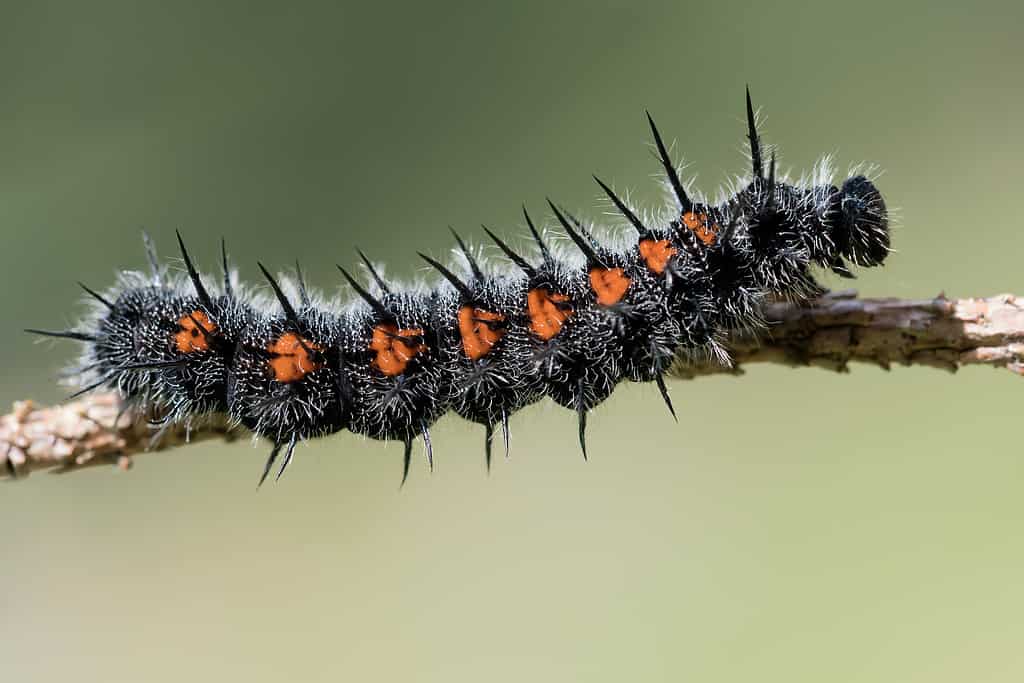
The spiny elm, or mourning cloak, caterpillar has black spikes that can cause skin irritation if you come into contact with them.
©Massimiliano Paolino/Shutterstock.com
Although butterflies don’t bite, caterpillars are a different story. A caterpillar has mandibles. Mandibles are jaws that work back and forth to chew up leaves and other vegetation. Although a caterpillar can bite into vegetation, it can’t bite a human.
However, some caterpillars have spines on their furry bodies that are capable of poking you if you inadvertently touch them. The spiny elm caterpillar is one example. It eventually turns into a mourning cloak butterfly. This caterpillar is black with tiny white dots and splashes of red. In addition, it has thin black spikes running down its body. The caterpillar does not sting, but these flexible spikes have poison in them that can cause skin irritation if you come into contact with them.