
Whether one is walking on a park trail or hiking in the woods, it’s exciting to see a snake in the wild. It could be a small one slithering through a pile of leaves on its way back to its hole. Or maybe it’s a large one stretched out on a rock or taking a swim in the water of a nearby creek. Chances are, when one sees a snake, the first thing one wonders is what kind it is. The second: Is it venomous? Continue reading to learn how to distinguish venomous snakes from non-venomous ones and to understand the difference between venom and poison.
Color of the Snake
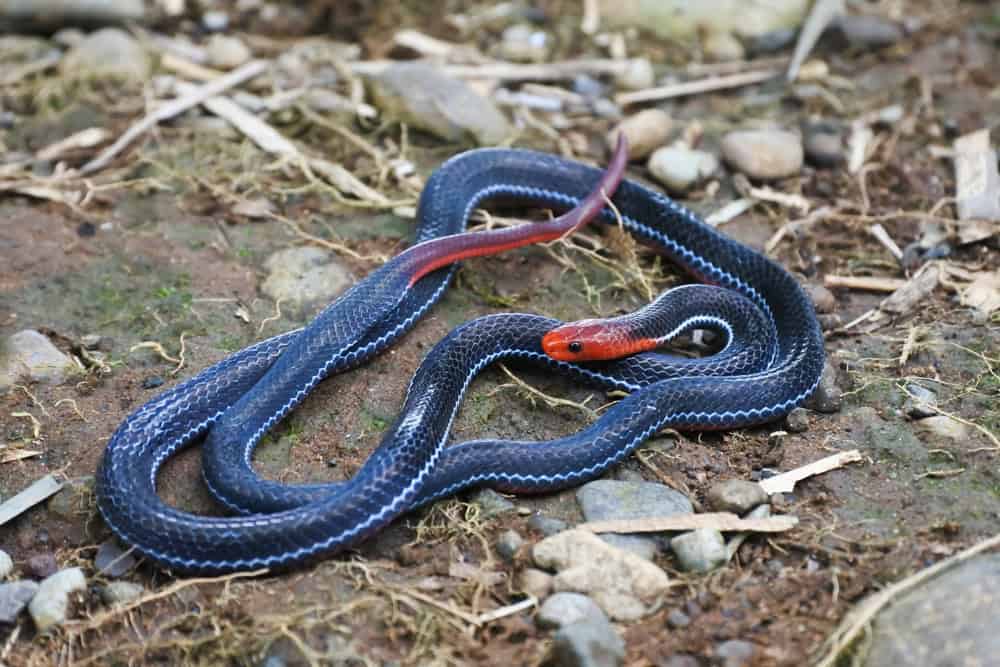
The blue coral snake, or blue Malayan coral snake, is native to Southeast Asia.
©Pepew Fegley/Shutterstock.com
Color is useful in identifying a snake. Many venomous snakes are brightly colored with striking patterns; this is true for many types of animals, including frogs and insects. Brightly colored scales are a warning to predators that a reptile is dangerous.
One example is the Blue Malayan coral snake (Calliophis bivirgata). It has dark blue or black scales featuring white stripes. Both its head and tail are bright red. Despite its small size, its venom is highly toxic and can cause rapid paralysis, but documented human fatalities are extremely rare.
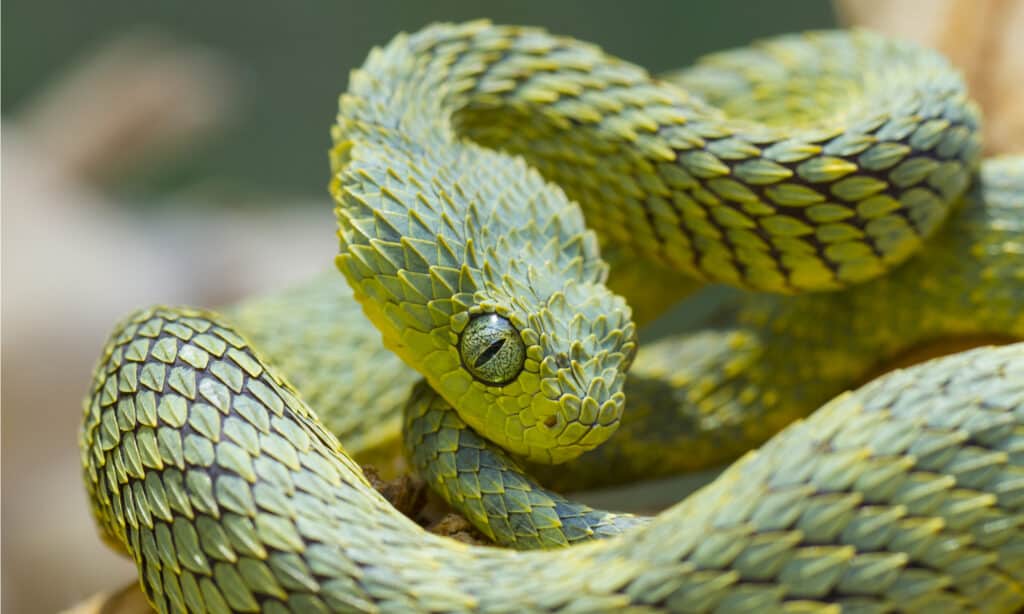
The green bush viper has a highly venomous bite.
©Will E. Davis/Shutterstock.com
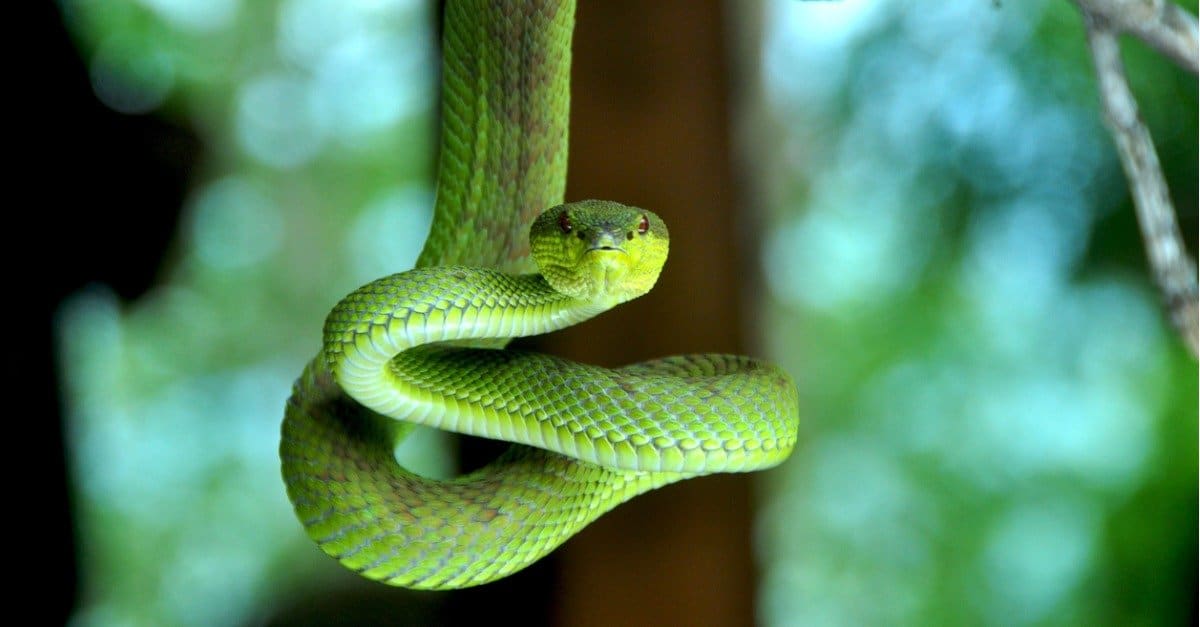
Another colorful venomous snake is the green bush viper (Atheris squamigera) found in Western and Central Africa. As its name indicates, this snake has bright green scales. It lives in the trees of tropical forests. Its venom can be dangerous and potentially life-threatening, but fatalities are rare, and there is no species-specific antivenin available.
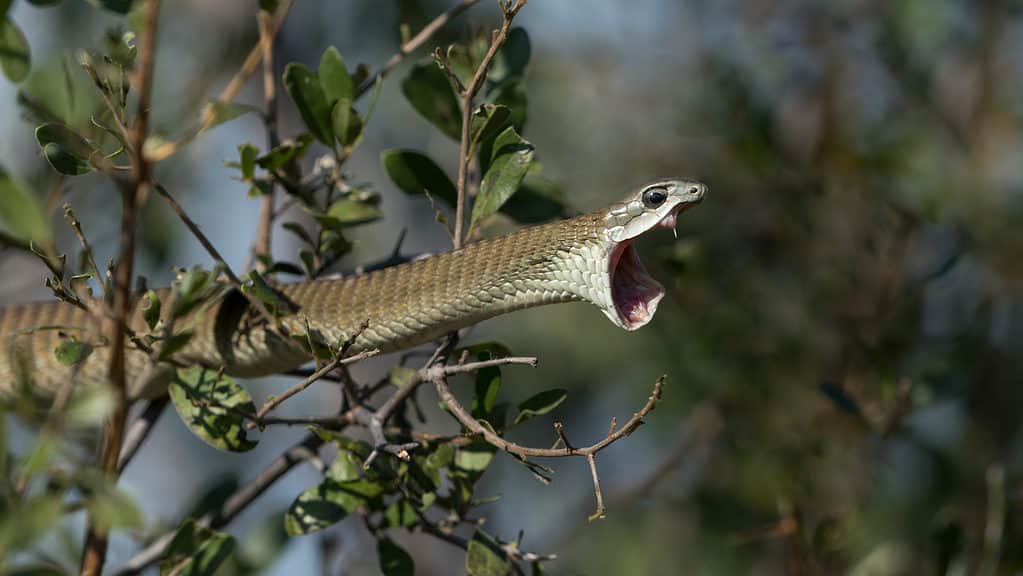
While extremely venomous, the boomslang is known for being a passive, shy reptile.
©Stu Porter/Shutterstock.com
The boomslang (Dispholidus typus) is another tree-dwelling venomous African snake. This species has a pattern of green and yellow scales. Despite being venomous, it has the reputation for being a passive, shy reptile. Its bite can cause internal bleeding, however, in addition to tissue and organ damage.
Mimicry in the World of Venomous Snakes
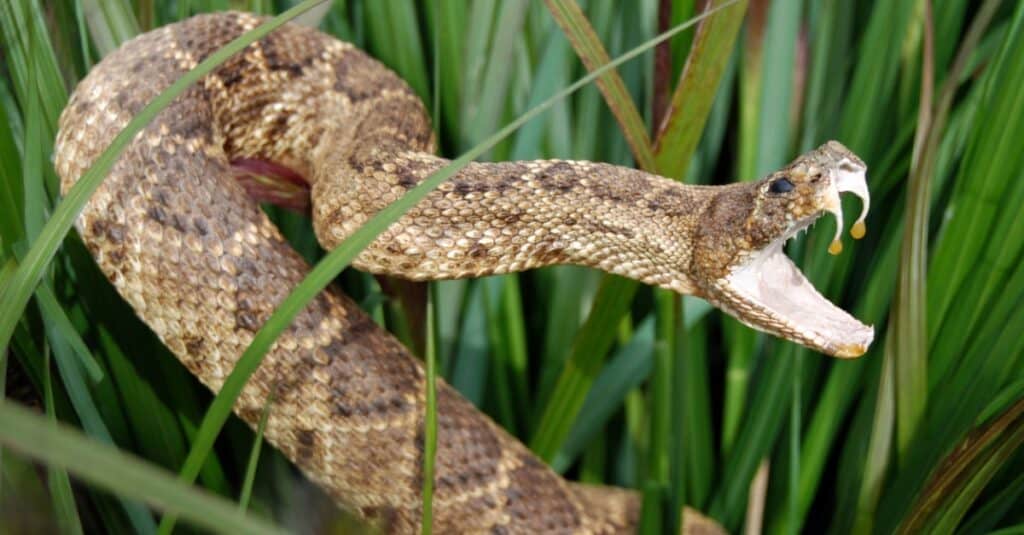
Non-venomous snakes will often adopt the color of a venomous snake.
©iStock.com/liveslow
When it comes to venomous snakes, mimicry is an important consideration. Mimicry occurs when a non-venomous snake adopts a color or pattern similar to that of a venomous snake.
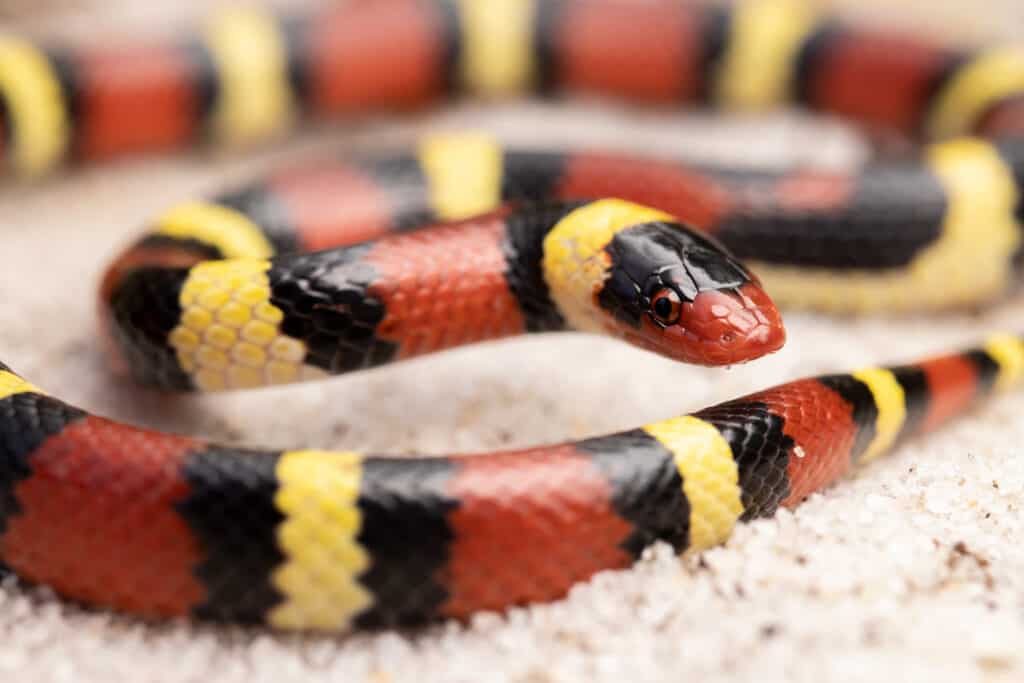
The snout of the scarlet kingsnake is always red, making for an easily identifiable feature.
© Radiant Reptilia/Shutterstock.com
One example is the scarlet kingsnake. The non-venomous scarlet kingsnake’s scales have a pattern of red, black, and yellow bands. Its appearance is very similar to that of the venomous eastern coral snake (Micrurus fulvius). The Eastern coral snake has alternating bands of red, yellow, and black. There are differences between these two reptiles, but at first glance, they look identical.
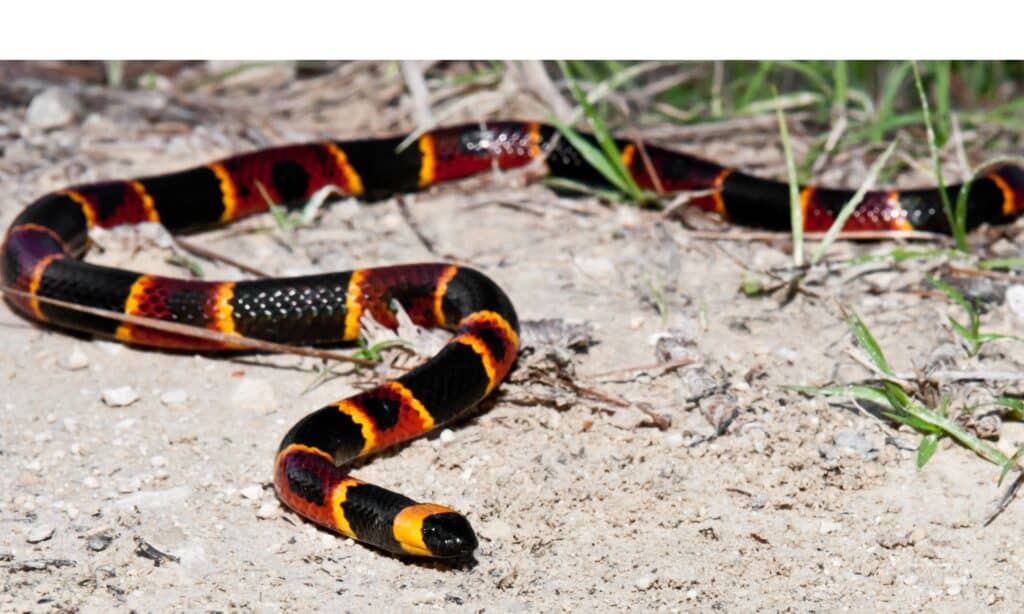
The eastern coral snake has a black snout followed by bands of yellow, black, yellow or white, red, and yellow—a pattern that repeats down to the tail.
©iStock.com/JasonOndreicka
There are advantages and disadvantages to a non-venomous snake mimicking the colors of a venomous one in the wild. One advantage is that a predator, seeing the bright colors, will think it is venomous. However, it is disadvantageous when a non-venomous snake is mistaken for a venomous one and is killed by a person who believes he or she has encountered a dangerous snake.
Shape of the Snake’s Head
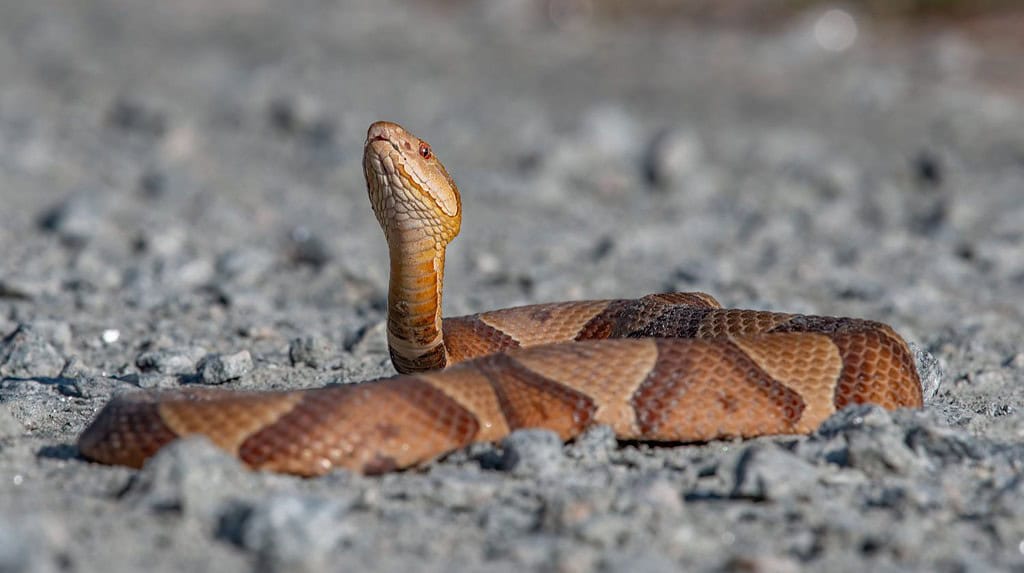
Copperheads are found from the Florida panhandle to the south, north to Massachusetts and west to Nebraska.
©Wirestock Creators/Shutterstock.com
A triangular head is sometimes an indication that a snake is venomous. Compare the size of its head with its neck, and you’ll see a notable difference in width. The copperhead (Agkistrodon contortrix) is a prime example of a snake with a triangular head. Most non-venomous snakes can also flatten their heads to achieve a similar triangular form, making themselves appear larger than they are.
Eyes of the Snake
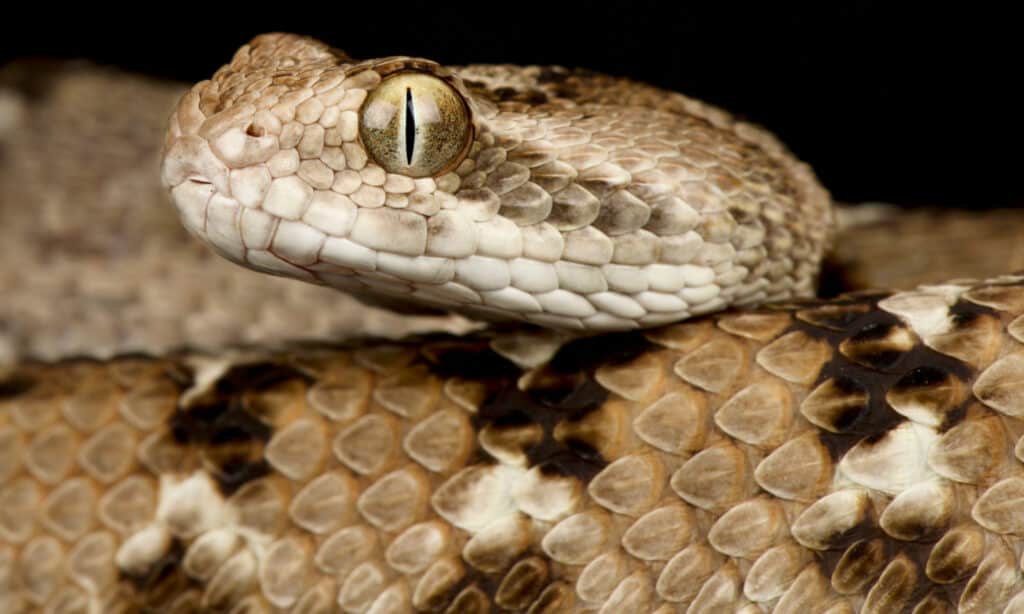
Saw scaled vipers have large eyes set close to their nose.
©reptiles4all/Shutterstock.com
Looking at a snake’s eyes in its triangular head can help in the identification process, provided there is enough light and one has an understanding of the local snakes. A snake with vertical pupils in North America could be venomous, but this is not always the case. Pit vipers are venomous and have eyes with vertical pupils. The Gaboon viper (Bitis gabonica), long-nosed viper, and the fer-de-lance are three of the many types of vipers.
As mentioned, the eastern coral snake is a venomous reptile in North America. However, its eyes are round, without a vertical pupil, like other elapids. These snakes are mostly diurnal and active during the day.
Venomous Snakes Can Bite Without Releasing Their Venom
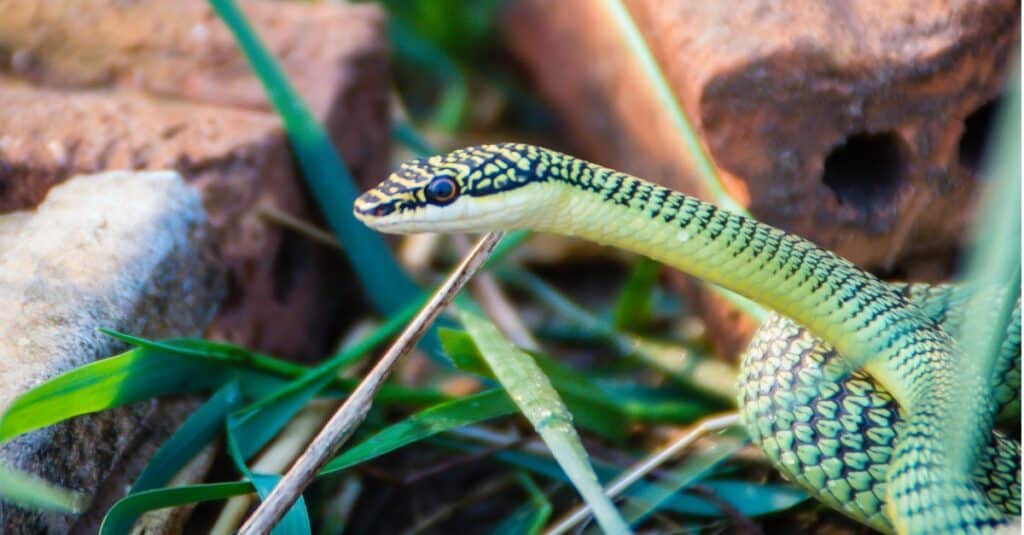
A dry bite is a bite that does not inject venom.
©iStock.com/Kwhisky
A venomous snake can give a human or another animal a dry bite. This is a bite that doesn’t inject venom. Scientists estimate that 20-25% of pit viper bites and up to 50% of coral snake bites may be dry. Because it is impossible to determine whether a bite is dry. Seeking medical attention is essential.
Size of Venomous Snakes

The smallest venomous snake, at a length less than a foot, is the Namaqua dwarf adder.
©Authentic travel/Shutterstock.com
Some venomous snakes are very large, while others are small. The smallest known venomous snake is the Namaqua dwarf adder (Bitis schneideri), which is less than a foot long. The king cobra (Ophiophagus hannah) is the largest, measuring up to 12 feet long.

The king cobra, the longest venomous snake, is endemic to forests from India through Southeast Asia.
©Mufti Adi Utomo/Shutterstock.com
Some of the Venomous Snakes in North America
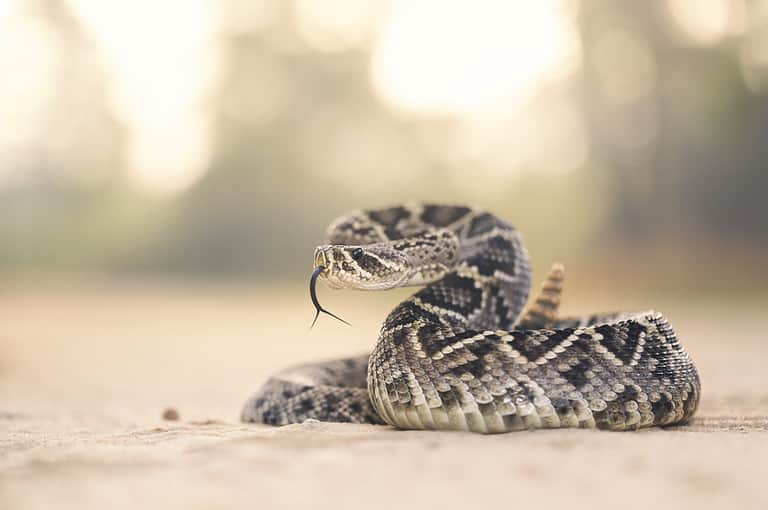
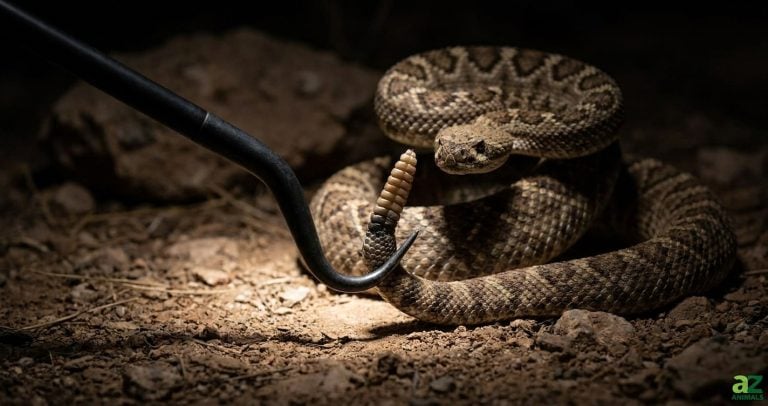
The eastern diamondback rattlesnake (Crotalus adamanteus) is the largest venomous snake in North America. Up to eight feet long, these beasts typically weigh between four and ten pounds. This reptile uses its rattle as a warning to both animals and humans to keep away. However, when it does bite, it has inch-long fangs and venom that can kill a human.
The copperhead is another one of North America’s venomous snakes. It is a pit viper, which means it has a pit on each side of its head that is used to sense the heat of warm-blooded prey. Though this reptile’s bite is painful, the venom is not usually fatal to humans.
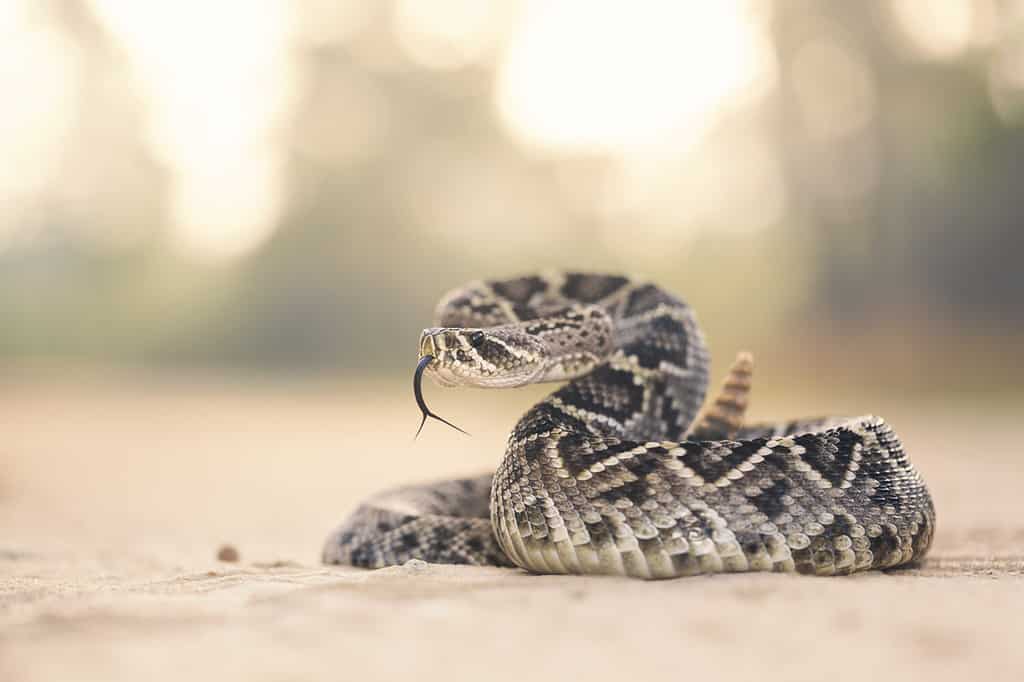
As the largest venomous snake in North America, the eastern diamondback rattlesnake can grow up to eight feet long.
©Kristian Bell/Shutterstock.com
Yellow-bellied sea snakes are found in the Pacific Ocean along North America’s West Coast. Although they are seldom encountered, their venom is highly potent and potentially lethal to humans, but confirmed fatalities are extremely rare.
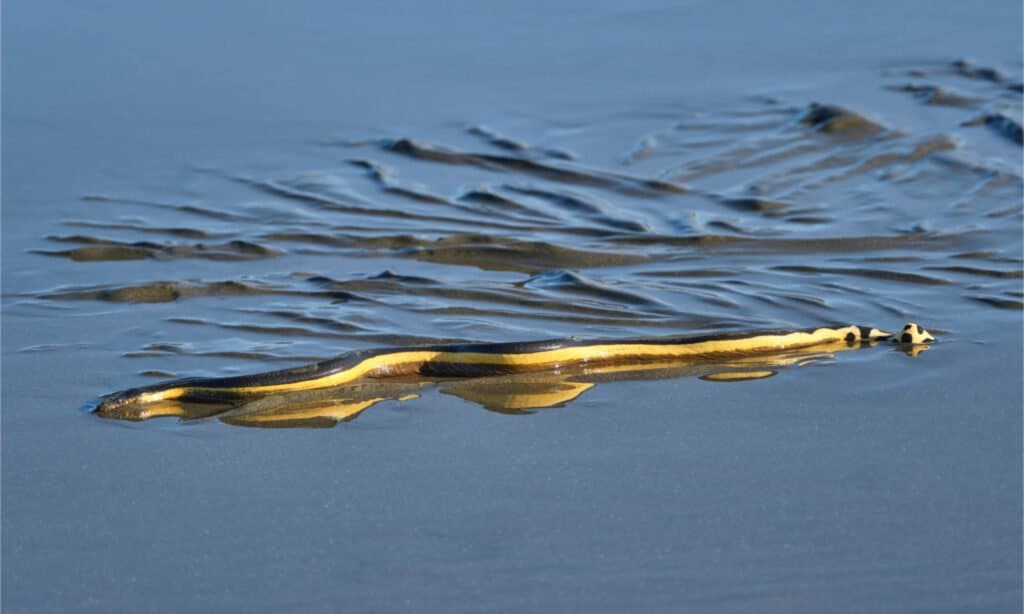
Yellow-bellied sea snakes can reach three to five feet in length, with females being slightly longer than males.
©John Fader/Shutterstock.com
The timber rattlesnake (Crotalus horridus), native to the eastern U.S., weighs between one and three pounds and reaches a length of three to five feet. Its venom can be dangerous, but fatalities are rare with prompt medical treatment.
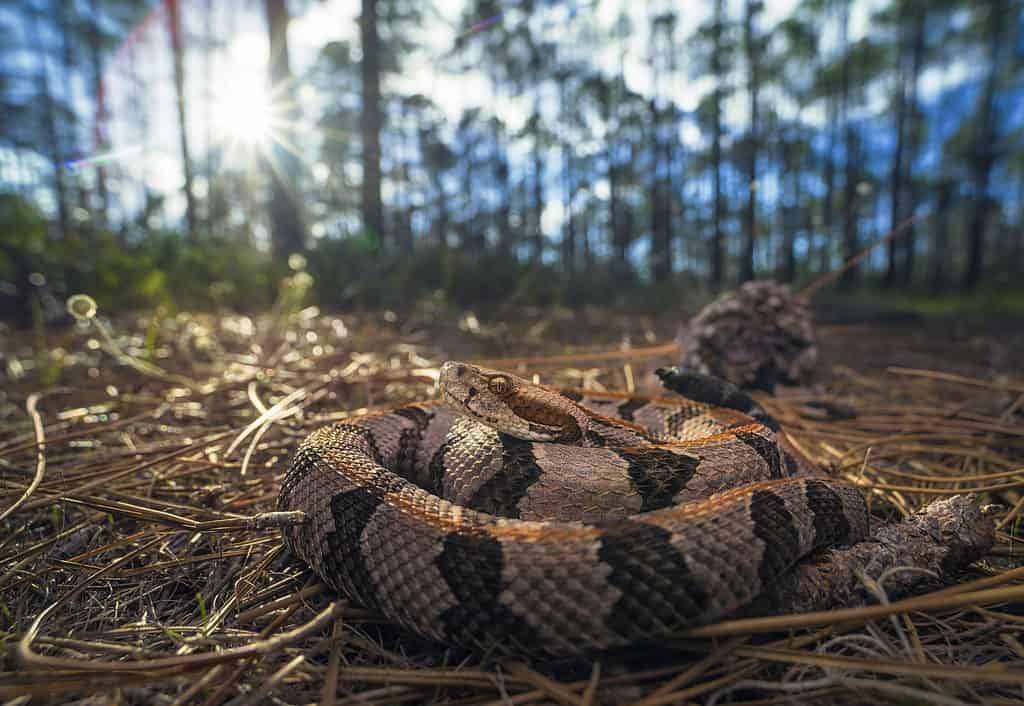
Timber rattlesnakes are extremely venomous, but they are not typically aggressive.
©Kristian Bell/Shutterstock.com
Venom vs. Poison
The difference between venom and poison is in the delivery method. Venom must be injected into the body to be effective, while poison must be ingested orally or absorbed through the skin to be harmful.