
Dolphins and whales belong to the taxonomic order Cetacea. This order includes all whales, dolphins, and porpoises. Animals in Cetacea are completely aquatic with streamlined bodies, front flippers, no hind limbs, a tail with a horizontal fin, and are usually hairless. And while all dolphins are whales, not all whales are dolphins. Dive in to discover why this is.
Dolphins
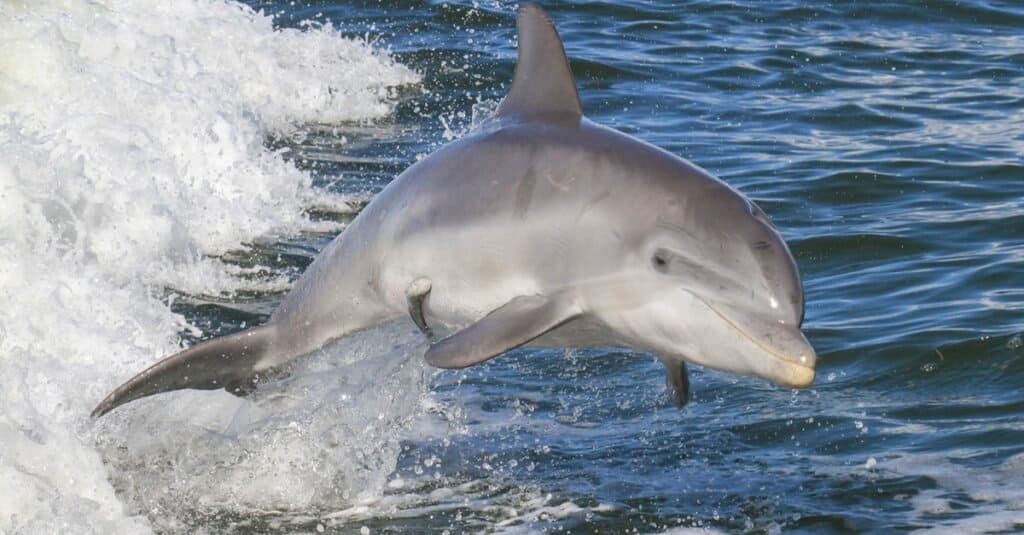
An Atlantic bottlenose dolphin (Tursiops truncatus) is a type of toothed whale.
©Tory Kallman/Shutterstock.com
All dolphins are whales. Dolphins are classified as toothed whales (Odontocetes), one of the two main suborders within the larger group of cetaceans. Baleen whales (Mysticeti) make up the other suborder. These whales have baleen plates hanging from their upper jaws, which they use to filter small prey from the water. So, while all dolphins are whales, not all whales are dolphins. Dolphins are a smaller, more streamlined whale, often distinguished by their cone-shaped teeth and beak-like snout.
Toothed Whales

Beluga whales are known for their diverse repertoire of chirps, clicks, and whistles, used for communication and echolocation.
©robertzwinchell/Shutterstock.com
There are approximately 75 species of toothed whales, including dolphins, porpoises, beaked whales, orca (killer whales), beluga whales, sperm whales, and narwhals. Toothed whales, also known as Odontoceti, are a diverse group of cetaceans characterized by their teeth, which they use to hunt and capture prey. They also possess a single blowhole and a melon (a fatty structure in the forehead used for echolocation).
Largest Dolphin

Orcas, also known as killer whales, are recognized by their distinctive black and white coloration and are found in every ocean on Earth.
©slowmotiongli/Shutterstock.com
Orcas (Orcinus orca), also known as killer whales, are the largest members of the dolphin family. Known for their distinctive black and white coloration, they are highly intelligent, social animals with complex hunting strategies. Orcas are typically 23 to 32 feet long and weigh between 3000 and 12,000 pounds.
In many toothed whale species, male whales are larger than females, exhibiting what is known as sexual dimorphism. This size difference is most pronounced in species like sperm whales, killer whales, and narwhals, where males can be significantly larger. However, in some toothed whale species, females are larger than males, while in others the size difference is minimal.
Largest Toothed Whale
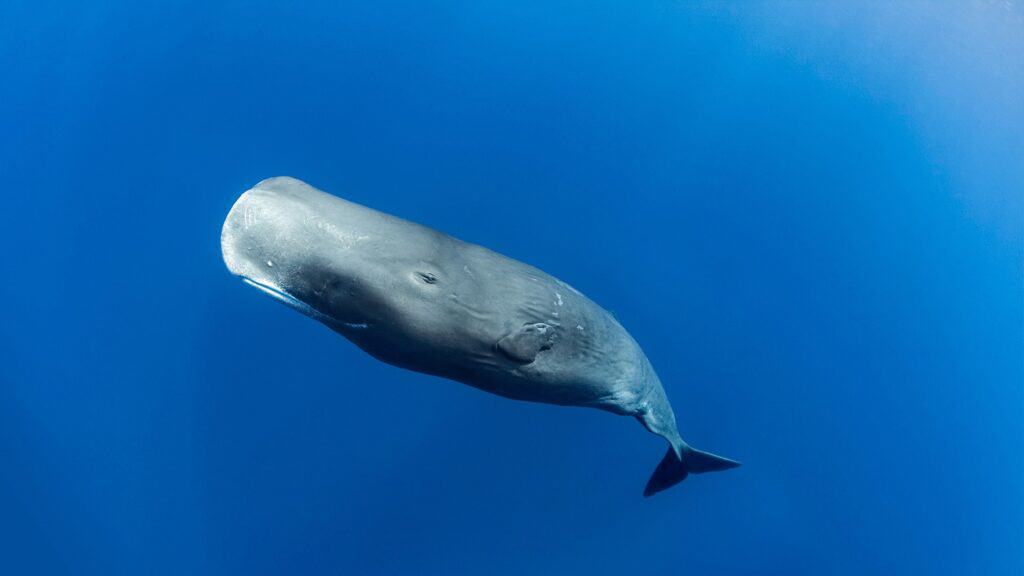
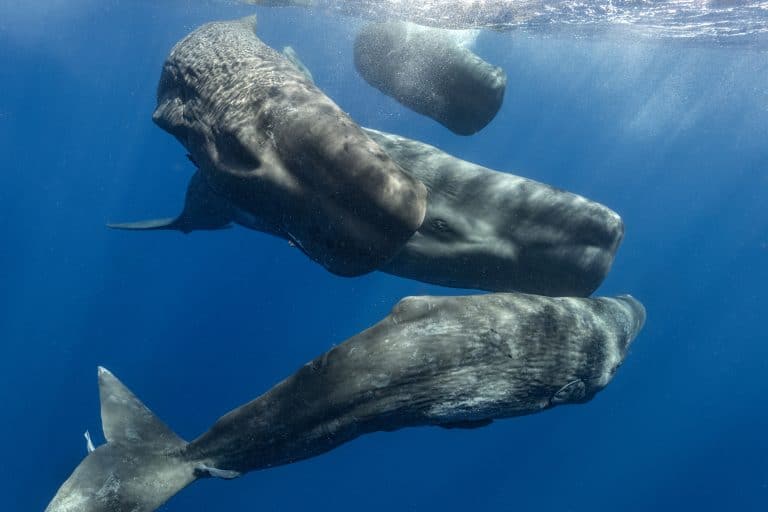
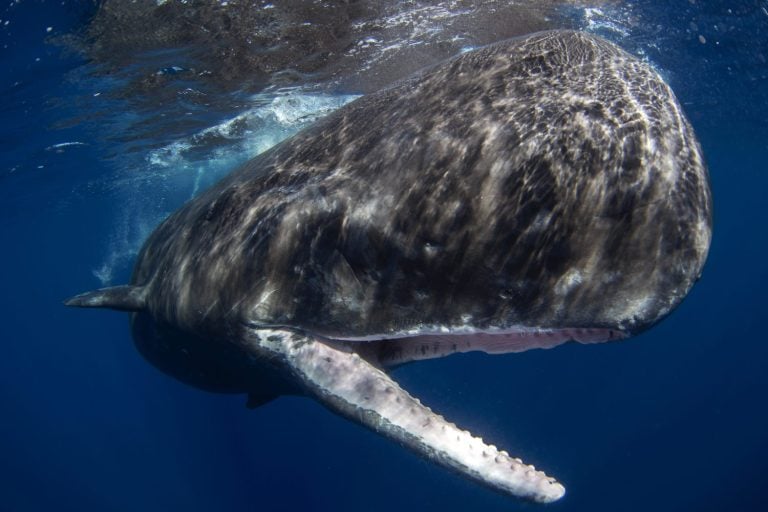
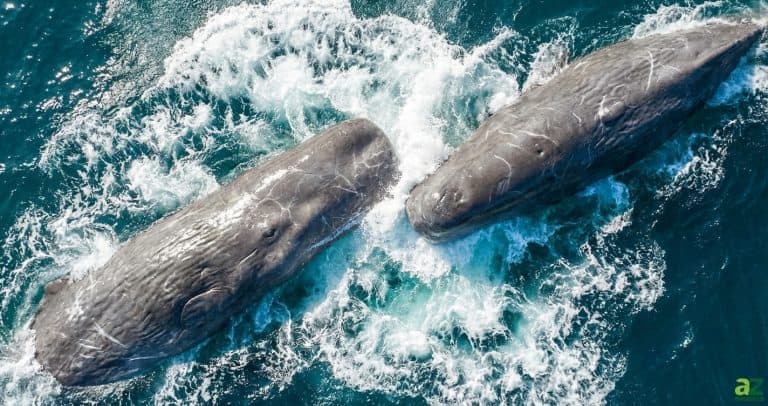
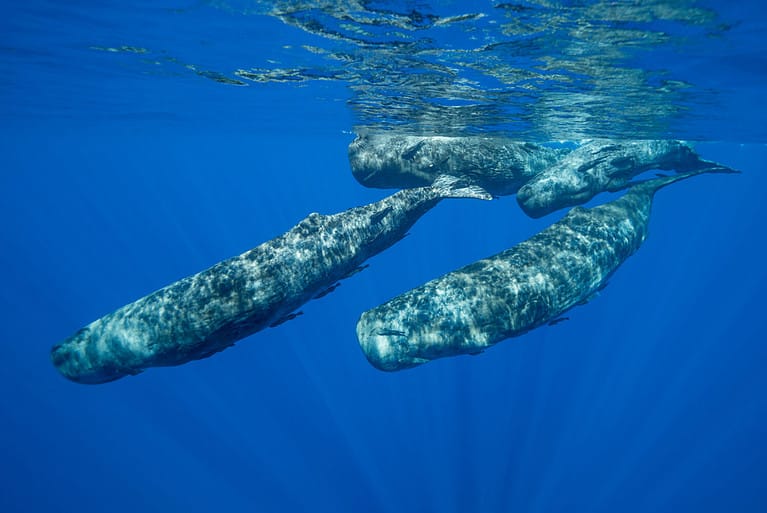
Sperm whales are the largest toothed whales, weighing over 100,000 pounds.
©Animalgraphy/Shutterstock.com
The largest toothed whale is the sperm whale (Physeter macrocephalus). Sperm whales can grow up to 59 feet long and weigh up to 124,000 pounds. However, sperm whales exhibit significant sexual dimorphism. Females of the species are significantly smaller than males. Female sperm whales average 30-40 feet in length and weigh 30,000 pounds.
Smallest Dolphin
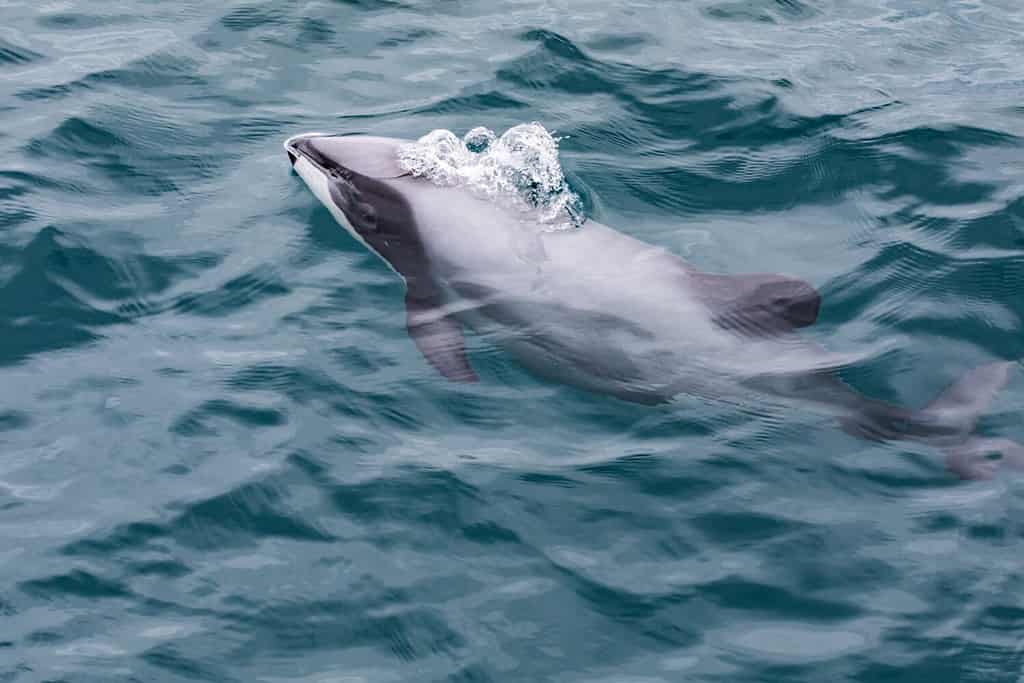
Hector’s dolphins are about the same size as a human.
©sljones/Shutterstock.com
Hector’s dolphin is the smallest and rarest marine dolphin in the world. Hector’s dolphin (Cephalorhynchus hectori) is a small, coastal dolphin native to New Zealand, specifically found around the South Island and the Northwestern Coast of the North Island. Adults of the species typically range from four to five feet long, weighing 88 to 132 pounds. They are sexually dimorphic, with females tending to be slightly larger than males.
Smallest Toothed Whale

Dwarf sperm whales are found in temperate and tropical waters around the world.
©Robert Pitman (NOAA), Public domain, via Wikimedia Commons – Original / License
The smallest toothed whale is the dwarf sperm whale (Kogia sima). It can grow up to 9 feet long and weigh between 400 and 600 pounds, making it smaller than many dolphin species. Dwarf sperm whales have a unique defense mechanism in which they release a dark, reddish-brown liquid from their intestines, similar to squid ink. The ink creates a cloud in the water, helping them to escape predators.
Baleen Whales
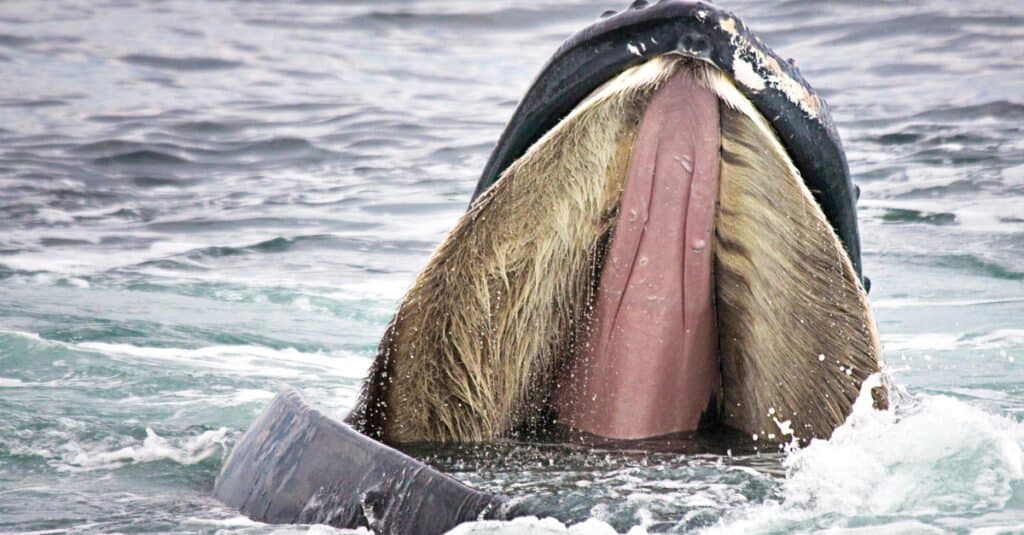
No species of baleen whales are considered dolphins.
©John Tunney/Shutterstock.com
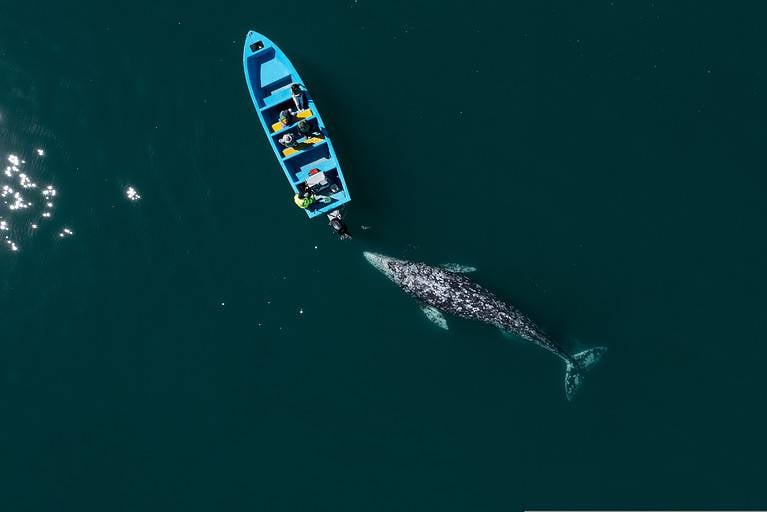
There are 14 species of baleen whales. They are also known as great whales due to their large size. Baleen whales are classified into four families: Balaenidae (right whales), Balaenopteridae (rorquals), Eschrichtiidae (gray whale), and Cetotheriidae (pygmy right whale).
Baleen whales include some of the largest whale species, including blue whales, fin whales, and humpbacks. While baleen whales are some of the largest animals on Earth, they feed on massive amounts of incredibly small food sources such as plankton and krill.
Instead of teeth, baleen whales have baleen plates, fringed, comb-like structures made of keratin (the same material as human hair and fingernails). They are found in the upper jaws of baleen whales. Baleen whales are filter-feeders, trapping small prey like krill and plankton from the water. The plates hang down from the whale’s upper jaw, acting like a sieve to strain food from the water as the whale swims with its mouth open.