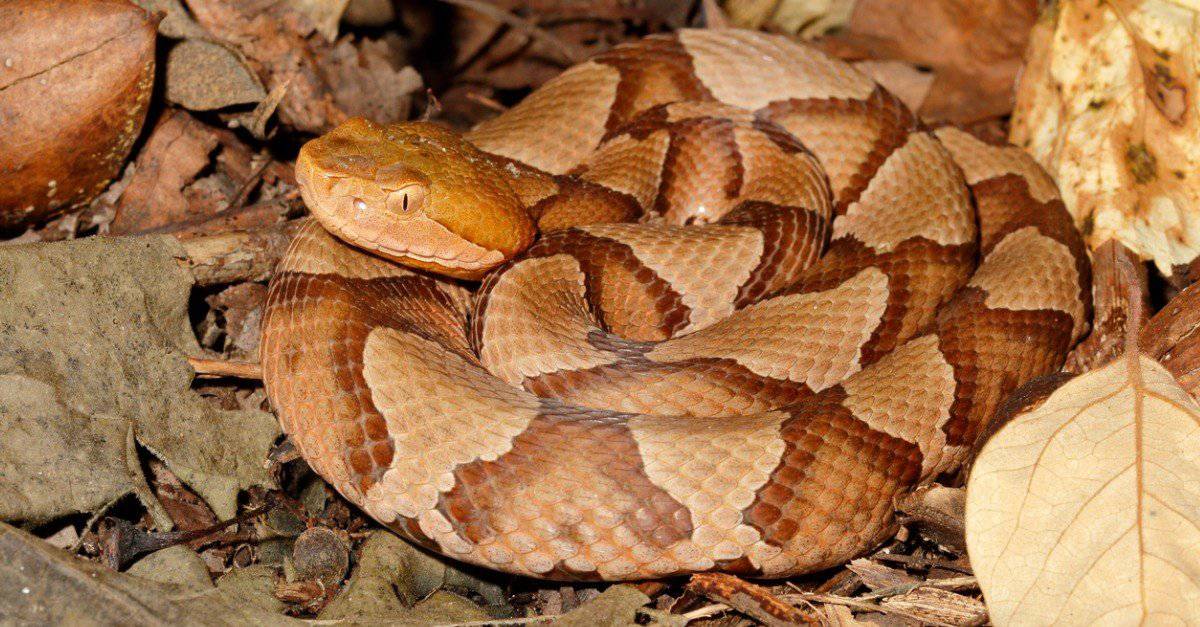

Quick Take
- One of Ohio's most fearsome-looking snakes is actually completely harmless, and it is secretly one of the most useful animals on your property. Meet the harmless hognose →
- A snake that looks nearly identical to a venomous copperhead lives in Ohio, and most people have no idea how to tell them apart. See the copperhead look-alike →
- Ohio's most venomous snake doesn't always inject venom when it bites, a fact whose explanation turns out to be fascinating. Explore dry bites explained →
- A rare aquatic snake survives in only one place in all of Ohio, and its location is surprisingly specific. Find Ohio's rarest aquatic snake →
Ohio is home to a wide variety of wildlife due to its diverse ecoregions, which transition smoothly from the glaciated plains and marshy coastlines of Lake Erie to the dense woodlands of the Appalachian Plateau. Ohio’s diverse geography supports hundreds of native species, including over 50 mammals, nearly 200 breeding birds, and a fascinating selection of reptiles and amphibians. Focusing on its reptile population, Ohio is home to 25 native snake species, though counting distinct subspecies can push the total higher. Most of these snakes are non-venomous and provide critical natural pest control. Only three snake species in Ohio are venomous. Continue reading to learn about some of the snakes that are found in Ohio.
Smooth Earth Snake
The smooth earth snake (Virginia valeriae) is found in Southern Ohio. This snake is among the smallest found not just in Ohio, but in the entire United States. It averages between 7 and 10 inches long and is rarely more than a foot long, though record specimens have reached around 15 inches.
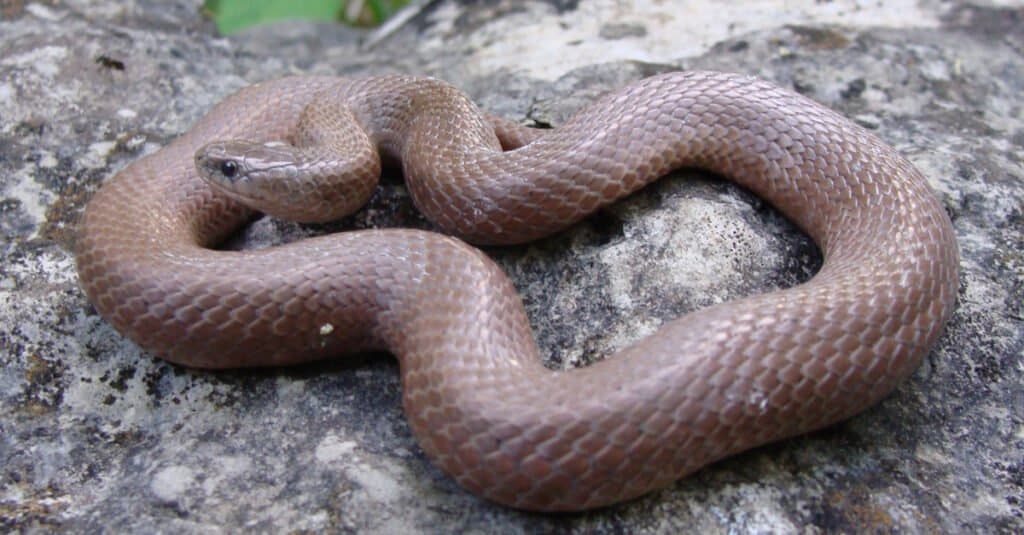
Smooth earth snakes are one of the smallest snakes you’ll find in Ohio.
©Matt Jeppson/Shutterstock.com
Smooth earth snakes have a gray or dark brown base color that helps them hide in the soil and at the base of trees in the forest. When hiking, check the bases of trees, old logs, and leaf piles for snakes. That’s where smooth earth snakes tend to hide.
Eastern Milk Snake
The Eastern milk snake (Lampropeltis triangulum) is also sometimes called the farmer’s friend because this snake consumes rodents of all kinds. Usually, the Eastern milk snake is found in woods, meadows, farms, and in barns and outbuildings where it can find rodents to eat. Eastern milk snakes are typically reddish-brown or brown with black markings.
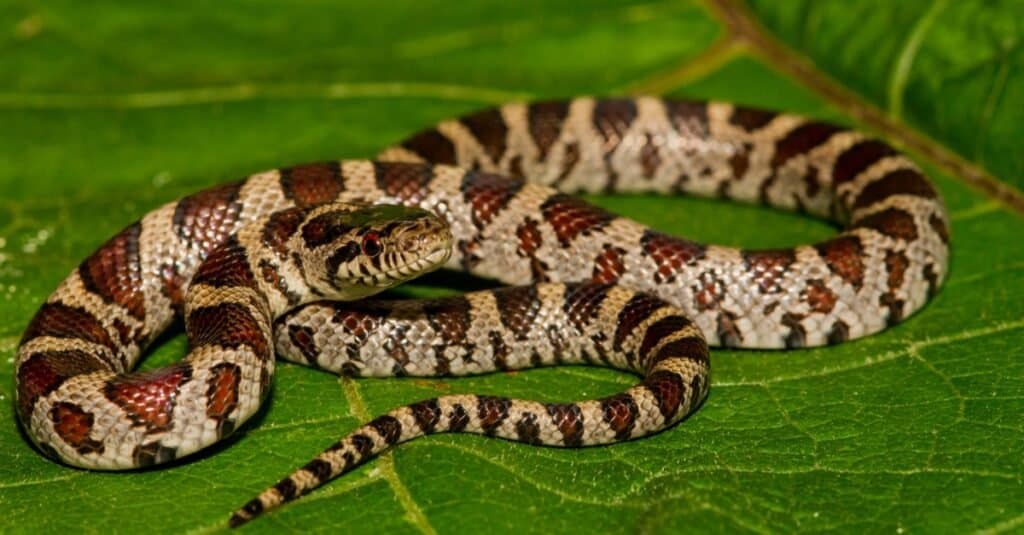
Eastern milk snakes are about 3 feet long on average.
©Jay Ondreicka/Shutterstock.com
Gray Rat Snake
Non-venomous gray rat snakes (Pantherophis spiloides) can reach significant lengths, sometimes up to six feet. Although several other snake species can reach similar lengths, gray rat snakes are generally considered the largest snake species in Ohio.
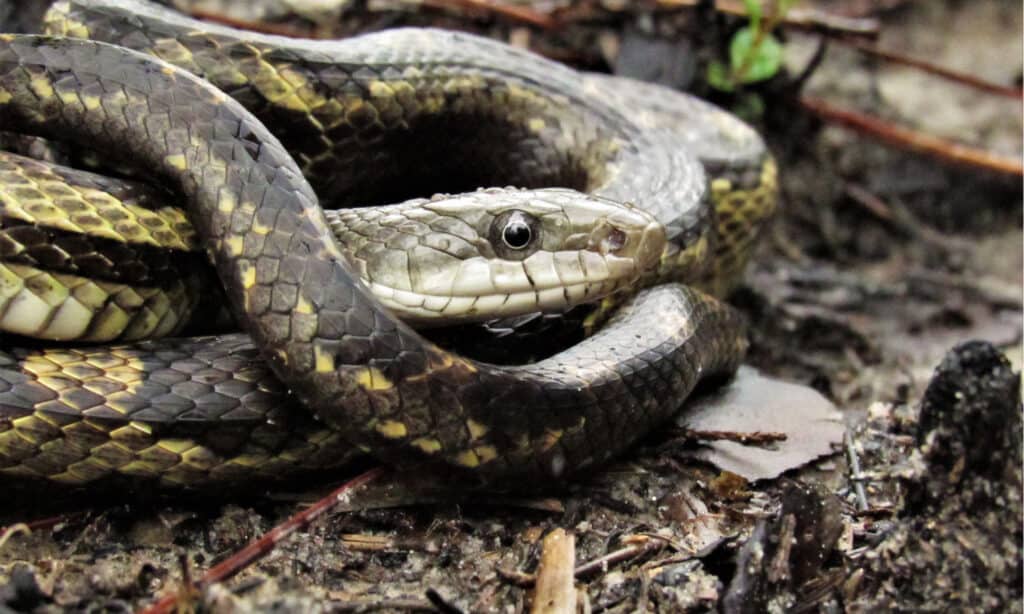
There are reports of gray rat snakes reaching 8 feet in length.
©Gabbie Berry/Shutterstock.com
The gray rat snake can climb trees, so you might spot one on the ground hidden among the brush or grass, or you could look up and see one hanging in a tree above you. That’s enough to give you a fright! They’ll often even climb to eat eggs from birds’ nests high up in trees.
The gray rat snake has a solid, dull black color that can make it look frightening. However, it is very helpful to humans, eating a wide variety of rodents and pests. So if you see one of these snakes in an outbuilding, a garage, or in the woods, don’t be alarmed.
Eastern Hognose Snake
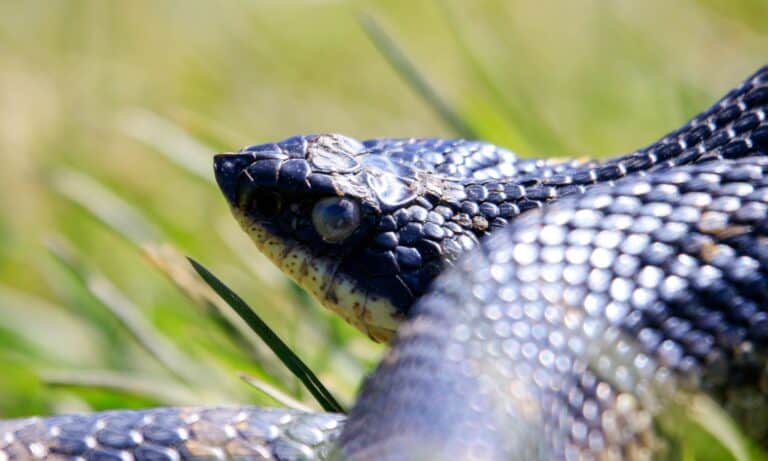
TheEastern hognose snake (Heterodon platirhinos) is unmistakable thanks to the unique shape of its nose. The Eastern hognose snake is found in Northwest Ohio and the hills of Southern Ohio. In the United States, there are four species of hognose snake.
- The Eastern hognose (H. platirhinos) is found in Ohio and most of the Eastern United States.
- Western hognose (H. nasicus) is found more in the prairies to the Rocky Mountains.
- Southern hognose (H. simus) occurs in a few Southeastern states.
- Mexican hognose (H. kennerlyi) inhabits areas of Southern Texas and Northern Mexico.
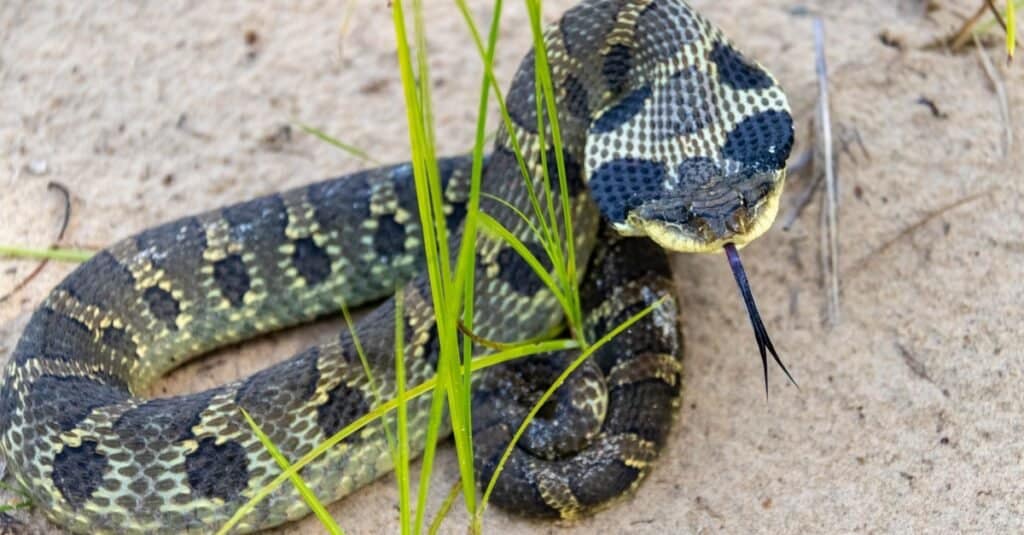
The Eastern hognose snake will flatten its head and neck and hiss loudly when threatened.
©IHX/Shutterstock.com
Hognose snakes are found in sandy, loose soil where they can dig down to hide from view. Hognose snakes have a lot of variety in their coloring depending on their habitat.
Eastern Fox Snake
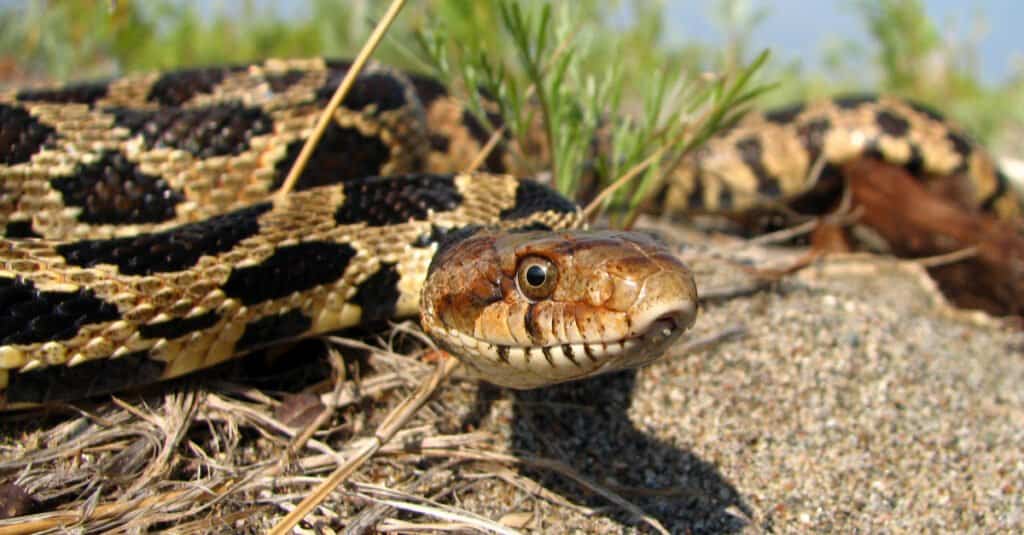
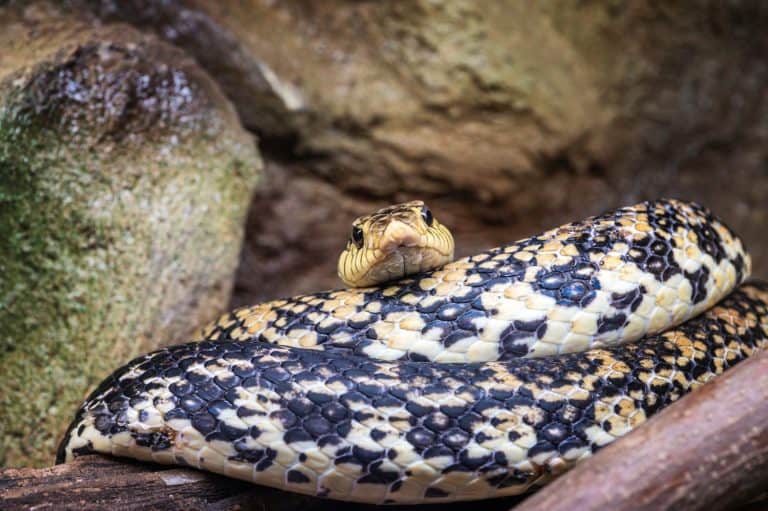
Eastern fox snakes live close to Toledo and islands in Lake Erie in marshland habitats.
©Ryan M. Bolton/Shutterstock.com
The Eastern fox snake’s (Pantherophis vulpinus) orange-brown color is similar to the color of a copperhead snake, which is venomous. However, the Eastern fox snake is nonvenomous. Eastern fox snakes live along the Southwestern shore and to the west of Lake Erie. The Eastern fox snake can grow quite large, sometimes reaching five feet in length.
Copper-Bellied Water Snake
The copper-bellied water snake (Nerodia erythrograster neglecta) is very rare in Ohio. The only known colony of copper-bellied water snakes is in Williams County, which is on the border with Indiana and Michigan. This is partly because these snakes are mostly aquatic and live only in shallow wetlands where they can find frogs and other food sources.
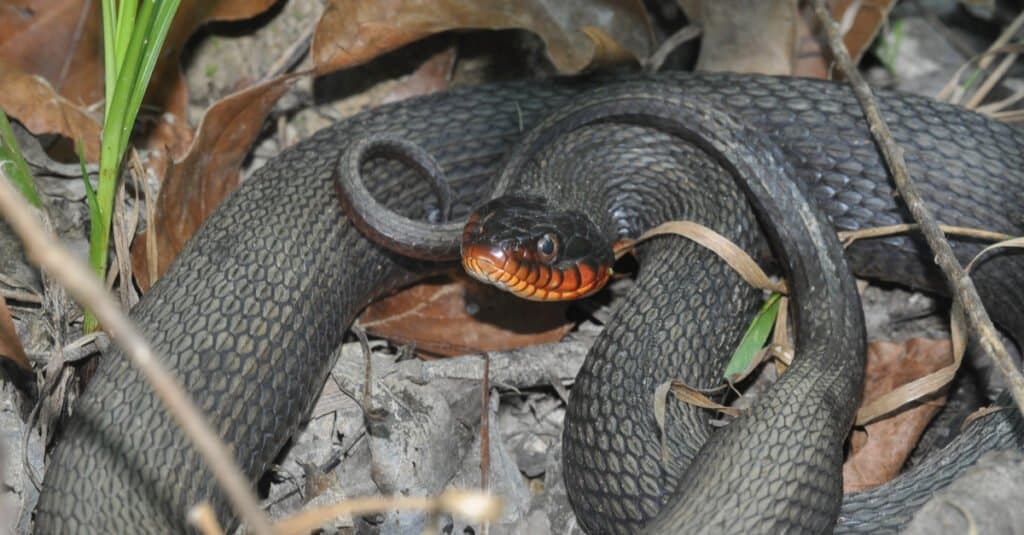
The copper-bellied water snake is only found in Williams County, Ohio.
©Mike Wilhelm/Shutterstock.com
The copper-bellied water snake averages 3–4 feet in length. The snake’s base color is almost always black, but it can also be dark gray. The snake has a bright orange-red or red belly, which is how it got its name.
Northern Water Snake
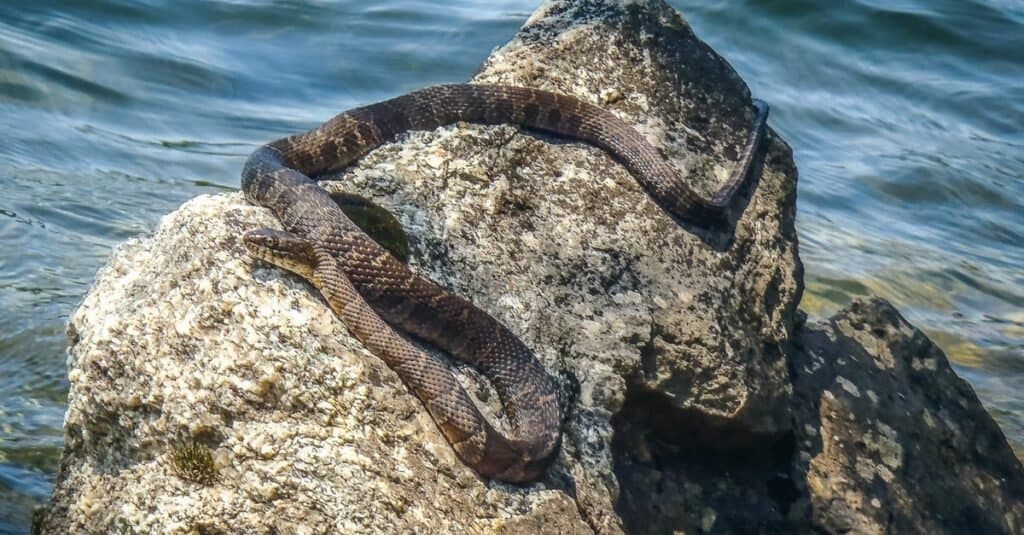
The nonvenomous Northern water snake (pictured) is often mistaken for the venomous cottonmouth.
©jmarino/Shutterstock.com
Northern water snakes (Nerodia sipedon) are abundant across the state. They can often be found basking on rocks next to bodies of water. Their pattern is most often confused with that of water moccasins (cottonmouths), yet they are not venomous. Although northern water snakes are not venomous, they should not be handled. These snakes defend themselves quickly and can inflict painful bites that, while not deadly, cause significant discomfort.
Northern Copperhead Snake
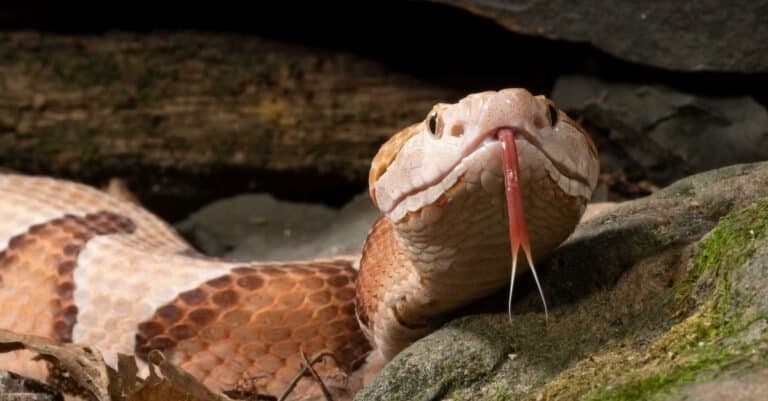
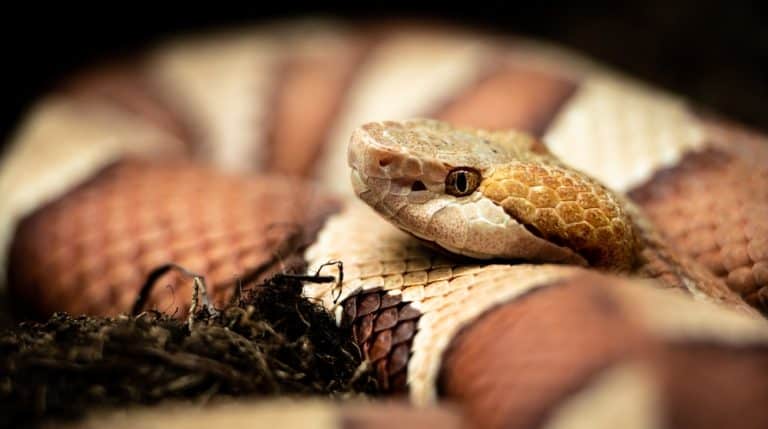
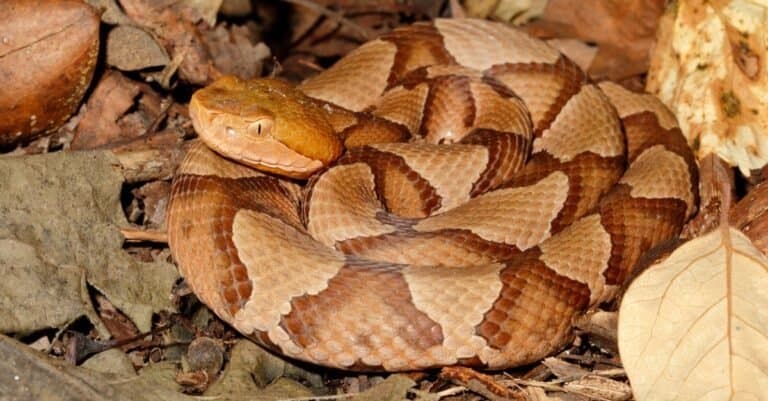
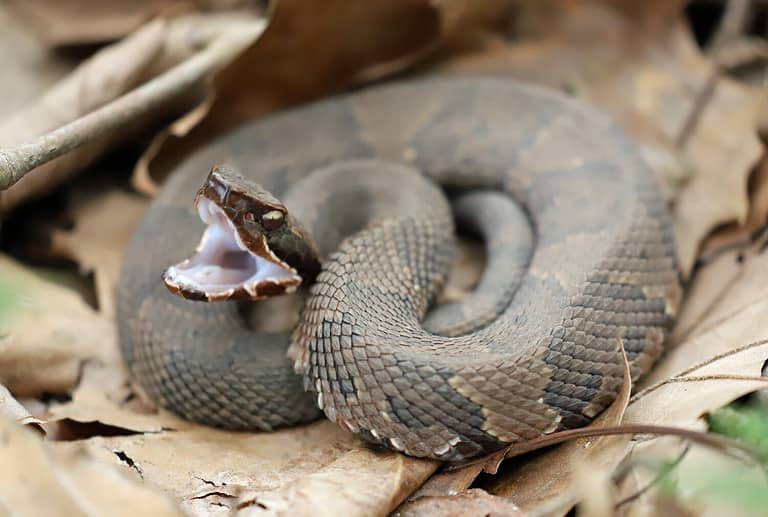
Northern copperheads (Agkistrodon contortrix mokasen) are venomous snakes that are two to three feet long. The northern copperhead is copper, orange, or pinkish-orange in color with brown or tan markings. These markings are irregular in shape. Copperhead snakes are only found in the hills of Southeast Ohio.
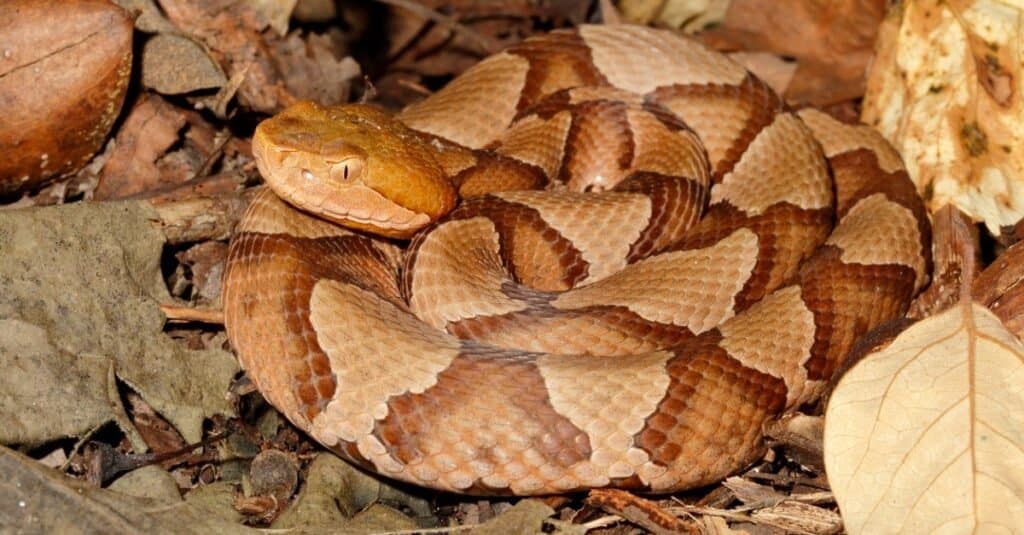
The Northern copperhead makes its home in Ohio in the state’s southeast hills.
©iStock.com/David Kenny
If you do come across a copperhead, give it plenty of space. A Northern copperhead typically won’t attack unless it feels cornered or threatened.
Eastern Massasauga Rattlesnake
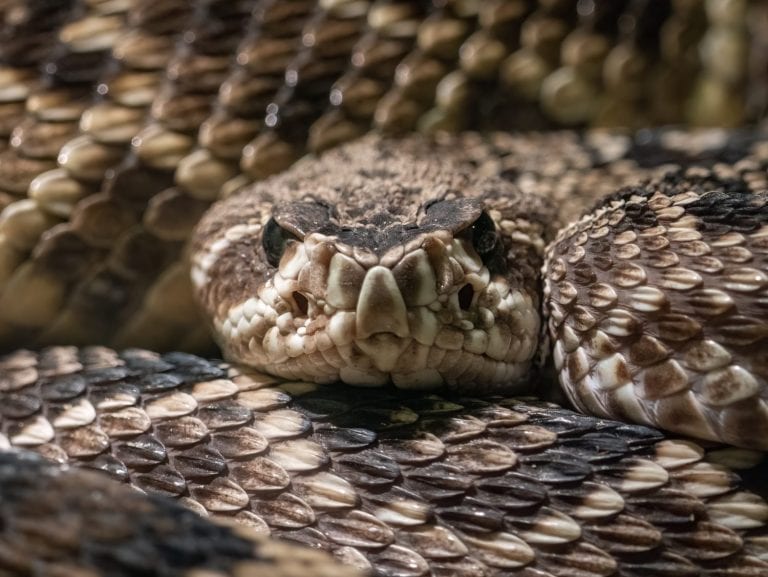
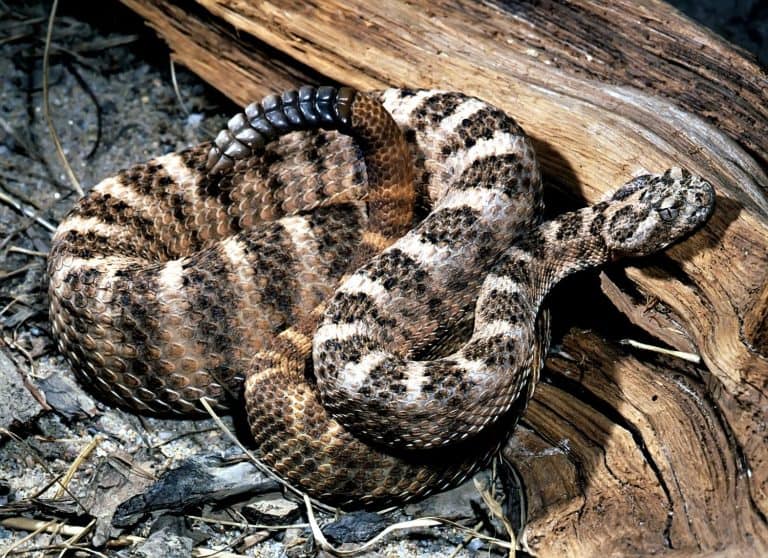
The Eastern massasauga rattlesnake (Sistrurus catenatus) is the most widespread venomous snake in Ohio. It can be found in 28 different Ohio counties, though it is becoming increasingly rare.
The areas with the highest concentrations of Eastern massasauga snakes are Cedar Bog, Killdeer Plains, and Mosquito Creek. The Eastern massasauga rattlesnake averages about 3 feet long. However, it has potent venom.
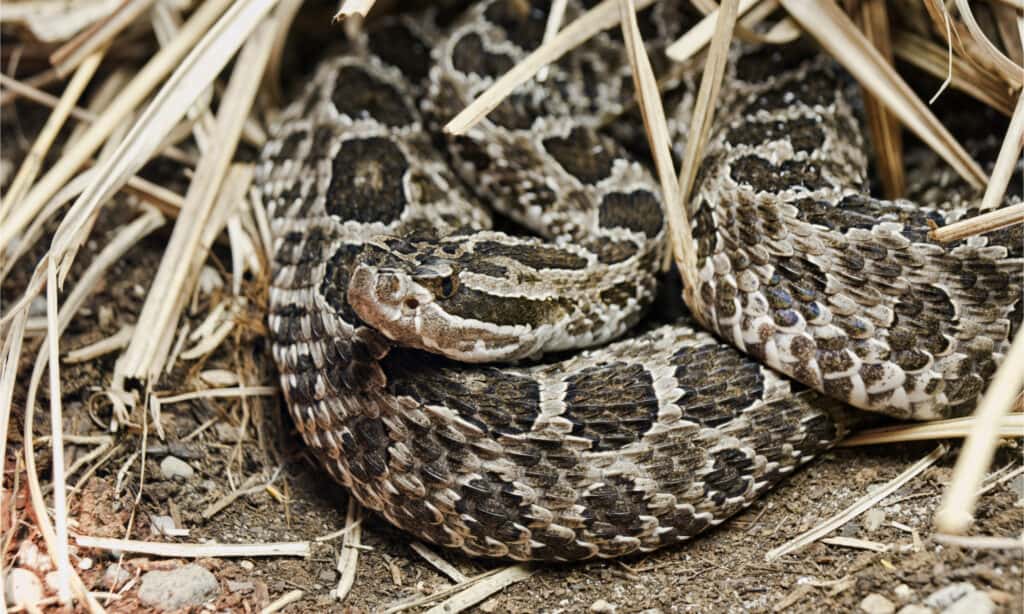
Eastern massasaugas are found most often in swamps and wet prairies.
©DnDavis/Shutterstock.com
Timber Rattlesnake
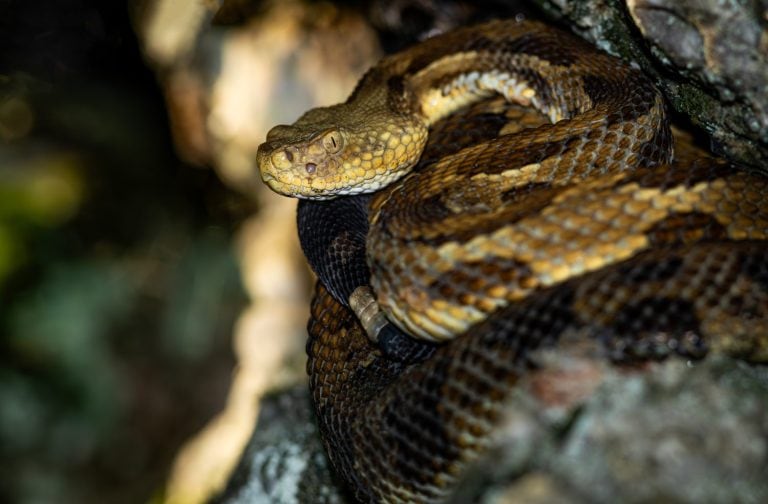
Timber rattlesnakes (Crotalus horridus) in Ohio are very rare and are only sometimes seen in the Southeastern part of the state. Even though the timber rattlesnake is the most venomous of all the snakes in Ohio, it doesn’t often attack people. Producing venom is energetically costly for snakes, so they don’t waste it. Even if a venomous snake bites you, it may not inject venom because of the energy required to produce it.
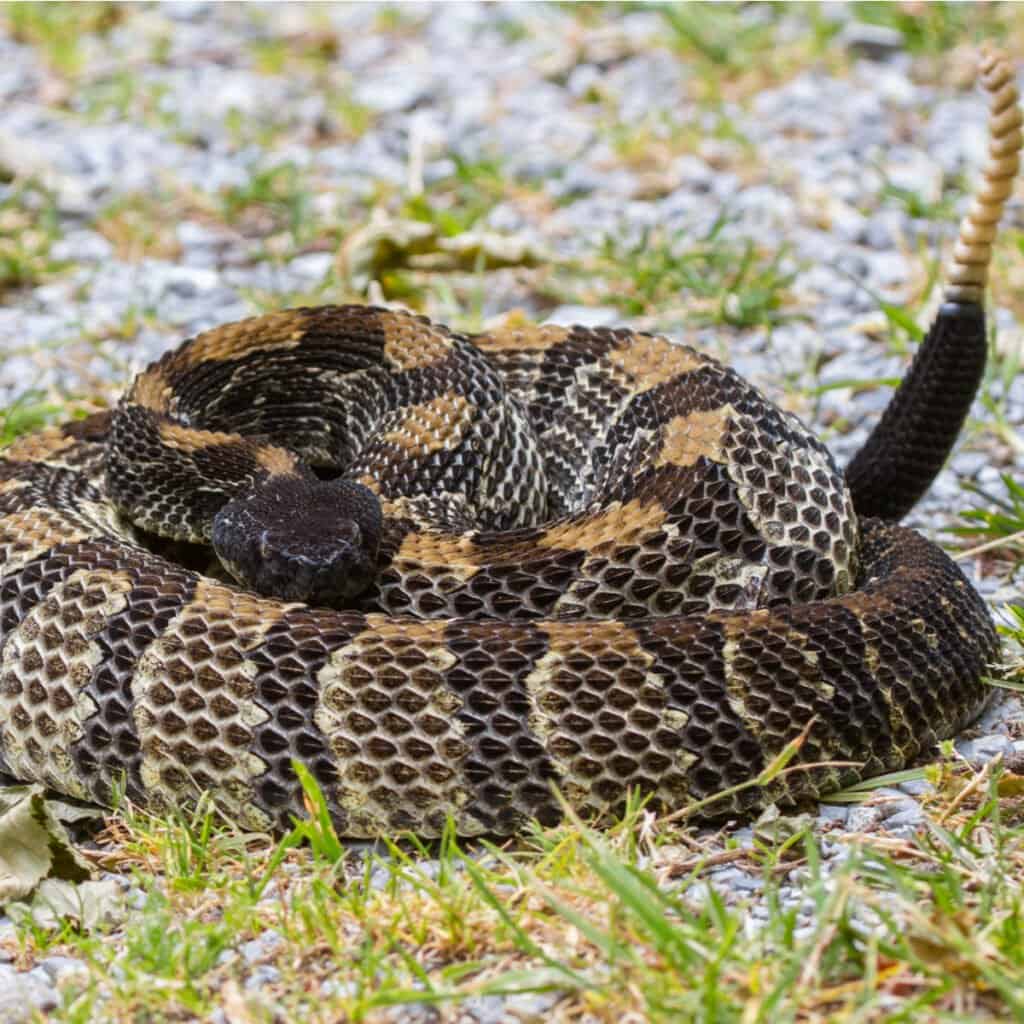
Be careful around timber rattlesnakes, as most bites occur due to their excellent camouflage.
©Frode Jacobsen/Shutterstock.com
25 Types of Snakes in Ohio
- Brown Snake
- Butler’s Garter Snake
- Copper-bellied Water Snake
- Copperhead
- Eastern Black Kingsnake
- Eastern Fox Snake
- Eastern Garter Snake
- Eastern Massasauga Rattlesnake
- Eastern Milk Snake
- Fox Snake
- Gray Rat Snake
- Hognose Snake
- Kirtland’s Snake
- Lake Erie Water Snake
- North American Racer subspecies: Blue Racer (Western Ohio)/Northern Black Racer (Eastern Ohio)
- Northern Red-bellied Snake
- Northern Ring-necked Snake
- Plains Garter Snake
- Queen Snake
- Ribbon Snake
- Rough Green Snake
- Smooth Earth Snake
- Smooth Green Snake
- Timber Rattlesnake
- Worm Snake