
Quick Take
- One snake on this list physically cannot bite humans, and this is not because it is gentle but because of how its body is built. See why they can't bite →
- Some 'docile' snakes do have venom, but they have a surprising reason for not using it on you. Explore the hognose venom →
- The snake considered the most gentle of all species uses a bizarre physical trick instead of biting, and most people have never heard of it. Discover the rubber boa's trick →
- Even the calmest snake on this list has one specific situation that dramatically raises its odds of biting you. See what triggers biting →
Some snakes don’t typically bite people. It’s important to snake breeders that the snakes they propagate have easy-going temperaments. The most docile snakes are usually bred for those characteristics, just like they are for patterns and morphs.
The problem with declaring any snake a bite-free animal is that unpredictable situations can occur. Biting is a matter of instinct, and you can’t breed that away. Any snake may lash out if they’re afraid, hungry, shedding, or agitated. Juveniles tend to nip more than adults. Whether a snake uses other defenses or is calm enough not to get upset in the first place, these eight snakes don’t usually bite.
1. Corn Snakes Stay Calm Instead Of Biting
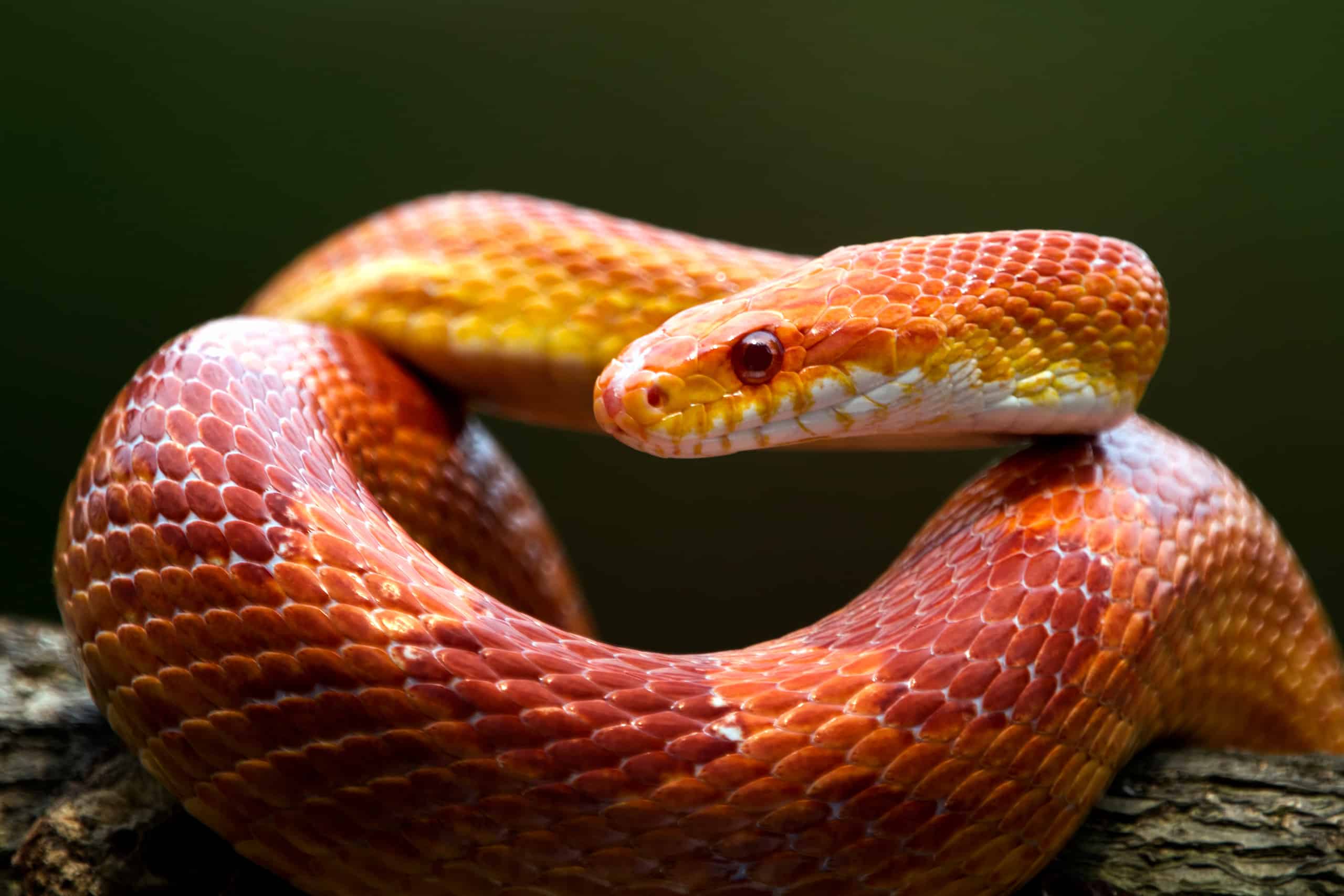
Corn snakes (Pantherophis guttatus) are nonvenomous and are great beginner snakes. They grow to about 2.5–5 feet long. Corns snakes come in a wide variety of color morphs, so there are plenty of colors and patterns to choose from.
Corn snakes generally have a calm, docile nature. These snakes are constrictors and have small mouths, so their first inclination is not to bite. They prefer to escape or hide when threatened. They typically hiss, coil, or vibrate their tails in a defensive posture rather than strike.
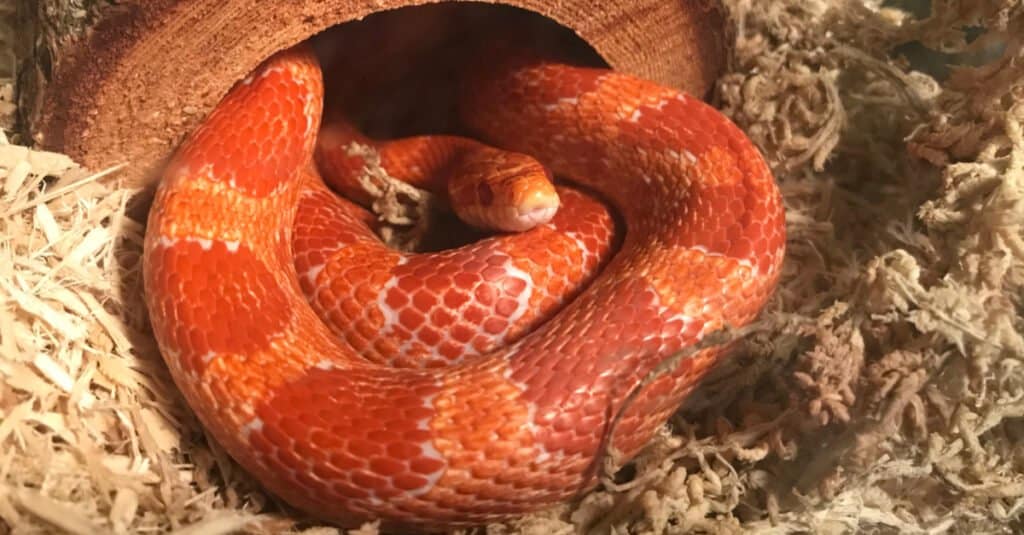
Corn snakes generally have calmer temperaments.
©Photohobbiest/Shutterstock.com
2. Hognose Snakes Usually Play Dead Instead Of Biting
The hognose snake (Heterodon spp.) is one of the most unique snake breeds on our list because of its upturned snout and its clever defenses. These snakes generally measure between 1.5 and 3 feet. Instead of striking as the first line of defense, this snake will roll over and play dead. It even hangs its tongue out and releases a foul-smelling odor to appear more convincing.
Hognose snakes have venom to subdue small prey, but the venom doesn’t harm humans. They rarely resort to biting, but they often do “mock” strikes with their mouths completely closed. If they do land a bite due to confusion during feeding, it could cause local swelling similar to a bee sting.
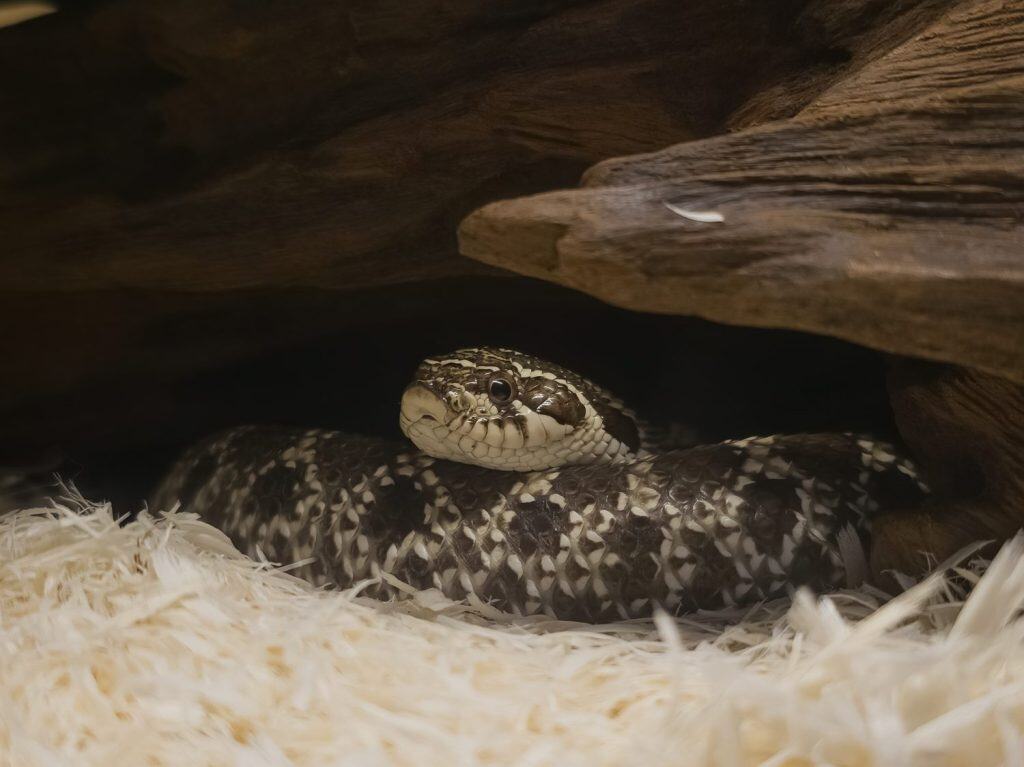
The hognose snake will play dead instead of biting.
©ANURAK PONGPATIMET/Shutterstock.com
3. Rosy Boas Only Bite When They Are Burrowed
Because this common pet doesn’t feel threatened by people, it does well with handling. It’s also a great choice if you want to keep a small enclosure. This is a small and very slow-moving snake that only reaches 2 to 3 feet. Rosy boas (Lichanura trivirgata) are generally calm and rarely bite in self-defense.
These non-venomous snakes like to burrow into their sandy substrate and then pounce on prey items. Don’t reach into their vivarium if they’re buried. The chances of a rare bite are higher at this time. Most bites happen by accident when the snake smells food or mistakes hands or fingers for prey.

The rosy boa usually only bites when burrowed.
©Jason Mintzer/Shutterstock.com
4. Rubber Boas Are Considered the Most Gentle Snake Species
Rubber boas (Charina bottae) aren’t venomous, and they rarely use their fangs. They have loose skin and small, smooth scales that give them a rubbery look and texture. Rubber boas are small and grow to around 2.5 feet.
Rubber boas are relatively easy to care for. They seem to enjoy being handled and are reluctant to bite, and are generally considered the most gentle and docile of all snake species. Rather than striking, they will curl into a ball and release a musky odor when threatened.
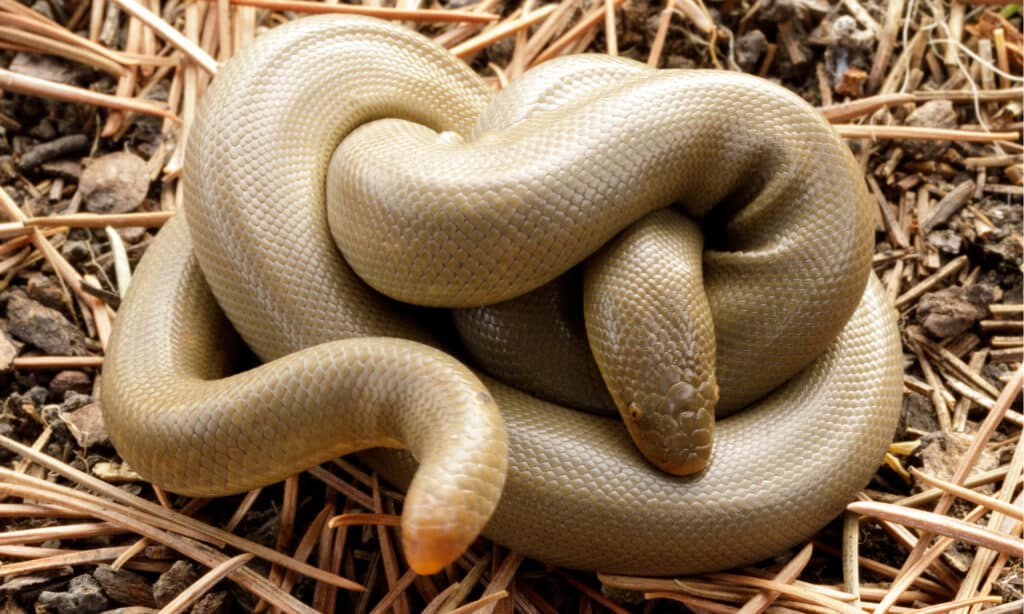
Rubber boas rarely bite and are considered the most gentle snake species.
©yhelfman/Shutterstock.com
5. Garter Snakes Do Not Have Fangs
Garter snakes (Thamnophis spp.) are common, non-venomous snakes widely distributed across the United States. These snakes can range from 18 to 54 inches in length. Like many snakes, when they feel threatened, they release a foul-smelling odor from glands near the tail. Garter snakes may also thrash their bodies or hide in a nearby water source.
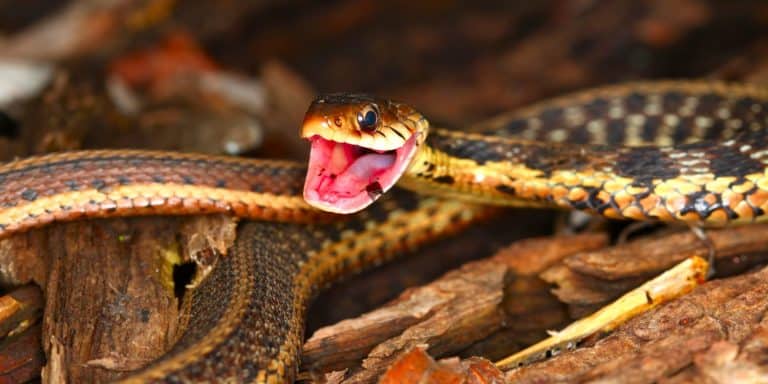
These snakes are typically docile and harmless to humans. They have small amounts of venom in their saliva to subdue small prey, but they do not have fangs. Instead, they use mild saliva toxins to subdue prey such as frogs, earthworms, and fish.
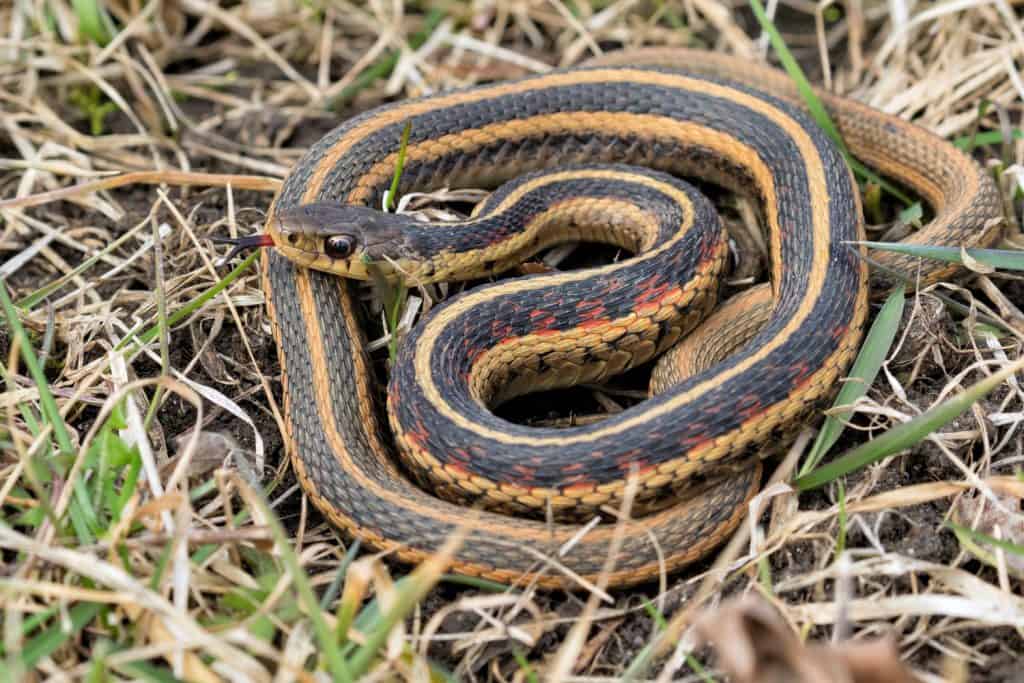
Even if a garter snake decided to bite, it doesn’t have fangs.
©Natalia Kuzmina/Shutterstock.com
6. Bites From A Ball Python Are Unusual
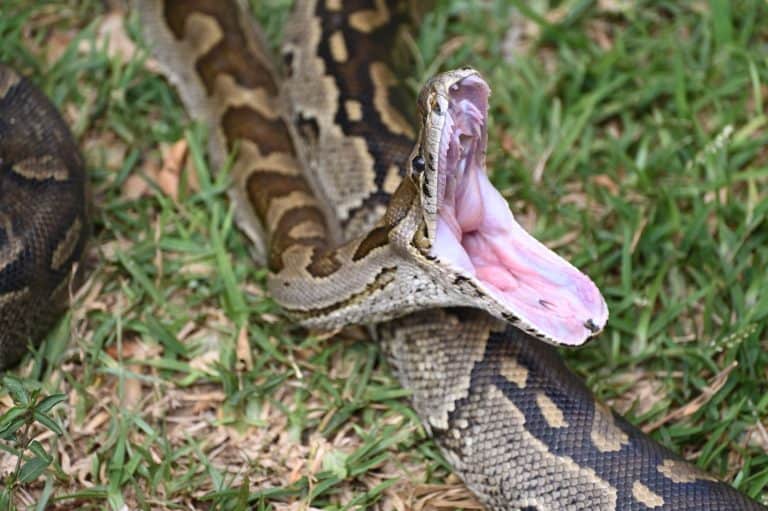
Ball pythons (Python regius) are docile and non-venomous, which is one of the reasons they’re a popular pet choice. These snakes are constrictors and do not have fangs, but they do have small teeth. They generally measure 3-5 feet in length.
The ball python’s name reveals its preferred defense method. Instead of biting, it typically curls into a tight ball with its head tucked in the center when it feels threatened. Ball pythons rarely bite, but they may do so if stressed or triggered when they smell food on your hands.
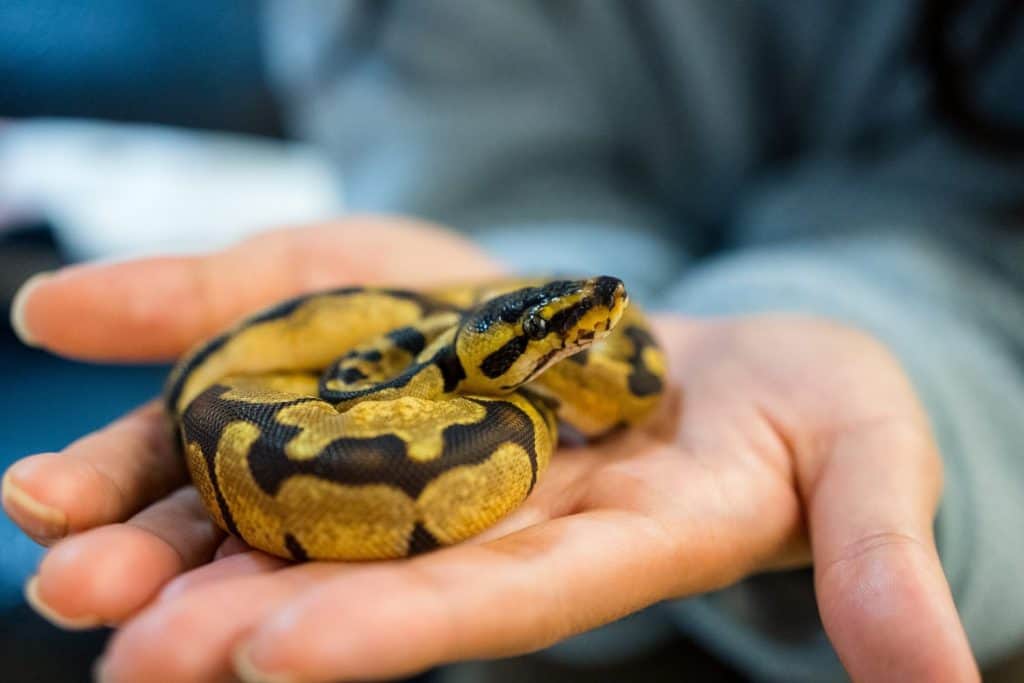
Ball pythons curl up in a ball instead of biting.
©leungchopan/Shutterstock.com
7. Egg-Eating Snakes Can’t Bite Humans
Egg-eating snakes (Dasypeltis spp.) are from sub-Saharan Africa and parts of the Middle East, but they are sometimes kept as pets. There are 16-20 egg-eating snake species, but Dasypeltis scabra is the one you’ll most often see kept as a pet. As the name suggests, these snakes dine solely on bird eggs. So if you’re squeamish about feeding mice, these snakes give you a less gruesome alternative.
Egg-eating snakes are generally between 1 and 3 feet in length. They’re unable to bite humans because they have no functional teeth, as they do not hold or bite prey. When threatened, many egg-eating snake species mimic venomous snakes by coiling up and rubbing their scales together to create a rasping sound. They may also make false strikes.
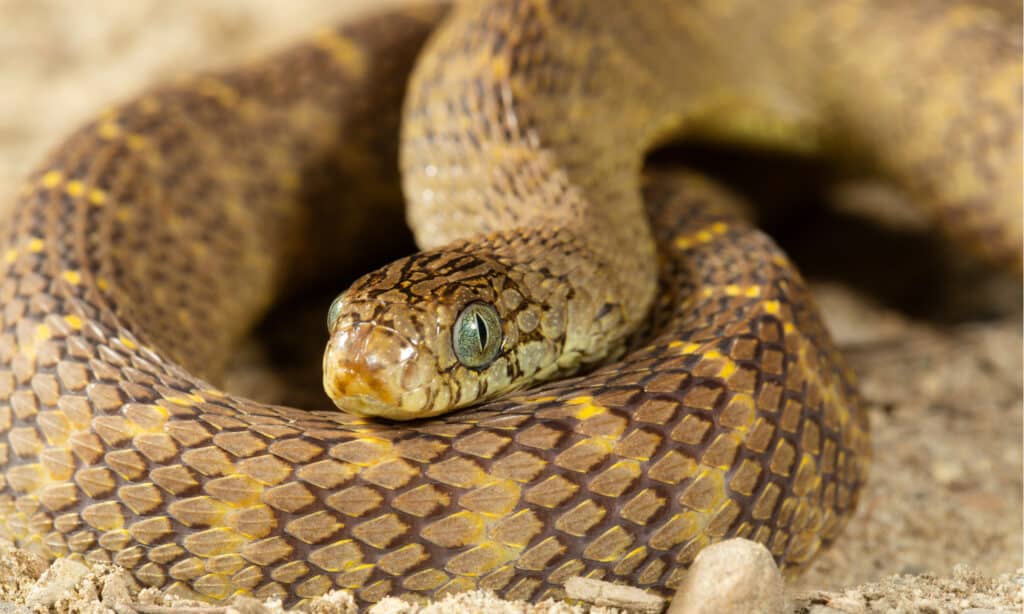
African egg-eating snakes don’t have teeth for biting.
©Joe McDonald/Shutterstock.com
8. The Children’s Python
Children’s pythons (Antaresia childreni) are small, non-venomous snakes from Australia that grow to an average of 2.5-4 feet long. They’re known to be easy to care for, but they can be defensive as hatchlings. Gentle handling and slow movements are key to raising calm, tolerant adults.
As with other pythons, they are constrictors. They do not have fangs, but they do have teeth and can bite, though they rarely do. These snakes generally rely on camouflage and avoidance. If they feel threatened, they may hiss, curl up into coils, and hide their heads. They may also rear up and open their mouths to look larger.

The children’s python is a great beginner reptile because of its good-natured temperament.
©My Lit'l Eye/Shutterstock.com