
Quick Take
- One black-and-yellow snake on this list is highly venomous, and its color pattern is the only reliable way to tell it apart from harmless lookalikes. Identify the coral snake →
- Kingsnakes earned their royal name by doing something no other snake on this list does, which makes them surprisingly useful to have around. Meet the kingsnakes →
- One species here can't even move on land, yet still ranks among the deadliest snakes in the world. Discover the sea snake →
- The snake most likely lurking in your backyard right now has a secret defense weapon that has nothing to do with venom. Learn the garter snake's defense →
As we inch closer to spring and summer, snakes begin to come out of hiding. As ectotherms, they require external sources to regulate their body temperature, so they are most often seen during the warm weather of spring and summer. Today, we look at the most common black snakes with yellow stripes to help you identify what you may have found in your backyard.
Identifying Black Snakes With Yellow Stripes
There are over 150 species of snakes in North America, not including subspecies. With so many snakes, it’s hard to cover them all. There are regional differences in subspecies that can make identification difficult. So, we are going to cover some of the most common snakes that are black and have yellow stripes.
Below, we have organized the information for each snake into the following categories:
- common identification markings
- habitat
- region
- diet
- danger level
If you happen to find a black snake with yellow stripes, this guide will help you find out which species you have stumbled across.
Common Garter Snake (Thamnophis sirtalis)
Garter snakes are some of the most common snakes in the US. They are sometimes called “garden snakes” because of their habit of ending up in the backyard. These snakes aren’t dangerous, and you are likely to encounter them at some point.
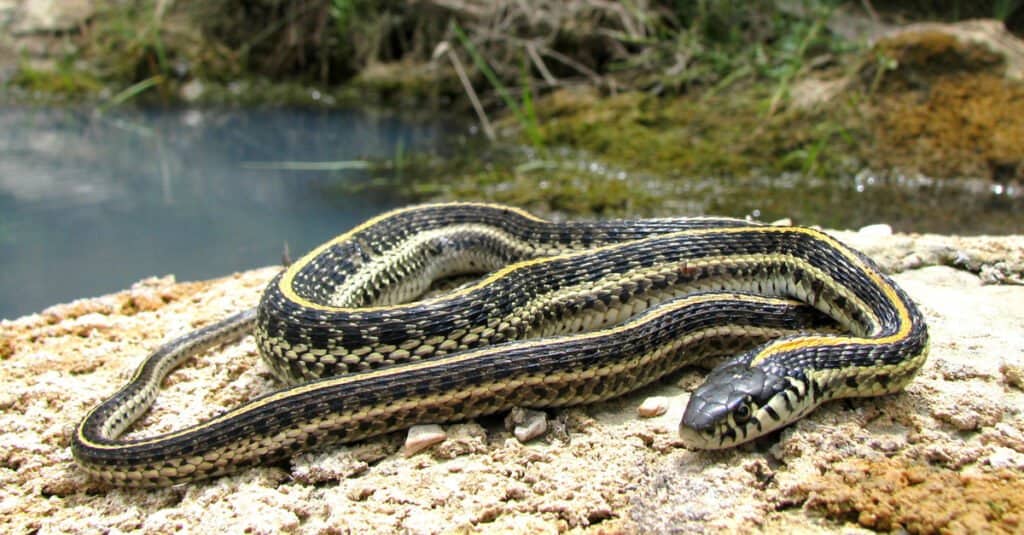
Garter snakes are known for their longitudinal yellow stripes.
©Joe Farah/Shutterstock.com
- Identification: Usually dark-bodied with cream bellies and yellow stripes running from the base of the head to tail; most snakes only measure up to 34 inches
- Habitat: Almost anywhere, including backyards, gardens, swamps, lakes, ponds, mountains, and more
- Region: All over the U.S. Populated areas, suburban, rural, and everywhere in between
- Diet: Small mammals, amphibians, earthworms, minnows
- Danger level: They are considered nonvenomous. It secretes a foul-smelling odor when threatened.
Orange-Striped Ribbon Snake (Thamnophis proximus proximus)
The orange-striped ribbon snake is a perfect fit for our description today. These snakes are a subspecies of the western ribbon snake, which is a type of garter snake.
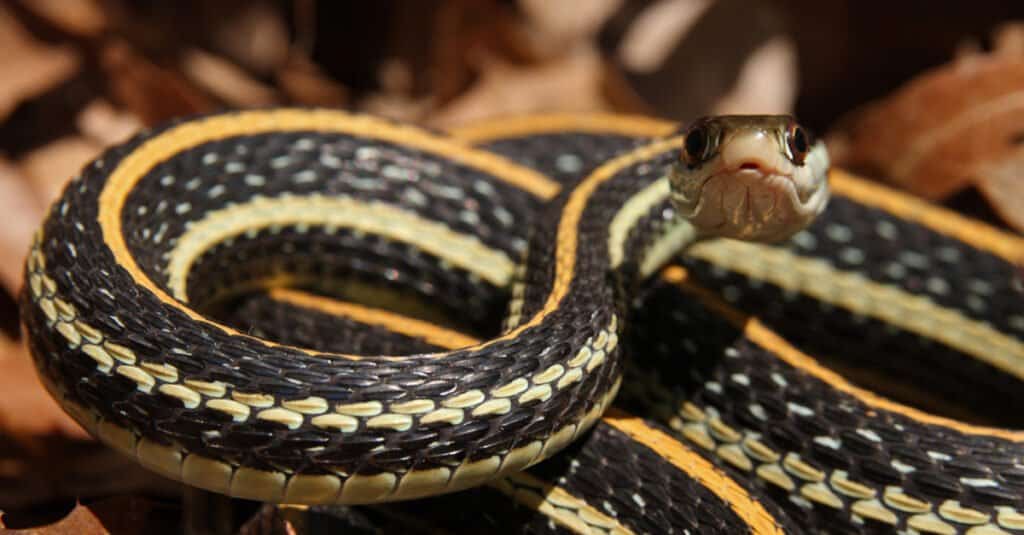
The orange ribbon snake is a subspecies of the western garter snake, shown above.
©Ryan M. Bolton/Shutterstock.com
- Identification: Black or brown bodies with an orange or yellow stripe running along the middle of the back from the base of the head to tail, narrow yellow stripes along each side, and a cream or light green belly; they measure 20 to 30 inches and occasionally up to 40 inches
- Habitat: Usually found near water, such as swamps, marshes, woods, ponds, streams, and rivers; they frequently hide in border vegetation
- Region: From western New Mexico east to Tennessee and from southwestern Wisconsin to the Gulf Coast and into Mexico
- Diet: Amphibians, including adult frogs and salamanders, as well as larvae; they also eat fish
- Danger level: Considered nonvenomous, but does secrete a foul odor when threatened
Striped Racers (Coluber lateralis)
Striped racers, often referred to as California whipsnakes, fit the description of black with yellow stripes, but eastern racers do not have stripes, blotches, or banding. These snakes are widespread and are considered relatively common throughout their range.
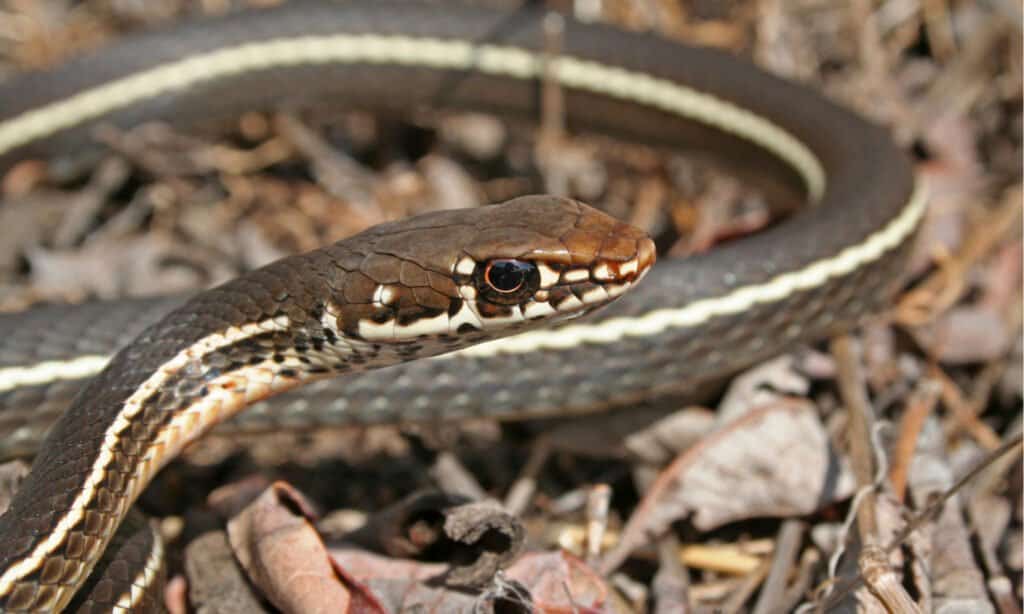
Striped racers are common throughout California in the U.S. and Baja California, Mexico.
©Creeping Things/Shutterstock.com
- Identification: Black or grey bodies with yellow or white stripes running laterally from head to tail; holds head up while moving; orange or yellow bellies, small dots under the head; 36-60 inches in length
- Habitat: Scrubland, woodland, rocks, foothills
- Region: California and the Mexican state, Baja California
- Diet: Frogs, salamanders, lizards, snakes, birds, rodents, insects
- Danger level: They are nonvenomous, but will strike if cornered
Kingsnakes (Lampropeltis spp.)
There are several species of kingsnakes in the U.S. that could potentially match our description of black with yellow stripes: the common kingsnake, eastern kingsnake, and the California kingsnake. They get the “king” in their name from their habit of eating other venomous snakes.
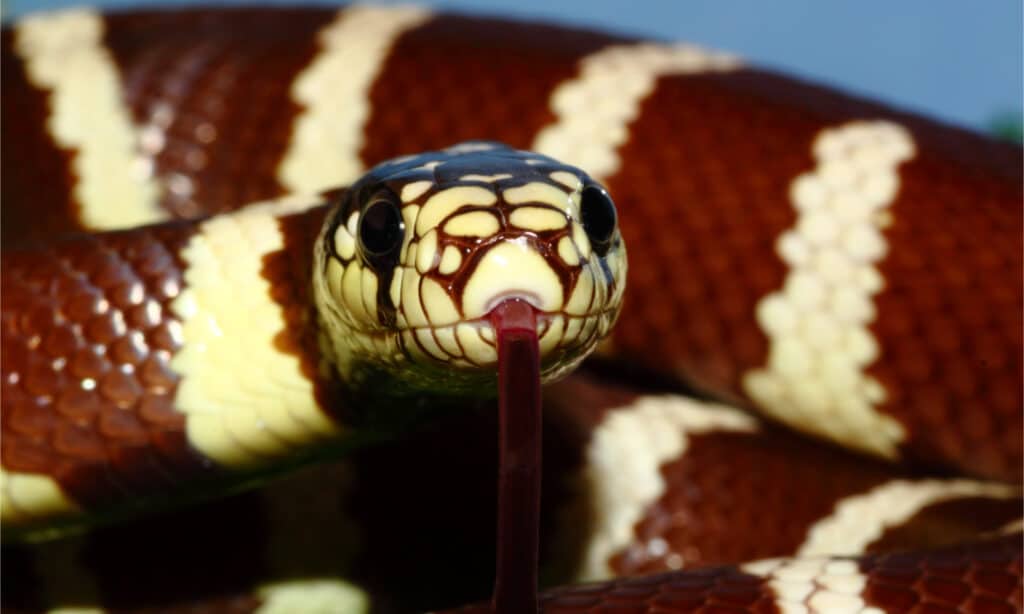
California kingsnakes are nonvenomous constrictors.
©MattiaATH/Shutterstock.com
- Identification: Common: Glossy black to dark brown, 20+ yellow or white crossbands; Eastern: Solid black or dark brown body with around 24-31 narrow white or yellowish crossbands; California: Alternating dark brown/black and white/yellow bands or a continuous cream-colored stripe down the back; all snakes generally reach 36-48 inches in length
- Habitat: From the oceans to the mountains and everywhere in between
- Region: Common: Almost all of the continental United States; Eastern: Primarily the southern and southeastern U.S.; California: California and much of the southwest, including Baja California, Mexico
- Diet: Rodents, birds, reptiles, venomous snakes, and almost everything else
- Danger level: Low; nonvenomous and often kept as pets
Texas Patch-Nosed Snake (Salvadora lineata)
Although these snakes usually spend their days under the sand staying cool, they can occasionally be found coming out during cool hours in the morning and evening. Their nose scale is believed to be an adaptation that allows them to dig into the burrows of small mammals through the sand.
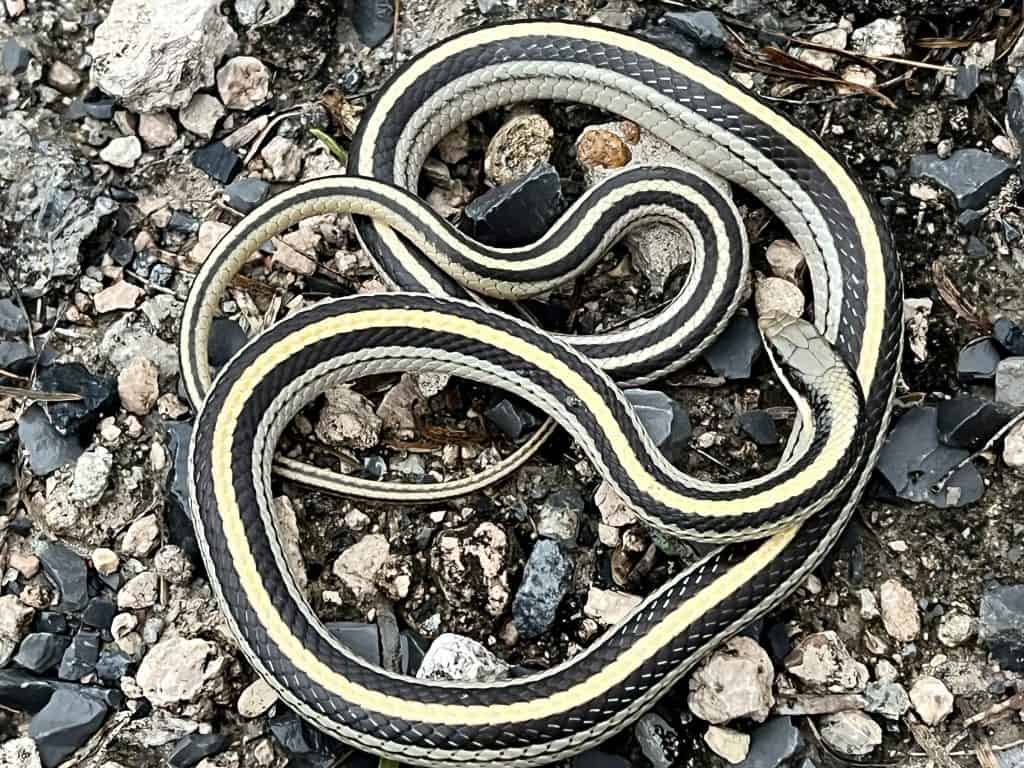
The Texas patch-nosed snake is primarily found across central and western Texas.
- Identification: Long, slender bodies with large triangular scales on their snouts; Grey, tan, or greyish-brown with a yellow, tan, or orange stripe running down the middle of the back; adults generally grow 26-40 inches long
- Habitat: Desert regions, scrublands, chaparral, canyons
- Region: Primarily across central and western Texas, including the Edwards Plateau and Hill Country and down into Mexico
- Diet: Lizards, reptile eggs, small rodents, and smaller snakes
- Danger level: They are harmless, non-venomous snakes
Coral Snake (Micrurus fulvius)
Coral snakes are as dangerous as they are beautiful and should be avoided due to the potency of their venom. They are secretive snakes, typically buried in the soil or hidden under leaf litter and rotten logs.
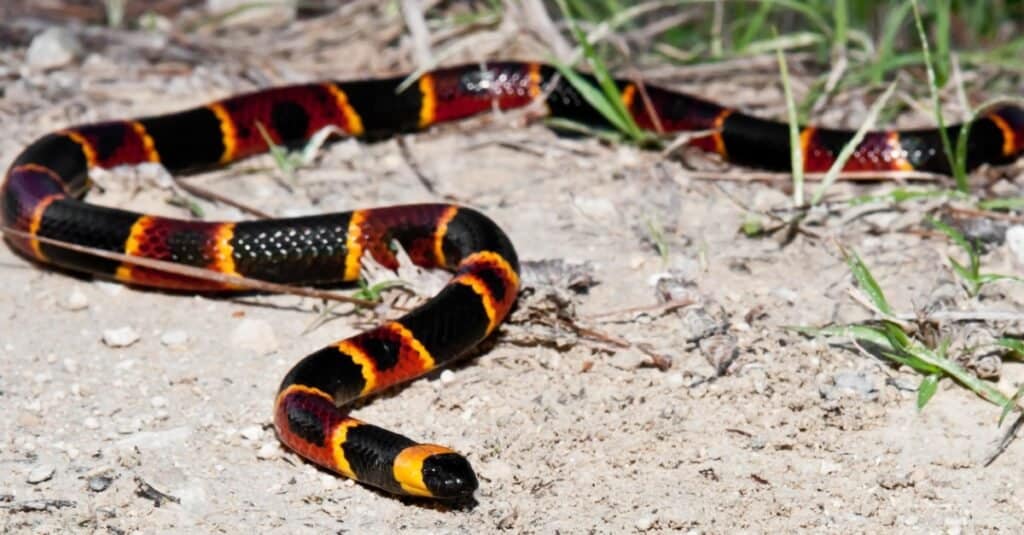
Coral snakes are highly venomous snakes that should be avoided.
©iStock.com/JasonOndreicka
- Identification: Long and narrow with black, yellow, and red bands across the body. Always goes black-yellow-red-yellow, with black never touching red
- Habitat: Forests, woodlands, desert scrub, rocky areas, and burrows, all usually near some type of water
- Region: Southern U.S. from Arizona to North Carolina, three different sub-species within the range
- Diet: Snakes, frogs, lizards, birds, small mammals
- Danger level: High; highly venomous, requiring immediate medical attention
Yellow-Bellied Sea Snake (Hydrophis platurus)
Sea snakes are among the deadliest snakes in the world and the yellow-bellied sea snake is no different. Thankfully, they live their lives in the water and can’t even move on land. Humans typically encounter them only while out at sea or when the snakes are accidentally trapped in tide pools.
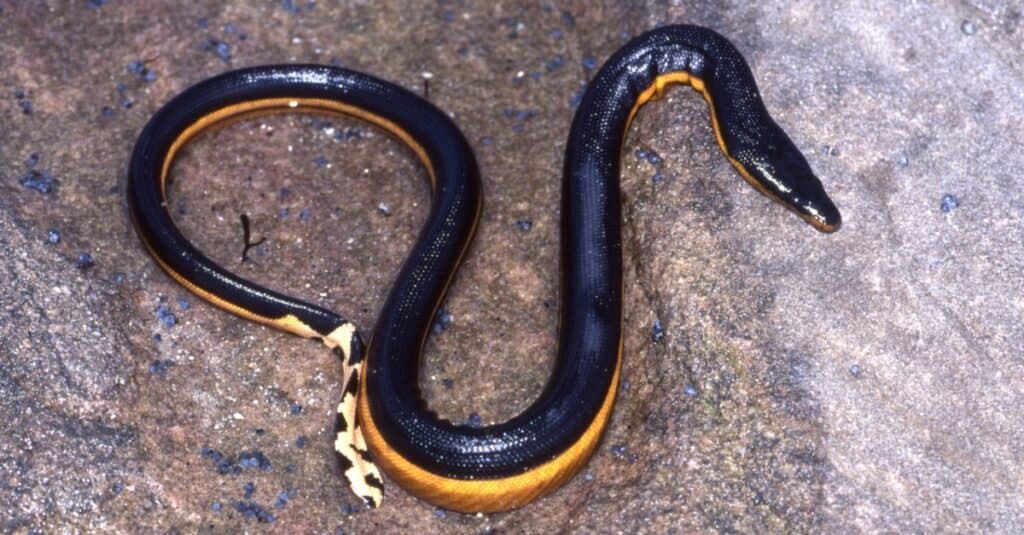
Yellow-bellied sea snakes only live in the ocean and are highly dangerous.
©Ken Griffiths/Shutterstock.com
- Identification: Streamlined appearance with a tail like a fin; black bodies with bright yellow bellies that can appear striped when viewed from the side
- Habitat: Lives in and near the sea and can’t move on land; they are occasionally trapped in tide pools
- Region: Hawaii and the coast of California
- Diet: Fish
- Danger level: High; highly venomous, requiring immediate medical attention if bitten