Quick Take
- One harmless Kansas snake gets mistaken for a deadly one, and the bite still hurts.
- Some Kansas yards hide a surprise in the mulch each fall.
- Only one venomous species is called the deadliest in Kansas, and it's a shy one.
- A famously aggressive rattler is barely ever spotted in the state, and only a few places have reports.
Kansas is home to many different species of snakes, of which five are venomous. These snakes live across a wide variety of environments, ranging from open grasslands and rocky hills to forests, wetlands, and suburban yards. Kansas averages over 100 venomous snakebites annually, with the greater Kansas City metro area alone typically logging 40 to 50 venomous bites a year. However, there has been only one documented fatality since 1950. The details of that case are not publicly available, and HIPAA laws keep modern medical records private.
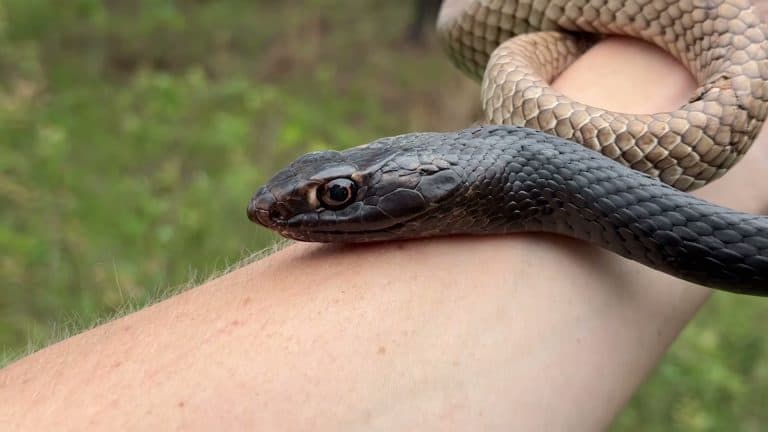
Eastern Racer
The eastern racer (Coluber constrictor) is one of the most commonly seen snakes in Kansas, where it is found statewide in grasslands, pastures, and prairies during the summer, and on rocky, wooded hillsides in the spring and fall. The eastern racer is an extremely fast snake, and when threatened, it tends to make a quick getaway. However, if an eastern racer feels cornered, it might strike.

Eastern racers are one of the most common snakes found across Kansas
©Matt Jeppson/Shutterstock.com
A mature eastern racer in Kansas will typically measure between 23 and 50 inches long.
Northern Water Snake
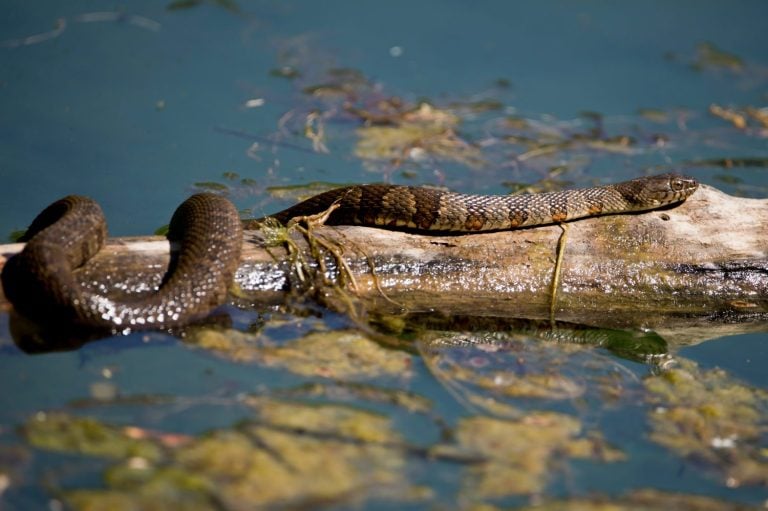
The northern water snake (Nerodia sipedon) is frequently found in the rivers, lakes, and streams that flow throughout Kansas. This snake is typically shades of gray and brown and may look like a cottonmouth (Agkistrodon piscivorus), which is exceedingly rare to nonexistent in the state. Northern water snakes are not venomous, but they will bite when feeling threatened or provoked.
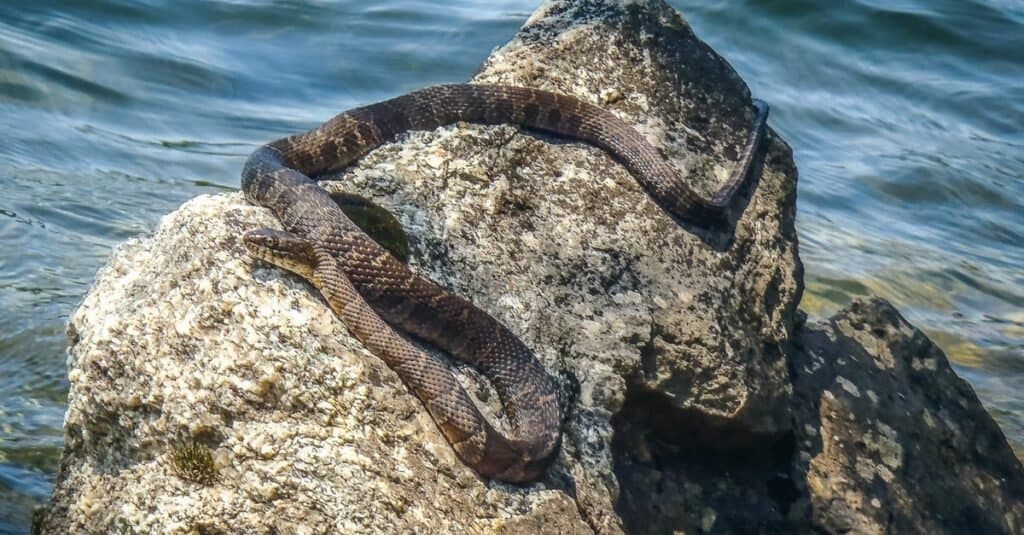
Northern water snakes, often confused with cottonmouths, are nonvenomous.
©jmarino/Shutterstock.com
Although larger specimens are found elsewhere, northern water snakes in Kansas average 22 to 42 inches long.
Red Milk Snake
The red milk snake (Lampropeltis triangulum syspila) is a nonvenomous constrictor primarily distributed across eastern Kansas. Red milk snakes inhabit rocky hillsides, open woodlands, and forest edges. They are active from April through November, preying on small lizards (such as five-lined skinks), smaller snakes, and rodents.
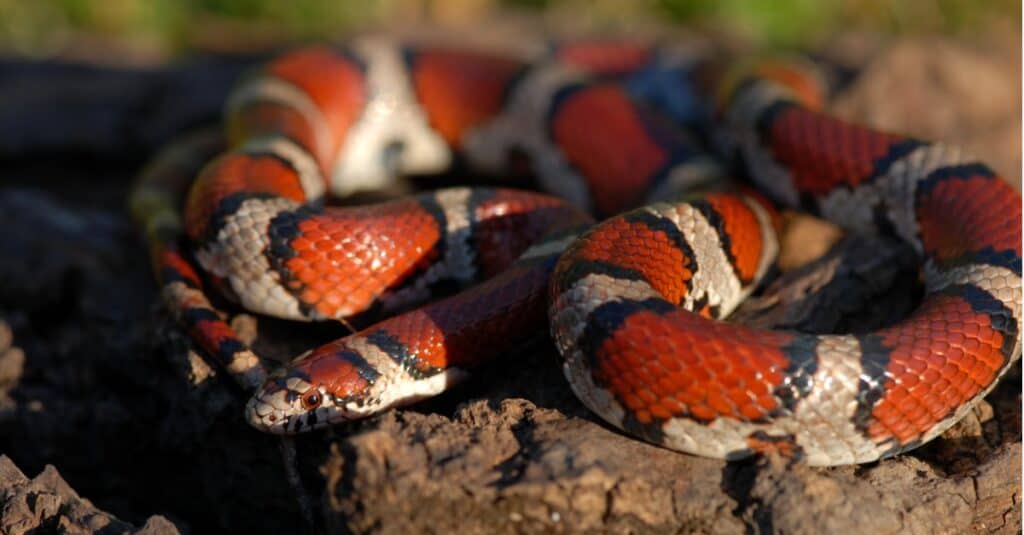
In Kansas, red milk snakes are generally 16 to 28 inches long.
©iStock.com/Shoemcfly
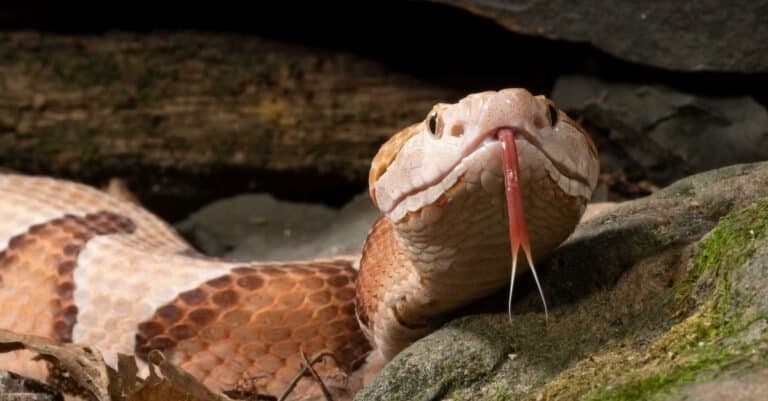
Copperhead
The eastern copperhead (Agkistrodon contortrix) is a venomous pit viper which is found primarily in the eastern third of the state, according to the Kansas Herpetofaunal Atlas. Its distribution overlaps with the closely related broad-banded copperhead (A. laticinctus), resulting in extensive hybridization.
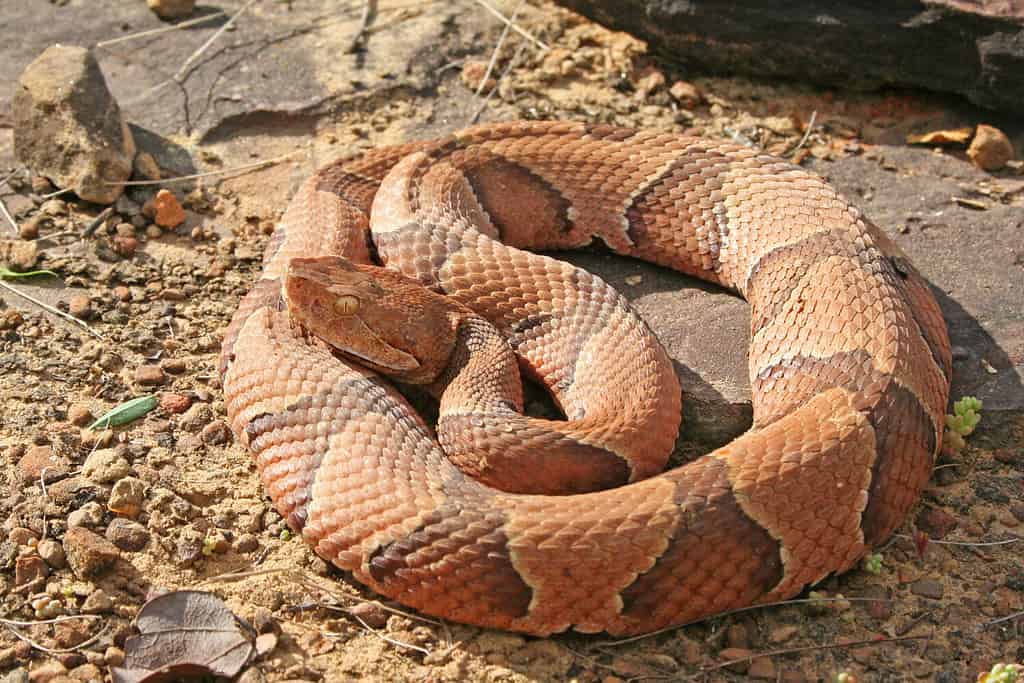
A mature eastern copperhead is typically two to three feet long.
©Creeping Things/Shutterstock.com
The eastern copperhead is found in deciduous hardwood forests, wooded hillsides, and limestone outcrops, where it ambushes rodents, cicadas, frogs, and small lizards before retreating to communal rocky dens for winter brumation, the reptile equivalent of hibernation.
Timber Rattlesnake
The timber rattlesnake (Crotalus horridus) is a shy snake and will hide or flee rather than attack. However, if a timber rattlesnake feels threatened or is cornered, it will attack. Timber rattlesnakes are found in the eastern quarter of Kansas.
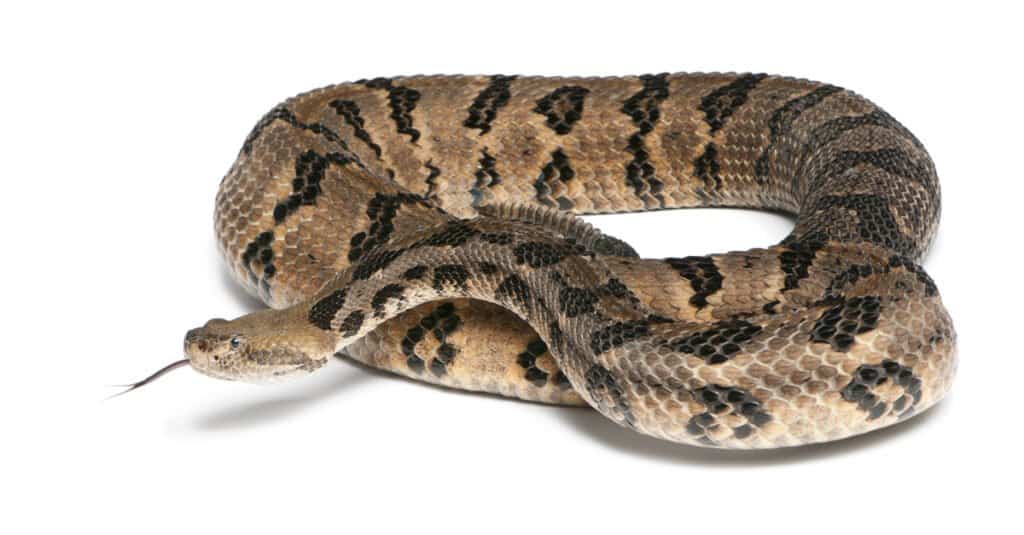
A mature timber rattlesnake typically measures 3 to 5 feet long. It is the largest native venomous snake found in the state.
©Eric Isselee/Shutterstock.com
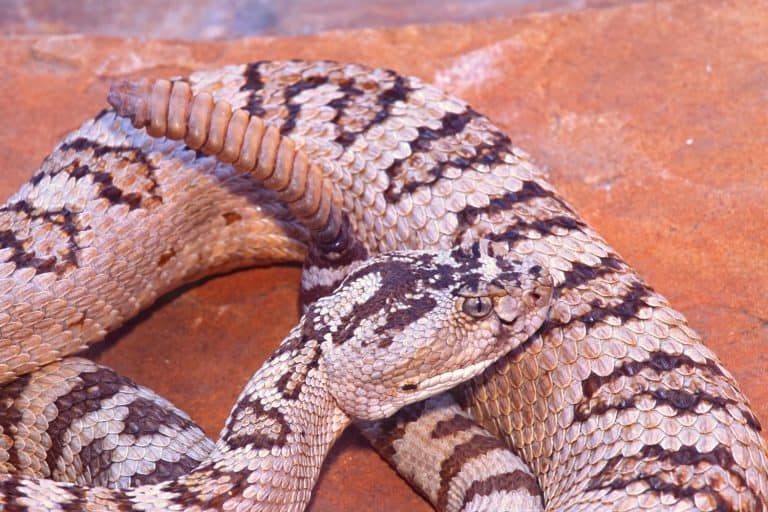
Prairie Rattlesnake
The prairie rattlesnake (Crotalus viridis) is primarily found in western Kansas. These speckled brown snakes are found in rocky outcroppings, dry vegetation, and abandoned burrows.
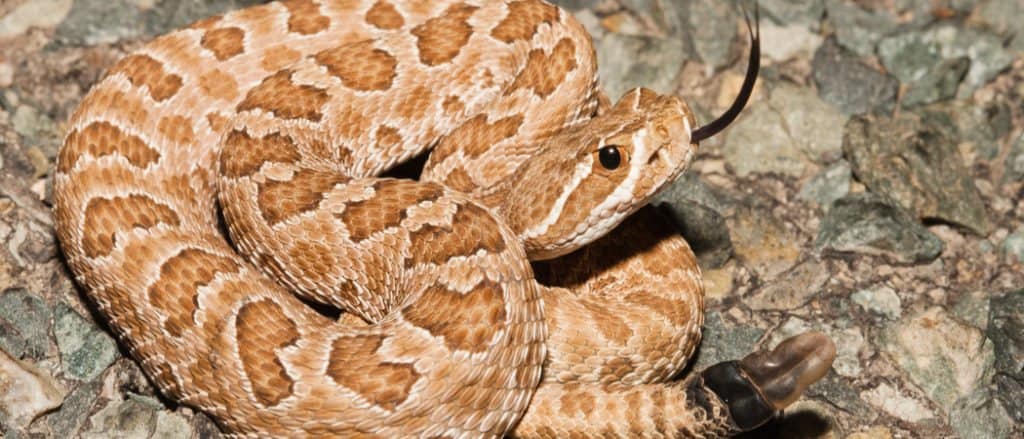
Mature prairie rattlesnakes are between three and four feet long.
©Nathan A Shepard/Shutterstock.com
Like other rattlesnakes, the prairie rattlesnake has rings around its tail that make a distinctive rattling sound when it’s agitated. However, the prairie rattlesnake is not usually aggressive, preferring to flee rather than attack. If you are bitten by a prairie rattlesnake, you should seek medical attention immediately.
Western Massasauga
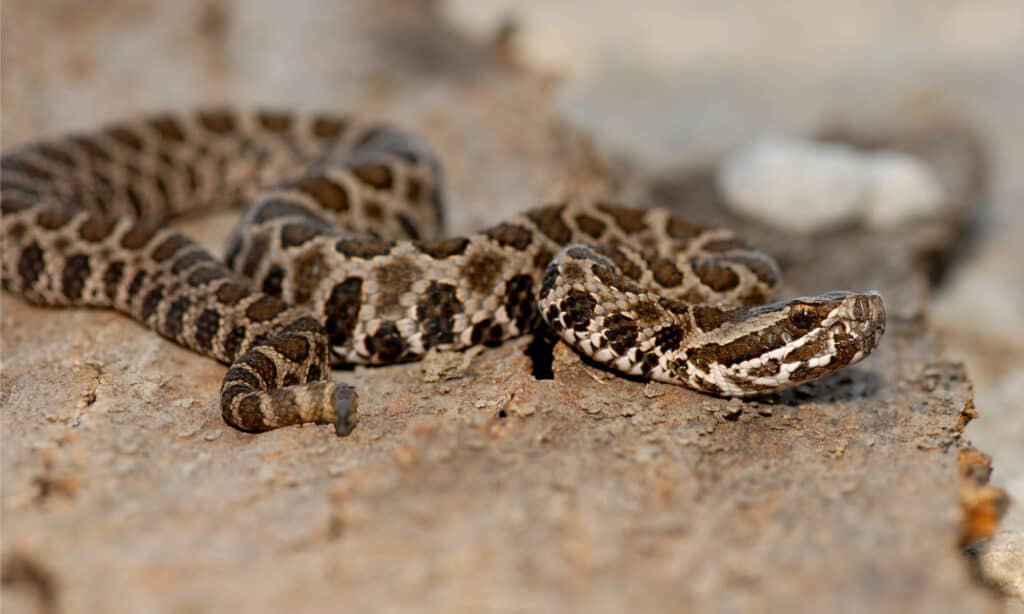
A juvenile western massasauga rattlesnake from northern Missouri
©iStock.com/Shoemcfly
The western massasauga (Sistrurus tergeminus) is the final venomous snake found in Kansas. Massasauga, from the Ojibwe language, means great river mouth. These rattlesnakes are smaller than other rattlesnakes found in the state, but are found throughout most of Kansas (though they are rather rare in its western third). The snake, which is notable for its strikingly patterned scales, is found in moist habitats near wetlands, as well as dry prairie and rocky hillsides.
In Kansas, a mature western massasauga typically measures 18 to 30 inches long.
List of Snakes in Kansas
- Brown snake
- Checkered garter snake
- Coachwhip
- Common garter snake
- Common kingsnake
- Copperhead (Venomous)
- Diamondback water snake
- Eastern glossy snake
- Eastern hognose snake
- Eastern racer
- Flathead snake
- Gopher snake
- Graham’s crayfish snake
- Great Plains rat snake
- Ground snake
- Lined snake
- Longnose snake
- Milk snake (including the red milk snake)
- New Mexico blind snake
- Night snake
- Northern cottonmouth (Venomous)
- Northern water snake
- Plainbelly water snake
- Plains blackhead snake
- Plains garter snake
- Prairie kingsnake
- Prairie rattlesnake (Venomous)
- Redbelly snake
- Ring-necked snake
- Rough earth snake
- Rough green snake
- Smooth earth snake
- Timber rattlesnake (Venomous)
- Western diamondback rattlesnake (Venomous – rare/accidental)
- Western hognose snake
- Western massasauga rattlesnake (Venomous)
- Western rat snake
- Western ribbon snake
- Western worm snake