
Ohio is the birthplace of several presidents and is named after the Ohio River, which begins in the state. This state is home to many different kinds of wildlife, including a variety of spiders. Of the 50,000 identified spider species worldwide, Ohio is home to over 600 of them. From the bold jumping spider (Phidippus audax), a tiny species measuring less than an inch, to much larger varieties, most spiders in Ohio do not pose a threat to humans. Continue reading to learn about five of the largest spiders in Ohio and how their bites can affect humans.
5. Long-Bodied Cellar Spider
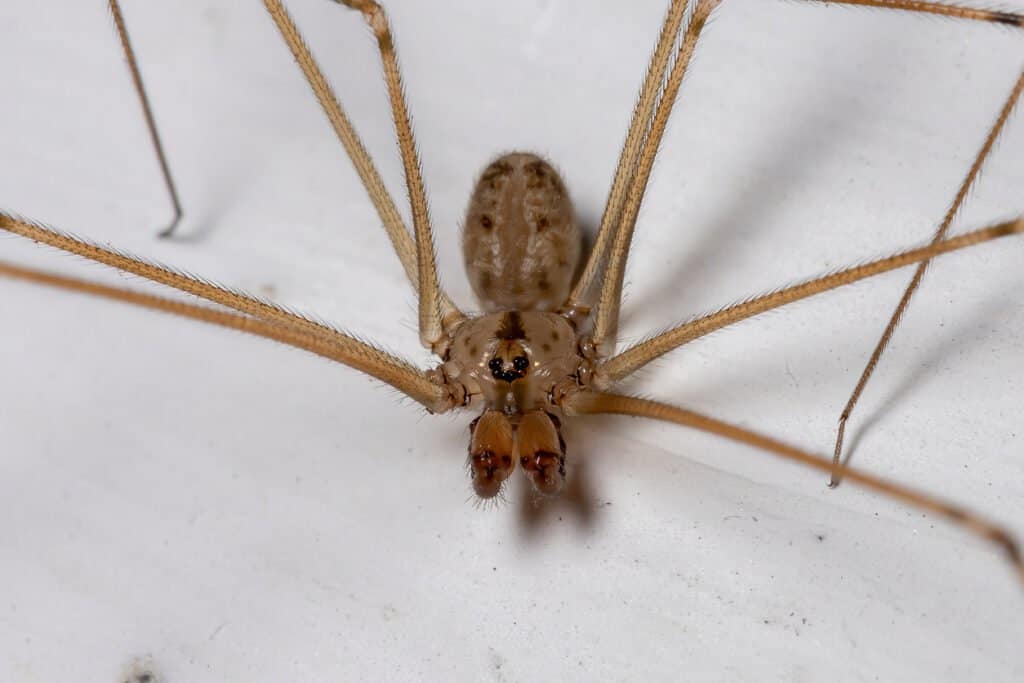
Cellar spiders have long legs.
©iStock.com/ViniSouza128
| Scientific Name | Size | Danger to Humans |
|---|---|---|
| Pholcus phalangioides | 1-2 inches | A bite may cause a mild burning sensation. |
The long-bodied cellar spider is a common spider that lurks in basements, garages, and other less-traveled areas in and around homes and outbuildings. This spider is sometimes called a daddy long-legs because of its large leg-to-body ratio.
These spiders are easy to identify with their long legs, translucent bodies, and grayish-brown or light brown color. Long-bodied cellar spiders consume other, more harmful types of spiders, including black widows.
Don’t believe the urban legends. Although long-bodied cellar spiders can bite and possess venom, their bite is not considered harmful to humans due to their small fangs and weak venom, rendering them unable to deliver a medically significant dose.
4. Black and Yellow Garden Spider
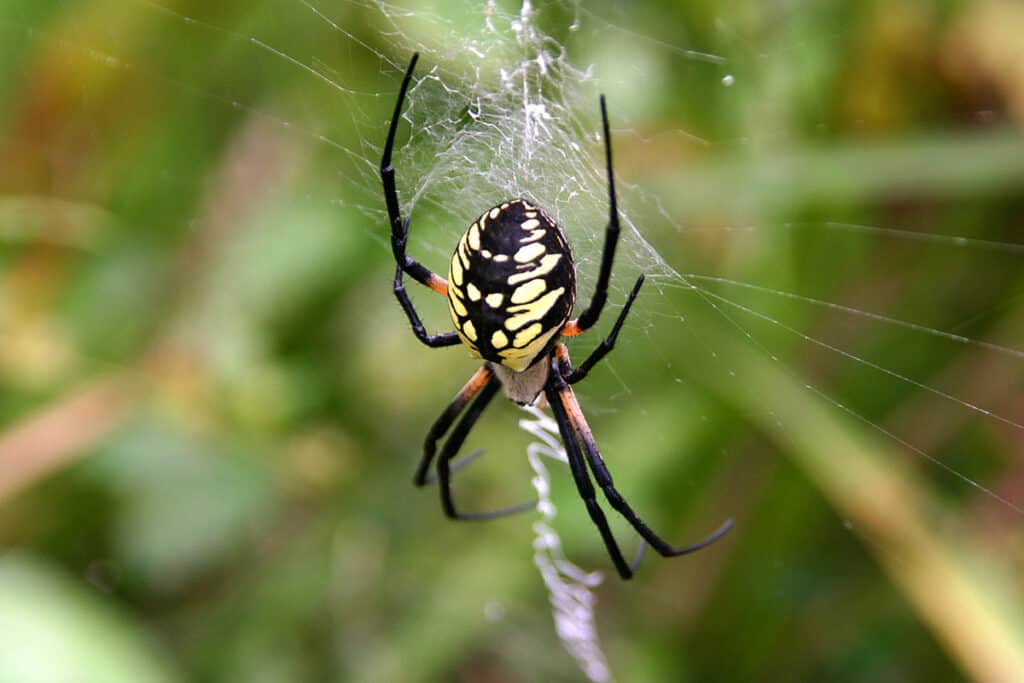
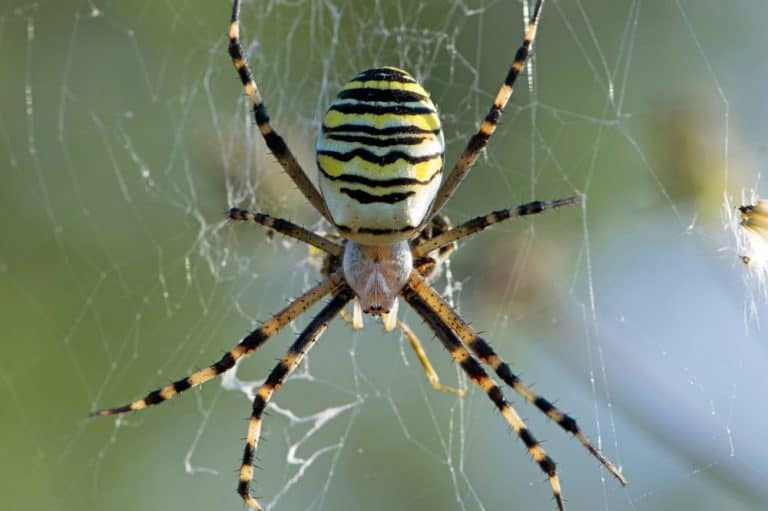
The black and yellow garden spider is a common sight throughout much of the United States.
©iStock.com/AwakenedEye
| Scientific Name | Size | Danger to Humans |
|---|---|---|
| Argiope aurantia | 0.5-3 inches | Rarely bites humans, but it may cause pain and swelling. |
The black and yellow garden spider is known for its iconic web and long legs. These spiders have a silver cephalothorax when viewed from the top. Their abdomen is patterned with black and yellow. It may also have some gray or silver patterns.
Black and yellow garden spiders have long legs that are reddish-brown on the femur and banded reddish-brown and black on the tibia. They spin large webs that are several feet in diameter and possess a long, thick section called a stabilimentum.
The stabilimentum gives these spiders their nickname, the writing spider, because the zig-zag pattern of this structure resembles messy handwriting. The black and yellow garden spider may bite if startled or disturbed. Their bite causes minor pain and swelling, similar to a bee sting.
3. American Nursery Web Spider
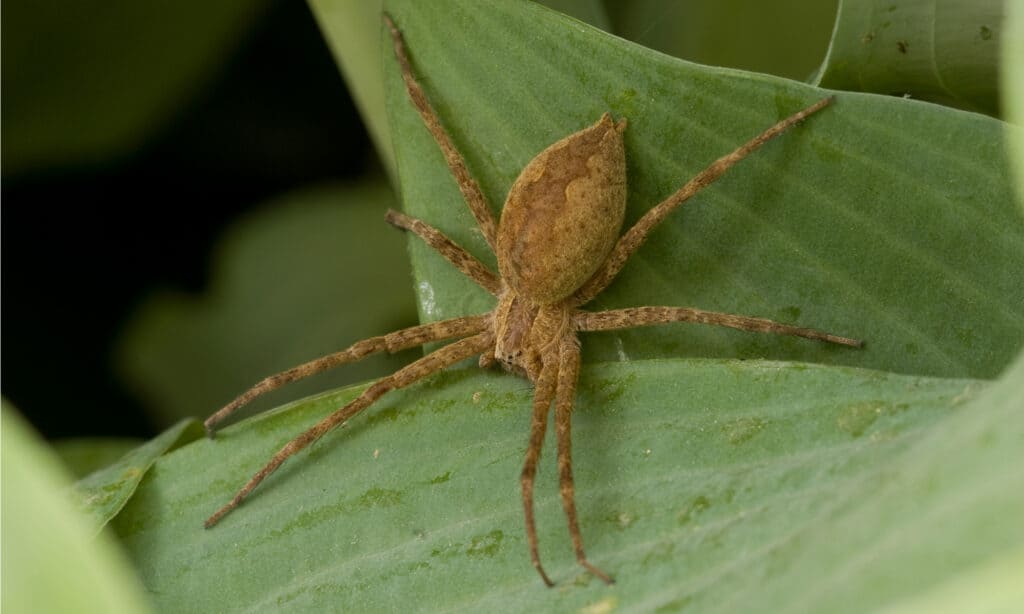
The American nursery web spider spins a nursery of webbing for its eggs to protect them until they hatch.
©SDeming/Shutterstock.com
| Scientific Name | Size | Danger to Humans |
|---|---|---|
| Pisaurina mira | 1-3 inches | Delivers a bite that is mostly harmless to humans, with pain and swelling common. |
The American nursery web spider is usually found outdoors near woods, living on the tall vegetation of fields where they hunt their prey. They are wandering hunters that don’t rely on their webs as their only means of obtaining food.
These spiders are brown or reddish-brown and have a darker brown stripe bordered by a lighter color running the length of their body. Their legs may appear solid in color or display light and dark chevrons on the femurs, with bands of light and dark brown on the tibias and lower segments.
A bite from one of these spiders is rare, but it can cause pain and a bump in the area where it is delivered.
2. Carolina Wolf Spider
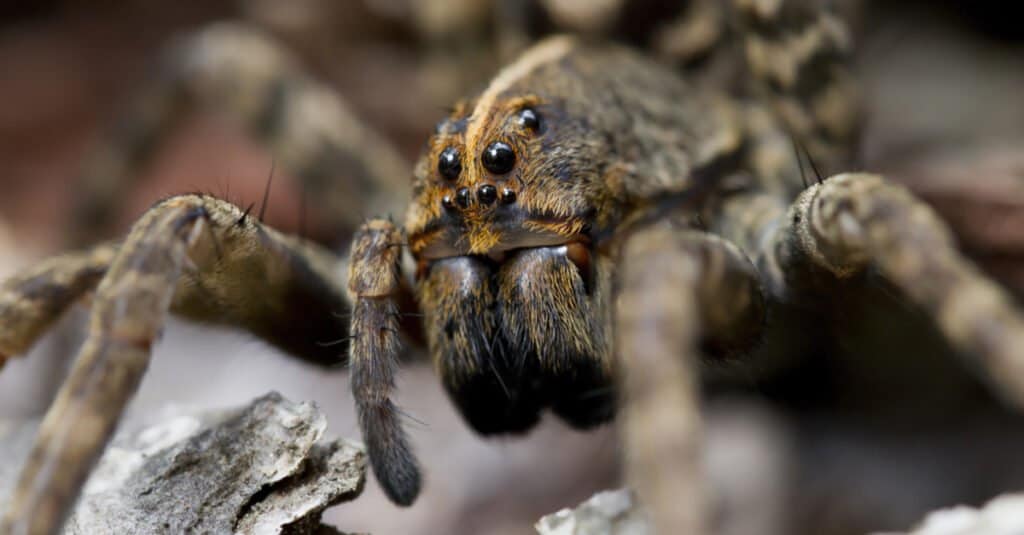
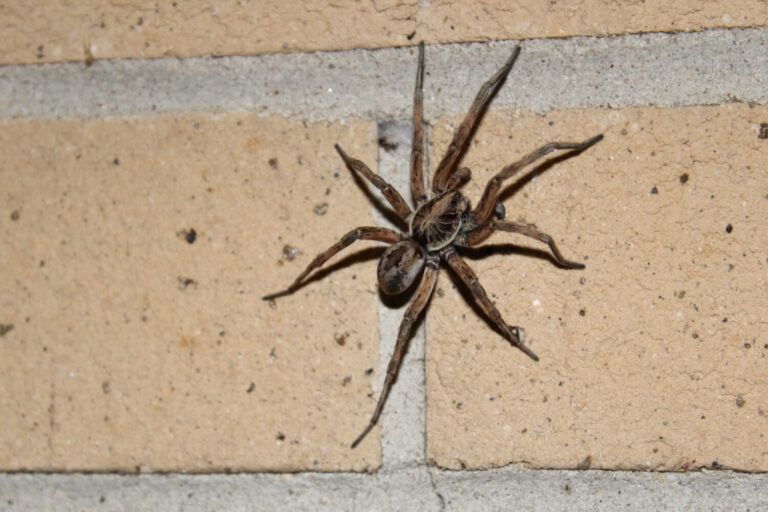
Carolina wolf spiders are among the largest spiders in the U.S.
©Will E. Davis/Shutterstock.com
| Scientific Name | Size | Danger to Humans |
|---|---|---|
| Hogna carolinensis | 2-4 inches | The bite from this spider causes local pain and swelling. |
The Carolina wolf spider has the largest body of any spider in Ohio. This species can measure up to 1.4 inches in body length in females, with a leg span approaching four inches.
The Carolina wolf spider can bite humans, but rarely does. If startled or threatened, the spider might inflict a bite that would result in mild-to-moderate pain, with minimal swelling at the site. Individuals who are allergic to the spider’s venom can experience more serious symptoms, including nausea, headache, and fever.
The Carolina wolf spider is not the only species of wolf spider in Ohio; several other species also inhabit the state, although they are not as large.
1. Dark Fishing Spider
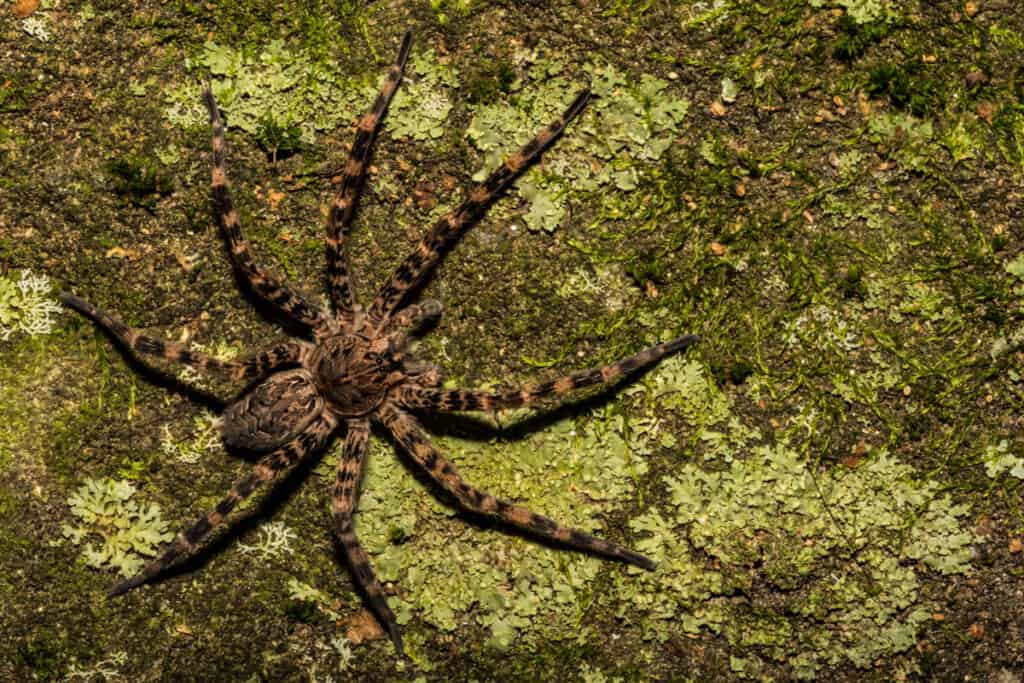
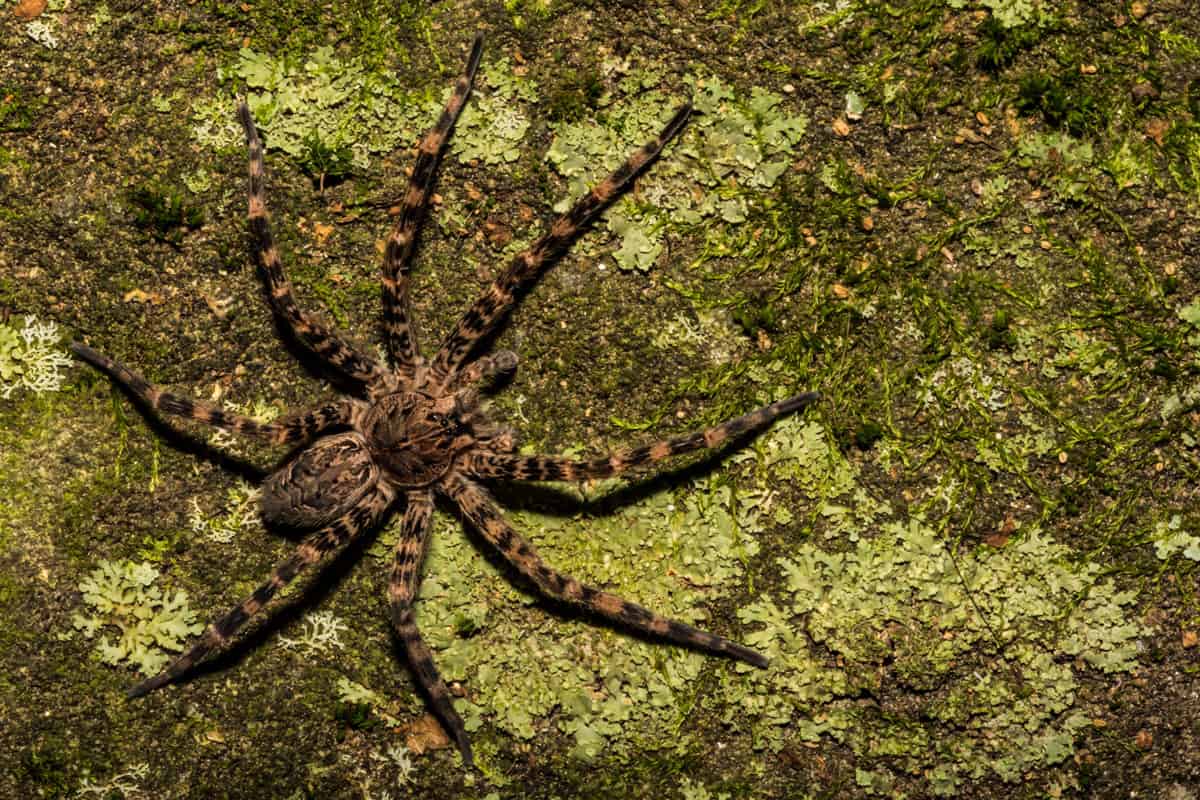
Dark fishing spiders are usually light-colored and live near trees.
©iStock.com/JasonOndreicka
| Scientific Name | Size | Danger to Humans |
|---|---|---|
| Dolomedes tenebrosus | 3.5-4.5 inches | This spider can bite humans and deliver pain that is similar to a bee sting. |
Dark fishing spiders are among the largest spiders in Ohio by leg span, while the Carolina wolf spider has the largest body size. You’ll often find this species on trees near water. Like wolf spiders, they don’t use webs to hunt their prey. Instead, they rely on chasing down their prey. They are fast, large spiders, which can be a startling combination.
The dark fishing spider is known for having a mottled carapace with W-shaped patterns on its abdomen. They are often light brown to dark brown in color, with light and dark brown bands running down the length of their legs.
Although they are large, they aren’t harmful to humans. A bite from a dark fishing spider is about as painful as a wasp bite or a bee sting.
Although they are not among the largest spiders, black widow spiders and yellow sac spiders are present in Ohio and can inflict medically significant bites.