
Many different species of spiders can be found in Kentucky. The majority of arachnids found in the Bluegrass State are beneficial, as most species are harmless to humans and provide natural pest control. Two exceptions are the venomous black widow and brown recluse, but even these spider species are not aggressive and bite only when threatened. However, these dangerous spiders are not large enough to make the list of the five biggest spiders in Kentucky. Continue reading to see which species made the cut.
5. Rabid Wolf Spider
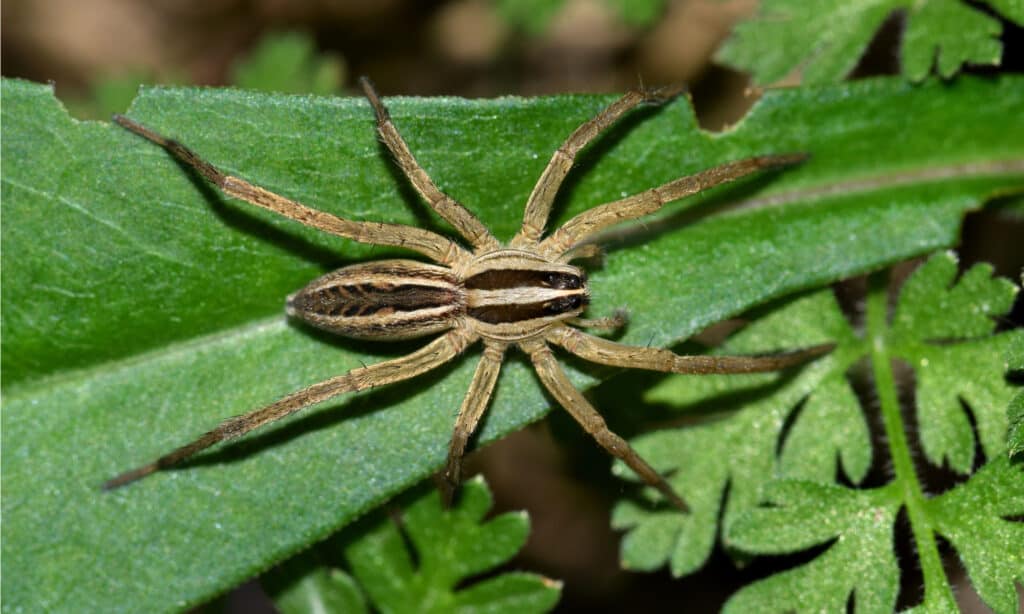
Rabid wolf spiders are harmless to humans, but larger specimens can give a painful bite.
©Brett Hondow/Shutterstock.com
| Scientific Name | Size | Danger to Humans |
|---|---|---|
| Rabidosa rabida | leg span up tp 1.5 inches | The bite may cause some pain and swelling, but it is not otherwise harmful to humans. |
Despite its name, the rabid wolf spider is not dangerous, but it is quite large. This species has a leg span approaching 3 inches. Like other wolf spiders, they hunt at night by chasing down and pouncing on their prey.
These spiders are usually light brown or tan, and they have two dark stripes on their cephalothorax, separated by a light stripe that occurs between their eyes and a light-colored stripe on either side of the dark stripes. The abdomen has a single dark stripe bordered by a lighter color.
The rabid wolf spider’s bite is moderately painful and may cause swelling.
4. Southeastern Wandering Spider
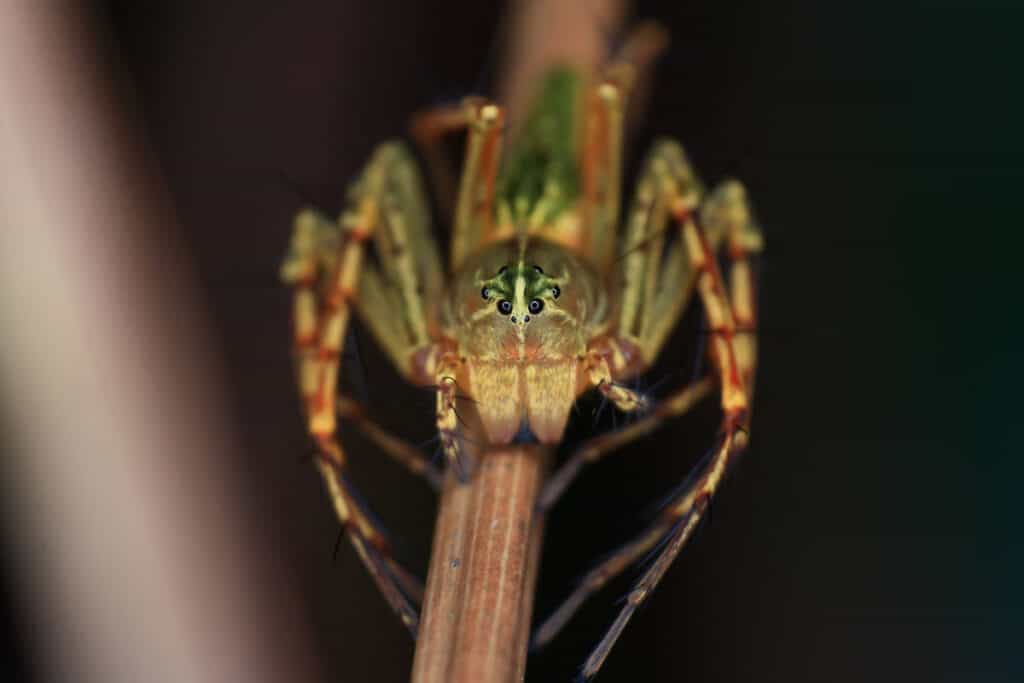
The Southeastern wandering spider actively hunts for prey using ambush tactics.
©Firdaus Khaled/Shutterstock.com
| Scientific Name | Size | Danger to Humans |
|---|---|---|
| Anahita punctulata | leg span up to 1.6 inches | Inflicts mild pain and redness in the area of the bite |
The Southeastern wandering spider is a brown, tan, or brownish-red spider with a light band running behind its eyes and down the length of its cephalothorax.
These spiders typically have a mottled, light-colored abdomen, and their legs are lighter near the body and darker toward the ends. The Southeastern wandering spider is not necessarily more aggressive than most spiders, but it is defensive when provoked. Its bite results in mild pain and redness.
3. Striped Fishing Spider
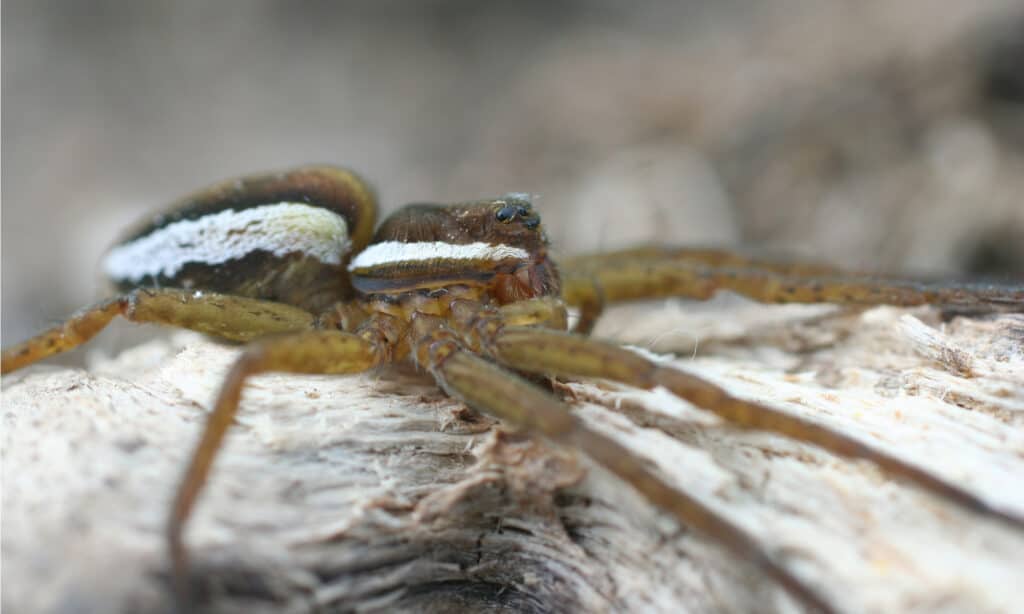
The striped fishing spider is known for the light stripes on its sides.
©Oleg Nikonov/Shutterstock.com
| Scientific Name | Size | Danger to Humans |
|---|---|---|
| Dolomedes scriptus | leg span up to 2.4 inches | A bite can cause pain and swelling much like a bee or wasp sting or bite. |
The striped fishing spider has trademark stripes and long legs. These spiders are often light brown, tan, or gray. Their abdomens have a gray, brown, or black W-shaped pattern running down them, and the sides of the spiders are cream-colored or white. These are easy to spot, and commonly found near water.
Striped fishing spiders are timid and will flee rather than interact with a human. Although rare, a bite from a striped fishing spider will inflict pain and swelling similar to a bee sting.
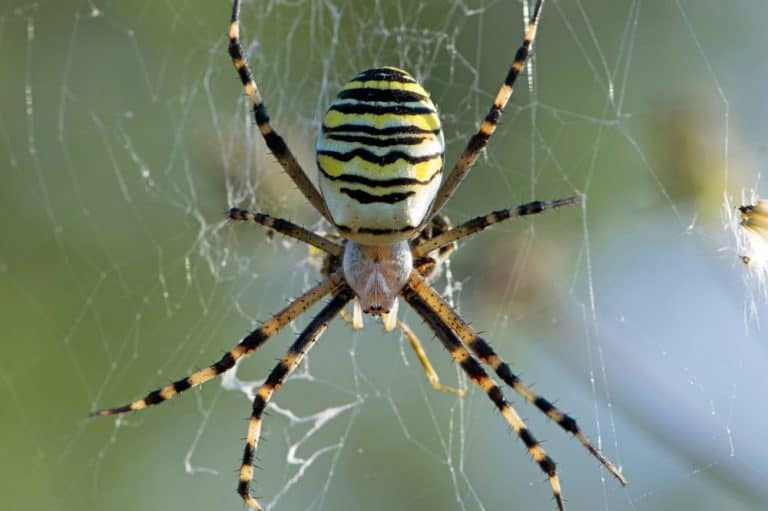
2. Black and Yellow Garden Spider
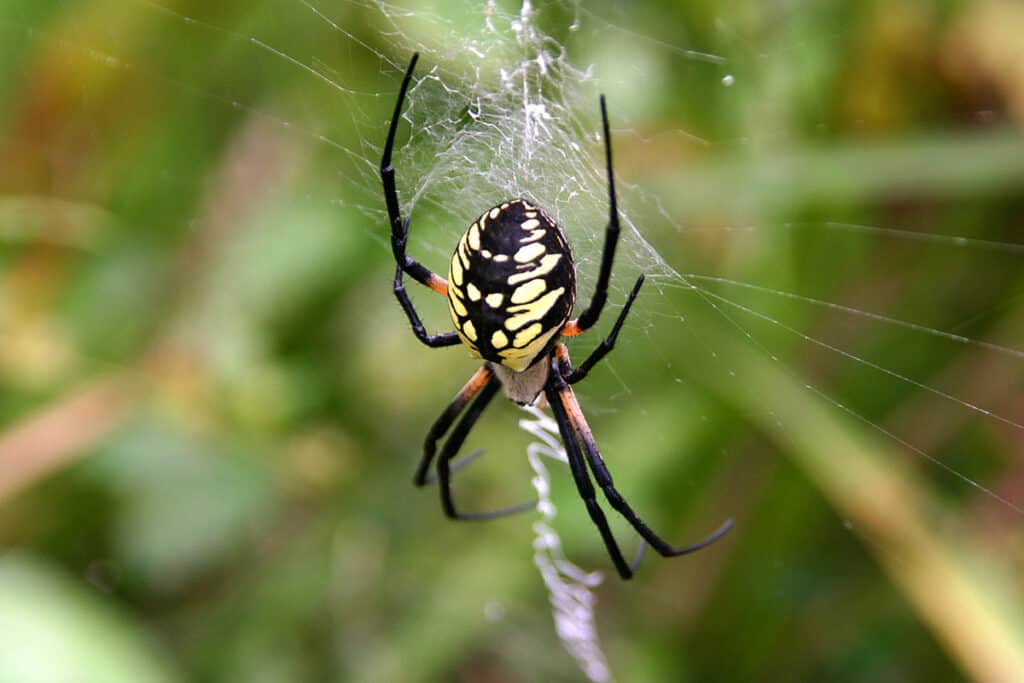
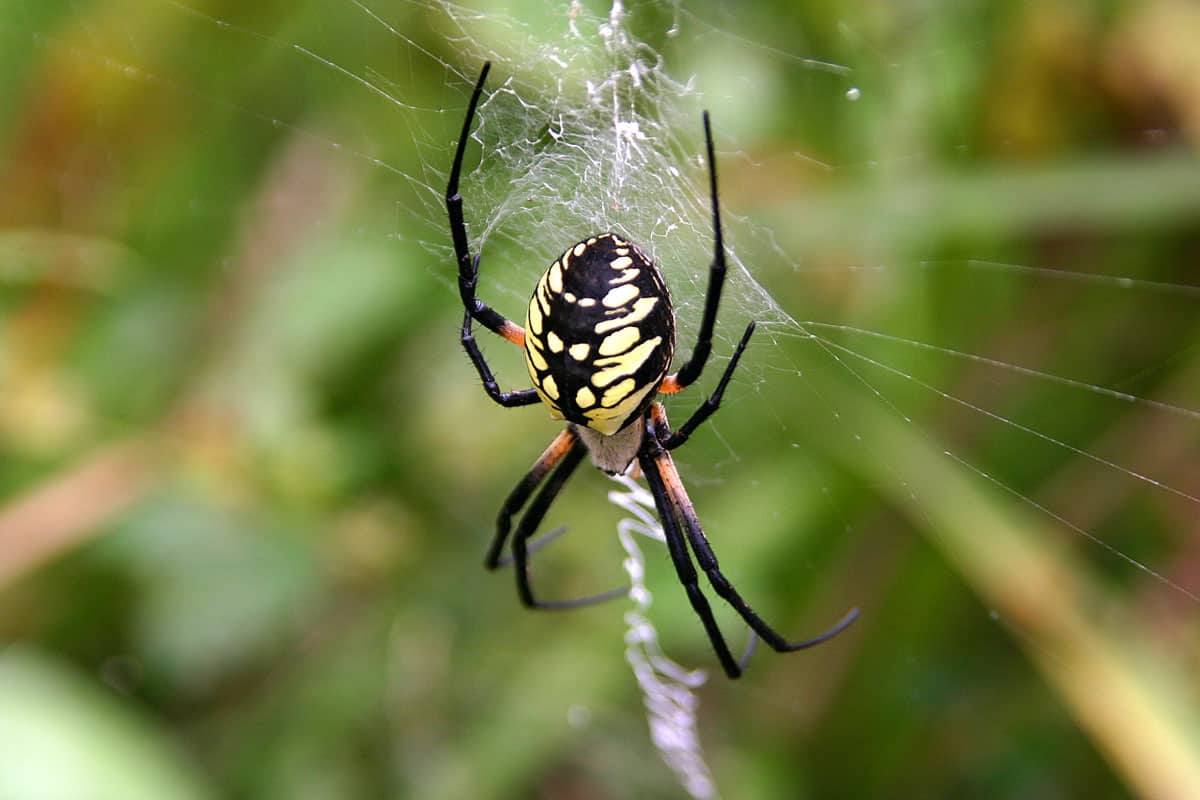
The black and yellow garden spider is also known as the writing spider.
©iStock.com/AwakenedEye
| Scientific Name | Size | Danger to Humans |
|---|---|---|
| Argiope aurantia | leg span up to 3 inches | Rarely bites humans, but it may cause pain and swelling. |
The black and yellow garden spider is a common sight throughout much of the United States. This species has a silver face and cephalothorax. Their abdomens are mostly black and yellow, but may also have some silver mixed in.
This spider is known for its large, unique web with a zig-zag seam at its center, called the stabilimentum. Research suggests that the stabilimentum serves either as a visual defense to prevent large animals like birds from crashing into the web or as a lure for insects by reflecting ultraviolet light.
These spiders don’t like to be disturbed, and they will bite humans defensively. Their bites can cause mild pain and swelling at the site of the bite.
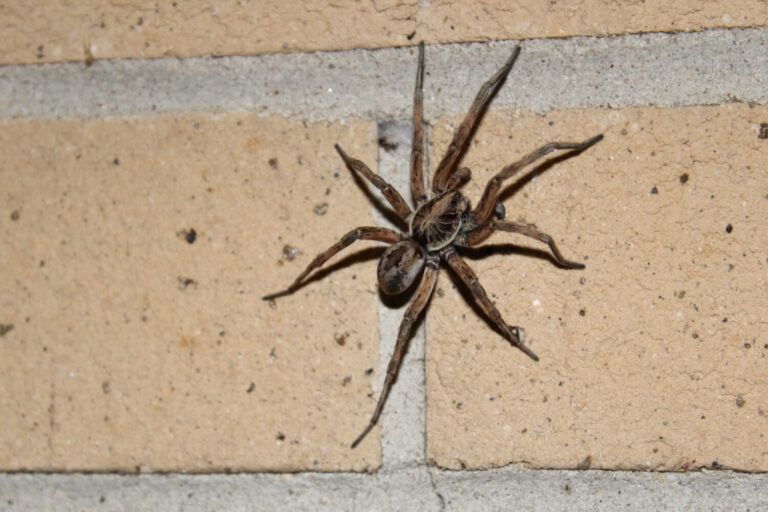
1. Carolina Wolf Spider
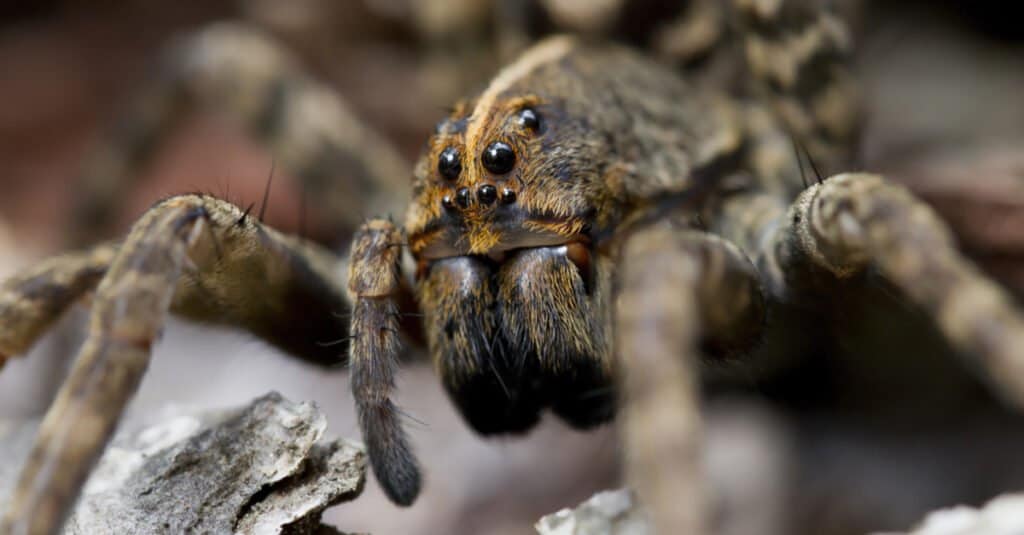
Carolina wolf spiders are the largest wolf spider species in North America.
©Will E. Davis/Shutterstock.com
| Scientific Name | Size | Danger to Humans |
|---|---|---|
| Hogna carolinensis | leg span up to 4 inches | The bite from this spider causes local pain and swelling. |
The Carolina wolf spider is one of the biggest spiders in Kentucky, if not the largest. These spiders have leg spans approaching 4 inches. They can be black, gray, brown, or some mixture of colors.
Wolf spiders are easily confused with tarantulas, although they aren’t as large. However, since they carry their young on their backs for a time, the size of their abdomens can make them appear very large.
Carolina wolf spiders are primarily active at night. They’re very fast and possess better vision than most spiders.
Most wolf spider bites aren’t serious and cause only minor pain and swelling. Individuals with allergies to wolf spider venom may have a stronger reaction and additional symptoms, including nausea, headaches, and rash.