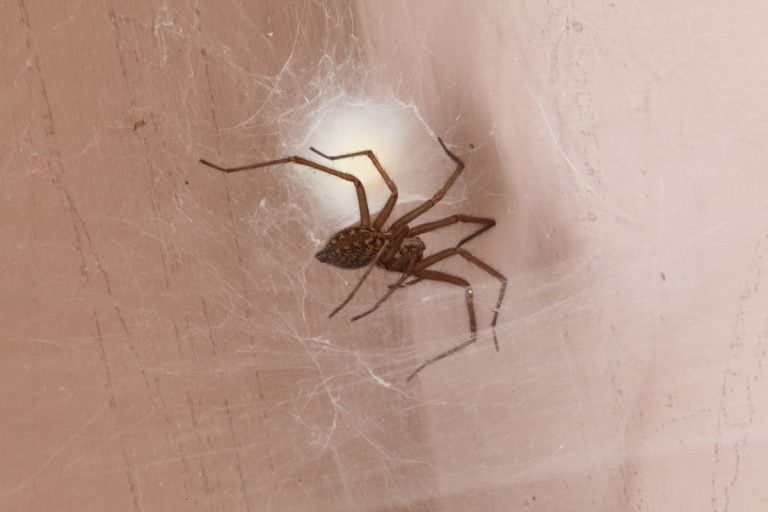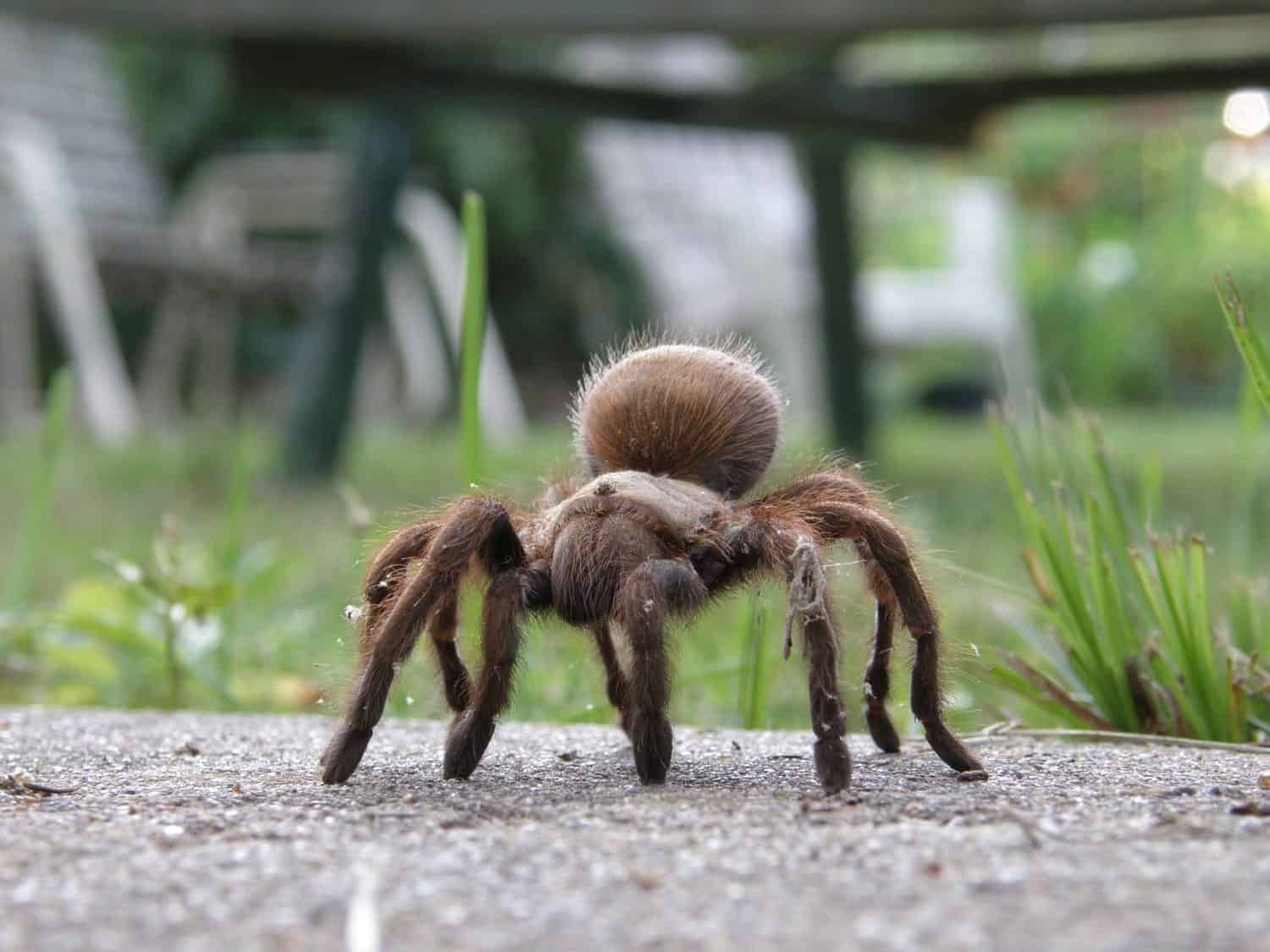

Missouri is renowned for Gateway Arch in St. Louis, a thriving barbecue culture, and the beauty of the Ozarks region. When people think about the wildlife in Missouri, they might imagine large mammals like bears, deer, bobcats, and even bison. However, Missouri is also home to more than 300 species of spiders, and some of them are quite large. So, let’s take a look at some of the biggest spiders in Missouri and the impact they can have on people.
5. American Nursery Web Spider
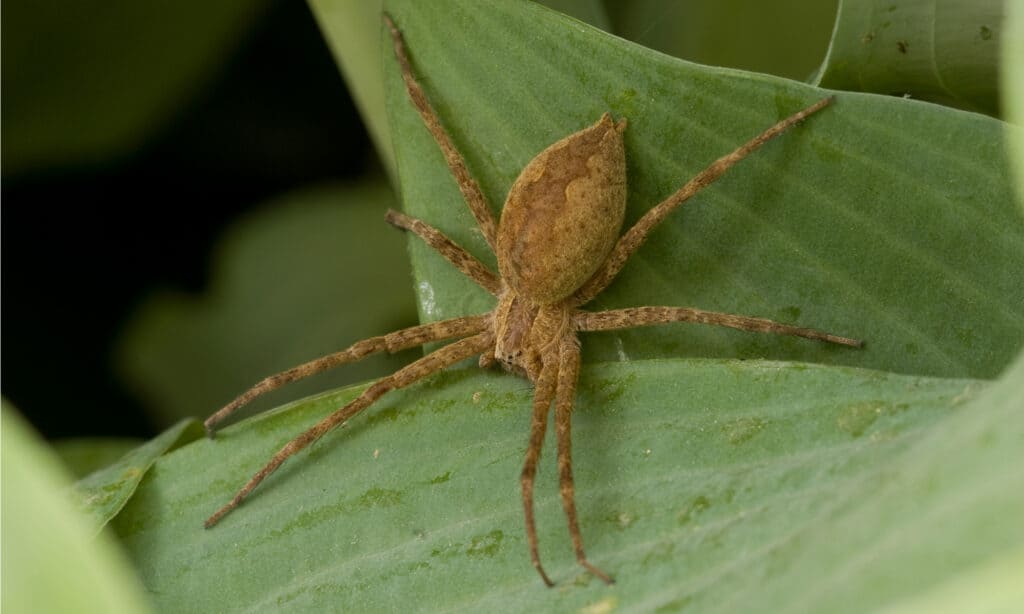
Female nursery web spiders are known to be protective parents.
©SDeming/Shutterstock.com
| Scientific Name | Size | Danger to Humans |
|---|---|---|
| Pisaurina mira | 0.75 inches in body length with a leg span of up to 3 inches | Delivers a bite that is mostly harmless to humans, with pain and swelling common |
American nursery web spiders have slender bodies with long legs. These spiders are typically shades of brown, black, or grey and have a dark stripe running the length of the carapace and abdomen. They can reach about 0.75 inches in body length with a leg span of up to 3 inches. They are called nursery web spiders because the females spin a protective enclosure around their young using the surrounding vegetation.
Nursery web spiders prefer to live in tall vegetation like trees, bushes, and tall grass, so that brings them near homes in some cases. They do not spin webs, but instead, they hunt and ambush their prey. Bites from these spiders are rare, but they may be mildly painful and can cause localized swelling.
4. Six-Spotted Fishing Spider
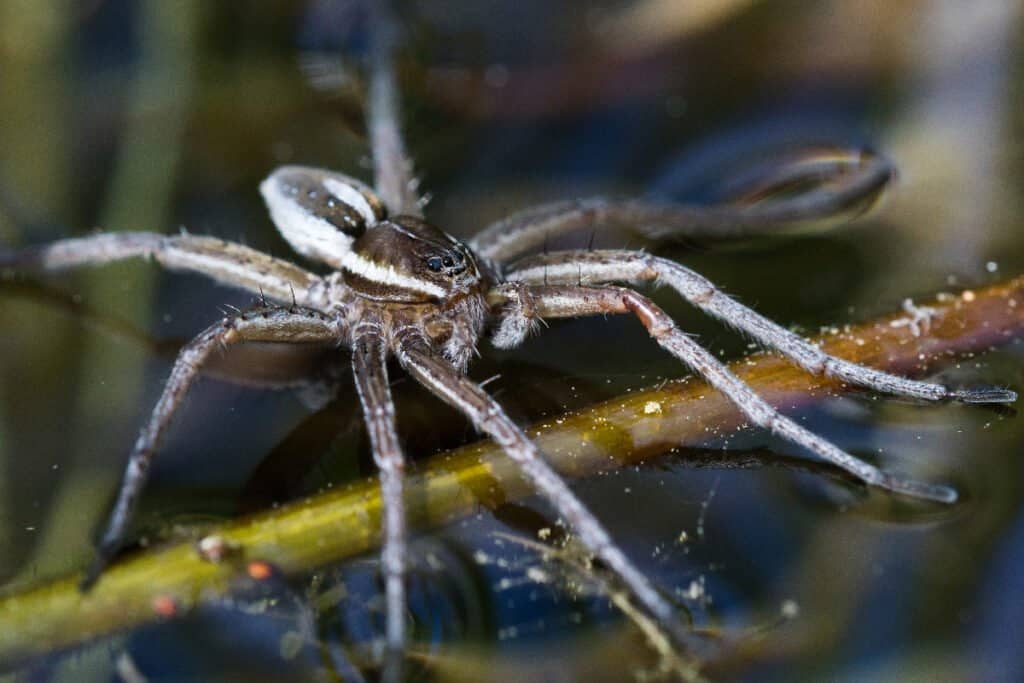
The six-spotted fishing spider can catch fish more than five times its own size.
©Jukka Jantunen/Shutterstock.com
| Scientific Name | Size | Danger to Humans |
|---|---|---|
| Dolomedes triton | Up to 0.8 inches in body length with a leg span of 2-3 inches | Bites will cause pain, swelling, and redness similar to a bee sting |
The six-spotted fishing spider is generally found near water where it hunts its prey. This unique spider can walk across water and dive below its surface to escape predators or even pull small fish from the water. They can grow up to 0.8 inches in length with a leg span of 2-3 inches.
This spider has a brown, dark grey, or brownish-grey body with a white stripe running down both sides. They also have white spots on their rounded abdomens. Their name comes from the six dark spots on the underside of the cephalothorax. A bite from this spider will cause pain, swelling, and redness, and has been compared to a bee sting.
3. Tiger Wolf Spider
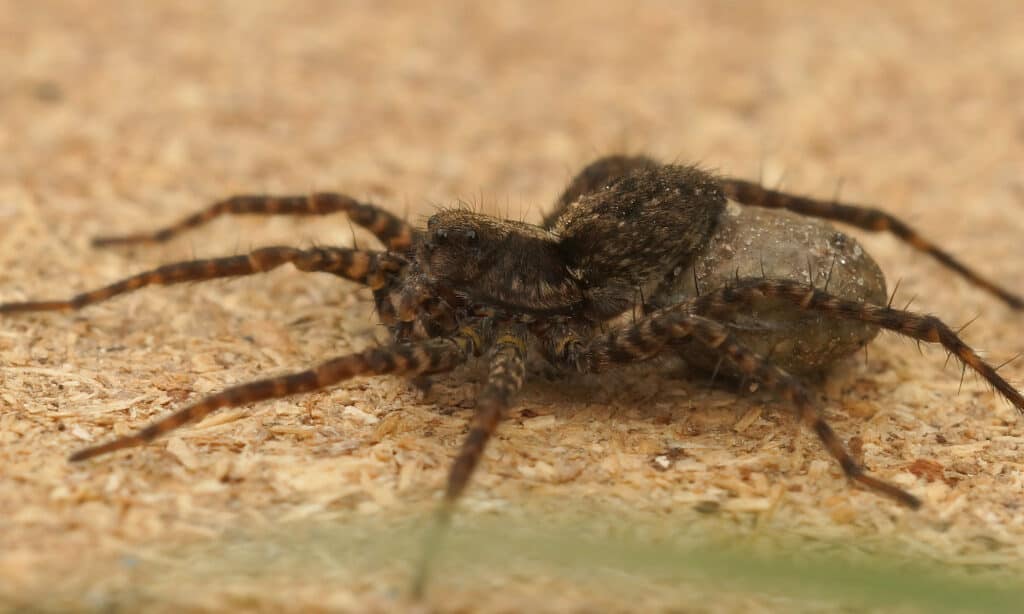
The tiger wolf spider is also known as the speckled wolf spider or woodland giant wolf spider.
©HWall/Shutterstock.com
| Scientific Name | Size | Danger to Humans |
|---|---|---|
| (Tigrosa aspersa) | Up to 1 inch in body length and a leg span of up to 3 inches | The bite may cause localized pain and swelling, but is not generally harmful to humans. |
Tiger wolf spiders can be found across the eastern U.S. and are one of Missouri’s most common wolf spiders. As with all wolf spiders, they do not spin webs, but instead chase their prey. They prefer to build their burrows in moist habitats near water or in woodland leaf litter, but they can also be found in open fields and gardens.
Tiger wolf spiders have dark bodies and banded legs, with males often being paler. They have a thin, light yellow line of hair running between their eyes and down the carapace. Their undersides have orange and black stripes, which is how they got their common name. Their bite may cause localized pain and swelling, but is not dangerous to humans.
2. Carolina Wolf Spider
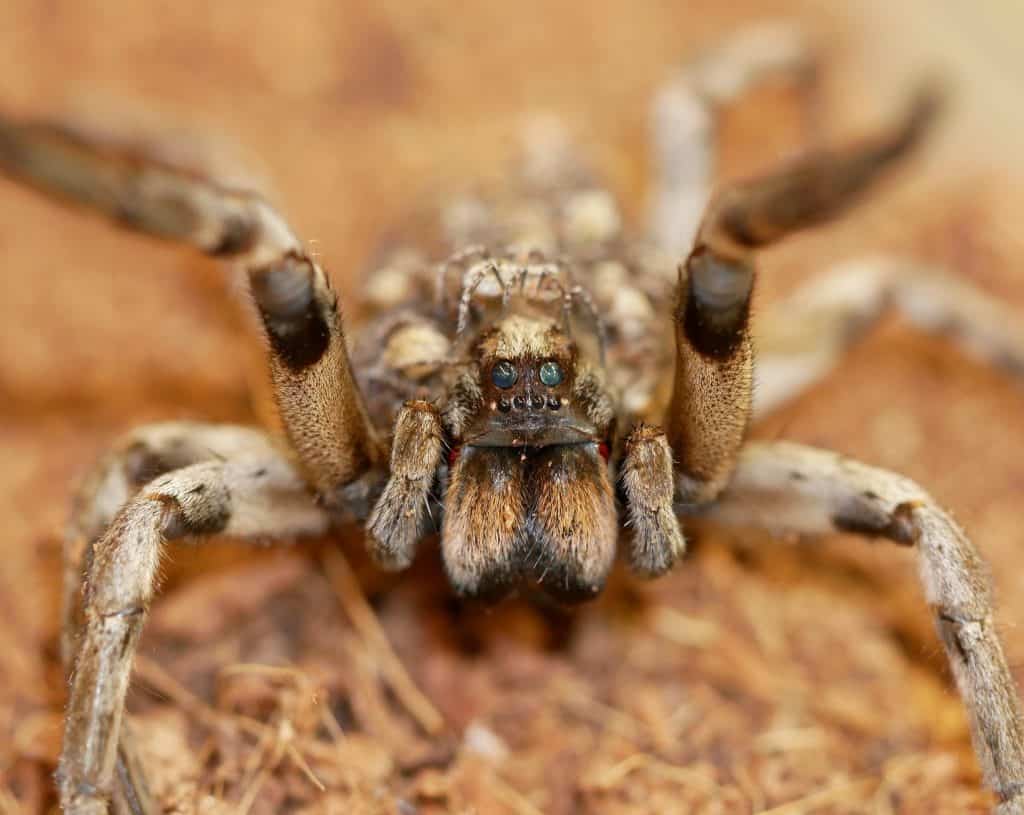
The Carolina wolf spiders are the largest wolf spiders in North America.
| Scientific Name | Size | Danger to Humans |
|---|---|---|
| Hogna carolinensis | Body length of up to 1.4 inches and a leg span of 3-4 inches | Typically only causes mild, localized symptoms similar to a wasp sting |
Carolina wolf spiders are the largest wolf spiders in the U.S. They have a body length of up to 1.4 inches and a leg span of 3-4 inches. These wolf spiders have a wide distribution throughout the country, including the state of Missouri. They inhabit a variety of open habitats, including forests, scrublands, grasslands, and even deserts. These spiders do not build webs. They live in burrows underground and hunt for their prey instead.
The Carolina wolf spider has a hairy, mottled brown to grey body with a darker stripe down the middle of the abdomen. The front of their chelicerae, or mouthparts, is a peachy-orange color, and males may also have orange down their sides. Like all wolf spiders, they have eight eyes arranged in three rows. A bite from this spider typically only causes mild, localized symptoms similar to a wasp or bee sting.
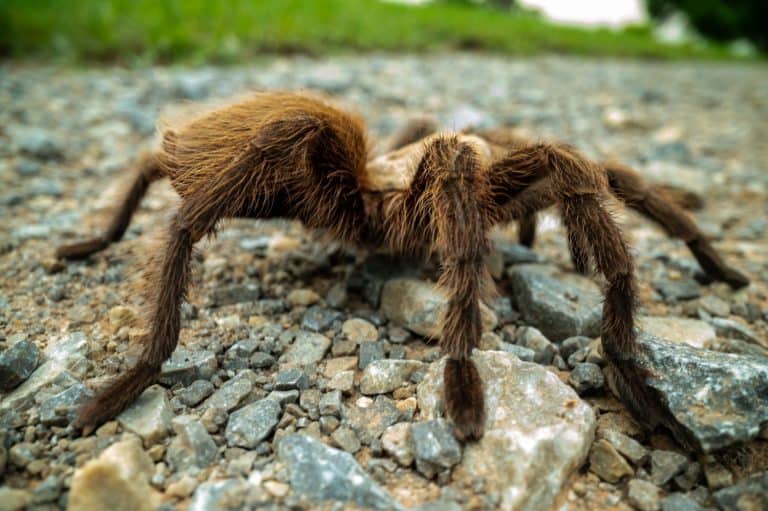
1. Texas Brown Tarantula
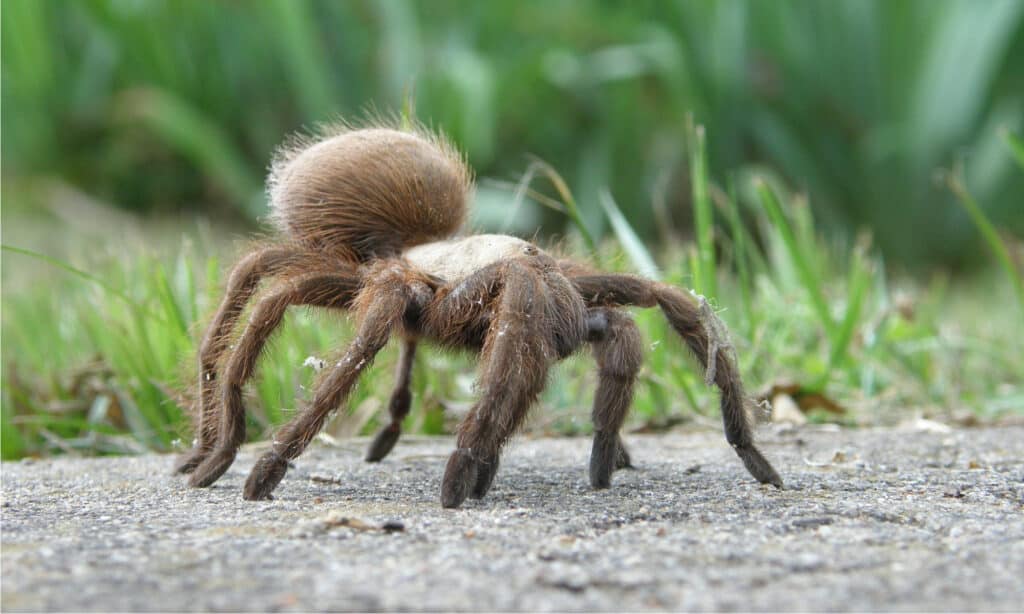
The Texas brown tarantula can have a leg span of over 4 inches long.
©texas brown tarantula/Shutterstock.com
| Scientific Name | Size | Danger to Humans |
|---|---|---|
| Aphonopelma hentzi | 2 inches in body length with a leg span of 4-5 inches or more | Delivers a painful bite said to be like a bee sting and can cause redness and inflammation |
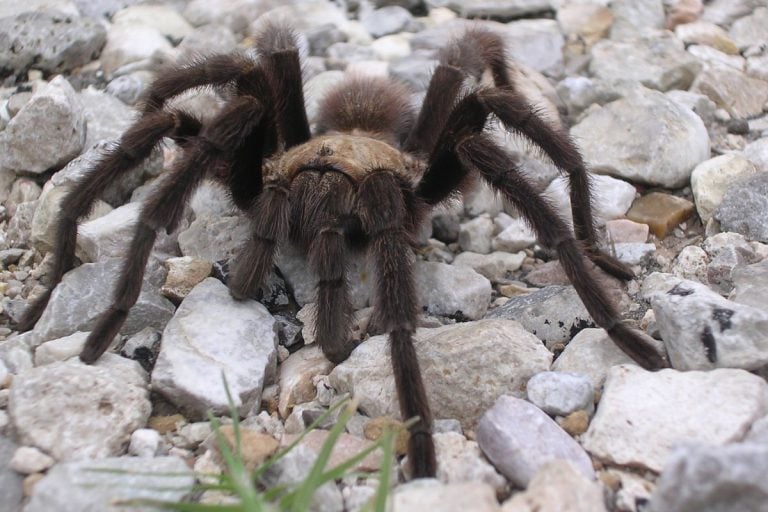
The Texas brown tarantula is the biggest spider in Missouri and is the only tarantula native to the state. They can reach up to 2 inches in body length and have a leg span of 4-5 inches, with some females possibly being even larger. In Missouri, they can typically be found in the meadows and grasslands of the Ozarks region. These tarantulas live in silk-lined burrows during the day and come out at night to hunt.
They usually have a sandy brown to dark brown body with hair covering their abdomen and legs. They are typically not aggressive, but they will flick the spiky, urticating hairs from their abdomens in self-defense.The Texas brown tarantula delivers a bite that is said to be like a bee sting and can cause redness and inflammation. Despite their large size, their mild venom is not considered medically significant in humans.