
The state of Louisiana is famous for its jazz music and its wildlife, as well as being the final stop on the Mississippi River’s course through the United States. While alligators are certainly the most well-known animals in this state, Louisiana is home to a few sizeable arachnids. When we measure the biggest spiders in Louisiana, we consider both their body size and leg span. When you see a spider that can stretch out to the width of your entire hand, its leg span becomes just as important as its body length. Read on to discover five of the biggest spiders in Louisiana.
5. Southern House Spider
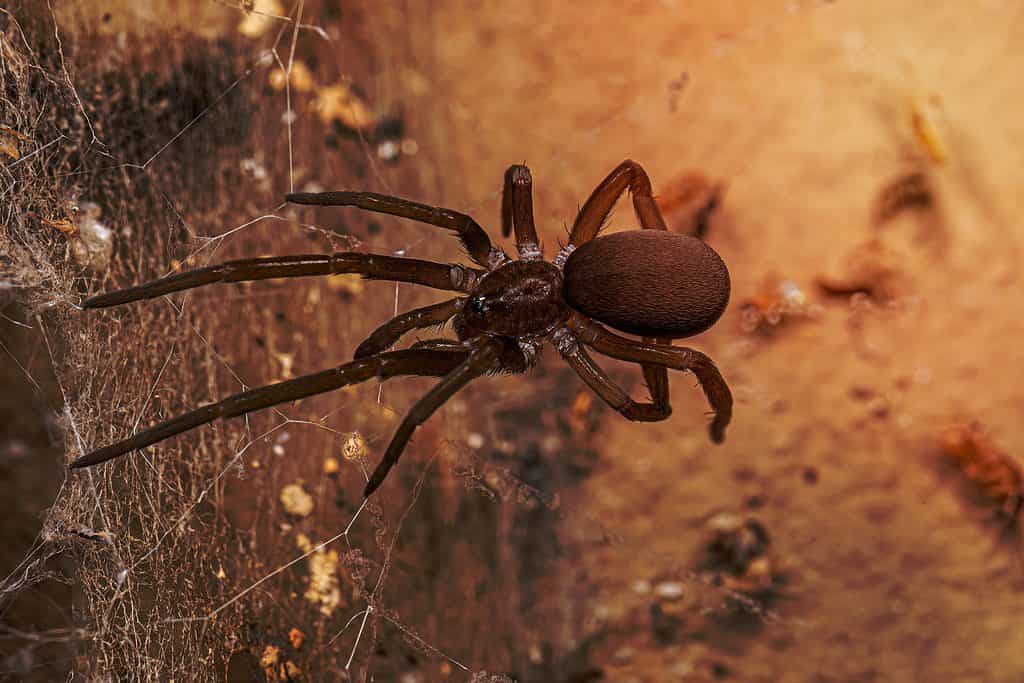
Southern house spiders are sometimes mistaken for brown recluses due to their shape and color, but they are harmless.
©postolocanu/Shutterstock.com
| Scientific Name | Size | Danger to Humans |
|---|---|---|
| Kukulcania hibernalis | 0.75 inches in body length with up to a 2-inch leg span | Bites are rare but can cause mild pain and swelling |
The southern house spider is a very common, harmless spider found across Louisiana. It has a plain, dark brown to greyish-brown body and legs with fine, velvety hair on its abdomen. Males are smaller with slimmer bodies, and females have more rounded abdomens and a wider cephalothorax. Females measure about 0.75 inches in body length, while males measure up to 0.50 inches. Both sexes can grow to have a leg span of around 2 inches.
Southern house spiders are found both indoors and outdoors. They build messy webs in the corners of basements and attics, the recesses of windowsills, and on cinder block walls and other masonry. Although they may look similar to brown recluses, these spiders are not dangerous. They will not bite unless they become trapped. Bites may cause mild pain and swelling.
4. Dark Fishing Spider
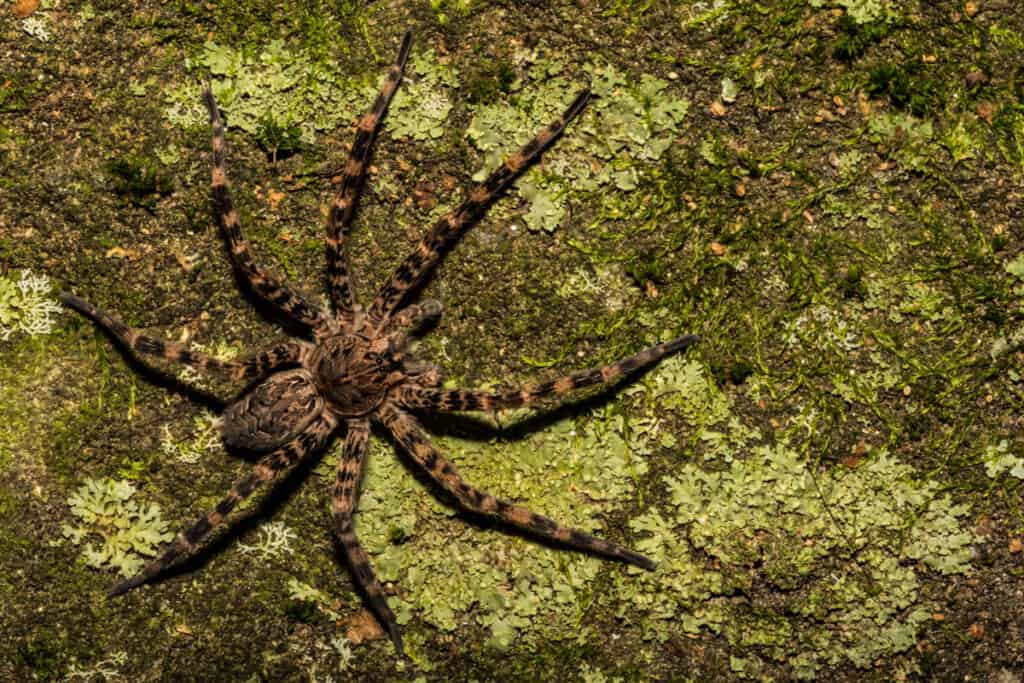
The dark fishing spider can run across the surface of water or dive into the water to catch prey.
©iStock.com/JasonOndreicka
| Scientific Name | Size | Danger to Humans |
|---|---|---|
| Dolomedes tenebrosus | Body length of up to 1 inch with a leg span of over 3 inches | May inflict a mildly painful bite with symptoms similar to a bee or wasp sting if bothered |
The dark fishing spider is believed to be the largest fishing spider species. They are commonly found near water, so in Louisiana, these spiders often inhabit the swamps. They can also be found on tree trunks along the edges of the water or in drier wooded areas. Dark fishing spiders are brownish-grey with lighter brown to black markings, and their legs are banded with brown and black. Females have a body length of up to 1 inch with a leg span of over 3 inches. Male spiders are about half this size.
These spiders can run across water and even dive below the surface to capture their prey. Although they are fierce hunters, dark fishing spiders pose little threat to humans. They are skittish and typically run at the slightest movement. Bites are rare but can be painful and have symptoms similar to a bee or wasp sting.
3. Giant Golden Orb Weaver Spider
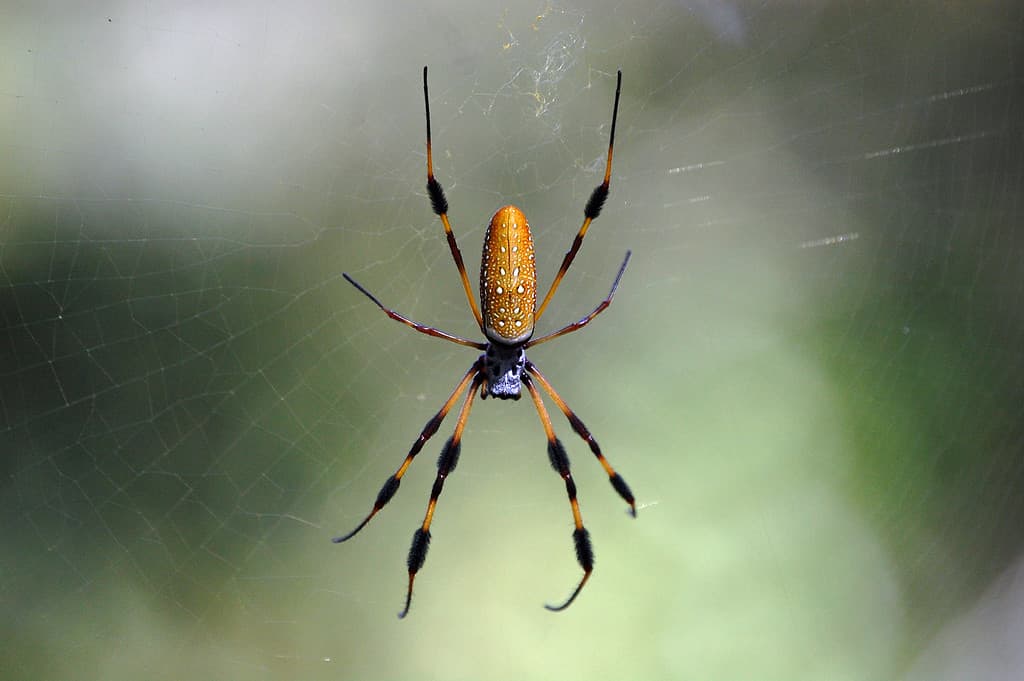
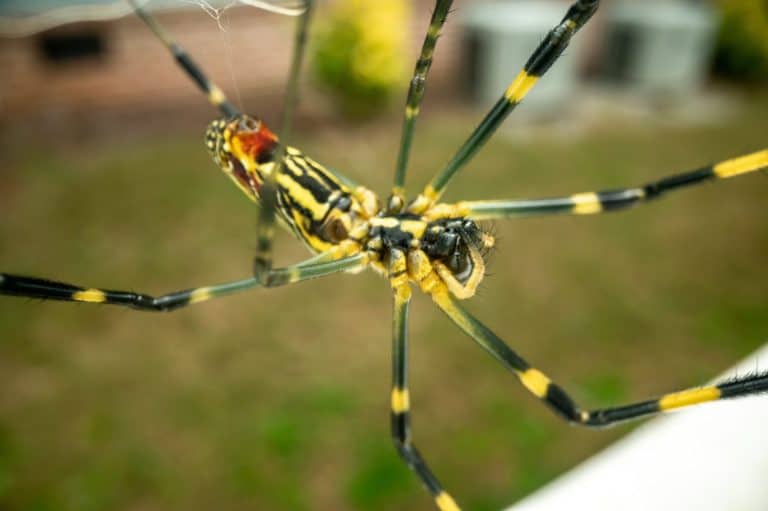
Giant golden orb weavers are said to be some of the largest non-tarantula spiders in the U.S.
| Scientific Name | Size | Danger to Humans |
|---|---|---|
| Trichonephila clavipes | Body size of 1.5 to 2 inches with a leg span of up to 4 inches | Rarely bite humans; symptoms said to be less serious than a bee sting |
The giant golden orb weaver spider is also known in Louisiana as the banana spider. Females are typically yellow, black, and white with long, slim, yellow legs that have hairy black bands and black tips. They have a silvery-colored carapace with a circular pattern of black spots. Their long abdomen is bright yellow or black with white speckles. These spiders can reach 1.5 to 2 inches in body length with a leg span of up to 4 inches. Males are significantly smaller, measuring only 0.25 inches in body length.
These spiders are common across the state. They typically attach their webs to trees and shrubs in open wooded areas or along the edges of dense forests. They are unlikely to enter homes or offices and almost never bite humans. The spider will bite only when threatened. Bites can cause temporary localized pain and redness, and are said to be less serious than a bee sting.
2. Carolina Wolf Spider
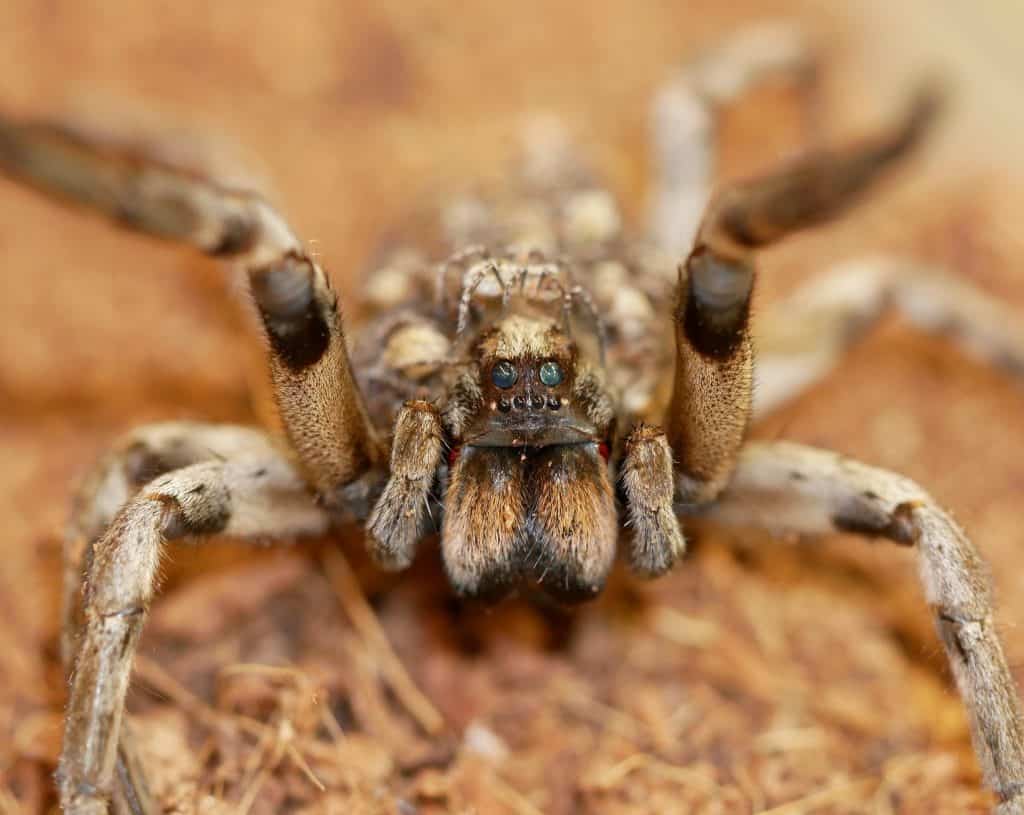
Carolina wolf spiders are the largest wolf spiders in North America.
| Scientific Name | Size | Danger to Humans |
|---|---|---|
| Hogna carolinensis | Body length up to 1.4 inches with a leg span of up to 4 inches | Bites typically cause only localized symptoms that are similar to a bee or wasp sting |
Louisiana is home to a number of wolf spider species, but the largest of them all is the Carolina wolf spider, which is the biggest wolf spider in the country. Their body length measures up to 1.4 inches with a leg span that reaches between 3 and 4 inches. Males are generally smaller than females. They are very adaptable spiders and can be found in a variety of open environments, including grasslands, forests, scrublands, and deserts. Wolf spiders live in underground burrows and hunt for prey instead of building webs.
Carolina wolf spiders have hairy bodies of mottled brown to grey with a darker stripe down the middle of their abdomen. The front of their mouthparts has a peachy tint, and males sometimes have orange along their sides. They have eight eyes arranged in three rows, as all wolf spiders do. A bite from a Carolina wolf spider can be painful due to its large size, but it typically causes only localized symptoms that are similar to a bee or wasp sting.
1. Texas Brown Tarantula
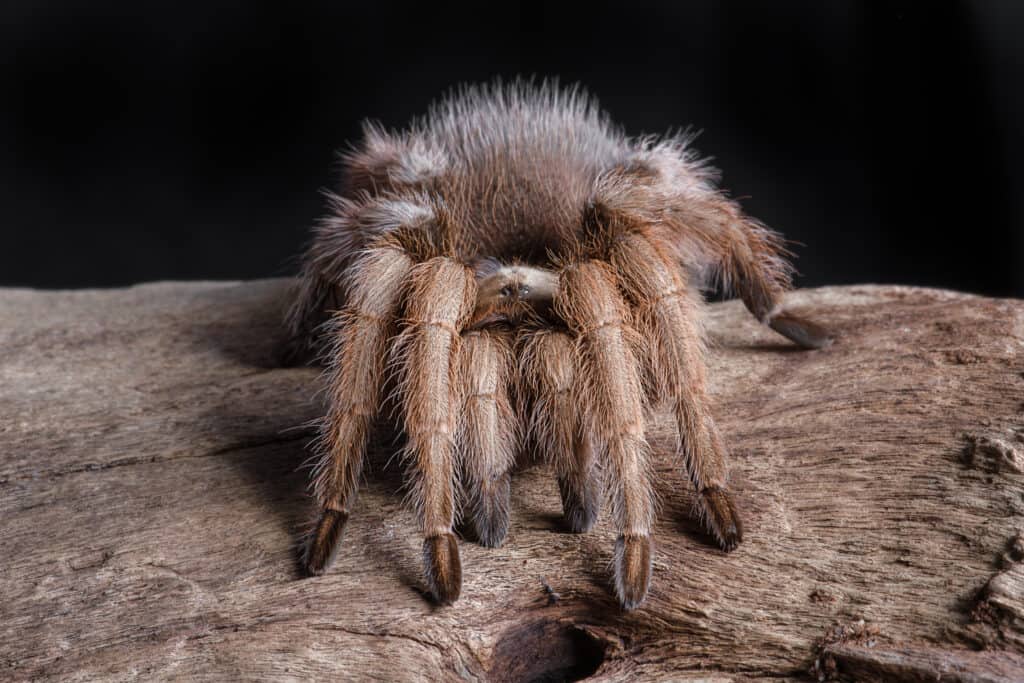
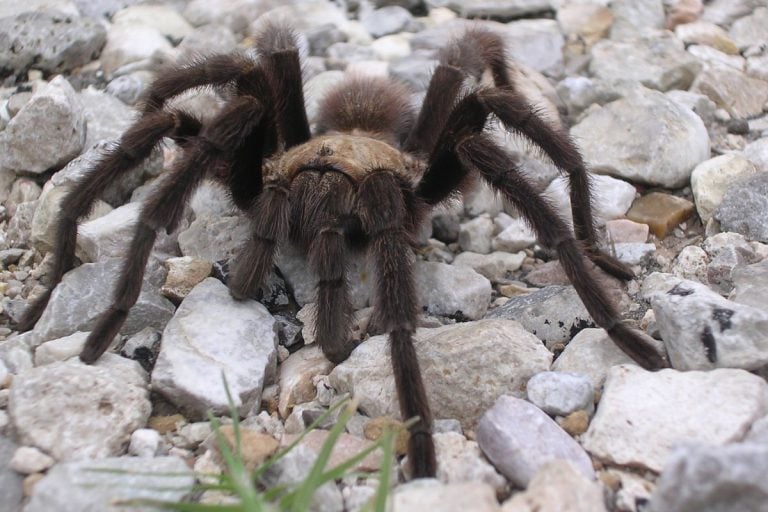
The Texas brown tarantula is a large, heavy-bodied spider, but it is not naturally aggressive toward humans.
©Alan Tunnicliffe/Shutterstock.com
| Scientific Name | Size | Danger to Humans |
|---|---|---|
| Aphonopelma hentzi | Body size of up to 2 inches with a leg span of 4 inches | Delivers a painful bite that leaves puncture wounds, swelling, and possible infection |
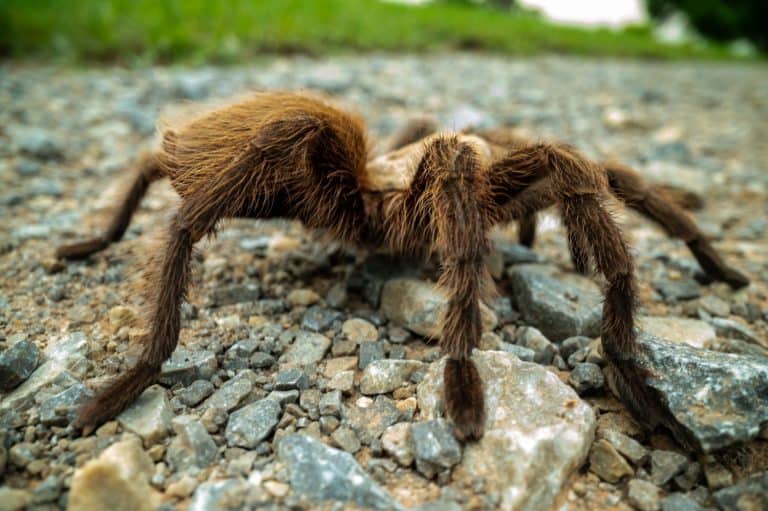
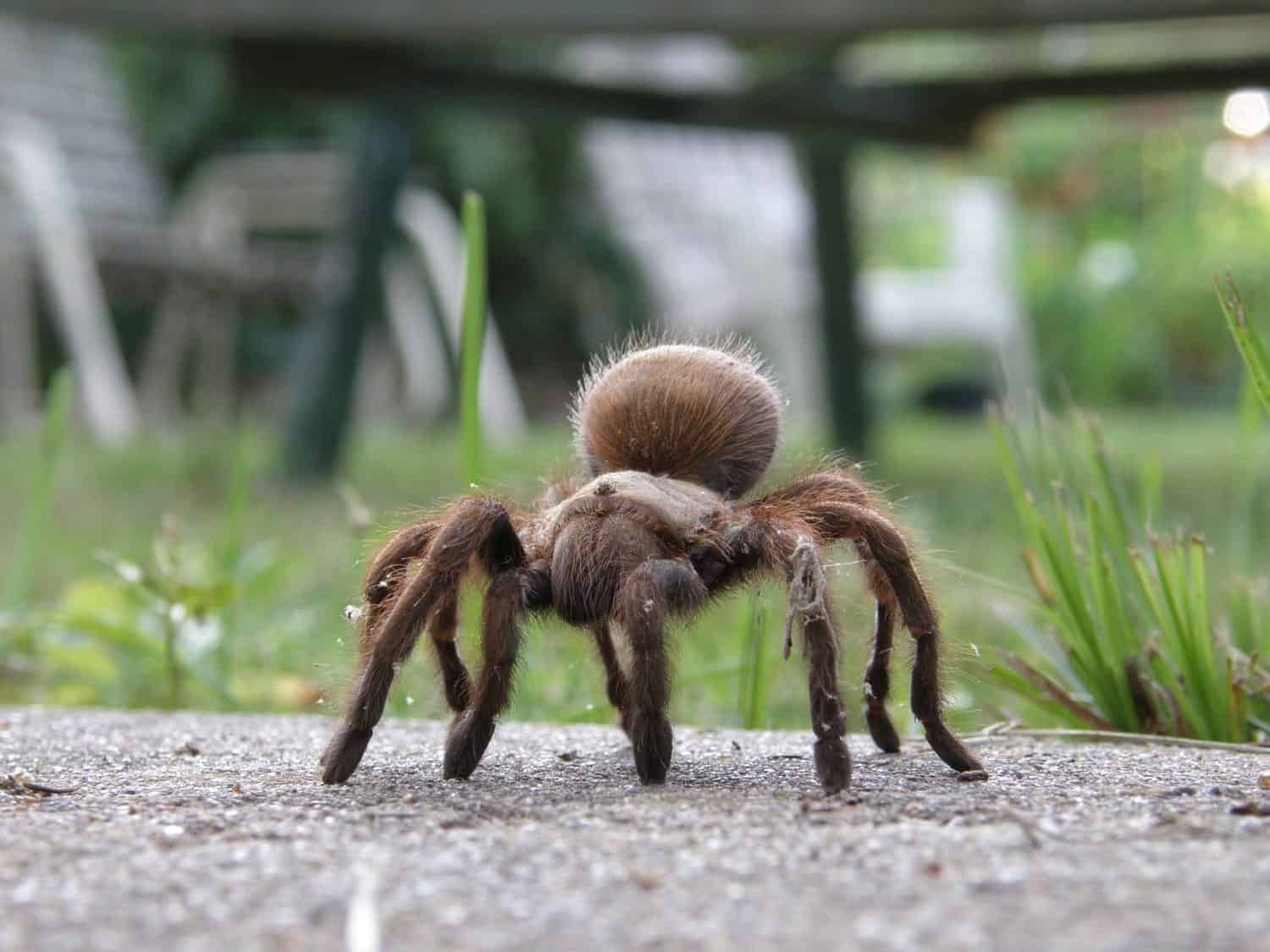
The Texas brown tarantula is a common tarantula found west of the Mississippi River to New Mexico and Colorado. It is arguably the biggest spider in Louisiana. Other common names include the Oklahoma and Missouri brown tarantula. They are heavy-bodied spiders measuring about 2 inches in body length with a leg span of up to 4 inches. The male tarantulas are slightly smaller than the females. These tarantulas have a large, bulbous, hairy, dark brown abdomen, a light brown carapace, and dark brown legs with bristly, urticating hairs.
Texas brown tarantulas are typically found in central and north-central Louisiana. They can be found living under the cover of rocks, fallen trees, and tall vegetation. They are not inherently aggressive toward humans, but if mishandled, they may deliver a painful bite with their large fangs. Bites can cause localized swelling and possible infections due to the puncture wounds. Some people are also allergic to their venom and may require medical attention.