
Quick Take
- The brown widow's venom is actually more toxic than the black widow's, but that fact alone doesn't tell the whole story when it comes to which bite you'd rather avoid. Brown widow venom explained →
- A brown recluse can bite you without you feeling a thing, and that delayed reaction is exactly what makes it so dangerous. Brown recluse bite symptoms →
- Most people picture just one type of black widow, but Mississippi is actually home to two. The difference between them could change how you identify a threat. Meet the northern black widow →
- One of these spiders is far more likely lurking inside your home than in the woods, and it's probably not the one you'd guess. Where brown recluses hide indoors →
As the summer months draw us outdoors, they also draw us into habitats of some dangerous critters. Some of the scariest may well be arachnids. Being able to identify the most dangerous spiders in Mississippi could help save you from a nasty bite. So, let’s take a look at the worst offenders in the state.
Southern Black Widow (Latrodectus mactans)
Southern black widow spiders are found throughout the state. Take a closer look at how to identify them, their habitats, and the symptoms of a southern black widow bite.
Black Widow Identification
Southern black widows have a red, orange, or yellowish-orange hourglass shape on the underside of their abdomens. The top of their shiny, rounded abdomen may be a uniform black, or they can have more reddish-colored spots. Female southern black widows measure about 0.5 inches in body length with a leg span of 1.5 to 2 inches. Only the females have large enough fangs to break the skin.
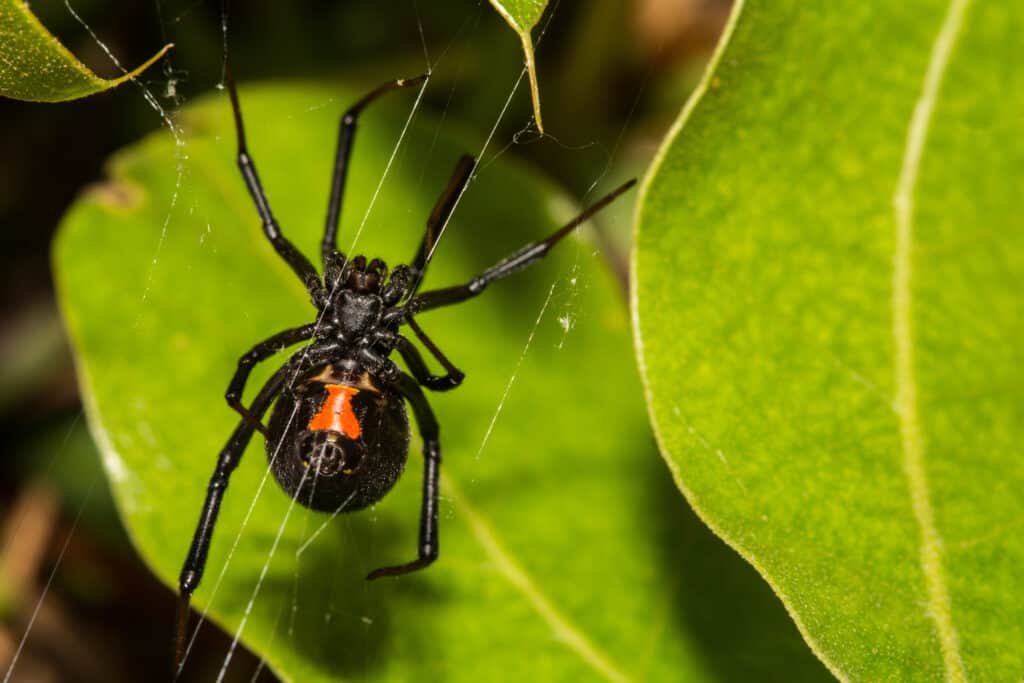
Look for the reddish hourglass on the underside of the abdomen to identify the southern black widow.
©Jay Ondreicka/Shutterstock.com
Black Widow Habitats
Southern black widows prefer the outdoors, but they can sometimes be found in undisturbed parts of buildings such as sheds, basements, and garages. They are typically found in wooded areas inside hollow logs, old rodent burrows, rotting tree stumps, wood piles, and under leaf litter. These spiders build messy webs and are typically seen hanging upside down.
Symptoms of Black Widow Bites
Black widow venom affects the nervous system, causing a variety of painful symptoms in those who are bitten. These may include:
- Fang marks where the bite occurs may be followed by burning, severe pain, redness, and swelling.
- Muscle pains and stiffness may develop within 8 hours, throughout the body.
- Excessive sweating may follow in more severe cases.
- Rashes, itching, and swollen eyes may occur.
- Nausea or vomiting may cause dehydration.
Stomach cramps, severe abdominal pain, and difficulty breathing often appear in more severe cases. If any of these symptoms occur, seek medical assistance immediately. There have been no U.S. deaths recorded as a result of a black widow bite since 1983.
Northern Black Widow (Latrodectus variolus)
The northern black widow spider may also be found throughout Mississippi, but they are not as common as the southern black widow. Learn how to identify it, how to avoid its habitats, and the symptoms of a bite.
Northern Black Widow Identification
Unlike the southern black widow, the northern black widow has a broken, reddish-colored hourglass shape on the underside of its abdomen. It can sometimes even appear as two triangular shapes. The top of its shiny, rounded abdomen may also have reddish spots and pale horizontal stripes. The body measures about 0.5 inches in length, and the leg span measures about 1.5 to 2.0 inches across. Only the females can pierce the skin.
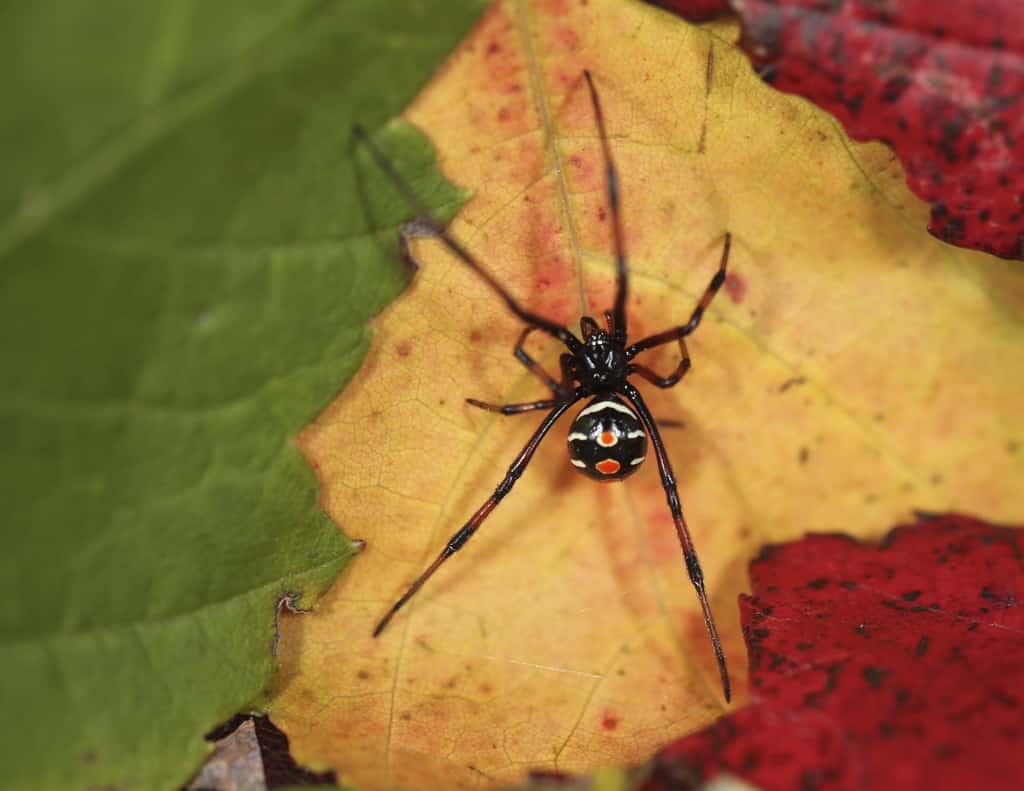
The northern black widow spider may also have reddish spots and pale horizontal stripes on its upper abdomen.
©iStock.com/NajaShots
Northern Black Widow Habitats
Black widows are usually found outside, but they can occasionally occur inside in areas like attics, garages, back porches, sheds, and storage units. These spiders prefer undisturbed woodlands. Outside they are often found inside hollow logs, tree stumps, wood and brush piles, under overhanging ledges, and inside abandoned rodent burrows. Northern black widows also build irregularly-shaped webs and are found hanging upside down.
Symptoms of Northern Black Widow Bites
Northern black widow venom affects the nervous system the same as the southern black widow. A bite can cause the following symptoms:
- Fang marks where the bite occurs may be followed with burning, severe pain, redness, and swelling.
- Muscle pains and stiffness may develop within 8 hours, all through the body.
- Excessive sweating may follow in more severe cases.
- Rashes, itching, and swollen eyes may occur.
- Nausea or vomiting may cause dehydration.
The mortality rate for northern black widow bites is less than 1%. Stomach cramps, severe abdominal pain, and difficulty breathing may occur with more severe bites. If you experience any of these symptoms, seek medical attention immediately.
Brown Recluse (Loxosceles reclusa)
If bitten by a brown recluse, you might not even know it in the moment. However, it won’t take long to see the signs of the venomous bite from this dangerous spider. Find out how to identify this spider, its habitats, and the symptoms of its bite.
Brown Recluse Identification
Brown recluses tend to be light to medium brown, though some are pale or off-white, or have dark, almost black-grey or dark brown bodies. The cephalothorax may vary in color from the rest of the body. The spider has the nickname of “fiddle” or “violin” spider, as well, due to the dark brown violin-shaped marking on its cephalothorax. The neck of the violin faces toward the abdomen. Brown recluses only have six eyes, while other spiders have eight. These spiders measure 0.31 to 0.47 inches in length, with a leg span of 1 to 1.5 inches. They build messy, irregular webs that they use as retreats.
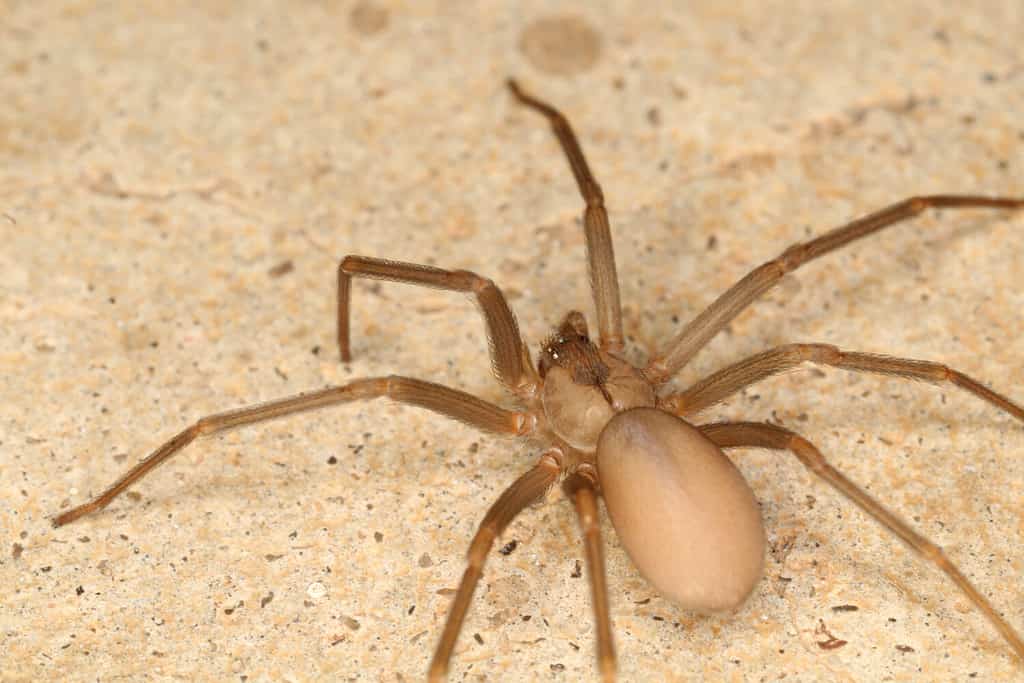
The brown recluse has a violin-shaped marking on its cephalothorax.
©Nick626/Shutterstock.com
Brown Recluse Habitats
The brown recluse spider can be found throughout Mississippi. These hermit-like arachnids are most commonly found in undisturbed areas indoors. They generally hide between walls, in dark, undisturbed corners, and in outbuildings. They most often appear during refurbishments and when structures are moved or razed. You may also find them outside in rock and woodpiles.
Symptoms of Brown Recluse Bites
Although they are primarily indoor spiders, brown recluse bites are rare. However, they are one of the most dangerous spiders in Mississippi because of the complications that can occur if you are bitten. If you are bitten, you may experience any of the following symptoms.
- Reddened skin around the wound
- Blistering, irritated skin at the wound site
- Swelling and itchiness
- Necrosis of flesh (decaying of flesh)
- Lethargy
- Flu-like symptoms, including fever, body aches, chills, exhaustion
- Flat purple or red spots all over the body
- Body-wide rashes
Victims of brown recluse bites often suffer lingering symptoms and may take as long as 6 to 8 weeks to recover fully. Those with allergies should seek medical attention immediately, as hospitalization may be required. Fortunately, less than 1% of bite victims experience systemic issues.
Brown Widow (Latrodectus geometricus)
Part of the widow family, but lesser known than the one that lends its name to a Marvel character, the brown widow packs a dangerous bite. You’ll want to watch out for these arachnids and avoid them at all costs.
Brown Widow Identification
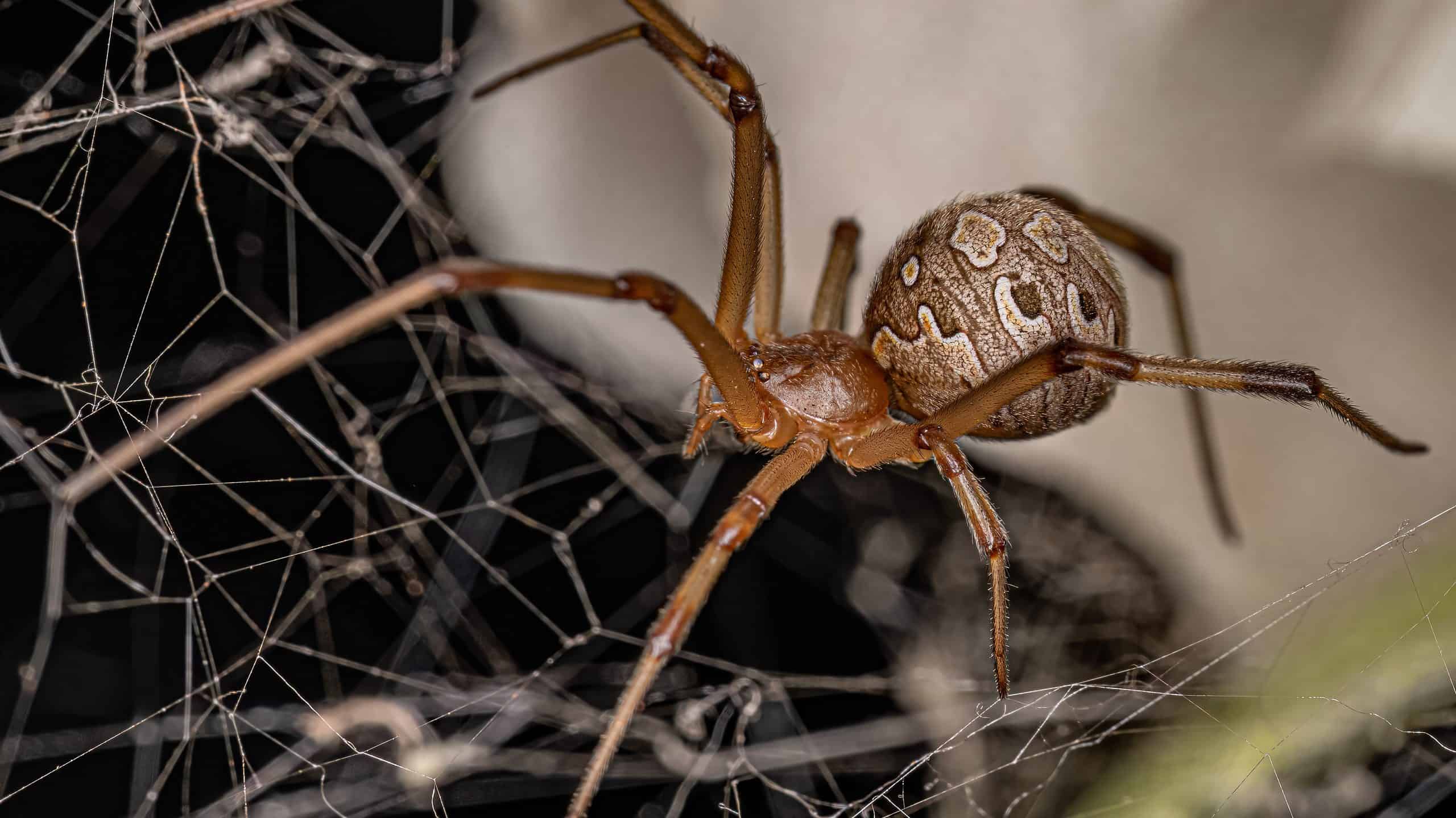
Brown widow spiders come in a range of light brown to grey-brown shades. Their legs can have brown, tan, or black banding. The underside of their abdomens has the hourglass-shaped marking, but it is orange or yellowish-orange instead of red. They also have a brown and white patterned upper abdomen. They measure up to 0.5 inches in body length with a leg span of 1.5 to 2 inches.
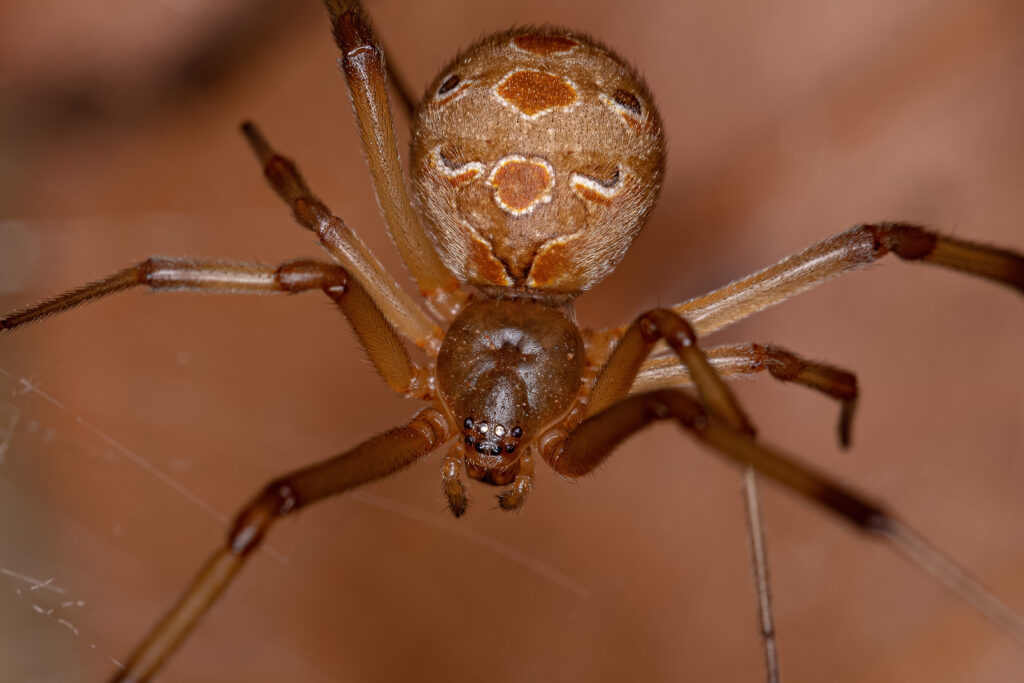
Unlike black widows, brown widows prefer more populated areas.
©iStock.com/ViniSouza128
Brown Widow Habitats
Non-native to Mississippi, brown widow spiders are now prevalent in urban areas across the Southeast and California. They prefer hidden sheltered areas outside, such as underneath patio furniture, in the handles of plastic trash cans, under roof eaves, and in the corners of entryways. Brown widows may also be found inside garages and storage closets. They build messy webs and are generally found hanging upside down.
Brown Widow Bites
Brown widow venom is more toxic than black widow venom, but they inject less of it, so bites are typically less severe. These spiders are also shy and non-aggressive, so bites are uncommon. If you are bitten by one, you may have the following localized symptoms:
- Pain
- Redness
- Swelling
Bites rarely lead to the systemic issues caused by black widows, but contact your physician if you experience severe symptoms.